


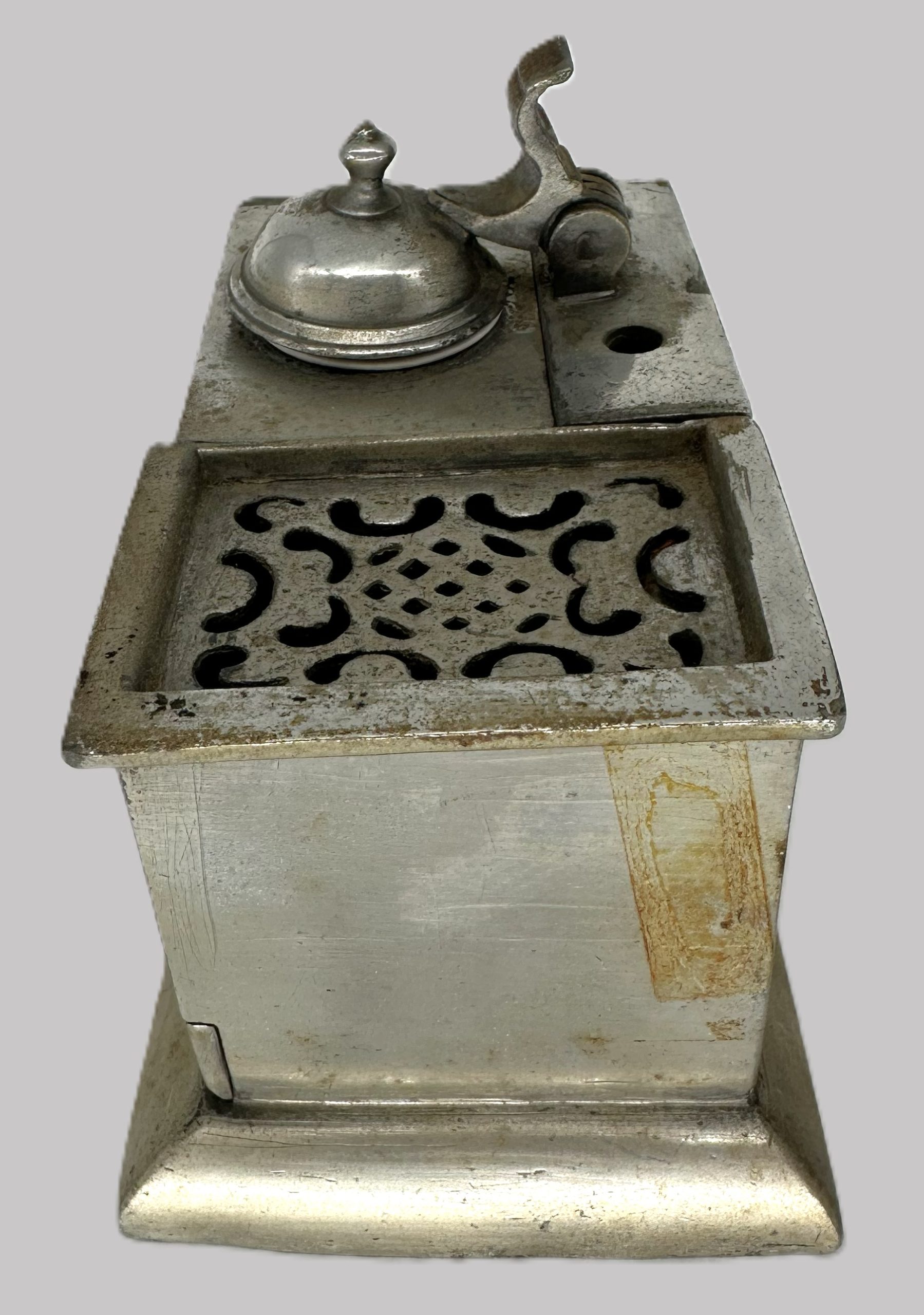
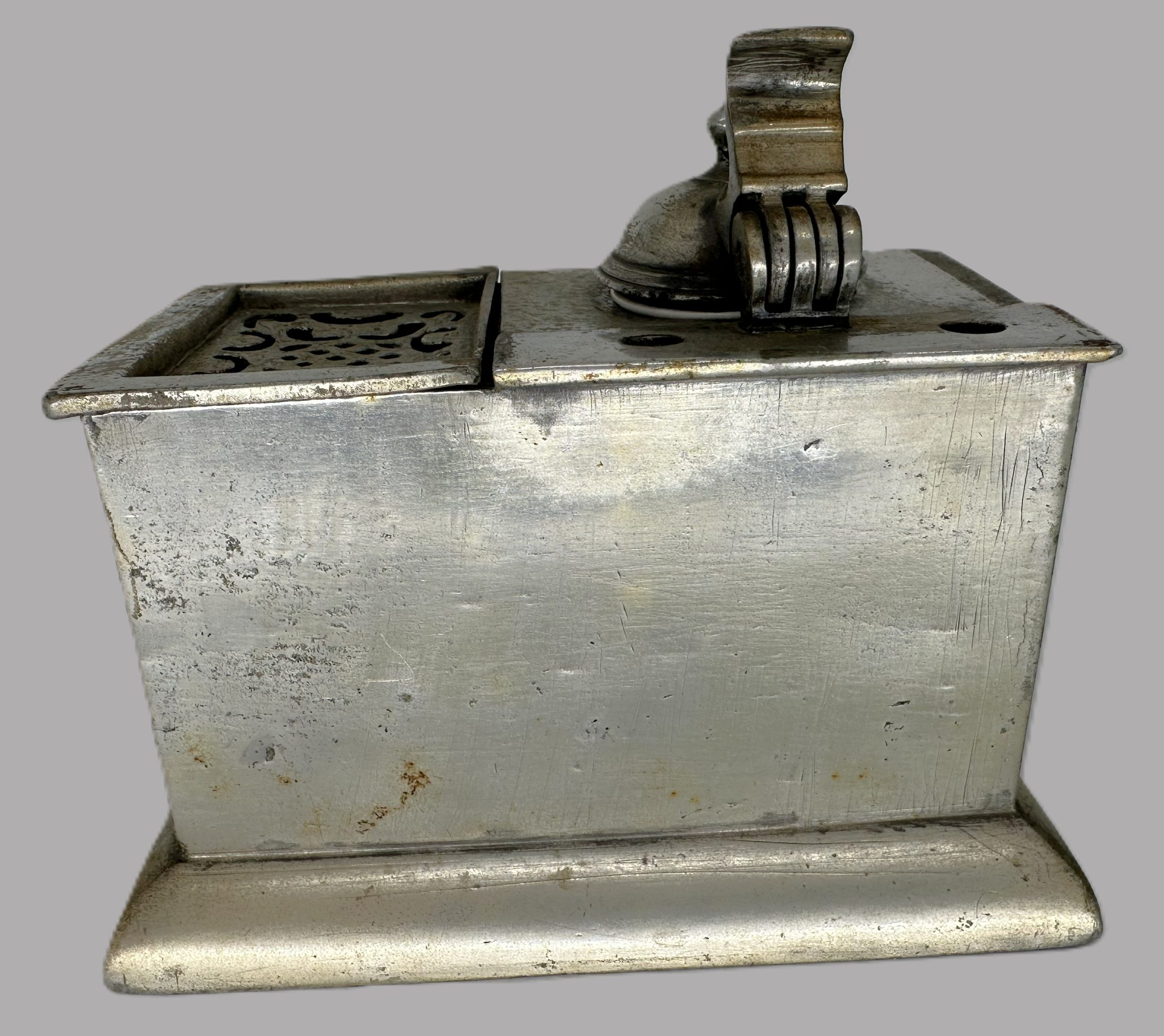
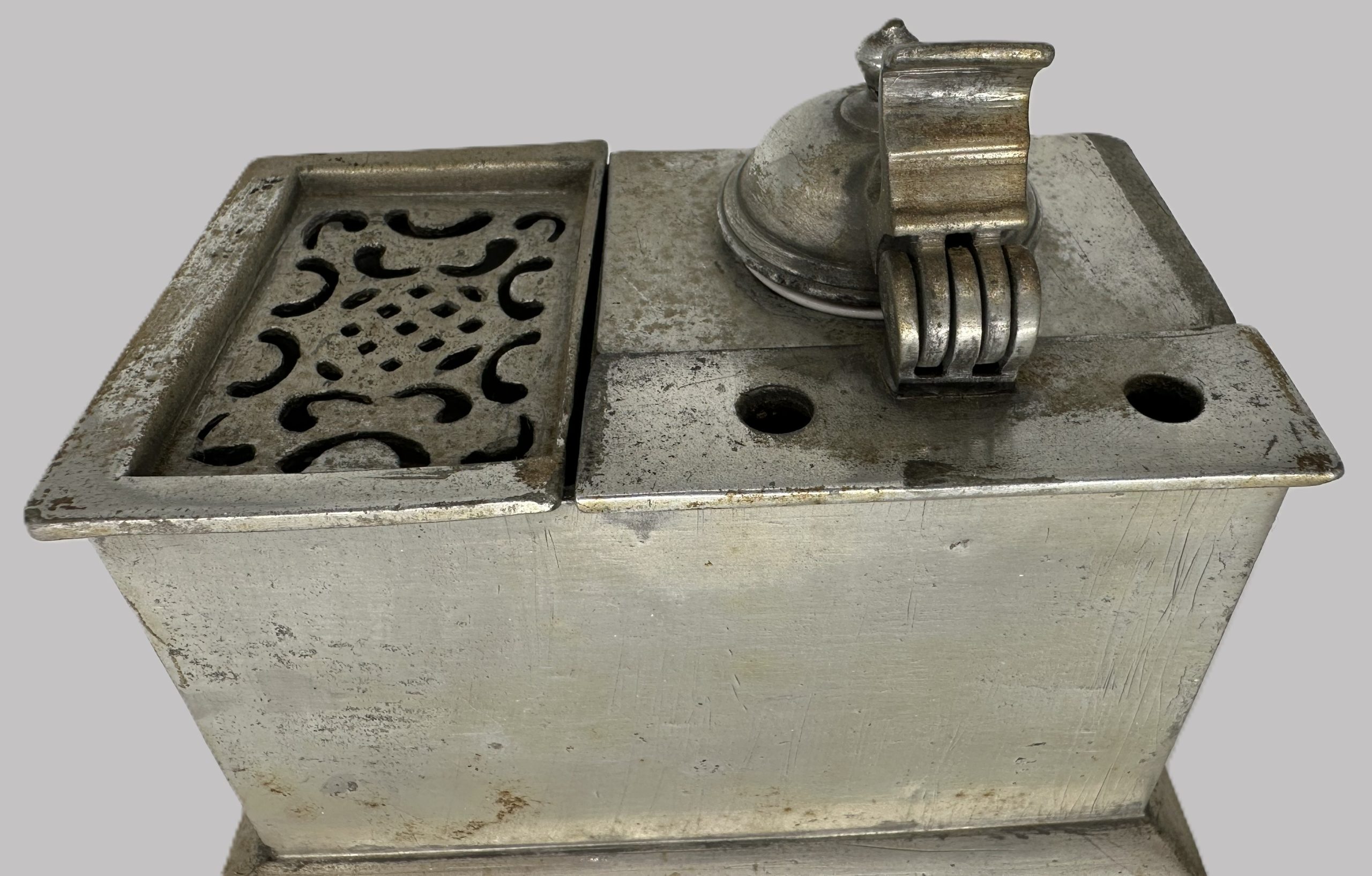
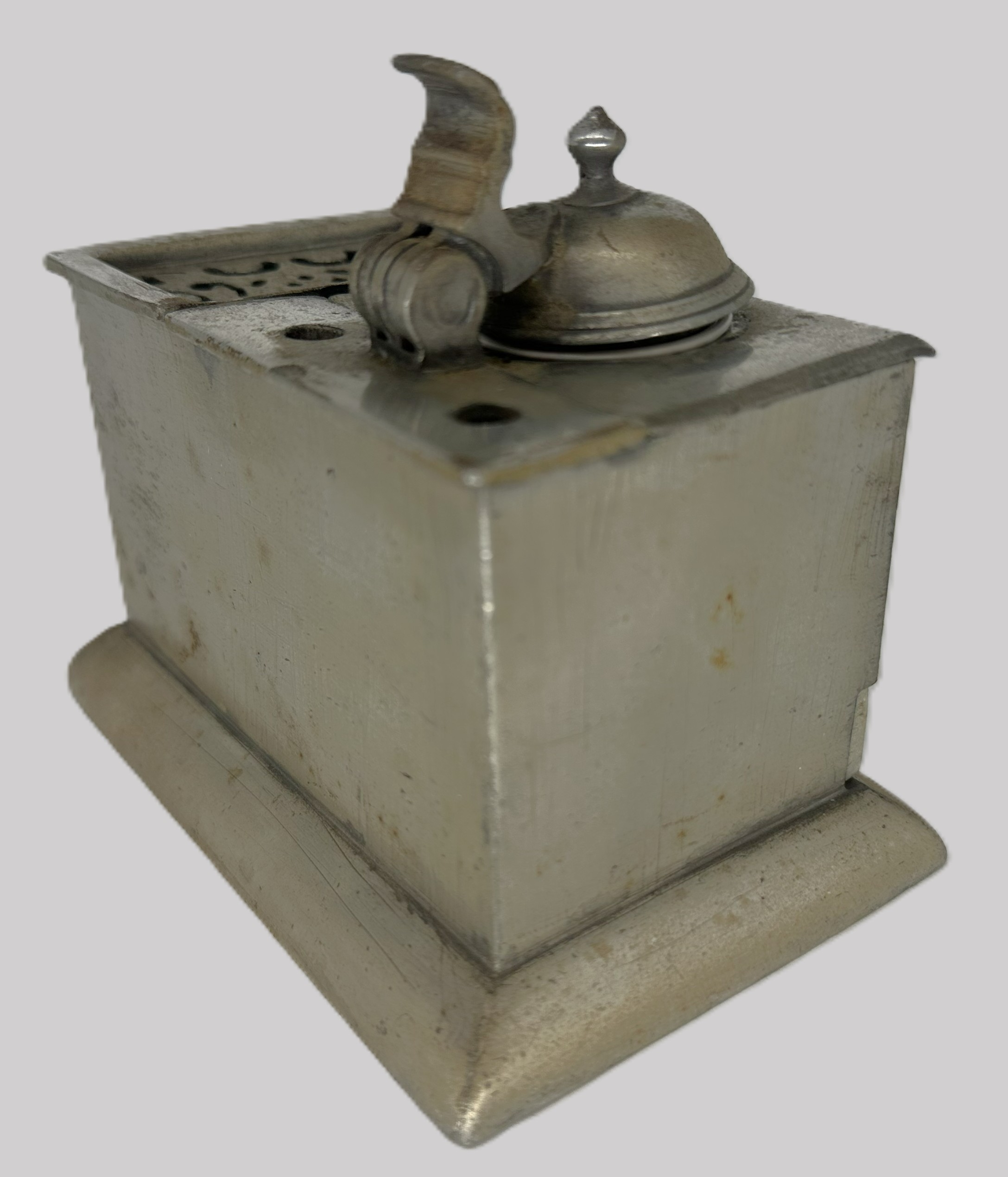
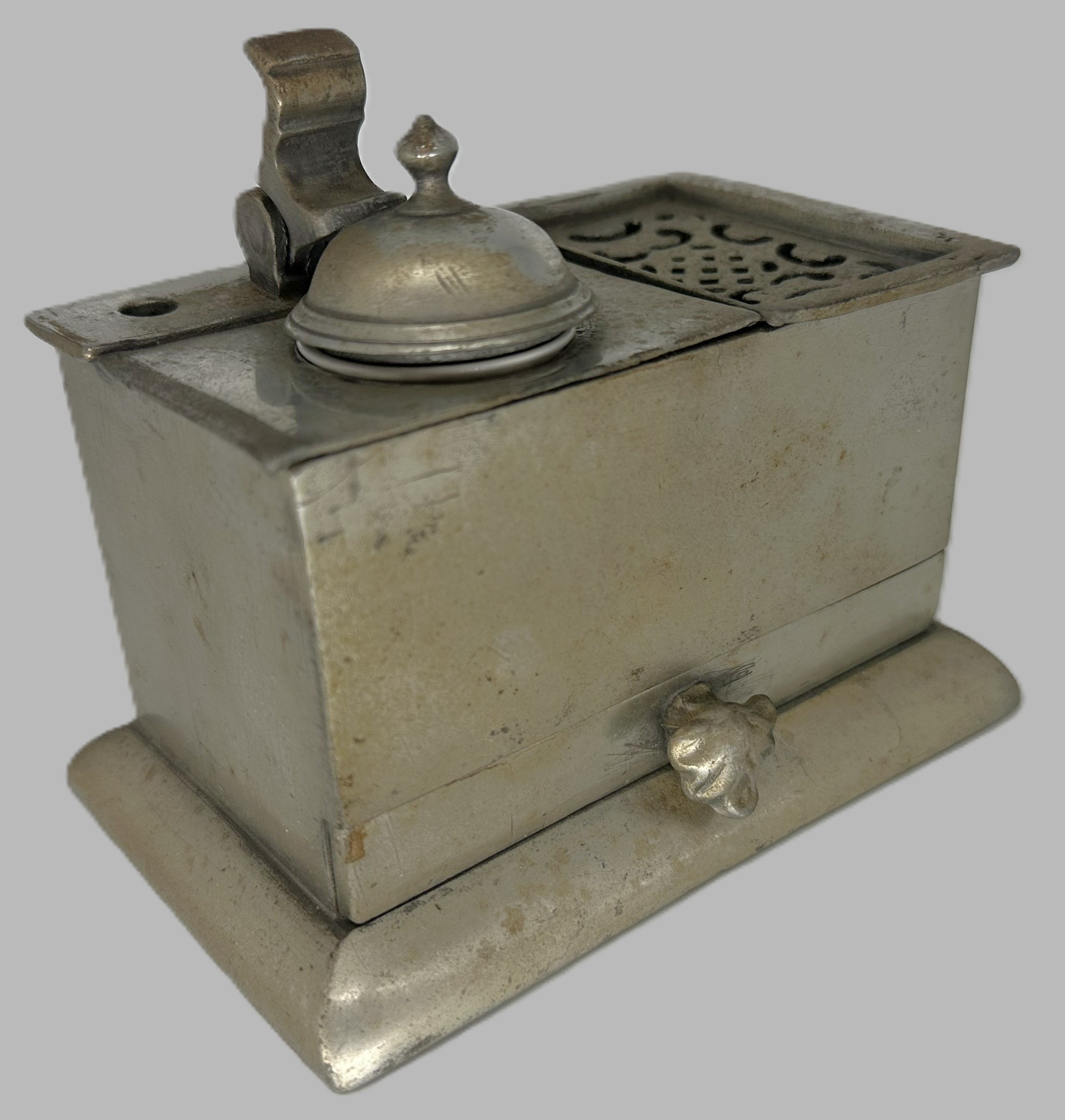

Rectangular Box-Form Pewter Inkstand
| Categories | Pewter / Tin |
| Material | Pewter |
| Markings | Unmarked |
| Manufacturer | Undetermined |
| Origin | Undetermined |
| Date or Era | circa 1840 |
| Measuring | 5 ¼” x 3 ⅝” x 4 ¾” high |
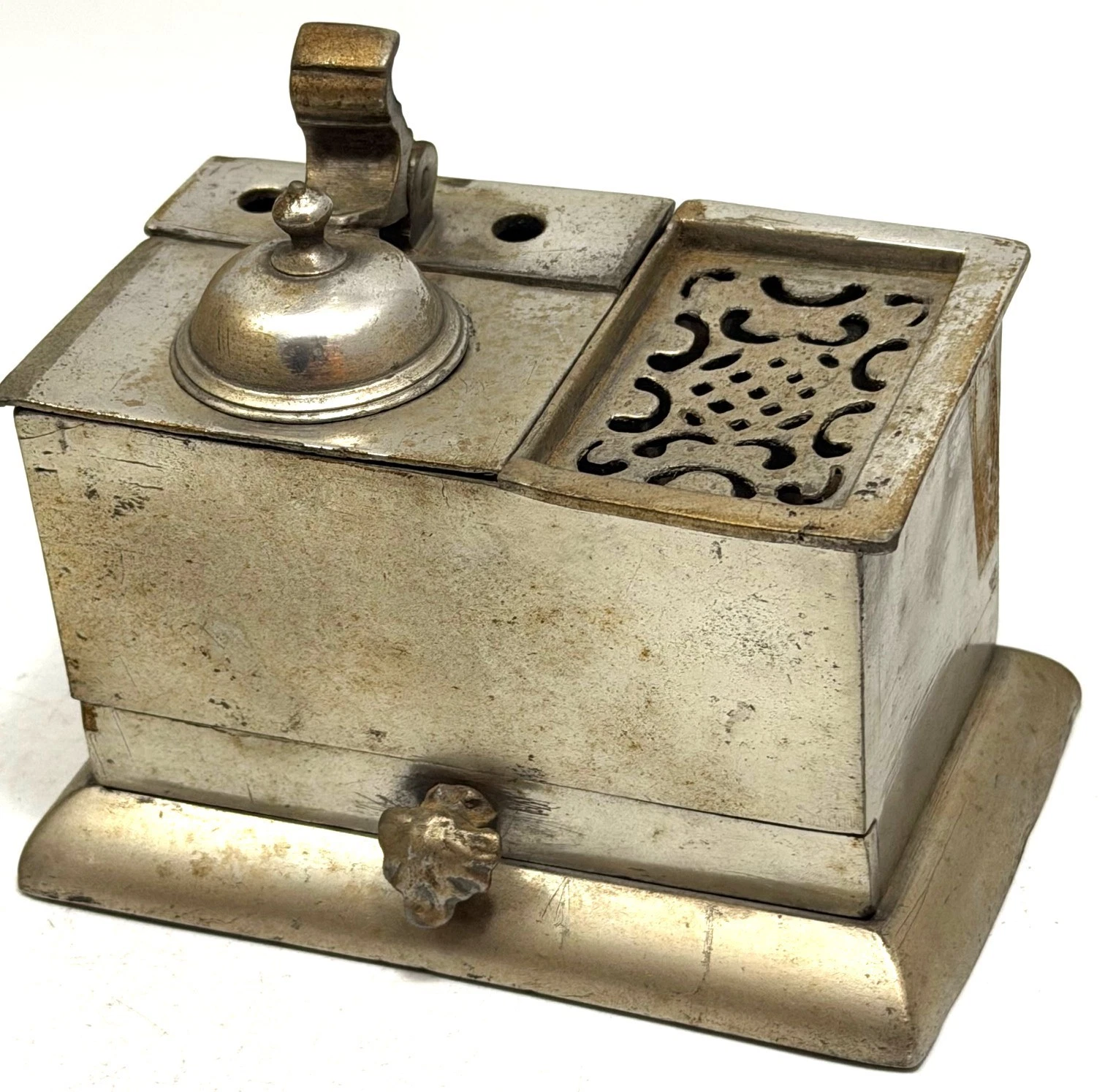
This rectangular box-form pewter inkstand likely dates from the early 19th century (c. 1800–1840), incorporating several writing tools of the pre-fountain pen era.
Description
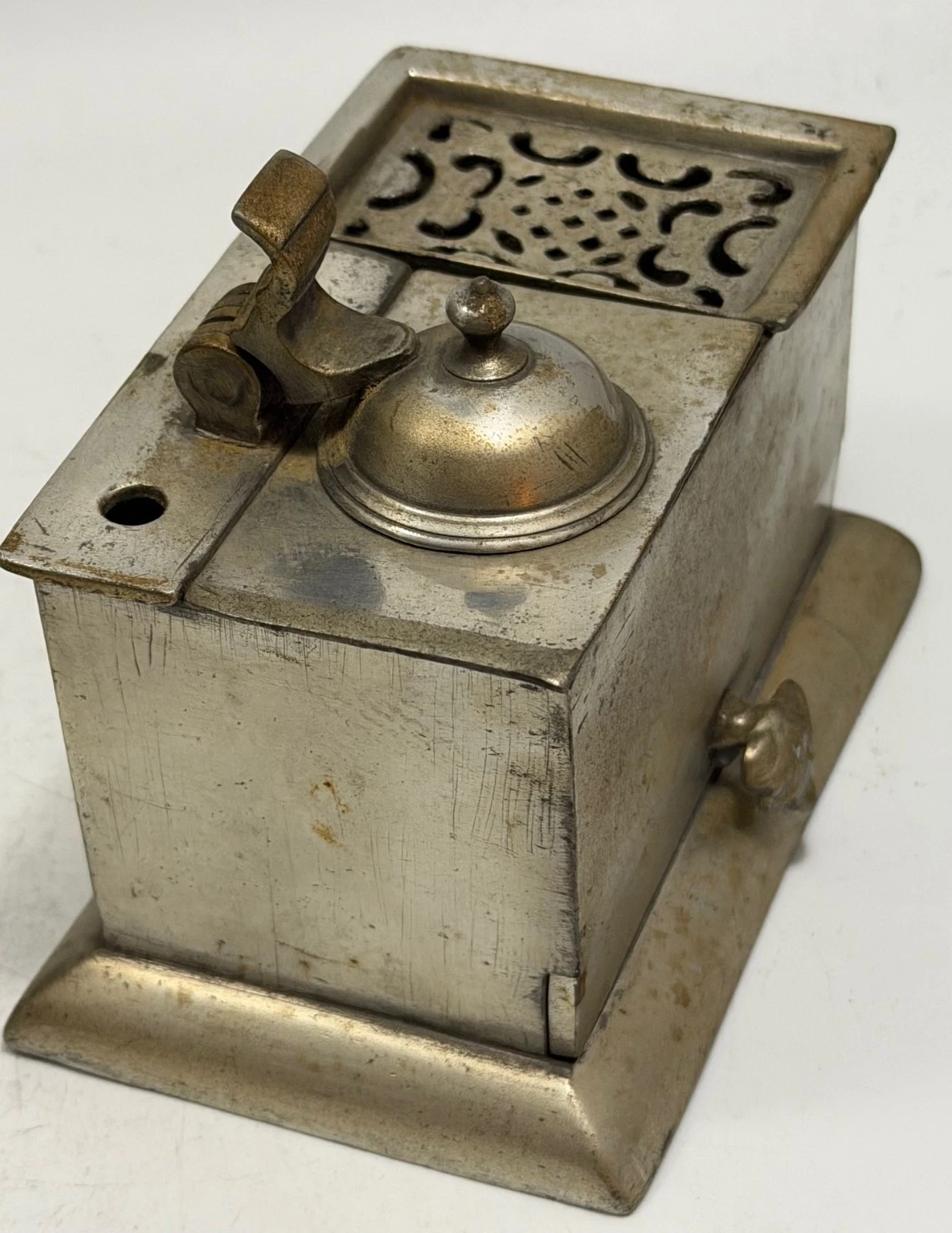
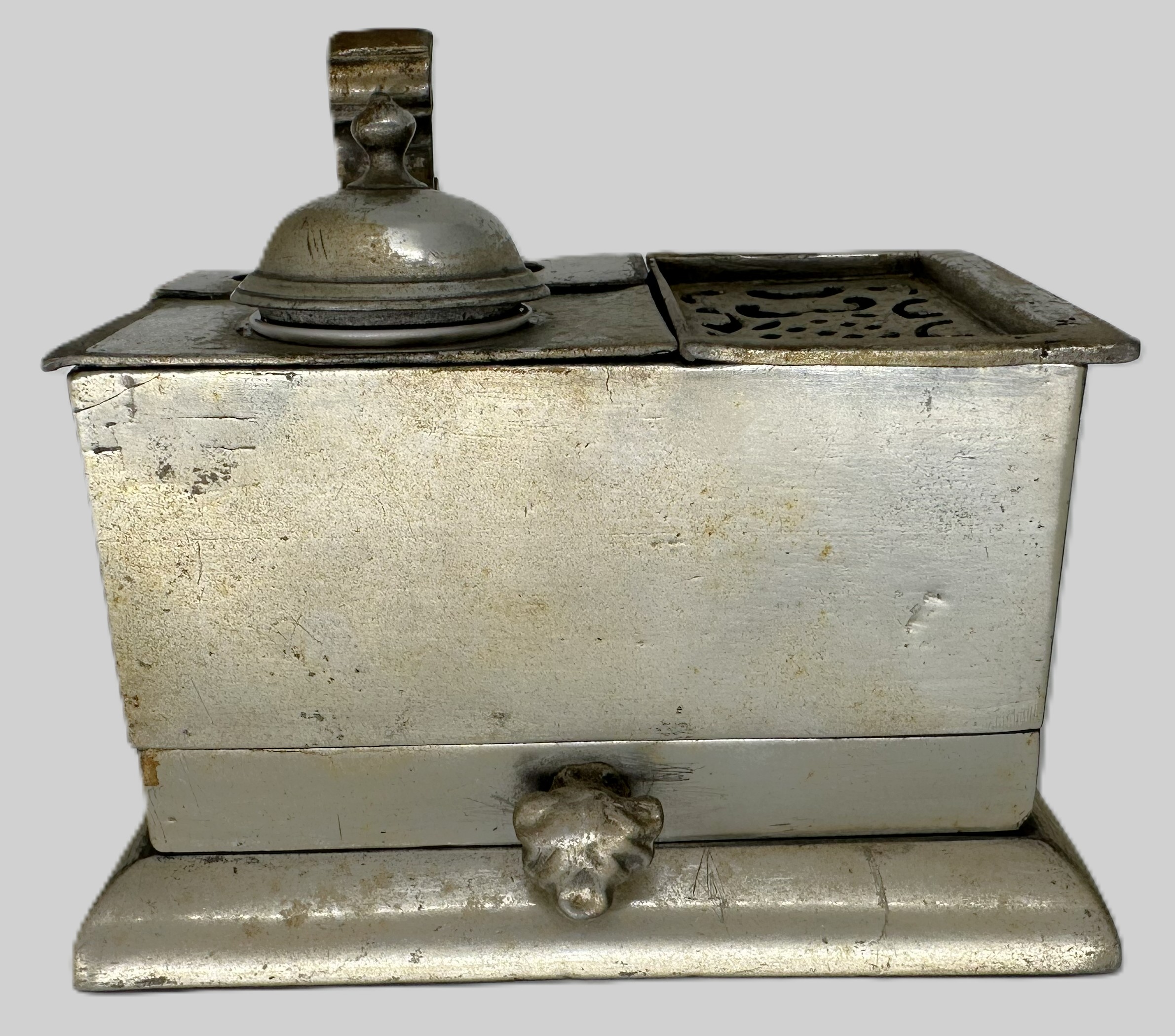
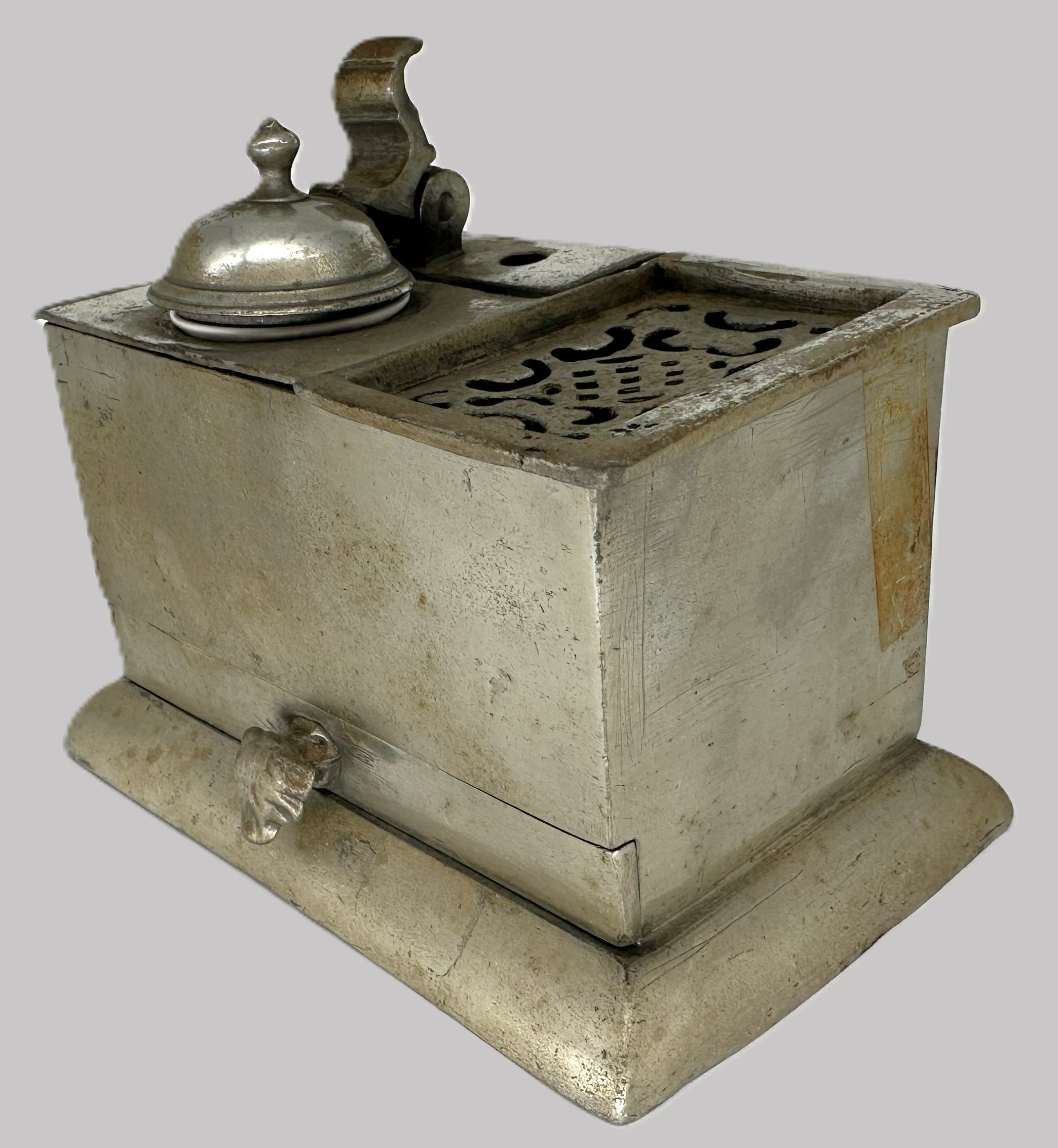
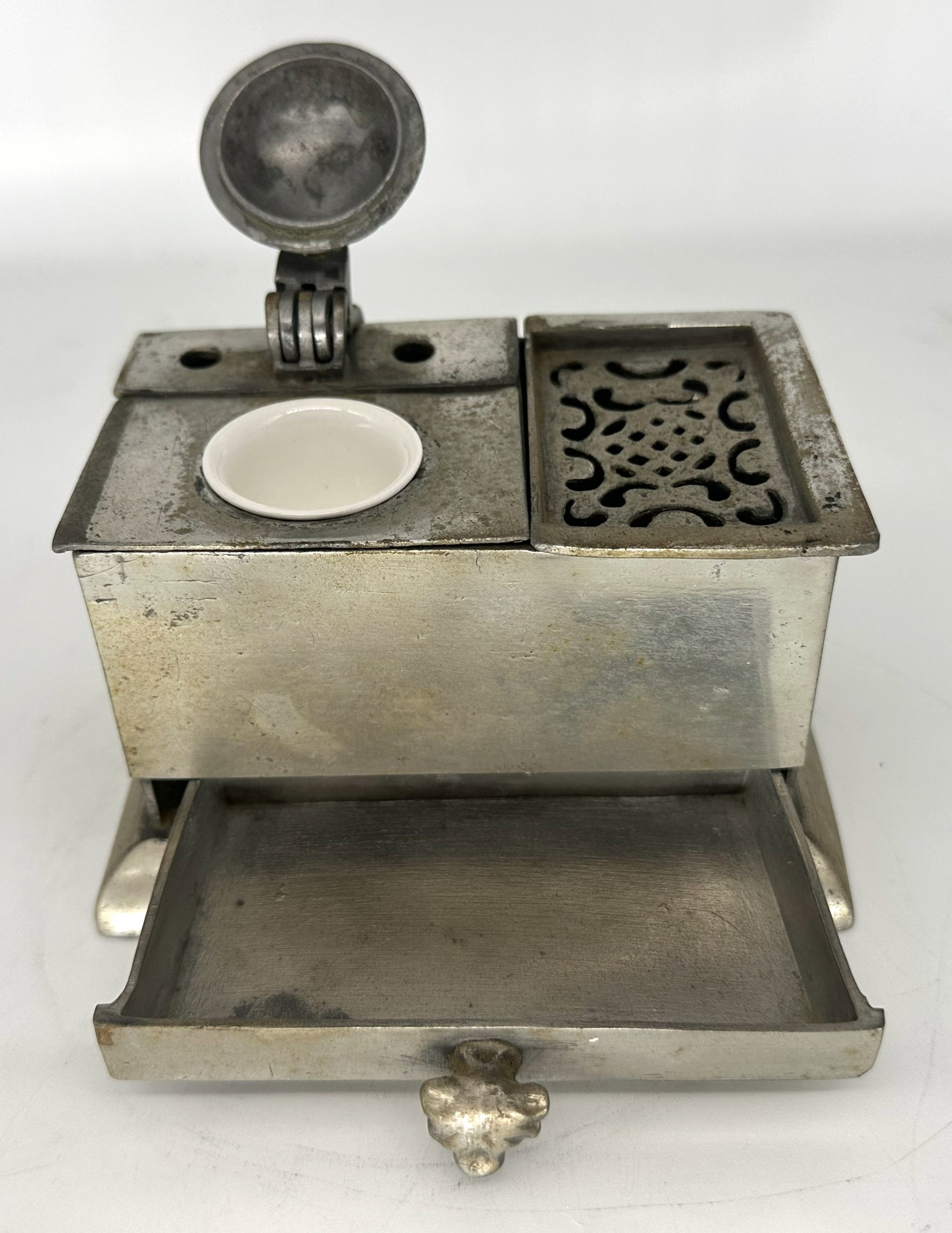
- Body & Form: The inkstand is constructed from pewter with a rectangular, box-like body and a flared, molded base. The patina shows a soft, oxidized grey typical of aged pewter.
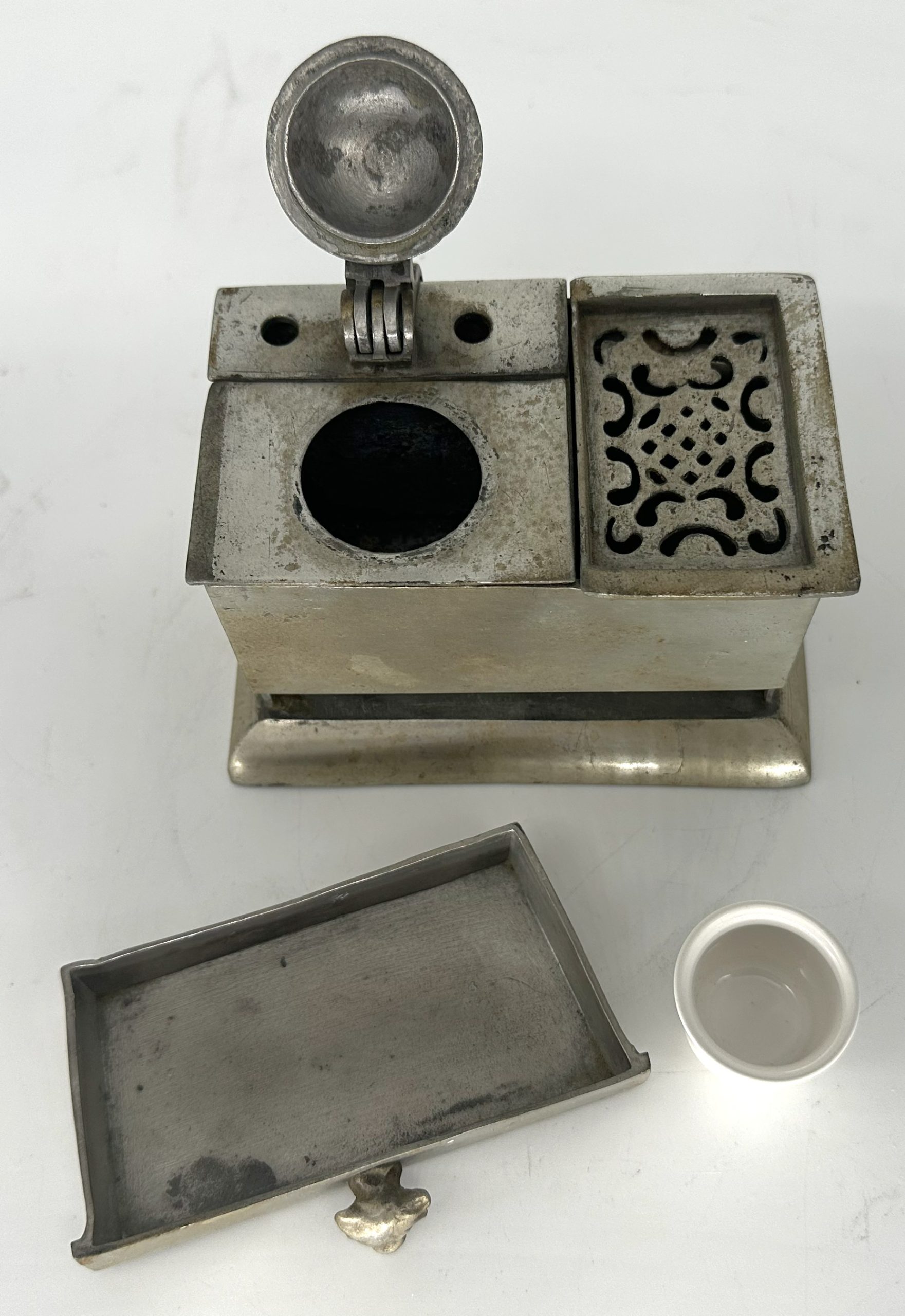
- Inkwell & Lid: On the left side of the top surface is the inkwell. It features a dome-shaped hinged lid with a small finial (knob). The hinge is equipped with a thumb-press lever (or thumb-piece), a feature often seen on high-quality pewter items of this period, allowing the writer to open the lid with one hand while holding a pen.
- Pen/Quill Holes: Behind the inkwell lid are two circular holes, designed to hold quill pens or dip pens upright when not in use.
- The Sander (Pounce Pot): On the right side is a removable rectangular container with a pierced (lattice-patterned) lid. This served as a “sander” or “pounce pot.” Before blotting paper became widespread in the mid-19th century, writers would shake fine sand or “pounce” (powdered gum or cuttlefish bone) through these holes onto wet ink to dry it quickly and prevent smudging.
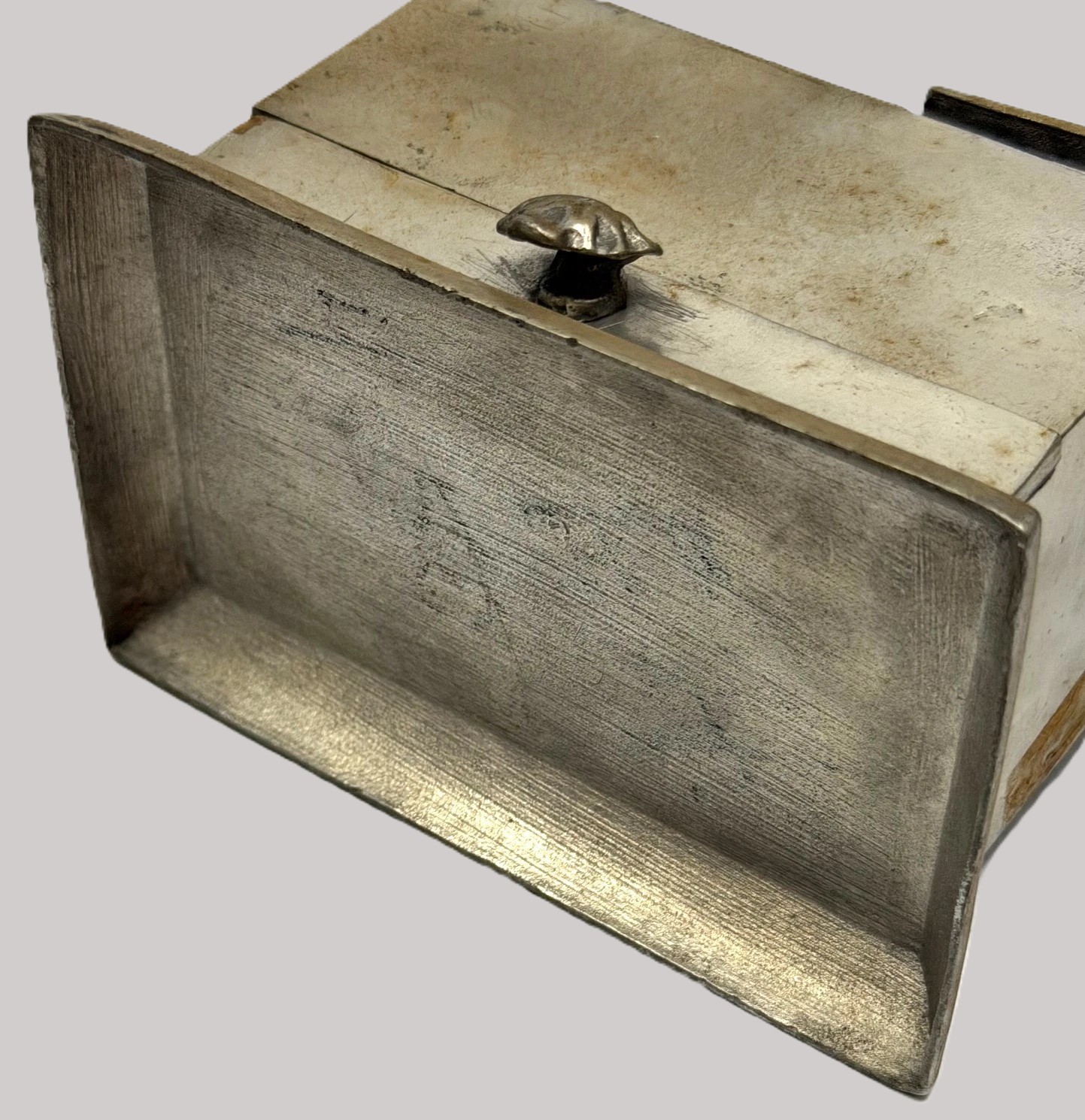
- Drawer: The base contains a full-width pull-out drawer with a decorative knob (in a stylized shell or floral motif). This drawer was used to store extra nibs, sealing wax, or other small desk accessories.
Estimated Age and Origin
- Age: The presence of the sander is the most definitive clue to its age. Sanders generally fell out of common use by the 1850s as blotting paper became more affordable and effective. The combination of the box-form design and the thumb-lever hinge points to the Late Georgian or Early Victorian era (c. 1810–1840).
- Origin: While unmarked, this style of “desk box” was a staple of both British (particularly Birmingham) and Northern European (Dutch or German) pewterers. The decorative pierced work on the sander and the specific scrolled shape of the thumb-lever are characteristic of English production from the early 19th century.
Markings
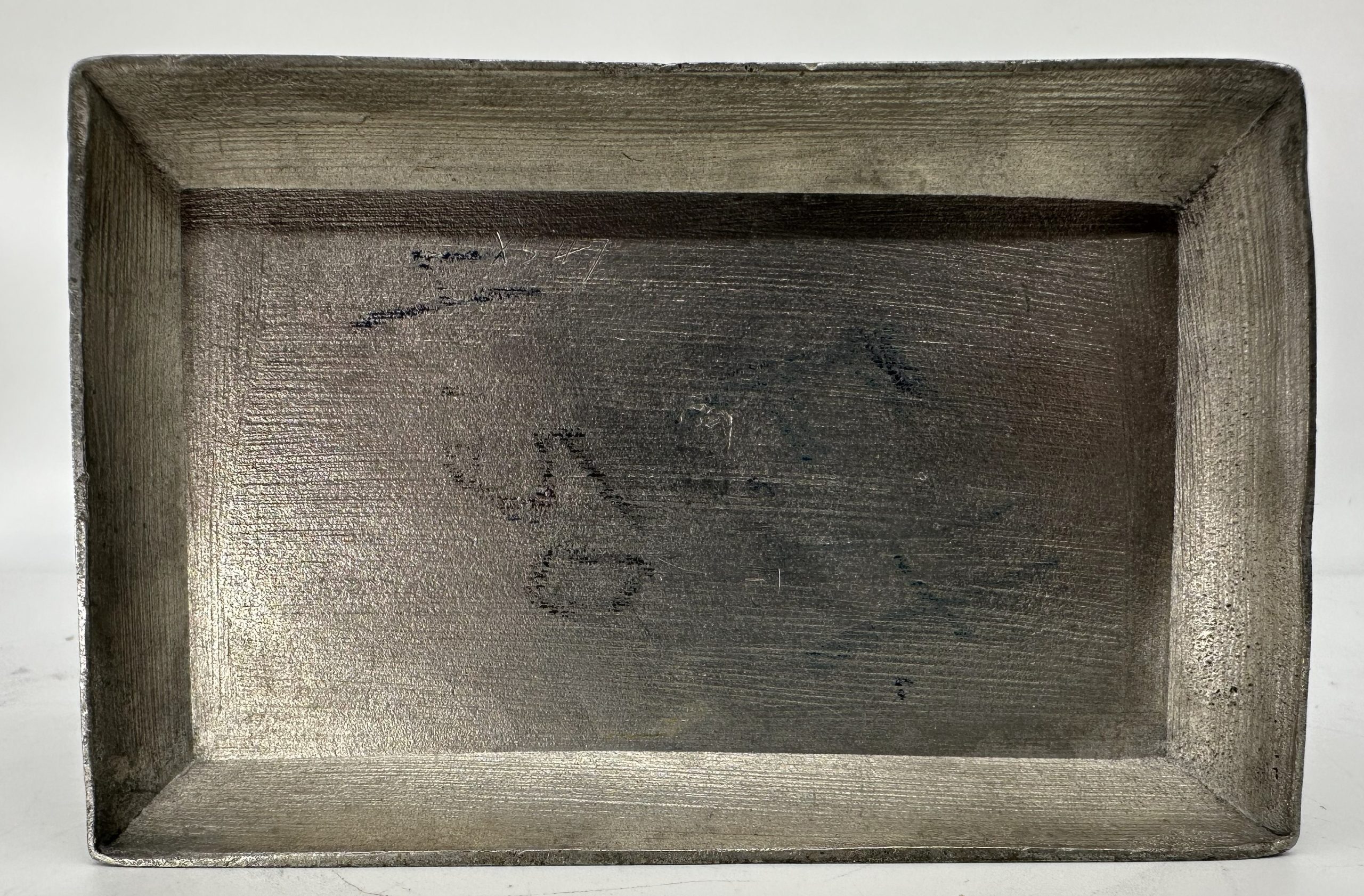
It is common for pewter pieces of this age to be unmarked. While master pewterers often used “touchmarks,” many utilitarian desk sets were either produced by smaller workshops or the marks have simply worn away from the soft metal over two centuries of use. The faint dark markings on the bottom of this piece (possibly numbers like “46” or “40”) are likely inventory marks or size indicators rather than maker’s hallmarks.
Use this link to see a similar pewter inkstand: Portuguese Pewter Inkstand – The Society of Inkwell Collectors (SOIC)
Estimated value: $125
Content disclaimer. The information posted is the owner’s best knowledge and may not have been vetted by the SOIC. We welcome comments, corrections, and additions, working to make our website information comprehensive and accurate.
Join the Society of Inkwell Collectors (SOIC) – it’s free!
Founded in 1981 as a non-profit organization,
we are documenting inkwells (and accessories).
We’re here to help and inform!