


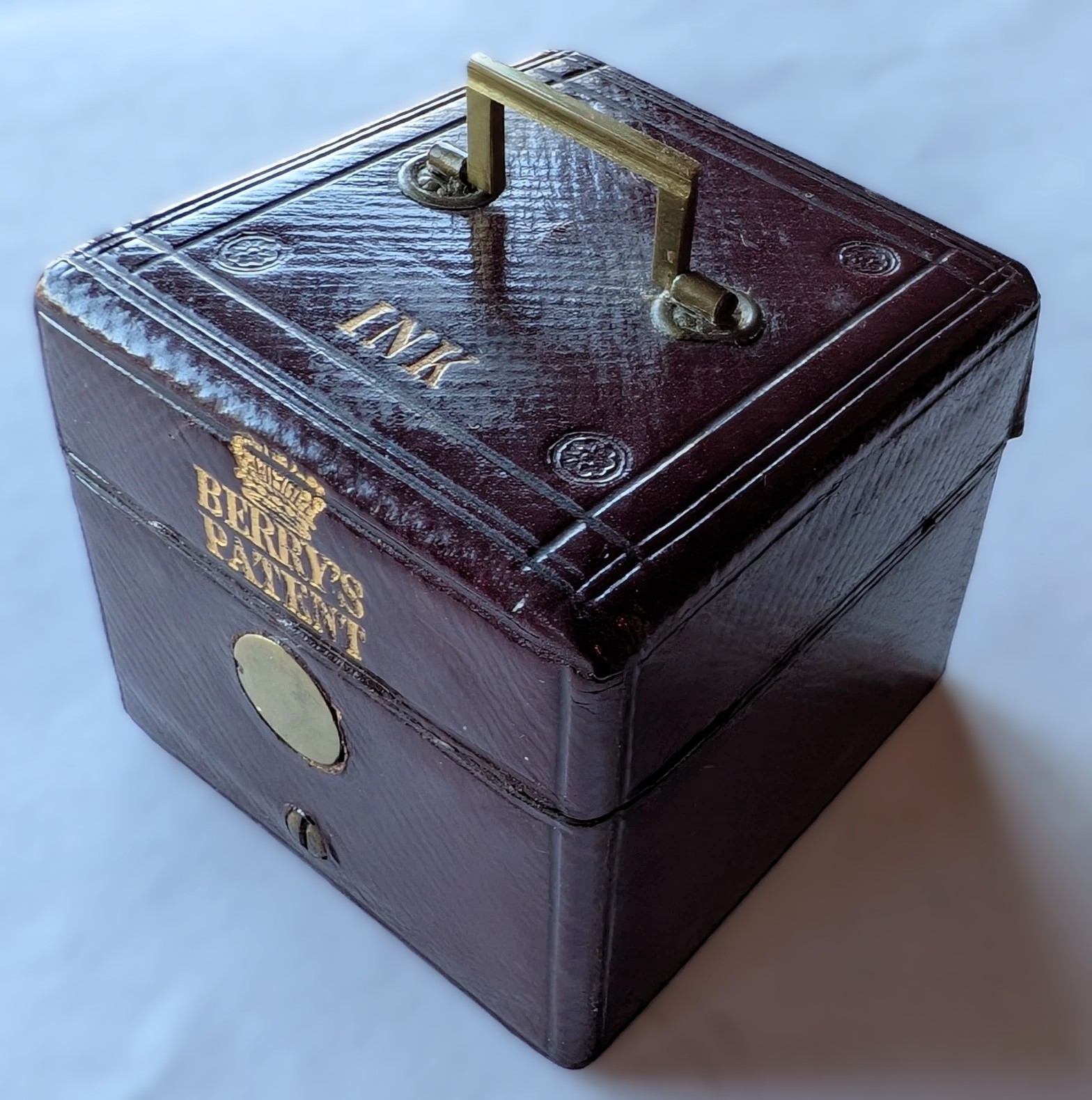
Traveling Inkwell – “Berry’s Patent”
| Categories | Travel |
| Material | Glass, Leather, Metal |
| Markings | See Narrative |
| Manufacturer | Undetermined |
| Origin | England |
| Date or Era | circa 1850 |
| Measuring | 1 ⅝” x 1 ⅝” x 1 ½” high |
| Patent | British Patent No. 8352 |
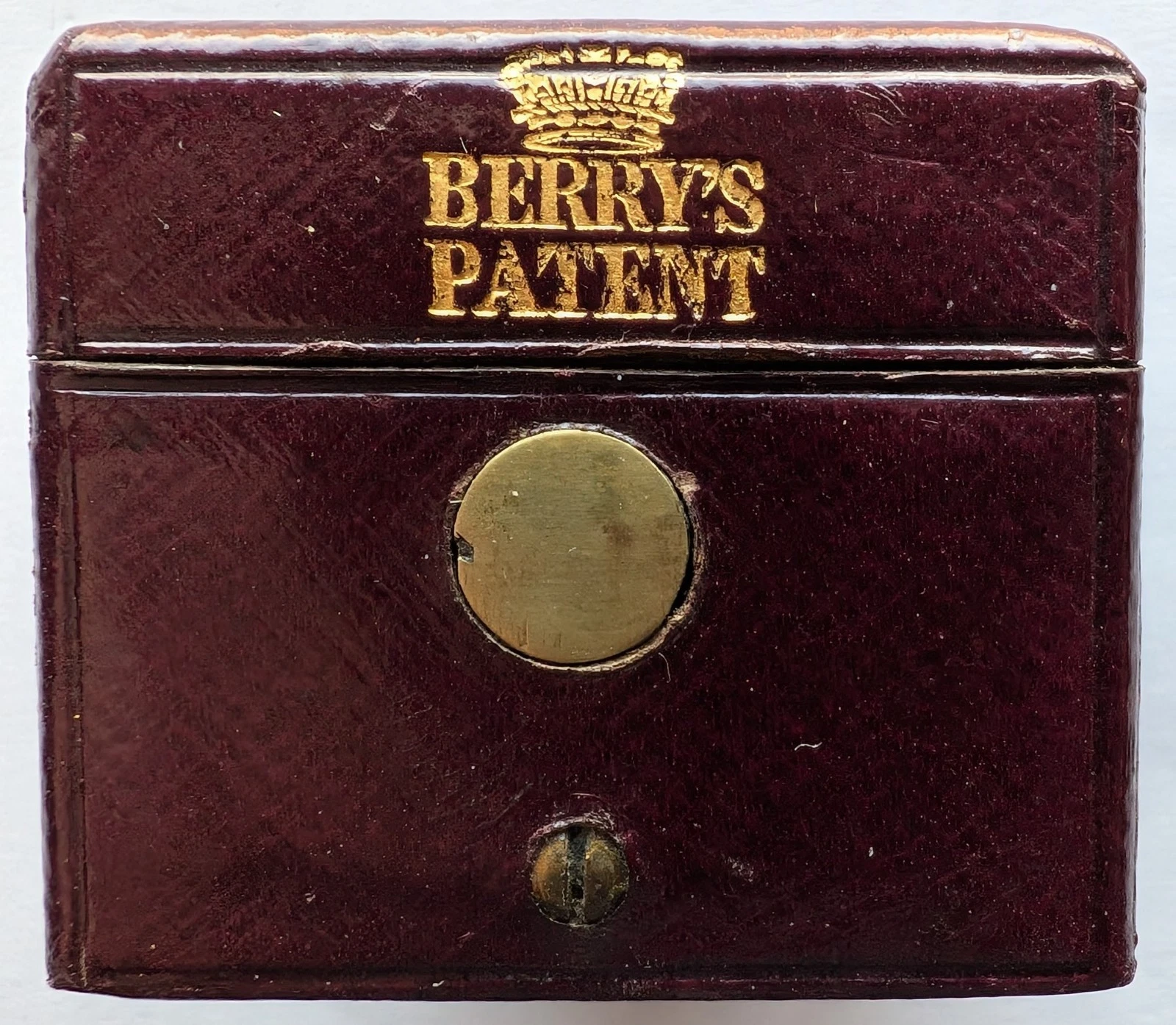
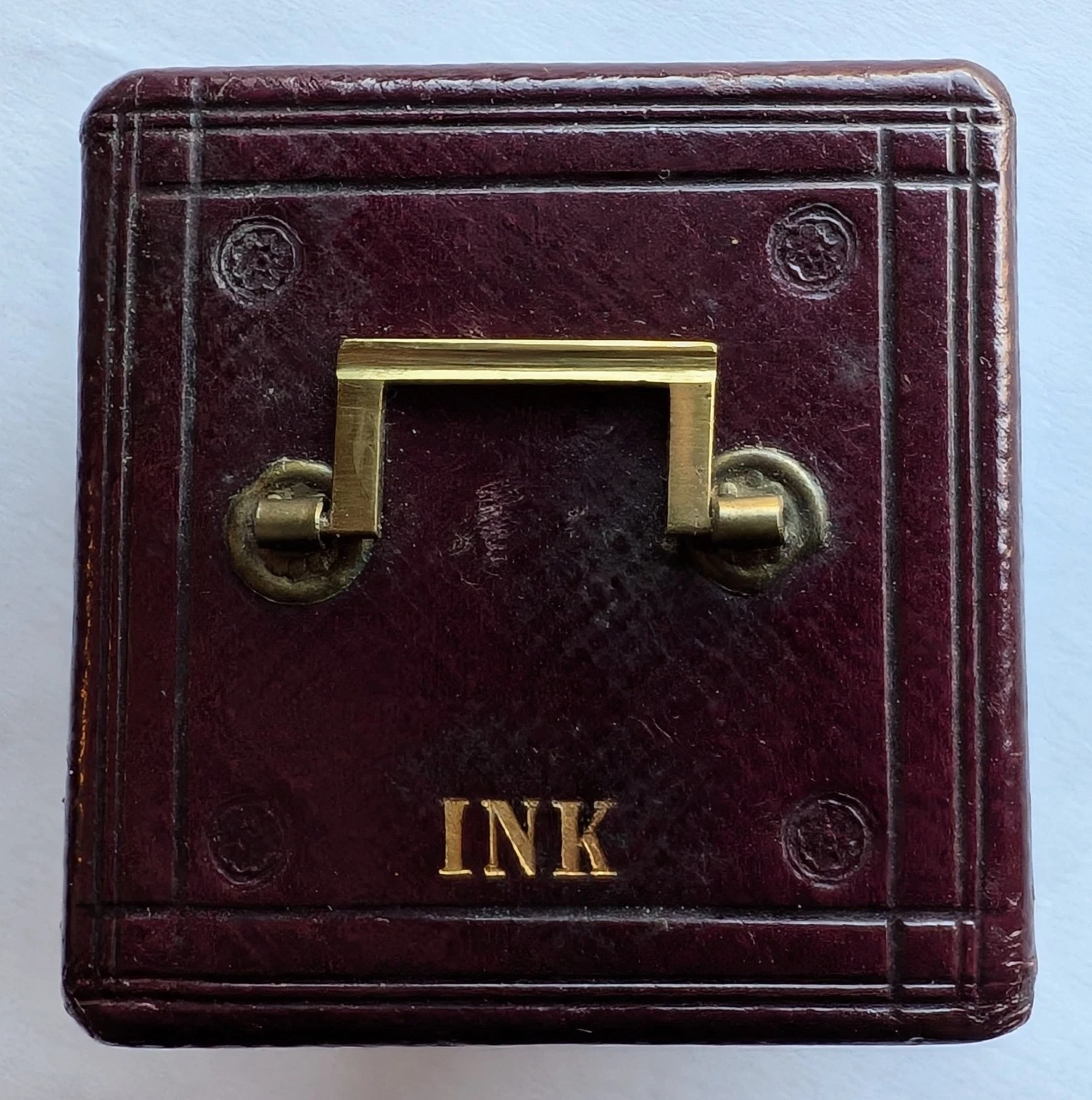
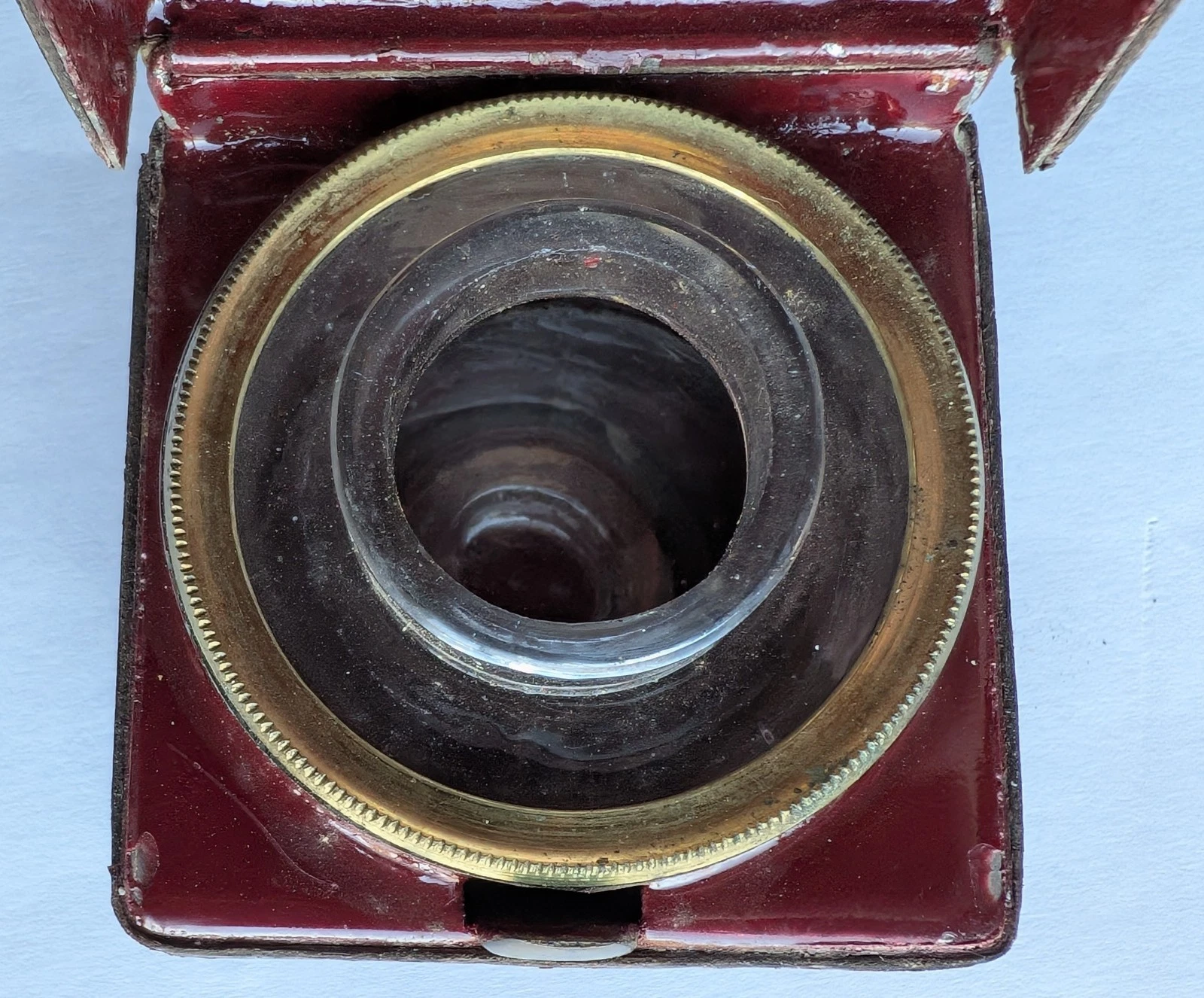
This is a beautiful example of a Victorian “Safety Inkwell” or traveling inkwell. These were essential for 19th-century travelers who needed to write letters or keep journals without the risk of ink leaking into their luggage.
The Maker and “Berry’s Patent”
The “Berry” referred to is James Berry, an Englishman who was a prolific inventor of stationery-related items in the mid-19th century.
- The Patent: The patent in question is likely British Patent No. 8352, granted in January 1840.
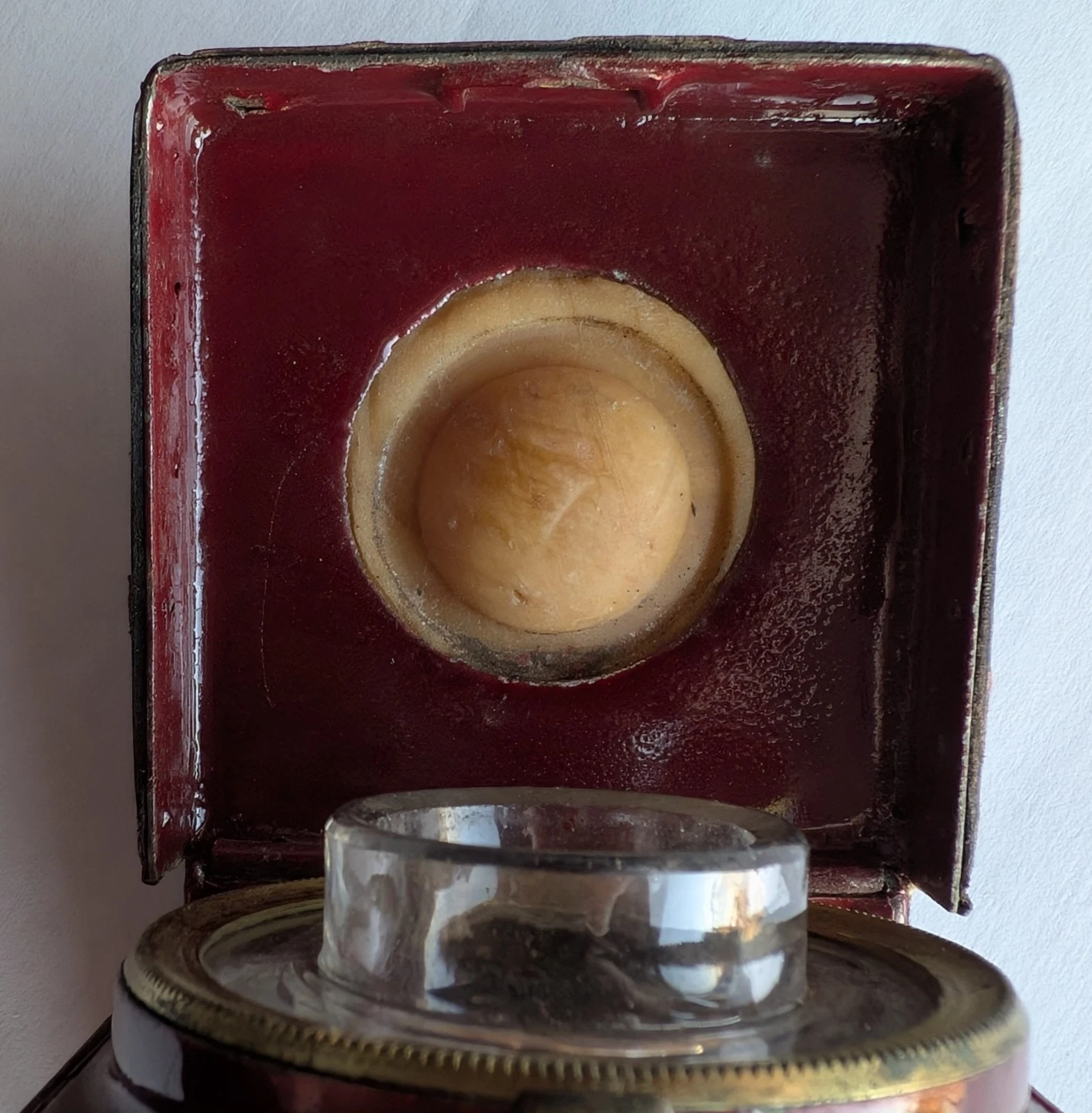
- What it means: The “Berry’s Patent” specifically refers to the spring-loaded, airtight sealing mechanism. If you look at the lid of this inkwell, you’ll notice that cushioned pad (leather-covered, though backed by cork or rubber). The patent design used a strong spring hinge that forced the lid downward with significant pressure against the glass rim of the ink bottle.
- Safety Feature: This “safety” design ensured that even if the box was turned upside down in a trunk or bounced around on a carriage, the ink would remain sealed inside the glass vial.
Date of Manufacture
Based on the style, materials, and the patent history, this inkwell was likely manufactured between 1840 and 1860.
The use of Japanned red lacquer on the interior was a popular decorative and protective finish during the mid-Victorian era. It mimicked expensive East Asian lacquerware and provided a durable, ink-resistant surface for the metal casing.
The Crown Insignia
The gold-embossed crown above “Berry’s Patent” is a Royal Warrant or a “by appointment” style mark.
- While it doesn’t necessarily mean the Queen herself used this specific inkwell, it indicates that the maker (or the retailer who commissioned it) held a Royal Warrant to supply goods to the British Royal Household.
- In the Victorian era, displaying the crown was a powerful marketing tool, signaling to the public that the product was of the highest quality and “fit for a monarch.”
Technical Specifications & Materials
- Case Construction: The core is metal (likely brass or tin-plated steel) to provide the rigidity needed for the spring mechanism.
- Exterior: Covered in Morocco leather (goatskin), which was prized for its durability and ability to take fine gold embossing.
- The Catch: The circular brass button on the front is a classic “push-button” spring catch.
Sold for $153 in January 2026
Content disclaimer. The information posted is the owner’s best knowledge and may not have been vetted by the SOIC. We welcome comments, corrections, and additions, working to make our website information comprehensive and accurate.
Join the Society of Inkwell Collectors (SOIC) – it’s free!
Founded in 1981 as a non-profit organization,
we are documenting inkwells (and accessories).
We’re here to help and inform!