





Bronze Hunting Dog Inkstand
| Categories | Figural - Animals & Living Creatures |
| Type | dog |
| Material | Bronze |
| Markings | Unmarked |
| Manufacturer | Undetermined |
| Origin | France |
| Date or Era | circa 1870 |
| Measuring | 3 ¾” x 2 ⅝” x 3 ½” high |
This is a detailed French animalier bronze inkstand from the mid-to-late 19th century. The piece is a classic example of the Animalier school, which gained immense popularity in France during this period, led by masters like Antoine-Louis Barye and Pierre-Jules Mène.
Description
The Figural Lid
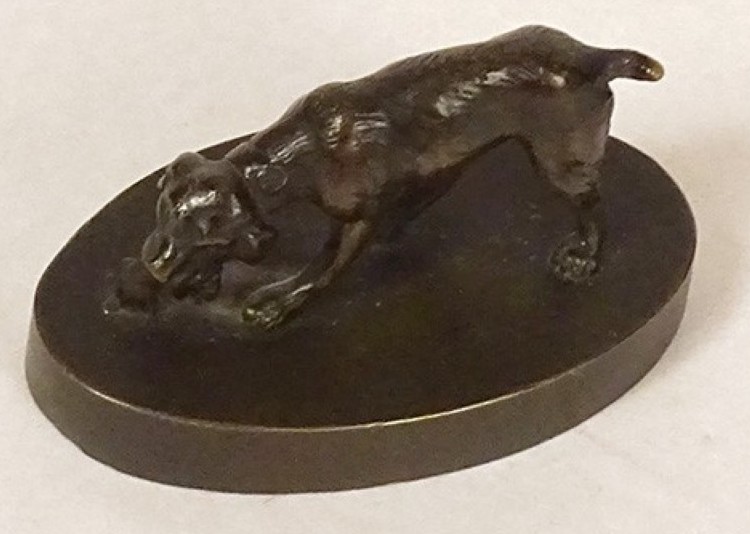
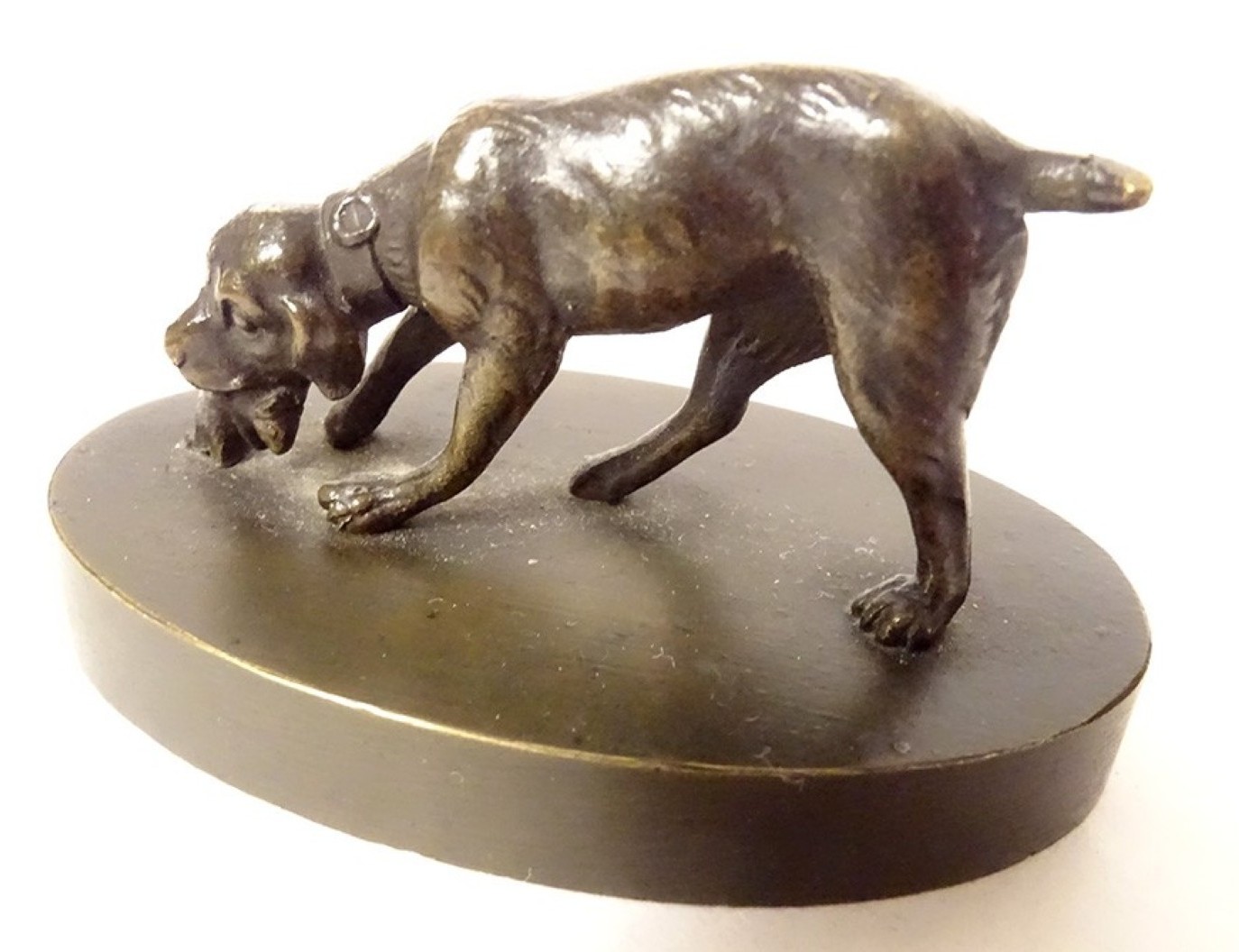
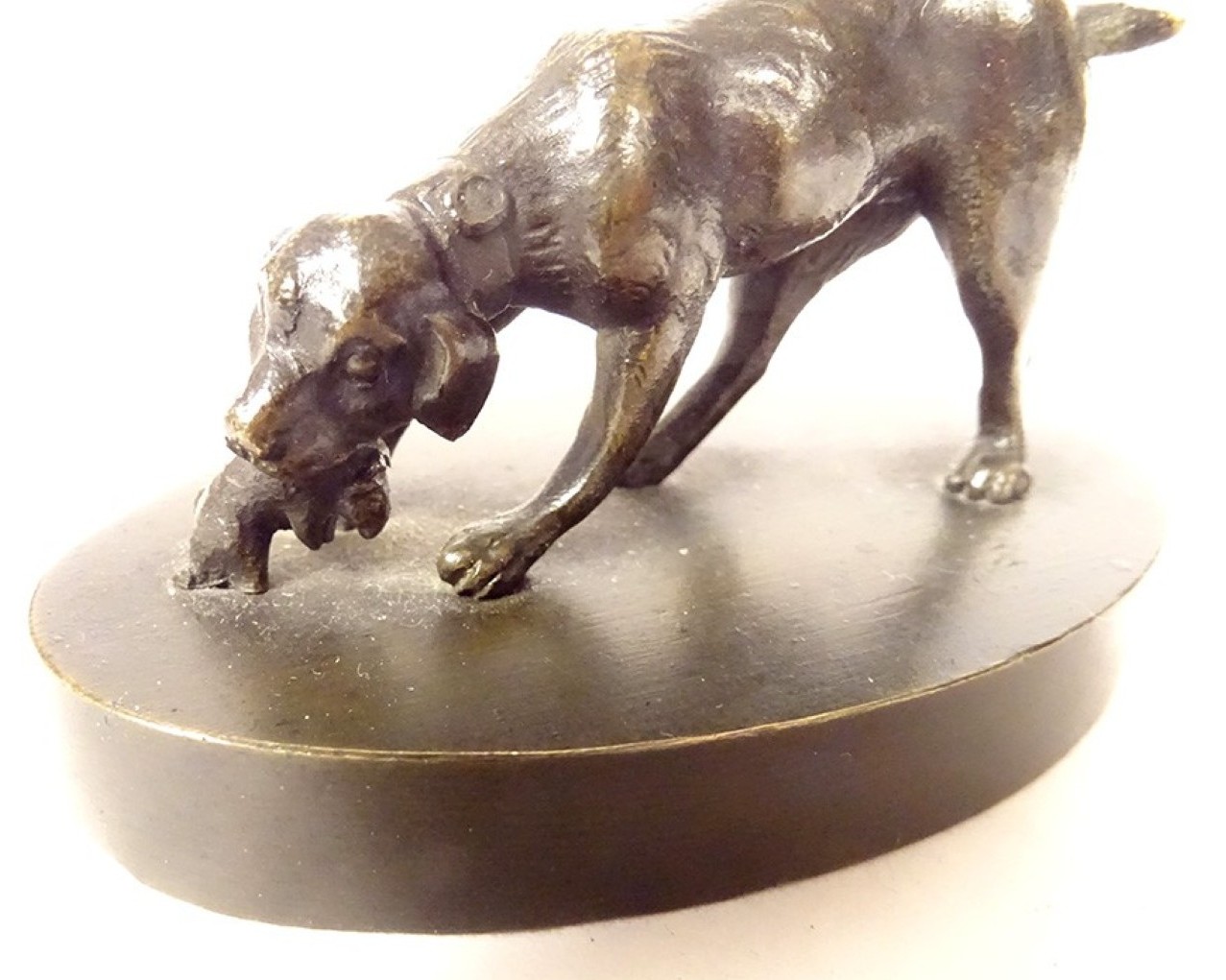
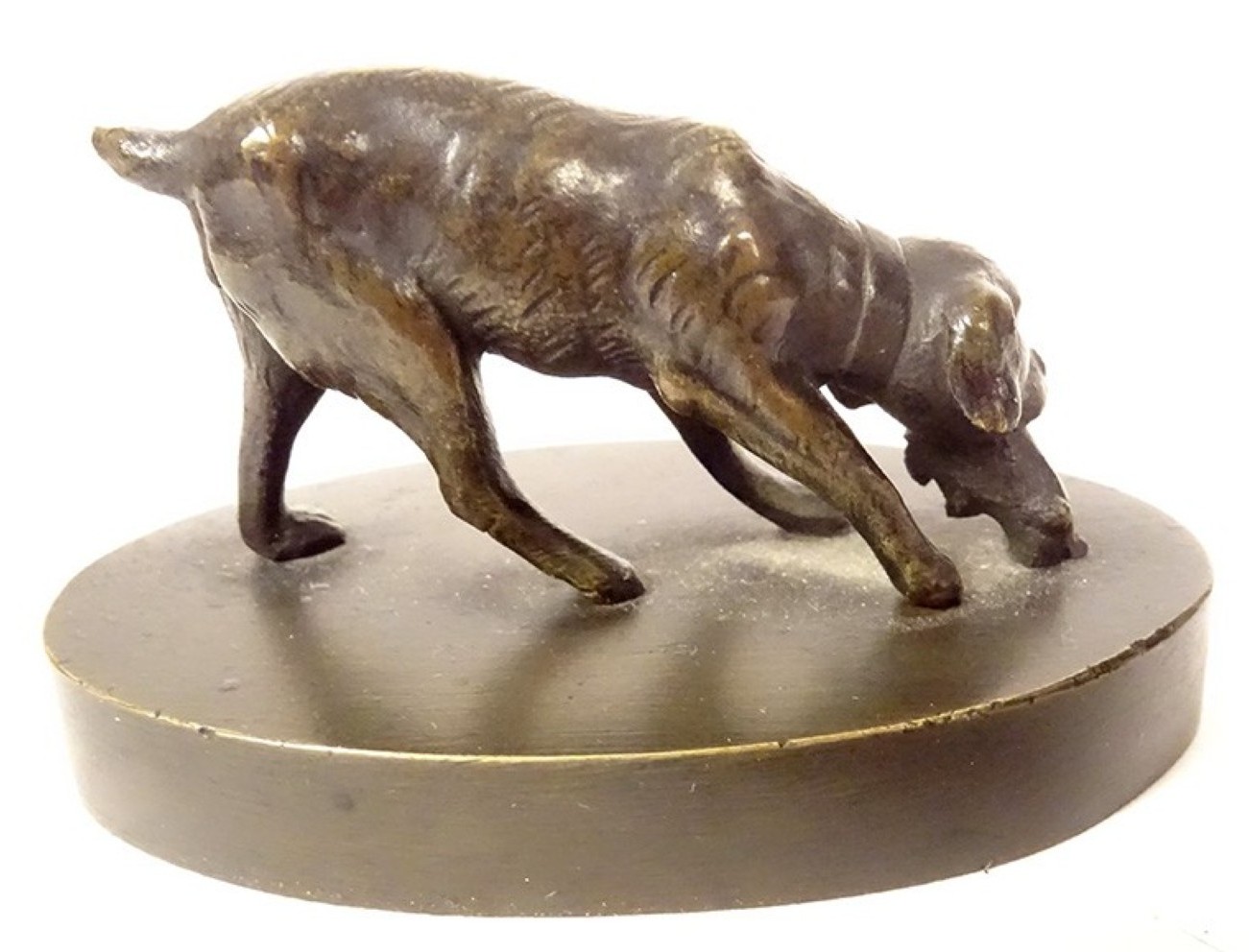
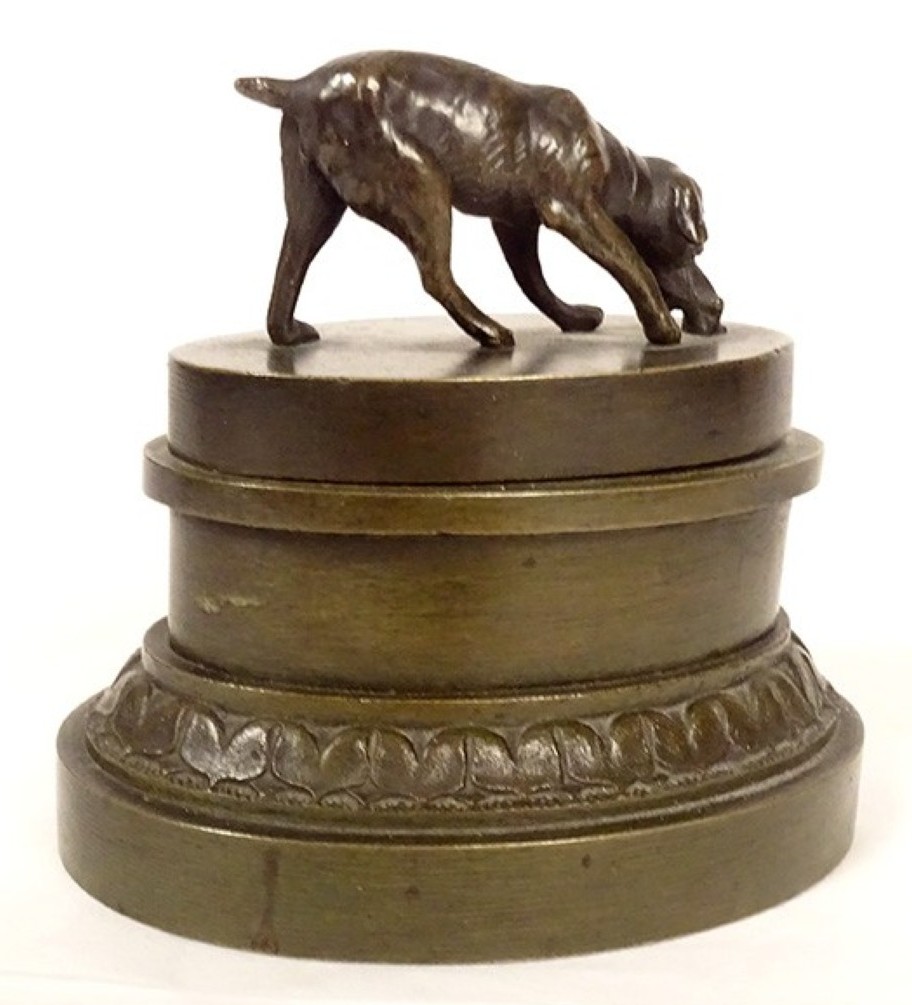
The centerpiece of the inkwell is the exceptionally cast bronze lid. It features a hunting dog, likely a pointer or a setter, in a dynamic, low-slung hunting pose. The dog has a hare or small game animal firmly in its mouth.
- Detailing: Note the realistic rendering of the dog’s muscular structure, the fine texture of its coat, and the collar around its neck.
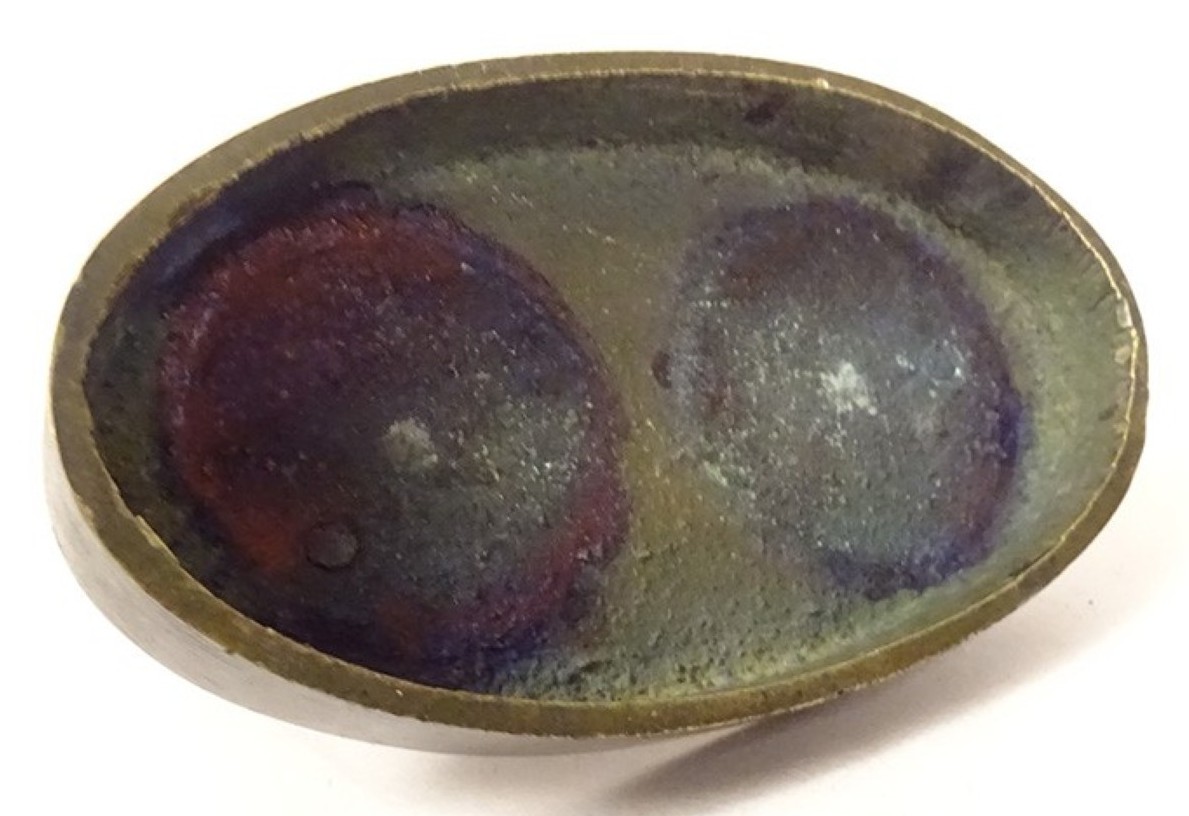
- Function: The entire oval top serves as a lift-off lid, providing access to the internal compartments.
The Base and Interior
The base is an elegant, multi-tiered oval form with a warm, aged bronze patina.
- Ornamentation: The lower tier of the base is decorated with a continuous embossed foliate border.
- The Compartments: Removing the lid reveals two circular wells.
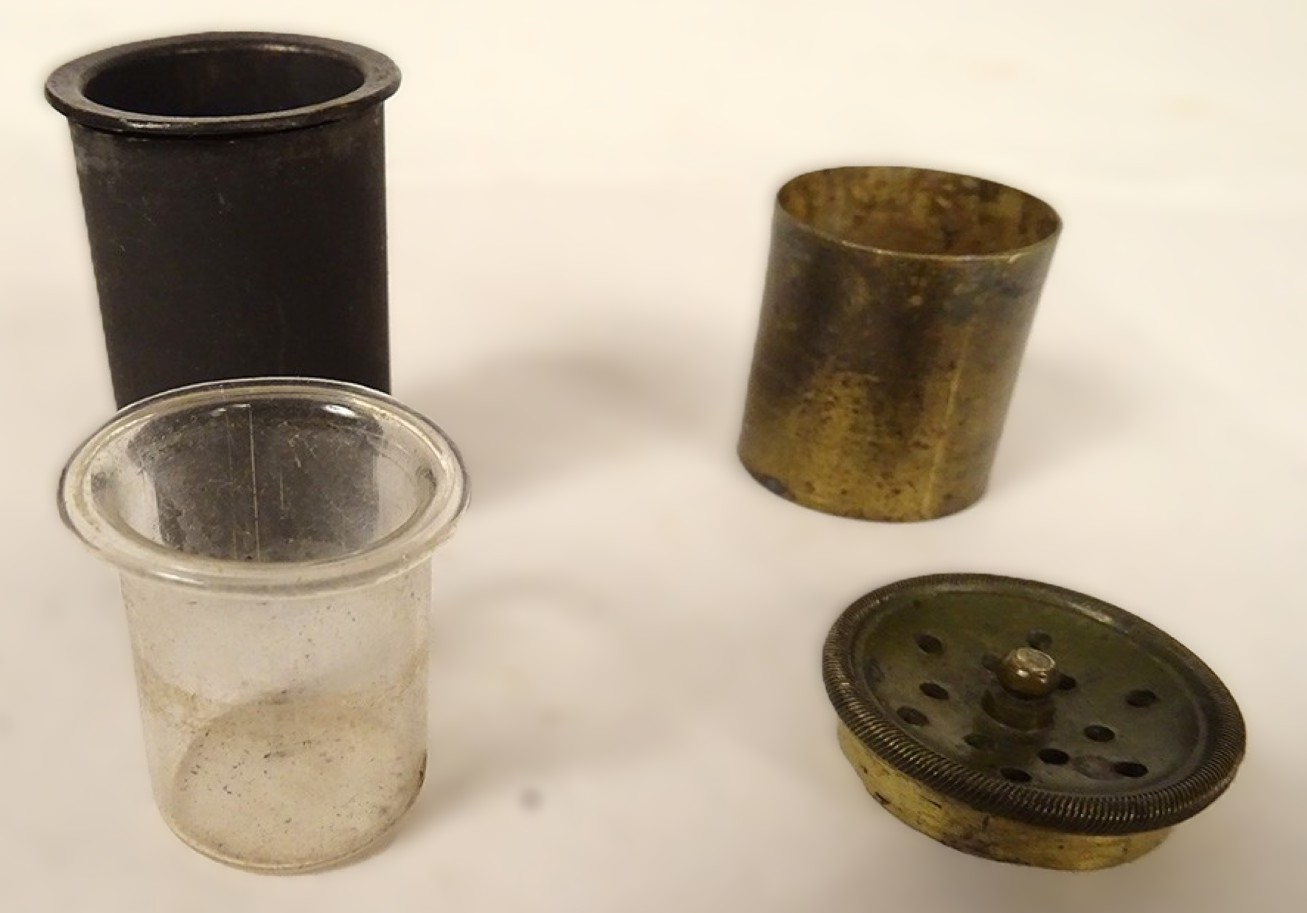
- The Inkwell: One well contains a removable clear glass liner to hold the ink.
- The Sander (Pounce Pot): The second well contains a brass insert with a perforated, domed lid. Before the invention of blotting paper, this would have held “pounce”—a fine powder used to dry ink and prepare the surface of the paper.
Origin and Dating
While there are no marks, the style, casting quality, and internal configuration provide some clues:
- Age: This piece most likely dates to between 1860 and 1880. The presence of a sander (rather than a second inkwell) suggests a mid-century date, as sanders began to disappear from desk sets in the latter part of the 19th century when blotting paper became standard.
- Origin: The “Animalier” hunting theme is quintessential French. Similar designs were produced by Parisian foundries such as F. Barbedienne or Susse Frères, though many high-quality pieces were produced by smaller ateliers without permanent signatures.
The fact that the sculpture on top is a “lift-off” lid rather than a hinged one is also a characteristic of earlier 19th-century designs.
Sold for $375 in January 2026
Content disclaimer. The information posted is the owner’s best knowledge and may not have been vetted by the SOIC. We welcome comments, corrections, and additions, working to make our website information comprehensive and accurate.
Join the Society of Inkwell Collectors (SOIC) – it’s free!
Founded in 1981 as a non-profit organization,
we are documenting inkwells (and accessories).
We’re here to help and inform!