


German Shepherd Inkstand
| Categories | Art Deco, Figural - Animals & Living Creatures |
| Type | dog |
| Material | Alabaster, Metal |
| Markings | See Narrative |
| Manufacturer | Undetermined |
| Origin | France |
| Date or Era | circa 1930 |
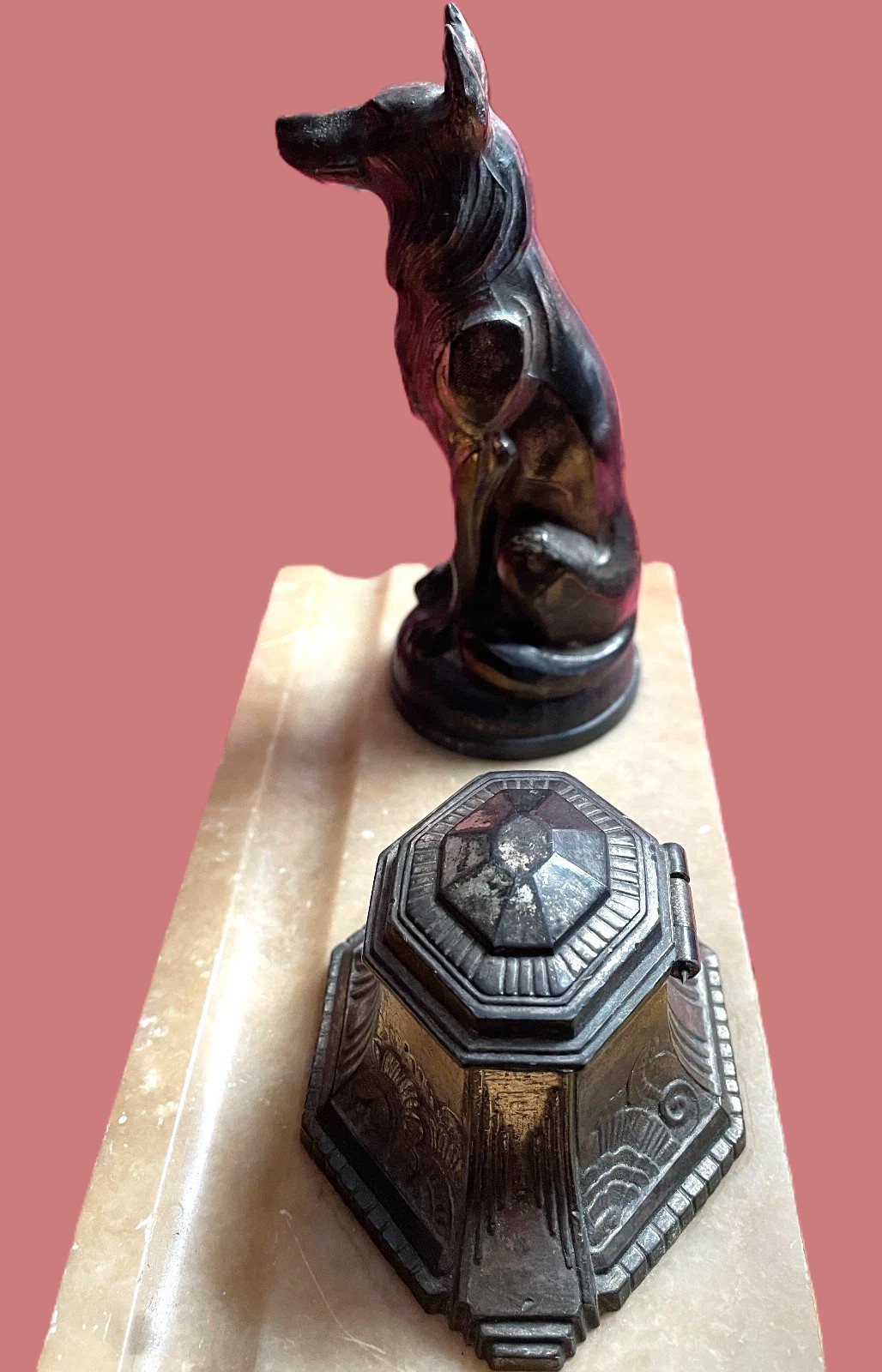
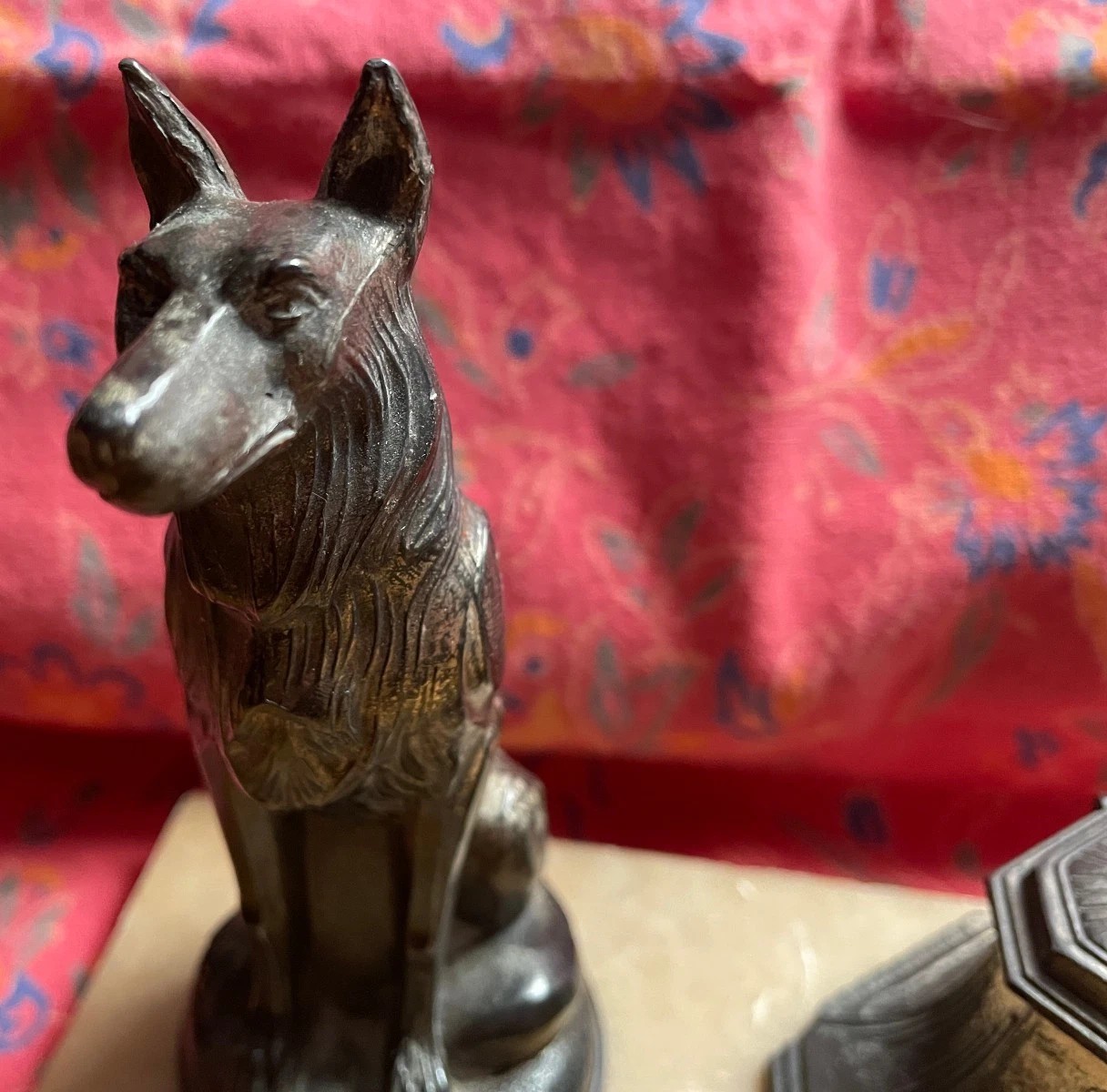
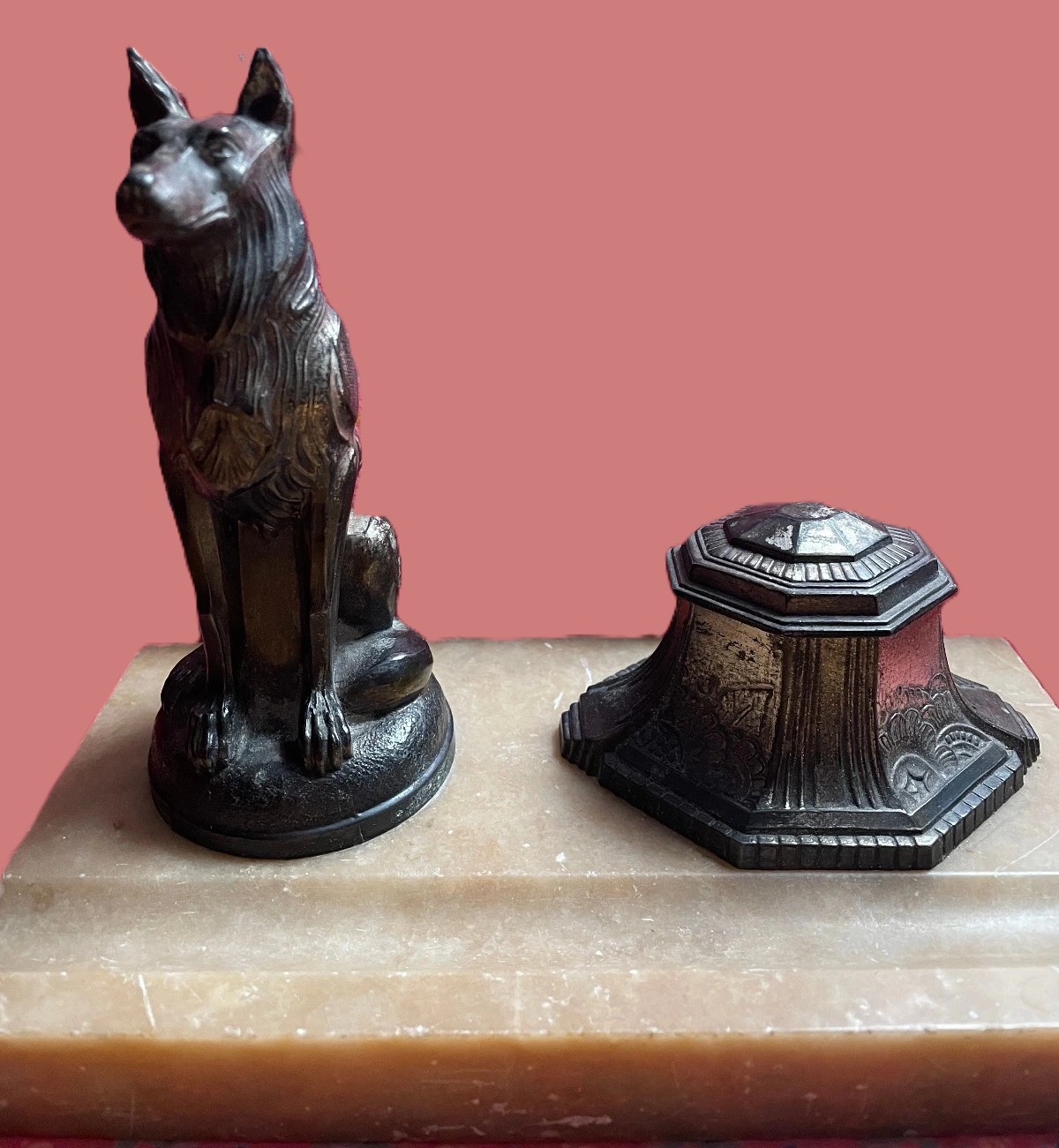
This is an Art Deco period inkstand featuring a seated German Shepherd (or Alsatian) and a geometric inkwell, mounted on an alabaster base with pen channel.
Description
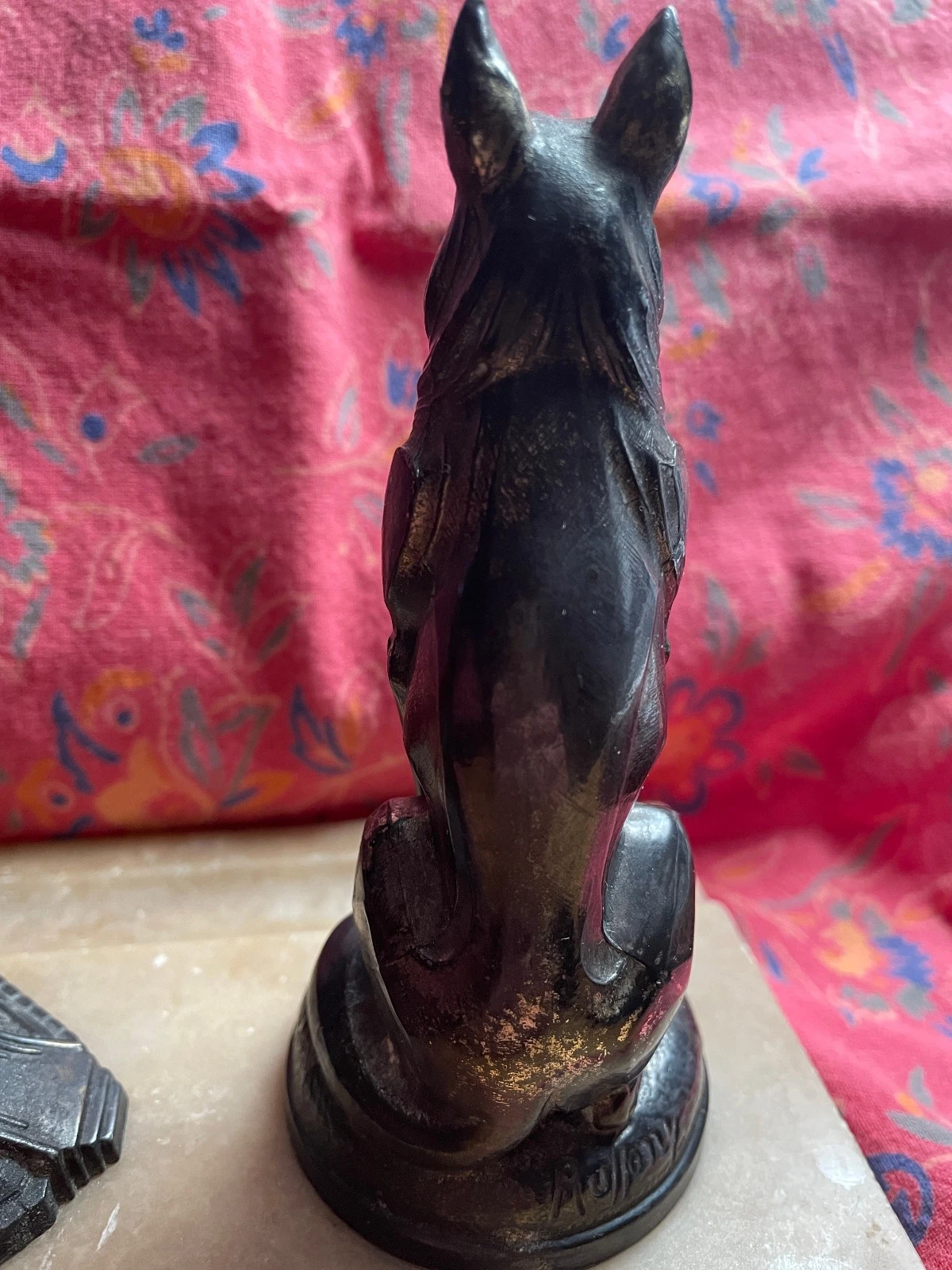
- The Figure: The central focus is a spelter (white metal) figure of a German Shepherd in an attentive, seated pose. The casting is detailed, capturing the texture of the fur and the alert expression of the breed.
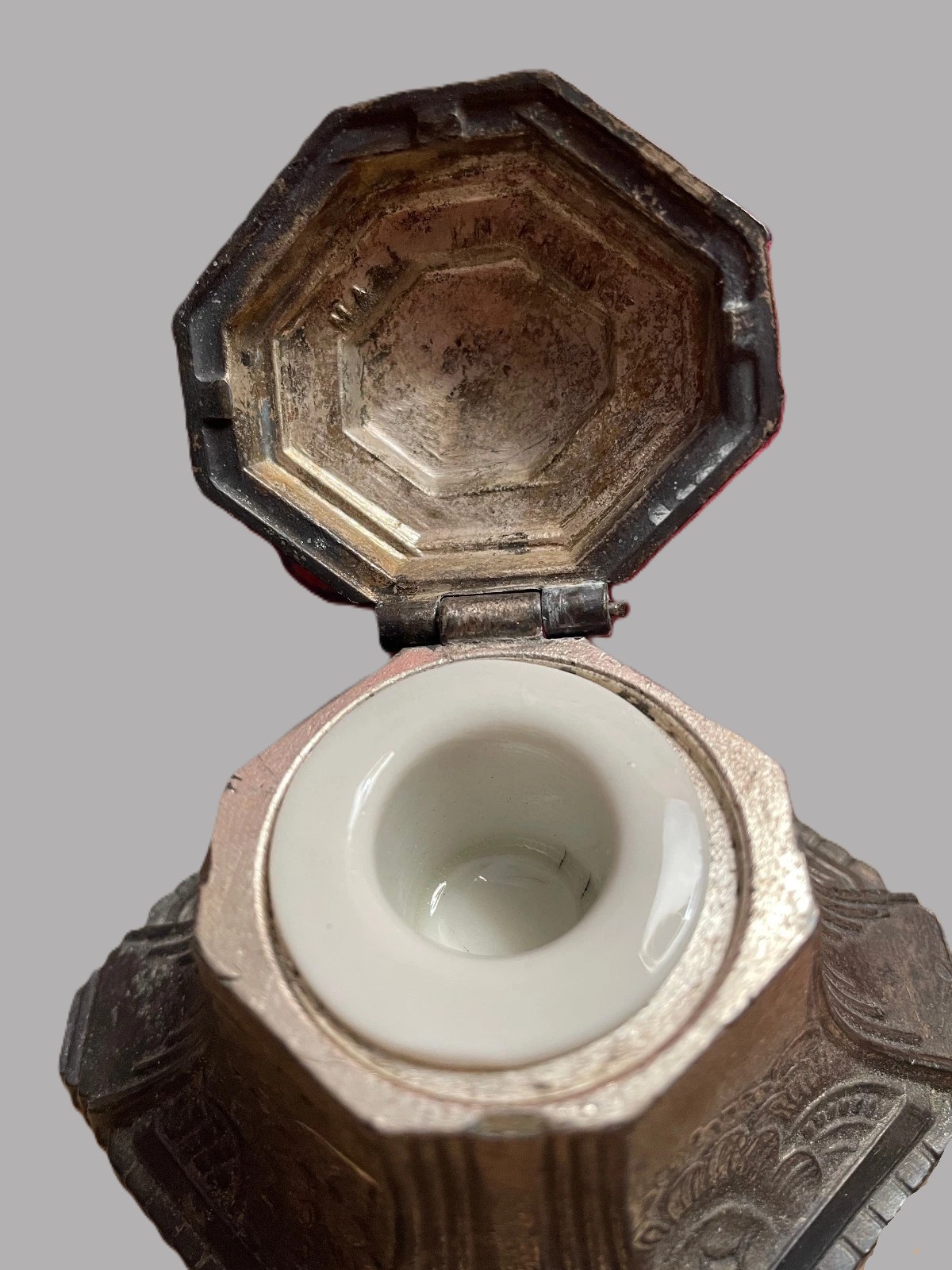
- The Inkwell: To the right of the dog is an octagonal, architectural-style inkwell. It features Art Deco stylized fan or sunburst motifs embossed around the base. The hinged lid opens to reveal a removable white porcelain insert.
- The Base: The components are mounted on a thick, alabaster base. The front of the base features a “pen groove”, designed to hold a dip pen when not in use.
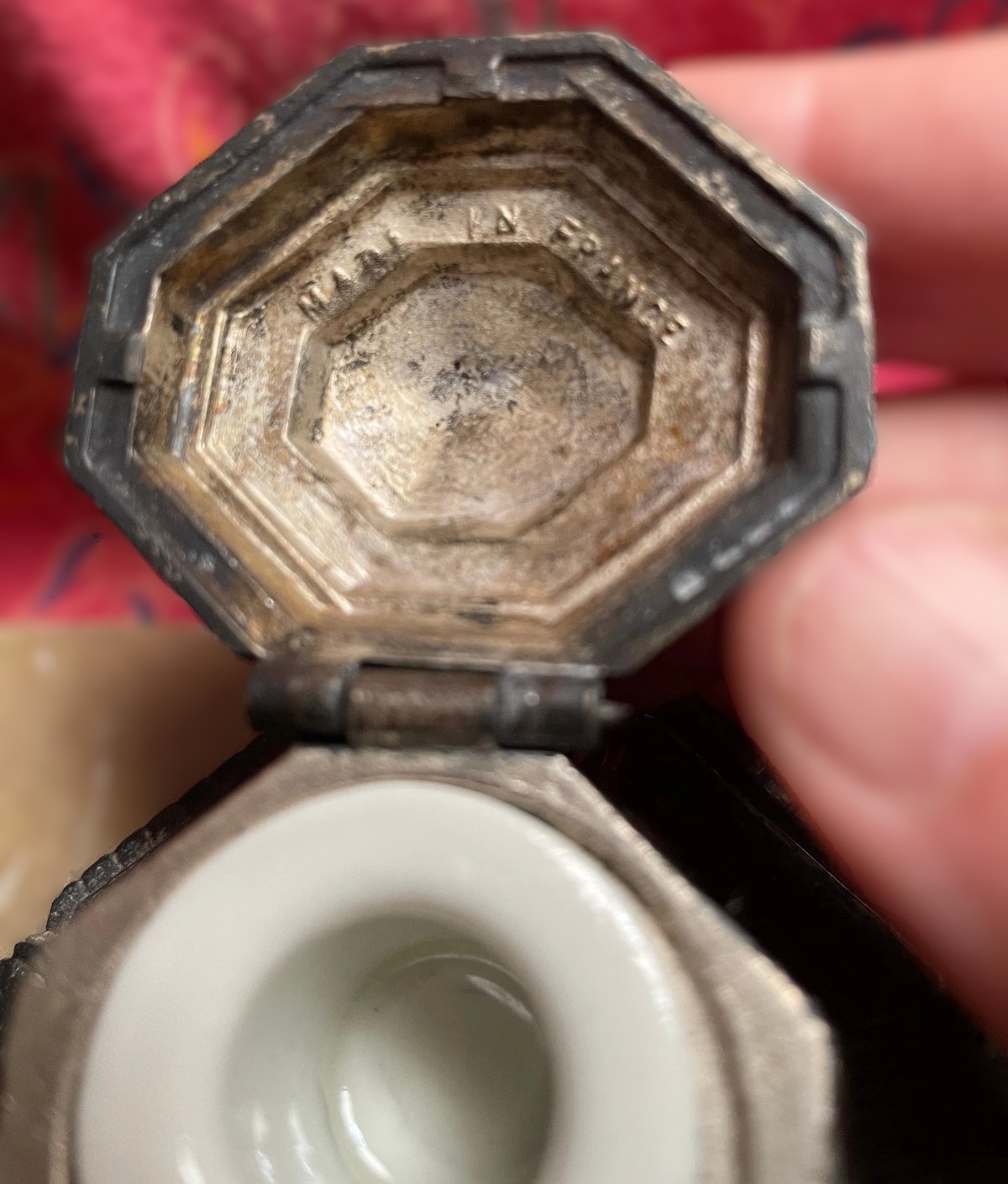
- The Markings: The underside of the lid is stamped “MADE IN FRANCE,” and there appears to be a faint signature on the back of the dog’s circular base (Mulloy?).
Origin and Dating
Based on the style, materials, and markings, this inkstand was most likely produced in the late 1920s to the mid-1930s.
- The Art Deco Influence: The octagonal shape of the inkwell and the stylized geometric patterns on its base are hallmarks of the Art Deco movement, which peaked during this timeframe.
- The French Connection: During the interwar period, France (specifically Paris) was the epicenter for high-quality decorative “animalier” (animal-themed) desk sets. Manufacturers like Max Le Verrier or Marcel Guillard popularized these spelter figures on marble or onyx bases.
- Subject Matter: The German Shepherd became immensely popular as a “hero dog” during and after WWI (notably with the rise of Rin Tin Tin in the 1920s), making it a frequent subject for decorative arts of that era.
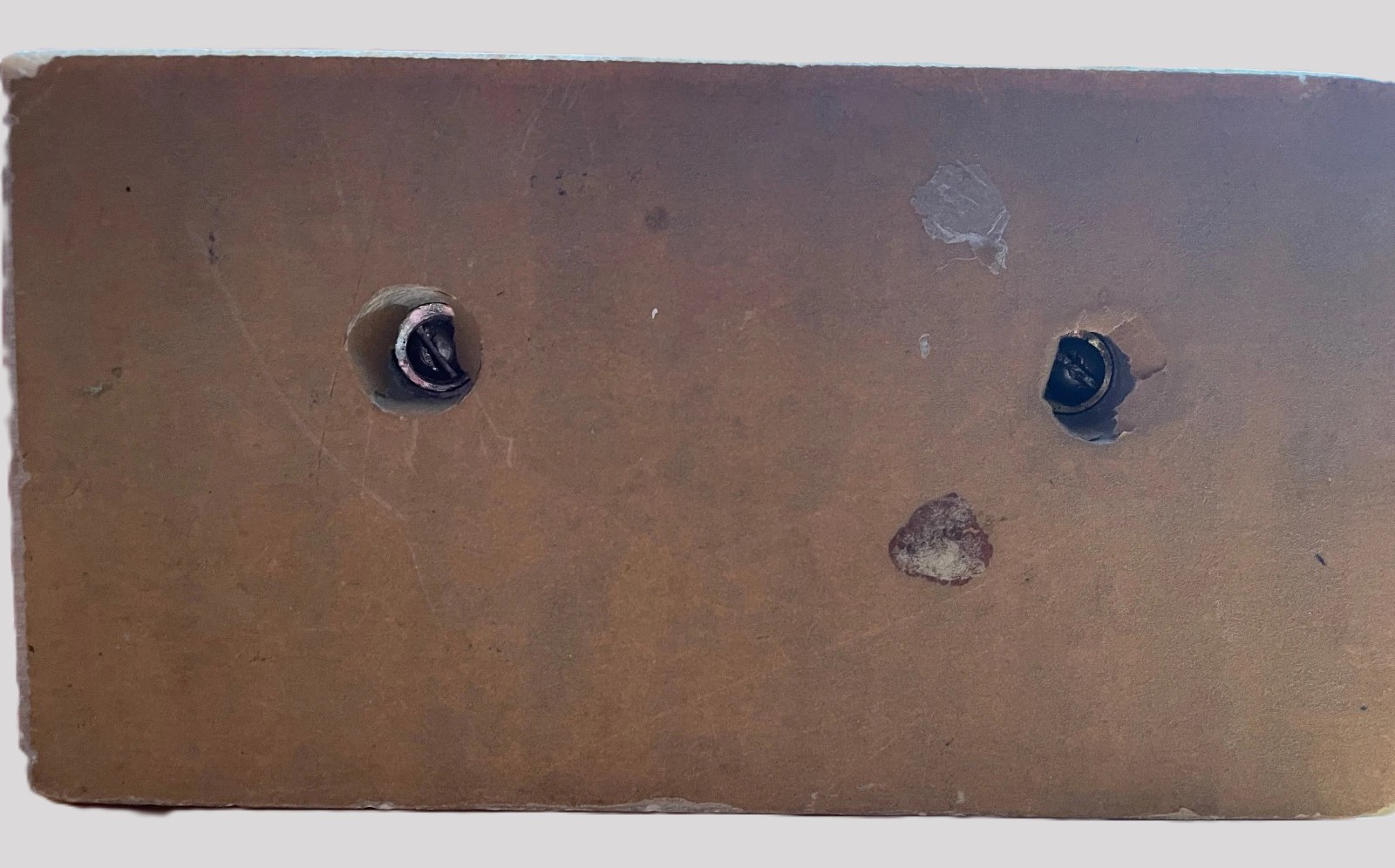
- Construction: The use of slotted screws on the underside to secure the figures to the heavy stone base is consistent with manufacturing techniques from the early-to-mid 20th century.
Historical Note
The “Made in France” mark in English was a common requirement for items intended for export to English-speaking markets, particularly the United States and Great Britain, following the McKinley Tariff Act and subsequent trade agreements that required country-of-origin markings.
Sold for $162 in December 2025
Content disclaimer. The information posted is the owner’s best knowledge and may not have been vetted by the SOIC. We welcome comments, corrections, and additions, working to make our website information comprehensive and accurate.
Join the Society of Inkwell Collectors (SOIC) – it’s free!
Founded in 1981 as a non-profit organization,
we are documenting inkwells (and accessories).
We’re here to help and inform!