


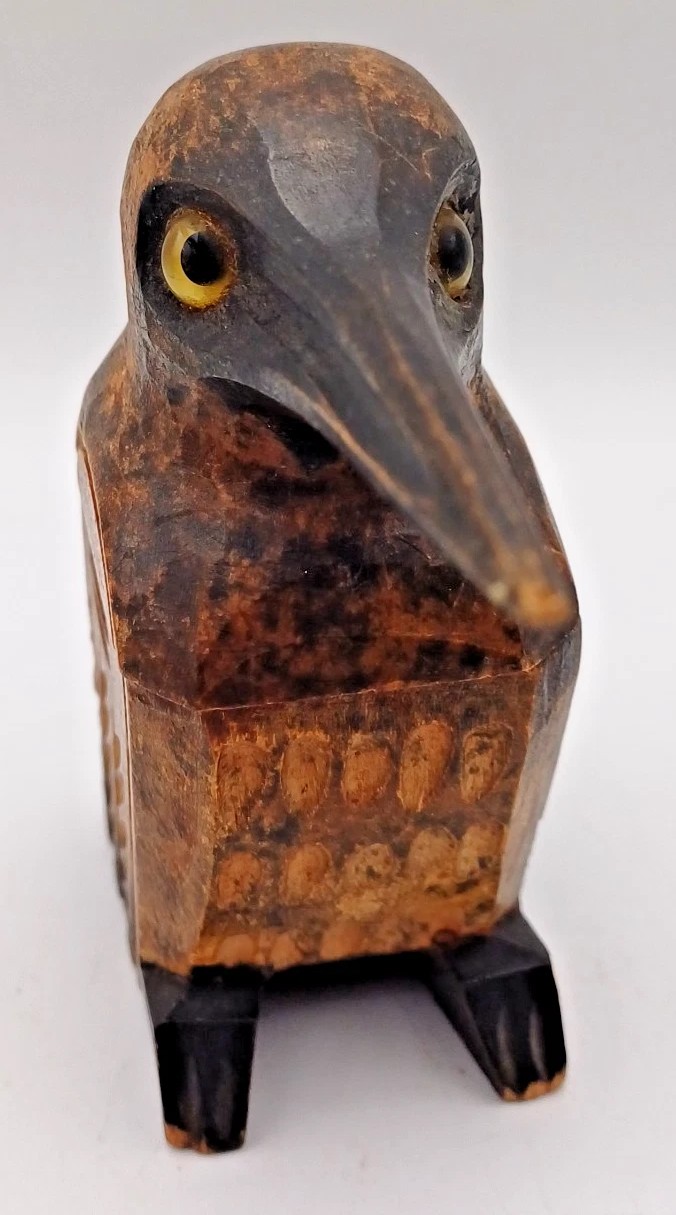
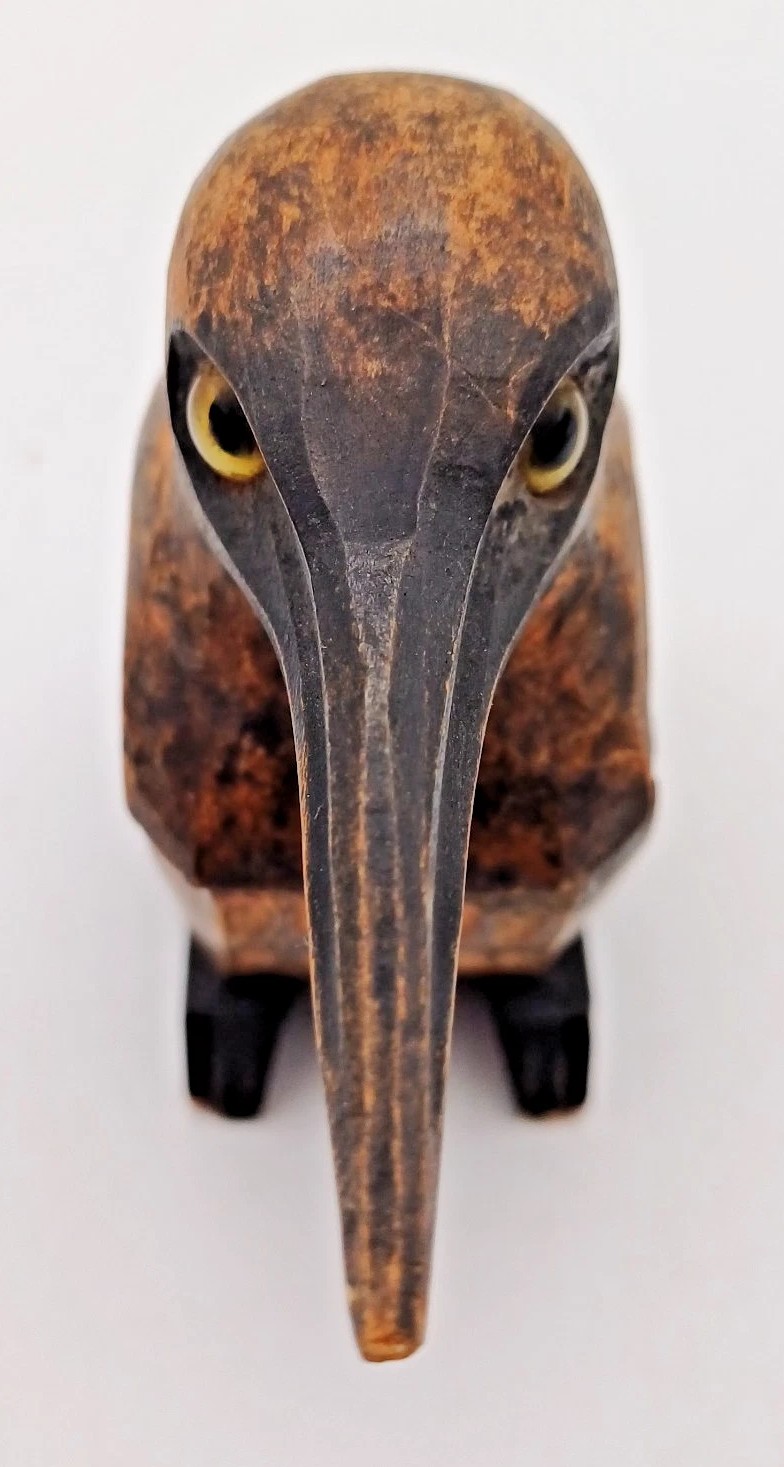
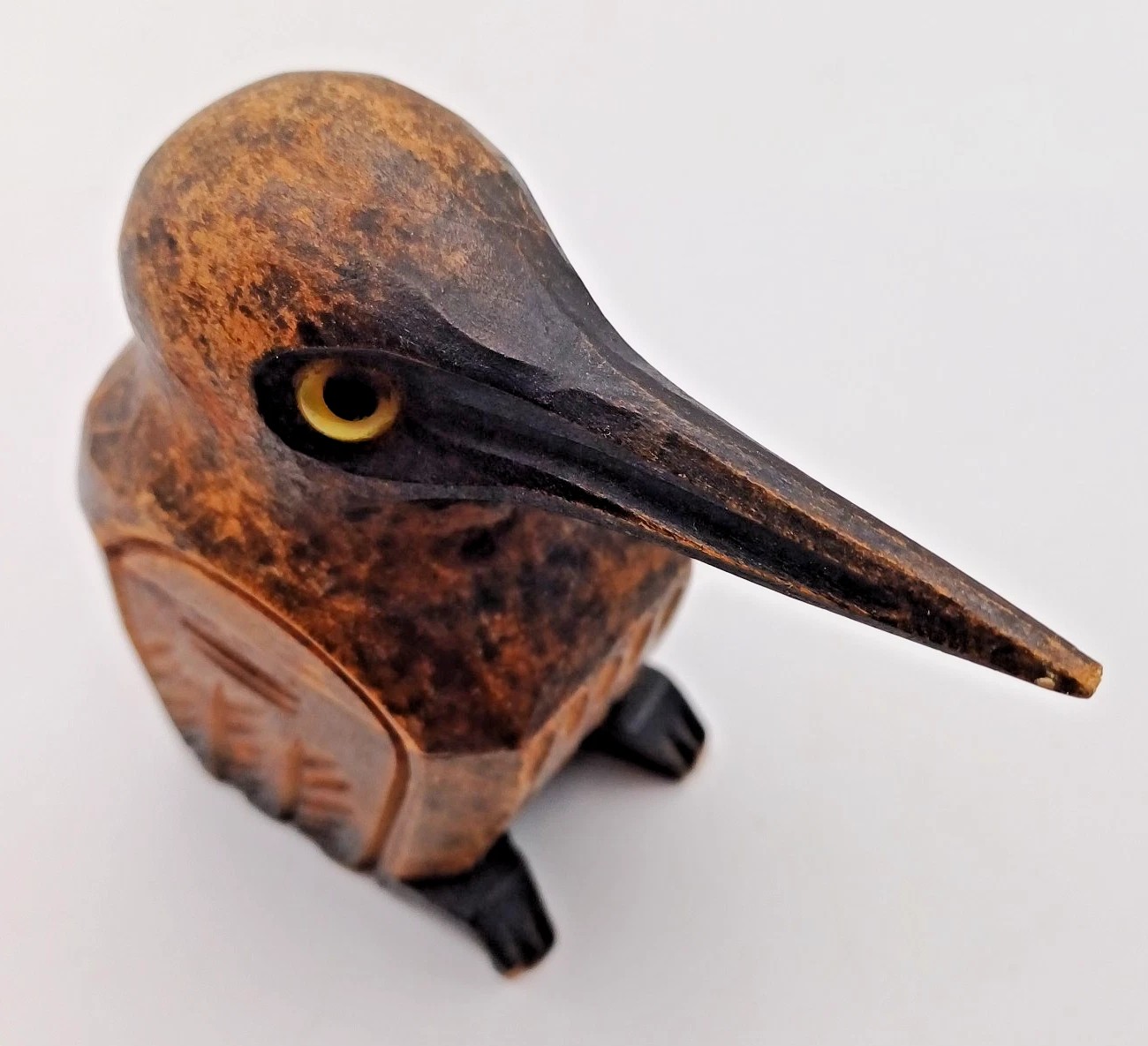

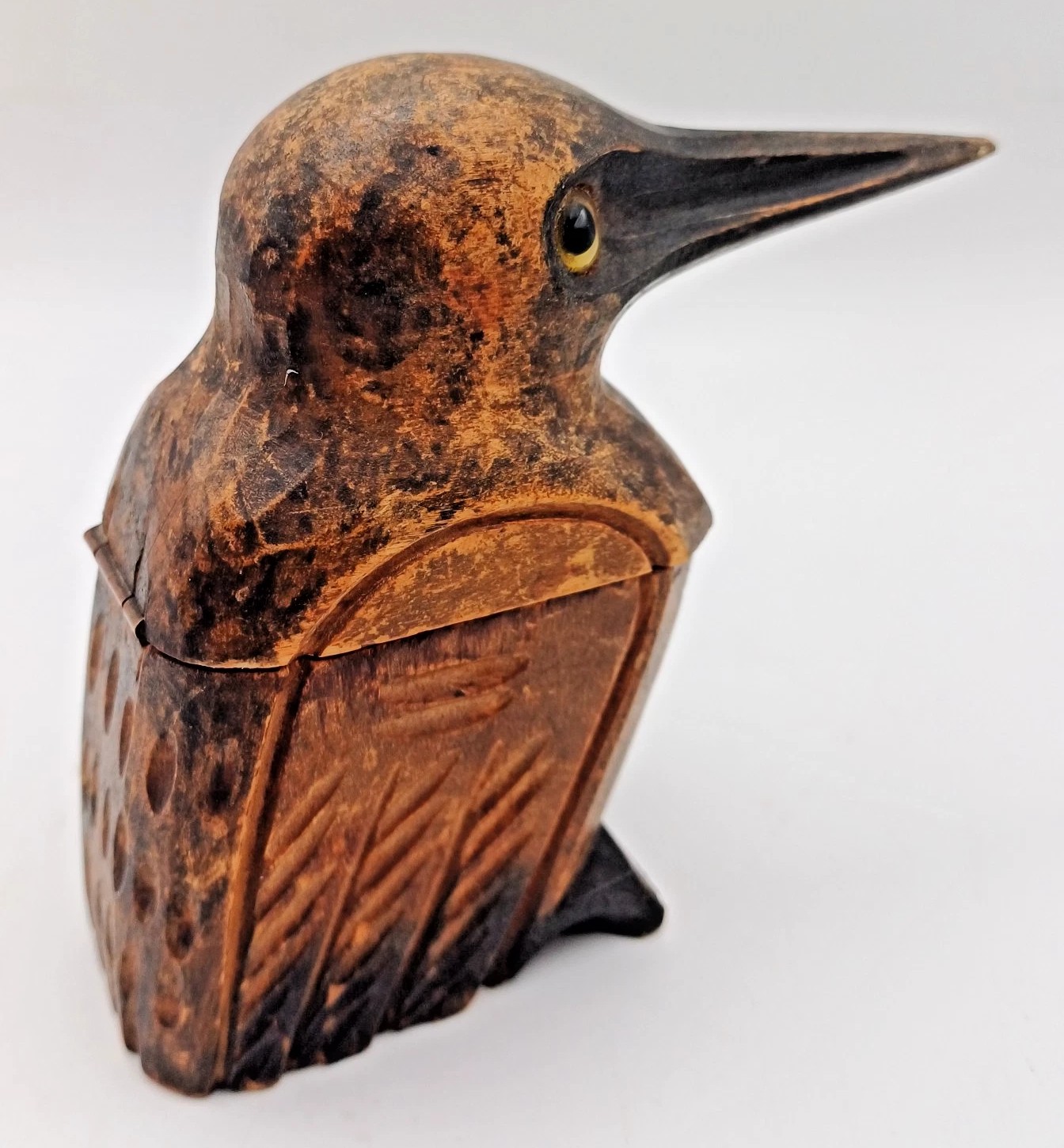

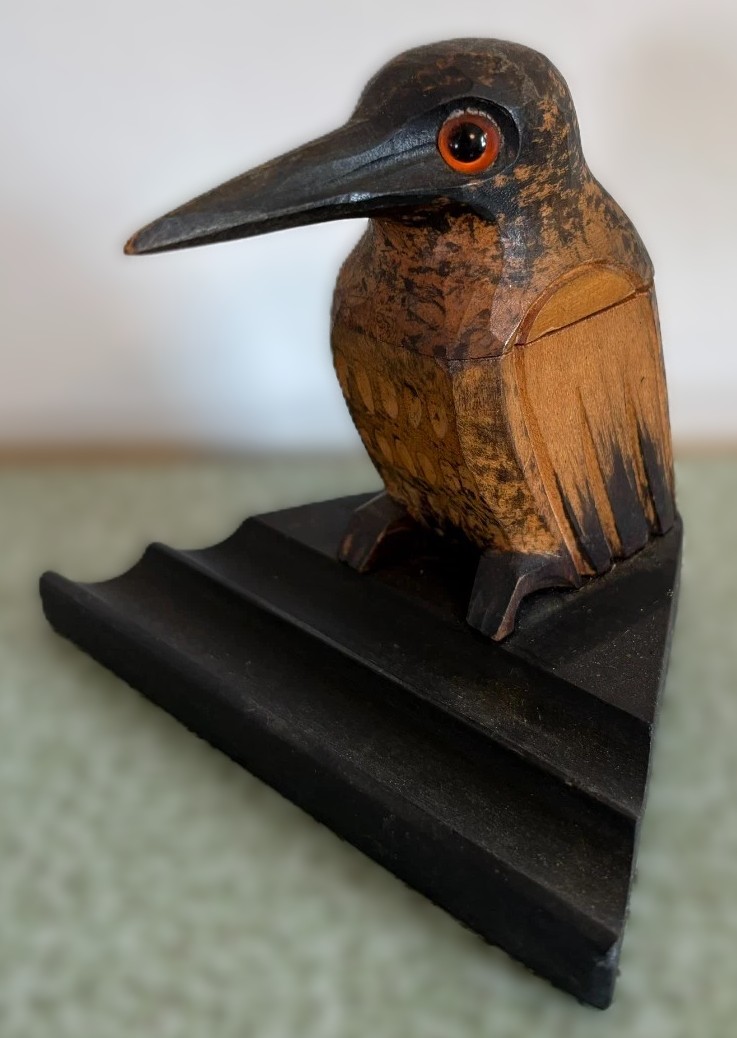
“Black Forest” Carved Kingfisher Inkwell
| Categories | Figural - Animals & Living Creatures |
| Type | Bird |
| Material | Wood |
| Markings | See Narrative |
| Manufacturer | Black Forest |
| Origin | Germany |
| Date or Era | circa 1900 |
| Measuring | 4”(including beak) x 1 ½” x 3 ⅝” high |
This is a nice example of antique treen (small, collectible woodenware), specifically in the “Black Forest” style. While this style originated in Brienz, Switzerland, by the turn of the 20th century, similar novelty carvings were also produced in Germany and Austria for the tourist market.
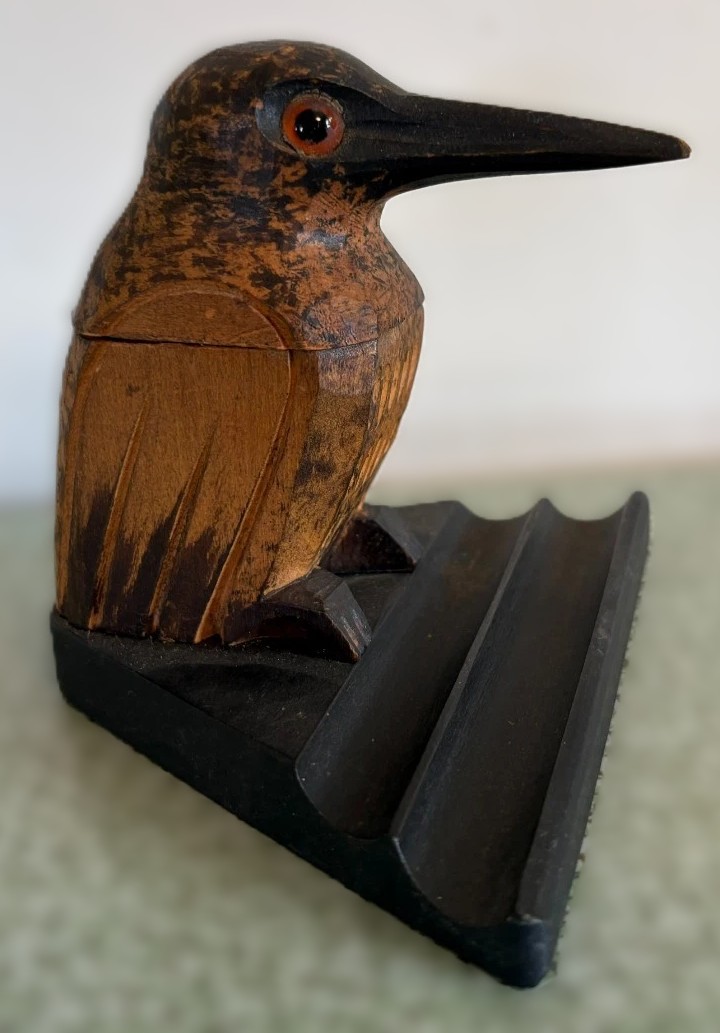
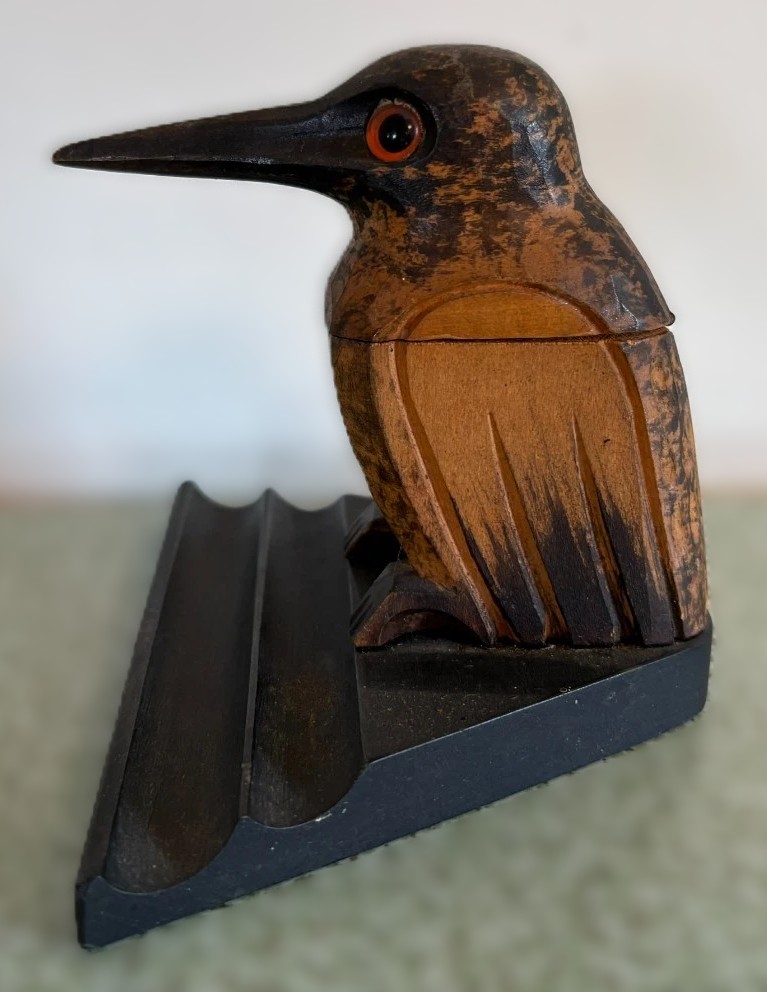
- Subject: The figure depicts a Kingfisher, a bird frequently featured in European folklore and art. It is characterized by its oversized, pointed beak and stocky body.
- Material & Technique: It is hand-carved from a single block of wood (likely linden or walnut). The carving style is somewhat “blocky” or expressionist, using visible chisel marks to simulate the texture of feathers on the wings and chest, rather than the hyper-smooth finish seen on high-end Brienz masterpieces.
- Features: The bird is fitted with glass eyes (amber with black pupils), which add a lifelike quality.
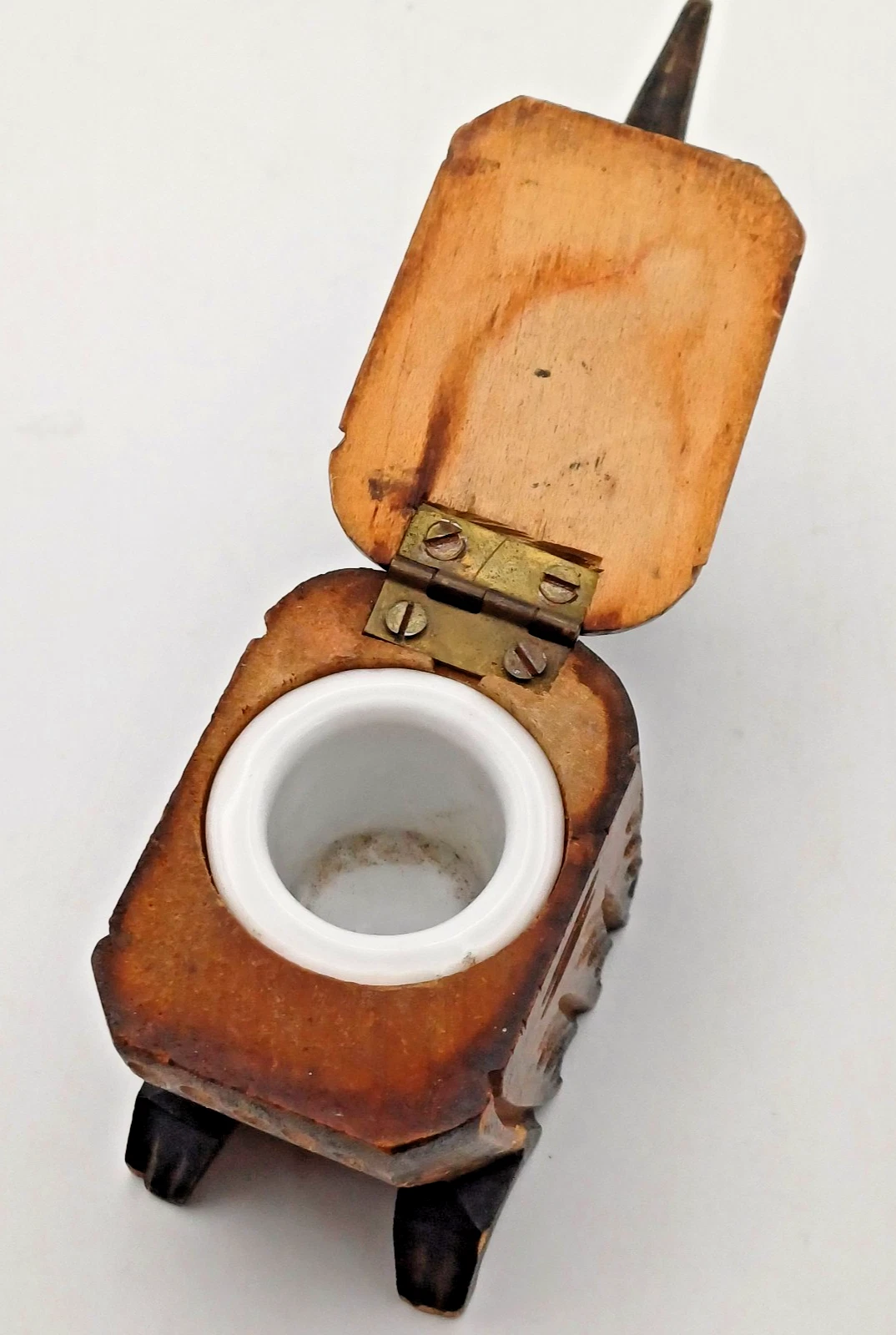
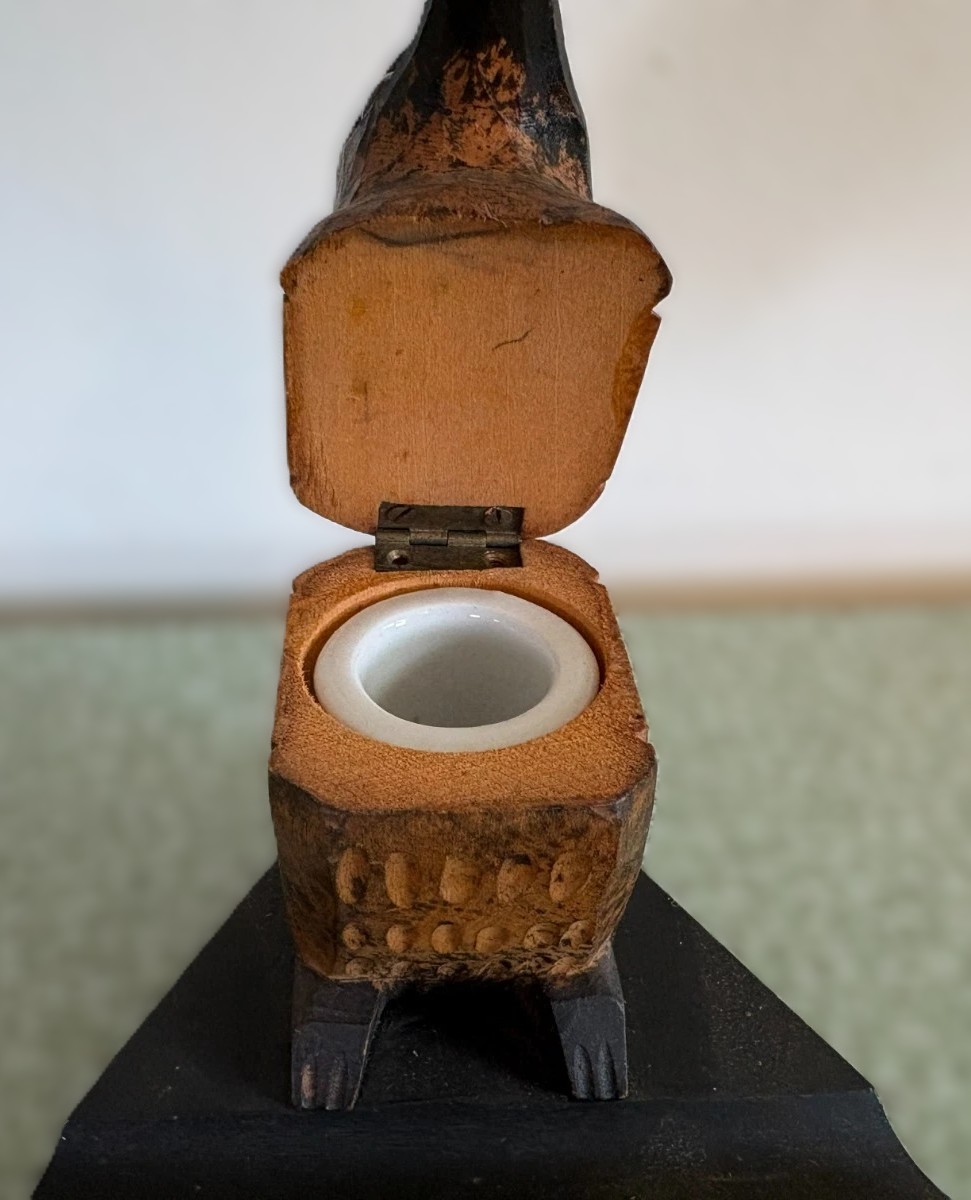
- Mechanism: The head is hinged at the neck with a simple metal flap hinge. It flips back to reveal the ink reservoir inside the body.
The Insert and the Numbers
The insert is made of white porcelain or ceramic.
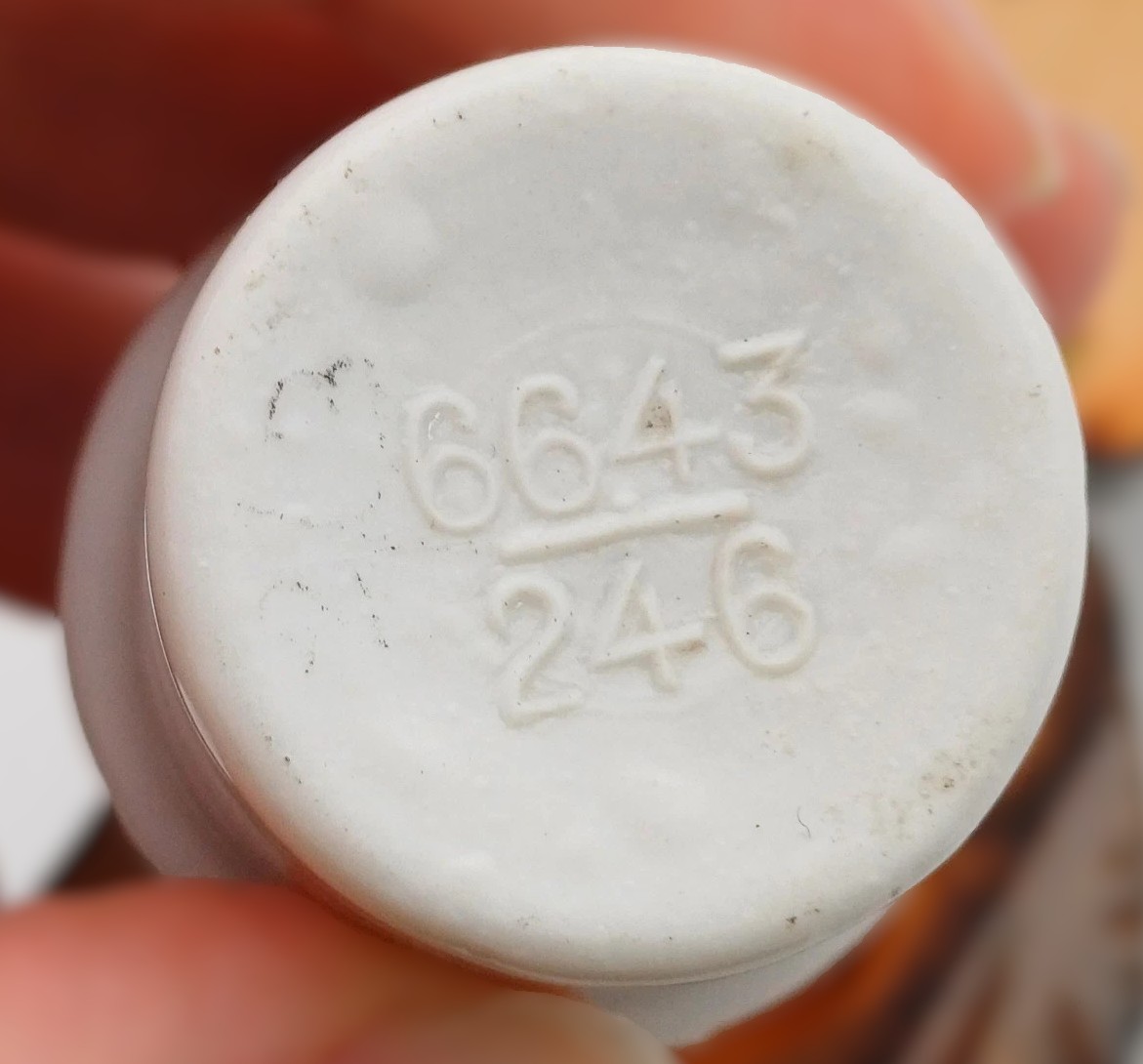
The numbers “6643” over “246” are impressed mold and size numbers.
- 6643 (Mold Number): This identifies the specific shape and style of this ceramic cup in the manufacturer’s catalog.
- 246 (Size/Batch Code): This likely refers to the size diameter (e.g., matching a specific hole size in the wooden body).
What this tells us about the history:
- Origin: This type of numbering (a four-digit mold number over a size number) is highly characteristic of German porcelain factories (such as those in Thuringia) operating between 1890 and 1920.
- Production Method: Wood carvers generally did not make their own inkwells; they bought these ceramic liners in bulk from industrial porcelain factories.
- Dating: The presence of a standardized, numbered industrial ceramic liner strongly supports a date of manufacture circa 1890 – 1920.
Summary: The numbers indicate the liner is a mass-produced German component, which fits perfectly with the inkwell being a “Black Forest” style souvenir produced in the German or Swiss regions during the early 20th century.
Second Example
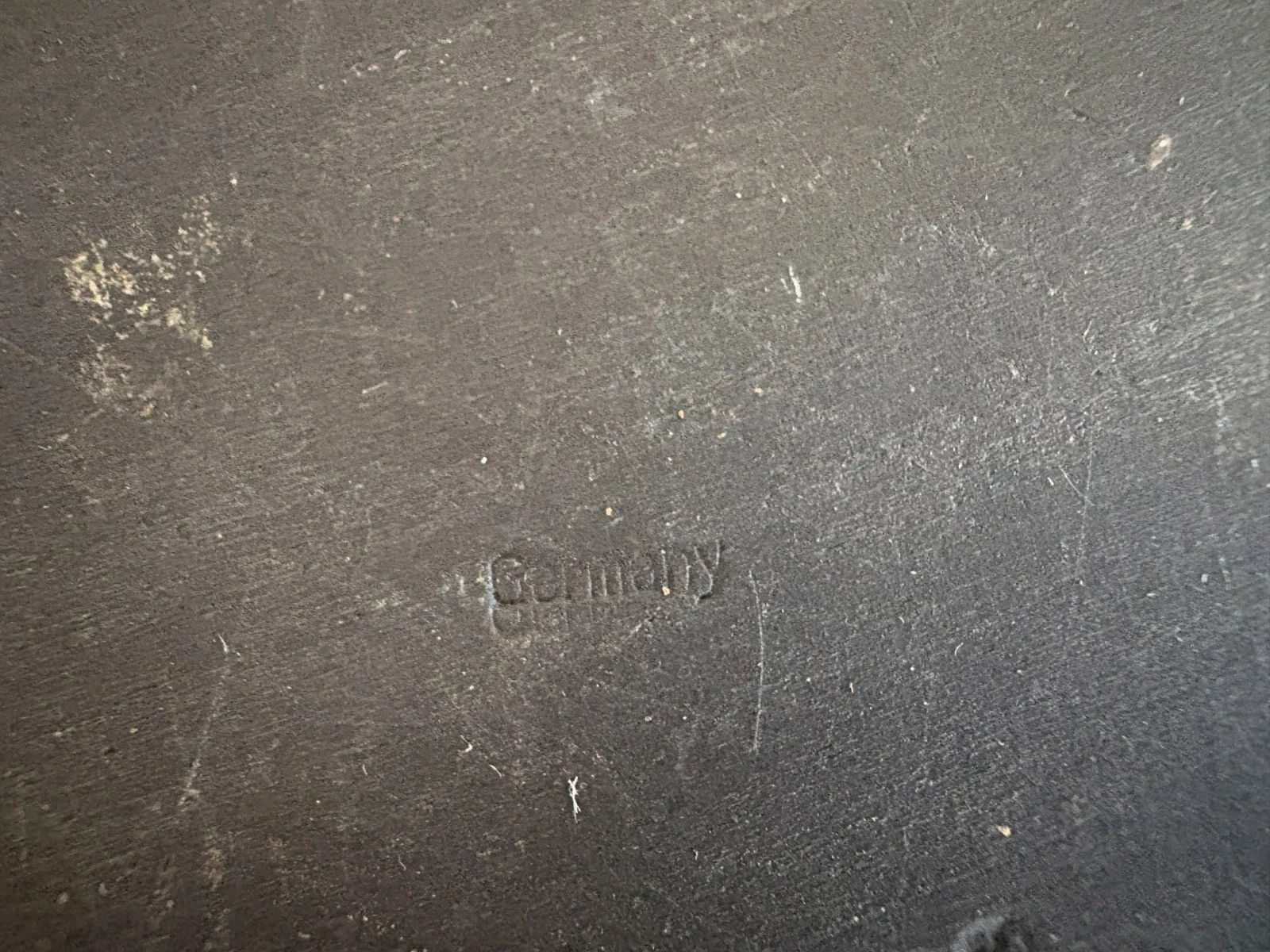
A second example with a pen holder in front. The base is marked “Germany”.
Sold for $105 in November 2025
Second example (with pen holder) sold for $43 in July 2026
Content disclaimer. The information posted is the owner’s best knowledge and may not have been vetted by the SOIC. We welcome comments, corrections, and additions, working to make our website information comprehensive and accurate.
Join the Society of Inkwell Collectors (SOIC) – it’s free!
Founded in 1981 as a non-profit organization,
we are documenting inkwells (and accessories).
We’re here to help and inform!