



Cold-Painted Spelter Figural Inkstand: Kingfisher and Walnut
| Categories | Figural - Animals & Living Creatures |
| Type | Bird |
| Material | Spelter |
| Markings | Unmarked |
| Manufacturer | Undetermined |
| Origin | Undetermined |
| Date or Era | circa 1900 |
| Measuring | 3” across; 2 ¼” high |
Description:
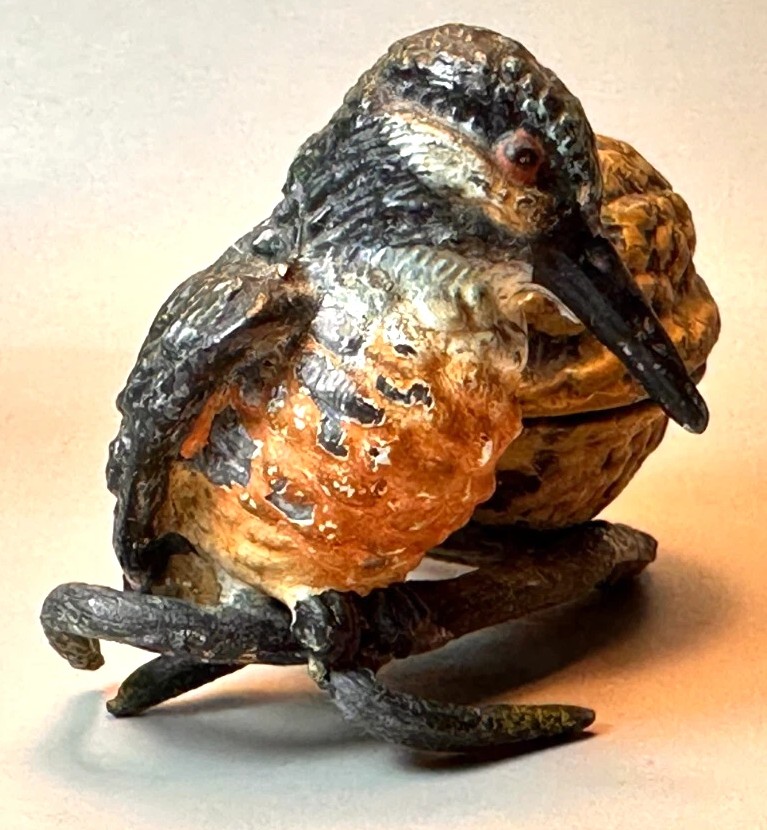
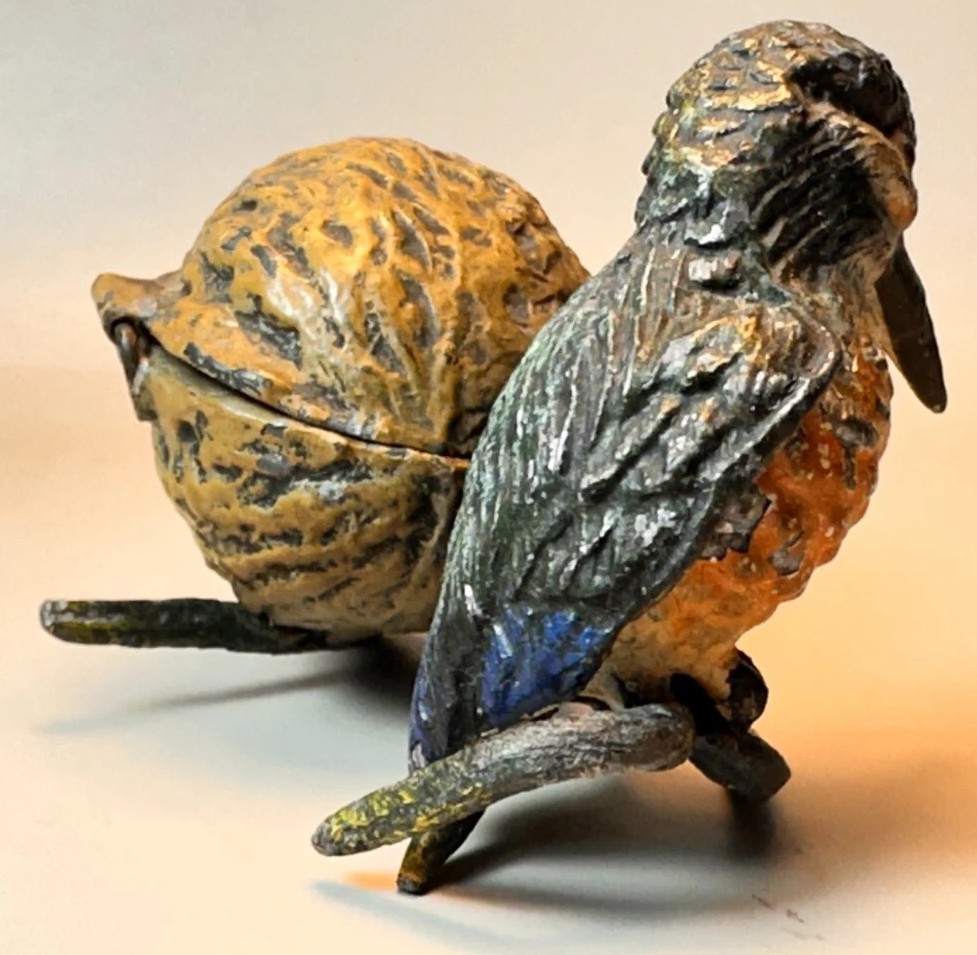
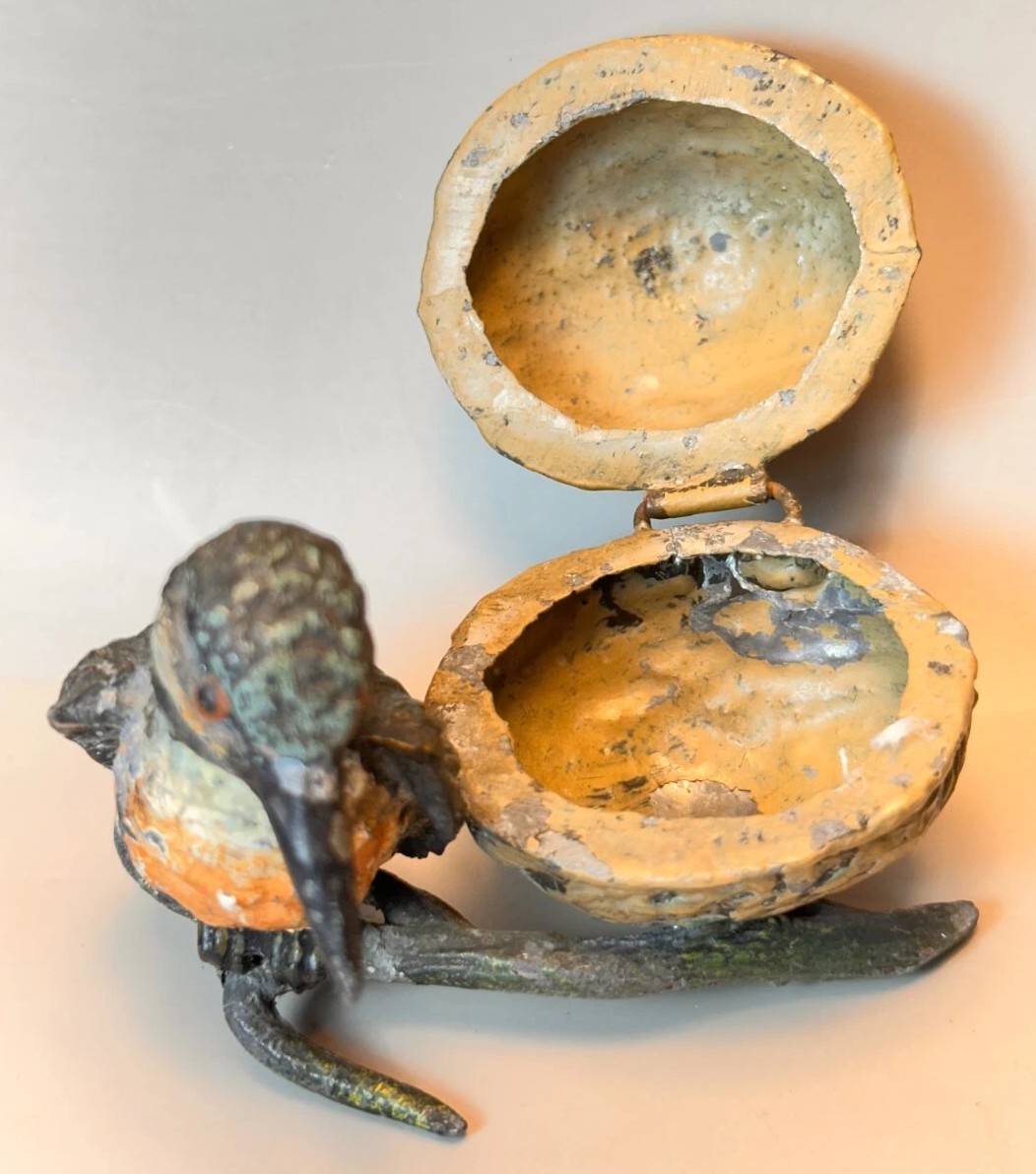
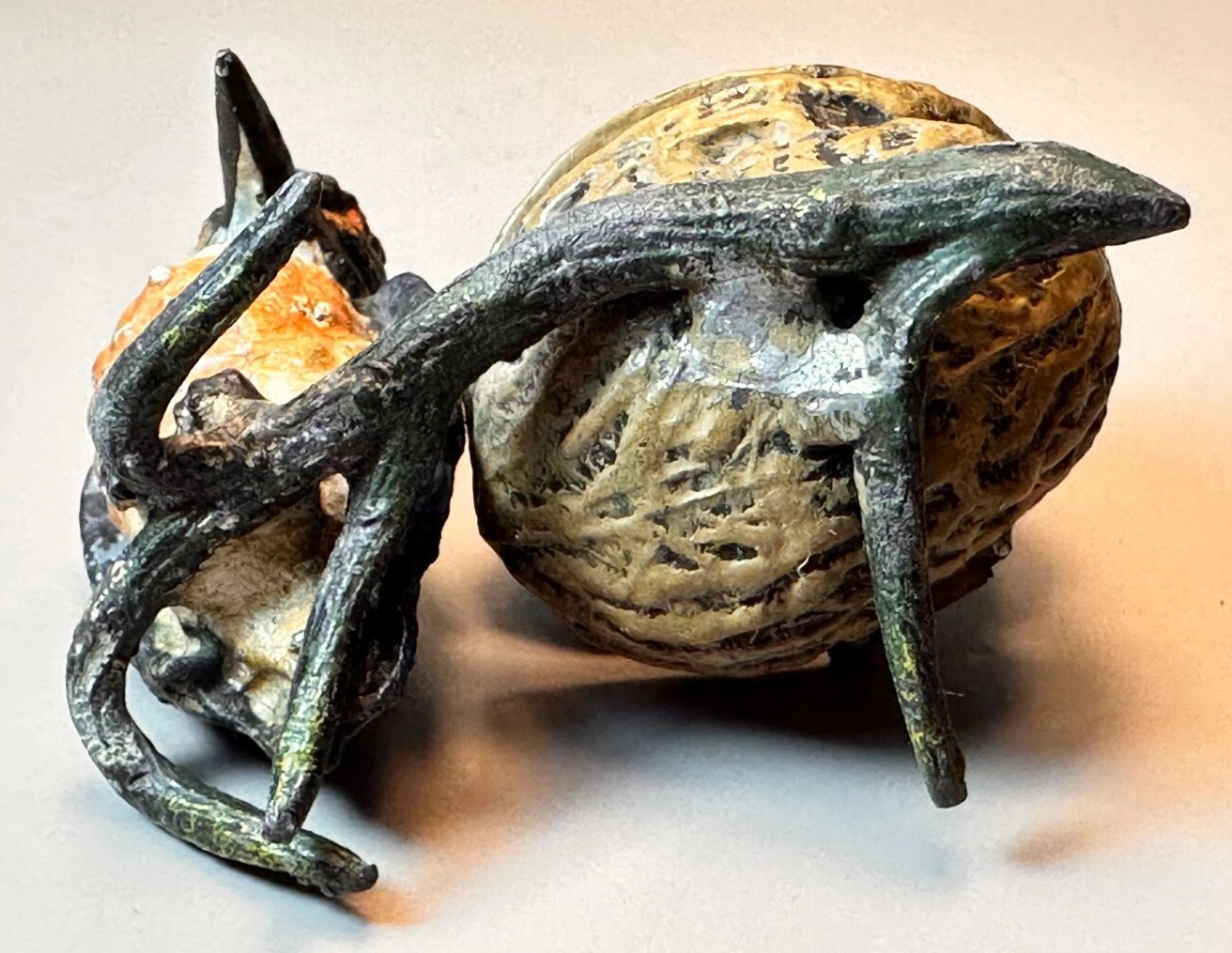
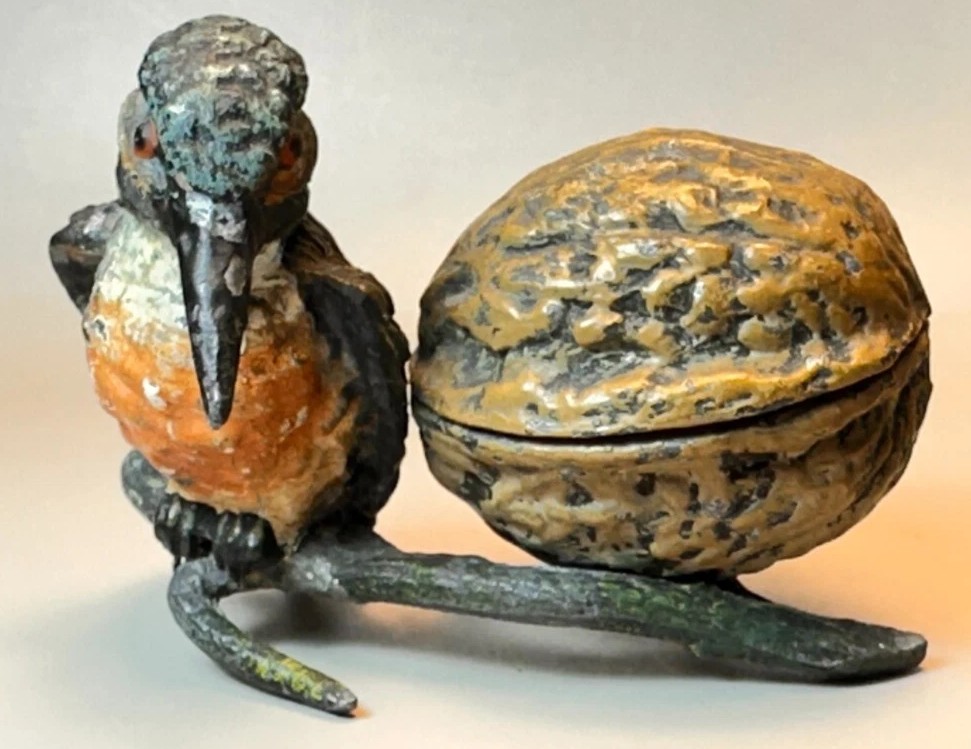
A naturalistic figural inkstand cast in spelter (zinc alloy) and finished with “cold painting” (polychrome unfired paint). The sculpture depicts a Kingfisher perched attentively on a textured tree branch.
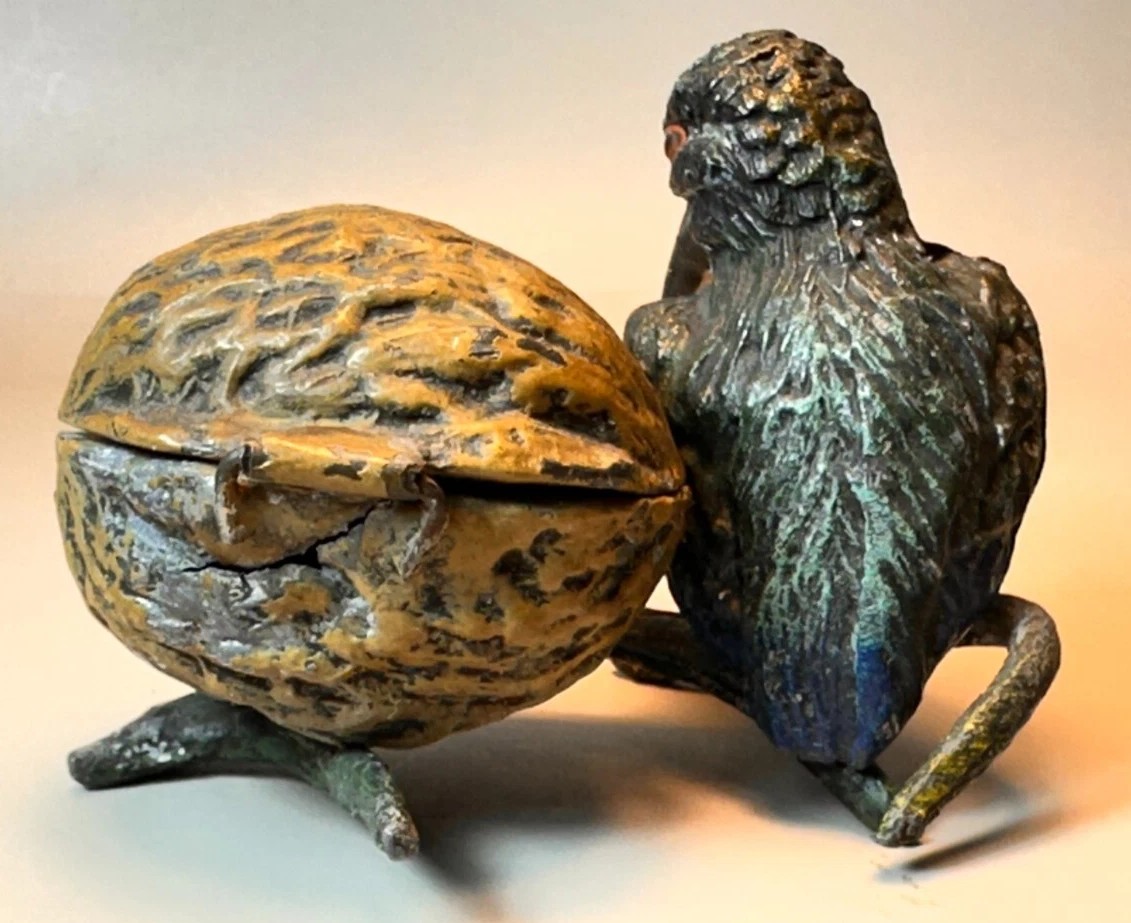
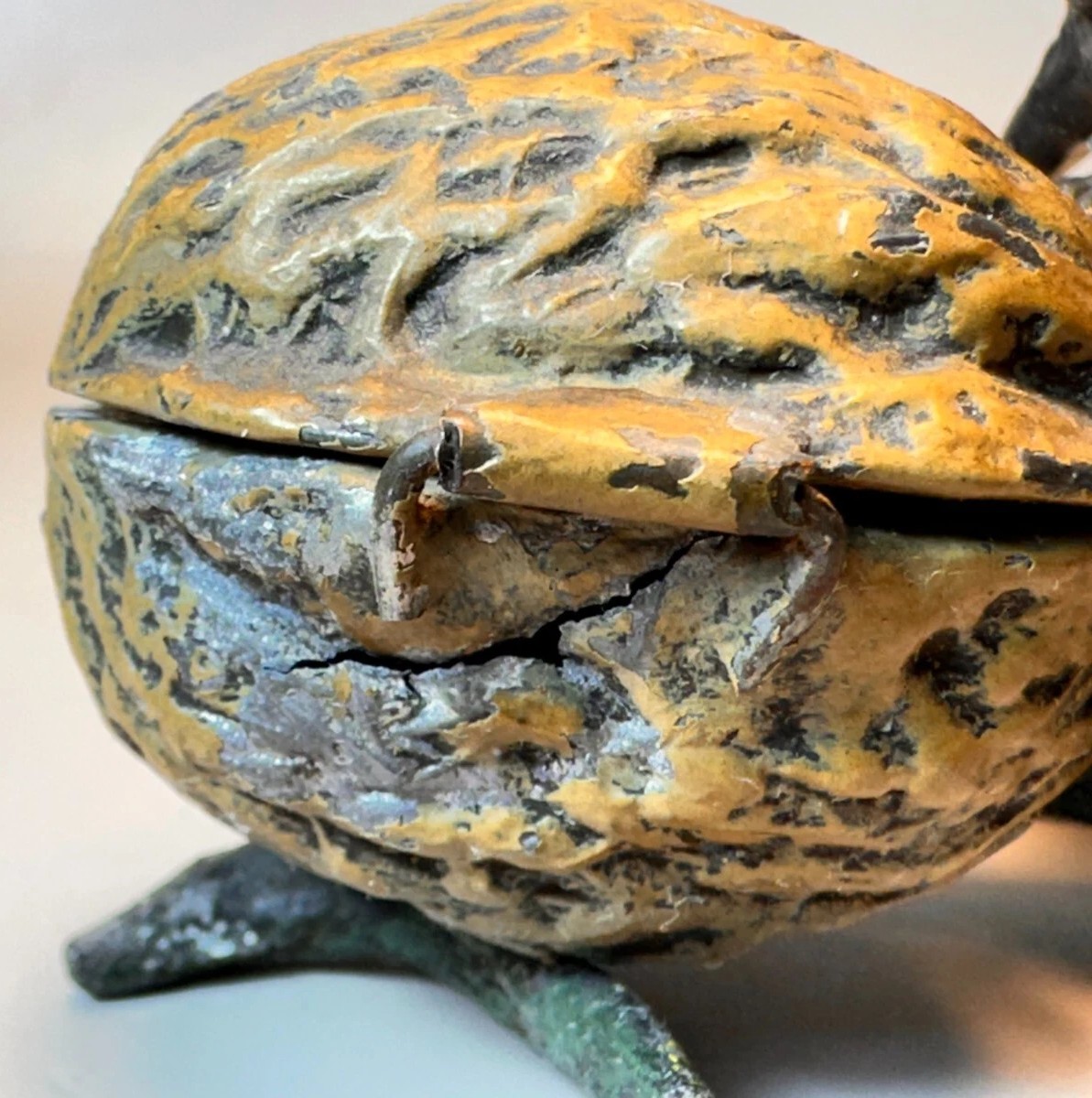
The Inkwell: Beside the bird sits a large, realistic English Walnut. The walnut shell is hinged at the back and opens to reveal the ink reservoir. (Note: The original glass or ceramic insert is missing).
Color & Finish: The piece retains remnants of its original cold-painted finish. The bird features a distinct orange breast and teal-blue wings with black accents on the beak and eyes. The walnut is painted in naturalistic shades of ochre and brown to mimic a shell.
Identification: The Bird
The bird is unmistakably a Common Kingfisher (scientific name: Alcedo atthis).
- Visual Evidence: The identification is confirmed by the long, dagger-like beak, the short tail, and the specific coloration remaining on the piece: a rust-orange breast and electric blue/teal wings and head.
- Context: The Kingfisher was a favorite subject in Victorian and Edwardian decorative arts, symbolizing patience and peace.
Age & Origin
- Origin: Most likely Austria or Germany.
- This piece is designed in the “Vienna Bronze” style. Famous Austrian foundries (like Bergmann) created high-end bronze versions of this exact subject (birds perched next to seeds, nuts, or fruit).
- Since this piece is made of spelter (a zinc alloy), it was likely produced as a more affordable alternative to solid bronze, manufactured by Austrian or German foundries for the export market.
- Age: c. 1890–1920 (Late Victorian to Edwardian period). The “cold-painted” technique and the naturalistic subject matter were at the height of fashion during this window.
Sold for $104 in November 2025
Content disclaimer. The information posted is the owner’s best knowledge and may not have been vetted by the SOIC. We welcome comments, corrections, and additions, working to make our website information comprehensive and accurate.
Join the Society of Inkwell Collectors (SOIC) – it’s free!
Founded in 1981 as a non-profit organization,
we are documenting inkwells (and accessories).
We’re here to help and inform!