

Inkipedia
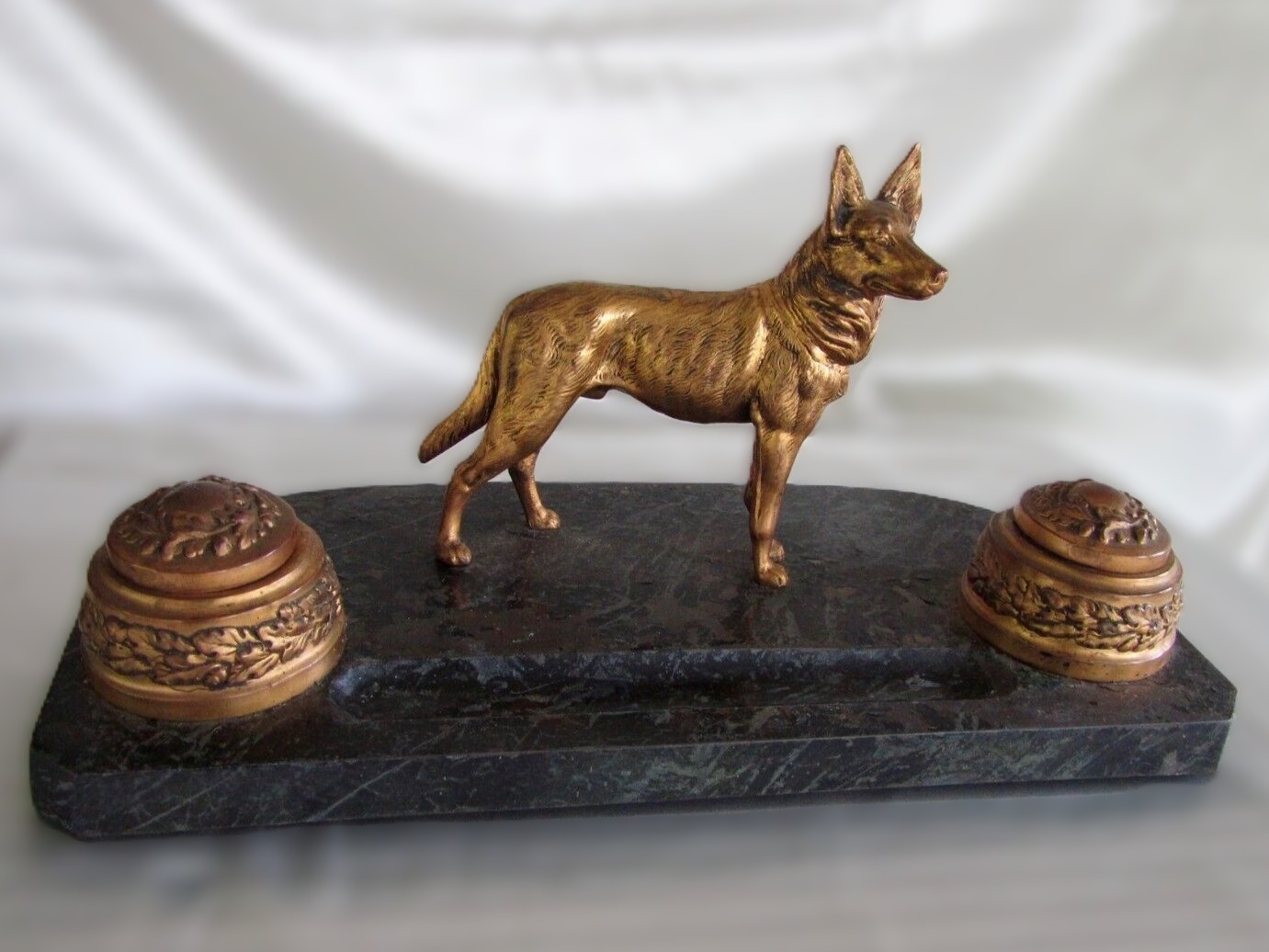


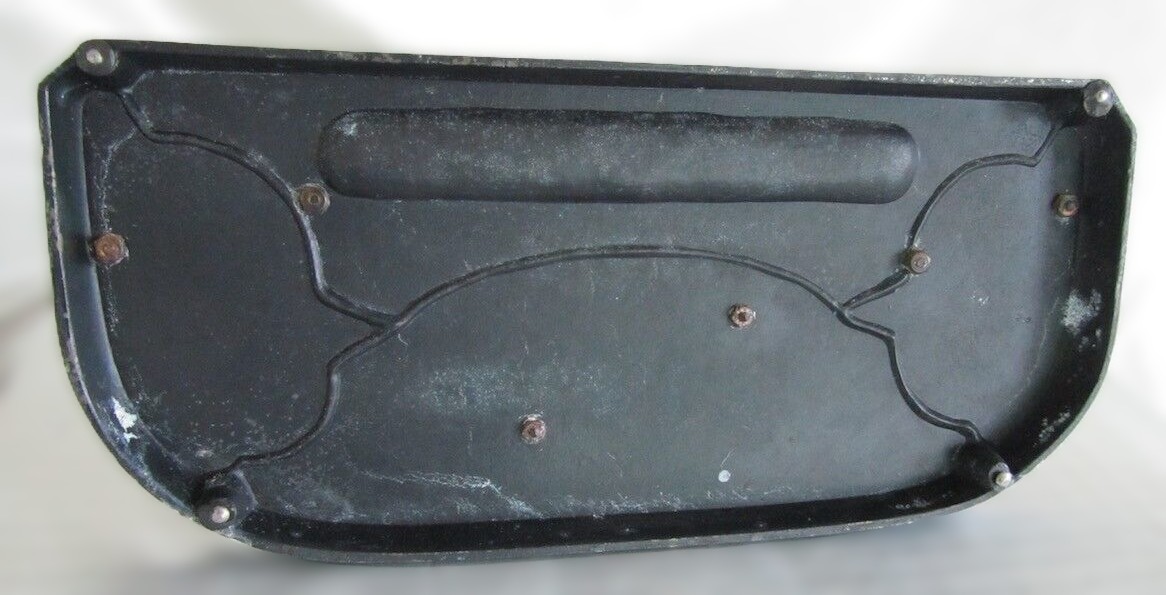
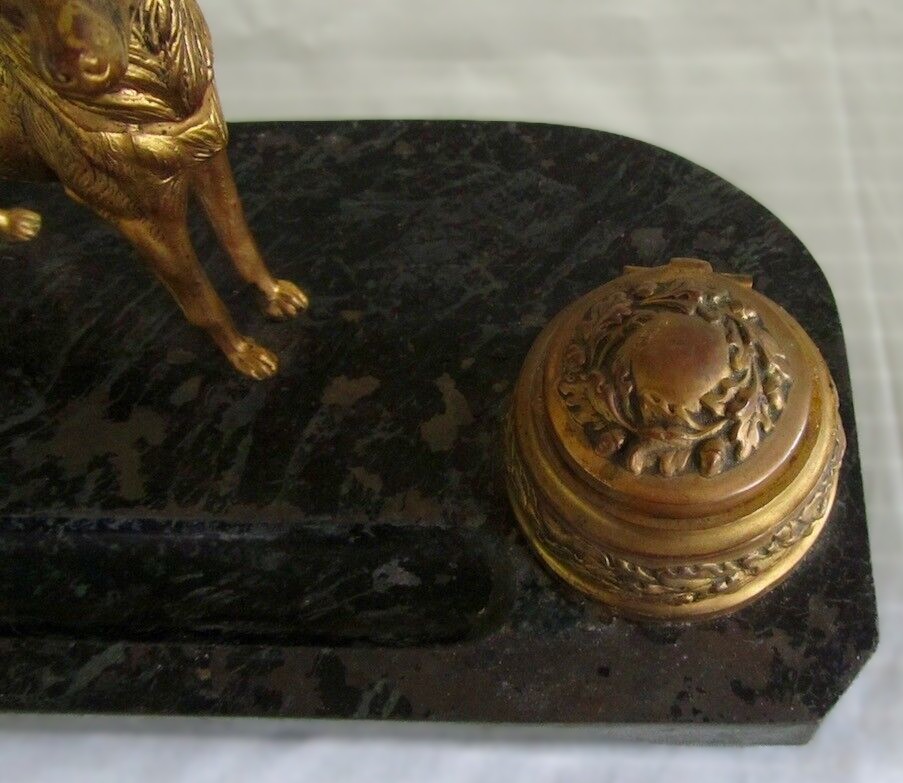
Double Inkstand with German Shepherd
| Categories | Figural - Animals & Living Creatures |
| Type | dog |
| Material | Metal |
| Markings | Unmarked |
| Manufacturer | Undetermined |
| Origin | Undetermined |
| Date or Era | circa 1900 |
| Measuring | Base: 15” x 6 ½” |
Detailed Description
- Overall Form: A large, decorative double inkstand featuring a prominent figural sculpture on a wide base.
- Material and Finish:
- Figural Sculpture: The German Shepherd dog is made of cast metal (likely spelter or pot metal) and finished with a gold gilt coating.
- Inkwells: The inkwell casings are also metal, finished in gold gilt, and feature ornamental details.
- Base: The base is a rectangular slab of metal that has been painted or faux-finished to resemble a piece of veined marble. This technique, known as marbling, was commonly used to give cast metal pieces the appearance of a more expensive material without the weight or cost.
- Inkwell Components:
- Double Inkwells: The stand features two matching cylindrical ink receptacles placed on either side of the dog figure.
- Lids: Each receptacle has a hinged metal lid decorated with acanthus leaves—a classic motif from Greek and Roman architecture.
- Inserts: The receptacles hold removable ceramic inserts to contain the ink.
- Pen Rest: A shallow pen channel is molded into the front edge of the marbleized base.
The German Shepherd Figure
- The Subject: The choice of the German Shepherd reflects the popularity the breed gained in Europe and the US during the late 19th and early 20th centuries for its intelligence and noble appearance.
- Style: The dog is cast in a dynamic, attentive pose, showing a high level of detail in its musculature and coat.
Age and Origin Assessment
The materials, the ornate style, and the manufacturing techniques used strongly point to a specific period:
- Style: This piece is firmly in the Late Victorian/Edwardian or Beaux-Arts style—a time characterized by ornate, heavily decorated desktop items and the use of figural, naturalistic subjects. The reliance on faux-marble finishes and gilt-finished spelter/pot metal was very typical of Continental European production for export.
- Likely Origin: France or Central Europe (Germany/Austria). The German Shepherd dog is a German breed, making a German or Austrian origin quite plausible. However, French foundries (known for Régule or spelter statuary) also produced a vast array of high-quality desk sets in this style.
- Age Estimate: The combination of the fin-de-siècle opulence and the subject matter suggests: circa 1890 – 1915
Sold for $75 in September 2023
Content disclaimer. The information posted is the owner’s best knowledge and may not have been vetted by the SOIC. We welcome comments, corrections, and additions, working to make our website information comprehensive and accurate.
Join the Society of Inkwell Collectors (SOIC) – it’s free!
Founded in 1981 as a non-profit organization,
we are documenting inkwells (and accessories).
We’re here to help and inform!