

Inkipedia
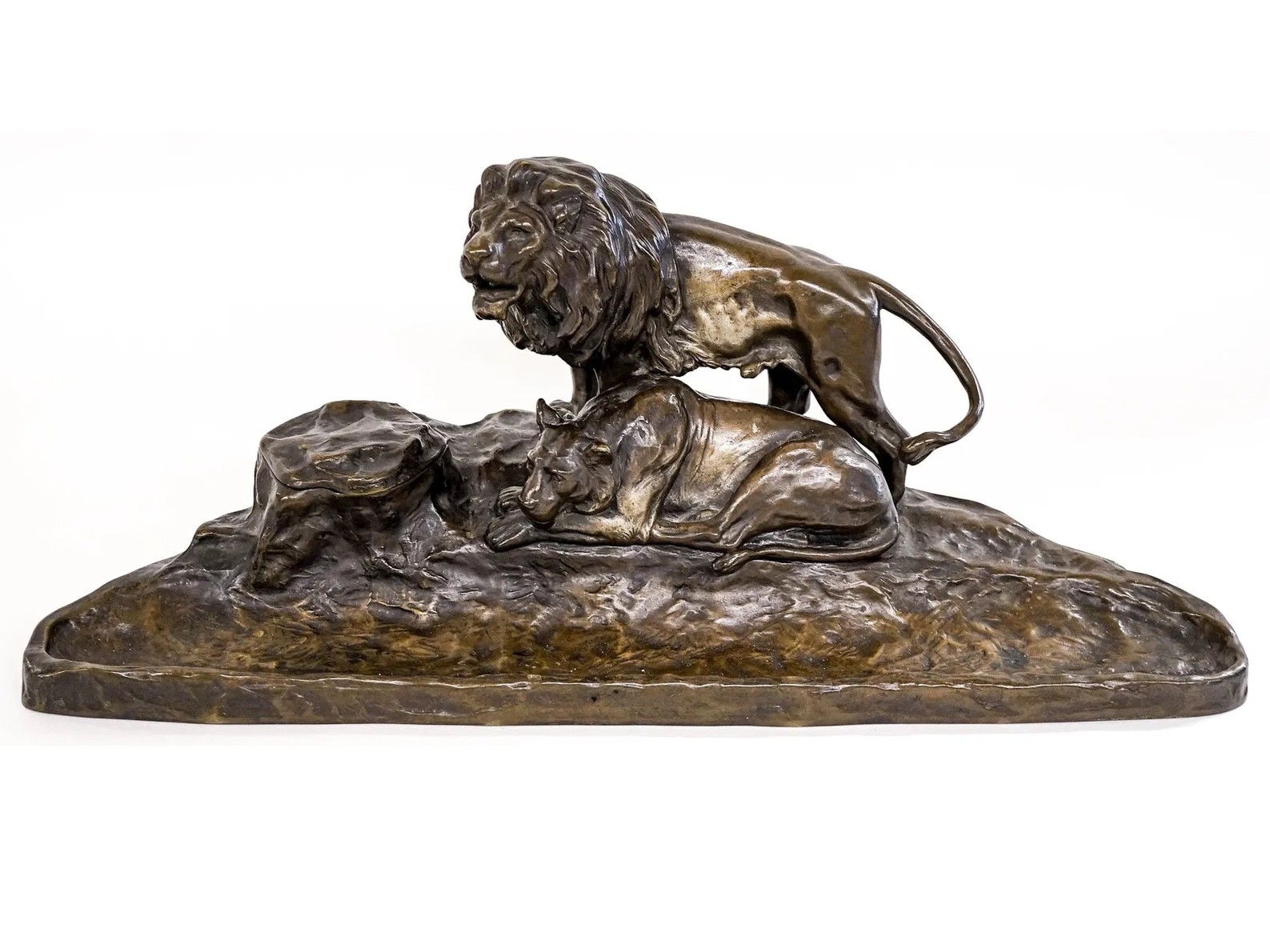
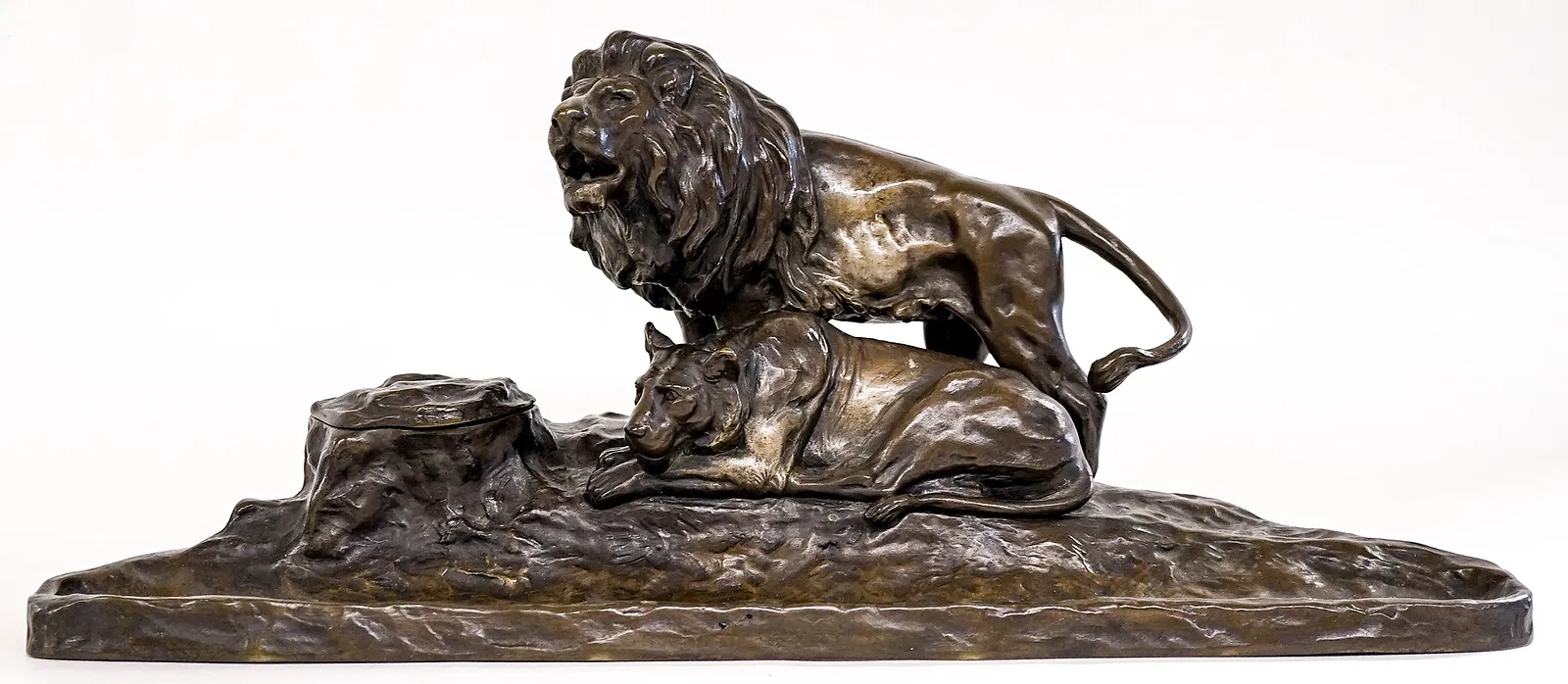


Bronze Inkstand: Lion and Lioness
| Categories | Figural - Animals & Living Creatures |
| Type | Lion |
| Material | Bronze |
| Markings | See Narrative |
| Manufacturer | Franciszek Kucharzyk |
| Origin | Undetermined |
| Date or Era | circa 1910 |
| Measuring | 18 ½” x 6 ½” x 7 ¼” high |
This is a figural bronze desk inkstand featuring a lion and lioness in an outdoor setting.
- Subject and Composition
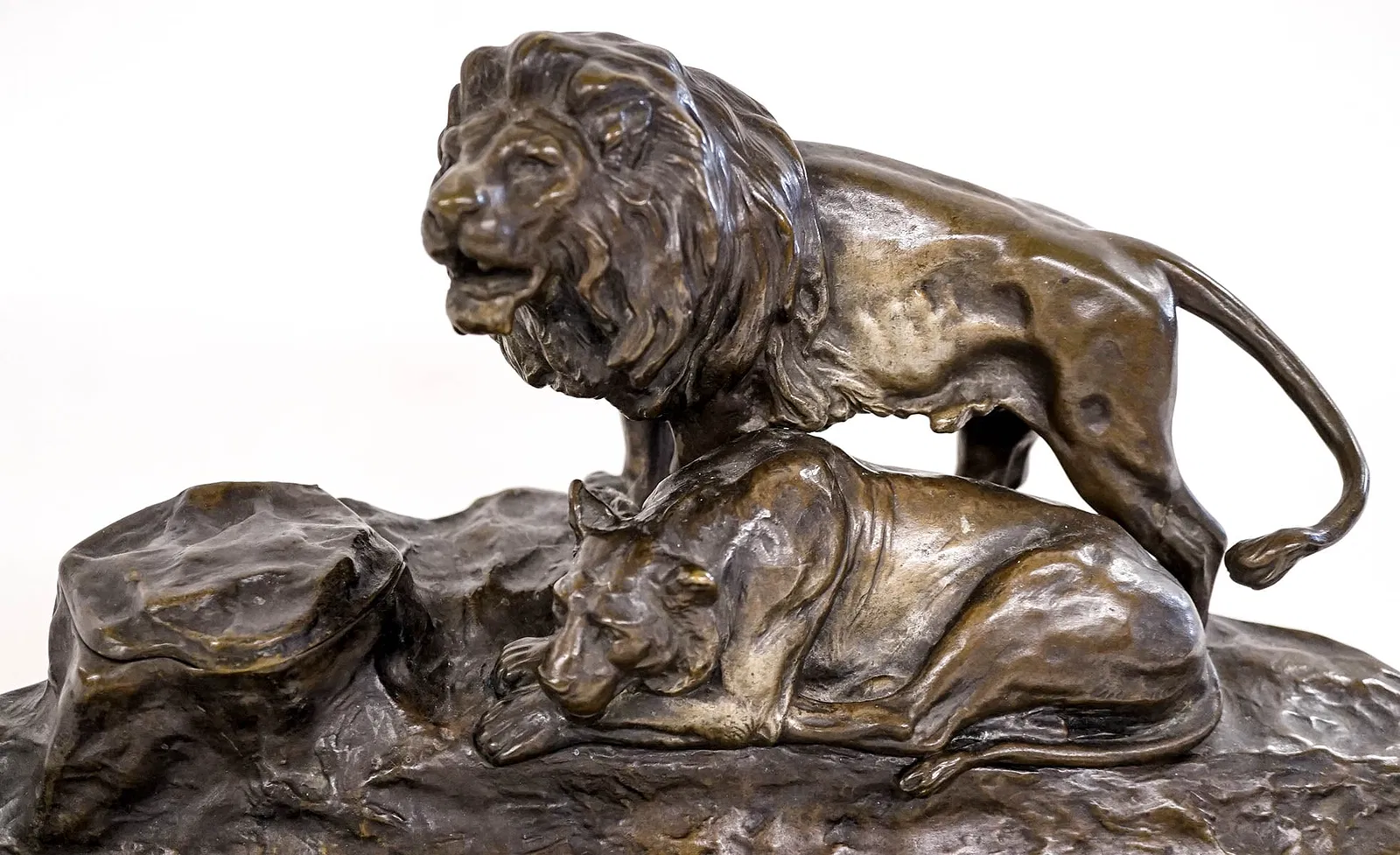
- Figural Group: The piece is dominated by two large felines: a lion and a lioness. They are posed dynamically, perhaps watching prey or defending their territory.
- The lion stands regally and roars, his muscular physique and thick, detailed mane giving the sculpture weight and presence.
- The lioness is stretched out in a low, alert crouch in front of the lion, exhibiting a sleek, powerful, and tense posture.
- Base/Setting: The animals rest upon a naturalistic, uneven base sculpted to resemble a rocky outcrop.
- Inkwell: The glass inkwell insert is integrated into the sculpture itself, set into the rock outcropping.
- Pen Tray: The irregular terrain of the base is utilized to create natural pen tray in the front.
- Material and Signature
- Material: The primary material is cast bronze, finished with a rich, dark patina that enhances the musculature of the animals and the texture of the rocky base.
- Signature: The piece is signed on the bronze base with “Kucharzyk.”
Dating and Origin Analysis
The Artist: Franciszek Kucharzyk
The signature “Kucharzyk” points to Franciszek Kucharzyk (Polish, 1880–1930).
- Style: Kucharzyk was a sculptor known for creating naturalistic animalier bronzes—sculptures that depict animals with high detail and realistic movement. This style was immensely popular in the late 19th and early 20th centuries. The dramatic, tense, and detailed depiction of the felines is highly consistent with his known body of work.
- Works: He frequently worked in bronze, and many of his pieces, including his famous horses and other large cats, were produced as desk accessories, lamps, and decorative statuettes.
Dating and Origin
-
- Date Range: Based on the artist’s life and the prevailing artistic movement, this inkstand was most likely cast during the peak of his career, which would place it in the late Edwardian / early Art Deco period: circa 1900 to 1930.
- Origin: While Kucharzyk was Polish, many European sculptors of this era had their works cast and distributed by large foundries, particularly in France (Paris) or Germany (Berlin/Frankfurt), which were centers for high-quality bronze casting. However, since the signature is the primary mark, the Polish connection remains central to the piece’s history. It is a work by a major Polish Animalier sculptor.
Sold for $604 in October 2025
Content disclaimer. The information posted is the owner’s best knowledge and may not have been vetted by the SOIC. We welcome comments, corrections, and additions, working to make our website information comprehensive and accurate.
Join the Society of Inkwell Collectors (SOIC) – it’s free!
Founded in 1981 as a non-profit organization,
we are documenting inkwells (and accessories).
We’re here to help and inform!