

Inkipedia


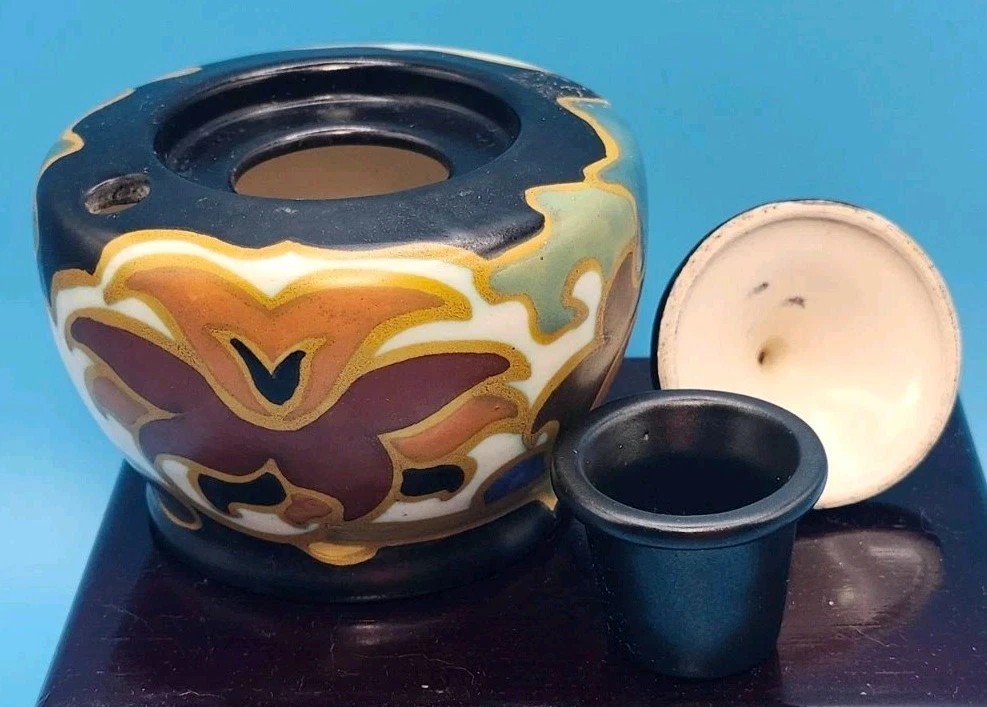


Zenith Gouda Holland Inkwell – Vera Pattern
| Categories | Ceramics/Porcelain "Named" Makers |
| Material | Pottery |
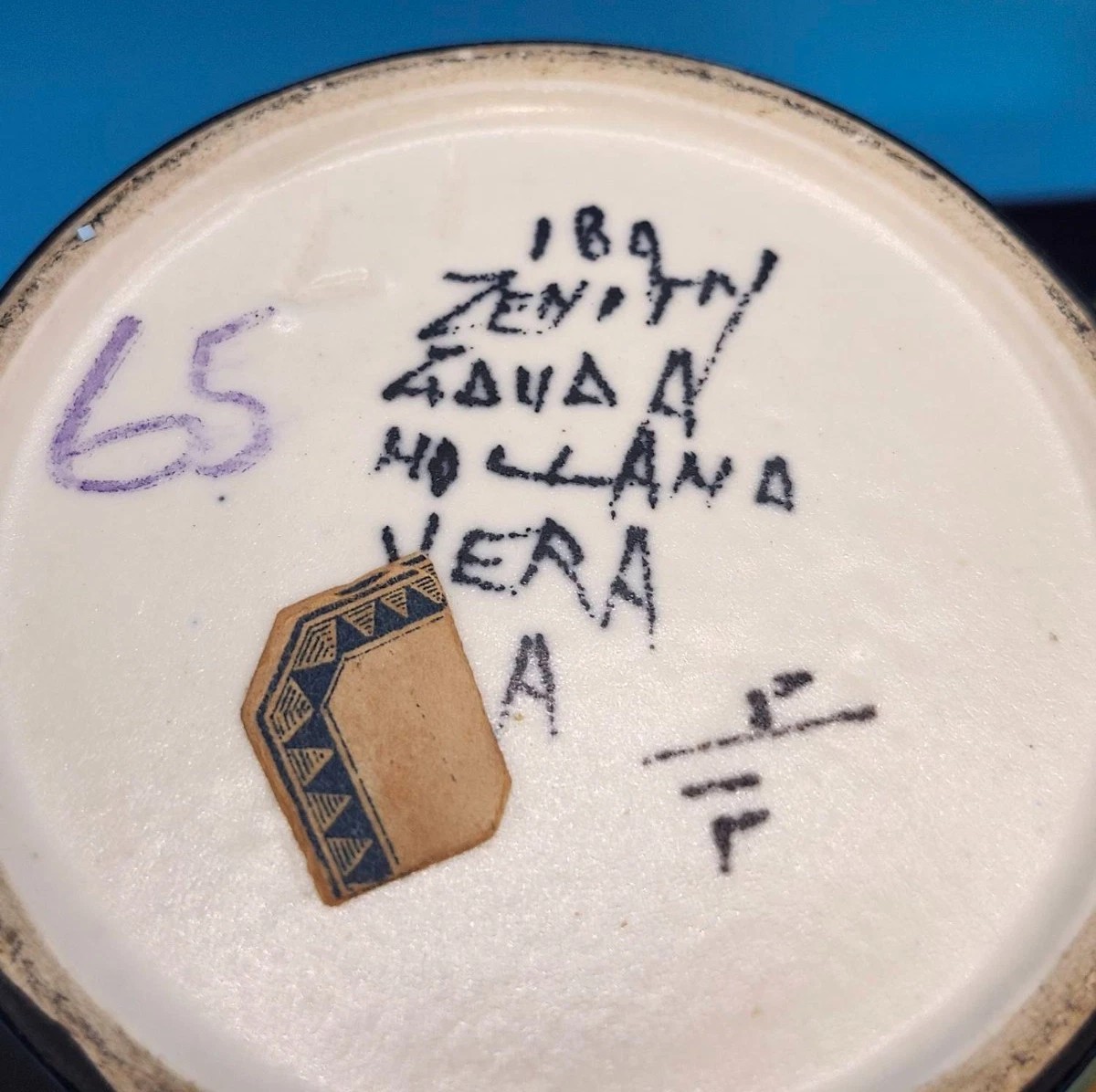
| Markings | See Narrative |
| Manufacturer | Gouda |
| Origin | Netherlands |
| Date or Era | circa 1930 |
| Measuring | Height with lid: 4 ⅛”; Width at widest point: 4” |
Description:
- Form: The inkwell has a compact, circular, slightly flattened globular body with a short, wide neck where the lid rests. It has a well opening for the ink insert. The lid is a simple, domed shape with a small knob handle.
- Pattern (Vera): The decoration is a hand-painted design in the Vera pattern, which dates to the later period of Zenith’s Gouda art pottery production (approximately 1923-1934). It exemplifies a transition from Art Nouveau to the bolder, more simplified forms of Art Deco.
- Color Palette: It features a striking contrast between the black background and the earth tone patterns. The main colors include matte glazes in shades of ochre/mustard yellow, teal/blue-green, and deep red/rust.
- Design: The pattern consists of bold geometric designs. These abstract shapes form vertical bands or segments around the body of the inkwell and on the lid. The design uses thick outlines and solid color blocks, characteristic of the geometric phase of Gouda pottery, setting it apart from the earlier floral Art Nouveau styles.
- Glaze: The finish is a characteristic matte glaze (also known as a semi-matte glaze), which was very popular for Gouda pottery during the Art Deco period.
Markings on the Underside
The underside of the inkwell features several hand-painted markings, which are typical for Zenith Gouda pottery and provide key information:
- Factory Mark:
- The primary factory mark is the hand-painted “Zenith”, which stands for Zenith Gouda (Plateelbakkerij Zenith). This mark was used after the factory began producing art pottery around 1915.
- Location:
- The words “Gouda” and “Holland” confirm the place of origin and style.
- Pattern Name:
- The hand-painted word “Vera” identifies the specific decorative pattern used on the piece.
- Model/Shape Number:
- The handwritten number (e.g., ‘189’) represents the specific model or shape of the pottery blank (in this case, the inkwell body). This number helped the factory track shapes for production.
- Decorator’s Monogram/Initials:
- The small, hand-painted set of initials (e.g., ‘IL.’) identifies the specific artisan who hand-painted the decoration.
Sold for $90 in September 2025
Content disclaimer. The information posted is the owner’s best knowledge and may not have been vetted by the SOIC. We welcome comments, corrections, and additions, working to make our website information comprehensive and accurate.
Join the Society of Inkwell Collectors (SOIC) – it’s free!
Founded in 1981 as a non-profit organization,
we are documenting inkwells (and accessories).
We’re here to help and inform!