

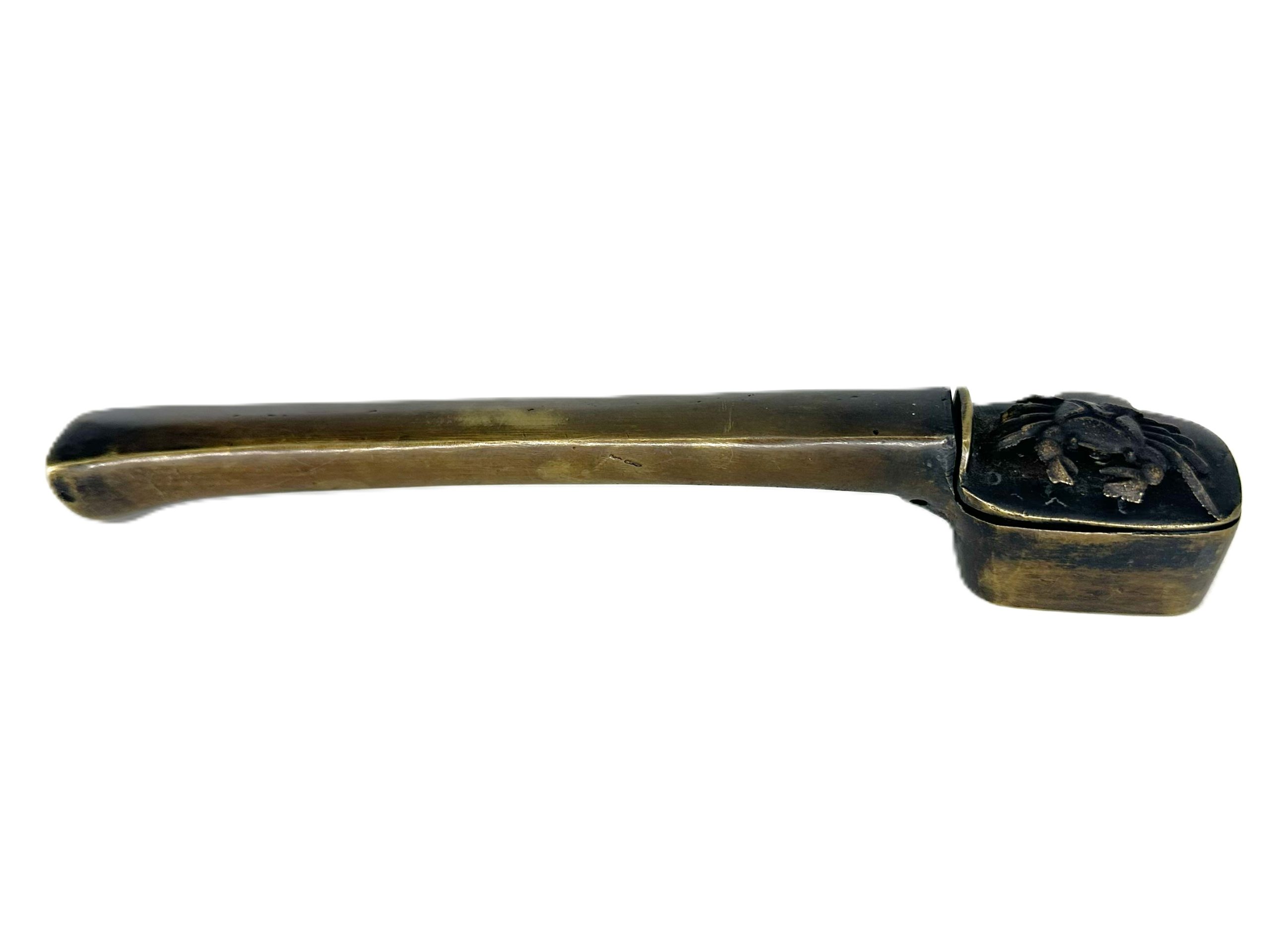
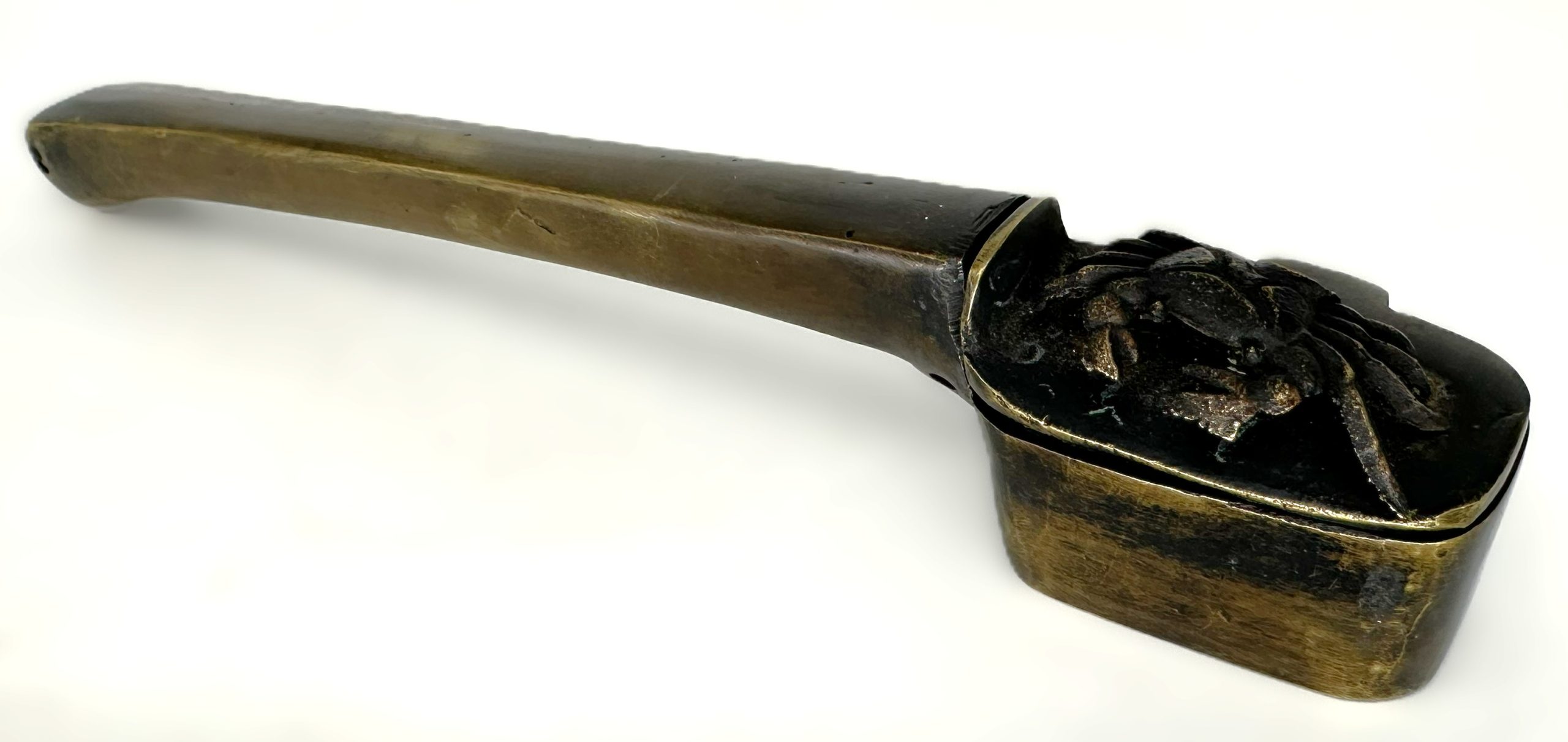

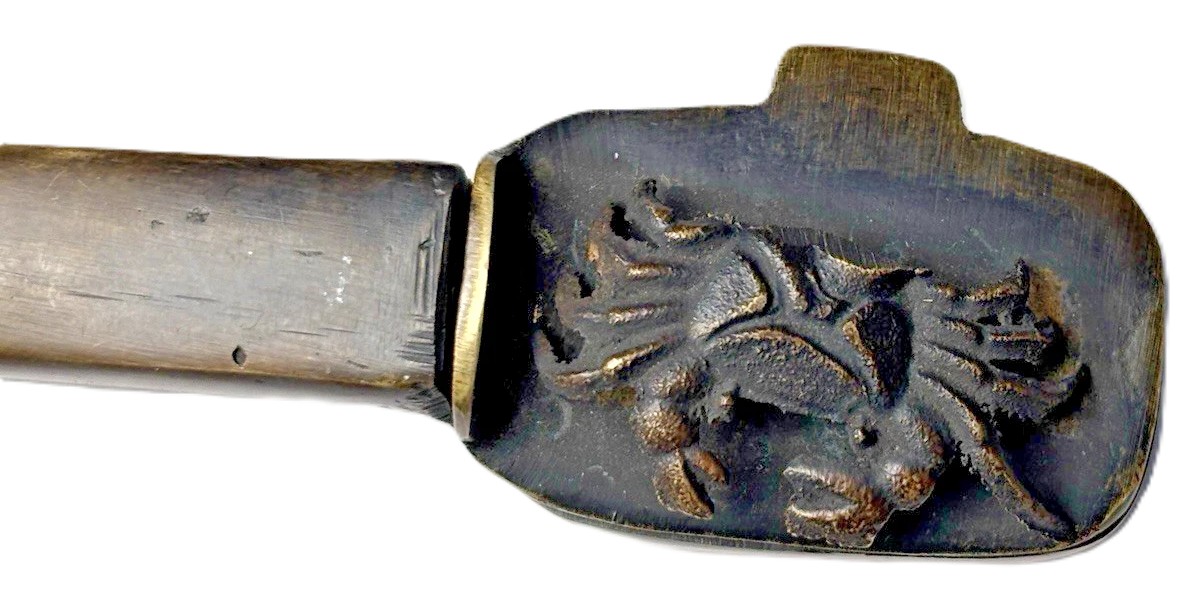
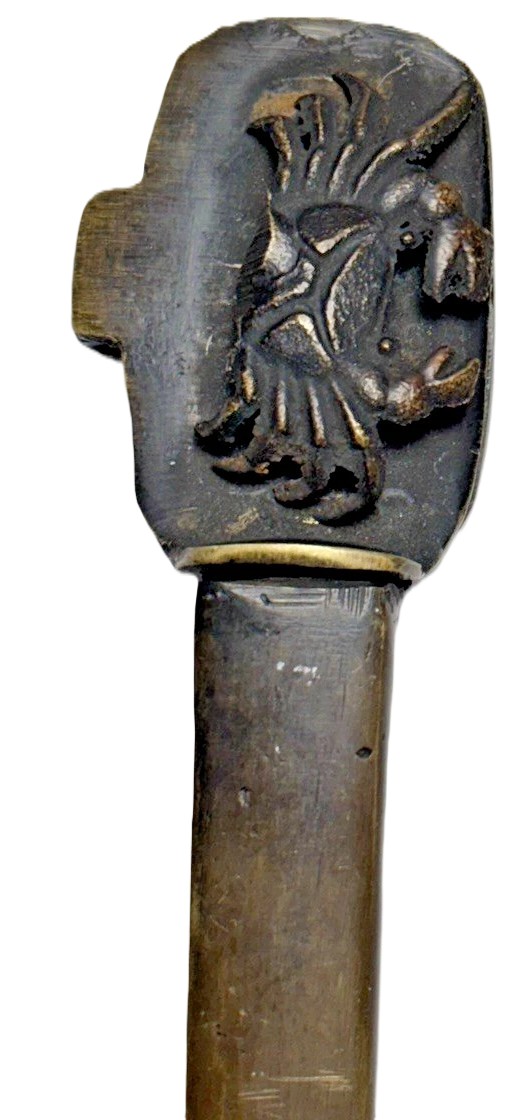



Yatate – Portable Writing Set with a Crab
| Categories | Far East / Oriental |
| Type | Yatate |
| Material | Bronze |
| Markings | Unmarked |
| Manufacturer | Undetermined |
| Origin | Japan |
| Date or Era | circa 1890 |
| Measuring | 7 ¼” long; 1 ¼” wide |
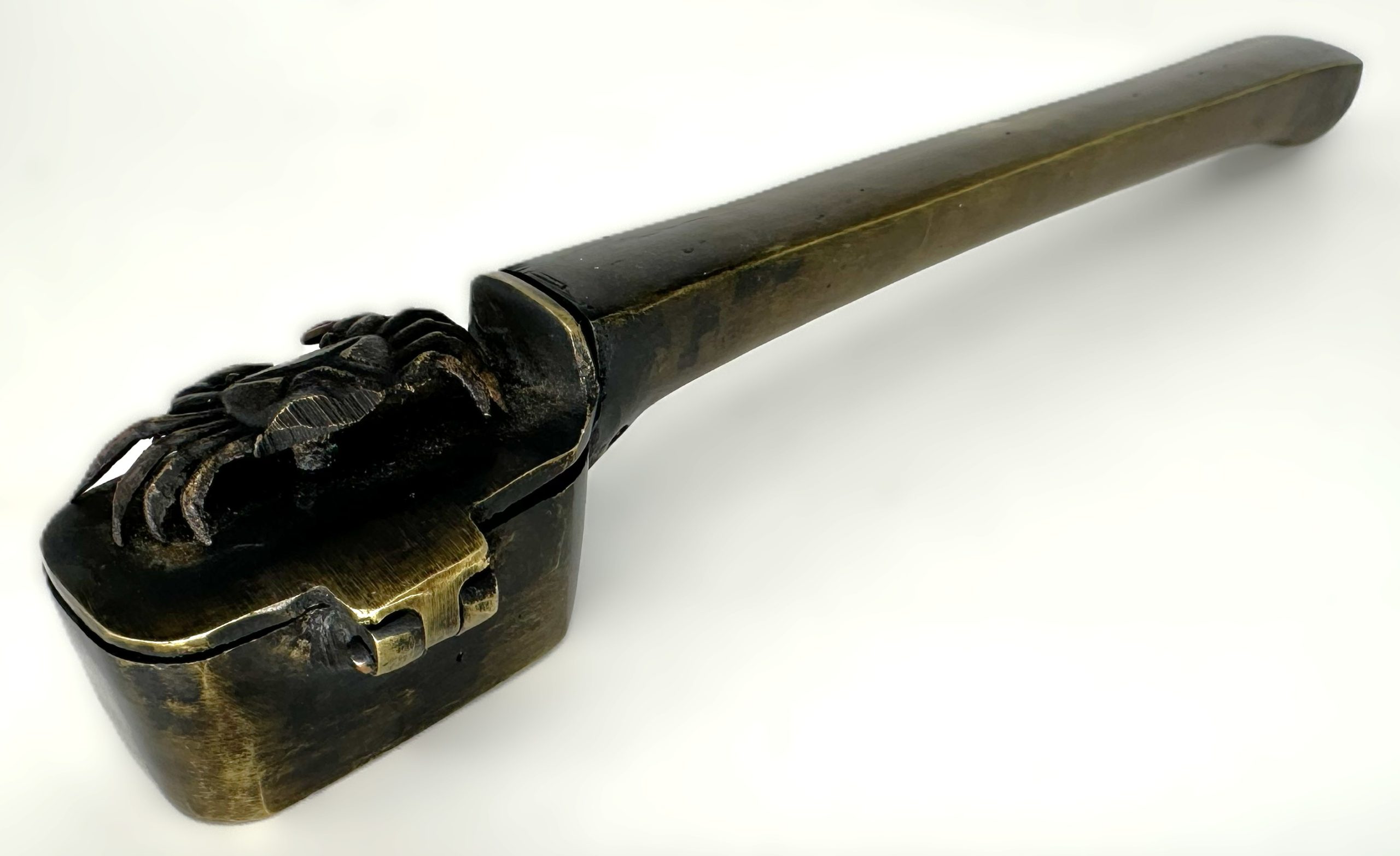
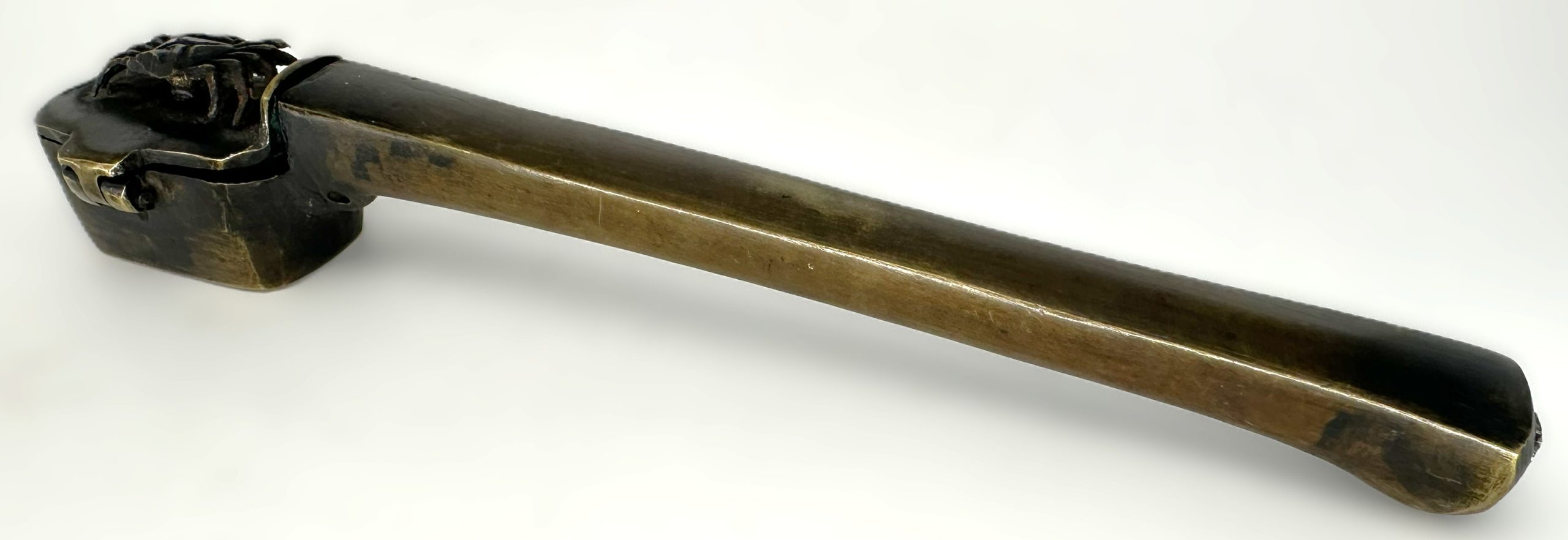
This is a classic yatate (portable writing set) from Japan. Based on the bronze casting and the high-relief “crab” motif, it is a fine example of 19th-century portable inkwells.
- Description of the Parts
- Handle (Fude-zutsu): The long, hollow bronze tube. This served as a protective case for a small bamboo calligraphy brush (fude).
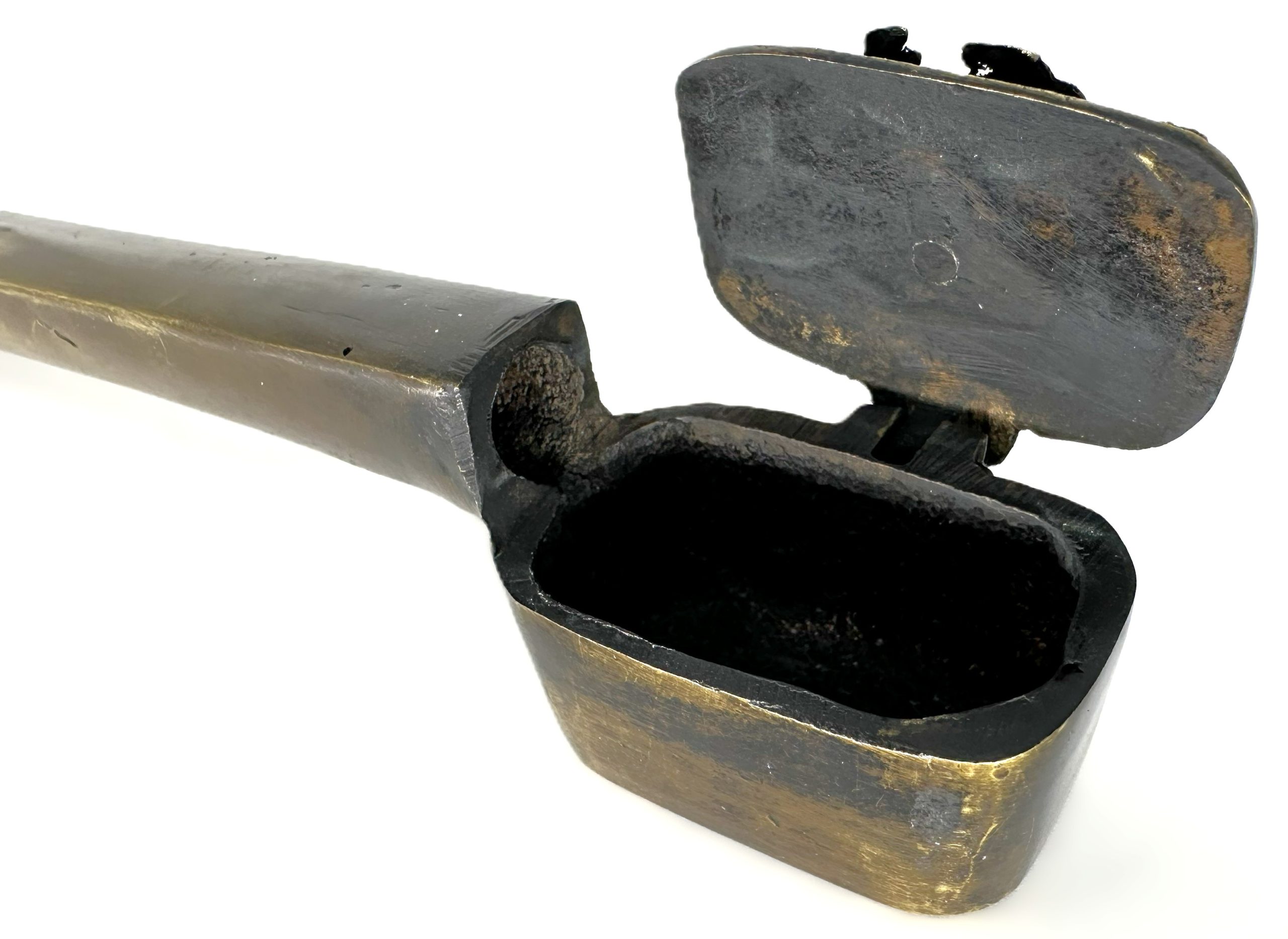
- Ink Reservoir (Sumitsubo): The rectangular box at the end. In a traditional desk set, you would use a heavy inkstone, but for travel, this small pot was used to store liquid ink.
- Hinged Lid (Futa): The lid with a robust hinge is designed to be tight-fitting to prevent leakage.
- Brush Opening: When you open the lid, you’ll notice a circular opening leading into the handle. The brush was inserted here, bristles-first, for storage.
- How it Was Used
A traveler, merchant, or scholar would tuck the handle into their obi (kimono sash) so the ink reservoir hung over the top, acting as a “stopper” to keep it from sliding through.
To use it:
- The user would fill the sumitsubo with silk or cotton wadding (wata) and then saturate it with liquid sumi ink. The wadding acted like a sponge, holding the ink in place to prevent spills.
- They would slide the brush out of the handle.
- They would open the lid and press the brush tips into the ink-soaked wadding to load it with ink.
- After writing, the brush was wiped and slid back into the hollow handle.
- Estimated Age
This piece likely dates to the late Edo period (mid-1800s) to early Meiji period (late 1800s). During the Meiji era, Japanese metalworkers reached a peak of technical skill, often creating these “naturalistic” bronze objects with incredible detail to appeal to both domestic collectors and the growing Western market for Japonisme.
- Significance of the Crab
In Japanese culture, the crab (kani) carries several layers of meaning that would have appealed to a 19th-century writer:
- Success and Rank: The Japanese word for a crab’s shell is jia (甲), which is a homophone for “first” or “top rank” (as in the highest grade in an imperial examination). For a scholar or official using a writing set, the crab was a “good luck charm” for achieving high status.
- Protection: The crab’s hard carapace and sharp pincers symbolize defense and the ability to “pinch” or hold onto one’s gains or ideas.
- The Heike Legend: There is a famous legend regarding the Heike-gani (Heike crab), whose shells are said to resemble the scowling faces of defeated samurai from the Heike clan. While this crab looks like a standard naturalistic specimen, the general association of crabs with the “warrior spirit” made them popular motifs for men’s accessories.
Estimated value: $75
Content disclaimer. The information posted is the owner’s best knowledge and may not have been vetted by the SOIC. We welcome comments, corrections, and additions, working to make our website information comprehensive and accurate.
Join the Society of Inkwell Collectors (SOIC) – it’s free!
Founded in 1981 as a non-profit organization,
we are documenting inkwells (and accessories).
We’re here to help and inform!