



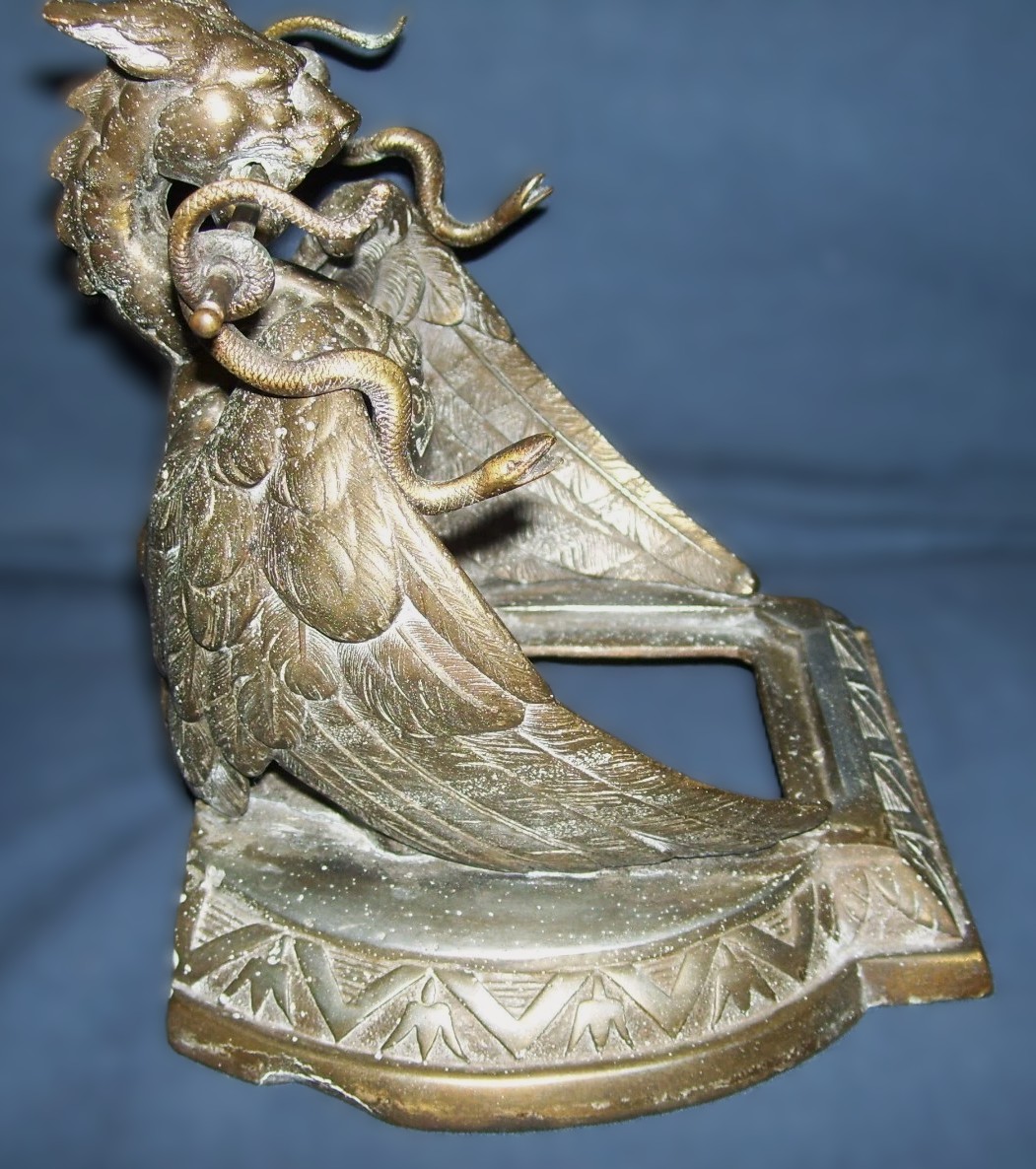

Winged Dragon Inkstand
| Categories | Figural - Mythology; Literature; Religion; Fictional |
| Type | Dragon, Mythology |
| Material | Glass, White metal |
| Markings | See narrative |
| Manufacturer | Nicholas Muller & Sons |
| Origin | United States |
| Date or Era | circa 1880 |
| Measuring | 6” x 5” x 6” high |
Description
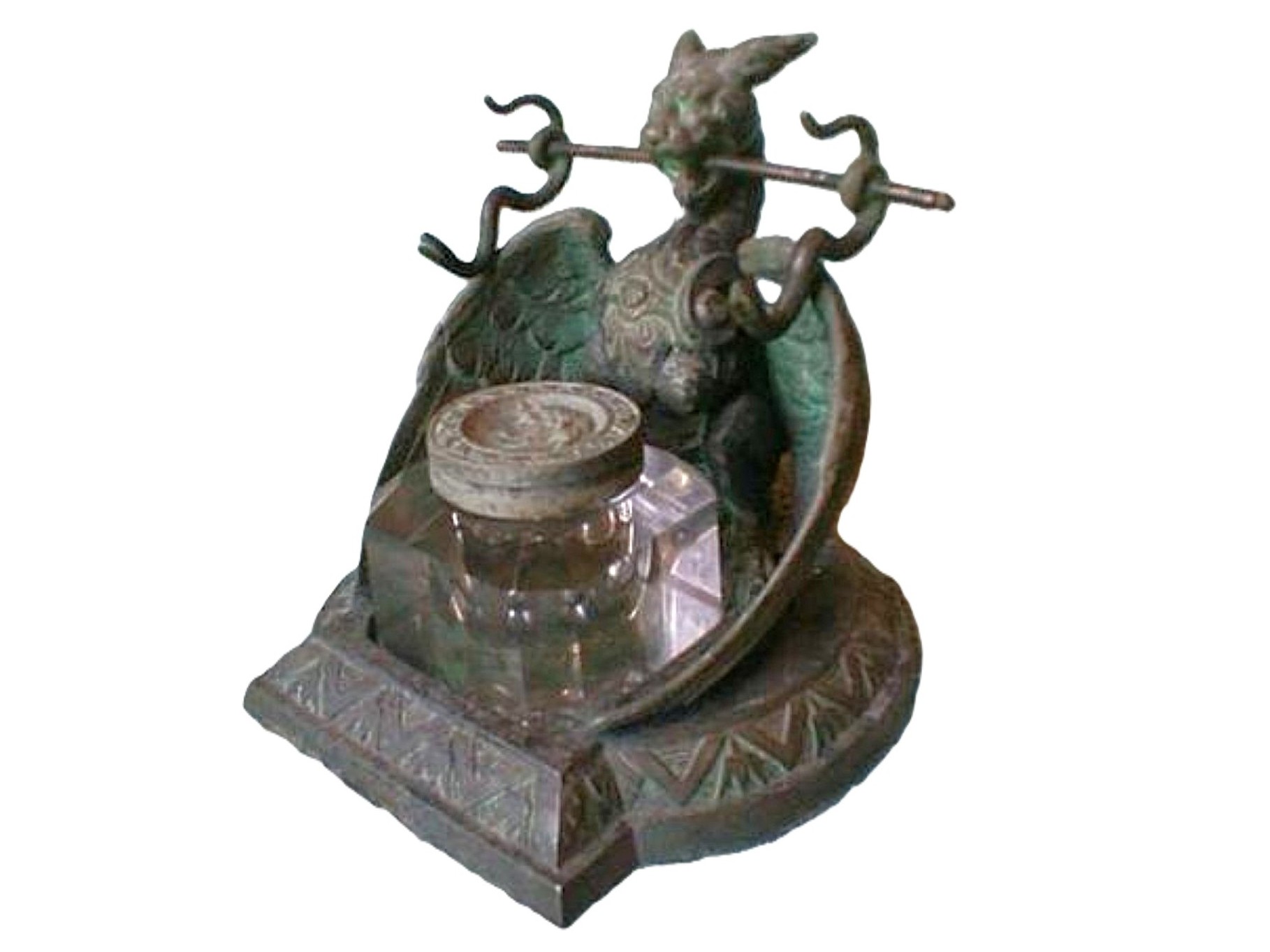
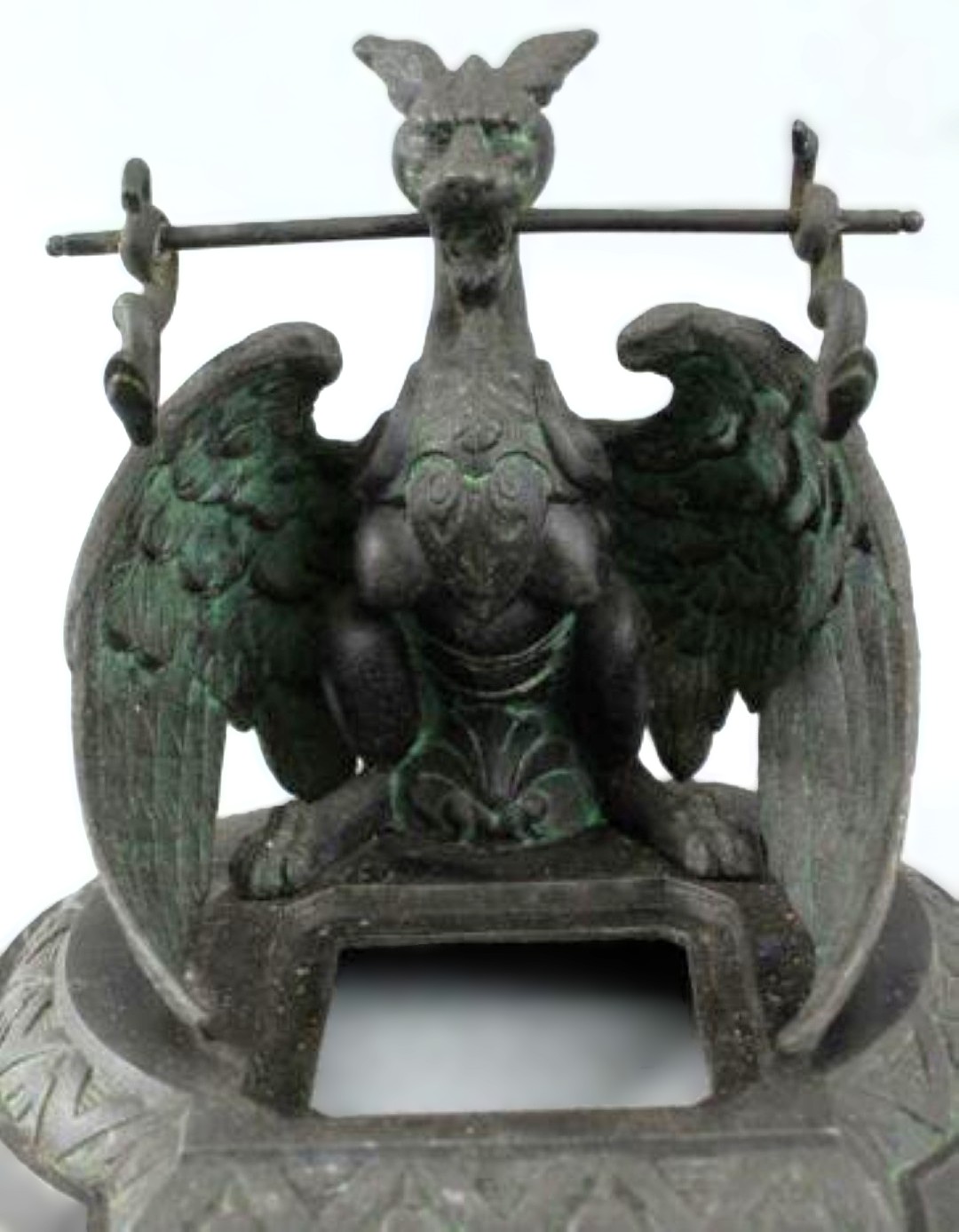
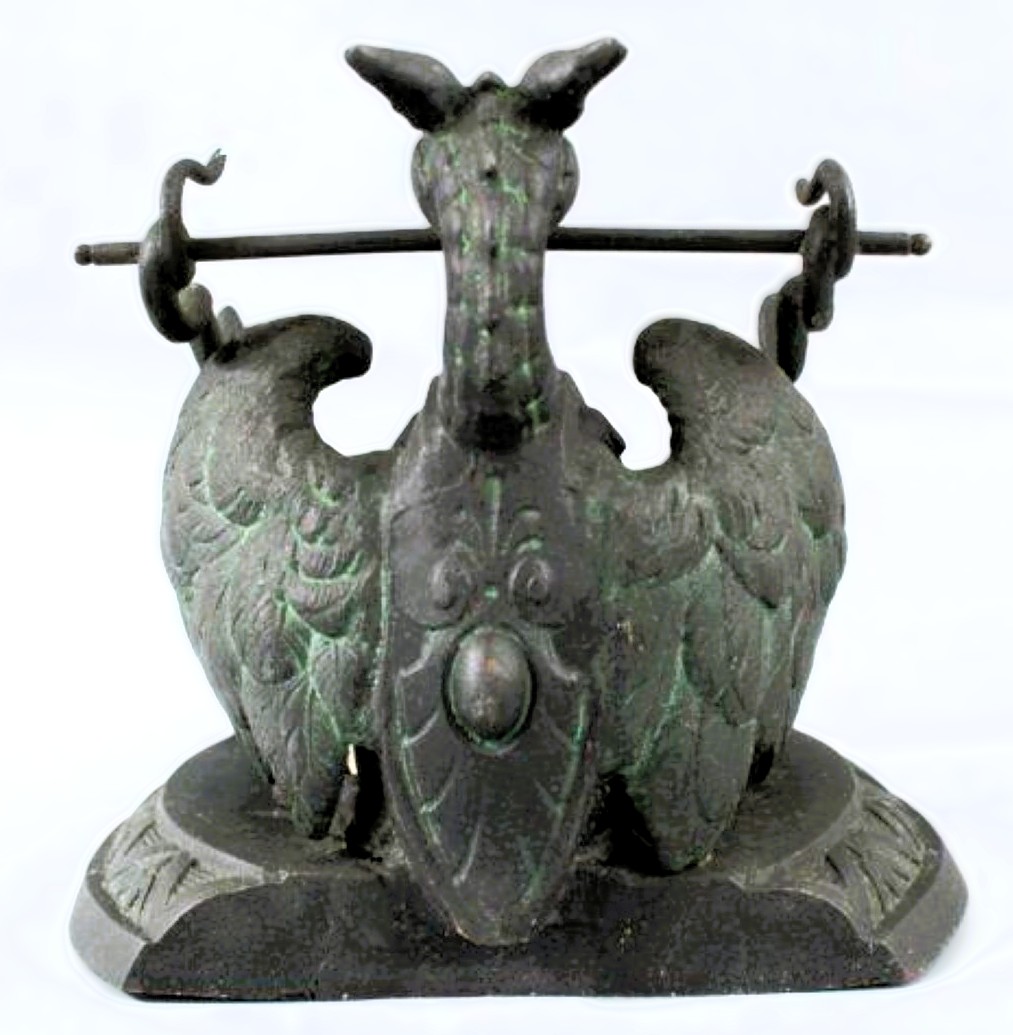
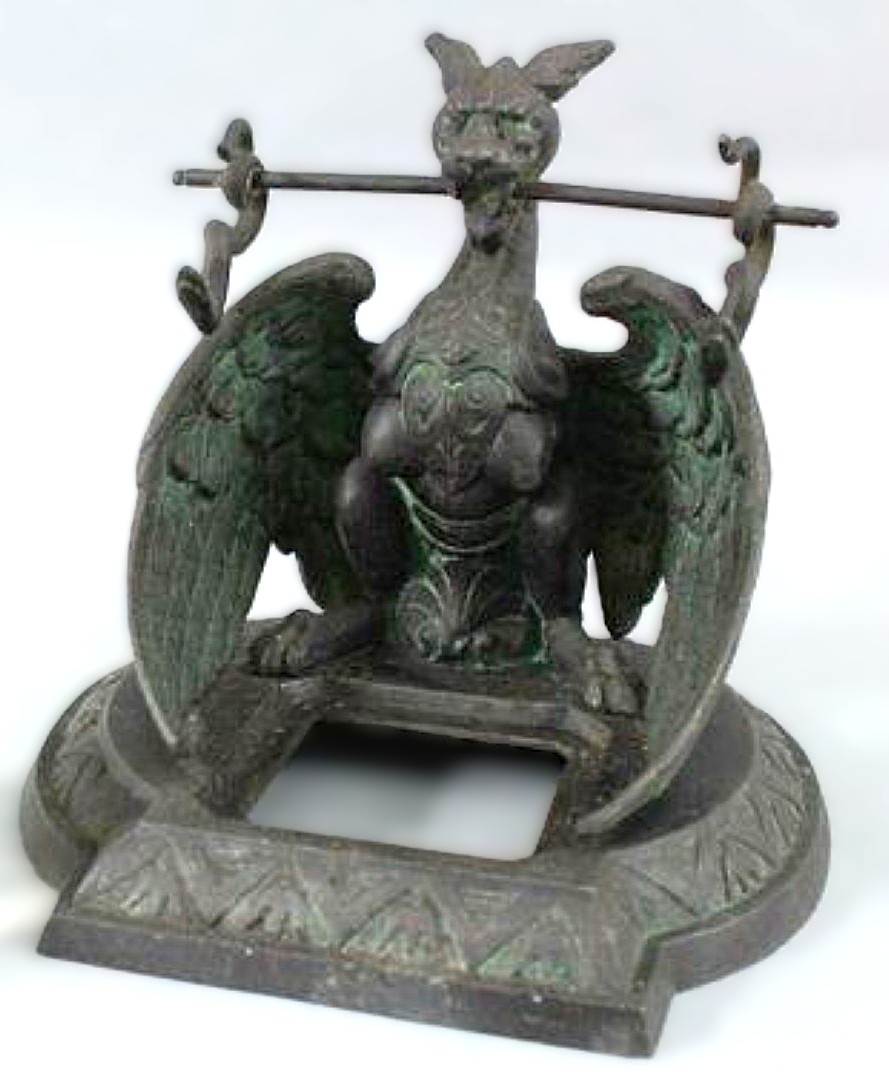
- The Main Figural Motif: The centerpiece is a gargoyle- or griffin-like winged creature (referred to historically in cataloging as either a dragon or a griffin). It features a stylized, reptilian head with pointed ears, deeply textured feathered wings that flare out to frame the piece, and a muscular chest adorned with scrolled, shield-like ornamentation.
- The Pen Rack: The creature holds a slender horizontal metal rod directly in its jaws. Wound around the outer edges of this rod are two independent, coiled snakes with raised heads, facing inward. The rod and snakes function as a pen rest, designed to hold a dip pen horizontally.
- The Base and Wells: The creature sits atop a stepped, trapezoidal base decorated with a heavy, stylized geometric border (reminiscent of the Gothic or Romanesque Revival styles popular in the late 19th century). The front features a square aperture designed to snugly hold a heavy, pressed clear-glass inkwell insert. The glass inkwell is topped by a matching decorated spelter collar and lid.
About the Manufacturer: Nicholas Muller & Sons
The underside inscription “N. MULLER N.Y. No. 611” provides a definitive attribution:
- The Maker: Nicholas Muller (c. 1818–1893) was a prominent German-American metalware founder and manufacturer based in New York City. Operating as Nicholas Muller & Sons (with showrooms and foundries located over the years at places like Chambers Street and Broadway), the firm operated primarily from the 1860s through the 1890s.
- Their Specialization: Muller was celebrated for creating fine-quality ornamental cast iron, bronze, and spelter decorative arts. While they manufactured clock cases and side ornaments (frequently supplying firms like Ansonia), they were equally famous for their highly artistic, figural inkstands.
- The Model Number: The stamped “No. 611” is the specific pattern or model number used by the foundry for this precise design, allowing retailers to order it directly from their trade catalogs.
When Was it Made?
Given the firm’s peak production era and the heavy, eclectic stylistic choice, this inkstand dates squarely to the late Victorian era, circa 1875 to 1885.
The Inspiration: Why a Dragon and Snakes?
While many Victorian inkwells feature peaceful subjects like pets, hunting motifs, or floral scrollwork, this model leans heavily into High Victorian Gothic Revival and Eclecticism. The piece draws on broad, powerful cultural currents of the 19th century:
- Gothic Revival and Romantic Literature
The mid-to-late 1800s saw a massive resurgence of interest in medieval lore, chivalric romances, and European mythology. Gargoyles, griffins, and dragons jumped off the rooflines of Gothic cathedrals and into the Victorian parlor. Objects like this were meant to evoke an atmosphere of ancient mystery, scholarly gravity, and intellectual depth.
- The Traditional Role of the “Guardian”
In classical and European mythology, dragons, griffins, and winged monsters are the ultimate guardians of treasure. On a writing desk, an inkwell was a vessel for a highly valuable commodity: ink, which recorded wealth, legacy, legal contracts, and personal thoughts. Having a fierce beast fiercely straddling the inkwell symbolically cast it as the “protector” of the writer’s thoughts and secrets.
- “The Pen is Mightier Than the Sword”
The imagery of a ferocious creature quite literally biting down on a pen rod, flanked by striking serpents, plays into a highly dramatic Victorian visual metaphor. It transforms the mundane act of writing into an intense, powerful deed. The writer is literally wresting the pen away from a dragon and snakes to conquer the blank page.
It is an imposing, beautifully preserved example of American metalwork from one of New York’s premier 19th-century decorative foundries!
Estimated value: $275
Content disclaimer. The information posted is the owner’s best knowledge and may not have been vetted by the SOIC. We welcome comments, corrections, and additions, working to make our website information comprehensive and accurate.
Join the Society of Inkwell Collectors (SOIC) – it’s free!
Founded in 1981 as a non-profit organization,
we are documenting inkwells (and accessories).
We’re here to help and inform!