

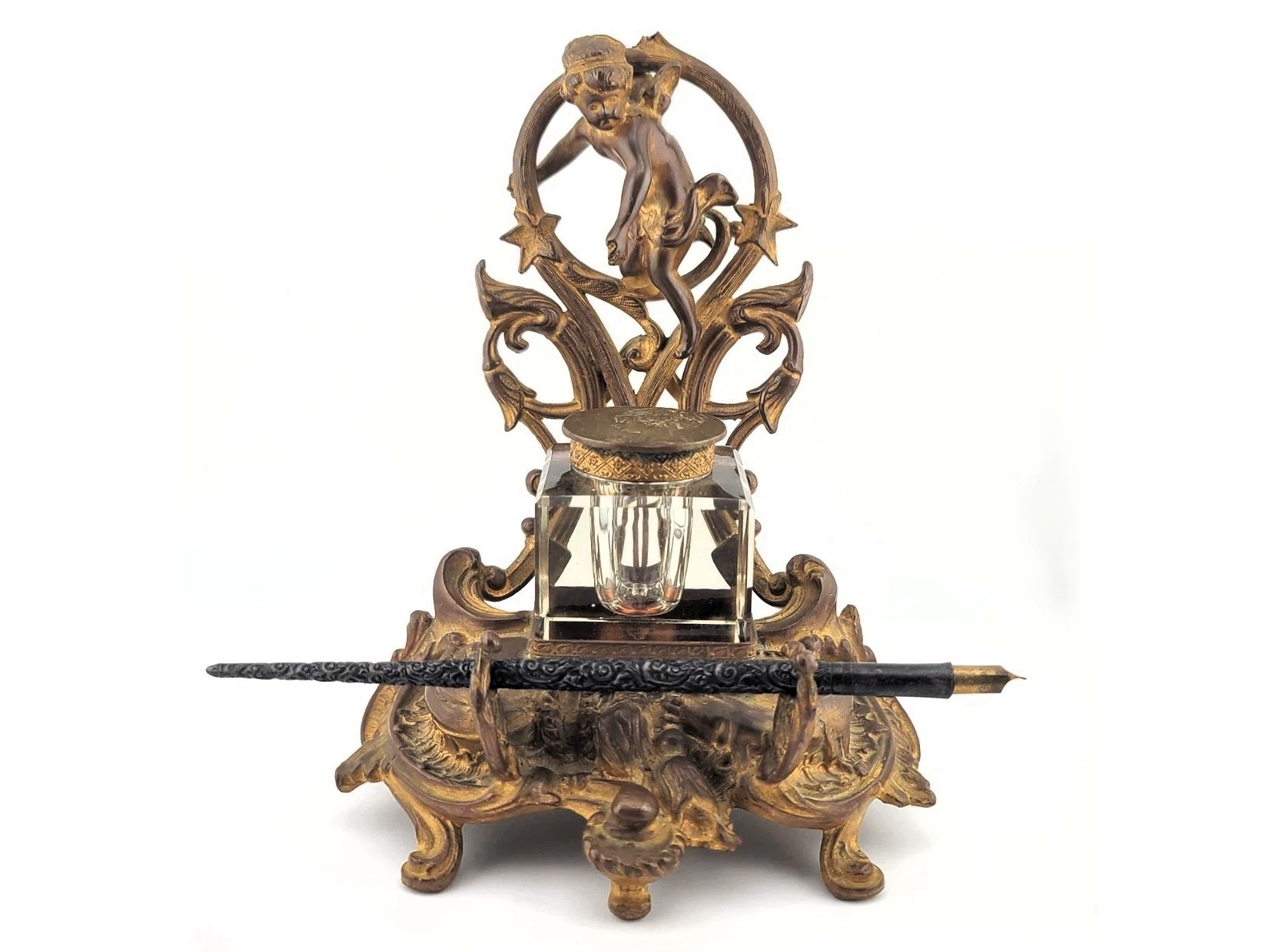
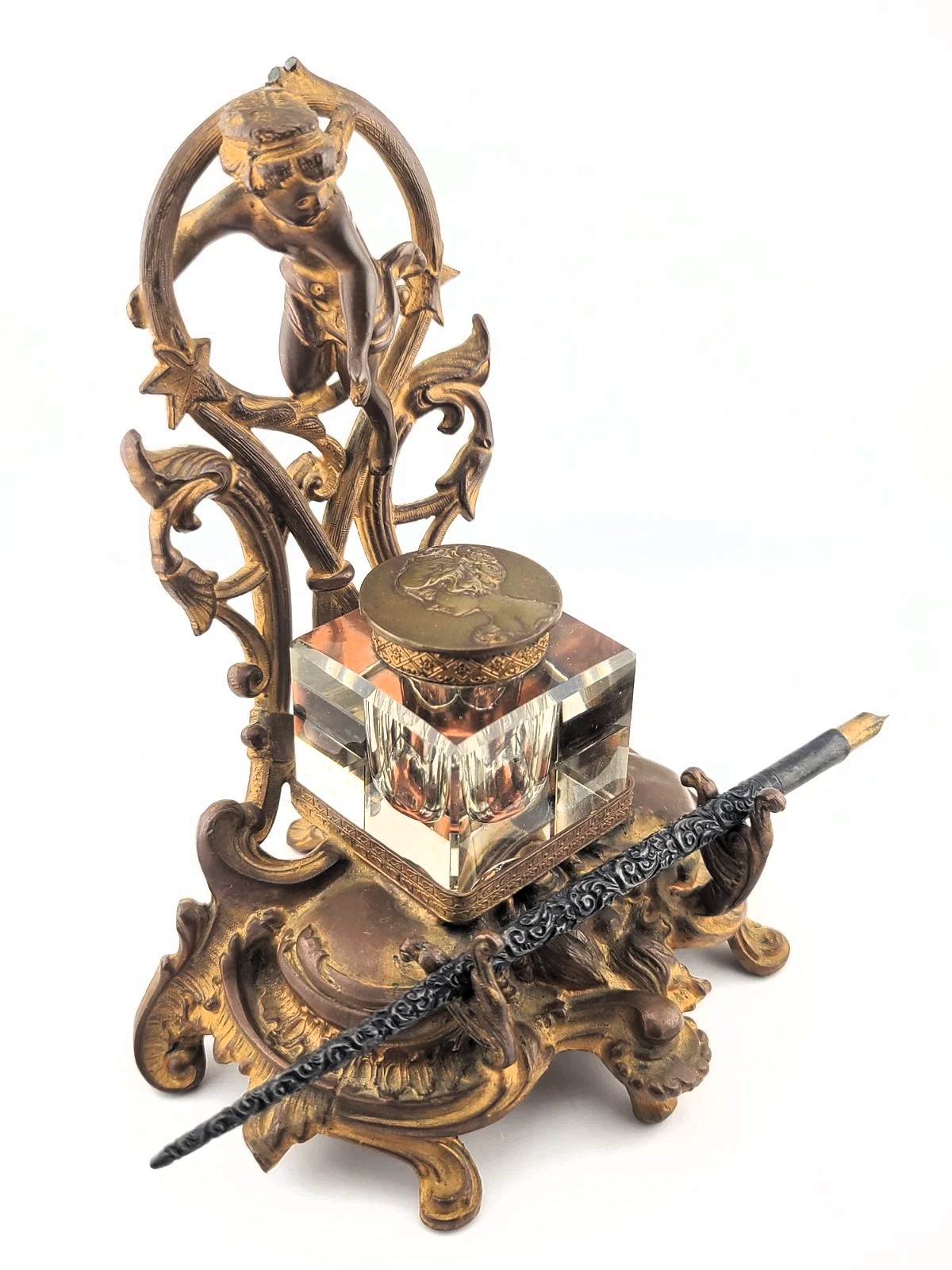


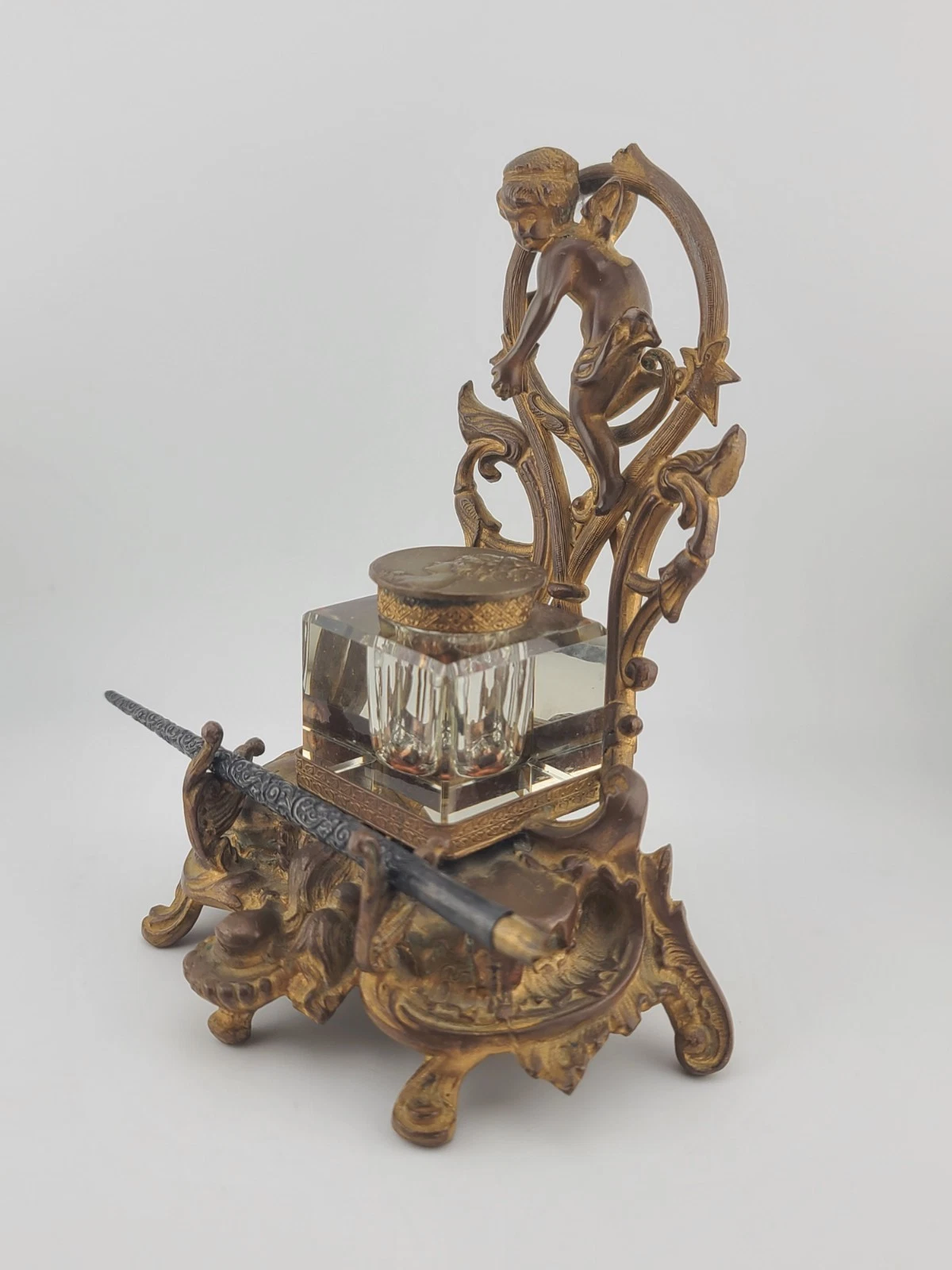
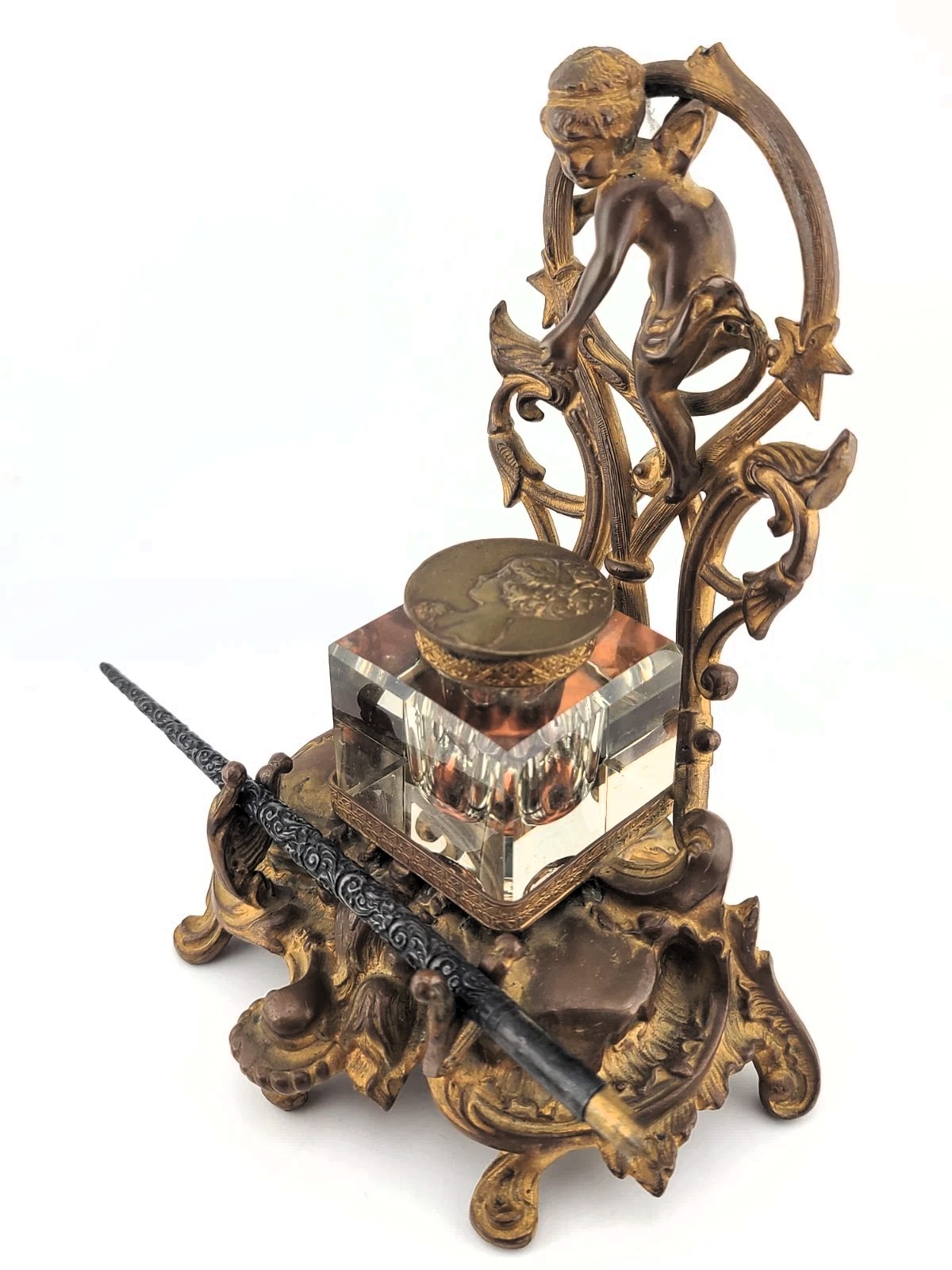
Winged Cupid Inkstand
| Categories | Figural - Mythology; Literature; Religion; Fictional |
| Type | Cupid / Cherub / Angel |
| Material | Gilt Bronze |
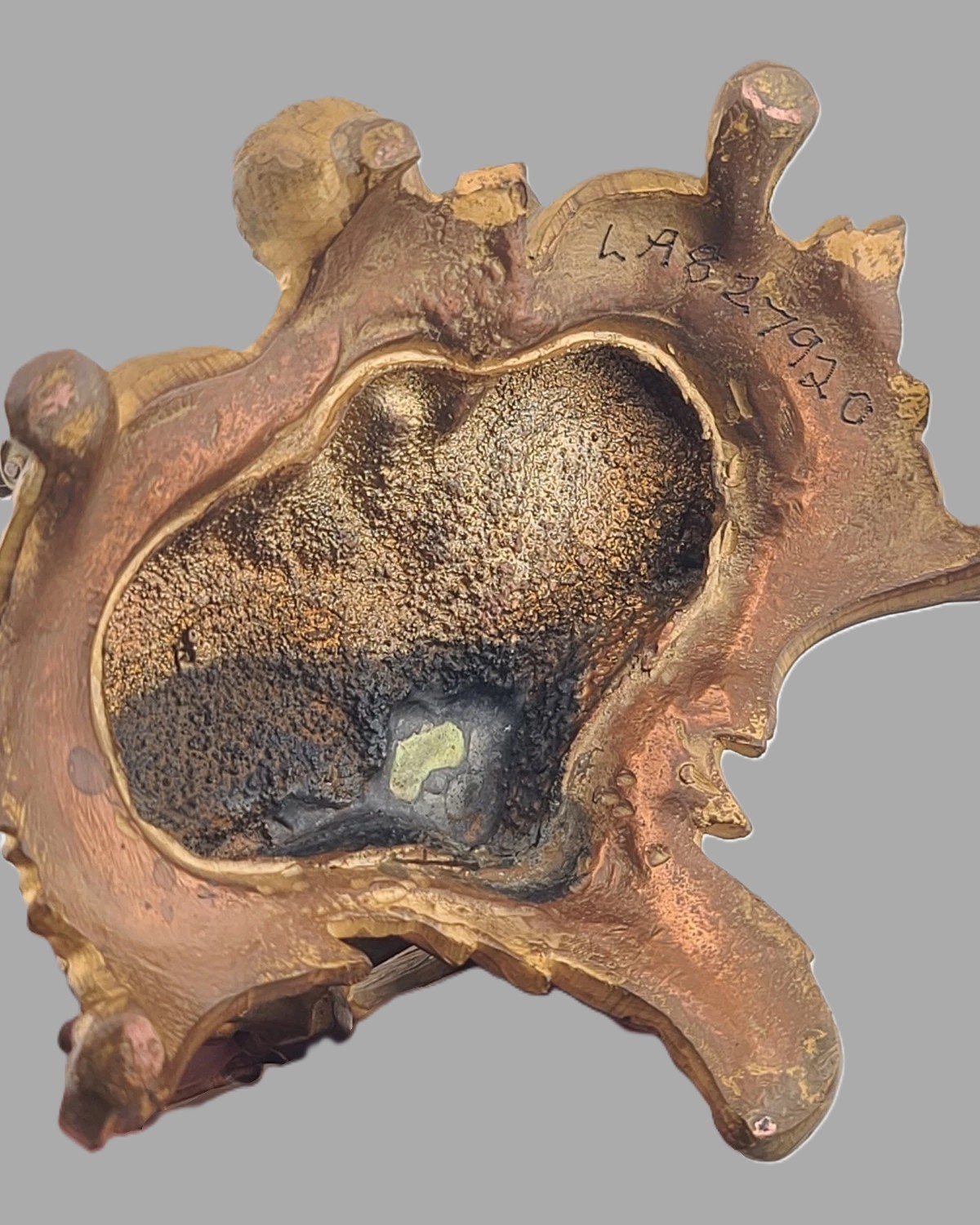
| Markings | Unmarked |
| Manufacturer | Undetermined |
| Origin | France |
| Date or Era | circa 1890 |
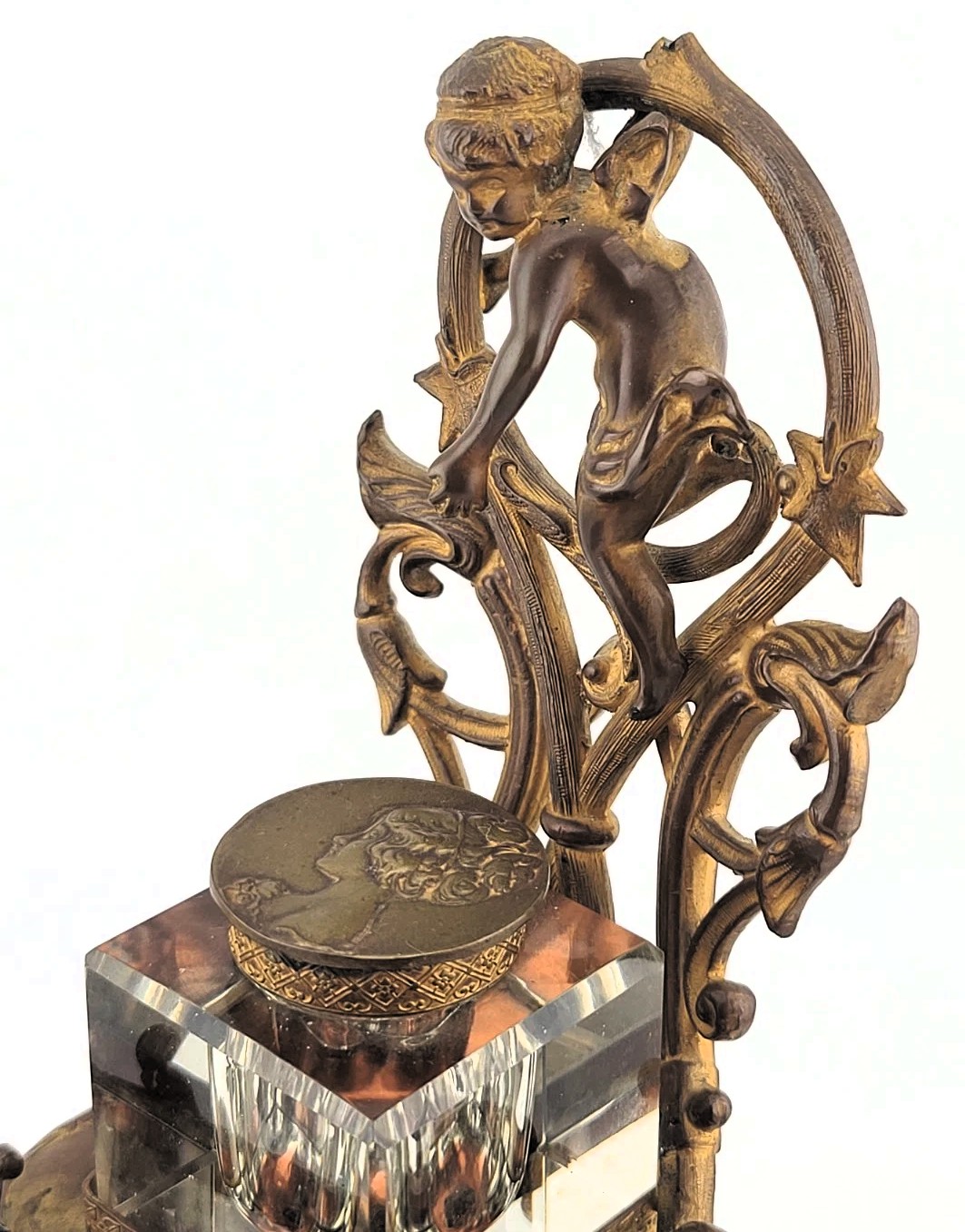
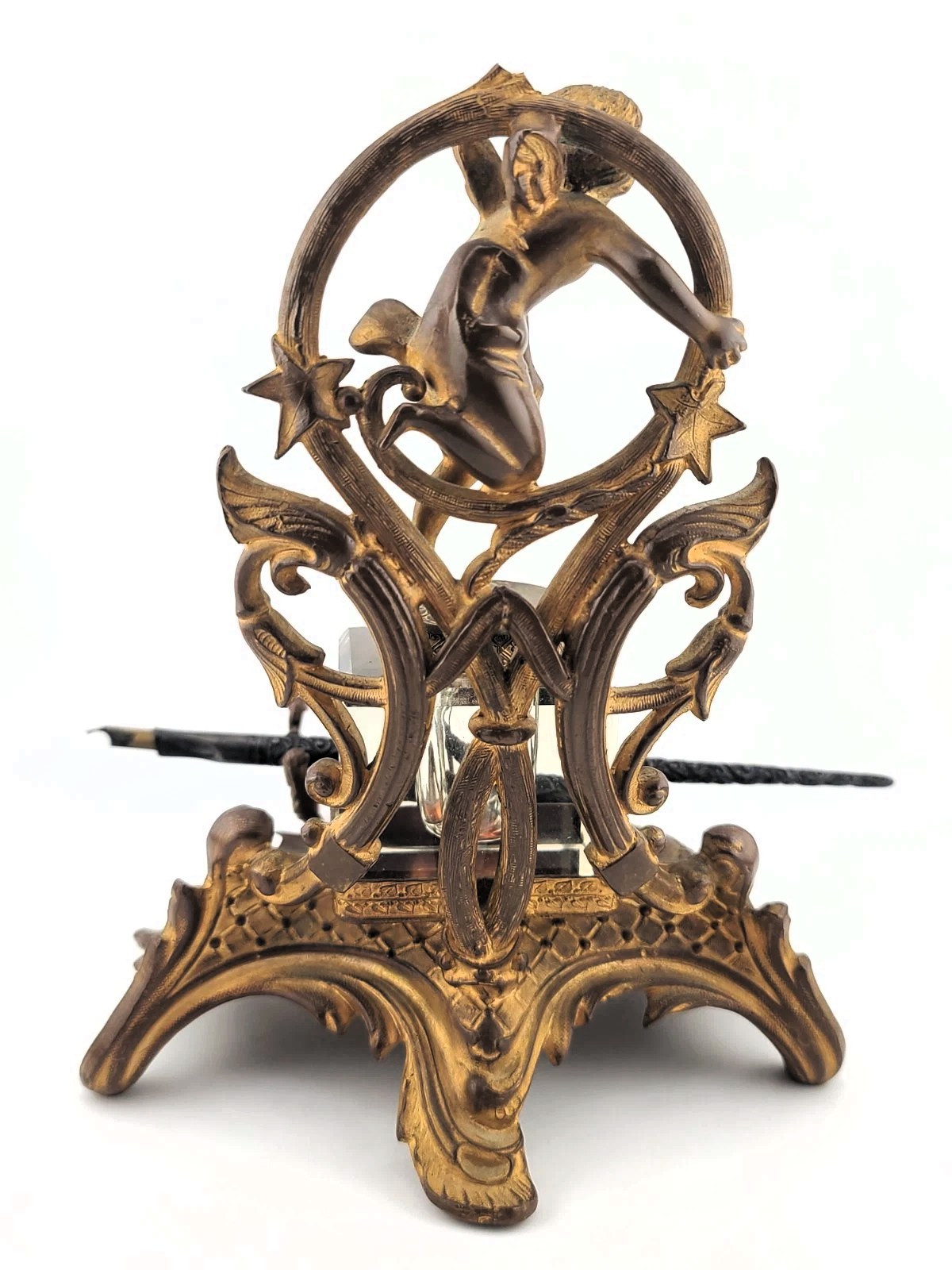
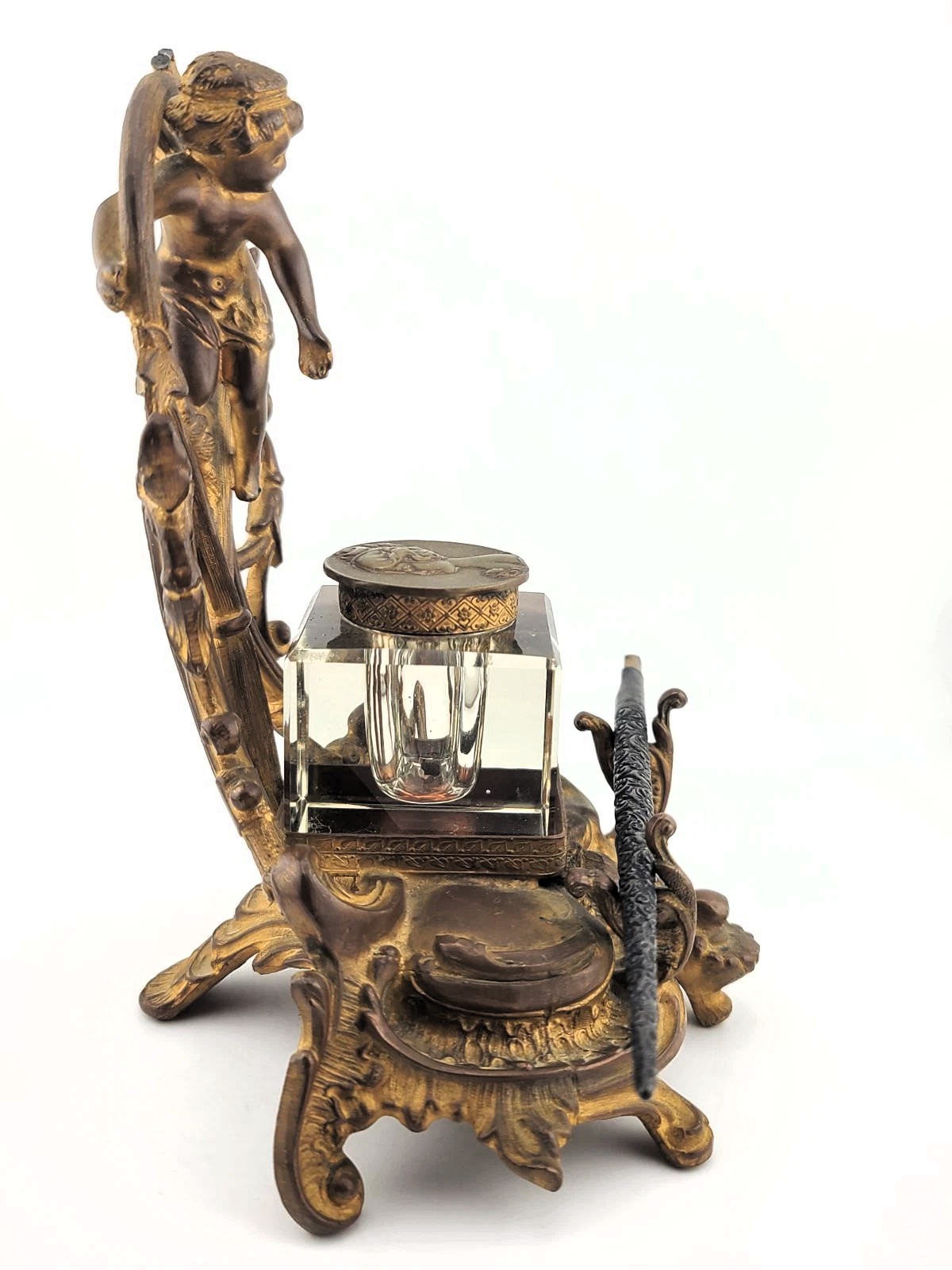
This ornate gilded bronze inkstand is a classic example of Art Nouveau desk furniture from the late 19th century.
The central figure is a winged Cupid (or Putto).
- Identifying Features: He is depicted as a mischievous, athletic young boy with small, feathered wings.
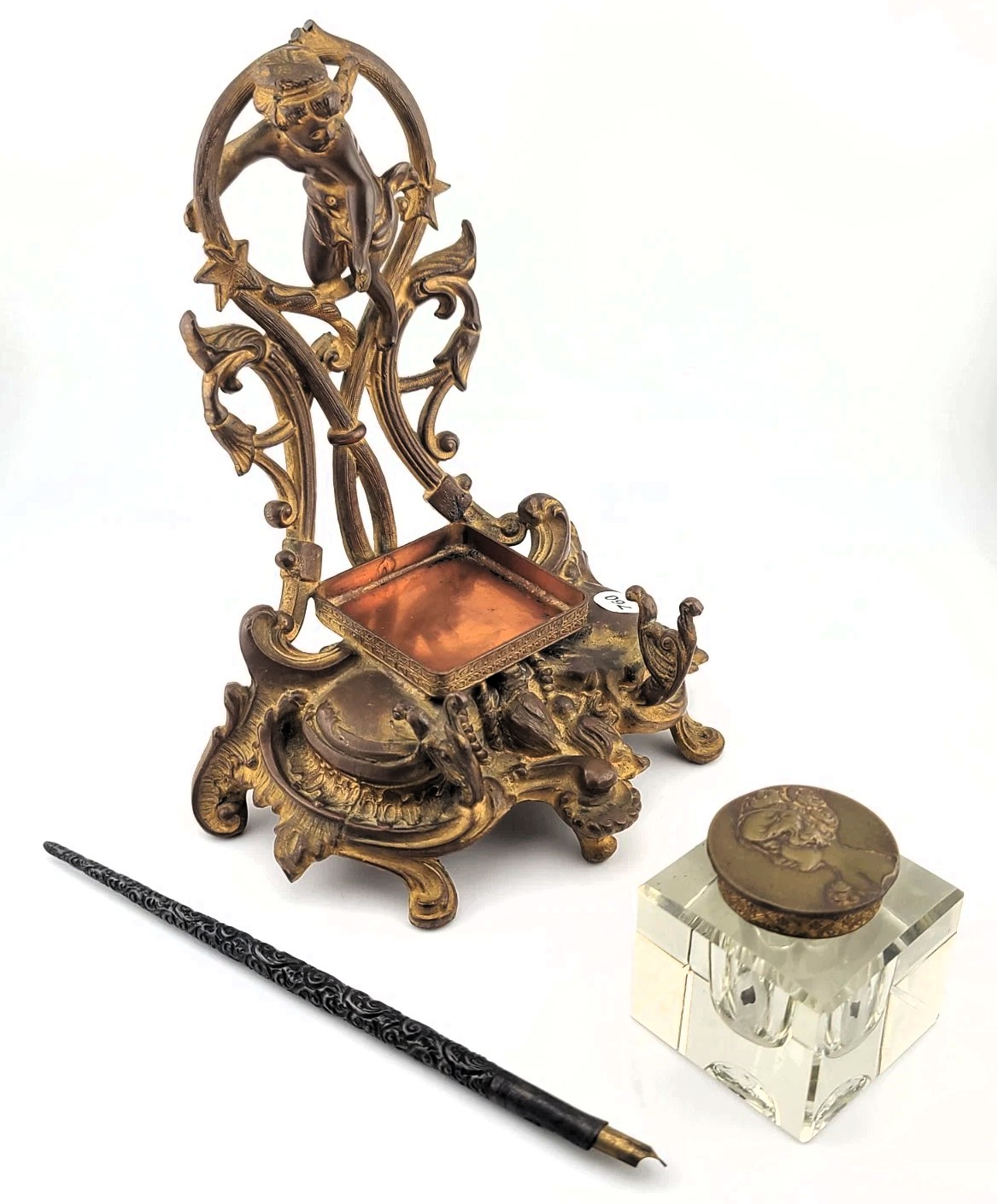
- Composition: He is positioned within a circular trellis framed by stars and stylized scrolling vines. One hand reaches downward toward the inkwell, while the other grips the circular frame.
Design and Construction
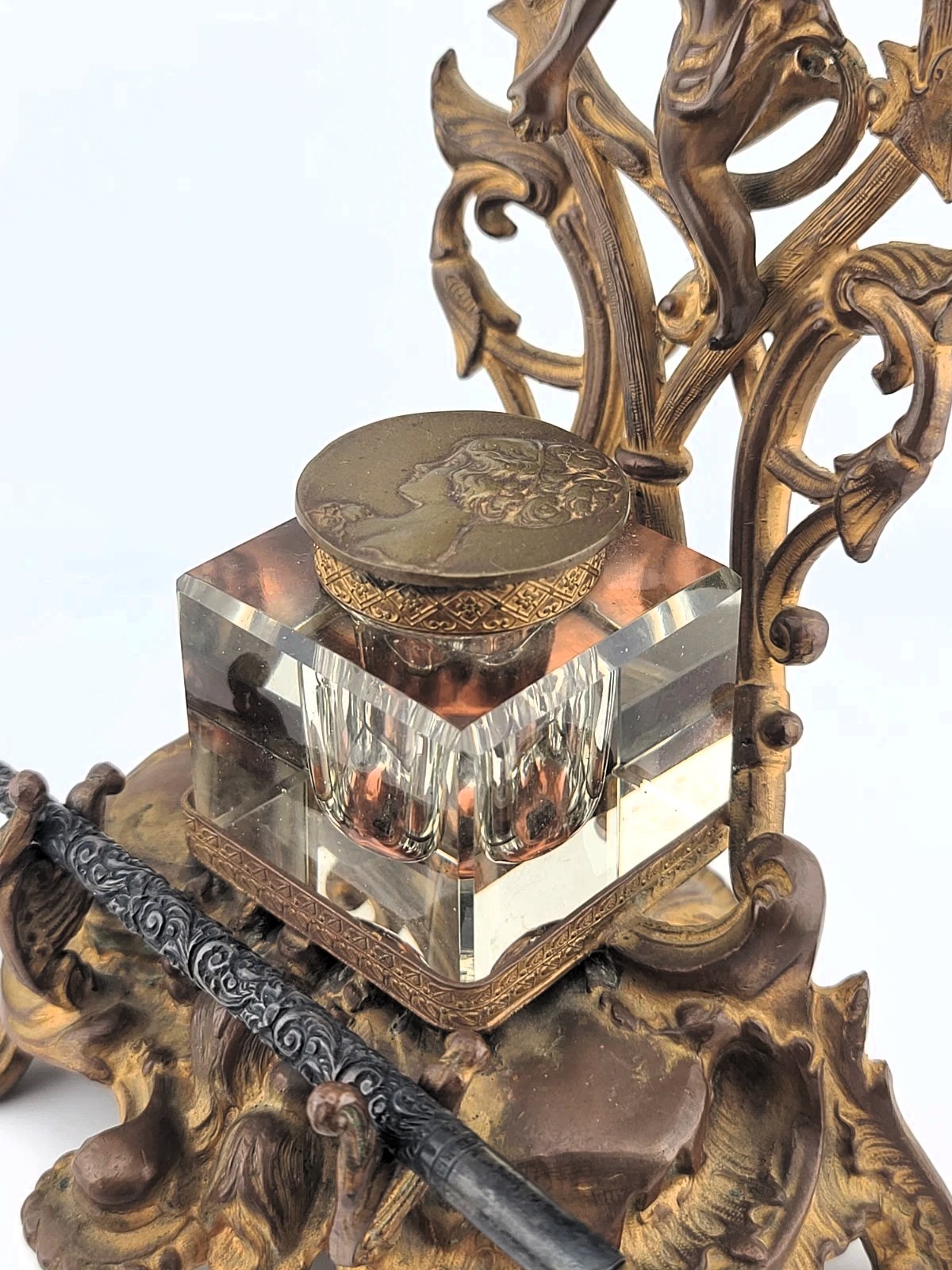
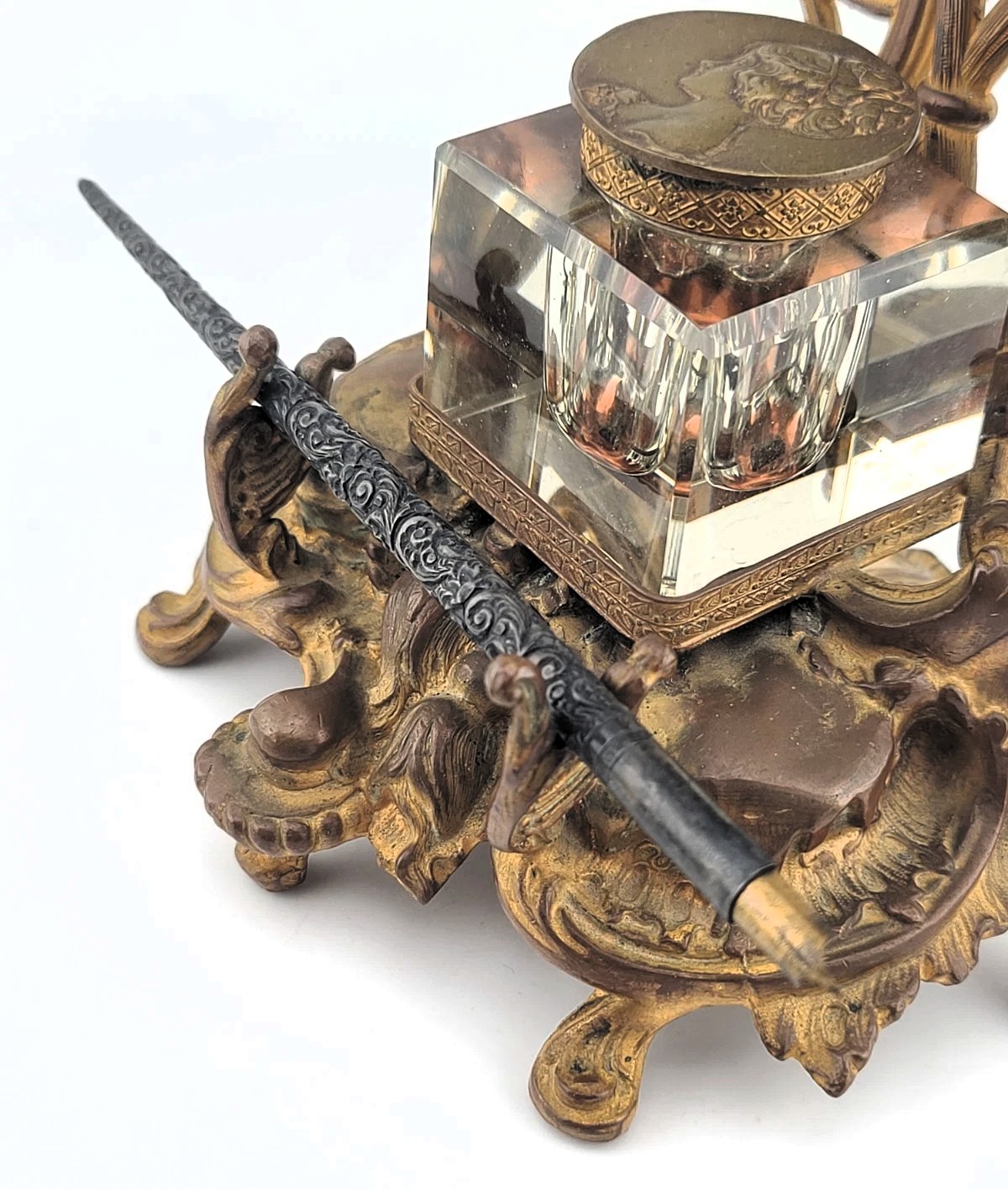
- Inkstand Base: The heavy, cast-metal base features a wide, flared footprint with Rococo-style scrolling feet and openwork (pierced) floral details.
- Gilded Finish: The entire stand is finished with a rich gold gilding (likely a gold-wash or ormolu), which has developed a soft, aged patina in the deeper crevices of the casting.
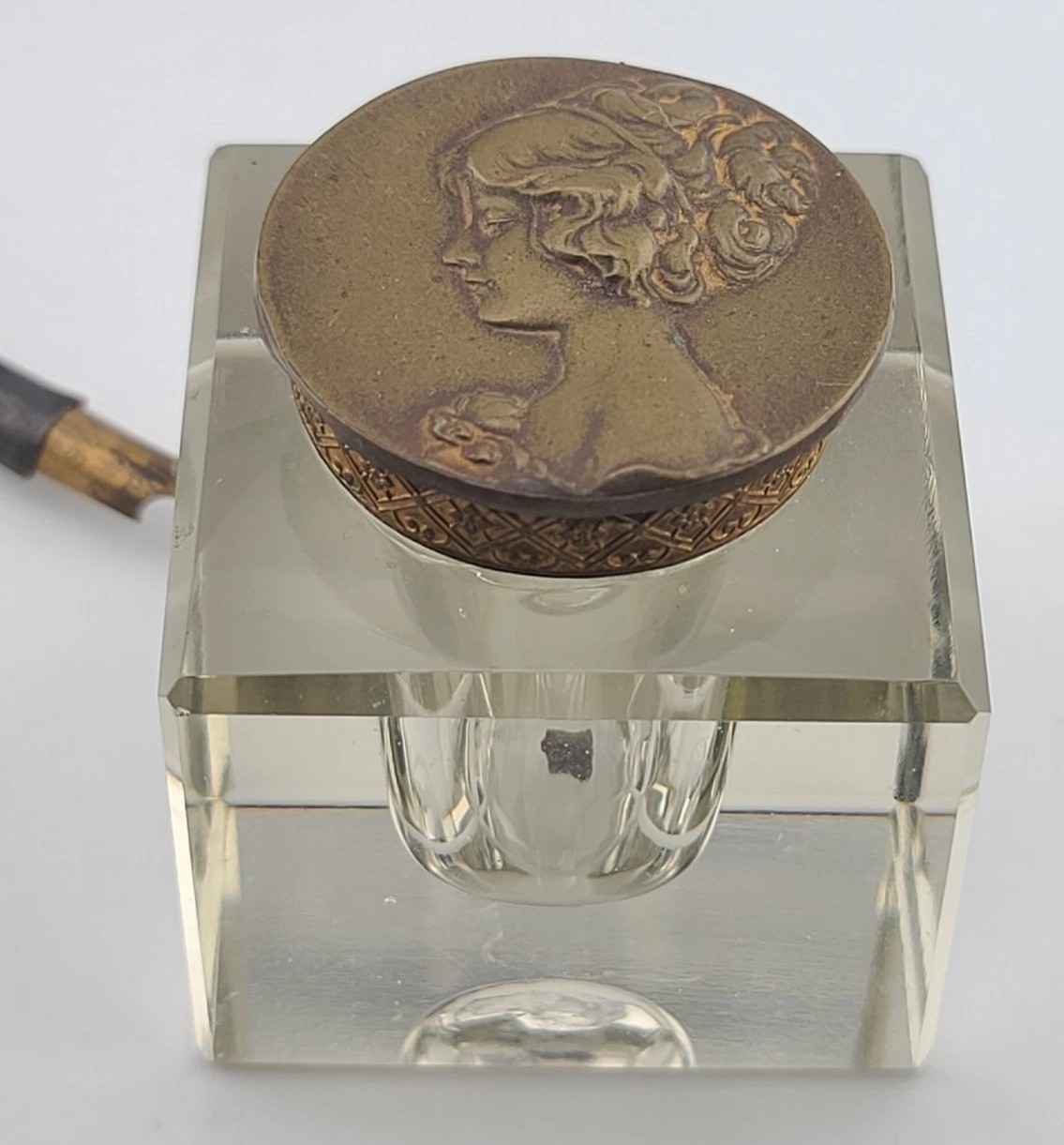
- Inkwell: A square, heavy crystal inkwell sits in a dedicated square tray on the base.
- The Lid: The glass well is topped with a hinged metal lid featuring a high-relief classical profile of a woman (possibly a Muse or a Gibson Girl-style figure) surrounded by scrolling hair and flowers.
Integrated Pen Rest
The front of the stand features an integrated pen holder consisting of two protruding brackets shaped like scrolling leaves. These are specifically designed to hold a long dip pen horizontally across the front of the desk set.
Likely Origin: France
- French Art Nouveau (Paris): The high-quality casting and the use of the “Cupid” motif within a whimsical, circular trellis are hallmarks of French decorative arts from the Belle Époque era.
Key Identifying Features
- Design Influence: The combination of a classical Cupid figure with the “Gibson Girl” style female profile on the lid suggests a date range of 1895–1905, when these two aesthetics merged in popular stationery design.
- The “LA” Mark: The hand-inscribed nature of the mark on the underside indicates it was likely a retailer’s inventory number or a foundry pattern mark rather than a factory logo.
- Material: The bright orange-copper tone visible inside the square metal tray (where the glass sits) suggests the base metal is brass or bronze that was then heavily gilded.
Sold (with sterling silver pen) for $500 in December 2025
Content disclaimer. The information posted is the owner’s best knowledge and may not have been vetted by the SOIC. We welcome comments, corrections, and additions, working to make our website information comprehensive and accurate.
Join the Society of Inkwell Collectors (SOIC) – it’s free!
Founded in 1981 as a non-profit organization,
we are documenting inkwells (and accessories).
We’re here to help and inform!