


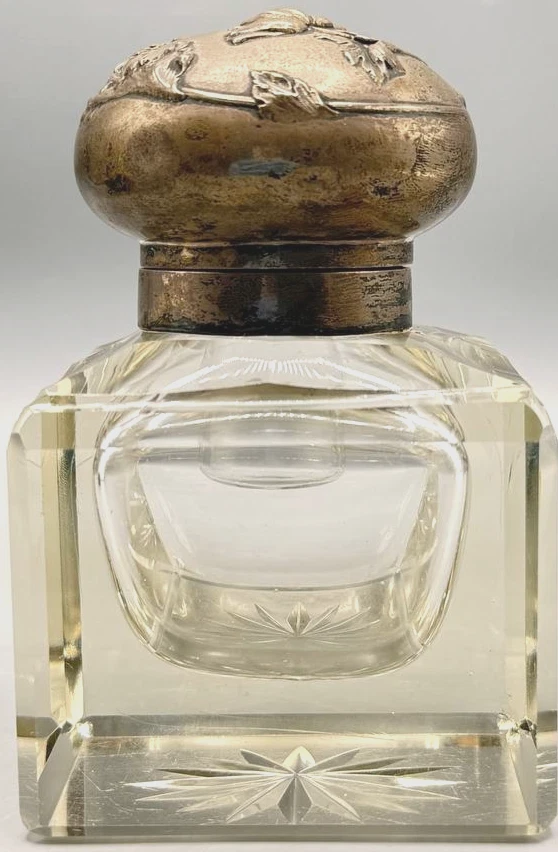
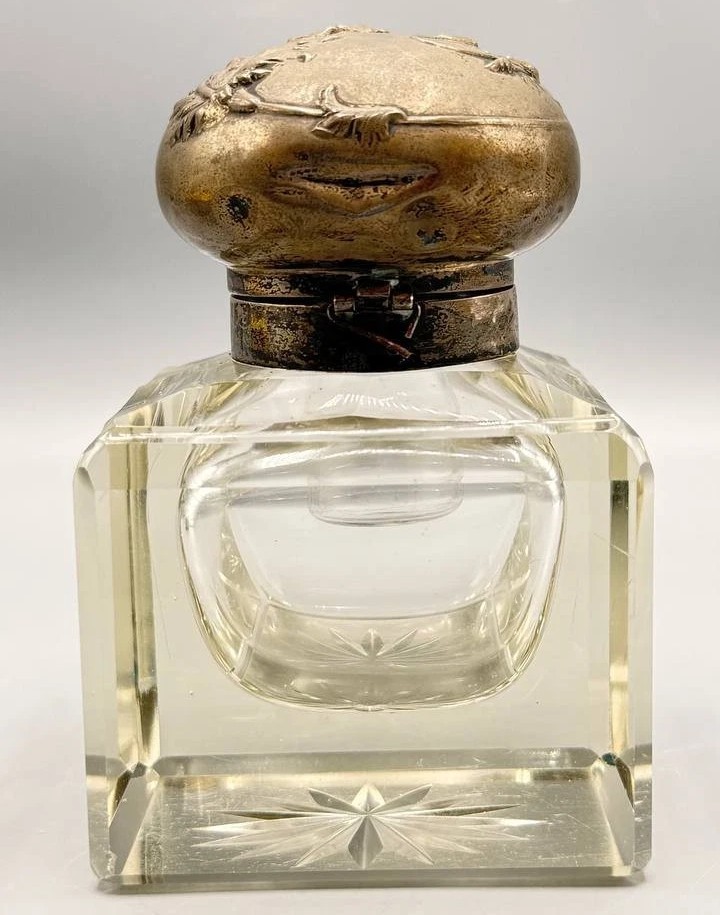


Wilhelm Binder Cut Crystal Inkwell
| Categories | Glass - Non-figural |
| Material | Glass, Silver |
| Markings | See Narrative |
| Manufacturer | Wilhelm Binder |
| Origin | Germany |
| Date or Era | circa 1900 |
| Measuring | 2 ⅞” x 2 ⅞” x 4 ⅝” high |
This is an example of German Jugendstil (Art Nouveau) functional art. Based on the hallmarks and the specific craftsmanship, this dates to circa 1890–1910.
Description
- The Lid: The hinged lid is crafted from 800 silver and features an elegant, high-relief repoussé design. The primary motif is a blooming poppy flower, a classic Art Nouveau symbol representing sleep, peace, and the organic flow of nature. The “whiplash” curves of the stems and leaves are characteristic of the German Jugendstil movement.
- The Base: The inkwell sits on a heavy, thick-walled cut crystal base. It features deep, vertical beveling on the sides that creates a brilliant prismatic effect.
- The Bottom: On the underside of the crystal, there is a large, hand-cut starburst (or sunburst) pattern. This was a hallmark of high-quality cut glass from this era, designed to catch and reflect light upward through the ink.
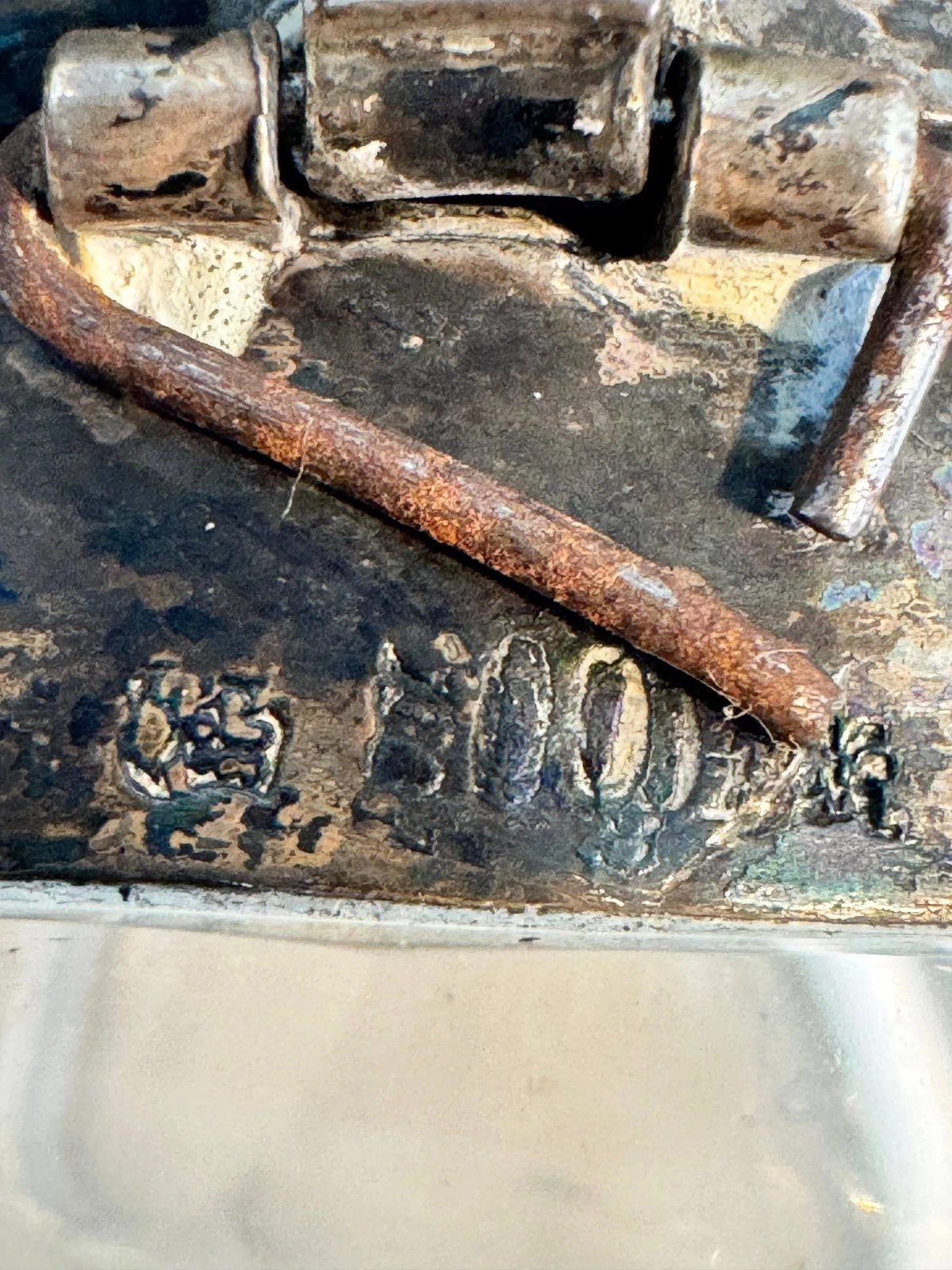
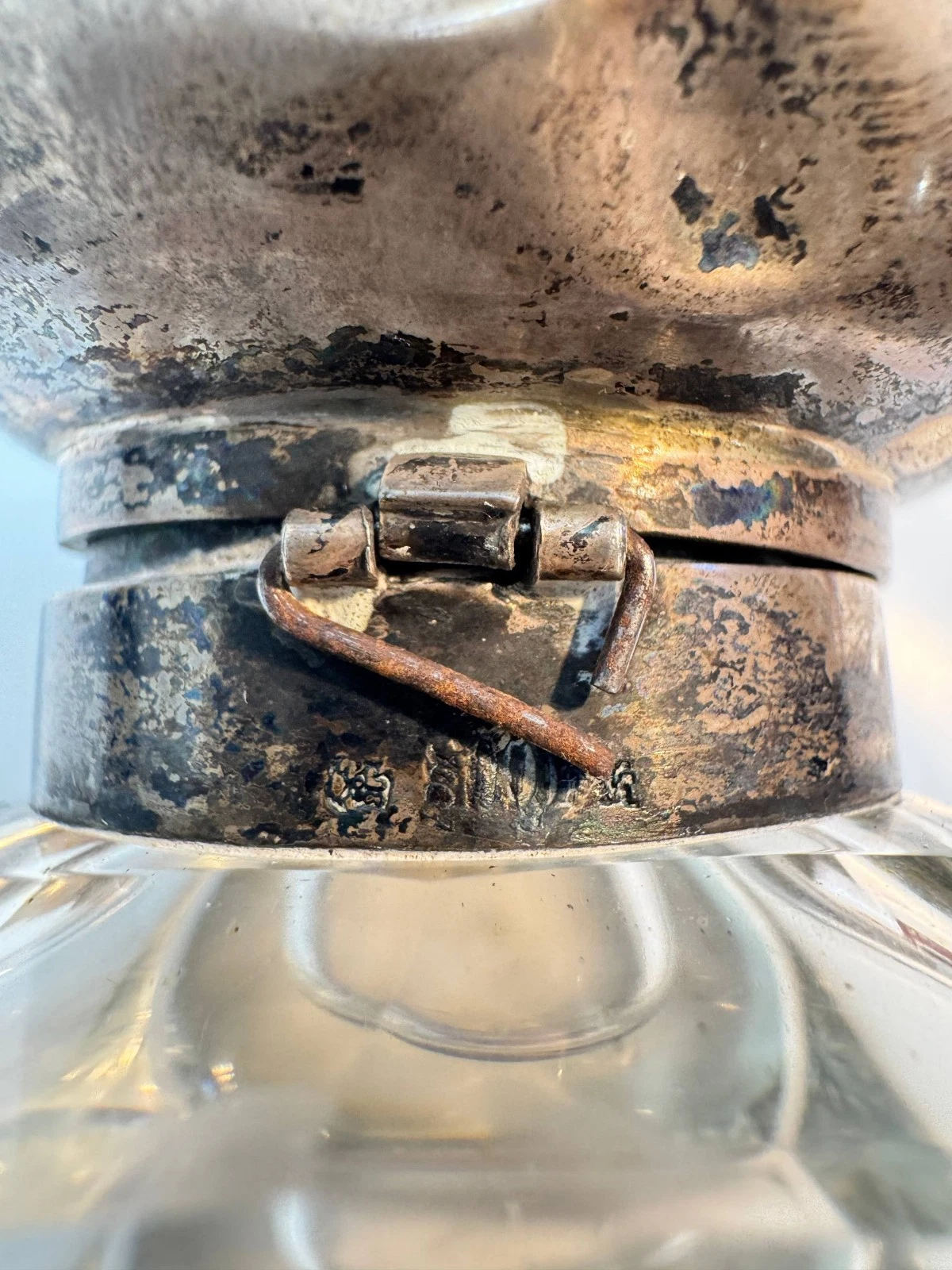
- The Hallmarks: The marks are struck into the silver collar:
- WTB: The maker’s mark for Wilhelm Binder.
- 800: Confirming the silver is 800/1000 parts pure (the German standard).
- Crescent & Crown: The Halbmond und Krone, Germany’s national mark for silver introduced in 1888.
About Wilhelm Binder (WTB)
Founded in 1869 by Wilhelm Binder in Schwäbisch Gmünd, the firm grew to become one of the most prominent silver manufacturers in Germany.
- Manufacturing Excellence: By the late 1890s, the company employed over 300 workers. They were famous for “small silverware” and high-quality hollowware, often combining silver with fine crystal or glass.
- Artistic Significance: While many firms stuck to traditional styles, Binder embraced the Jugendstil movement wholeheartedly at the turn of the century. Their work was highly regarded for its “superb workmanship,” eventually winning a gold medal at the 1937 Paris World Exhibition.
- Legacy: Schwäbisch Gmünd was the heart of the German silver industry (home to over 120 manufacturers at one point), and Wilhelm Binder was widely considered its “crown jewel” because of their ability to mass-produce high-quality art pieces that felt hand-crafted.
Sold for $109 in March 2026
Content disclaimer. The information posted is the owner’s best knowledge and may not have been vetted by the SOIC. We welcome comments, corrections, and additions, working to make our website information comprehensive and accurate.
Join the Society of Inkwell Collectors (SOIC) – it’s free!
Founded in 1981 as a non-profit organization,
we are documenting inkwells (and accessories).
We’re here to help and inform!