

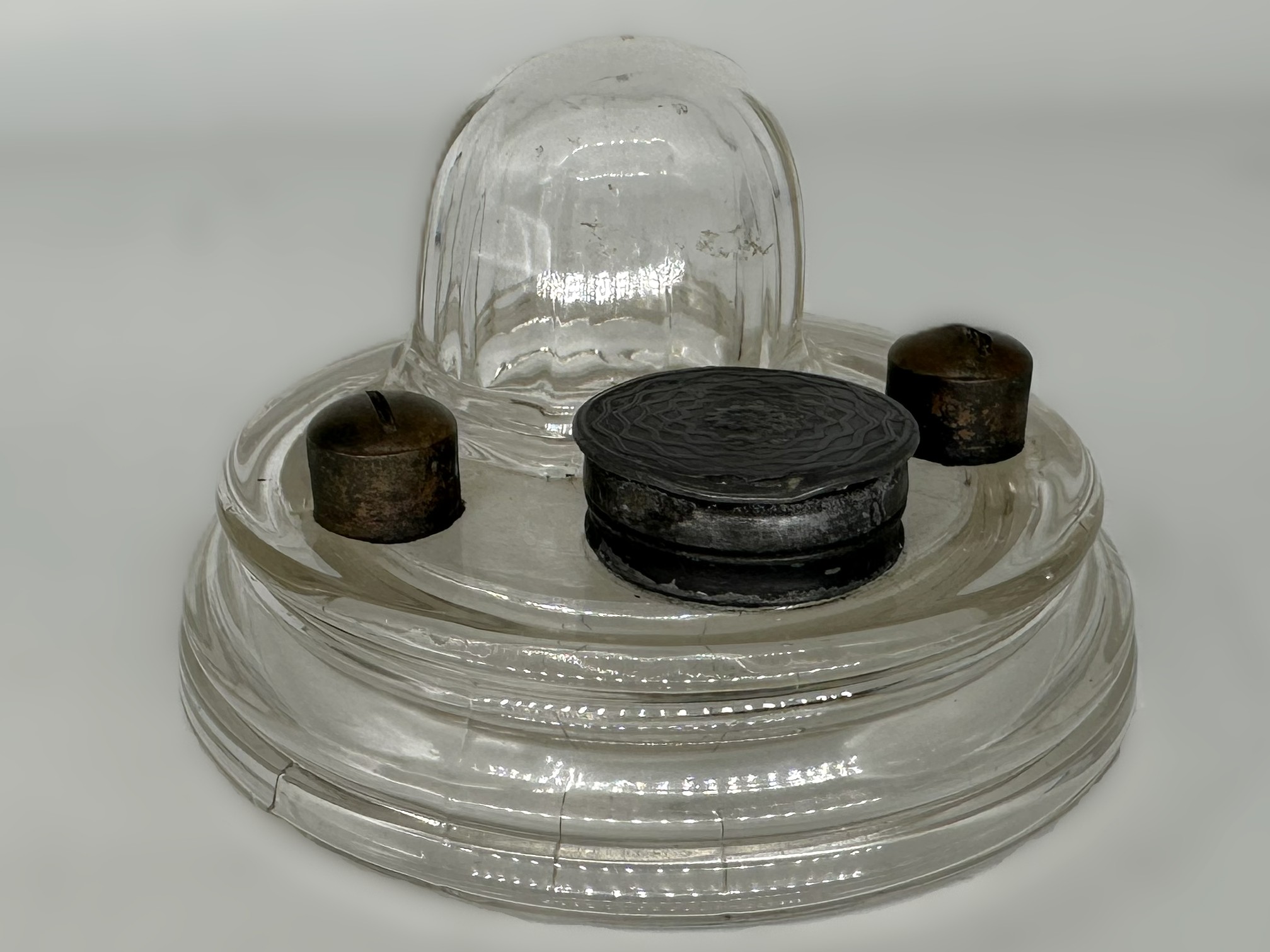
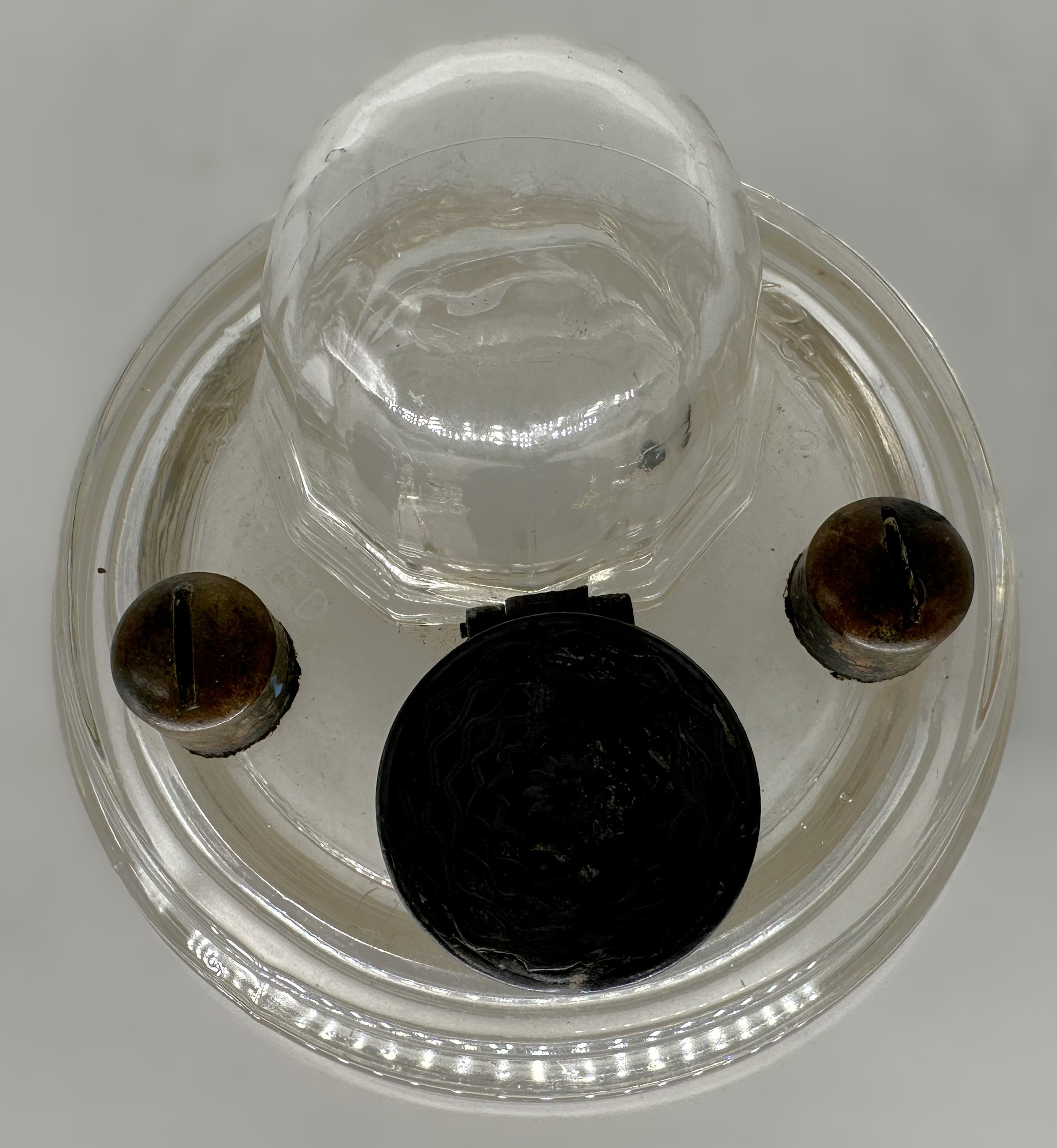


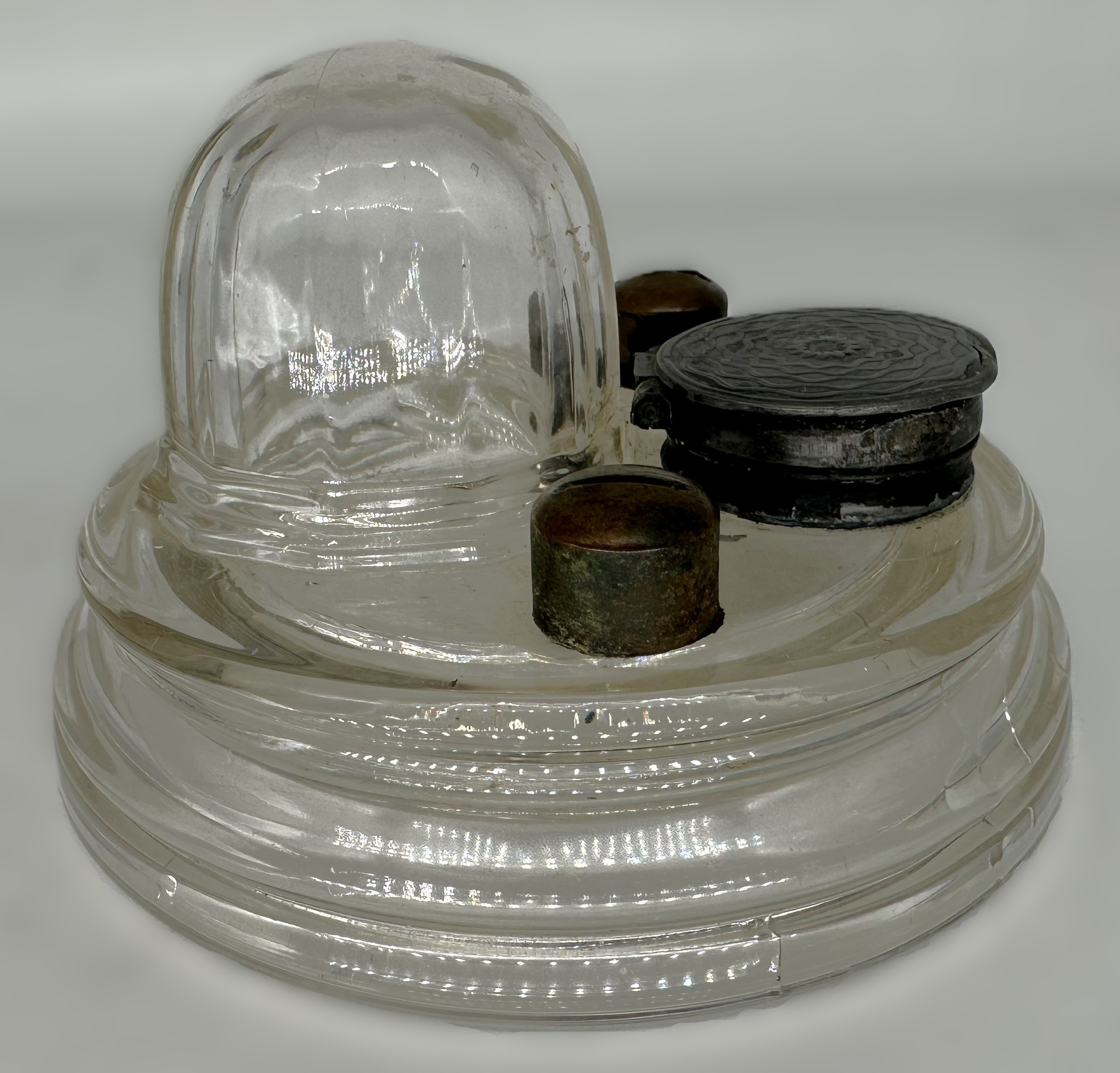
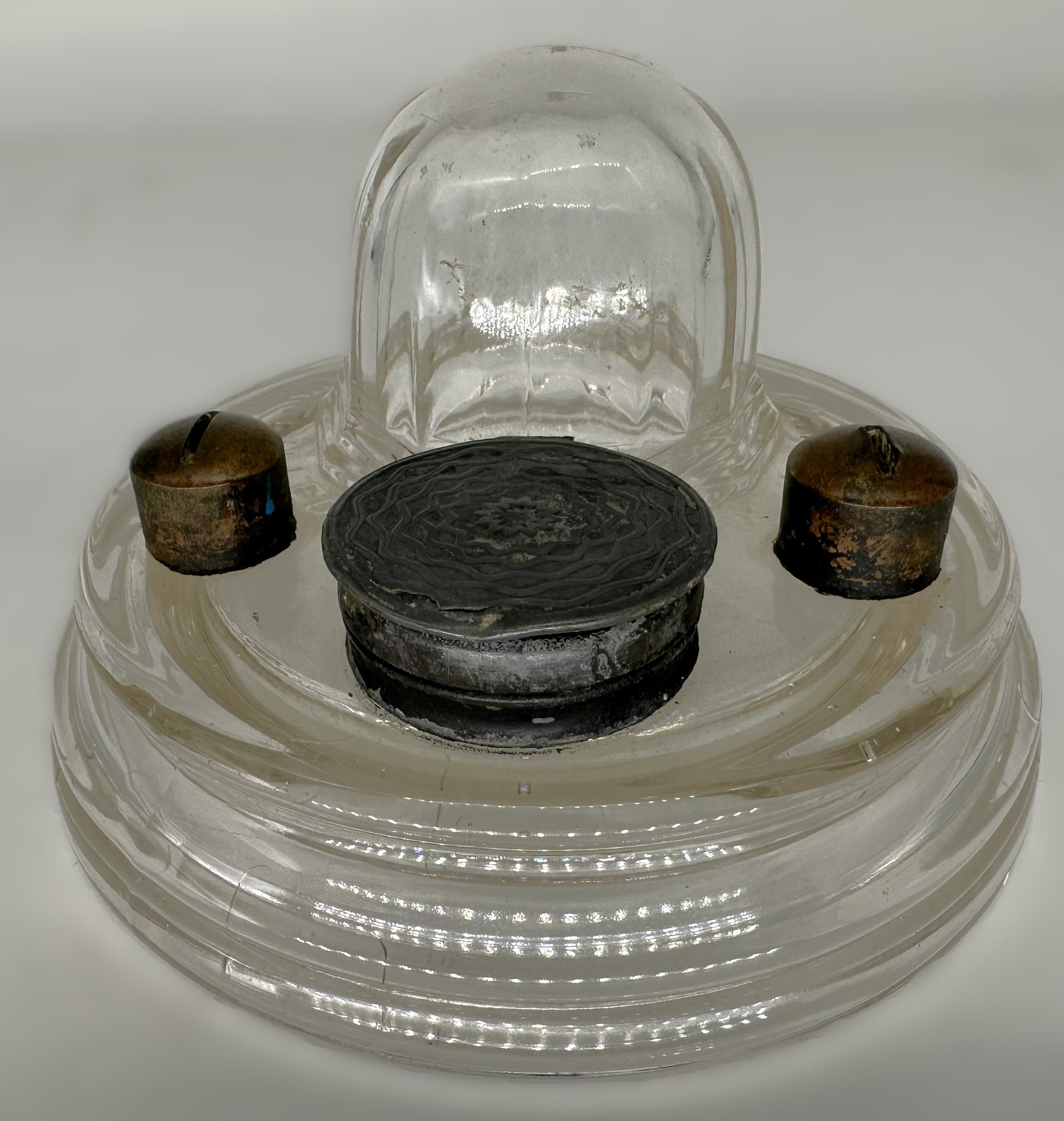


Whitney’s Patent Siphon Inkwell
| Categories | Mechanical - Pump / Siphon |
| Type | Siphon |
| Material | Glass |
| Markings | See Narrative |
| Manufacturer | New England Glass Co. |
| Origin | United States |
| Date or Era | circa 1869 |
| Measuring | 4 ¾” diameter; 3” high |
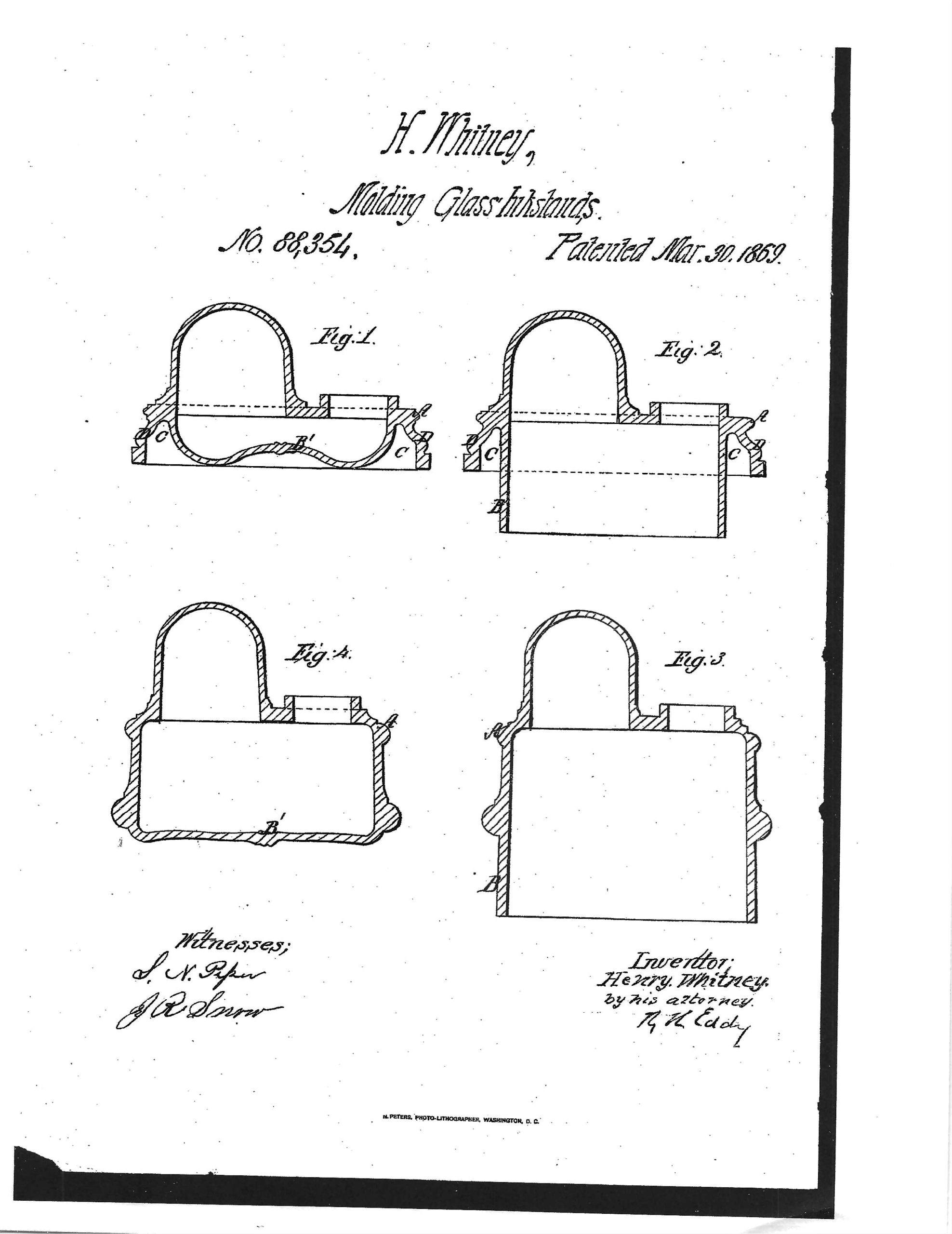
| Patent | No. 88,354 Patented March 30, 1869 |
This Whitney’s Patent Siphon Inkwell is a fascinating piece of 19th-century office tech! While it looks like a simple glass paperweight at first glance, its design was a clever solution to the messiest problem of the Victorian era: evaporating and thick, “gummy” ink.
Description and Mechanism
The inkwell is made of heavy, pressed glass with a central dome and a smaller opening for dipping a pen. Unlike a standard open inkwell, this is a siphon system (also known as a “barometric” or “fountain” inkwell).
How it works:
- Vacuum Seal: You fill the main reservoir (the large dome area). When the inkwell is level, the ink is kept inside the main body by atmospheric pressure.
- Siphon Action: As you dip your pen into the small, hinged opening, you are only accessing a tiny amount of ink at the surface.
- Freshness: Because the bulk of the ink is sealed inside the dome with little exposure to air, it doesn’t evaporate or collect dust. As you use the ink in the small well, more is “siphoned” or fed from the main reservoir to maintain a constant level.
Summary of Patent #88,354 (March 30, 1869)
The patent granted to Henry Whitney of East Cambridge, Massachusetts, focuses on a specific improvement in the manufacturing of these glass vessels.
- The Core Innovation: Before this patent, making an inkwell with an internal siphon was difficult because you couldn’t easily mold a “hole” or a “bridge” inside a solid piece of glass.
- The Solution: Whitney’s patent describes a method of molding the glass so that the internal passage (the siphon) is formed during the pressing process.
- Airtight Construction: It emphasizes creating a vessel that is effectively one solid piece of glass, ensuring there are no leaky joints where the vacuum could be broken.
Who manufactured it?
Based on the patent and the design, this was manufactured by the New England Glass Company (NEGC) in East Cambridge, Massachusetts. Henry Whitney was a prominent figure and agent for the NEGC. They were one of the leading glass manufacturers in the U.S. during the 19th century and were famous for their high-quality pressed and blown glass.
The Purpose of the Two “Bolts”
Those metal pieces are actually threaded brass plugs (or “screws”) that serve two vital functions:
- The Filling Ports: To fill the inkwell, you unscrew these plugs. Since the main dipping well is small and the dome is sealed, you need these secondary openings to pour the ink into the large reservoir.
- Pressure Regulation/Cleaning: Having two plugs allows air to escape from one side while you pour ink into the other, preventing “glugging” or air pockets. They also allow you to flush out the inkwell with water when the ink eventually stains the glass or needs changing.
Sold for $75 in January 2026
Content disclaimer. The information posted is the owner’s best knowledge and may not have been vetted by the SOIC. We welcome comments, corrections, and additions, working to make our website information comprehensive and accurate.
Join the Society of Inkwell Collectors (SOIC) – it’s free!
Founded in 1981 as a non-profit organization,
we are documenting inkwells (and accessories).
We’re here to help and inform!