


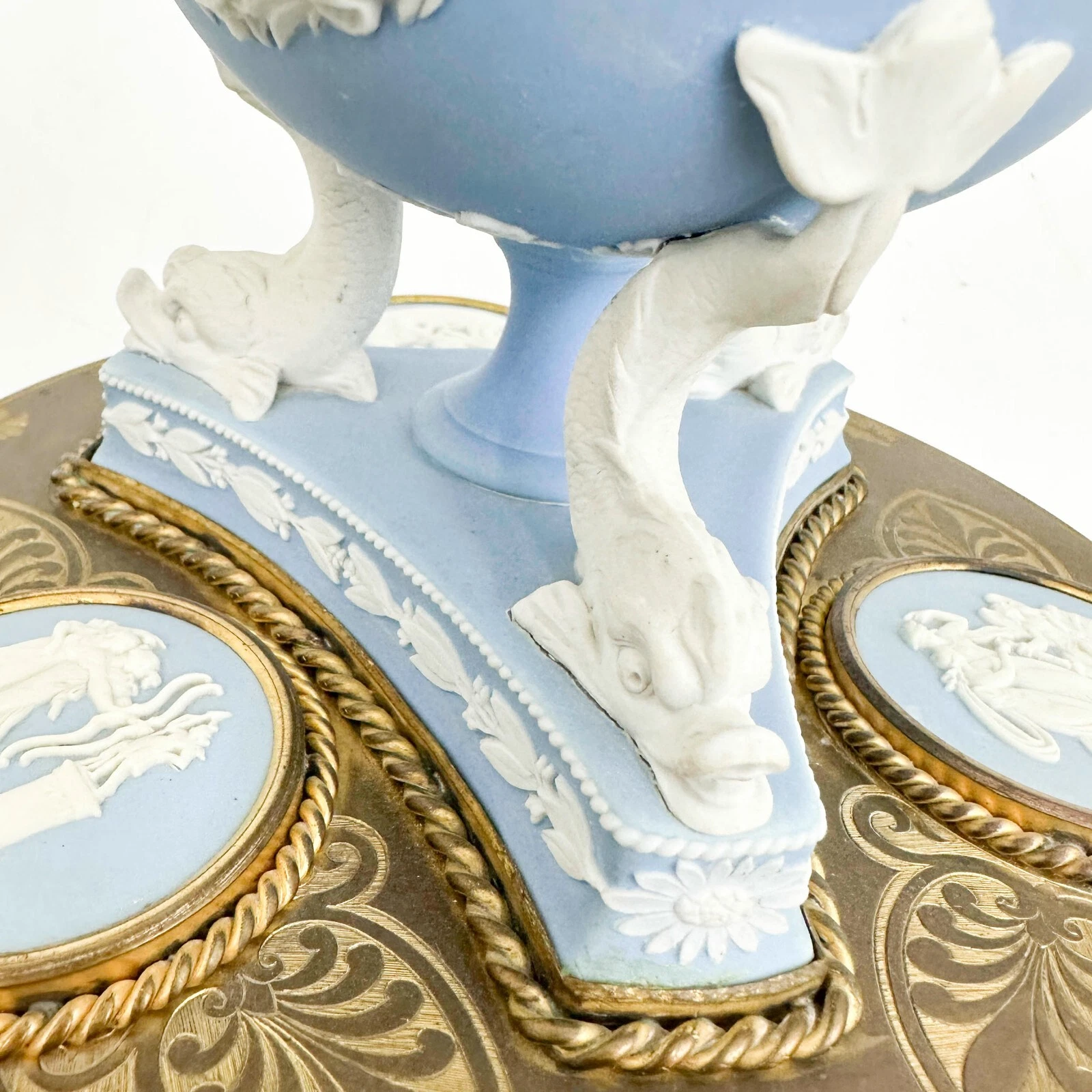
Wedgwood & G. Betjemann Gilt Bronze “Dolphin” Inkstand
| Categories | Ceramics/Porcelain "Named" Makers |
| Material | Bronze, Jasperware |
| Markings | See Narrative |
| Manufacturer | Wedgwood |
| Origin | England |
| Date or Era | circa 1880 |
| Measuring | 8 ⅞” diameter; 6 ½” high |
This is an example of high-Victorian luxury desk furniture, representing a collaboration between England’s premier ceramicist (Wedgwood) and one of London’s finest “fancy goods” metalworkers (G. Betjemann & Sons).
Overview A fine quality Neoclassical revival inkstand, dating to the late 19th century (c. 1870–1900). It combines a Wedgwood Blue Jasper Dip body with substantial gilt bronze (ormolu) mounts.
Description
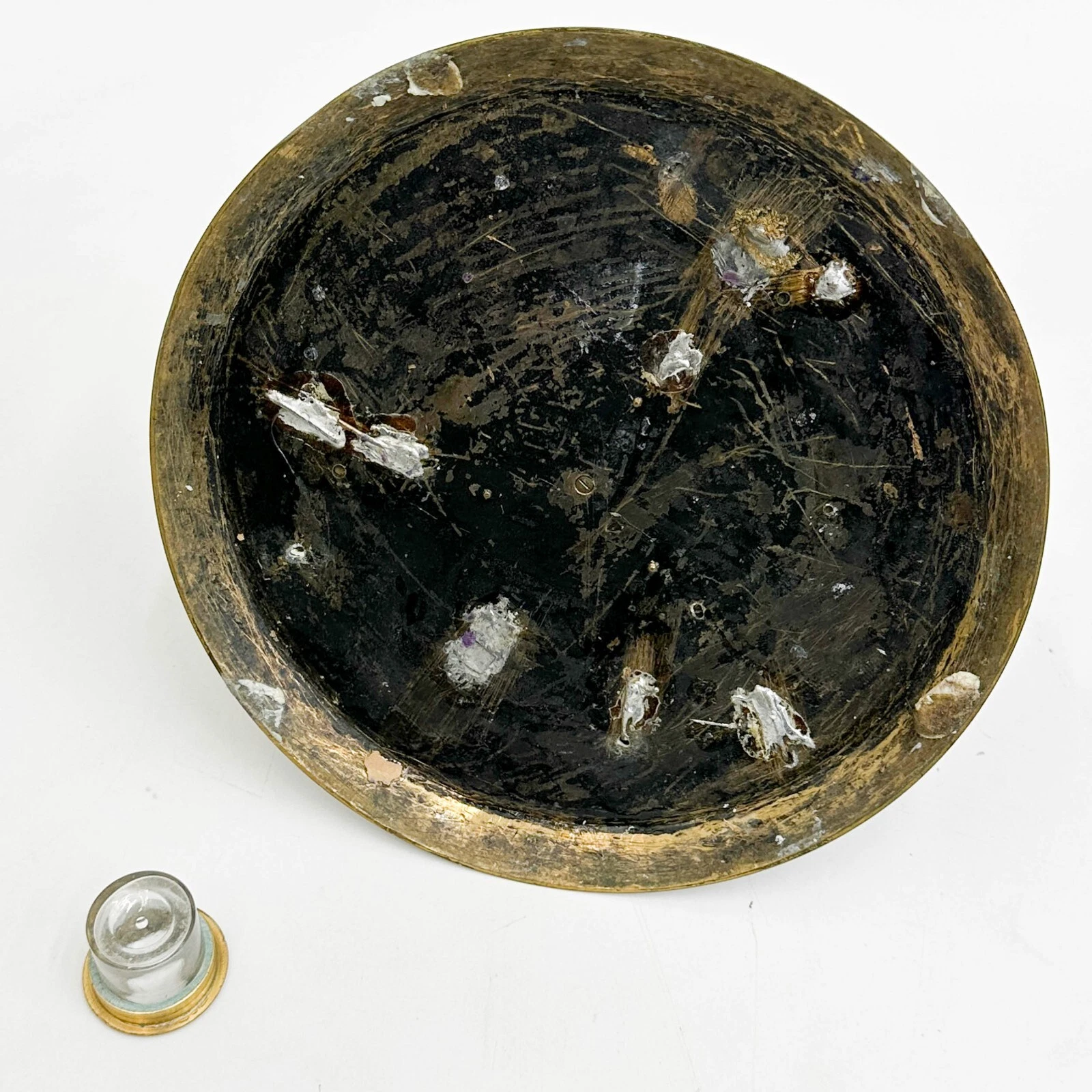
- The Base: The piece rests on a heavy, circular gilt bronze plinth. The wide rim is engraved with a continuous Greek Key (meander) pattern. Set into the base are three circular Wedgwood jasper medallions featuring classical white relief figures (likely Muses or mythological scenes), each framed in a rope-twist bronze bezel.
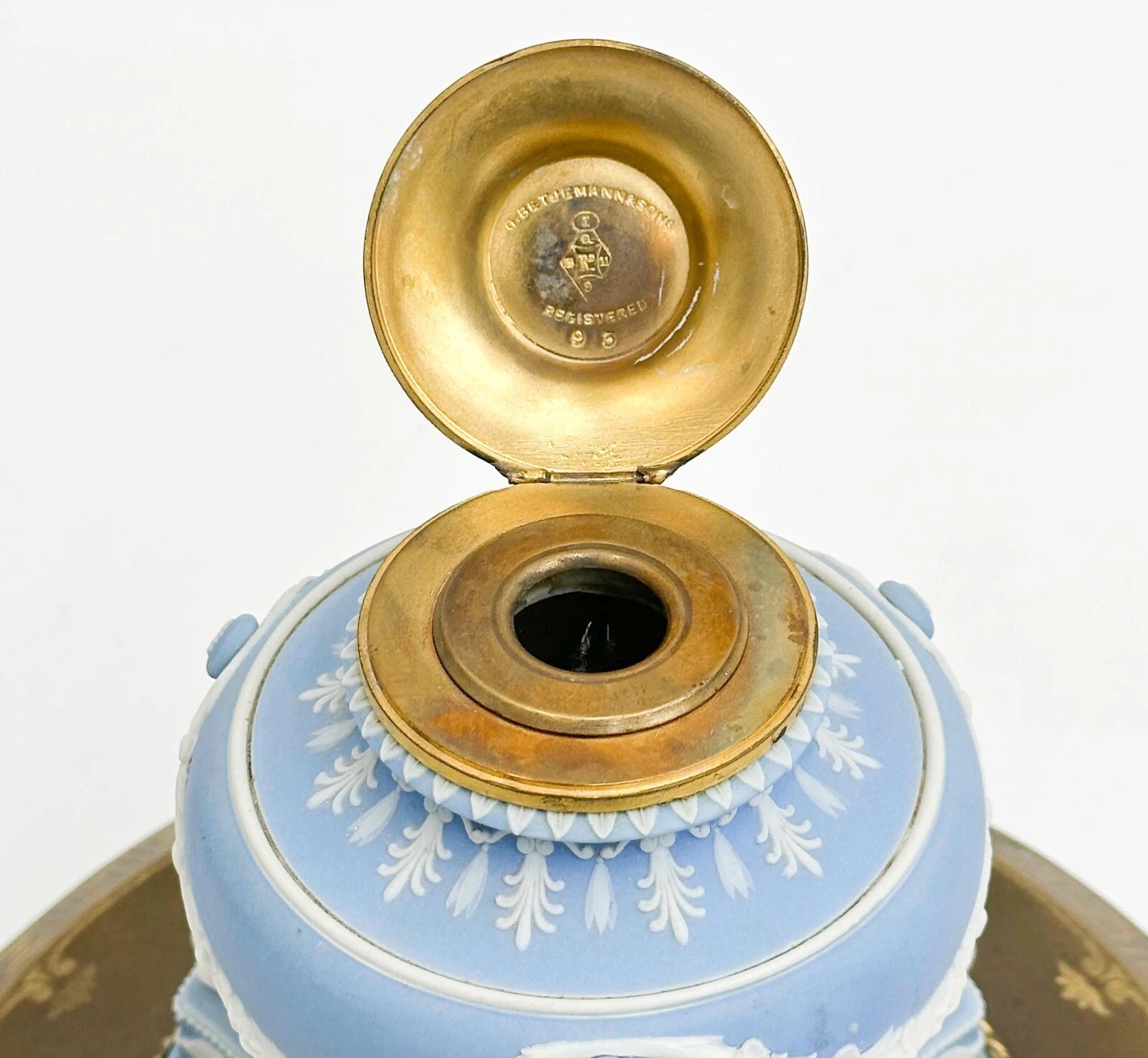
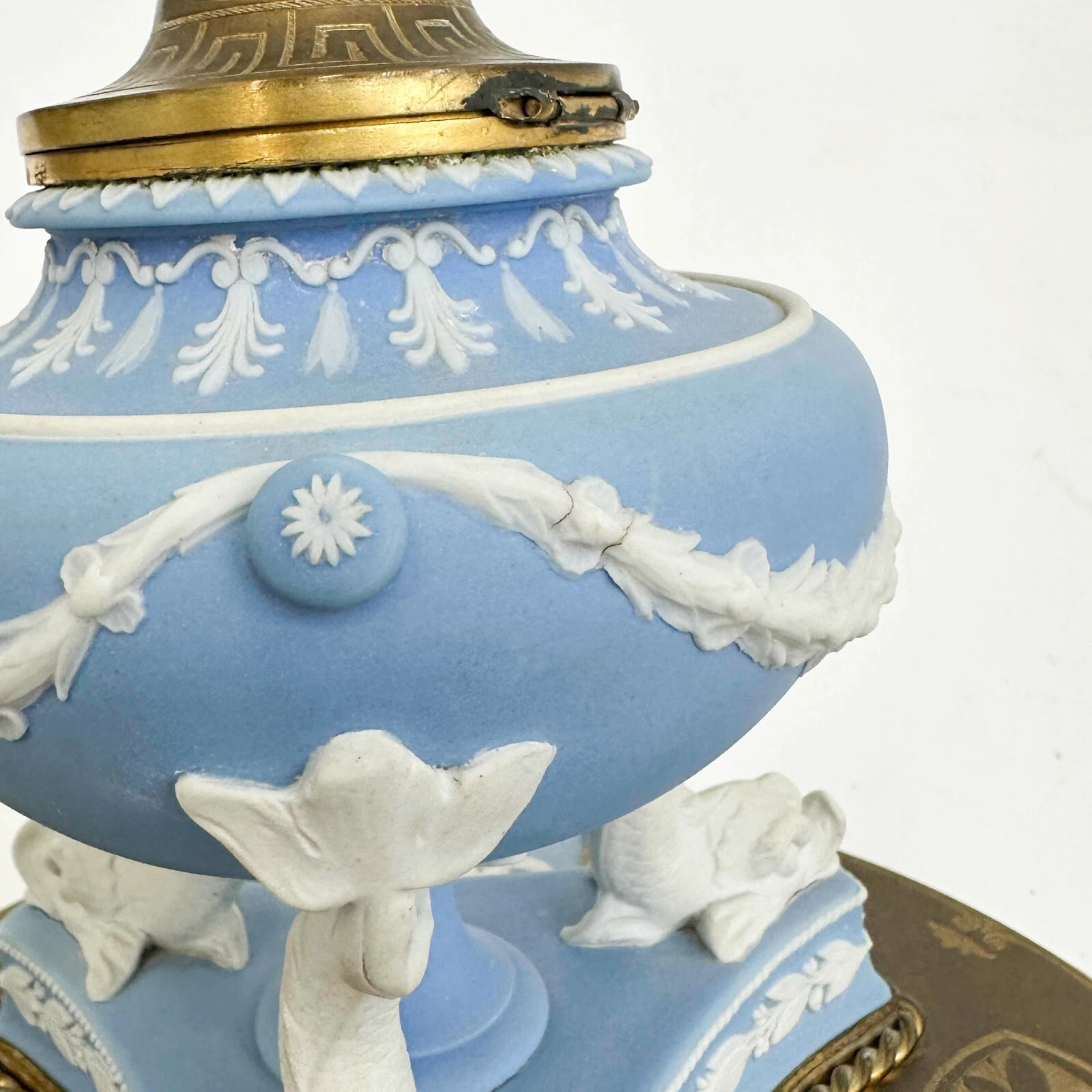
- The Inkwell: The central vessel is a classic urn shape in blue jasper dip. It is decorated in white relief with festive swags (garlands) suspended from paterae (rosettes).
- The Feet: The inkwell is supported by three white jasper dolphin-form feet, their tails supporting the bowl and heads resting on the bronze base. The dolphin is a classic motif in Neoclassical art, symbolizing safe travel and water.
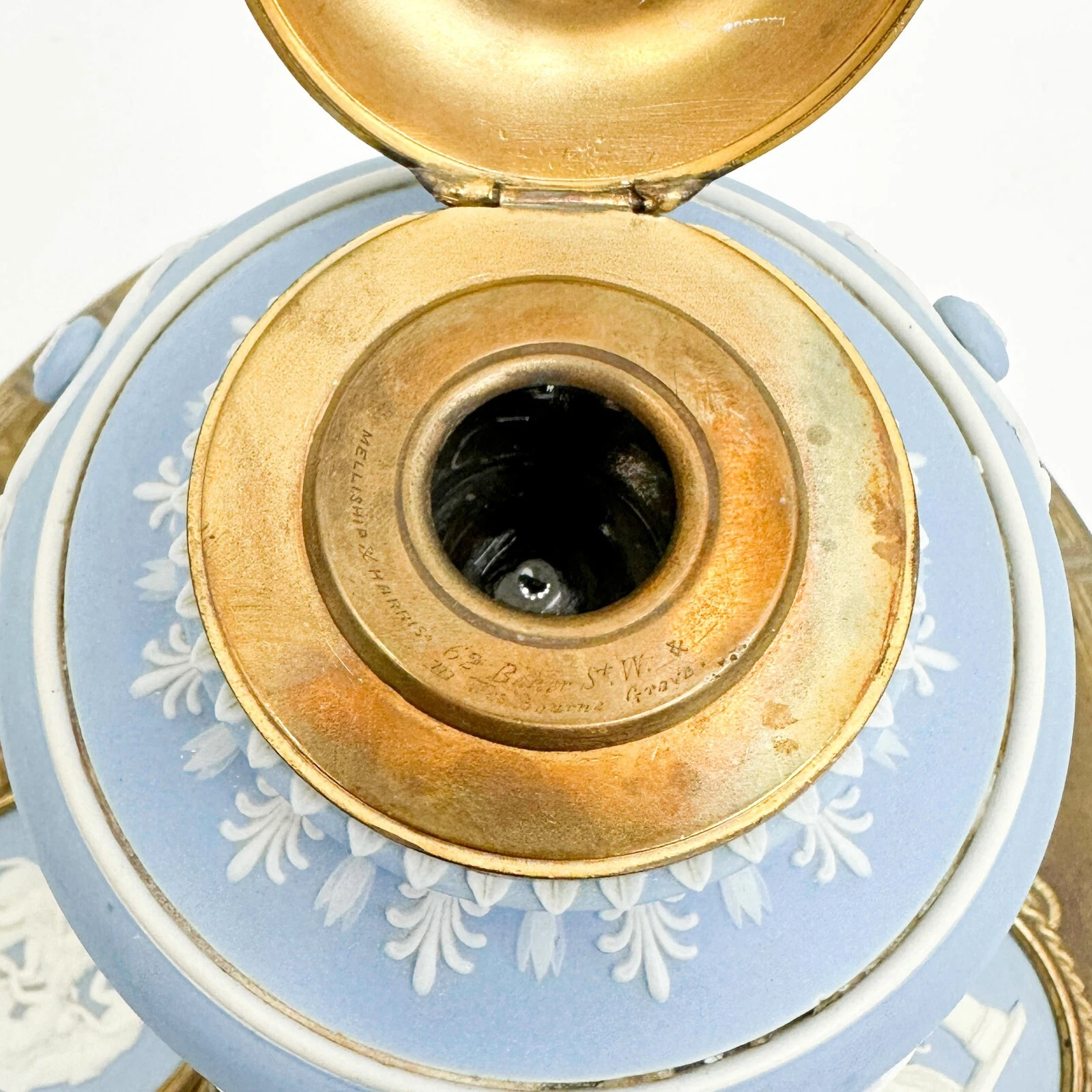
- The Lid: The hinged gilt bronze lid repeats the Greek Key motif of the base and is topped with a turned finial.
Markings & Attribution
- Metalwork Maker: The interior of the lid is stamped “G. BETJEMANN & SONS / REGISTERED / 95”. This refers to the famous London firm founded by George Betjemann (active c. 1859–1930s), best known for their patented “Tantalus” decanter sets and high-quality mechanical box fittings.
- Retailer: The rim of the glass liner is engraved “MELLISHIP & HARRIS, 62 BAKER St. W.”. This identifies the luxury stationer and fancy goods shop in London where the piece was originally sold.
- Ceramics: The blue and white stoneware is unmistakably Wedgwood. (Note: If the pottery is marked “WEDGWOOD” only, it is pre-1891; if “WEDGWOOD ENGLAND,” it is post-1891).
Note This inkstand is a desirable “marriage” of top-tier manufacturing. Betjemann & Sons frequently mounted ceramics from major factories (like Wedgwood or Royal Worcester) to create expensive giftware for the London luxury market. The presence of the original retailer-marked glass liner is a bonus.
Sold for $1156 in November 2025
Content disclaimer. The information posted is the owner’s best knowledge and may not have been vetted by the SOIC. We welcome comments, corrections, and additions, working to make our website information comprehensive and accurate.
Join the Society of Inkwell Collectors (SOIC) – it’s free!
Founded in 1981 as a non-profit organization,
we are documenting inkwells (and accessories).
We’re here to help and inform!