

Wedgwood Blue & White Jasperware Inkwell
| Categories | Ceramics/Porcelain "Named" Makers |
| Material | Jasperware |
| Markings | See Narrative |
| Manufacturer | Wedgwood |
| Origin | England |
| Date or Era | circa 1870 |
| Measuring | 3” diameter; 3” high |
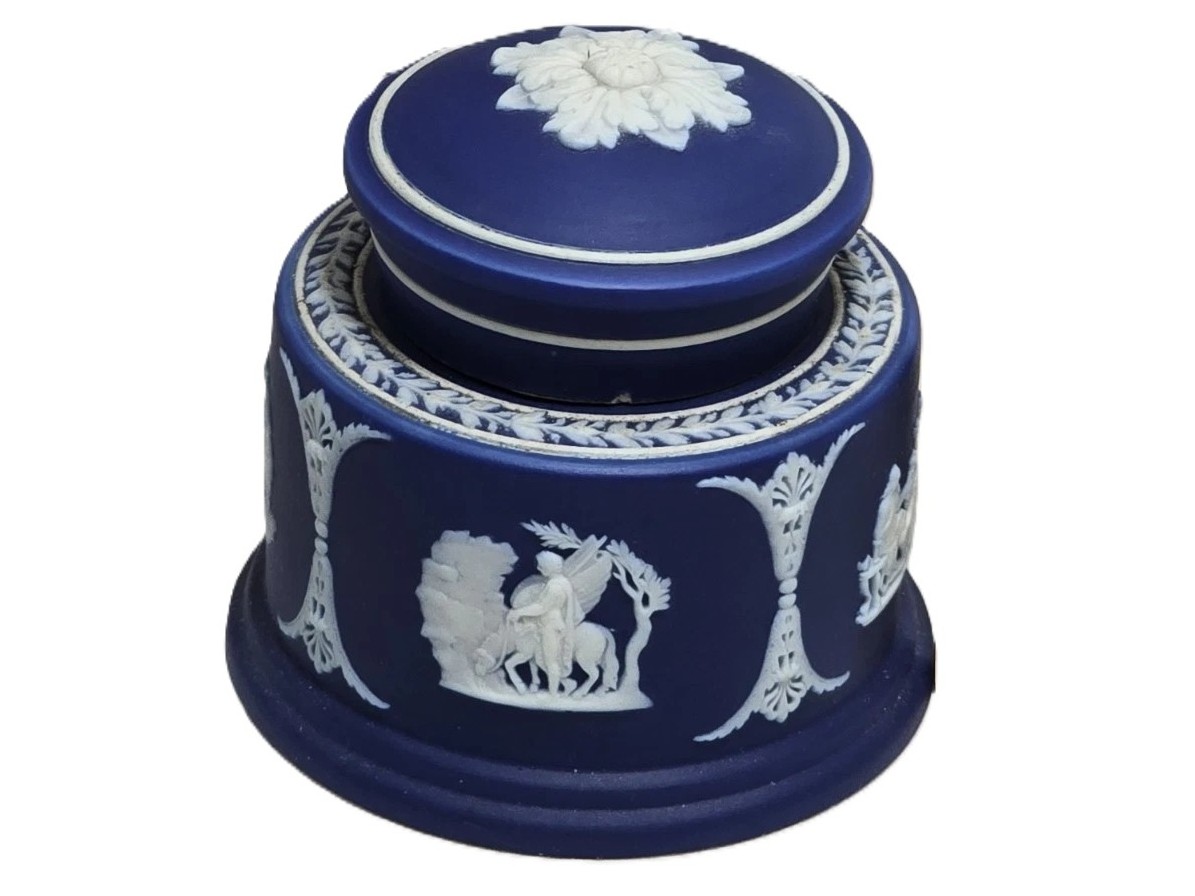
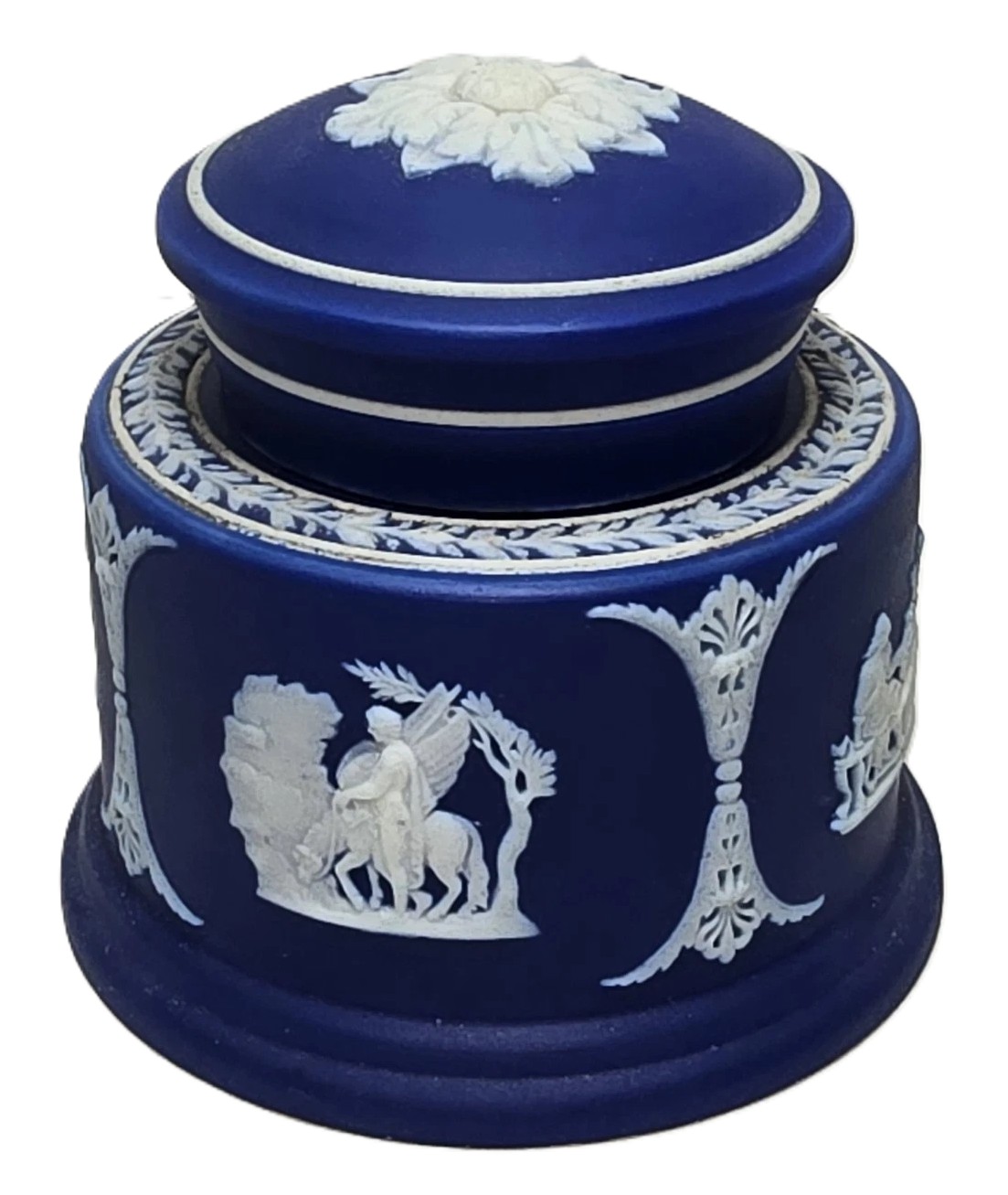
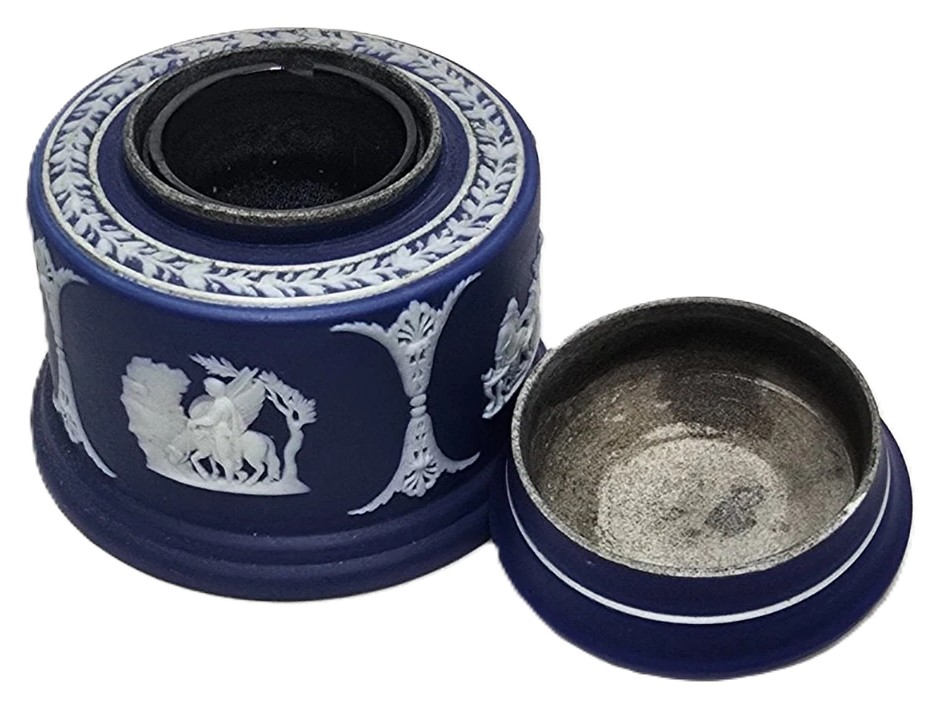
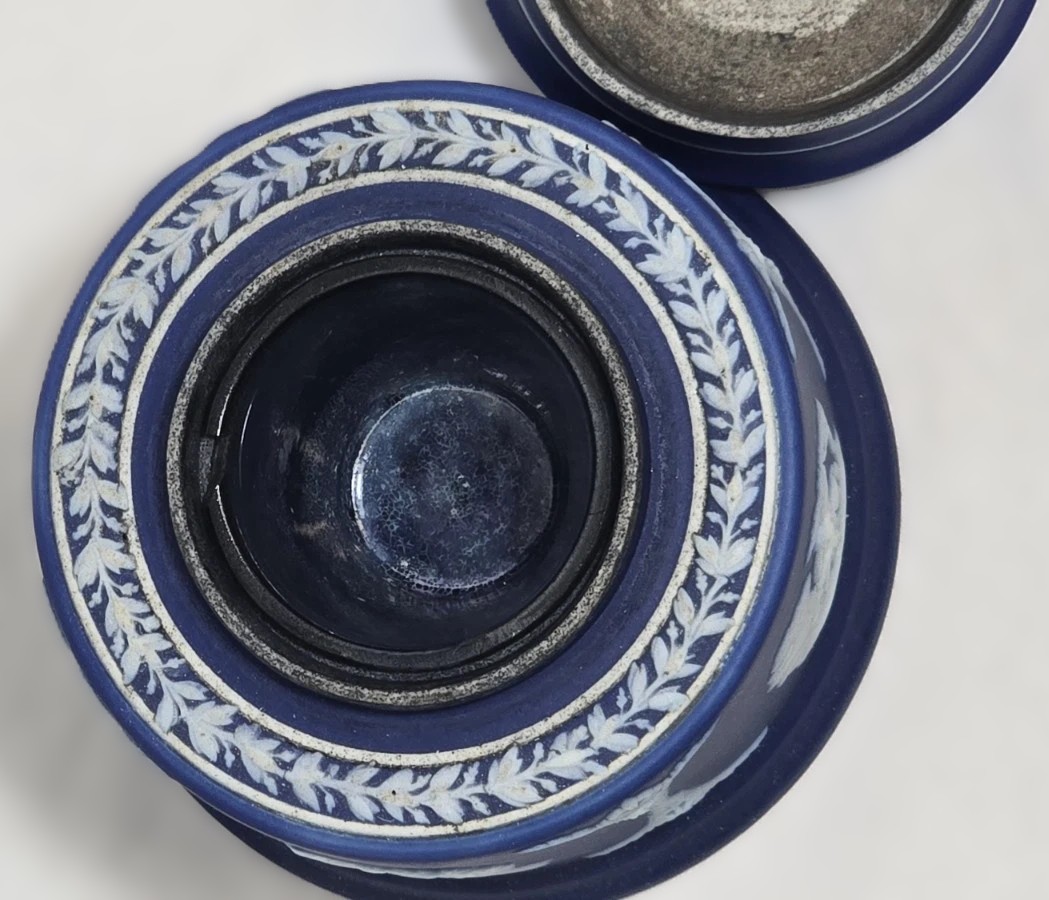
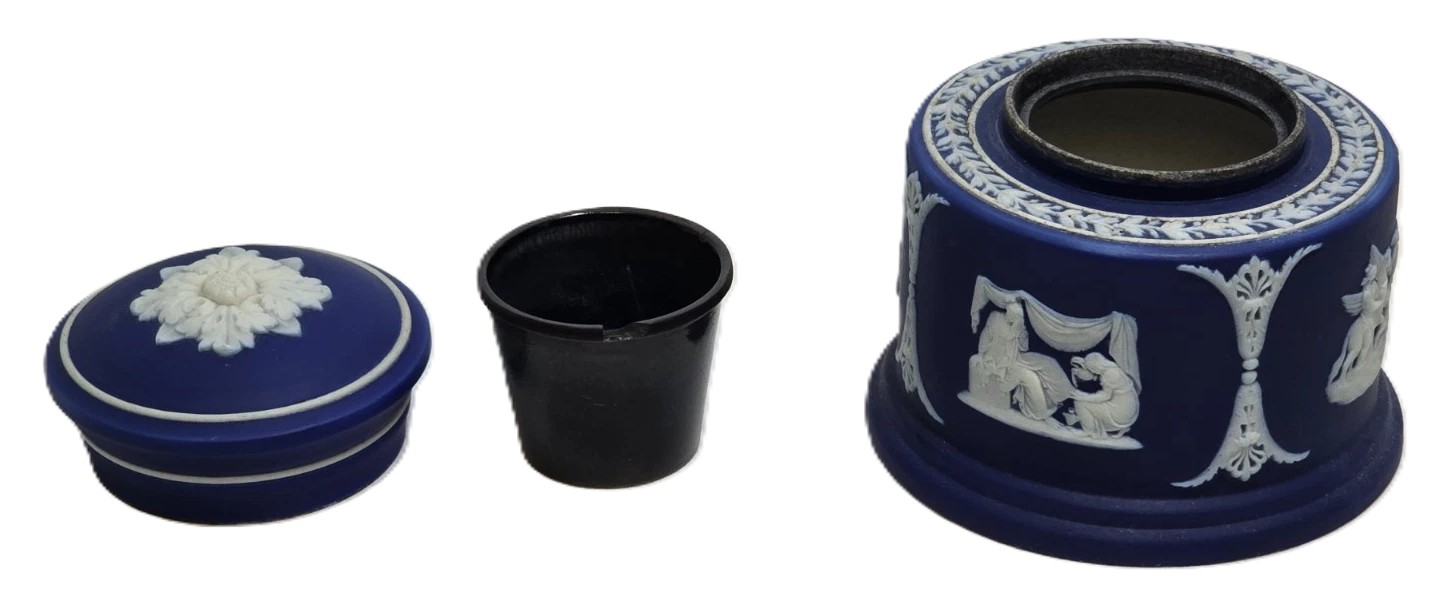
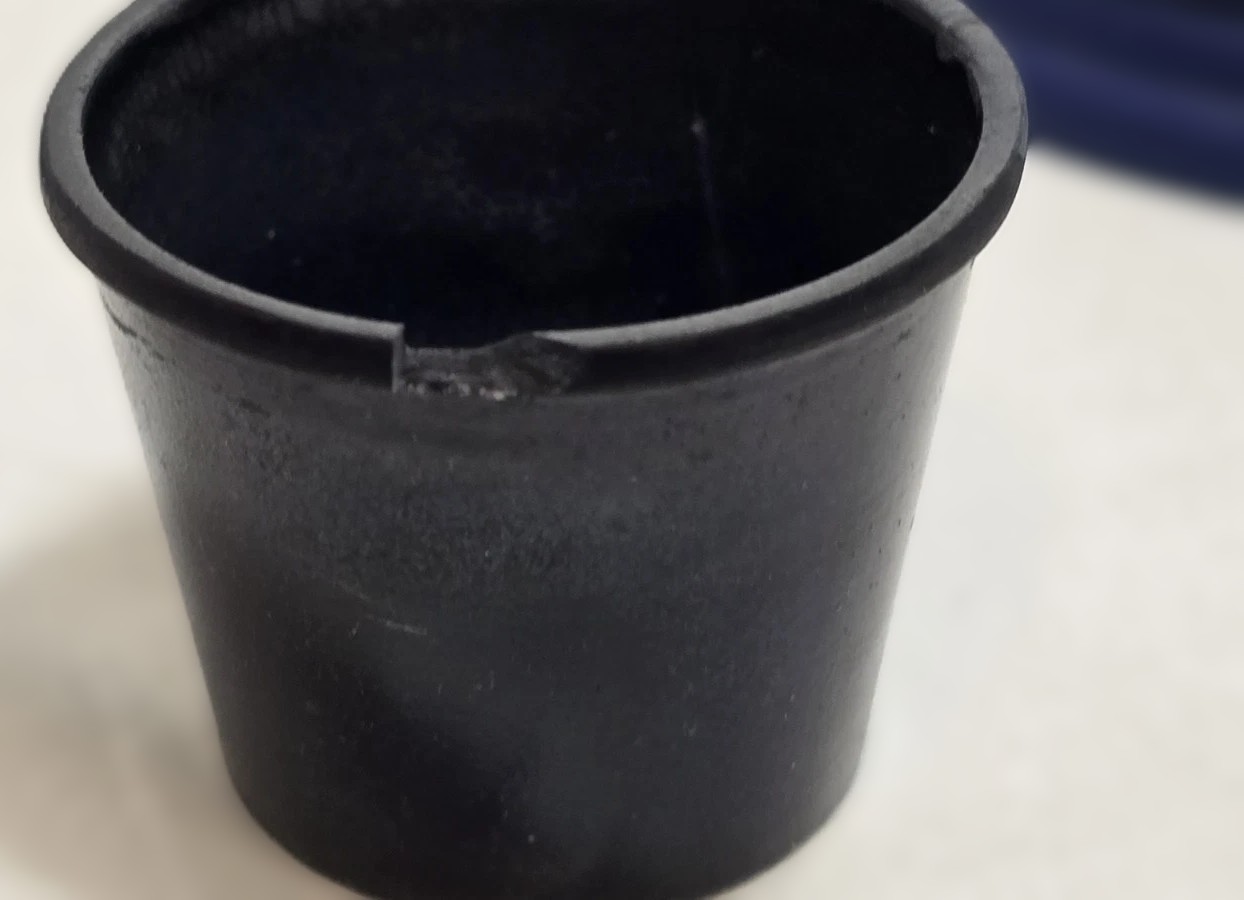
This is a classic 19th-century Wedgwood blue and white Jasperware drum inkwell (often called “Jasper dip”), complete with its matching lid featuring a molded white floral rosette. Inside, it houses its original removable glazed ceramic insert (liner).
The Scenes Depicted
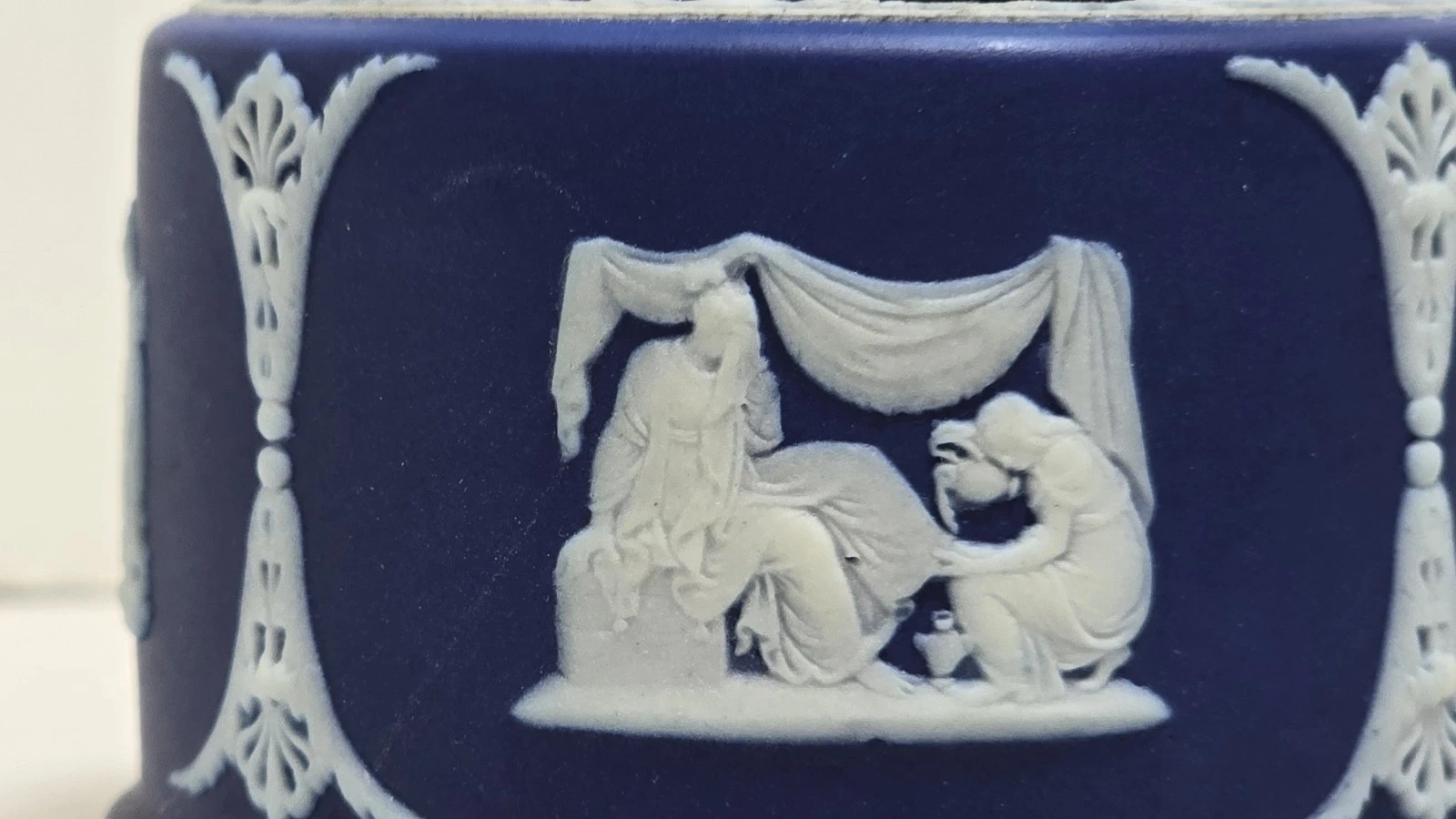
The cylindrical body features neoclassical white sprigged reliefs (cameos) set against a rich dark blue background, separated by stylized palmette and anthemion vertical pilasters:
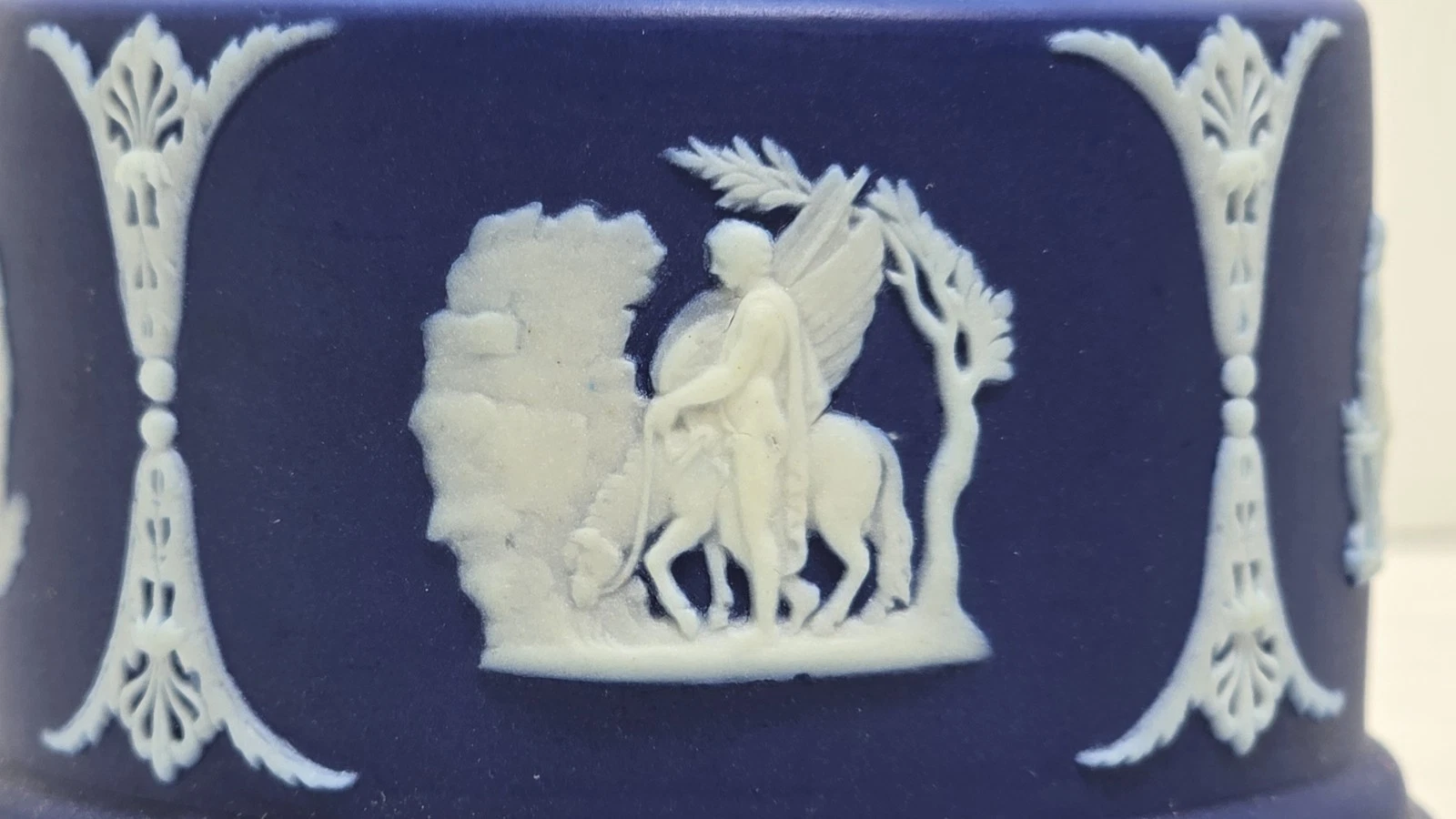
- Bellerophon on Pegasus: One panel depicts the hero Bellerophon standing beside or holding the reins of the mythical winged horse Pegasus, framed by rocky landscape elements and foliage.
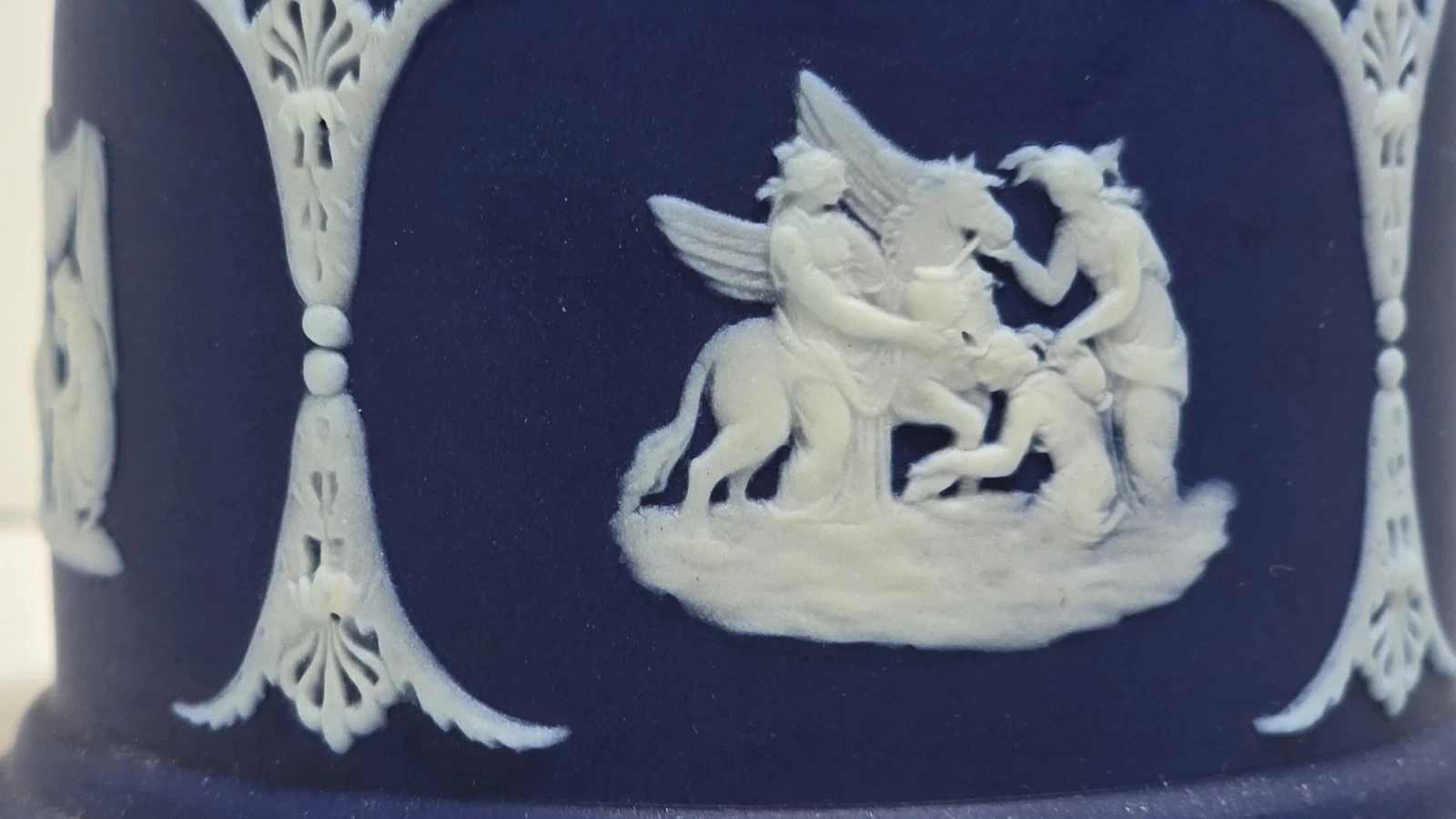
- Pegasus Watering / Muses: Another prominent classical relief shows figures tending to or interacting with Pegasus.
- Mythological / Domestic Scene: A seated classical figure draped under a canopy or tented structure, attended to by another figure holding a vessel (often associated with mythological domestic or toilette scenes from antiquity).
- Border Details: The top shoulder of the inkwell and the rim framing the lid are finished with fine, delicate running leaf and laurel-wreath borders.
History & Background
- The Medium: Jasperware was developed by Josiah Wedgwood in the late 1770s (perfected around 1775). It is a fine-grained, unglazed stoneware that could be stained in various colors—most famously the rich cobalt blue seen here. The white neoclassical reliefs were cast separately in molds and applied by hand to the surface (“sprigging”).
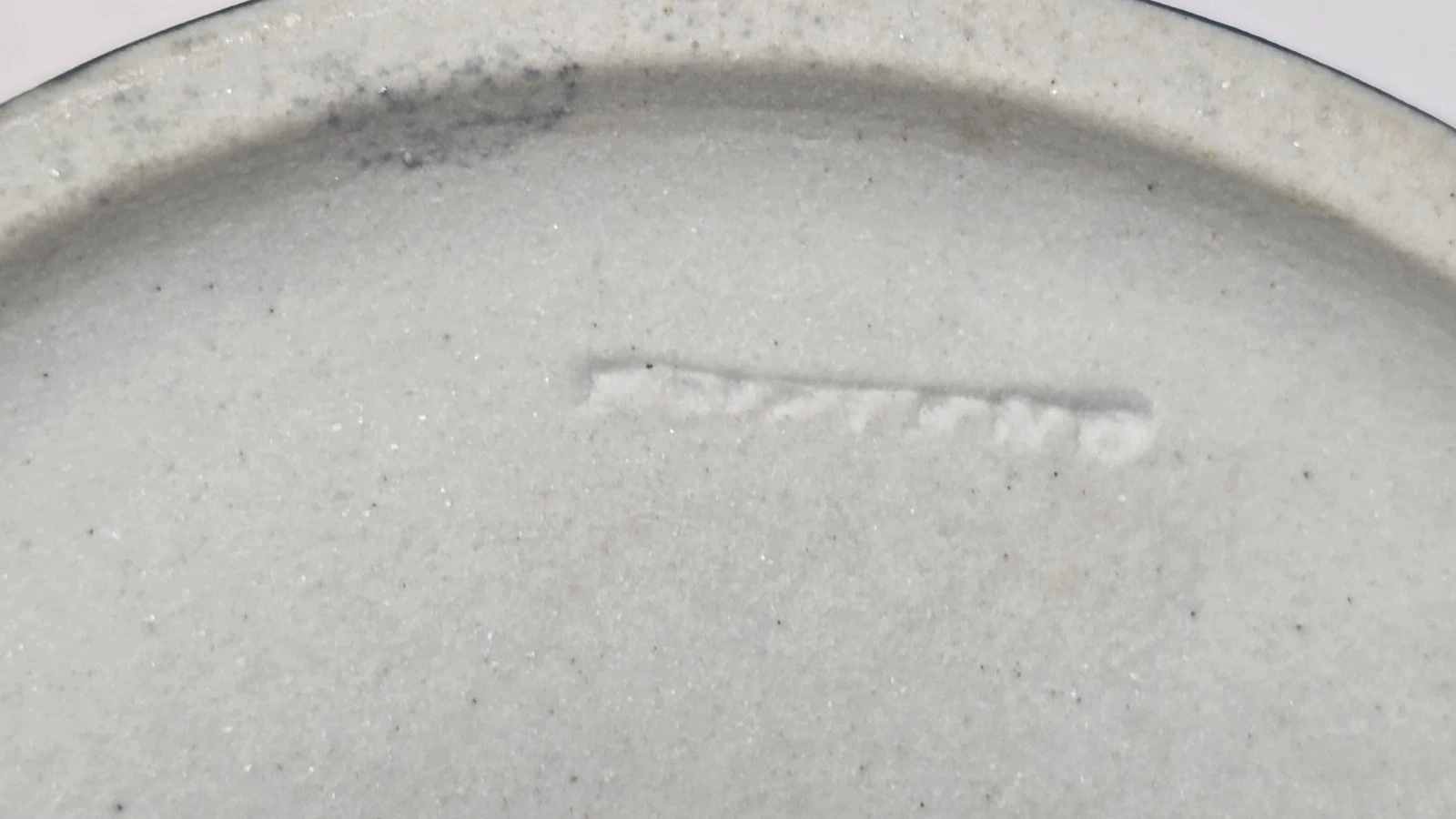
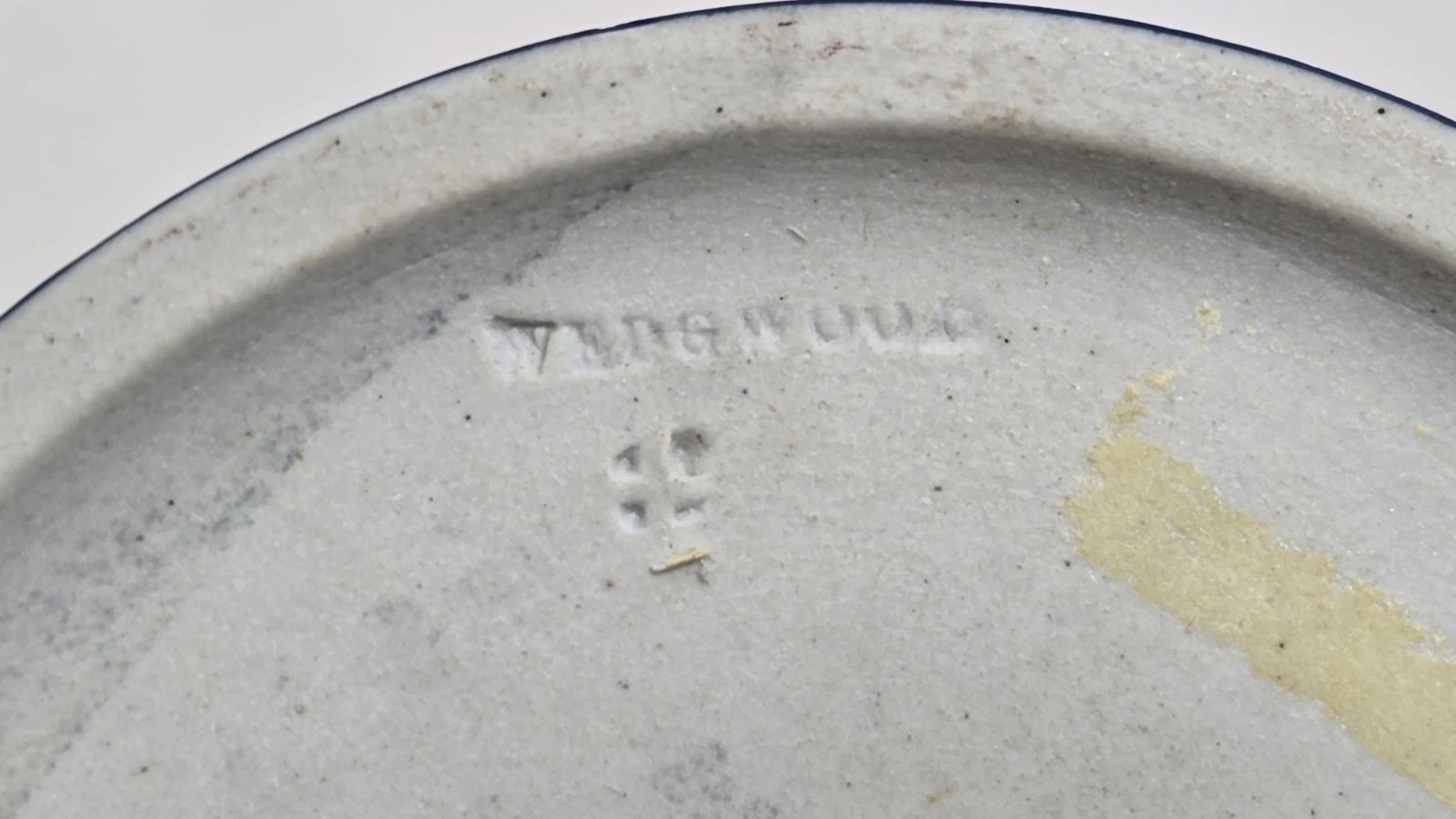
- Dating the Piece: As established by the impressed uppercase WEDGWOOD stamp on the base (with no “England” or “Made in England” modifier), this inkwell was manufactured prior to 1891.
- The Main Maker’s Mark
- Mark: The impressed uppercase WEDGWOOD stamp.
- Interpretation: This classic, clean serif stamp was used across a very long span of production. Because there is no accompanying “ENGLAND” or “MADE IN ENGLAND” stamp visible alongside it, this indicates that the piece was manufactured prior to 1891, when the McKinley Tariff Act made country-of-origin marking mandatory for exports to the United States.
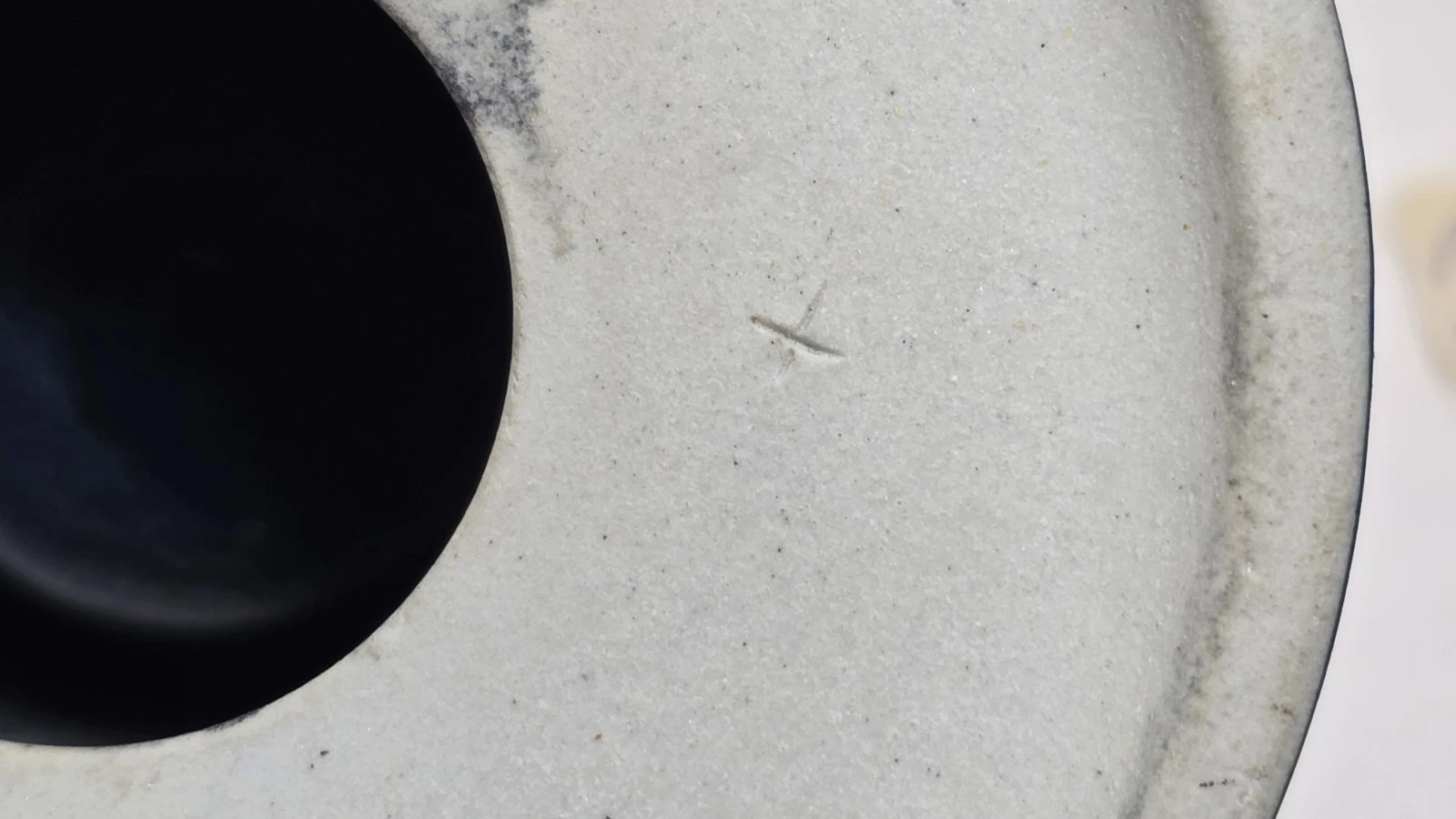
- The Factory / Potter’s Marks
- Marks: The small, clustered symbol (resembling a cross or divided square) and the standalone incised scratch marks (such as the small slash/tally stroke near the well opening).
- Interpretation: These are internal workshop tallies, potter’s marks, or batch symbols. Wedgwood routinely used these small subsidiary ciphers to track individual throwers, turners, or decorators so that piece-rate work could be accurately counted and paid. They are generally intended for internal factory use rather than dating.
Summary
This inkwell is a fine 19th-century piece of solid blue Jasperware (often referred to as “Jasper dip”), produced before 1891. The classical sprigged reliefs—featuring classical figures and delicate running leaf borders—combined with the unglazed white stoneware base rim and clear, uppercase impressed factory stamp, are characteristic of Wedgwood’s high-quality Victorian ornamental output.
Sold for $205 in September 2026
Content disclaimer. The information posted is the owner’s best knowledge and may not have been vetted by the SOIC. We welcome comments, corrections, and additions, working to make our website information comprehensive and accurate.
Join the Society of Inkwell Collectors (SOIC) – it’s free!
Founded in 1981 as a non-profit organization,
we are documenting inkwells (and accessories).
We’re here to help and inform!