


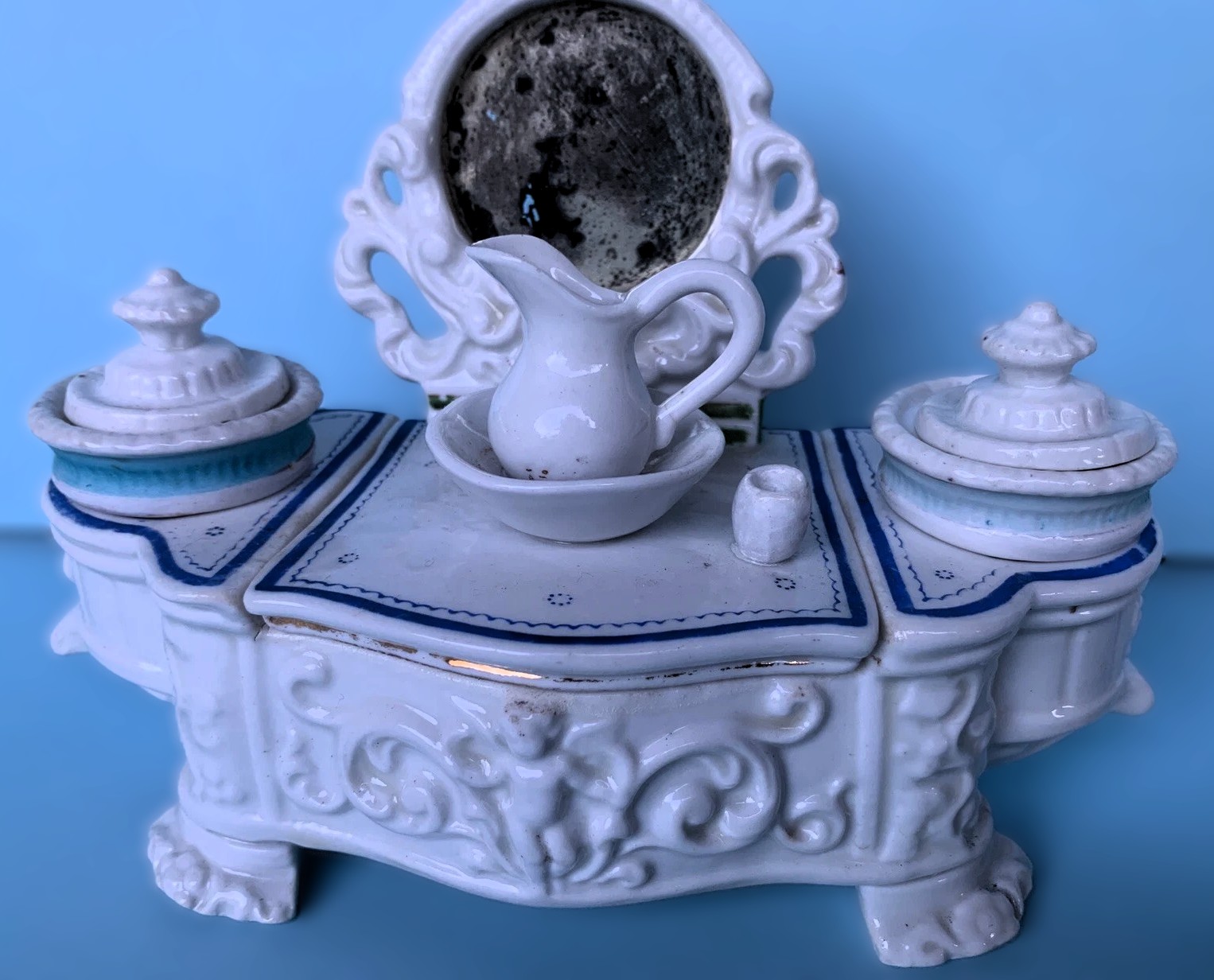






Washstand Inkwell
| Categories | Ceramics/Porcelain Figural, Figural - Inanimate |
| Type | Furniture |
| Material | Porcelain |
| Manufacturer | Conta & Boehme |
| Origin | Germany |
| Date or Era | circa 1880 |
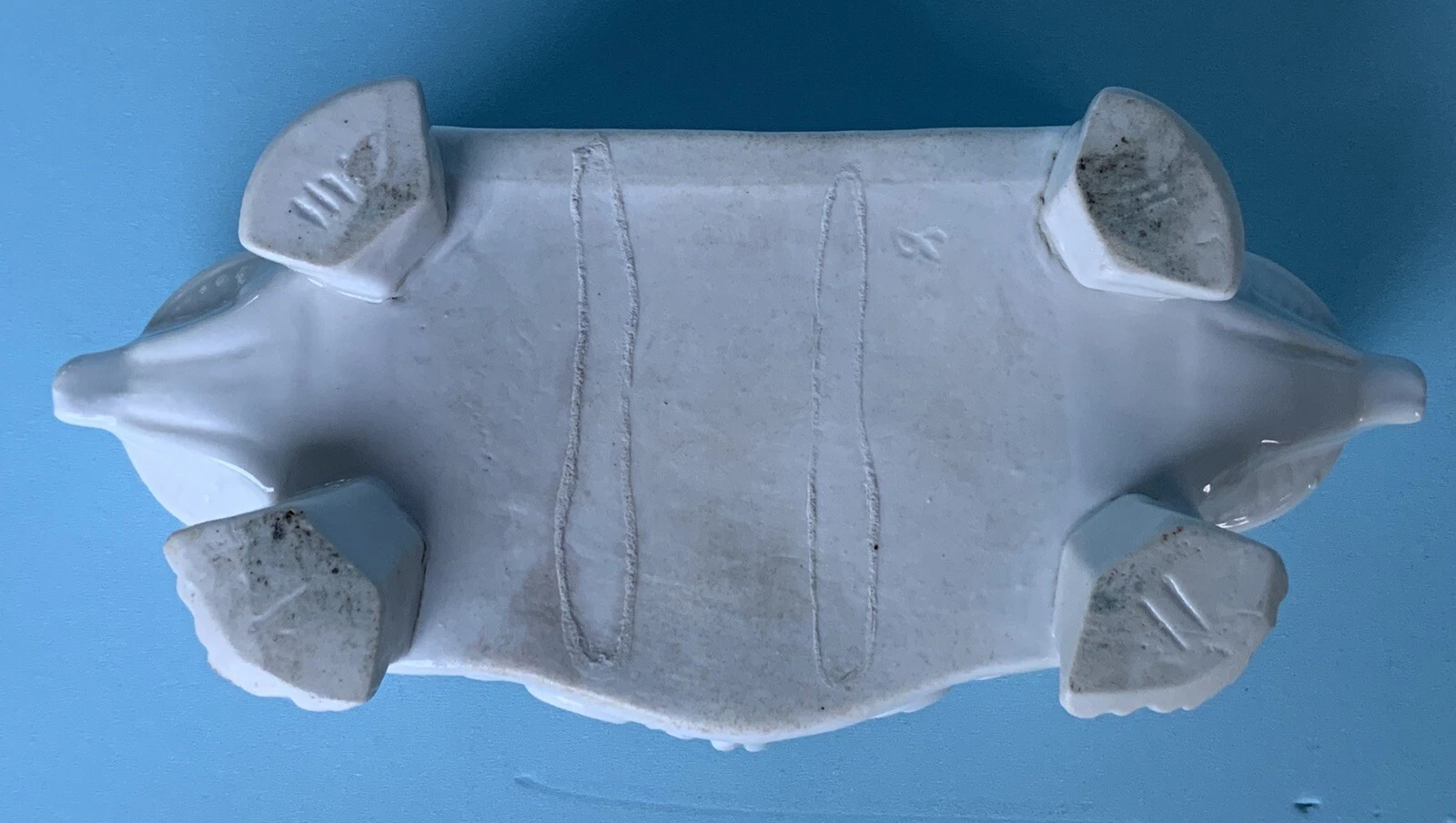
| Measuring | 7 ¼” x 3 ¼” x 5 ¼” high |
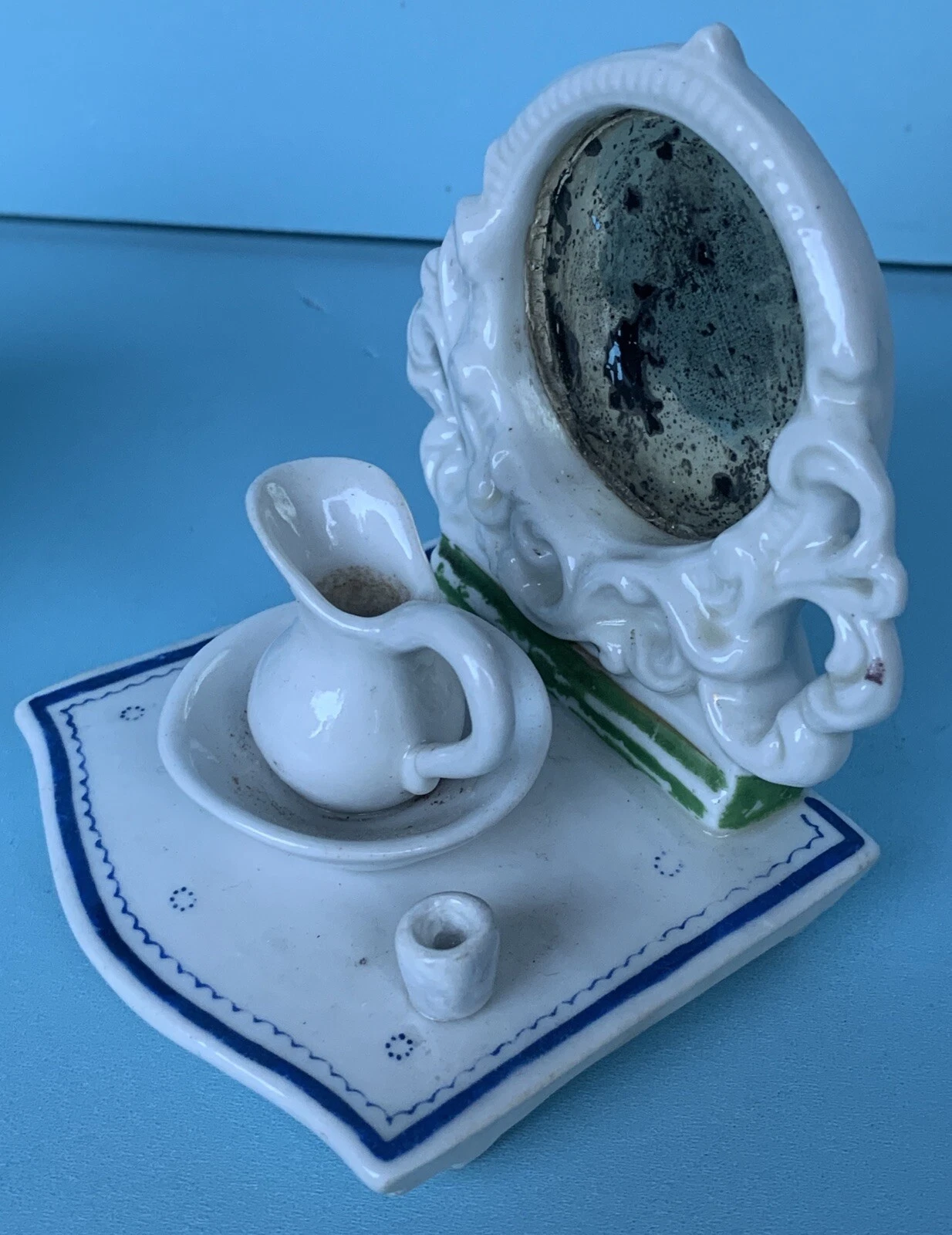
This whimsical inkstand, modeled after a Victorian vanity or washstand, is a prime example of the “Fairing” style novelty porcelains produced by the Conta & Boehme factory in Pössneck, Germany.
Detailed Description
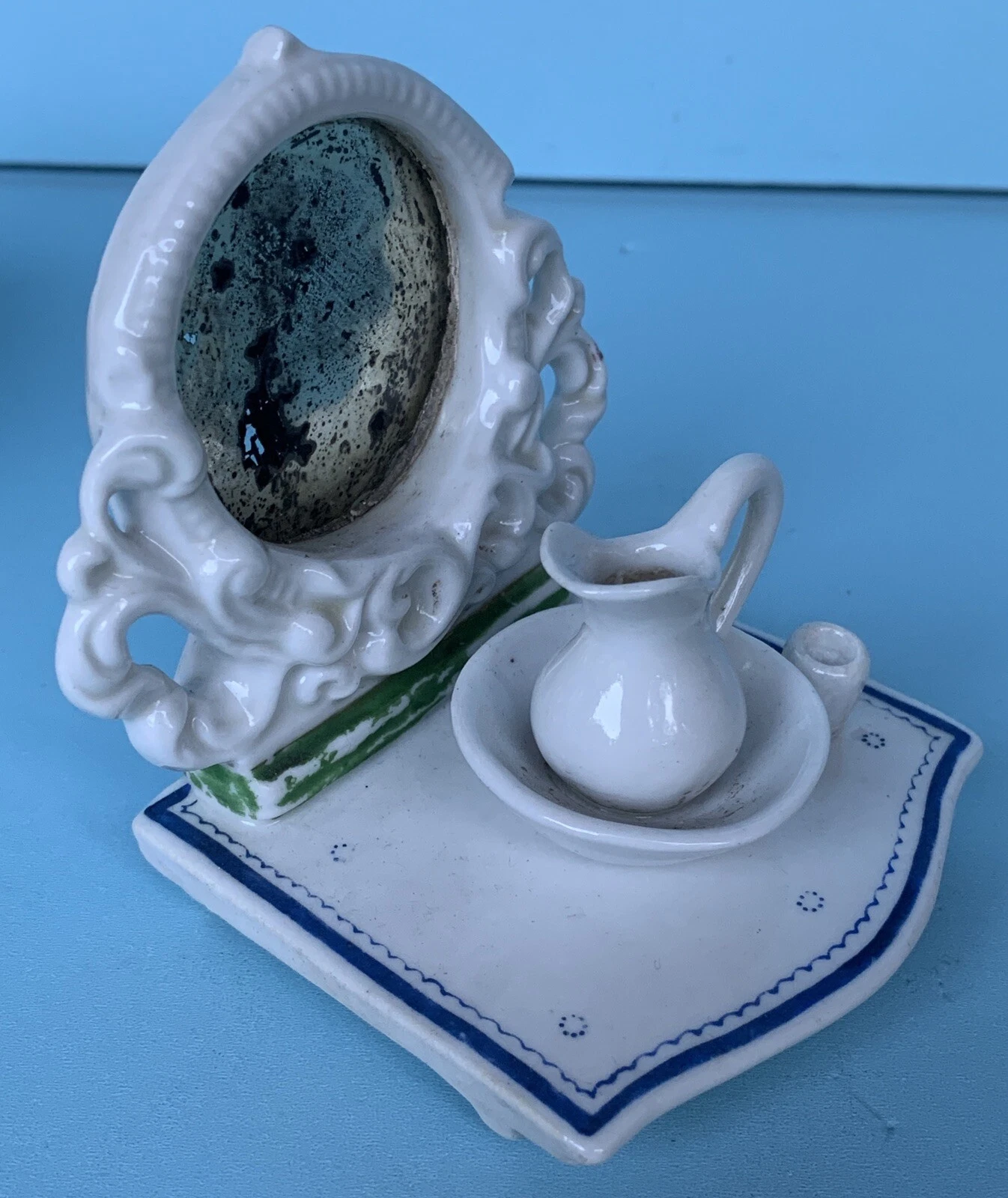
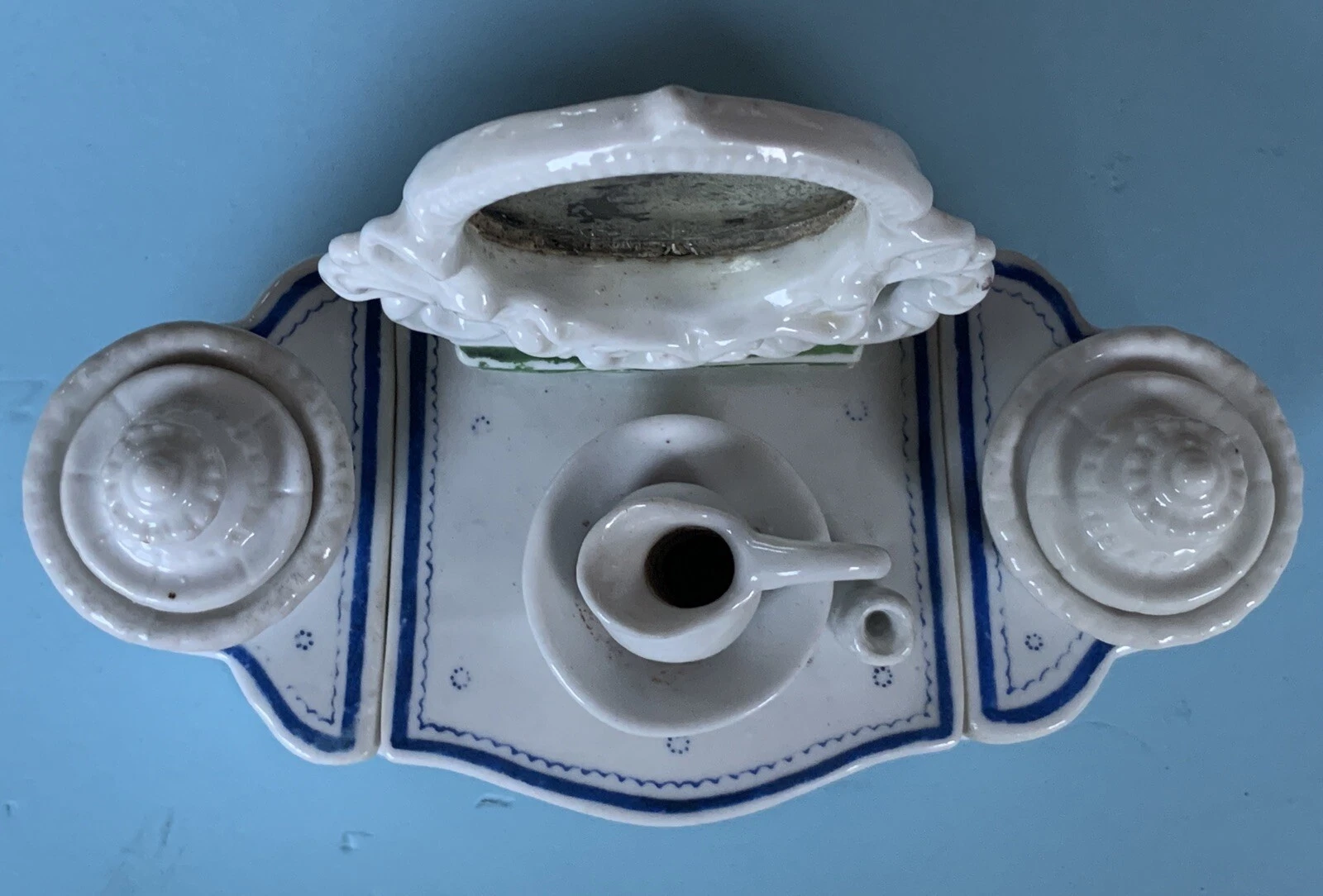
- The Theme: The inkstand is a miniature domestic scene. In the foreground, it features a wash basin and pitcher (ewer) resting on a surface. Behind this sits a large, ornate vanity mirror with a scroll-top frame.
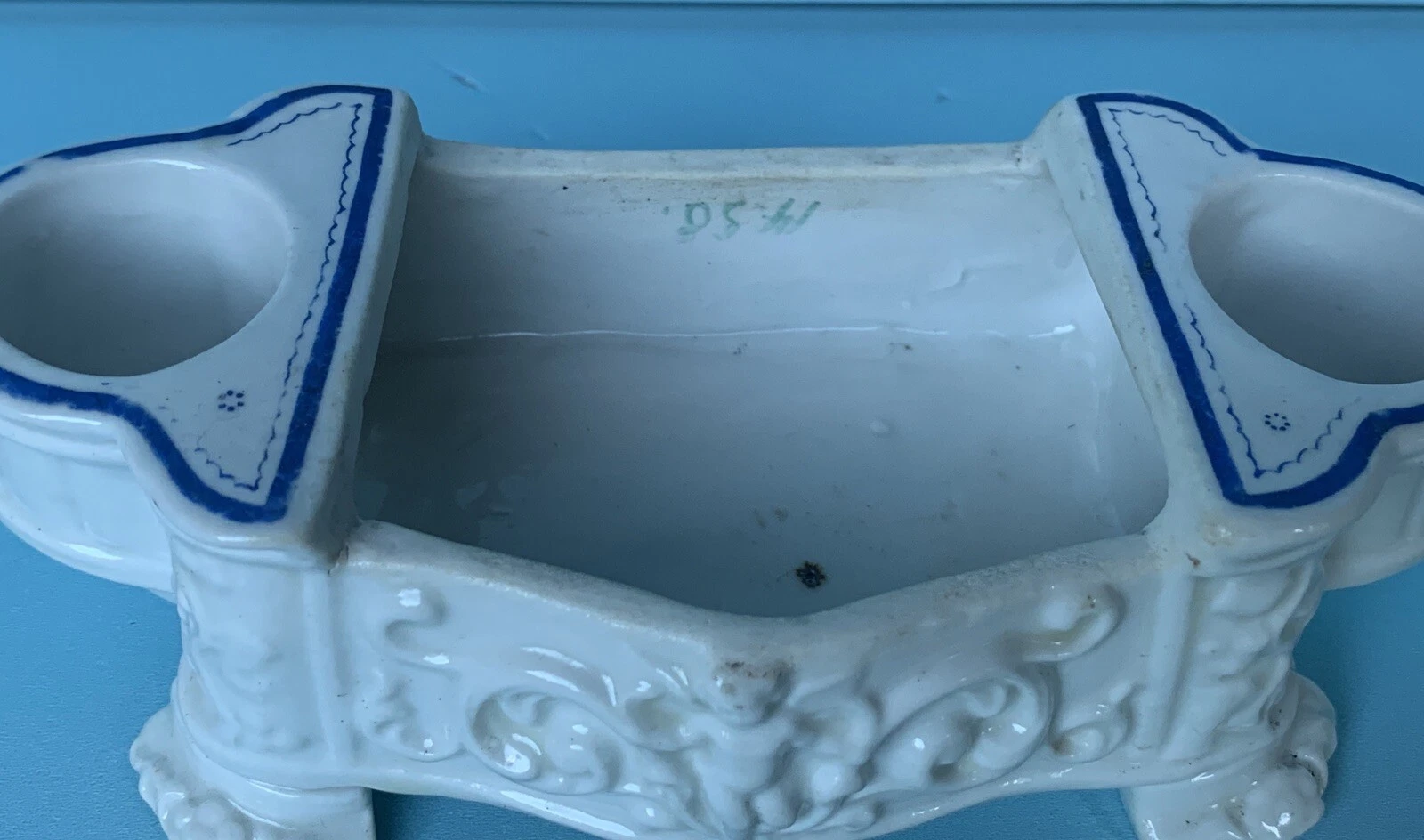
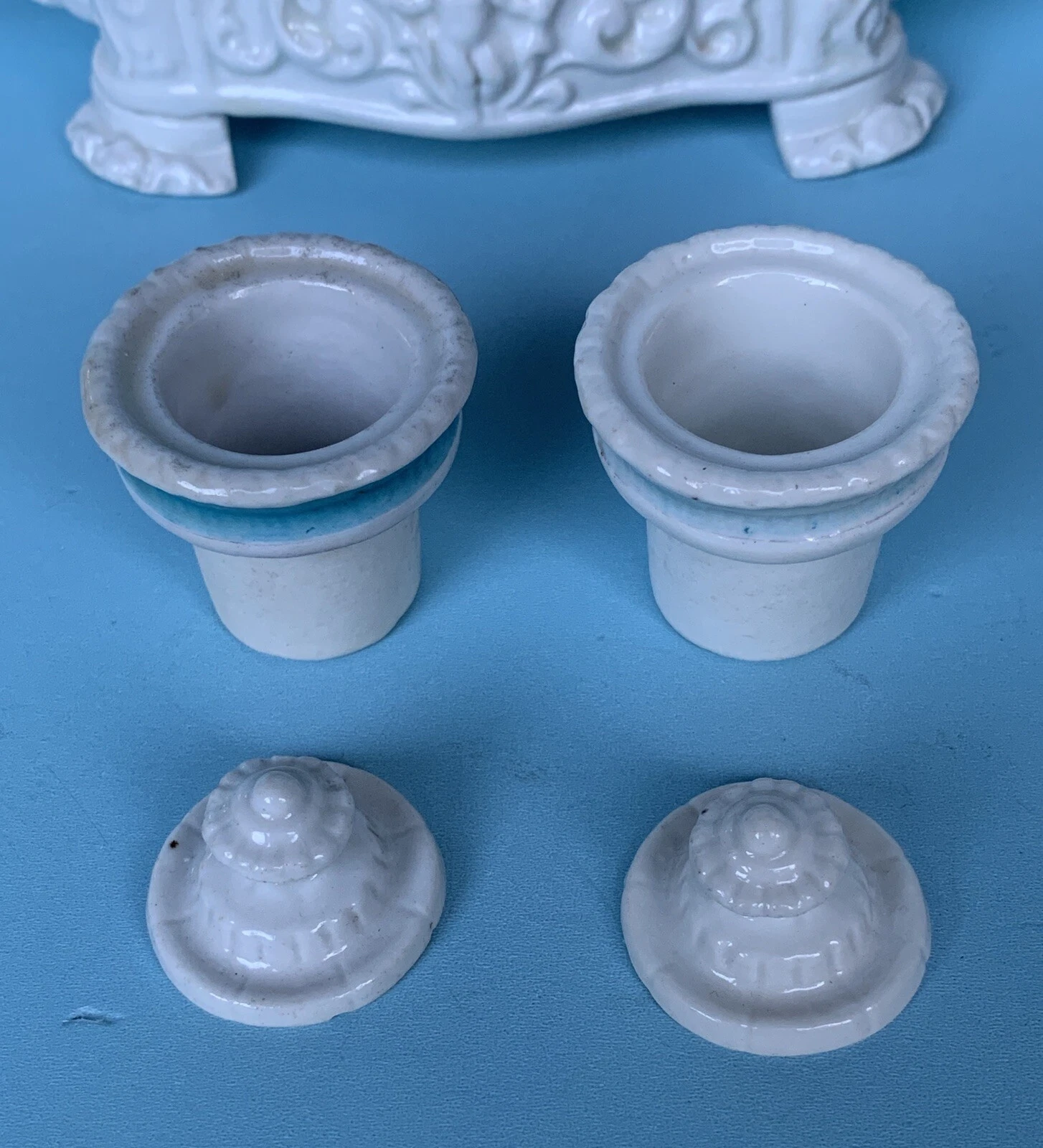
- The Inkwells: Disguised within the vanity structure are two separate inkwells. They are equipped with their original lift-off lids. These lids are designed to look like decorative jars or containers sitting on the washstand.
- Artistry: The piece is made of porcelain with hand-painted polychrome enamels. It features a bright, clean palette common to German porcelain of this era— whites, pinks, and golds with delicate floral accents on the pitcher and mirror frame.
Manufacturer: Conta & Boehme
Founded in 1790, Conta & Boehme became world-famous in the mid-to-late 19th century for their “Fairings”—small porcelain figurines and trinkets originally sold or given as prizes at country fairs.
- Quality: Unlike the cheaper “knock-offs” of the time, Conta & Boehme pieces are noted for their high-quality molding and the charming, often humorous, domestic or social scenes they depict.
The “Washstand” Series
In the Conta & Boehme factory archives, these furniture-style inkwells and trinket boxes were officially categorized as “Washstand Fairings” or “Dressing Table Trinket Sets”.
- The Official Name: This specific design—featuring the mirror, ewer, and basin—is often titled in factory records as “The Toilet Table” or simply “Washstand with Mirror and Basin”.
- The “Fairing” Connection: Most of these pieces were sold as “fairings” (souvenirs from fairs), and while many had humorous titles like “Which is Prettiest?” or “Twelve Months After Marriage,” the furniture models were often left untitled on the front to emphasize their utility as inkstands or trinket boxes.
Estimated Date
- Circa 1860–1880.
- The “Fairing” craze peaked between 1860 and 1880. The design of the vanity—with its heavy scrollwork and specific style of washstand—reflects the Mid-Victorian taste for elaborate household furniture.
Historical Significance
These novelty inkwells were dual-purpose: they served as functional desk tools while acting as a “conversation piece.” The vanity theme specifically appealed to the Victorian fascination with domesticity and “feminine” spaces.
Sold for $109 in December 2025
Content disclaimer. The information posted is the owner’s best knowledge and may not have been vetted by the SOIC. We welcome comments, corrections, and additions, working to make our website information comprehensive and accurate.
Join the Society of Inkwell Collectors (SOIC) – it’s free!
Founded in 1981 as a non-profit organization,
we are documenting inkwells (and accessories).
We’re here to help and inform!