



Walter Hunt’s Inkwell – Patented 1845
| Categories | Mechanical - Pump / Siphon |
| Material | Brass, Glass |
| Markings | See Narrative |
| Manufacturer | Walter Hunt |
| Origin | United States |
| Date or Era | circa 1845 |
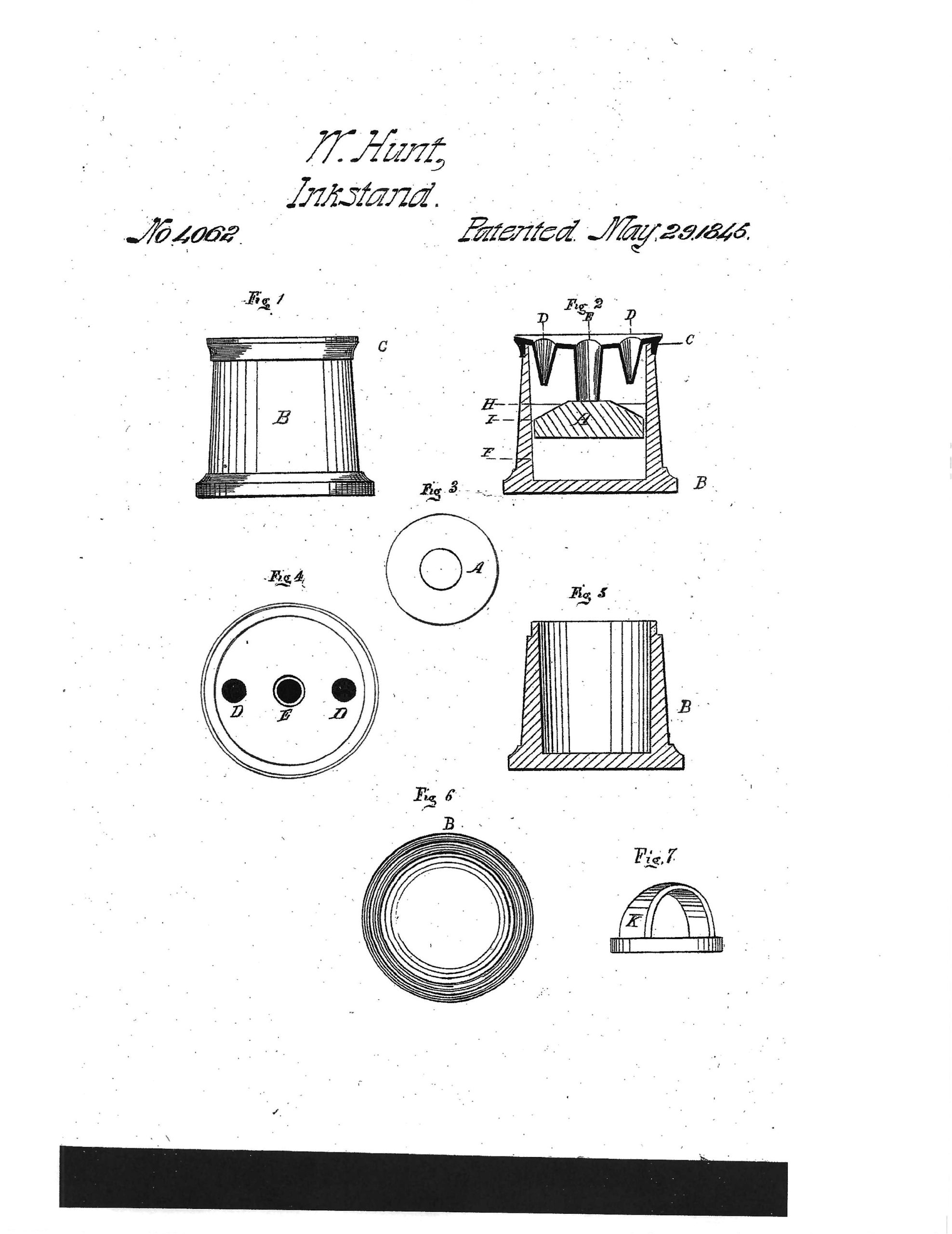
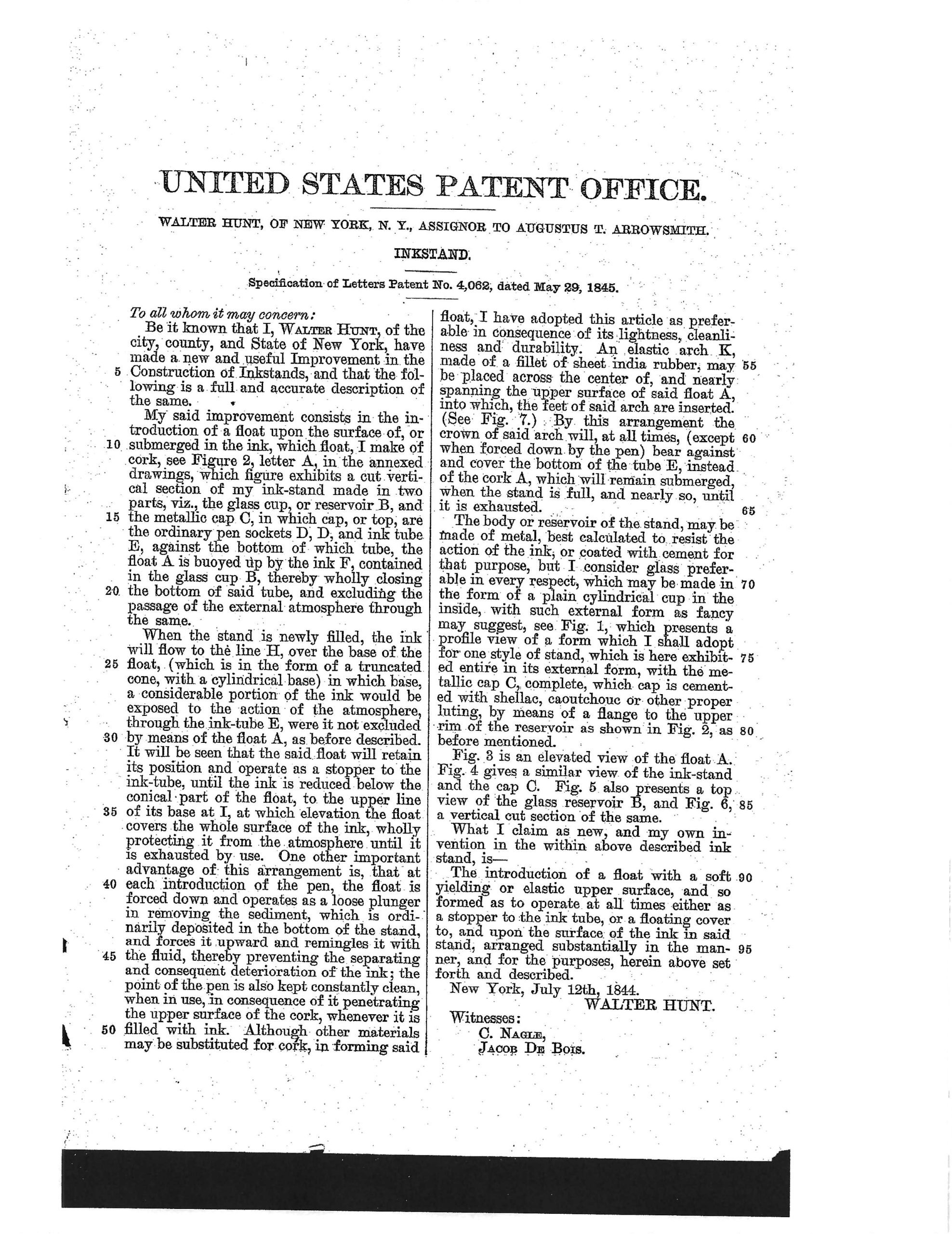
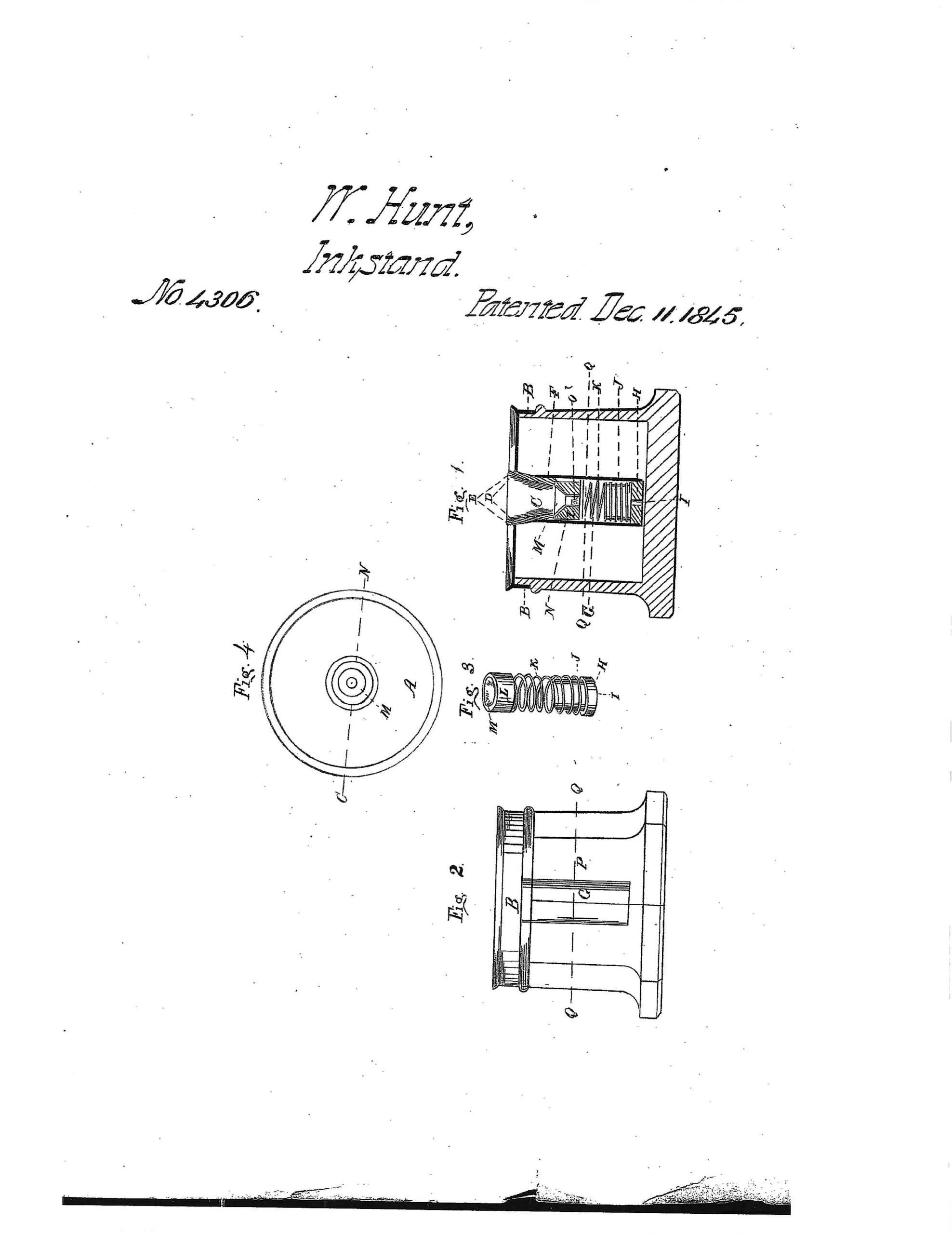
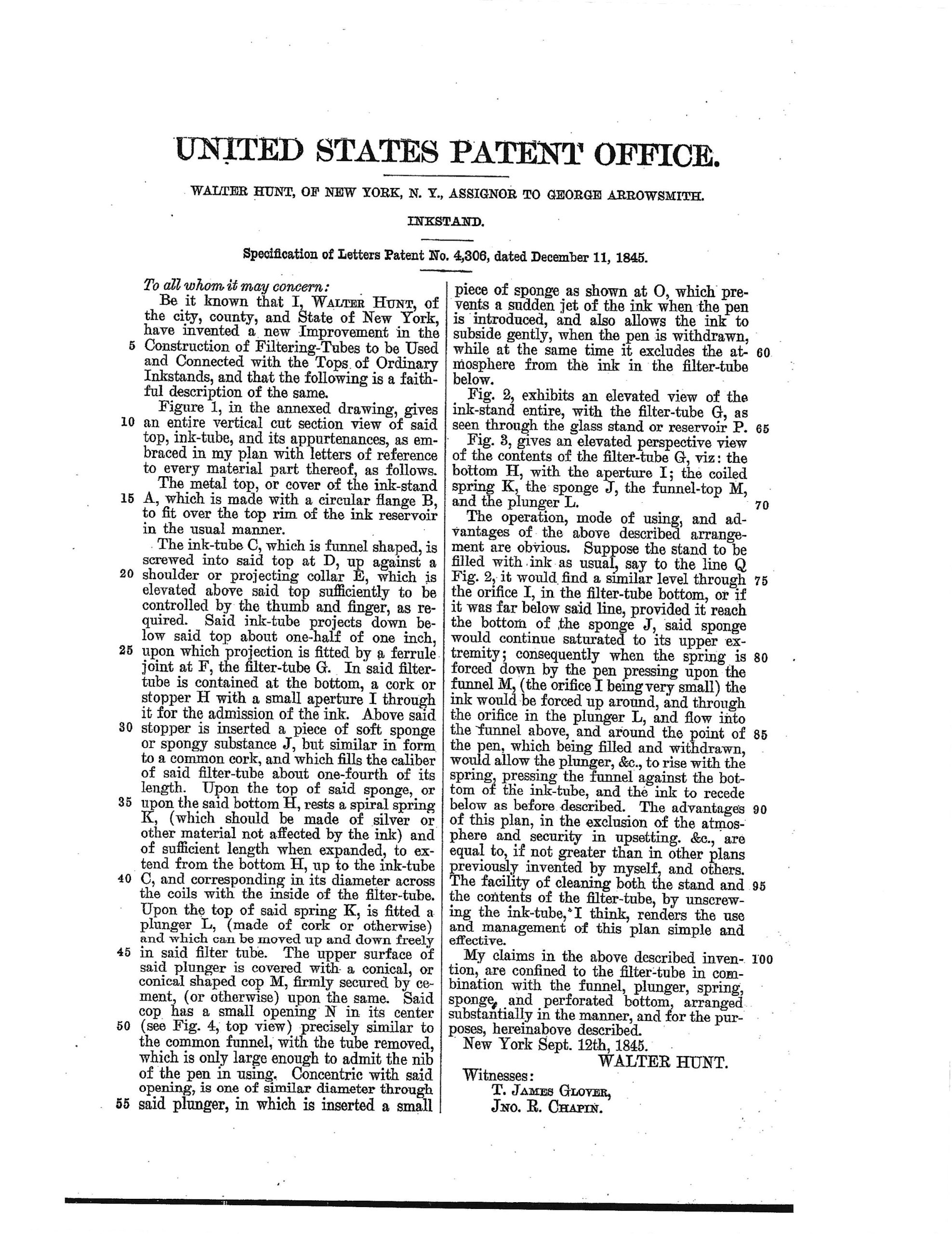
| Patent | No. 4,062 dated May 29, 1845; No. 4306 dated Dec 11, 1845 |
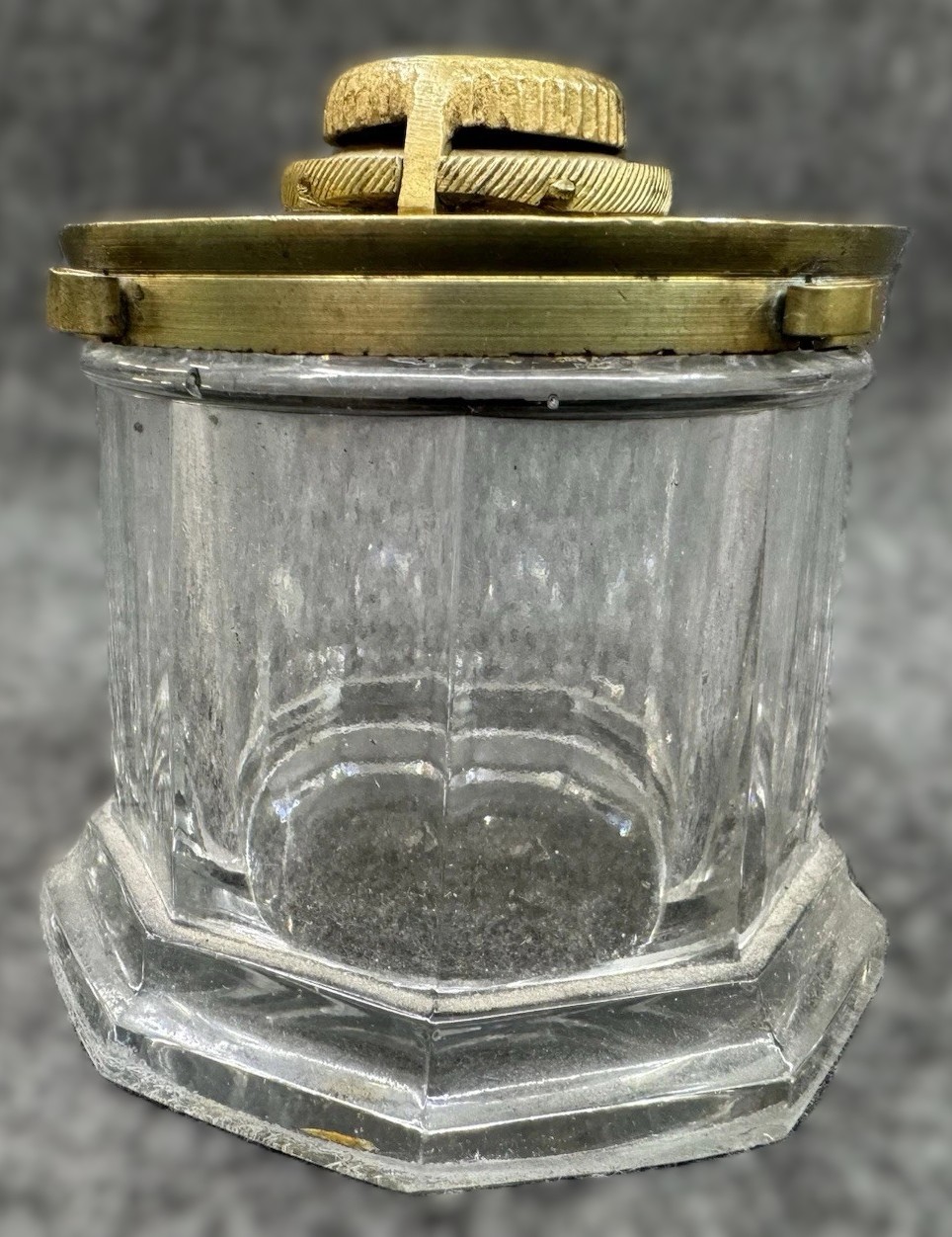
This patented inkwell is an ingenious 19th-century writing accessory that combines a cut glass reservoir with a sophisticated brass filtration and delivery system.
Description of the Walter Hunt Inkwell
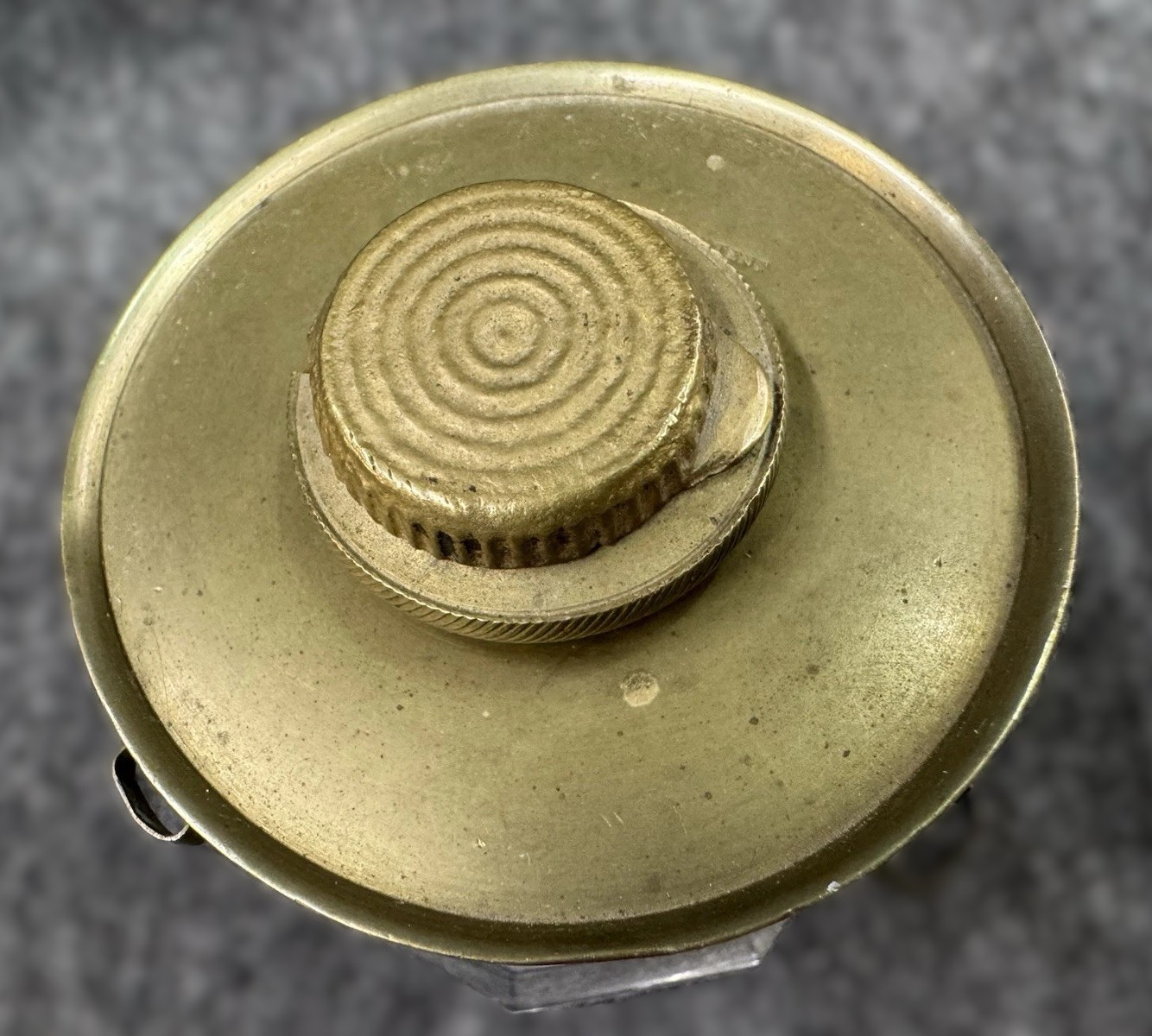
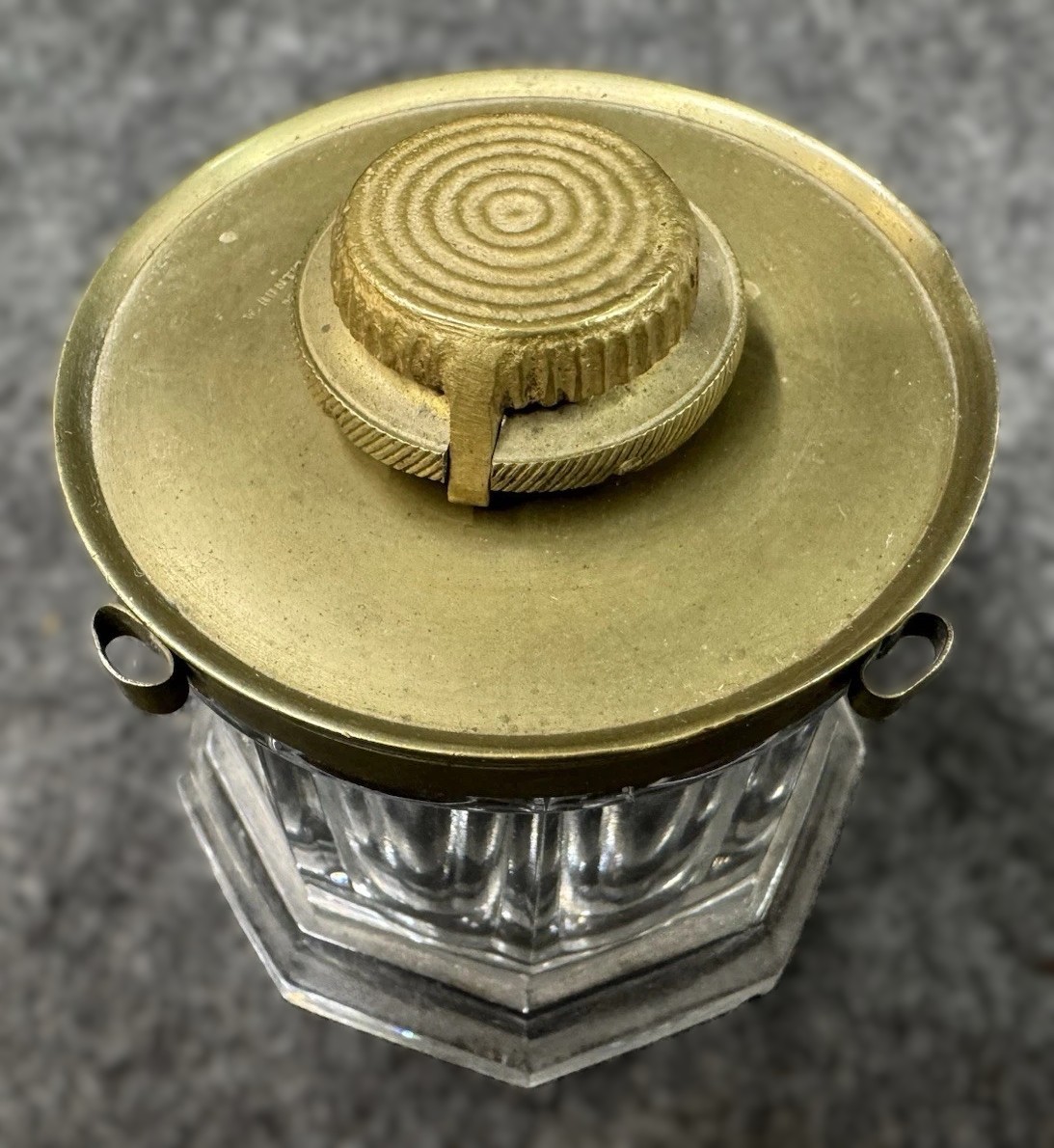
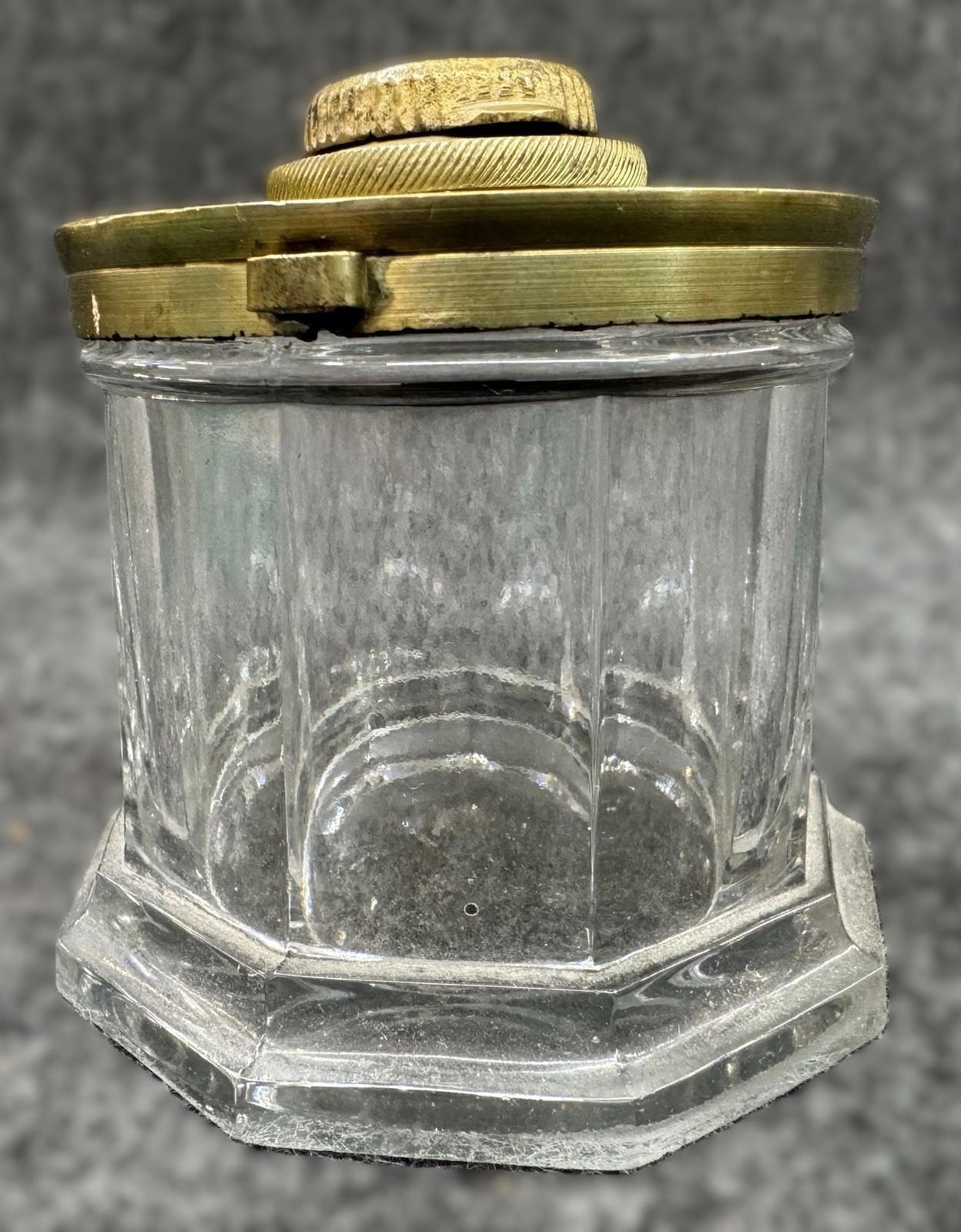
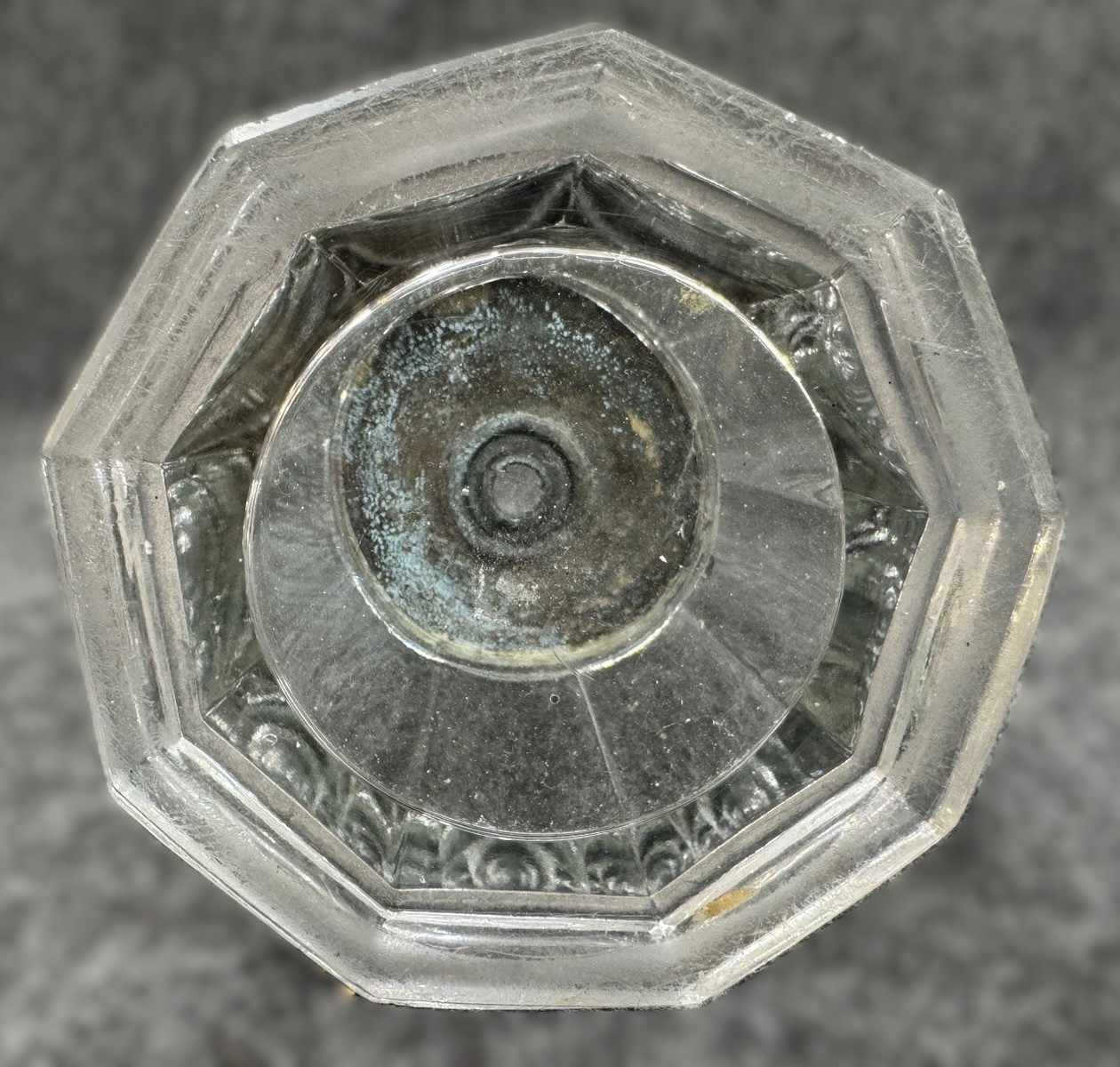
The inkwell features a heavy, octagonal cut glass base that serves as the main ink reservoir. It is topped with a substantial brass cover.
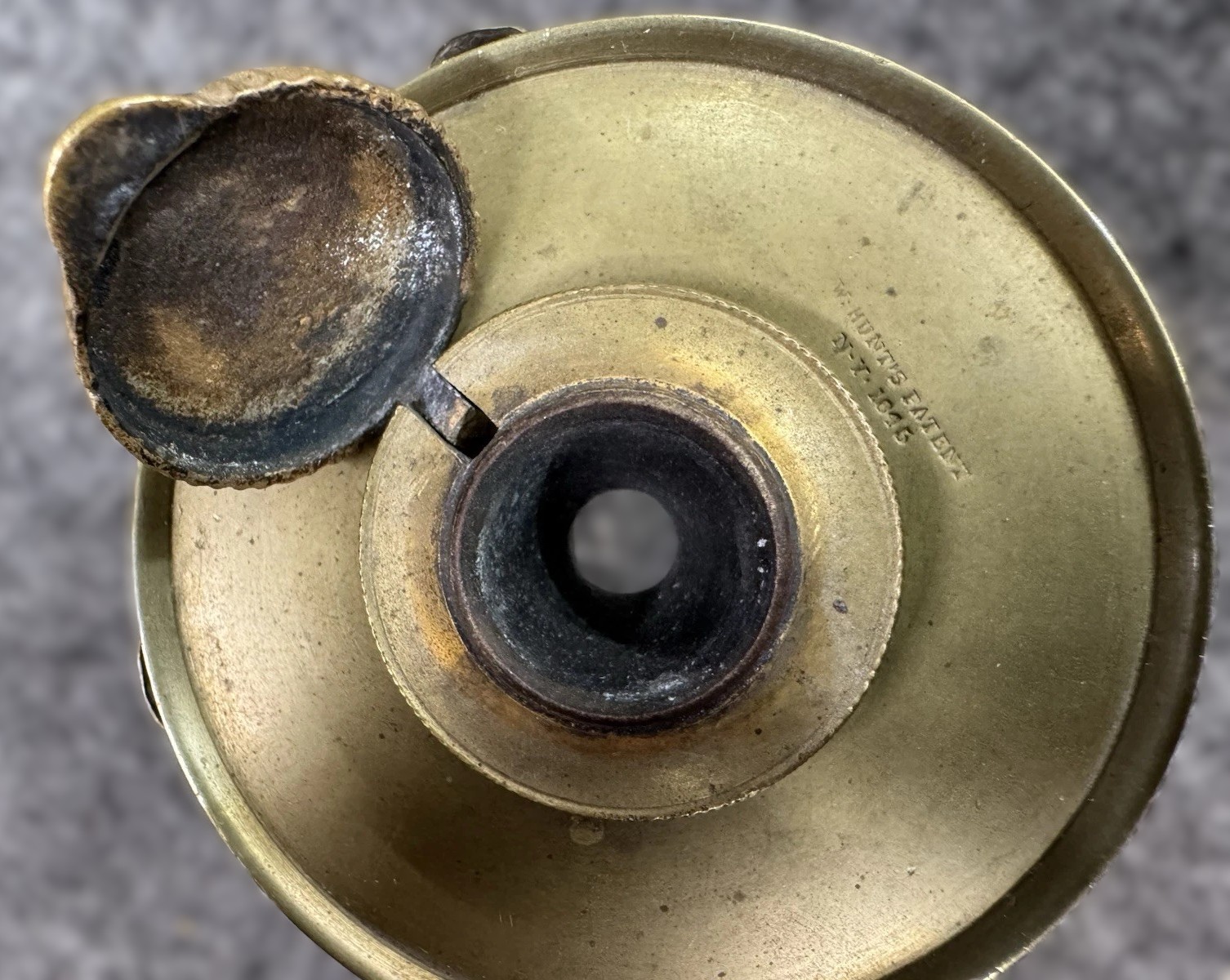
- Markings: The brass top is clearly stamped with “W. HUNT’S PATENT N.Y. 1845“.
- The Cap: The circular brass cover fits over the rim of the glass reservoir with a flange.
- Central Delivery System: In the center of the brass top is a smaller, threaded cap with a concentric ring design and a small vertical tab for easy gripping.
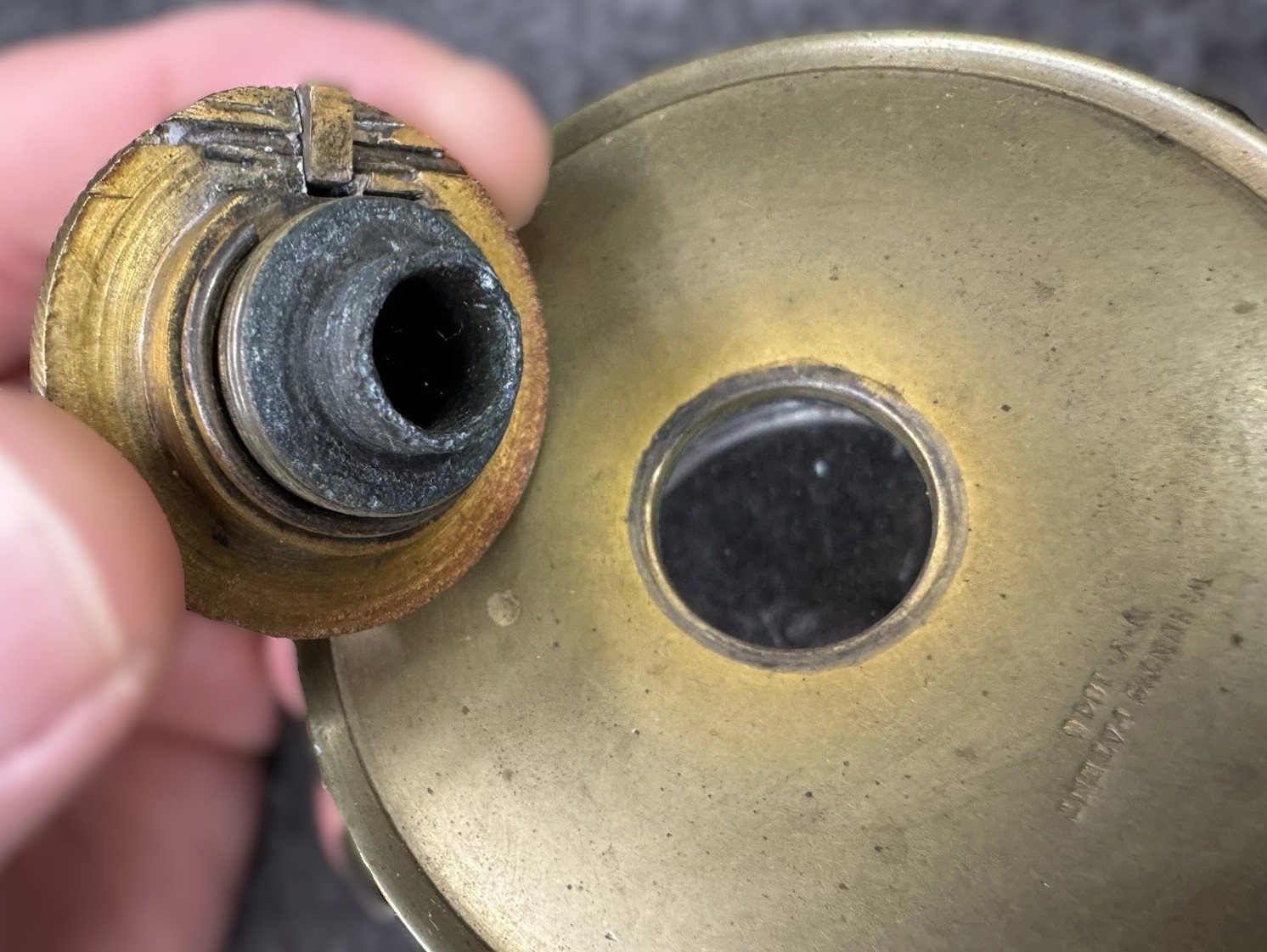
- Internal Components: This central piece unscrews to reveal a funnel-shaped ink tube that extends down into a secondary “filter-tube”.
Mechanical Operation
This inkwell was designed to prevent ink from drying out or spilling while ensuring the pen always received clean, filtered fluid.
- Filtration: The internal filter-tube contains a cork stopper at the bottom with a tiny aperture to let ink in, followed by a piece of soft sponge that filters the ink as it rises.
- Spring-Loaded Plunger: A silver spiral spring sits on the sponge and supports a plunger topped with a small conical funnel.
- Ink Delivery: When a user presses a pen nib into the central opening, the spring-loaded plunger is forced downward. This action forces filtered ink up through the plunger’s center to surround the pen point.
- Atmospheric Seal: When the pen is withdrawn, the spring pushes the plunger back up against the bottom of the ink tube, sealing the reservoir from the air to prevent evaporation.
Patent Summaries
The device incorporates features from two of Walter Hunt’s mid-1840s patents:
| Patent No. | Date | Primary Innovation |
| No. 4,062 | May 29, 1845 | Introduced a float (often cork) that acts as both a stopper for the ink tube and a floating cover for the ink to exclude air. It also acted as a plunger to remingle sediment. |
| No. 4,306 | Dec. 11, 1845 | Focused on the filtering-tube system. It refined the combination of a spring-loaded plunger, sponge filter, and perforated bottom to deliver clean ink. |
About the Inventor: Walter Hunt
Walter Hunt (1796–1859) was a prolific American inventor based in New York City. Often called “the quintessential American inventor,” he is most famous for creating the safety pin and the first lockstitch sewing machine, though he famously failed to patent many of his most profitable ideas until others had already commercialized them.
His work on inkwells was part of a broader interest in improving daily stationery tools; he also held patents for fountain pens and various types of ink delivery systems. Hunt’s designs were characterized by their mechanical complexity—utilizing springs, plungers, and valves—aimed at solving the common 19th-century problems of ink evaporation and sedimentation.
Sold for $40 in January 2026
Content disclaimer. The information posted is the owner’s best knowledge and may not have been vetted by the SOIC. We welcome comments, corrections, and additions, working to make our website information comprehensive and accurate.
Join the Society of Inkwell Collectors (SOIC) – it’s free!
Founded in 1981 as a non-profit organization,
we are documenting inkwells (and accessories).
We’re here to help and inform!