

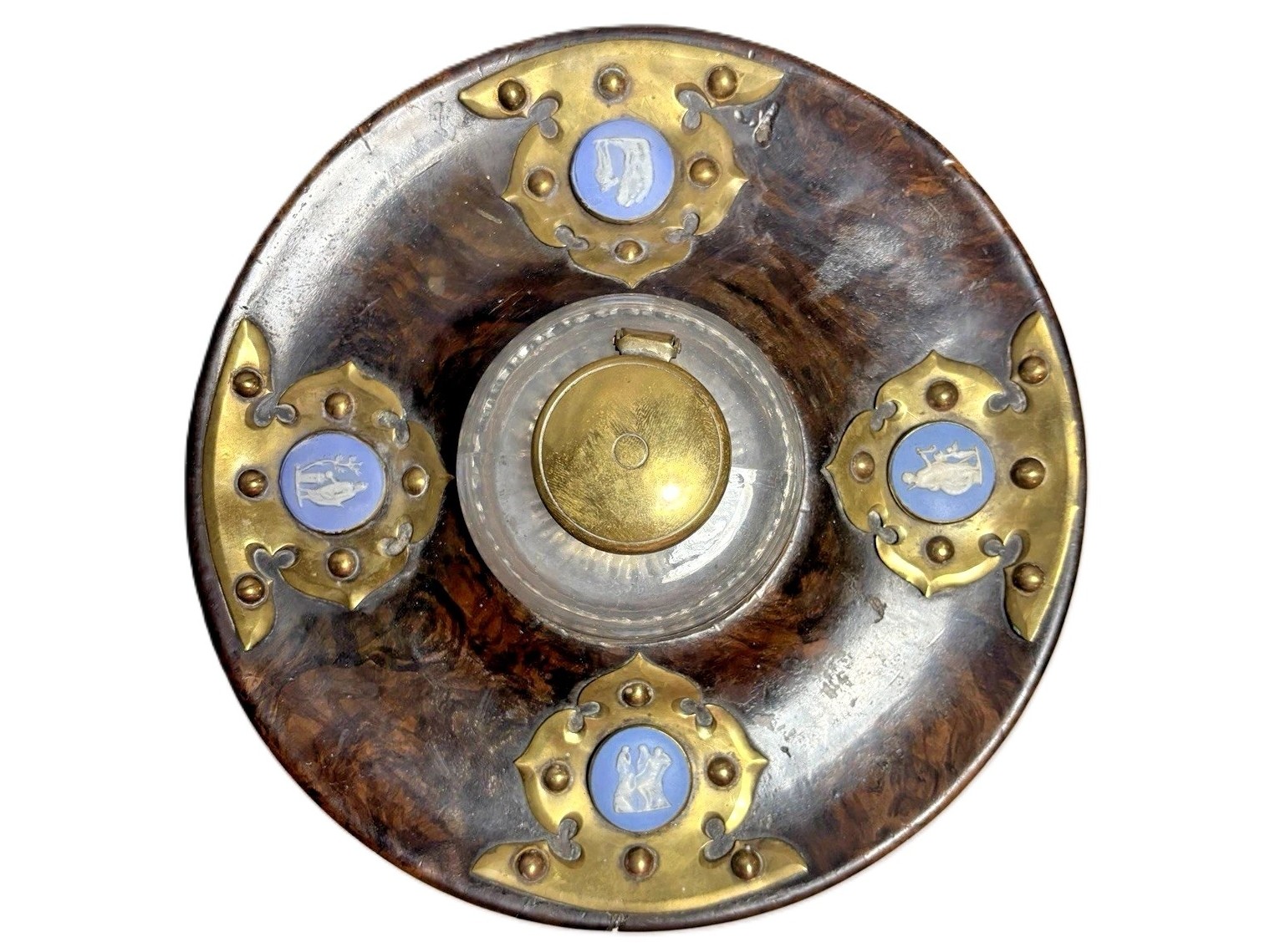
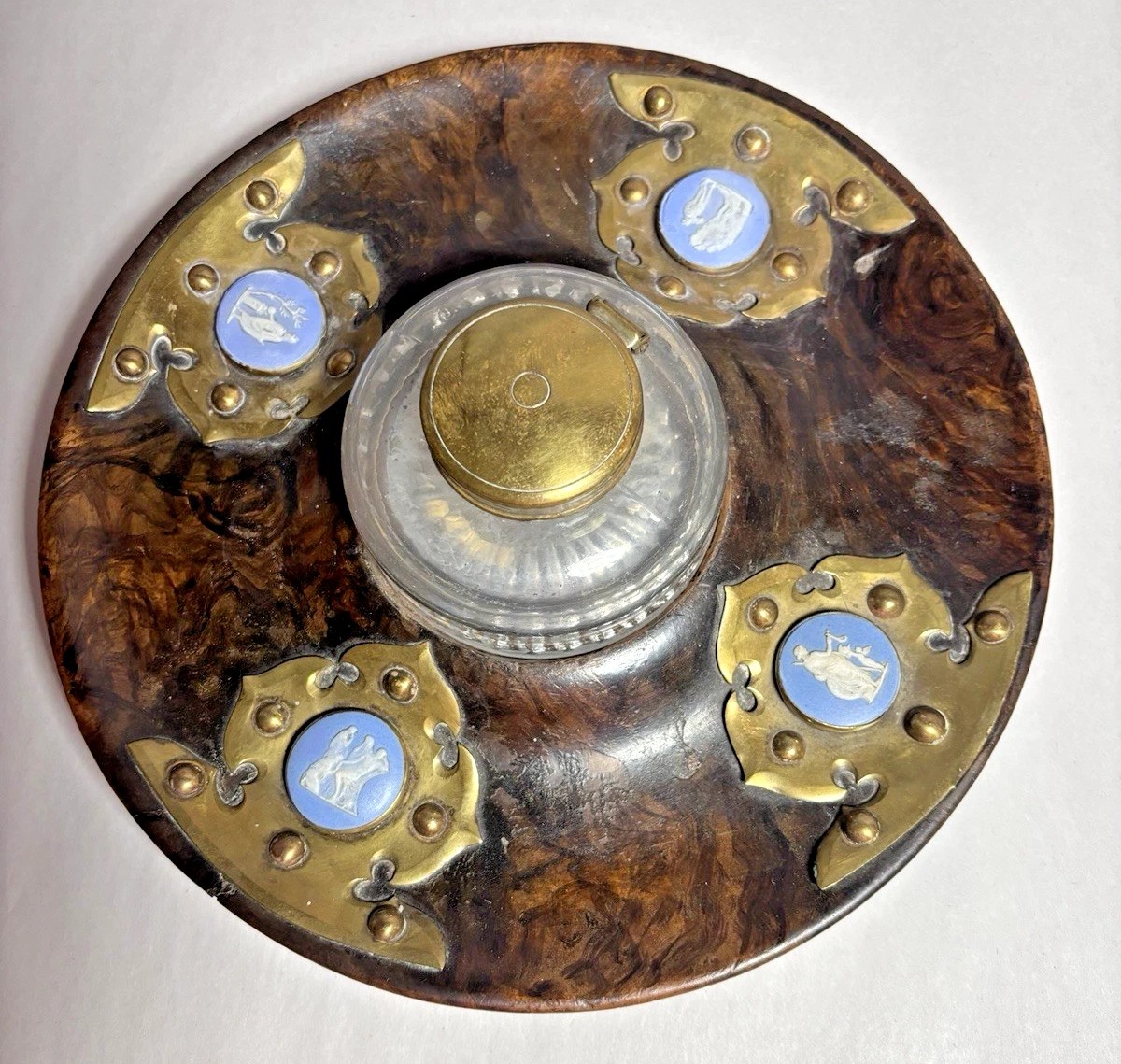
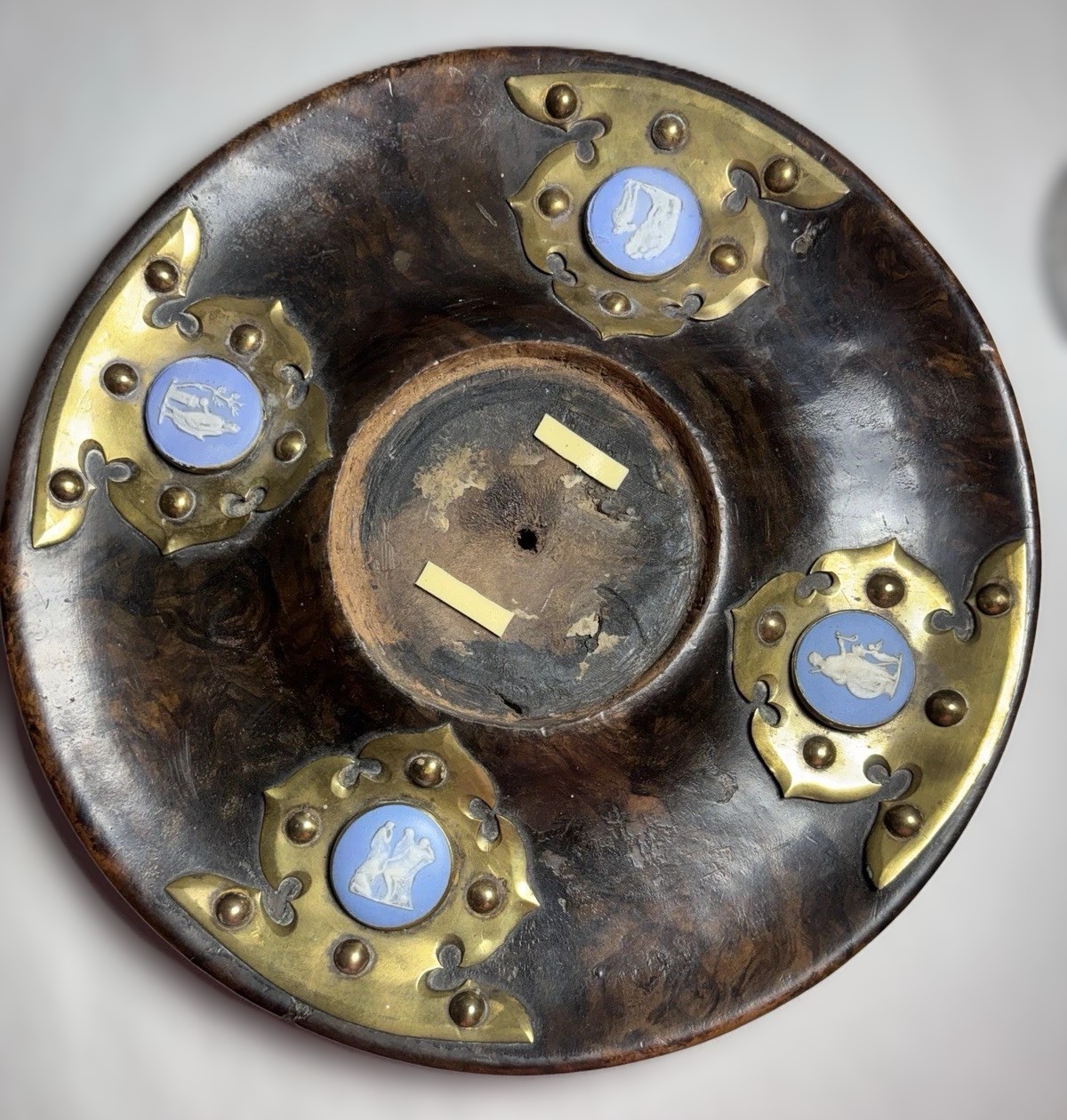
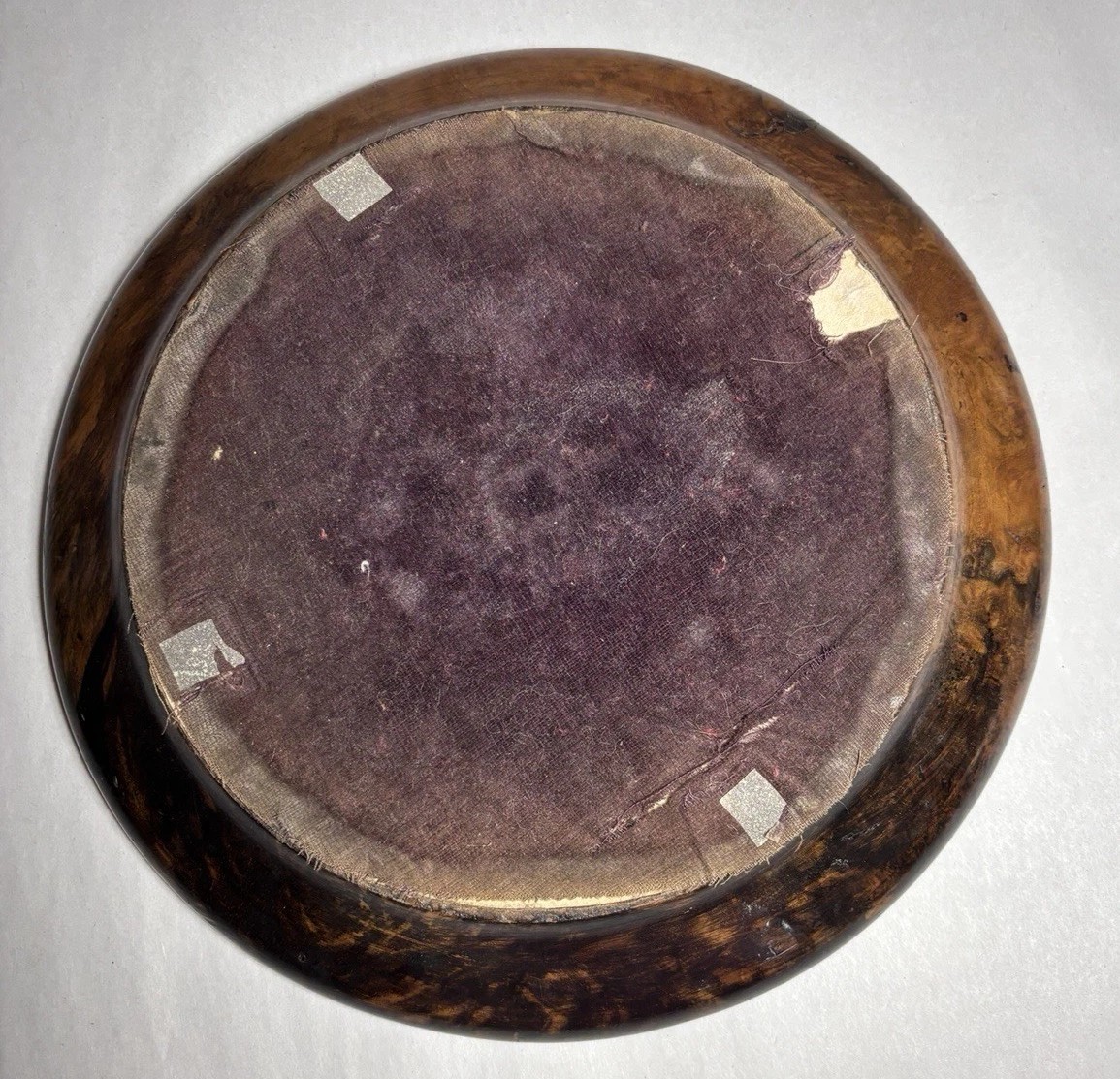
Walnut Inkstand with Jasperware Plaques
| Categories | Wood Inkstands |
| Material | Brass, Jasperware, Wood |
| Markings | Unmarked |
| Manufacturer | Undetermined |
| Origin | England |
| Date or Era | circa 1890 |
| Measuring | Base: 10 ½” diameter x 1” high |
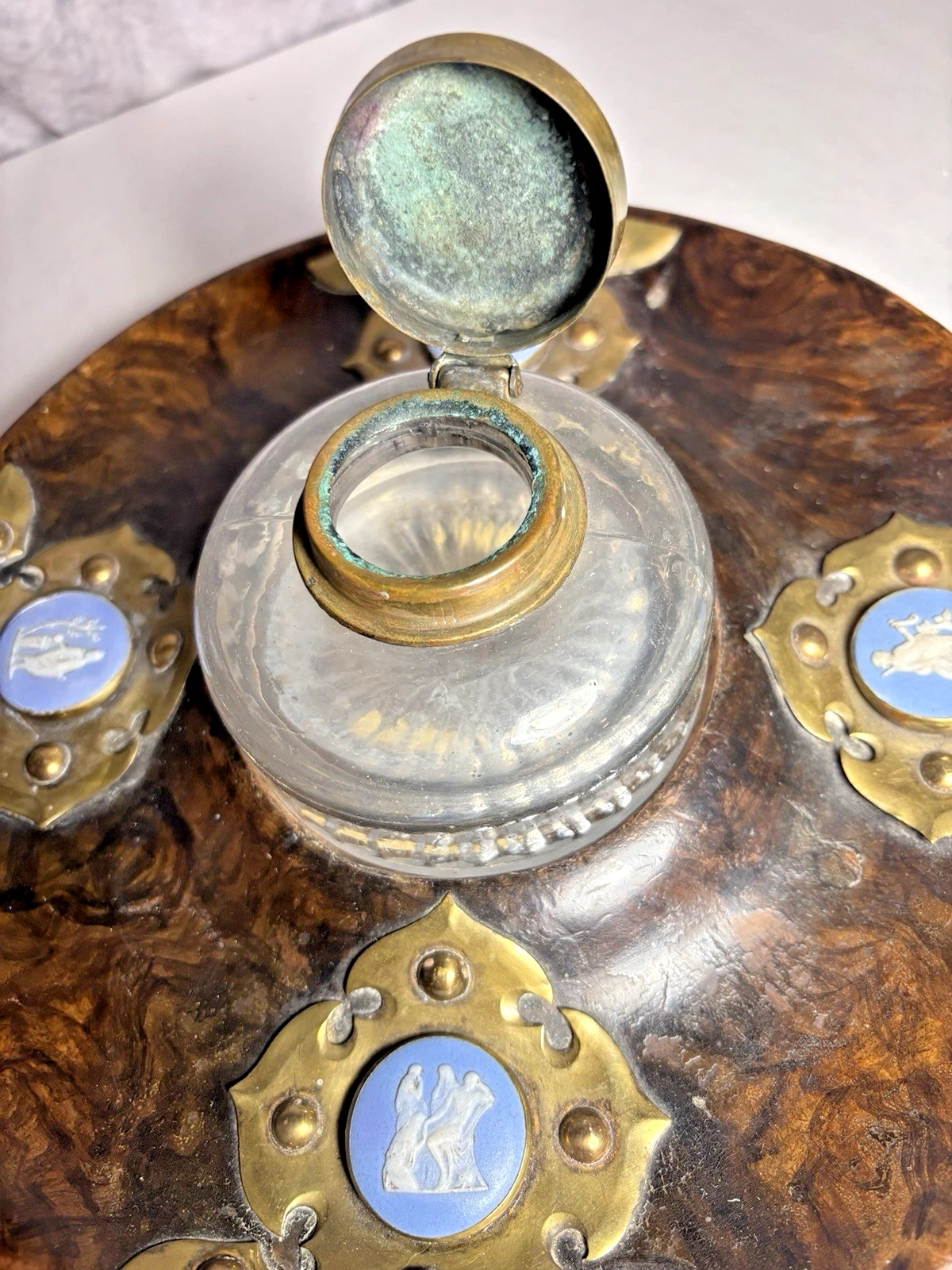
This late 19th-century desk accessory of English origin combines the natural beauty of figured wood with the classic elegance of Wedgwood-style stoneware.
Material and Construction
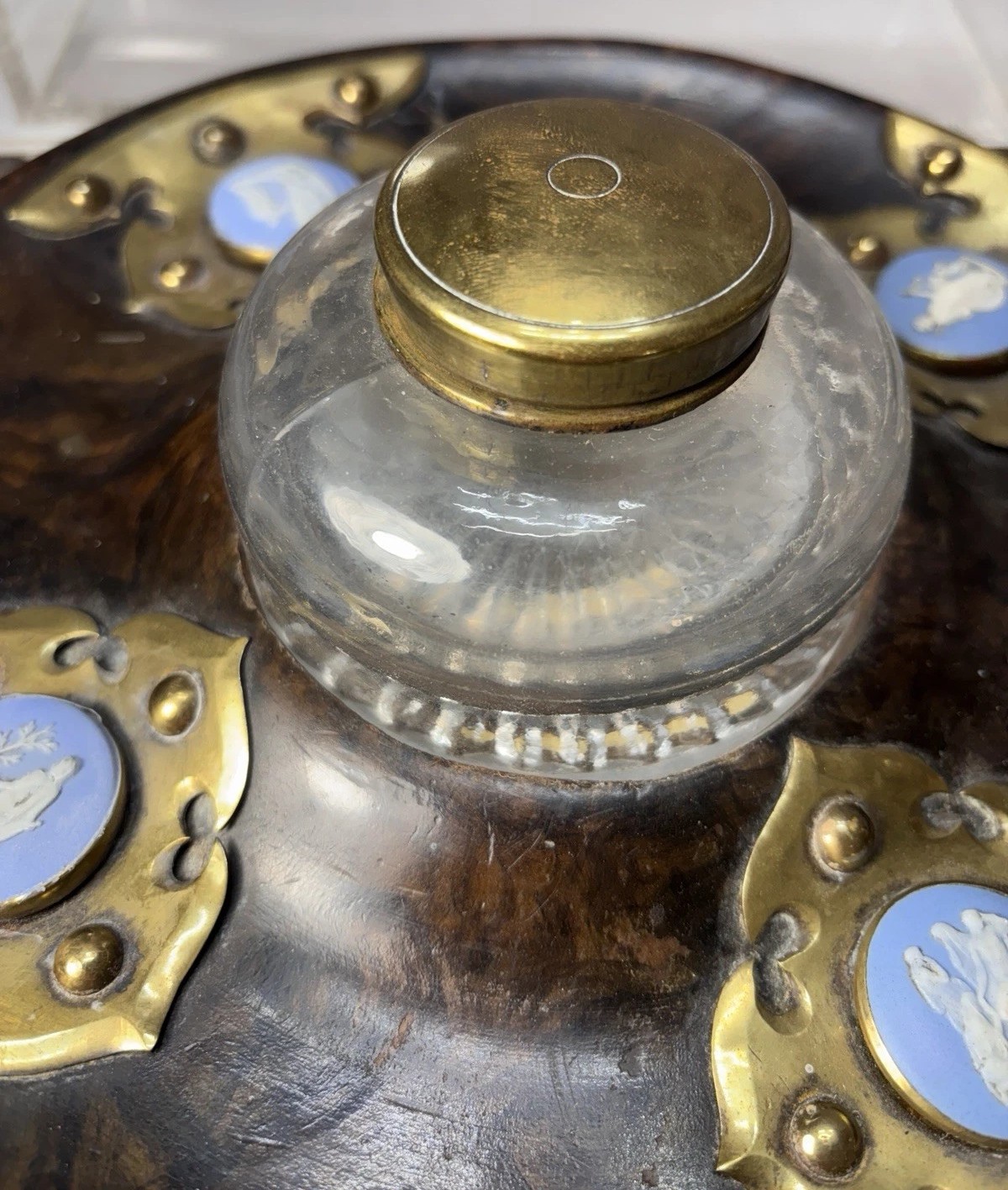
The inkstand is made of burr walnut (also known as burl walnut). The “swirly” and mottled appearance is characteristic of wood cut from a burr – a growth on a tree where the grain has grown in a deformed, knotted manner. This creates the highly prized “eyes” and varied brown tones seen across the surface.
The central clear glass inkwell features a molded ribbed base and is fitted with a simple brass collar and hinged lid.
The Jasperware Plaques
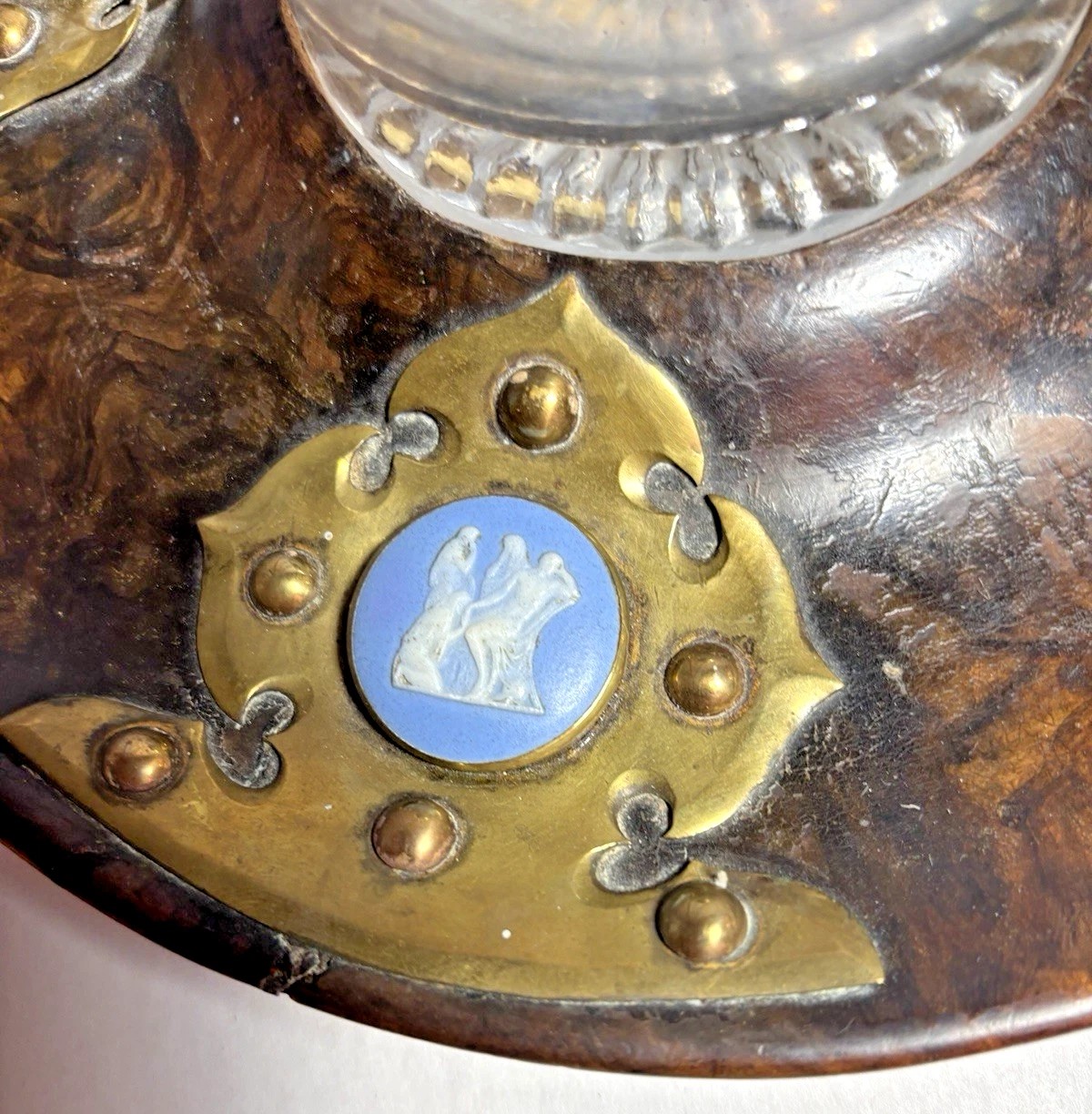
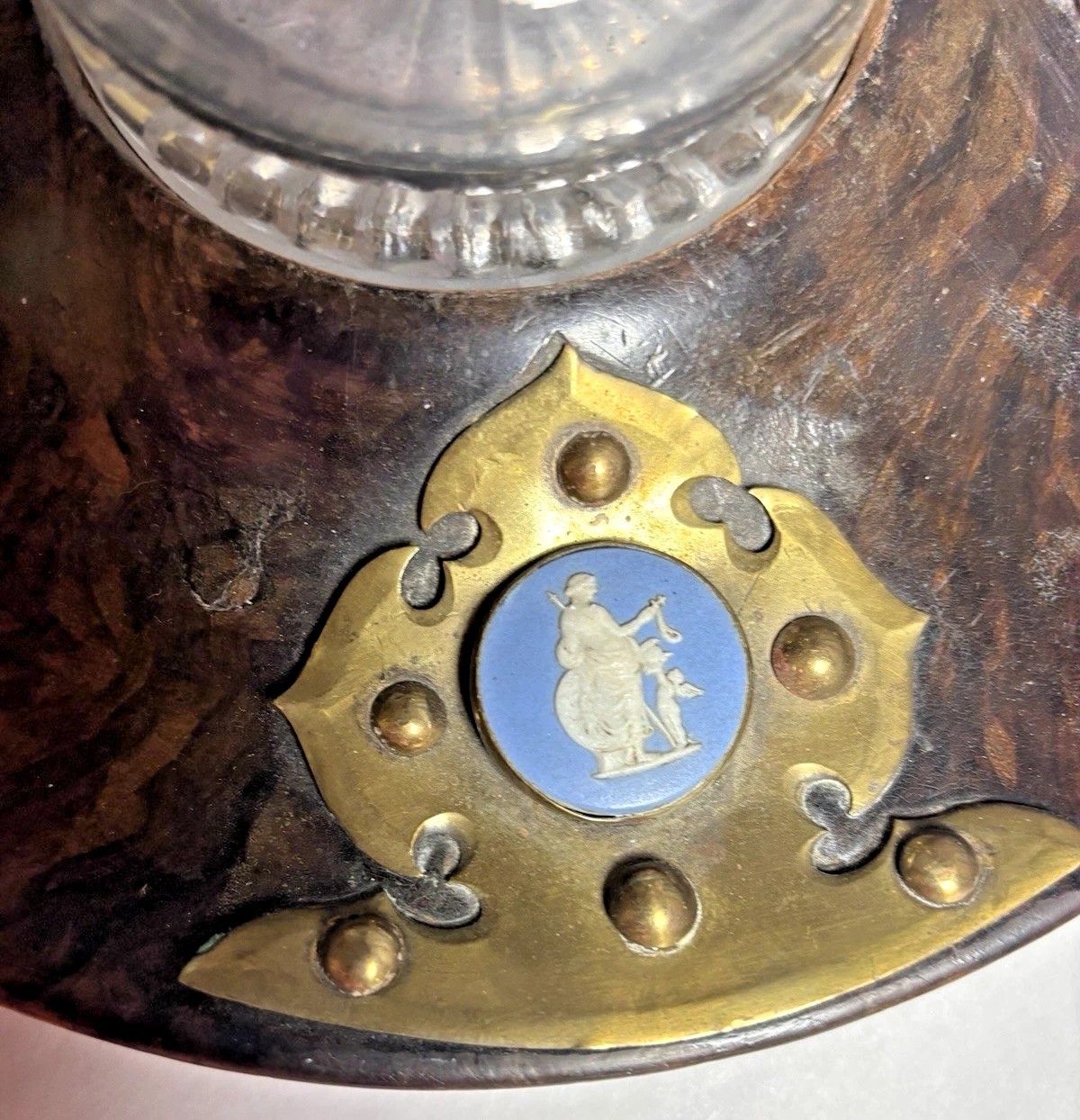
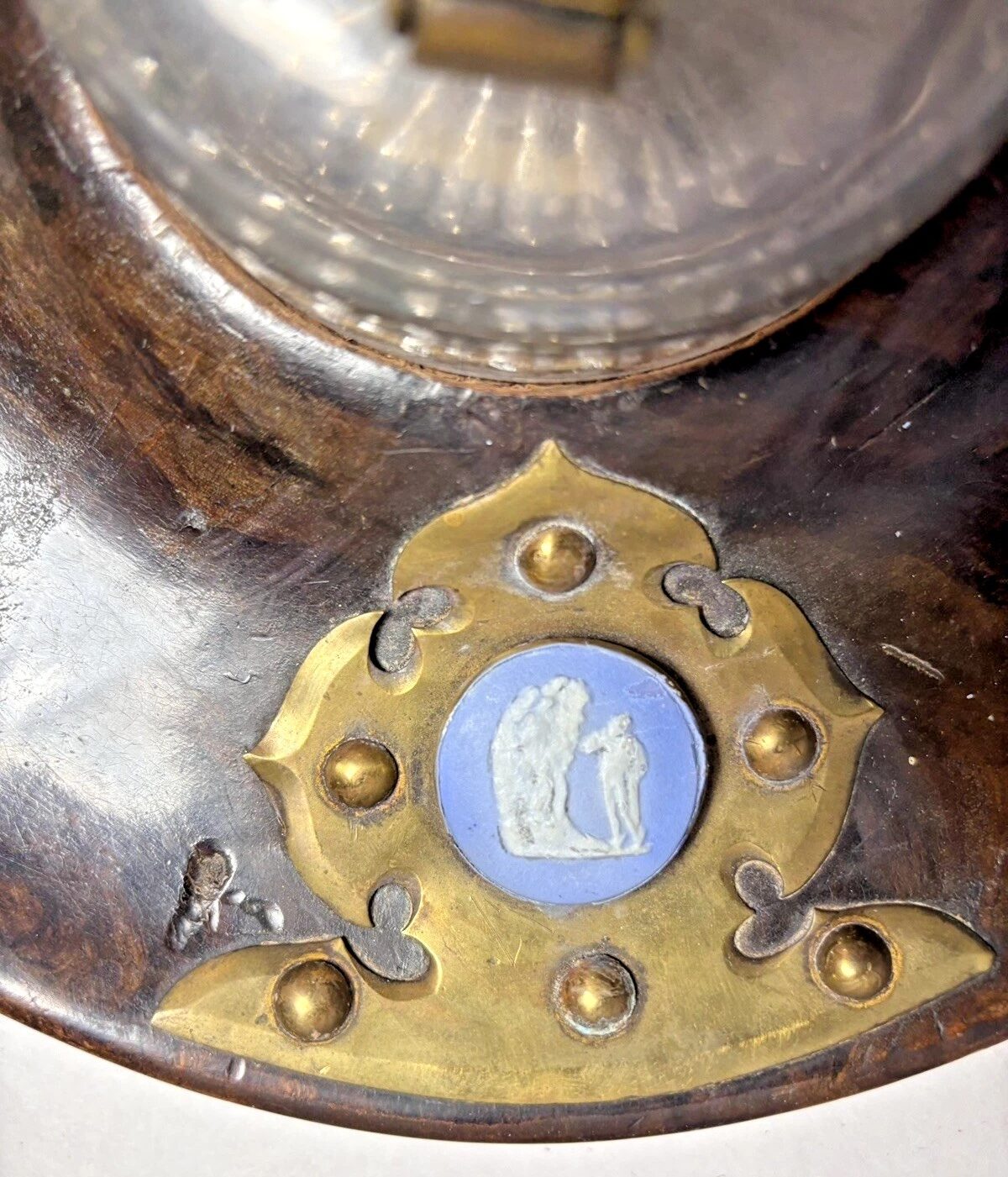
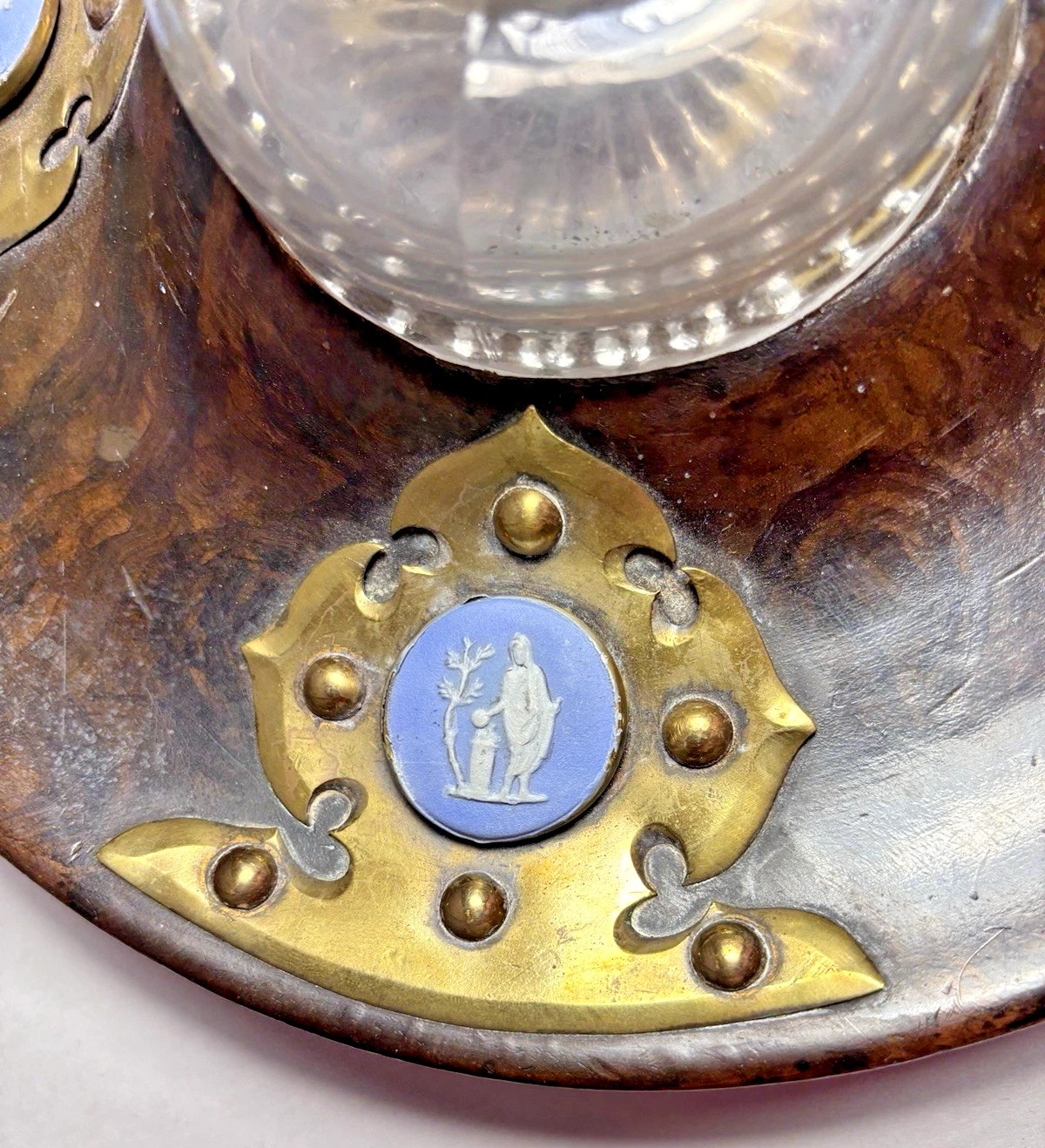
The four light blue porcelain plaques are Wedgwood Jasperware medallions Jasperware is a stoneware decorated with “sprigged” white relief classical figures. While these medallions were made by Wedgwood, the wood stand itself was likely produced by a high-end cabinetmaker or “fancy goods” manufacturer in a city like London or Birmingham, who purchased the medallions to mount into their own designs.
The Depicted Scenes: The scenes are derived from classical mythology and were often inspired by 18th-century designs by artists like John Flaxman or Lady Templeton:
- Maternal/Domestic Scenes: One plaque shows a female figure with a small child or Cupid, a common theme representing Maternity or a Muse.
- Offerings/Sacrifice: Another depicts a figure standing before an altar or pedestal, common in “Sacrifice to Flora” or “Offerings to Peace” motifs.
- Classical Allegory: The other plaques show figures in contemplative or instructional poses, often representing virtues like Hope or Prudence.
Age and Origin
- Estimated Date: Circa 1880–1910 (Late Victorian to Edwardian era).
- Origin: England. This specific combination of burr walnut and Wedgwood Jasperware was a hallmark of British desk sets during this period.
Estimated value: $125
Content disclaimer. The information posted is the owner’s best knowledge and may not have been vetted by the SOIC. We welcome comments, corrections, and additions, working to make our website information comprehensive and accurate.
Join the Society of Inkwell Collectors (SOIC) – it’s free!
Founded in 1981 as a non-profit organization,
we are documenting inkwells (and accessories).
We’re here to help and inform!