

Victorian Lawn Tennis Figural Inkstand
| Categories | Sports |
| Type | Tennis |
| Material | Glass, Silverplate |
| Markings | Unmarked |
| Manufacturer | Undetermined |
| Origin | England |
| Date or Era | circa 1878 |
| Measuring | 5” across; 3 ⅞” high |
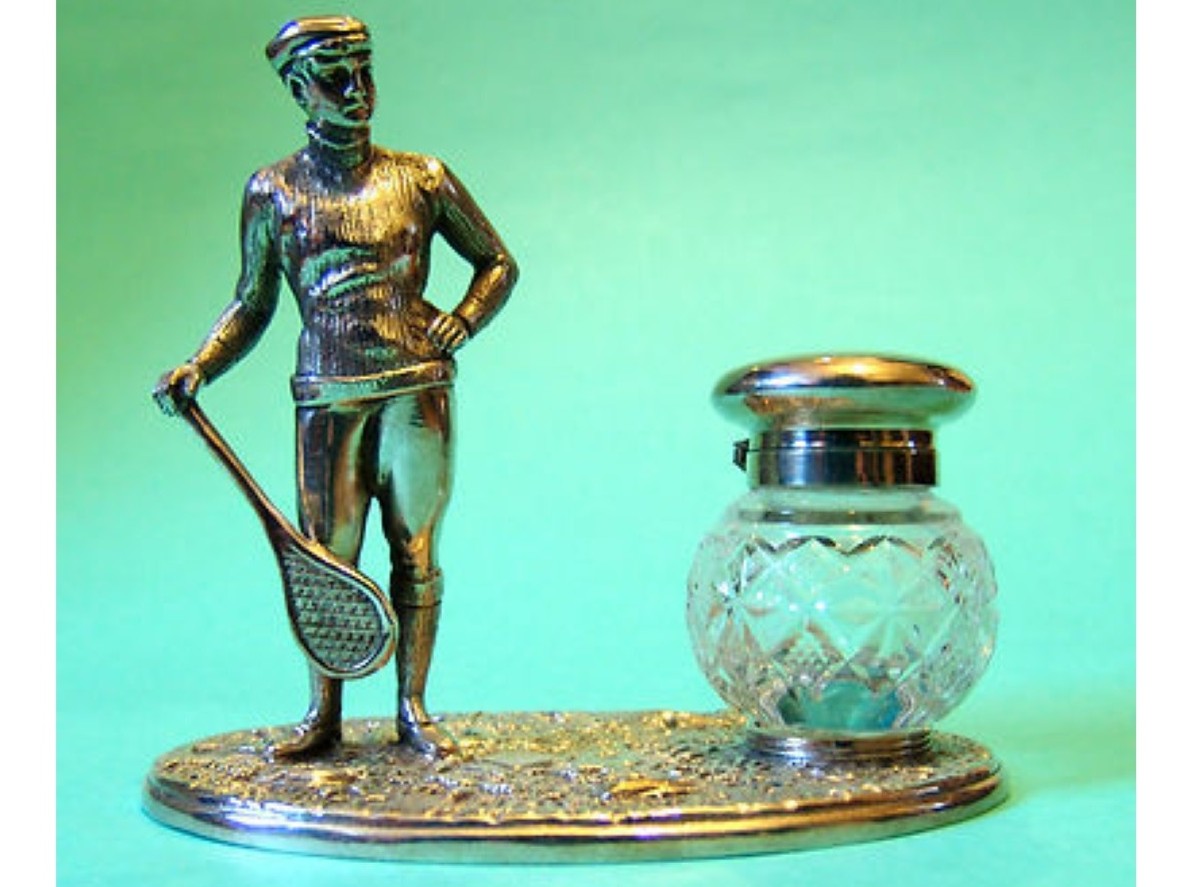
This Victorian lawn tennis figural inkstand captures the genesis of modern tennis, serving as both a functional writing accessory and a commemorative piece celebrating one of the game’s earliest champions.
Overview & Composition
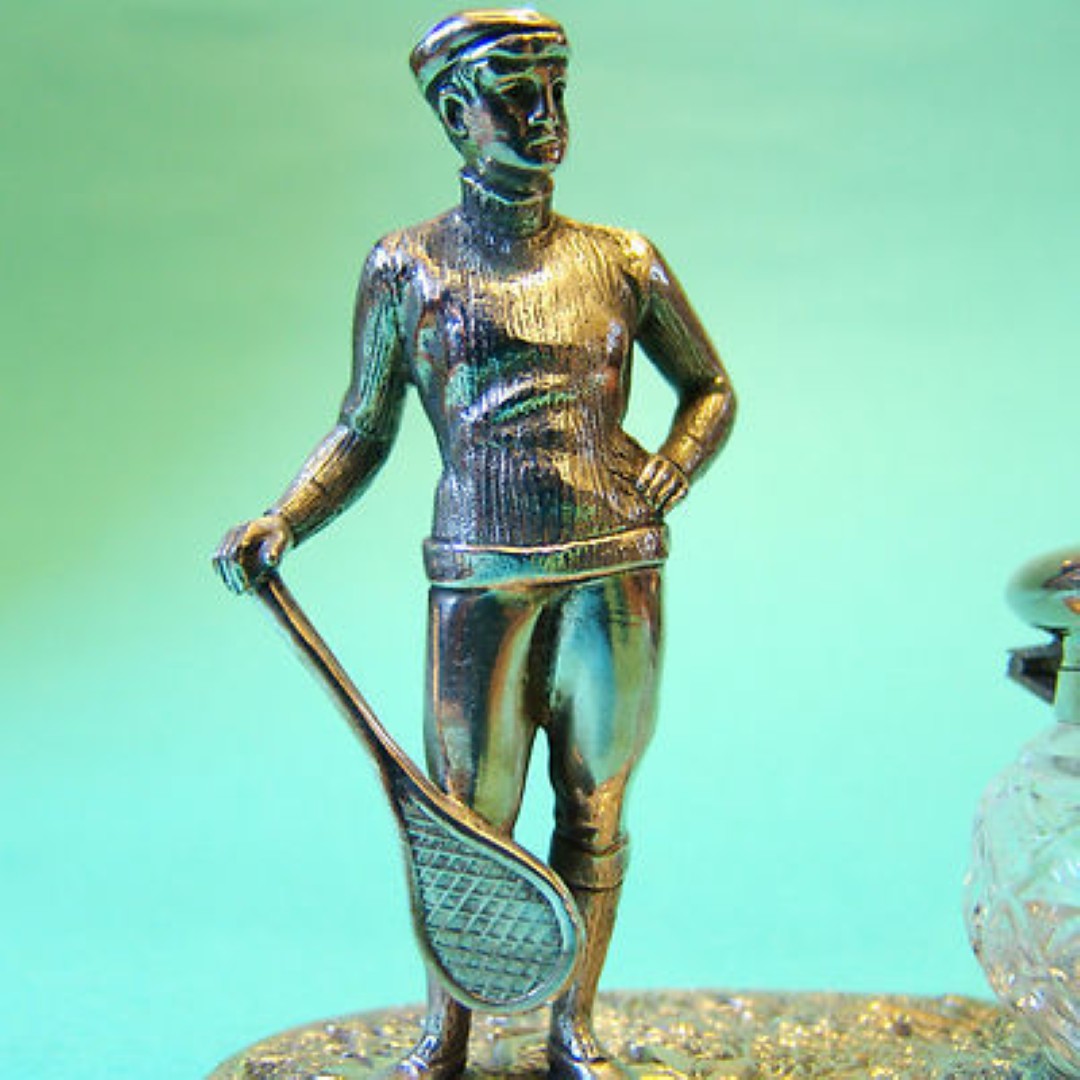
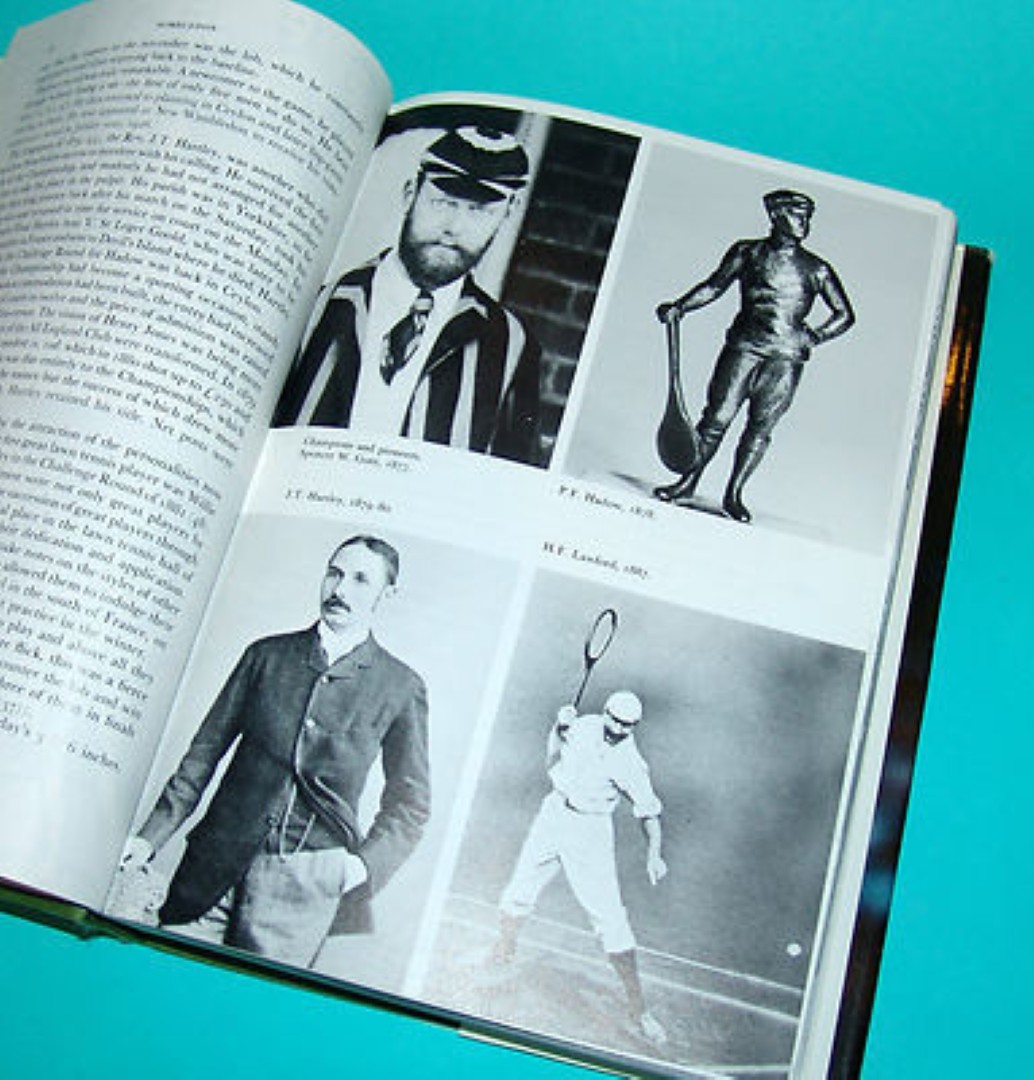
- Subject: A detailed, silver-plated figural sculpture identified as Patrick Francis “Frank” Hadow, the winner of the second All England Club Wimbledon Championship in 1878.
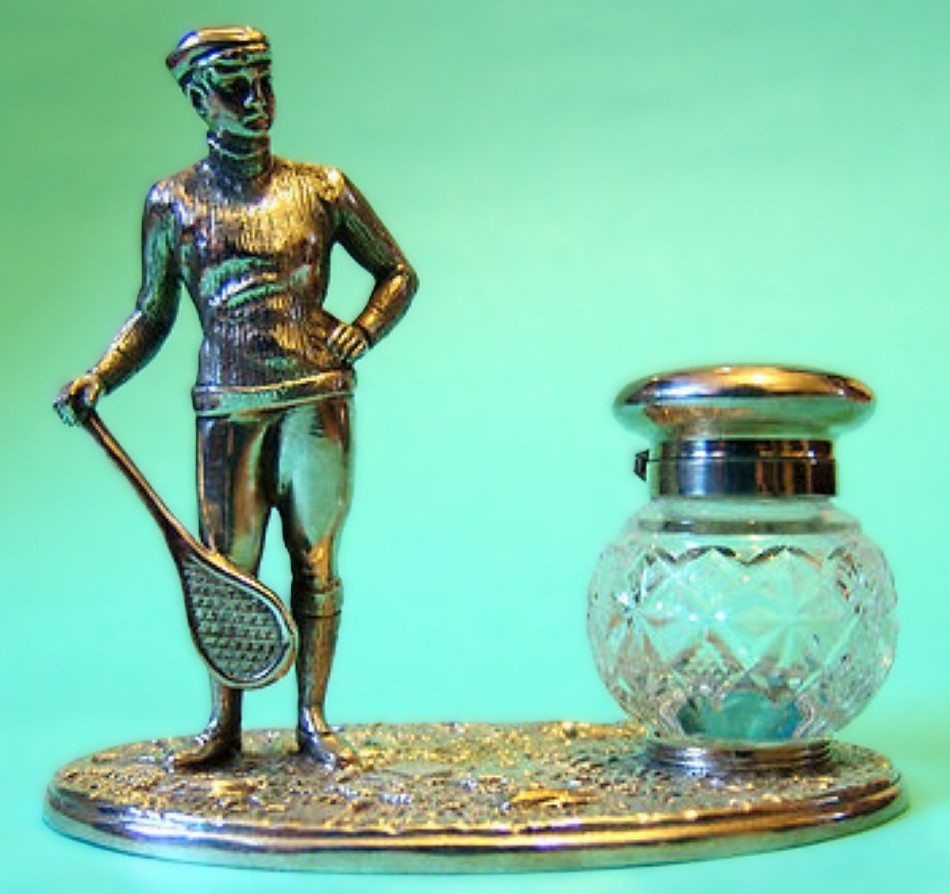
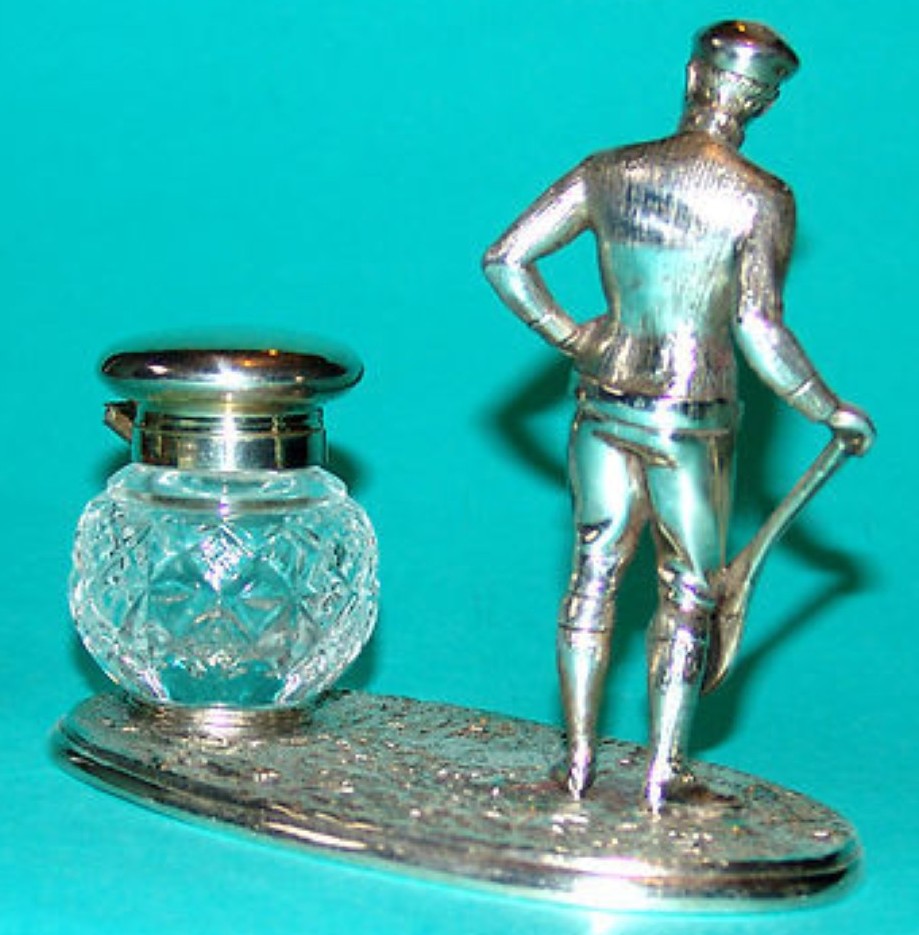
- Structure: The piece is set upon an oval, low-profile silver-plated base with a heavily textured, naturalistic ground (mimicking an early grass or earth court surface).
- Components: The left side of the stand features the standing figure of Hadow, while the right side accommodates a fitted collar holding a spherical cut-glass inkwell.
The Figural Sculpture (Frank Hadow)
The figure is modeled to showcase the distinctive sports attire of the late 1870s Victorian era:
- Attire: He is depicted wearing a heavy, ribbed turtle-neck woolen sweater, tailored knickerbockers (breeches) tucked into thick knee-high socks, and athletic shoes. He wears a classic flat, paneled sportsman’s cap (sometimes referred to as a flannel or cricket cap) popular with early lawn tennis pioneers.
- Pose: He stands in a casual, triumphant posture with his left hand placed firmly on his hip and his right hand resting on the throat of his racket.
- The Racket: The racket is accurate to the period, featuring an asymmetrical, slightly tilted or lop-sided head characteristic of early real tennis adaptations and Major Walter Clopton Wingfield’s Sphairistike patent design. The modeling clearly shows the intricate cross-hatched grid representing the early gut stringing.
The Inkwell
- Glassware: A heavy clear crystal inkwell with a spherical body. It features a deeply cut double-diamond or hobnail pattern around the midsection that catches and refracts the light.
- Mountings: The inkwell features a polished, smooth silver-plated collar and a flush-fitting, hinged domed cap.
Historical Context & Rarity
As verified by literature from legendary tennis journalist and historian Max Robertson (Wimbledon: Centre Court of the Game), this specific figural model is a scarce piece of early tennis memorabilia. Because Hadow only played Wimbledon once—subsequently returning to his tea plantation in Ceylon (Sri Lanka) and famously remaining the only Wimbledon singles champion never to defend his title—contemporary likenesses of him are virtually nonexistent.
The piece represents the brief window in the late 19th century when “lawn tennis” was evolving out of court tennis.
Estimated value: $400
Content disclaimer. The information posted is the owner’s best knowledge and may not have been vetted by the SOIC. We welcome comments, corrections, and additions, working to make our website information comprehensive and accurate.
Join the Society of Inkwell Collectors (SOIC) – it’s free!
Founded in 1981 as a non-profit organization,
we are documenting inkwells (and accessories).
We’re here to help and inform!