

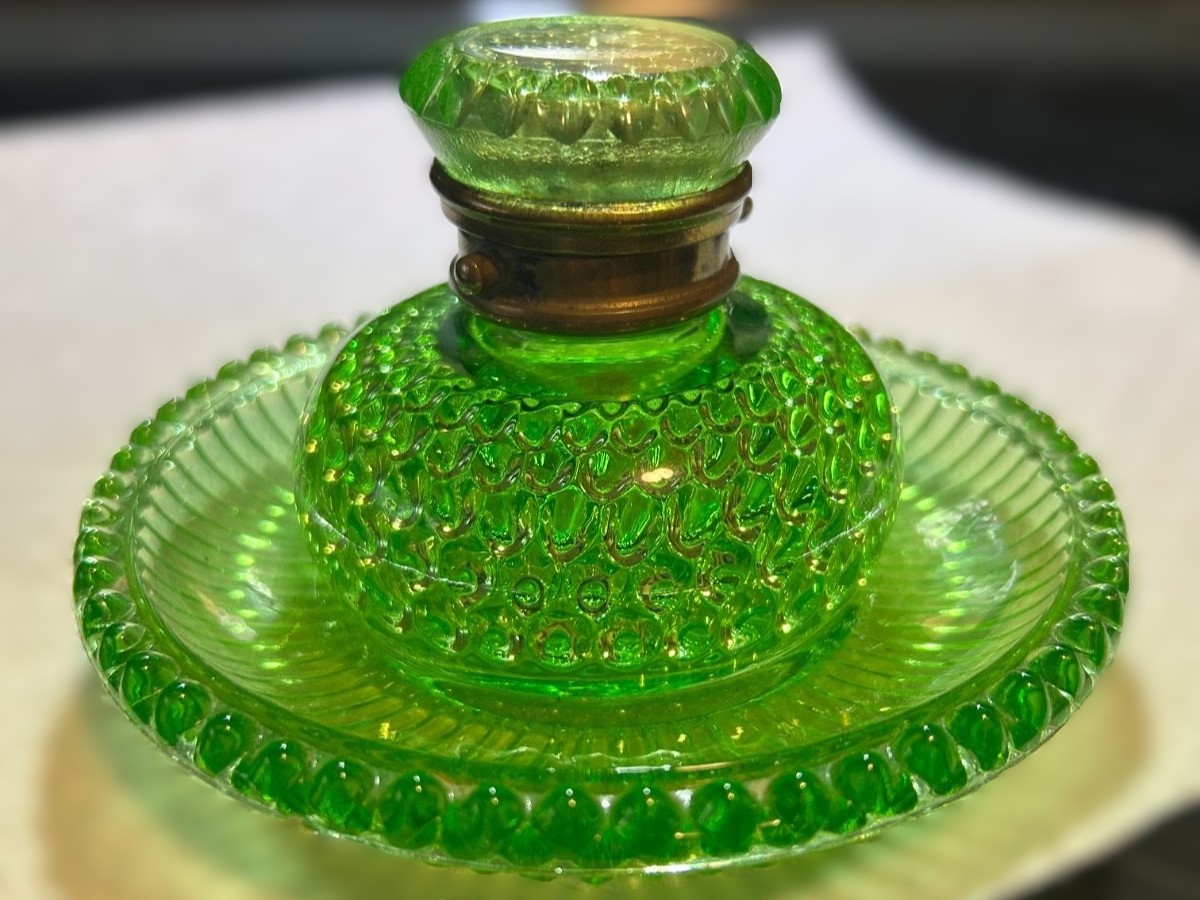
Vaseline Glass Inkwell and Pen Tray
| Categories | Glass - Non-figural |
| Type | Vaseline |
| Material | Glass |
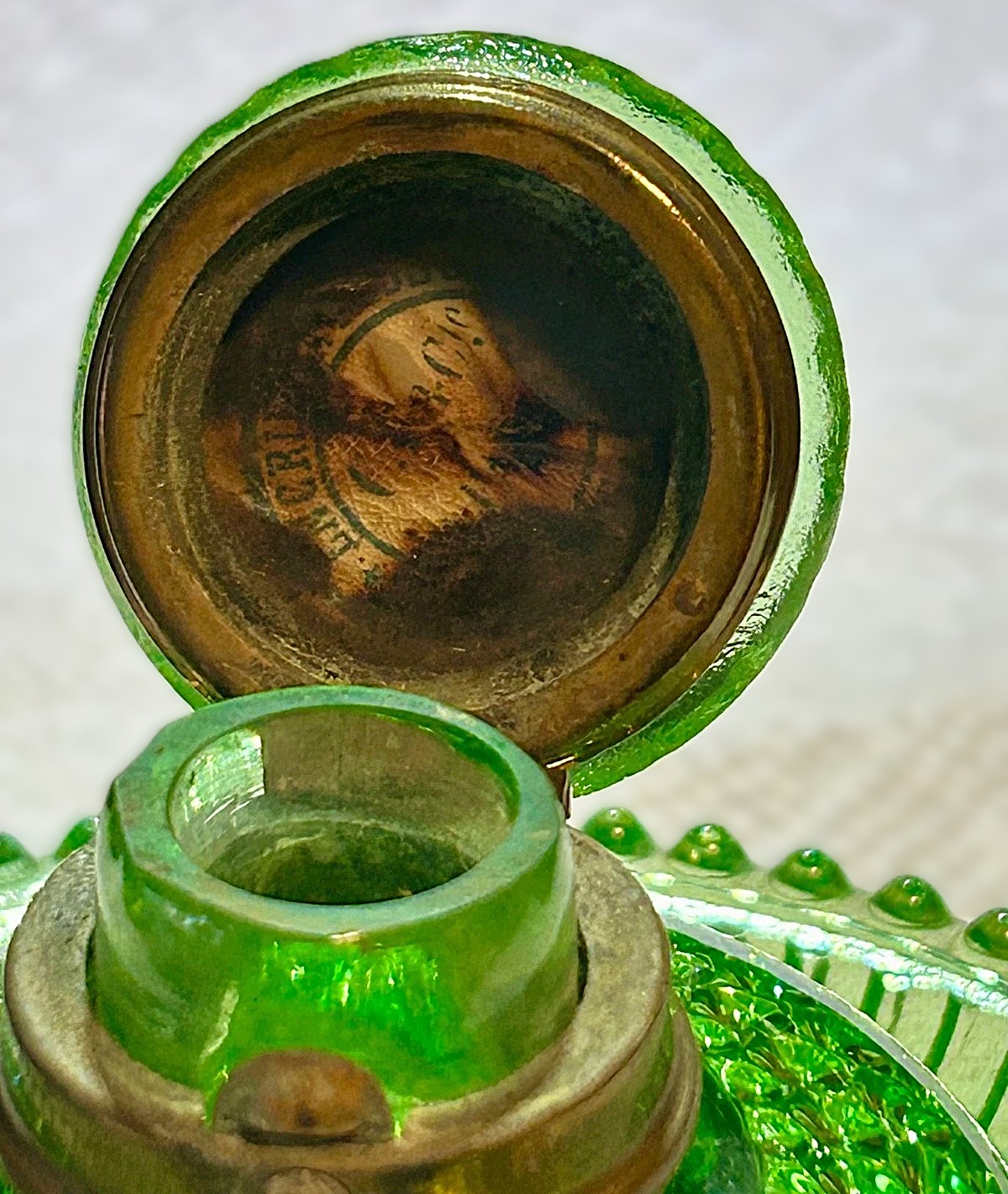
| Markings | "DÉPOSÉ" |
| Manufacturer | Undetermined |
| Origin | France |
| Date or Era | circa 1890 |
| Measuring | 5” diameter; 3” high |
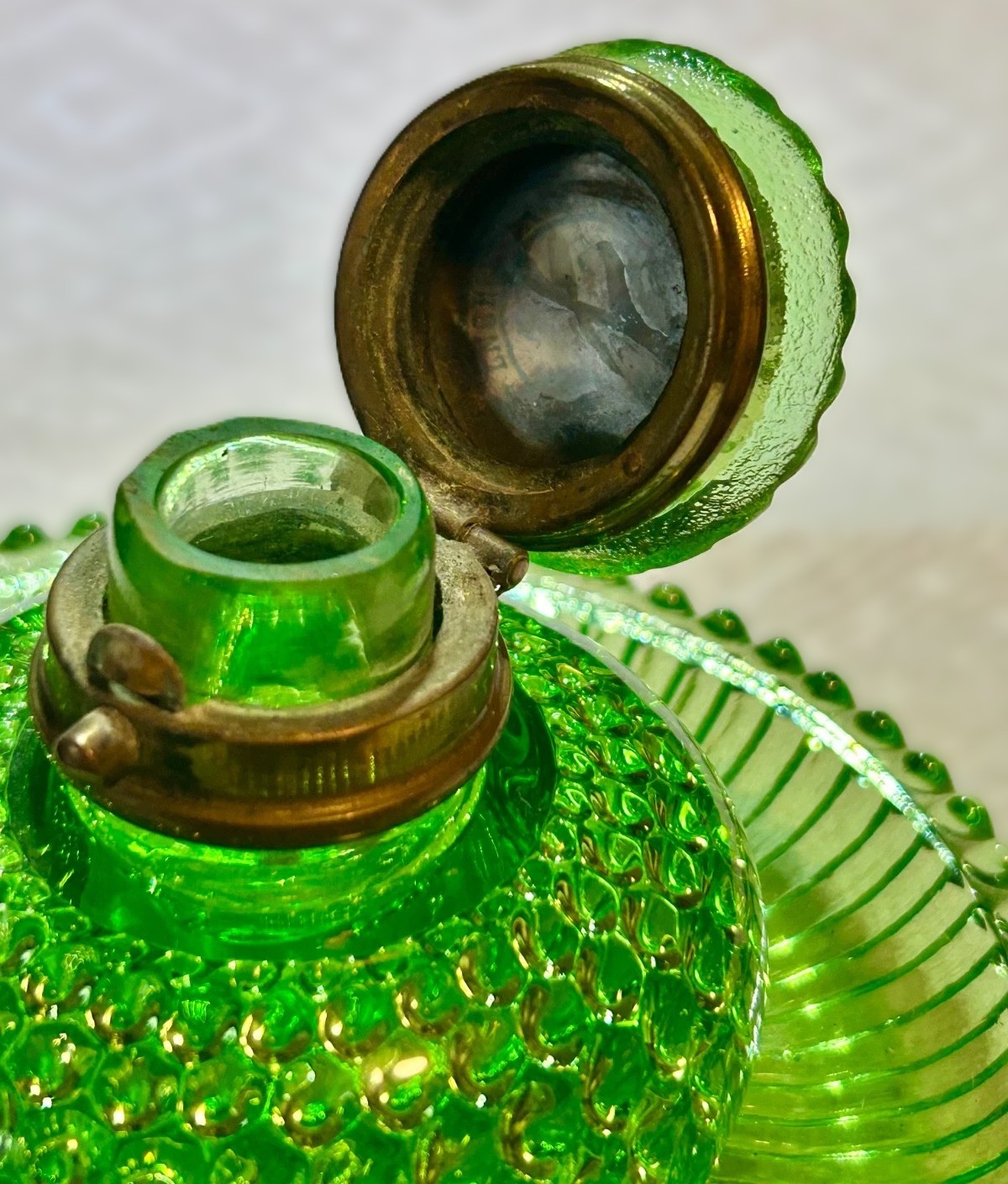
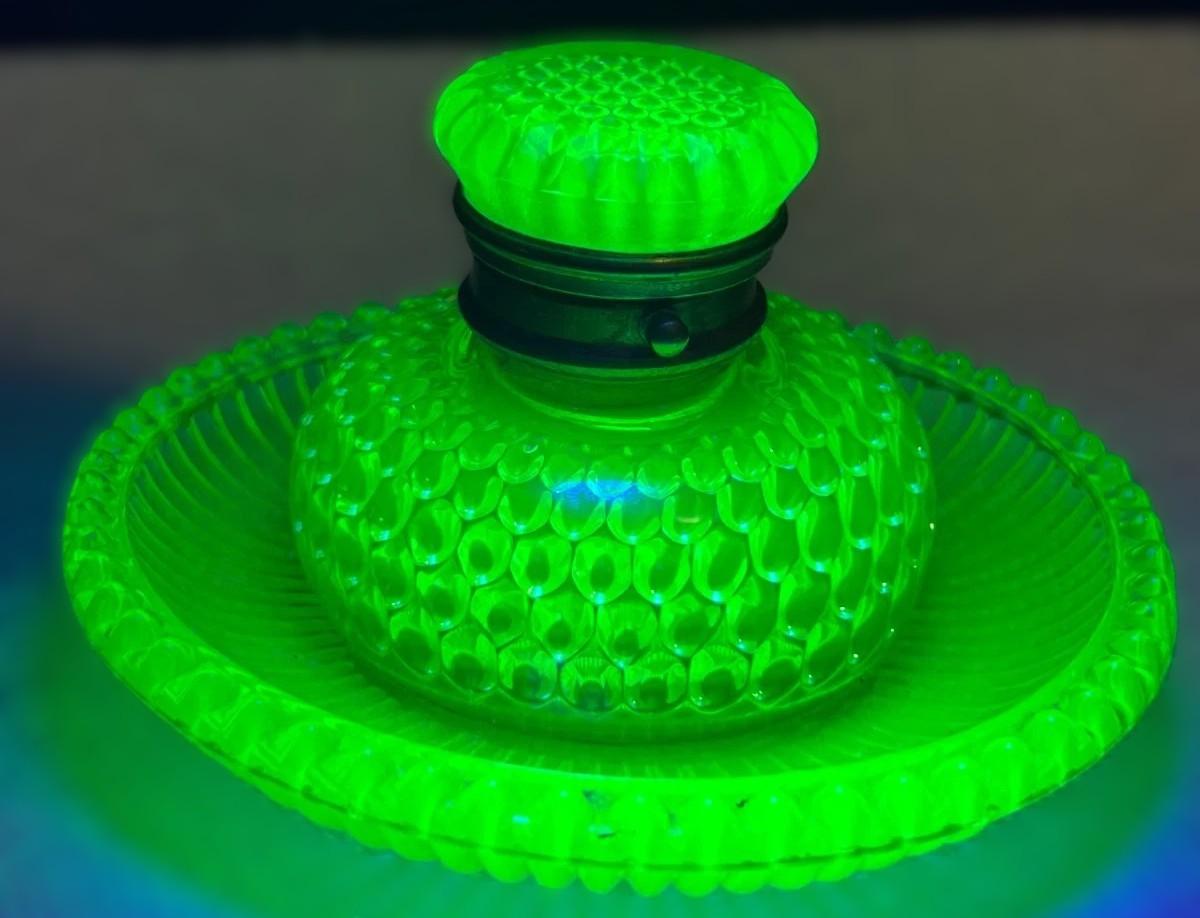
This inkstand features a bulbous inkwell nestled inside a matching saucer-style pen tray.
Description
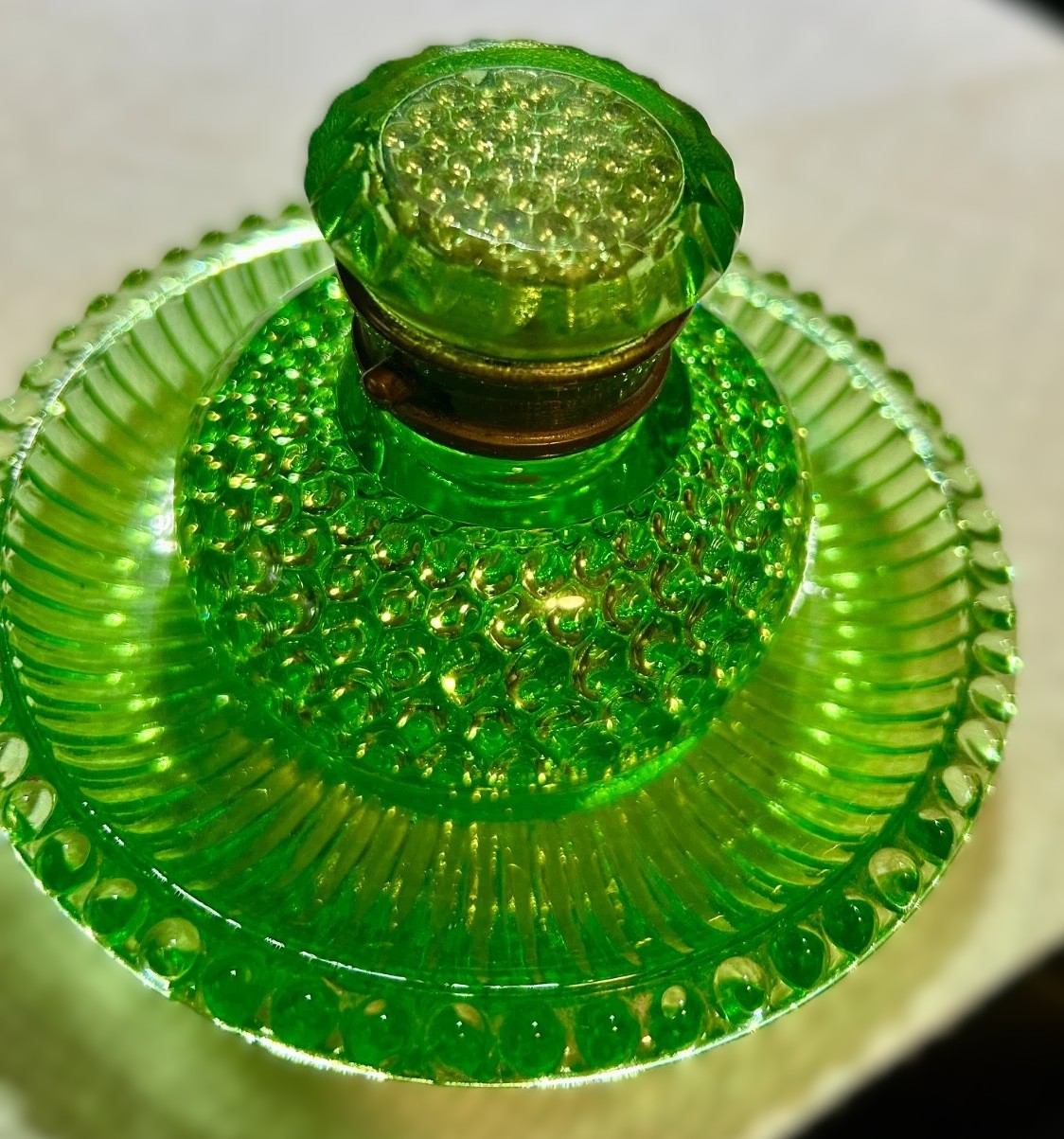
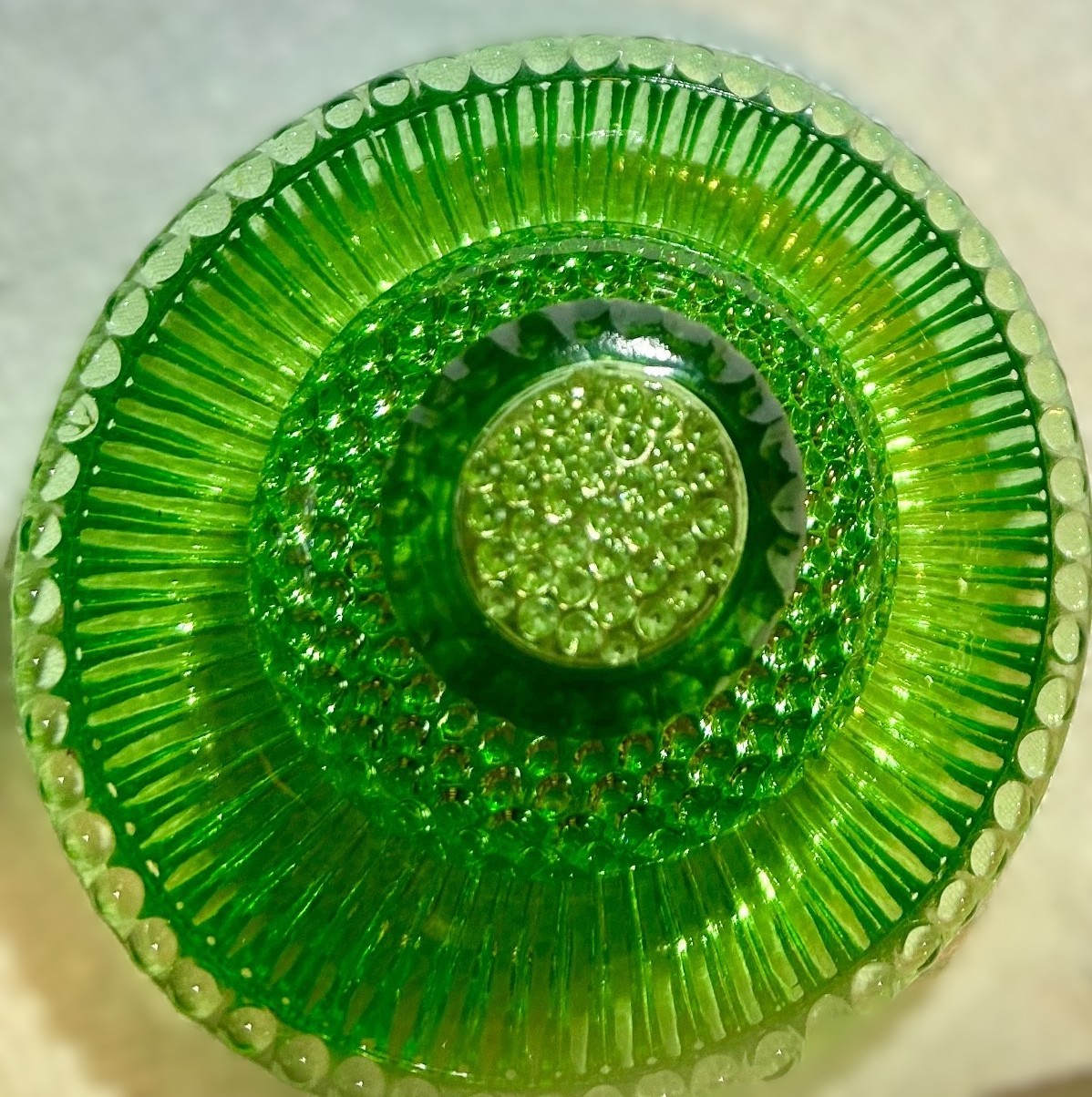
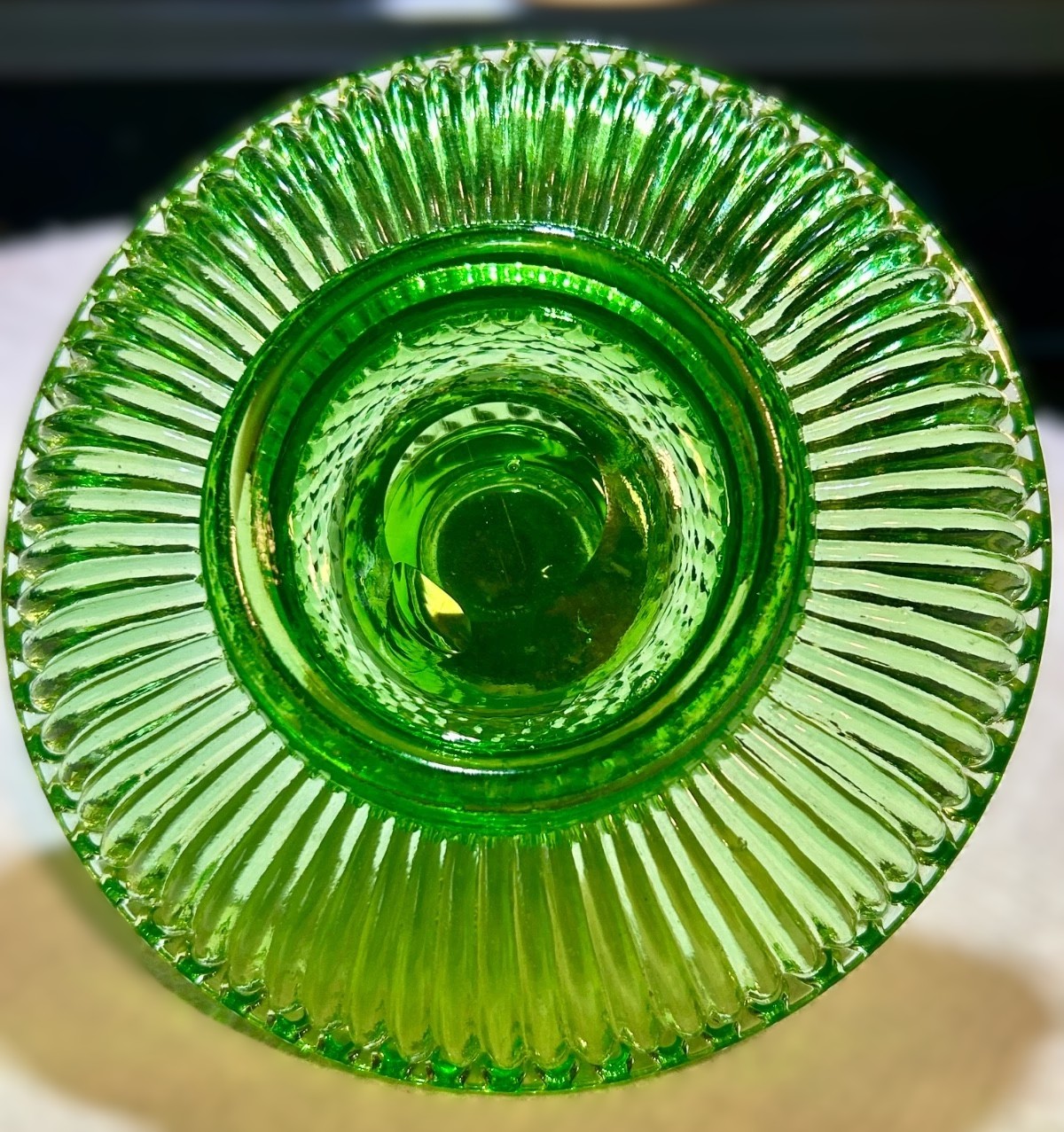
- Glass Body: Cast in a vibrant light green shade, the inkwell body is textured with an all-over hobnail pattern. The matching saucer base features radiating vertical ribbed fluting along its top, bordered by a textured bead-and-reel or hobnail rim.
- Lid and Collar: The glass ink reservoir is fitted with a hinged brass collar and cap assembly, topped by a matching faceted/hobnailed glass finial lid.
- Fluorescence: Under a black light (ultraviolet light), the glass fluoresces brilliantly with a vivid, neon-lime-green glow, confirming it is genuine uranium glass (frequently referred to as “Vaseline glass”).
Markings
Inside of the brass lid, the circular paper liner features curved lettering along its perimeter that reads:
- “DÉPOSÉ”
Déposé is a French word (short for Modèle Déposé) meaning “registered” or “patented,” acting as a period legal protection or design registration stamp commonly found on continental European decorative arts, bronzes, and glassware.
Maker, Origin, and Date
- Where was it made? France (evidenced by the Déposé registration mark on the internal lid liner and the distinct style of European desk hardware).
- Who made it? While the specific glasshouse (such as Baccarat, Choisy-le-Roi, or St. Louis) or hardware maker cannot be pinned down to a single definitive stamp—due to many independent makers supplying hardware to glass factories—it represents high-quality mid-to-late 19th or early 20th-century European art glass production.
- When was it made? Late 19th to early 20th century (circa 1870–1910), during the height of the Victorian and Art Nouveau periods when ornate, functional colored-glass desk sets were popular.
How the Color and Fluorescence Were Achieved
- The Color (Light Green): The characteristic transparent green tint is achieved by introducing a small quantity of uranium compounds (typically uranium oxides or sodium uranate) directly into the molten glass batch prior to shaping and cooling.
- The Fluorescence: Uranium glass owes its striking neon-green glow under ultraviolet (UV) light to the photo-luminescent properties of the uranyl ion (). When invisible UV photons strike the uranium atoms embedded in the glass matrix, the electrons absorb the high-energy ultraviolet radiation and instantly re-emit it at a lower energy wavelength as visible green light.
Sold for $345 in September 2026
Content disclaimer. The information posted is the owner’s best knowledge and may not have been vetted by the SOIC. We welcome comments, corrections, and additions, working to make our website information comprehensive and accurate.
Join the Society of Inkwell Collectors (SOIC) – it’s free!
Founded in 1981 as a non-profit organization,
we are documenting inkwells (and accessories).
We’re here to help and inform!