

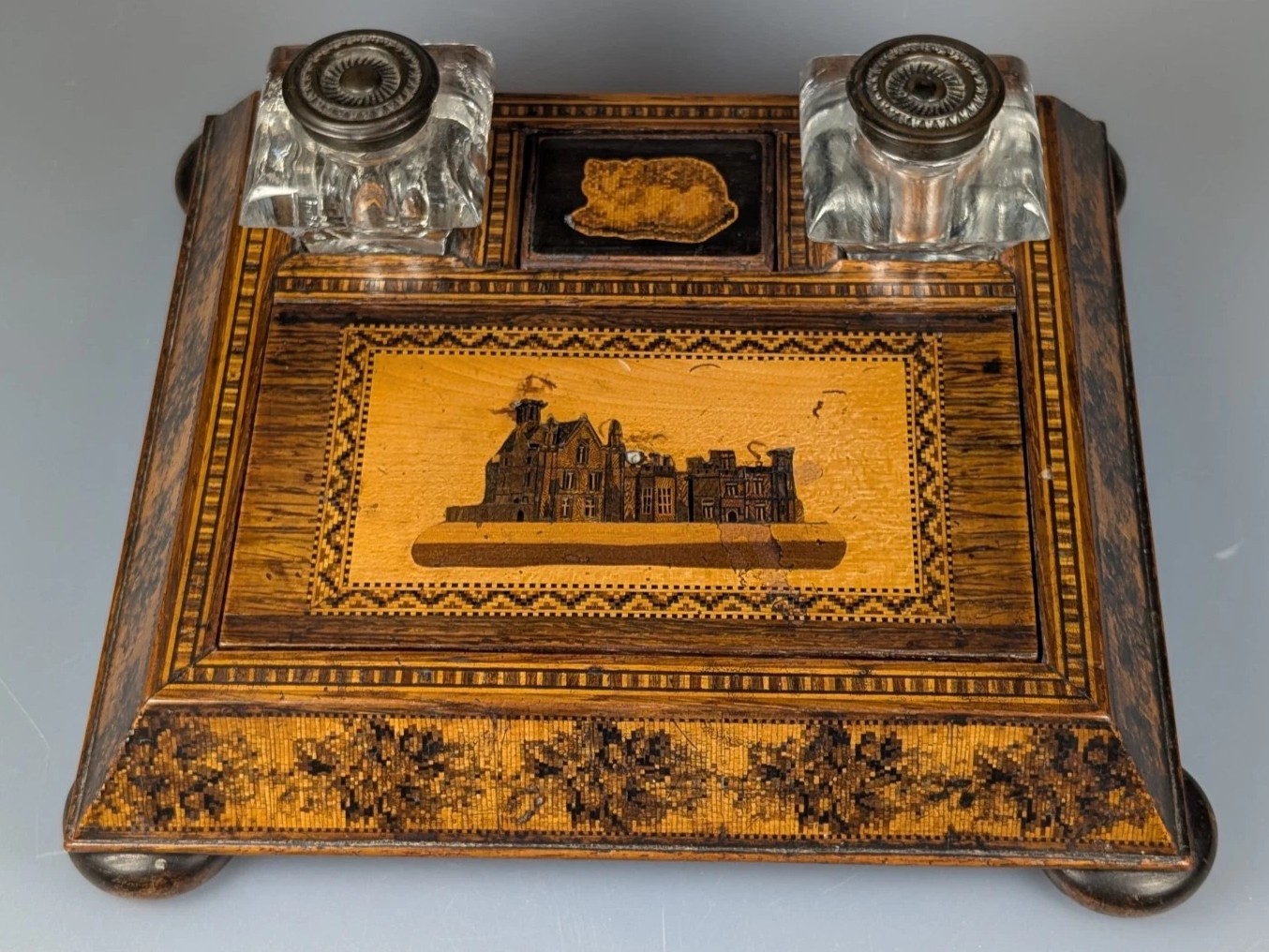
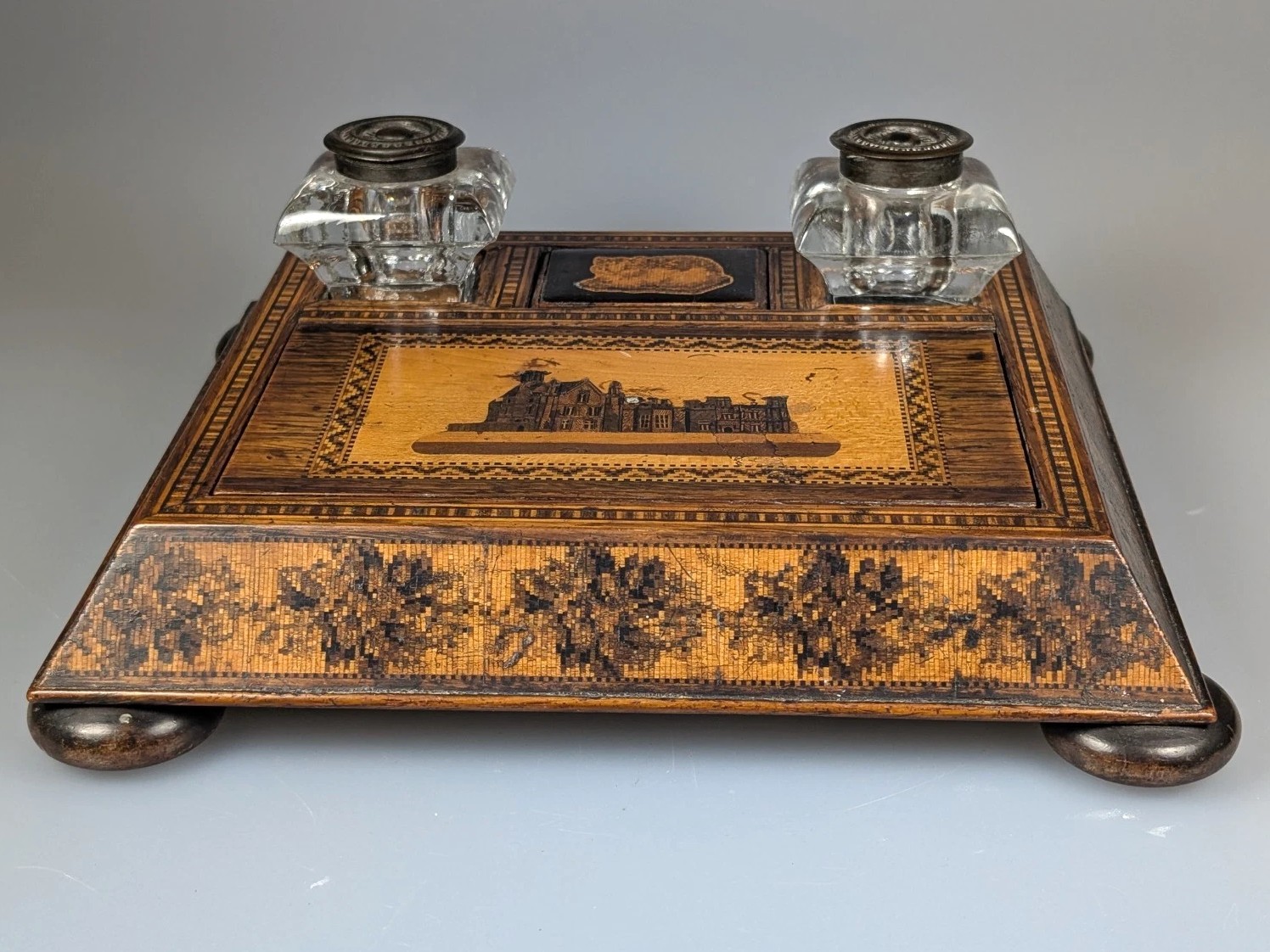
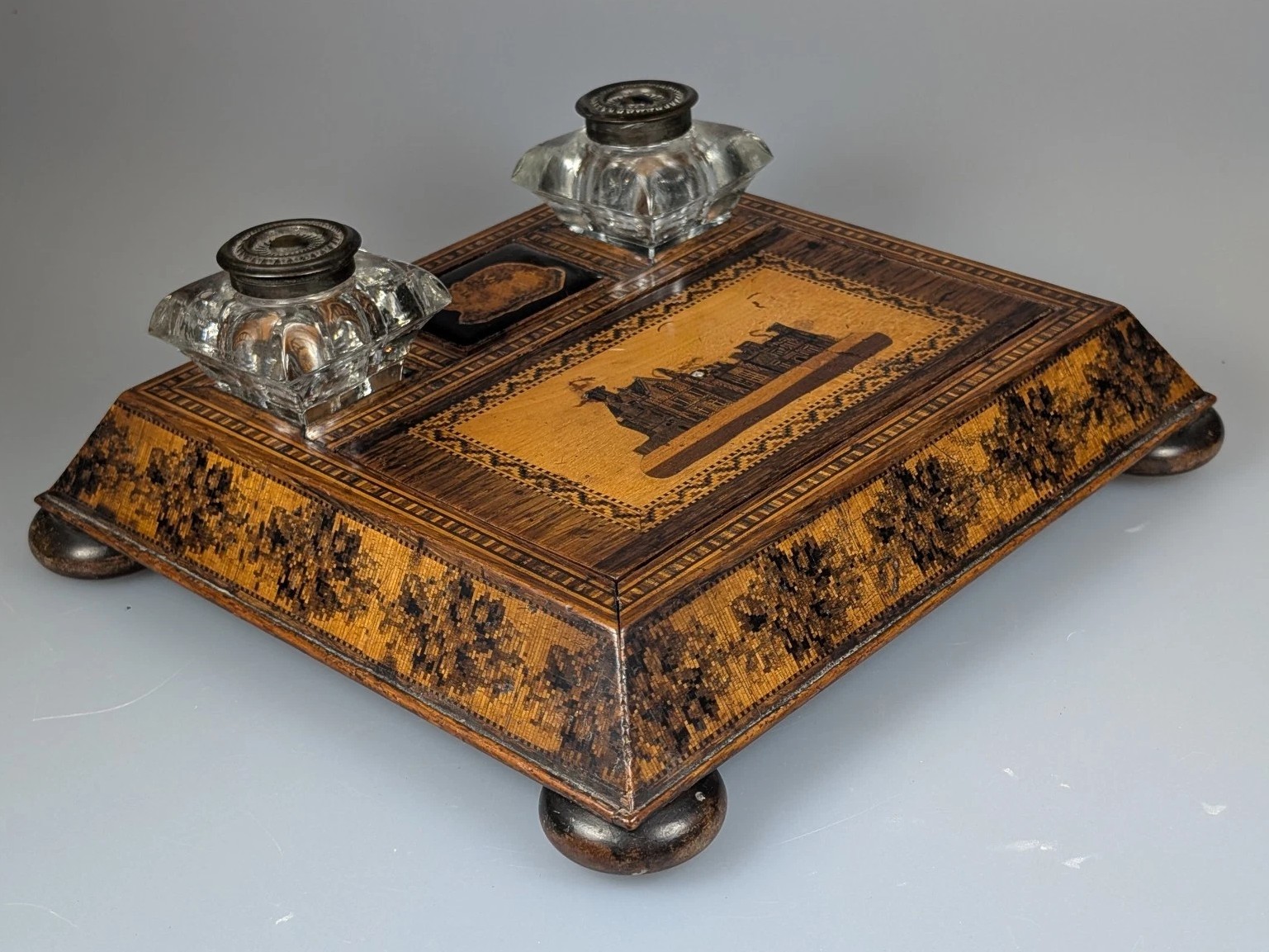
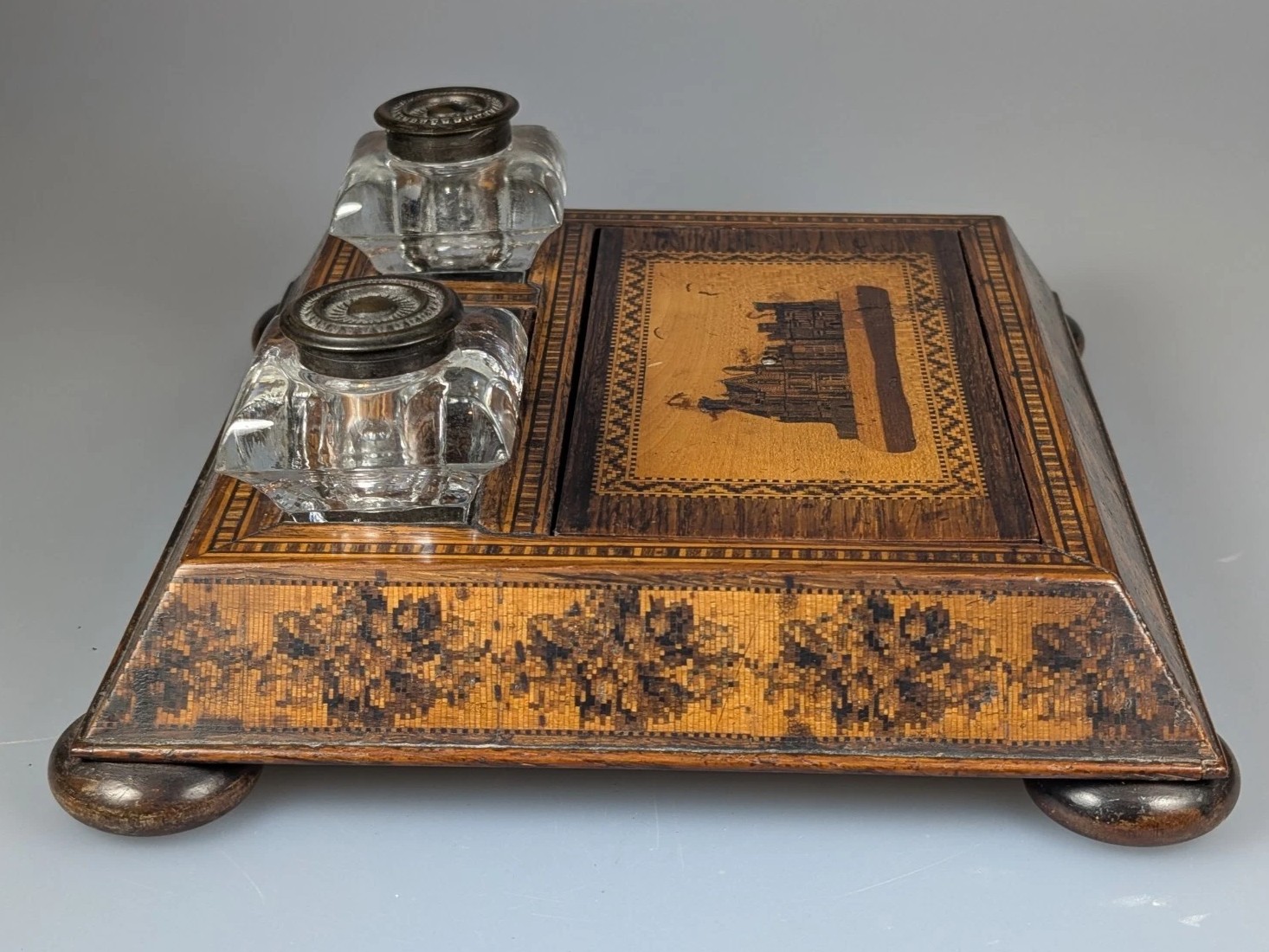
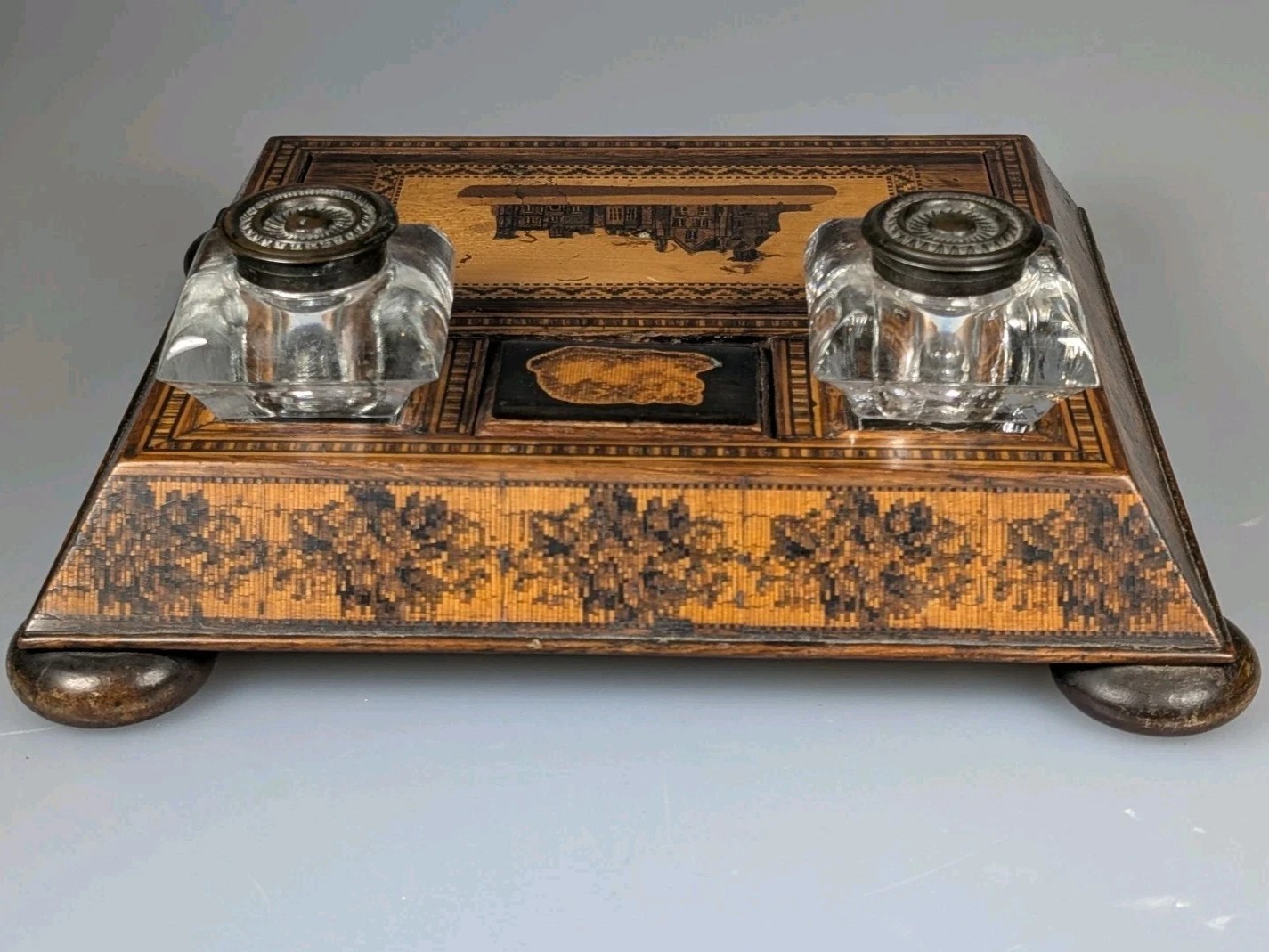
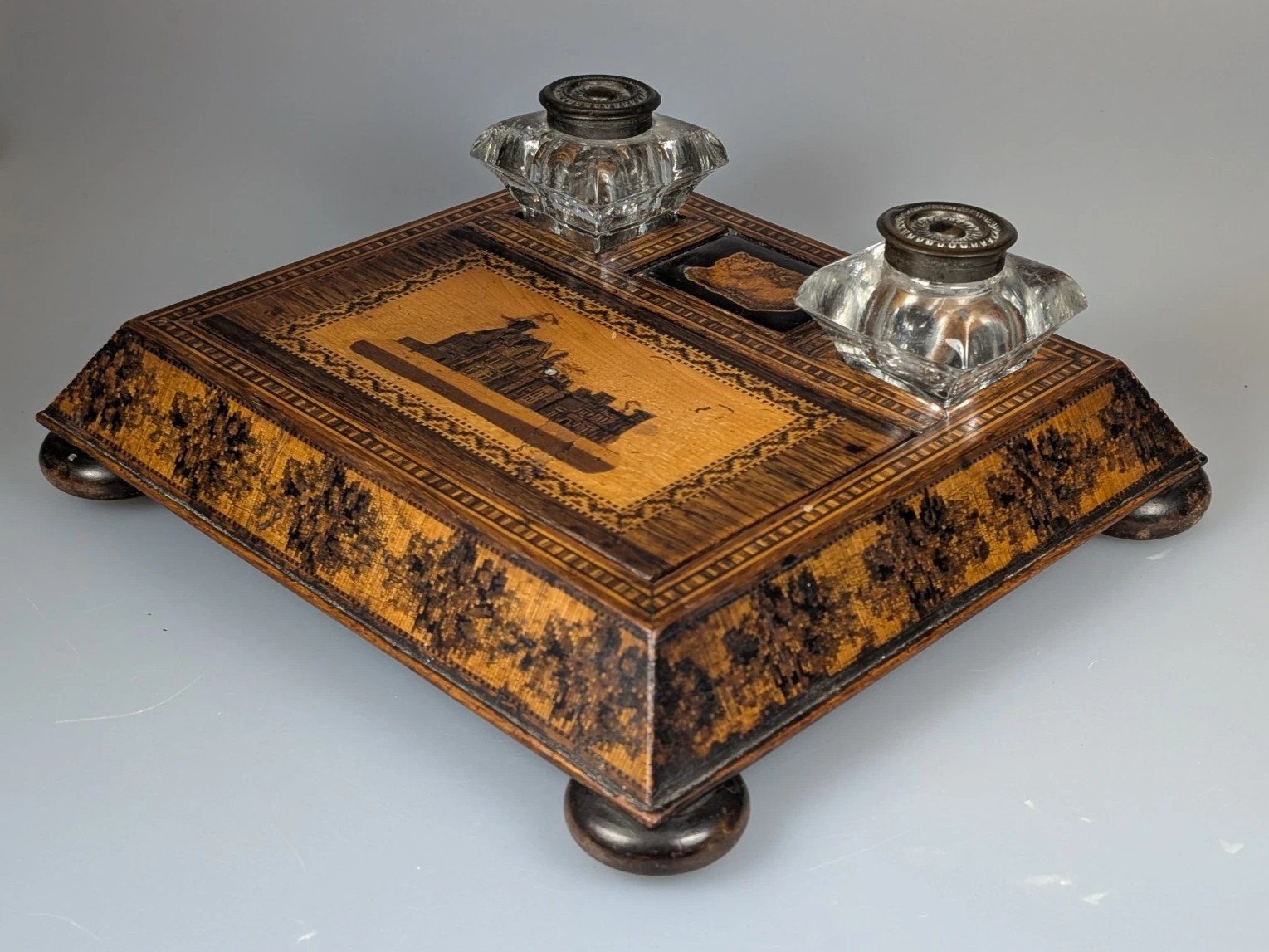

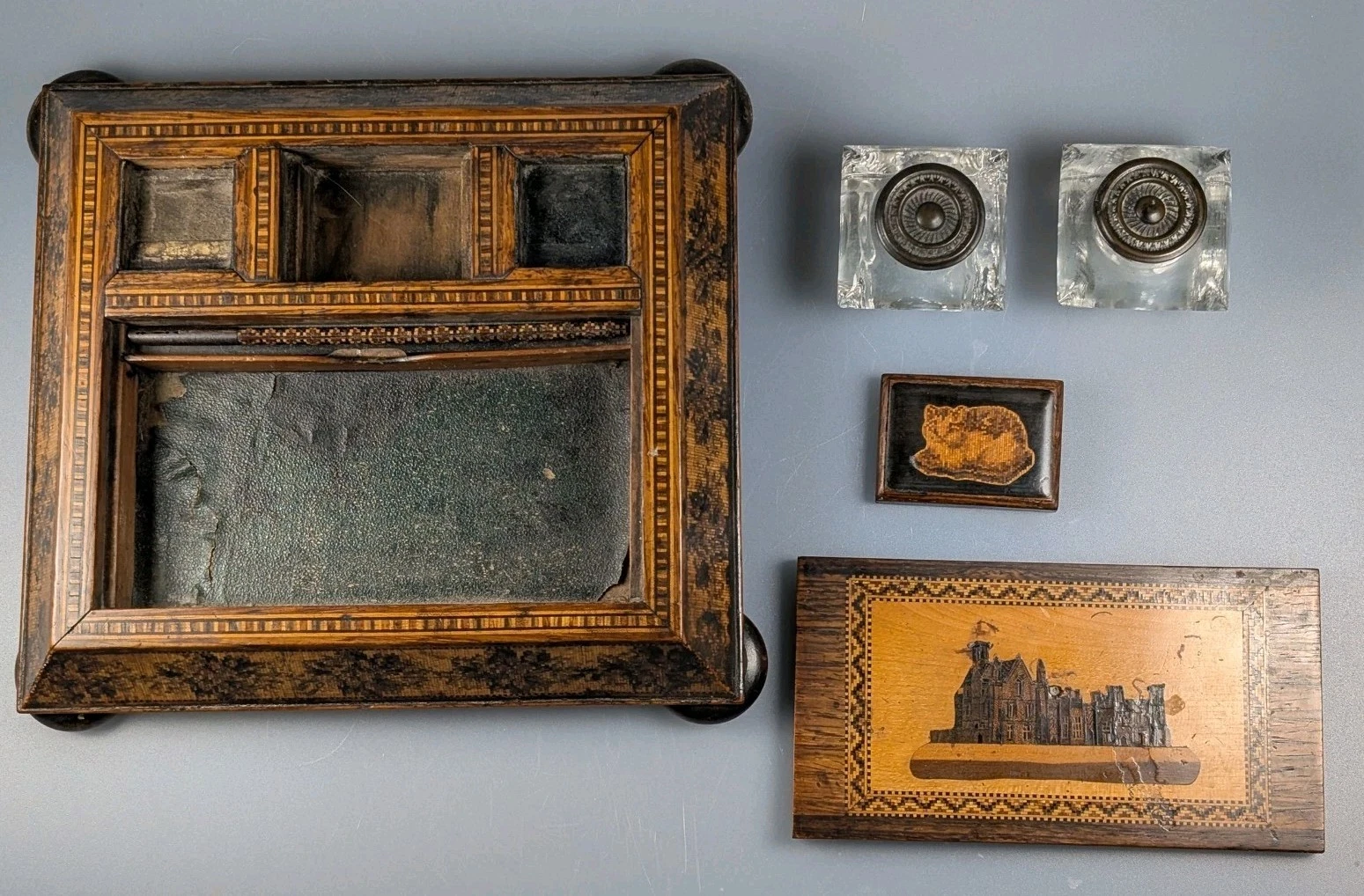
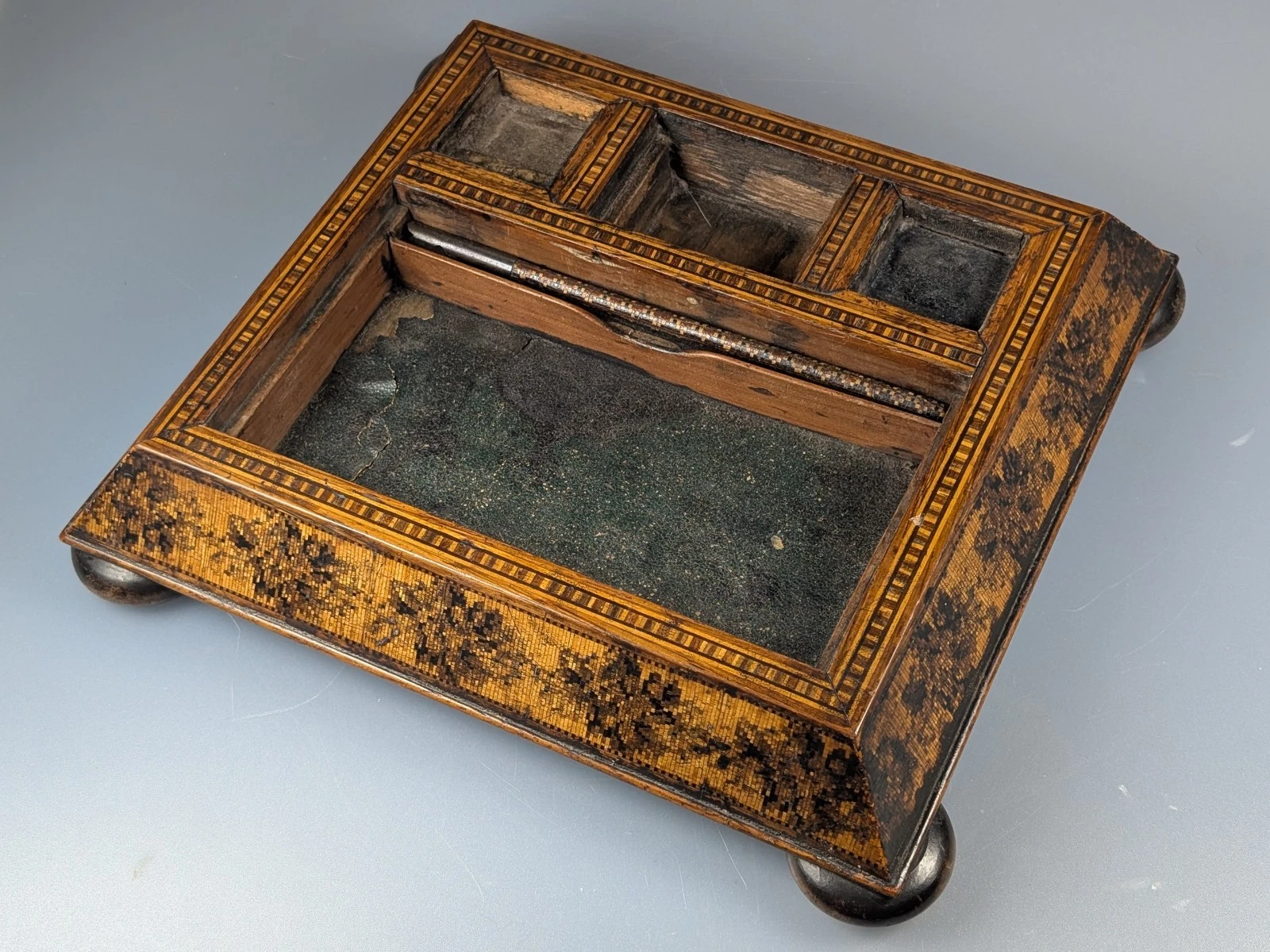


Turnbridge Ware Inkstand
| Categories | Wood Inkstands |
| Material | Glass, Wood |
| Markings | Unmarked |
| Origin | England |
| Date or Era | circa 1870 |
| Measuring | 9 ⅞” x 8 ¾” |
Description
- Top Configuration: The inkstand features two heavy, square-cut glass inkwells fitted with ornate, circular pressed-metal lids.
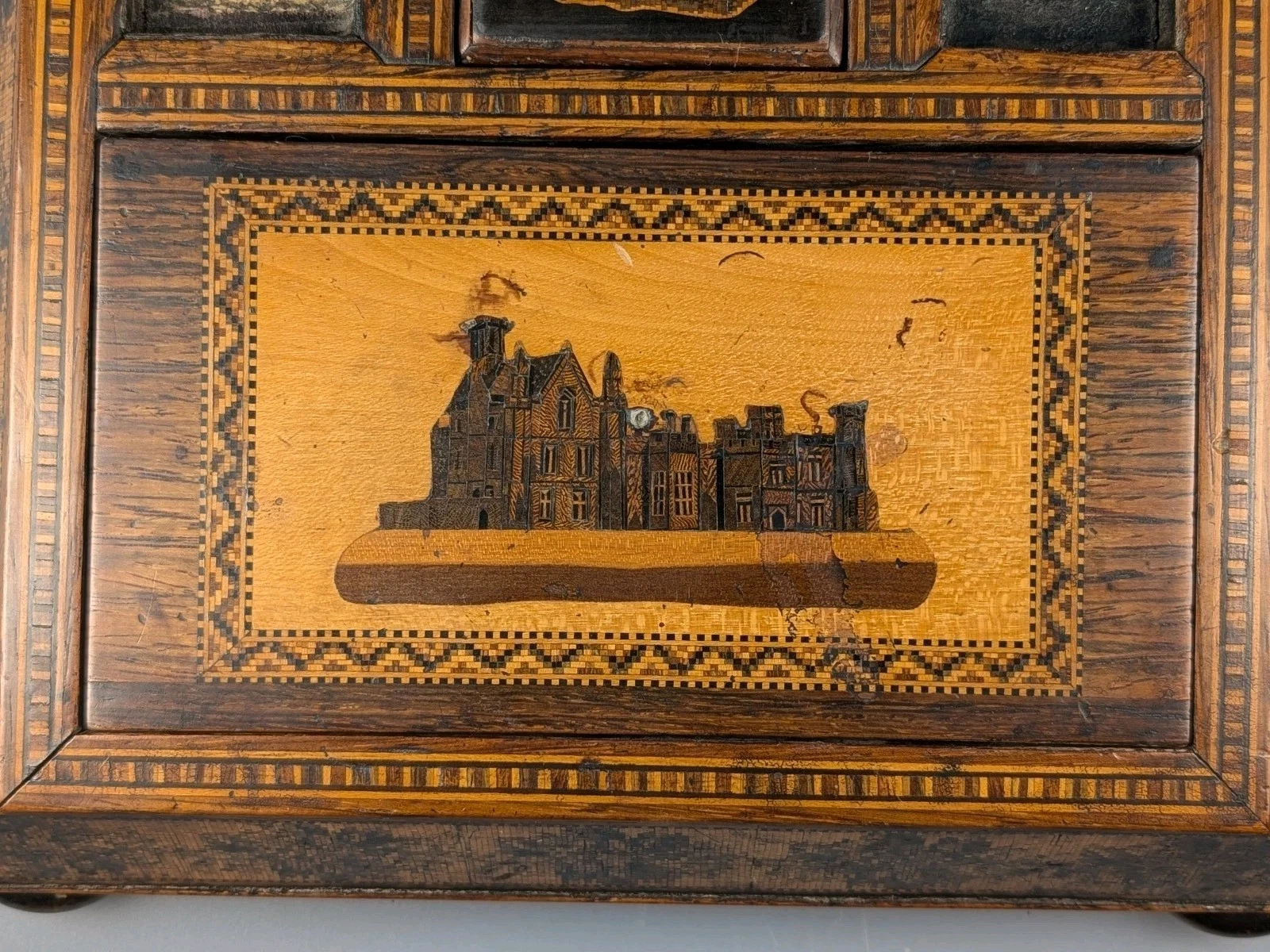
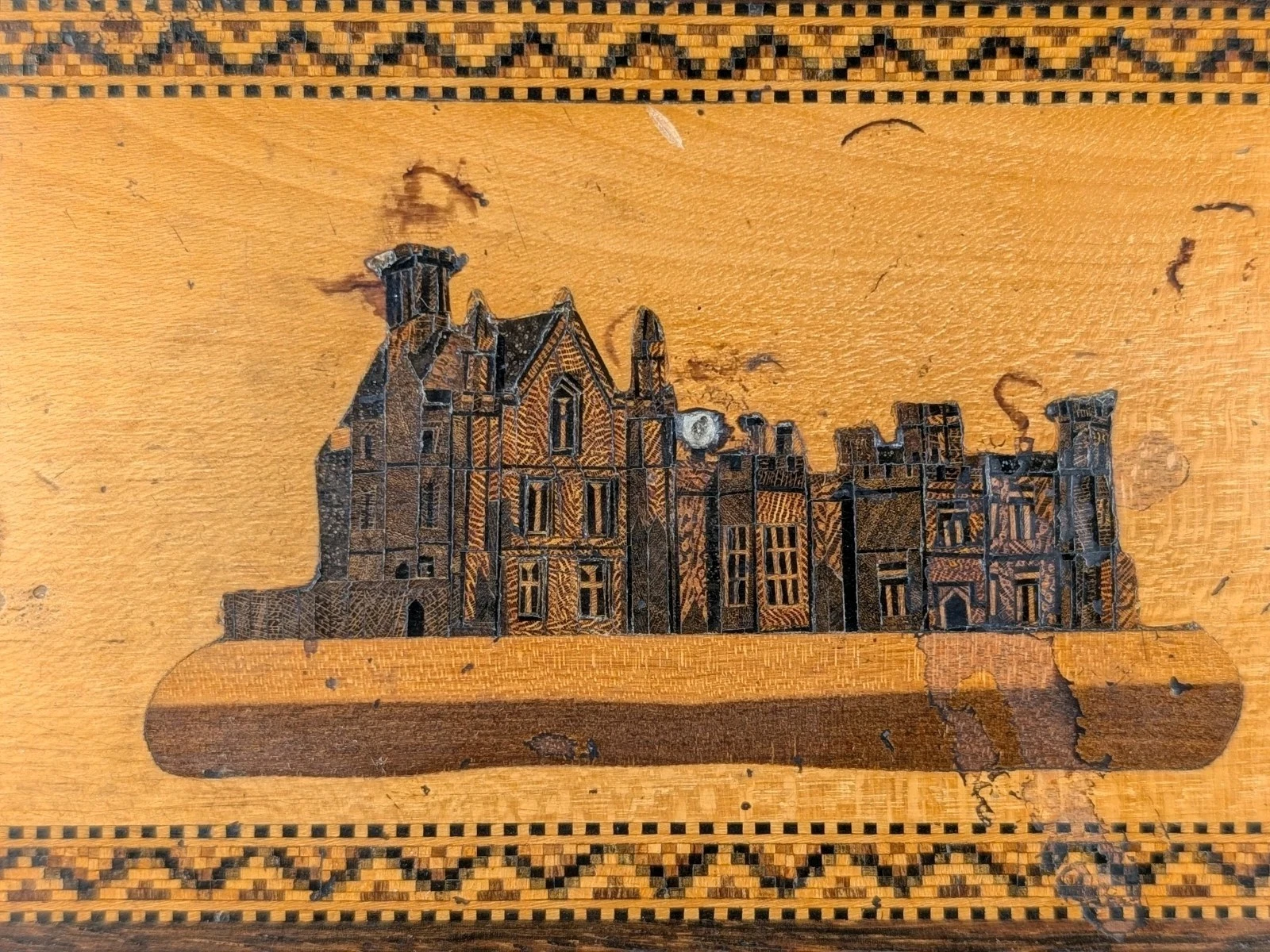
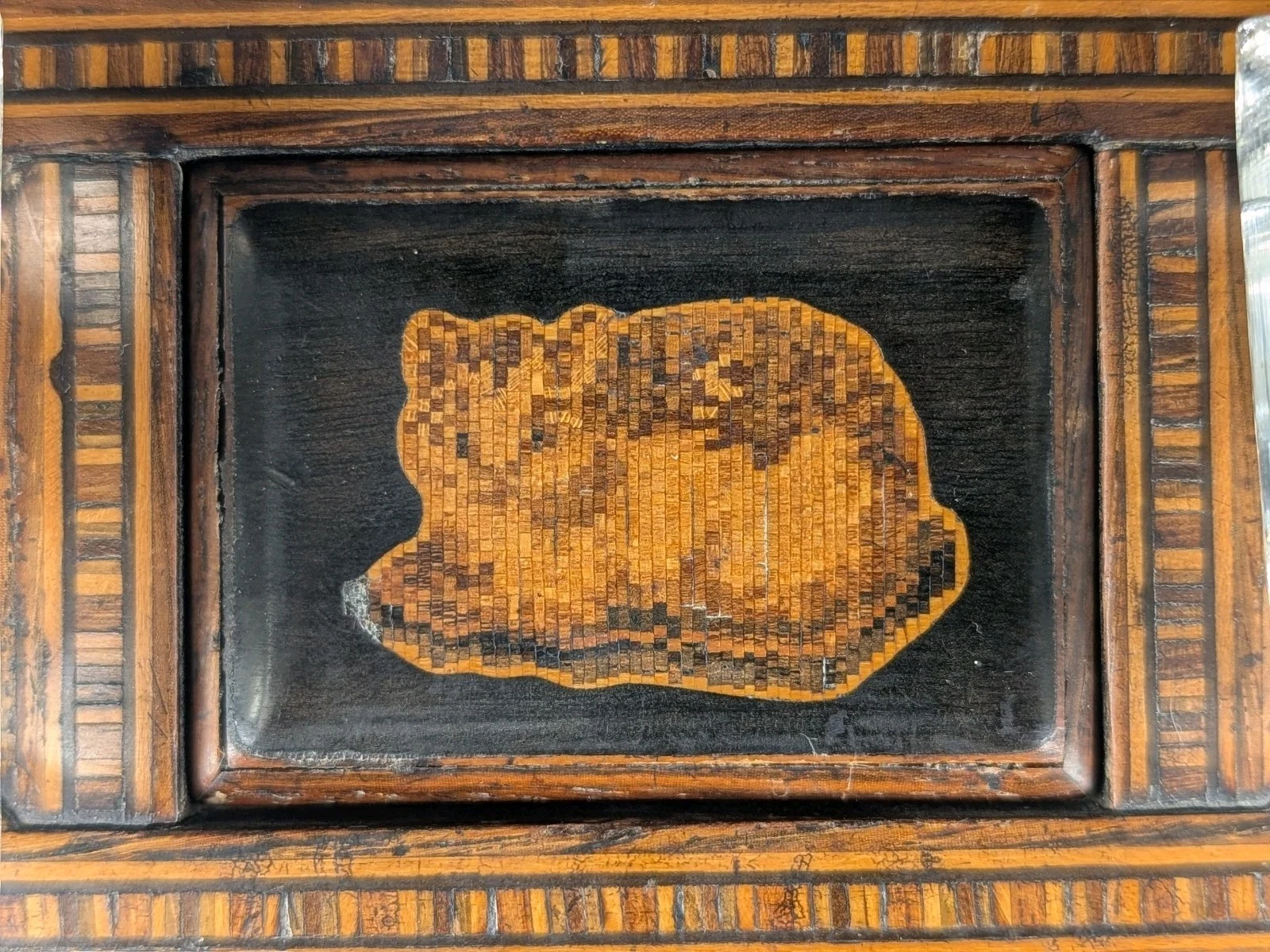
- Central Compartments: Positioned between the inkwells is a small, lidded compartment featuring a micro-mosaic of a sleeping tabby cat. Below this sits a larger, removable rectangular lid featuring a detailed architectural view of a historic English country manor or castle, framed by an intricate geometric tooth border.
- Interior: Lifting the lids reveals internal storage wells—traditionally used for stamps, nibs, or wafers—and a recessed pen tray lined with dark textured leather or cloth, shown holding an inlaid dip pen.
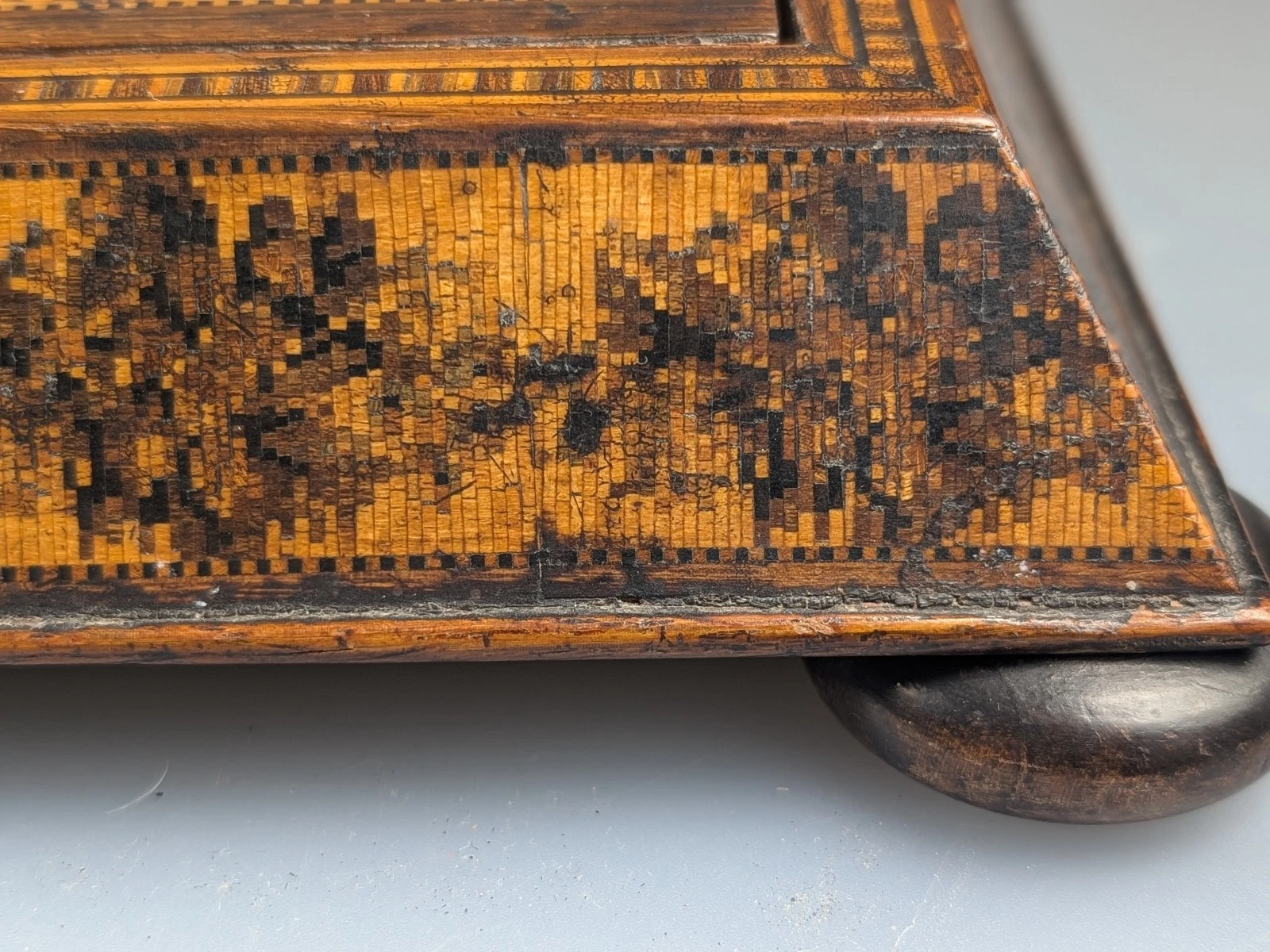
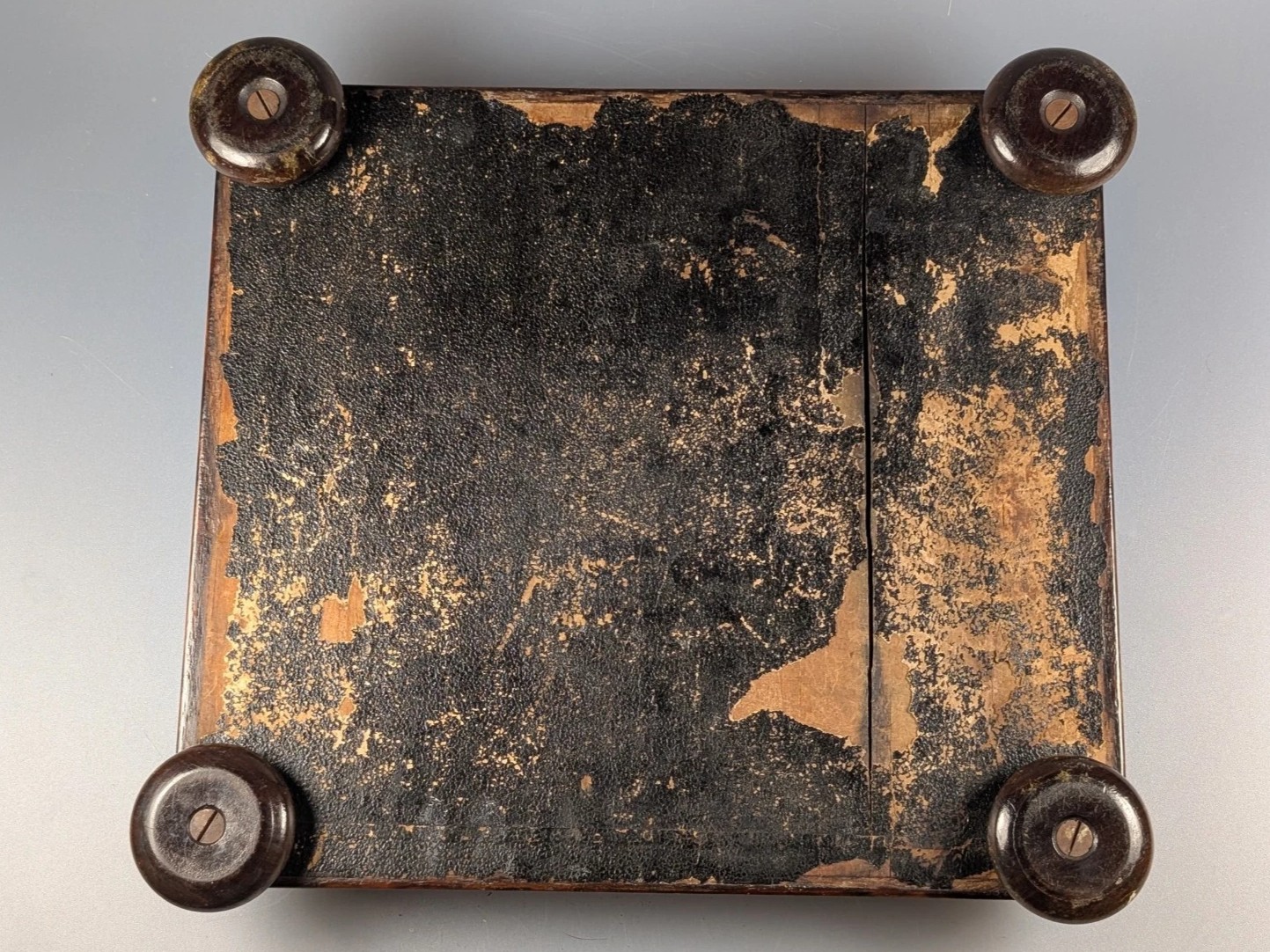
- Exterior Border & Base: The sloping, stepped sides of the stand are wrapped in a wide, repeating pixelated floral/foliate band. The entire piece is elevated on four turned dark wood bun feet, with a textured leather cloth covering the bottom.
Where and How it Was Made
Where it Was Made: Tunbridge Ware was produced exclusively in the spa town of Tunbridge Wells and the neighboring town of Tonbridge in Kent, England. It developed as a booming cottage industry catering to wealthy tourists visiting the local chalybeate springs who sought high-quality souvenirs.
How it Was Made: The intricate images on this inkstand were not painted, nor are they standard marquetry. Instead, they were crafted using a meticulous end-grain mosaic (tesserae) technique:
- Sourcing Wood: Craftsmen utilized a massive palette of natural woods to get the right colors—such as cream from holly, red from yew, brown from walnut, and a distinctive gray-green from “green oak” (oak naturally stained by the Chlorociboria fungus).
- Building the Block: Workers took thousands of tiny, square wooden rods (often less than 1mm wide) and glued them together side-by-side. They followed a gridded design chart—very similar to a cross-stitch or pixel-art pattern—to compile the image of the castle or the cat.
- Slicing the Veneer: This created a solid wooden block or “loaf” where the pattern ran all the way through the length. A master craftsman then carefully sliced this block crosswise with a fine saw, yielding thin veneer wafers containing the complete mosaic image.
- Application: These thin slices were glued down onto the underlying mahogany or rosewood frame of the inkstand, scraped smooth, and varnished to a rich shine.
When Was it Made?
This piece dates to the peak period of pictorial Tunbridge Ware production, approximately c. 1850–1880.
During this mid-to-late Victorian window, prominent local workshops (such as those of Thomas Barton or Henry Hollamby) perfected these complex architectural views of local estates and charming domestic animal motifs to meet high demand from desk-writing enthusiasts.
Sold for $450 in June 2026
Content disclaimer. The information posted is the owner’s best knowledge and may not have been vetted by the SOIC. We welcome comments, corrections, and additions, working to make our website information comprehensive and accurate.
Join the Society of Inkwell Collectors (SOIC) – it’s free!
Founded in 1981 as a non-profit organization,
we are documenting inkwells (and accessories).
We’re here to help and inform!