

Inkipedia

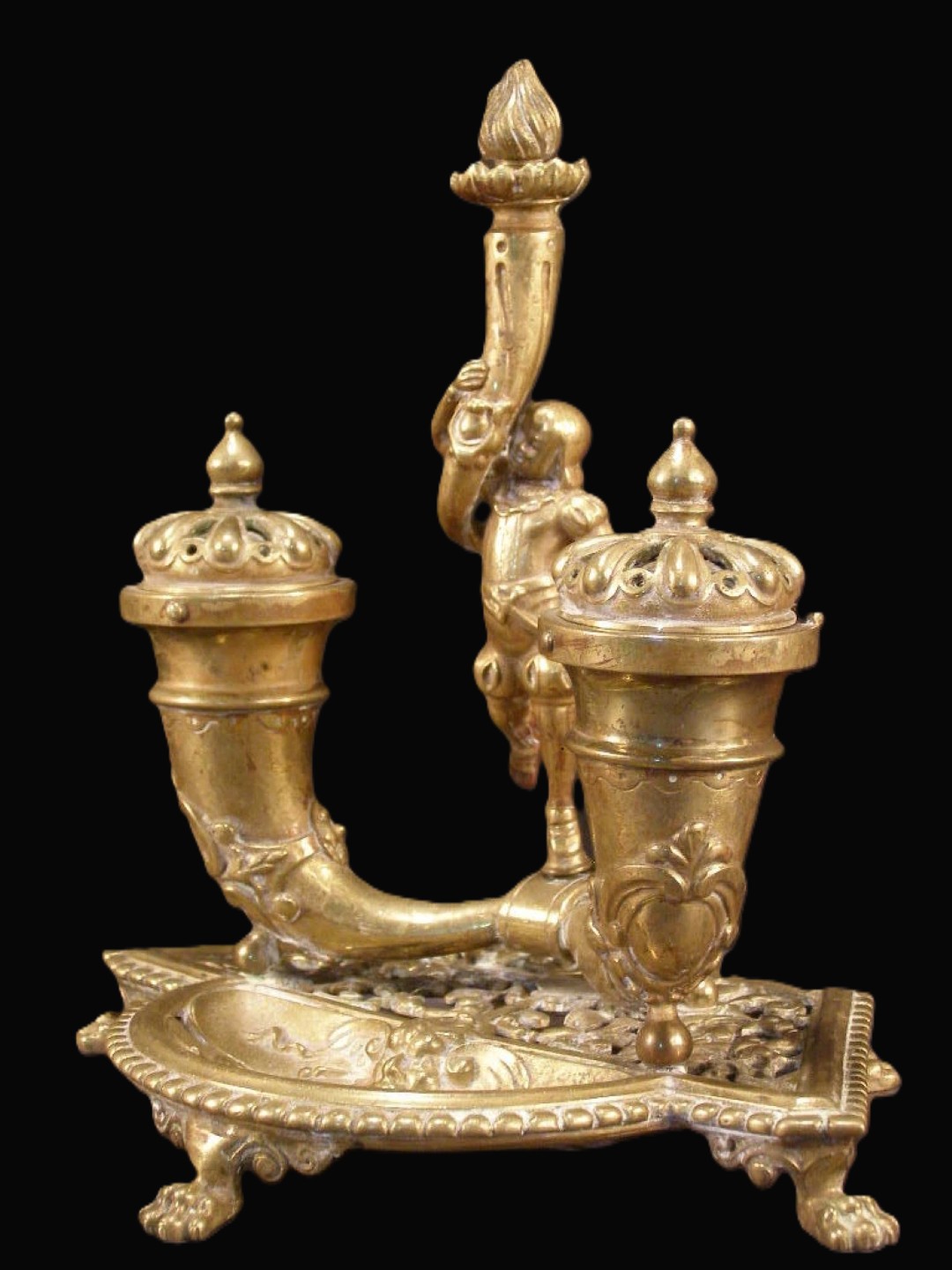


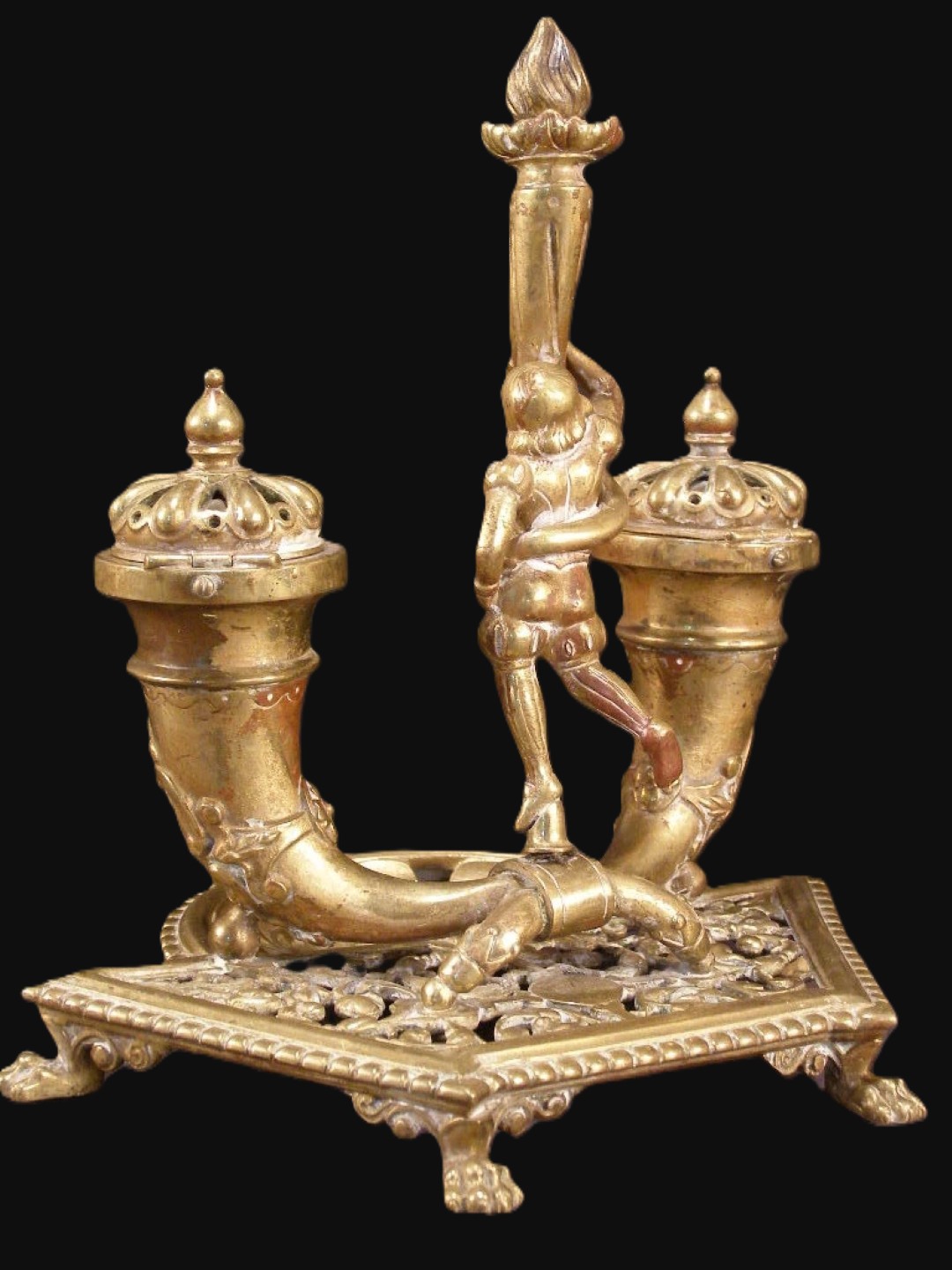

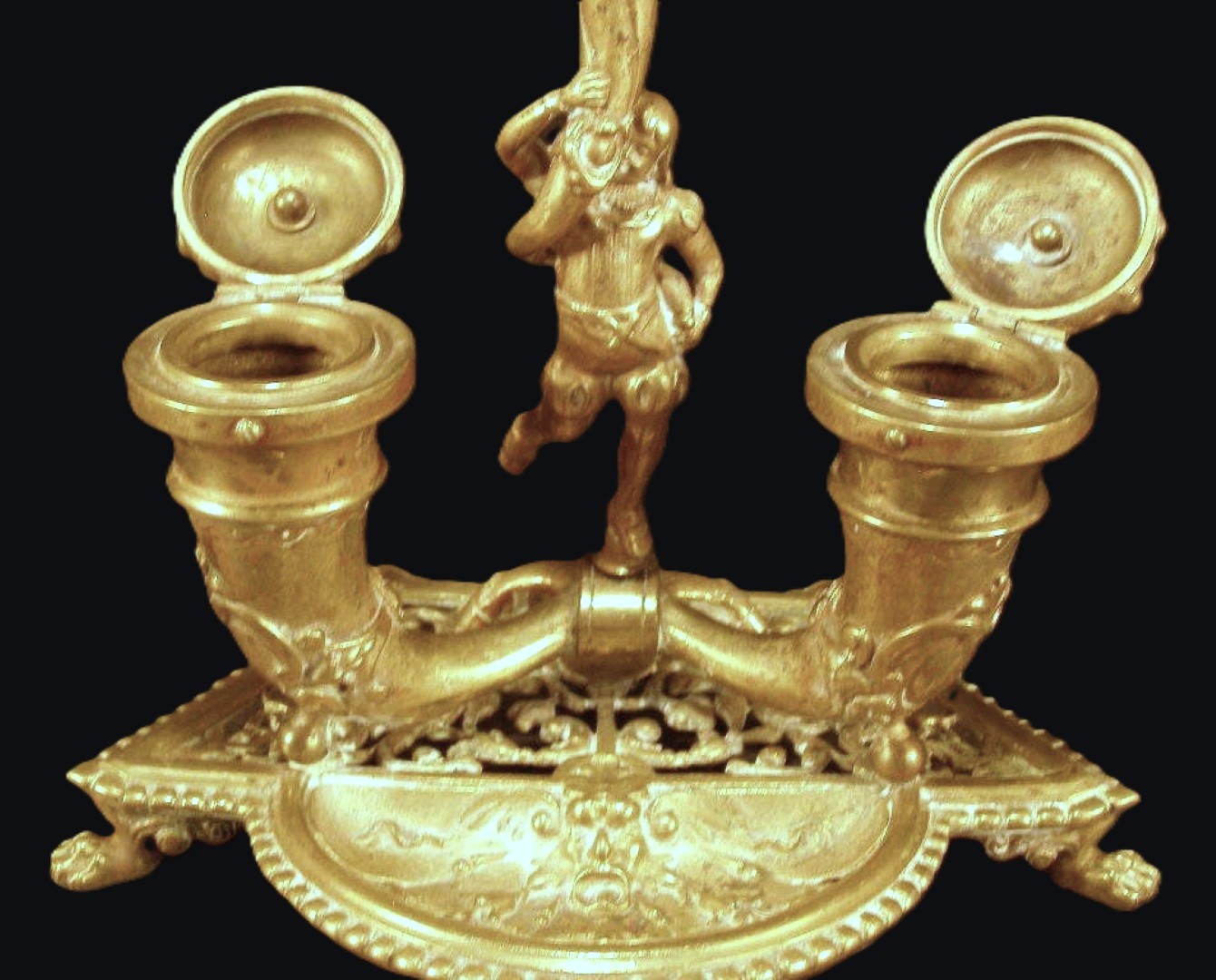
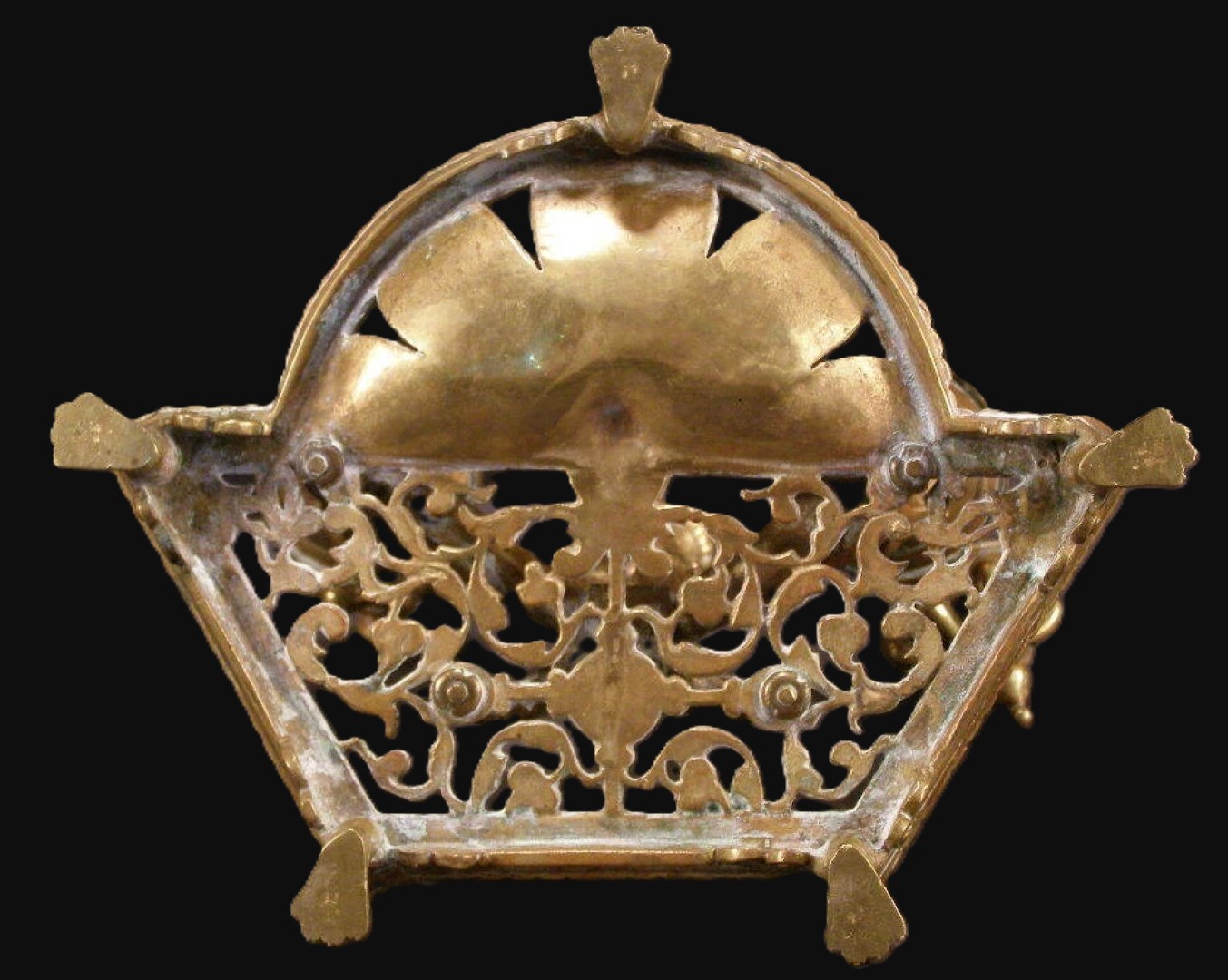
Torch Bearer Double Inkstand with Cornucopia
| Categories | Figural - Persons |
| Material | Bronze |
| Markings | Unmarked |
| Manufacturer | Undetermined |
| Origin | France |
| Date or Era | circa 1870 |
| Measuring | 8 ½” across; 9” high |
Description
- Central Figure: The sculpture depicts a young male attendant in high-status period dress. He wears mid-thigh length pantaloons (or trunk hose) and a fitted doublet, with a utilitarian knife visible at his waist.
- The Torch: He holds a tall, flaring torch aloft in a gesture of lighting the way, a pose historically associated with the duty of a page or link-boy.
- Cornucopia Inkwells: The two cornucopia-shaped reservoirs are chased with floral and leaf patterns, flaring outward to serve as the ink fonts.
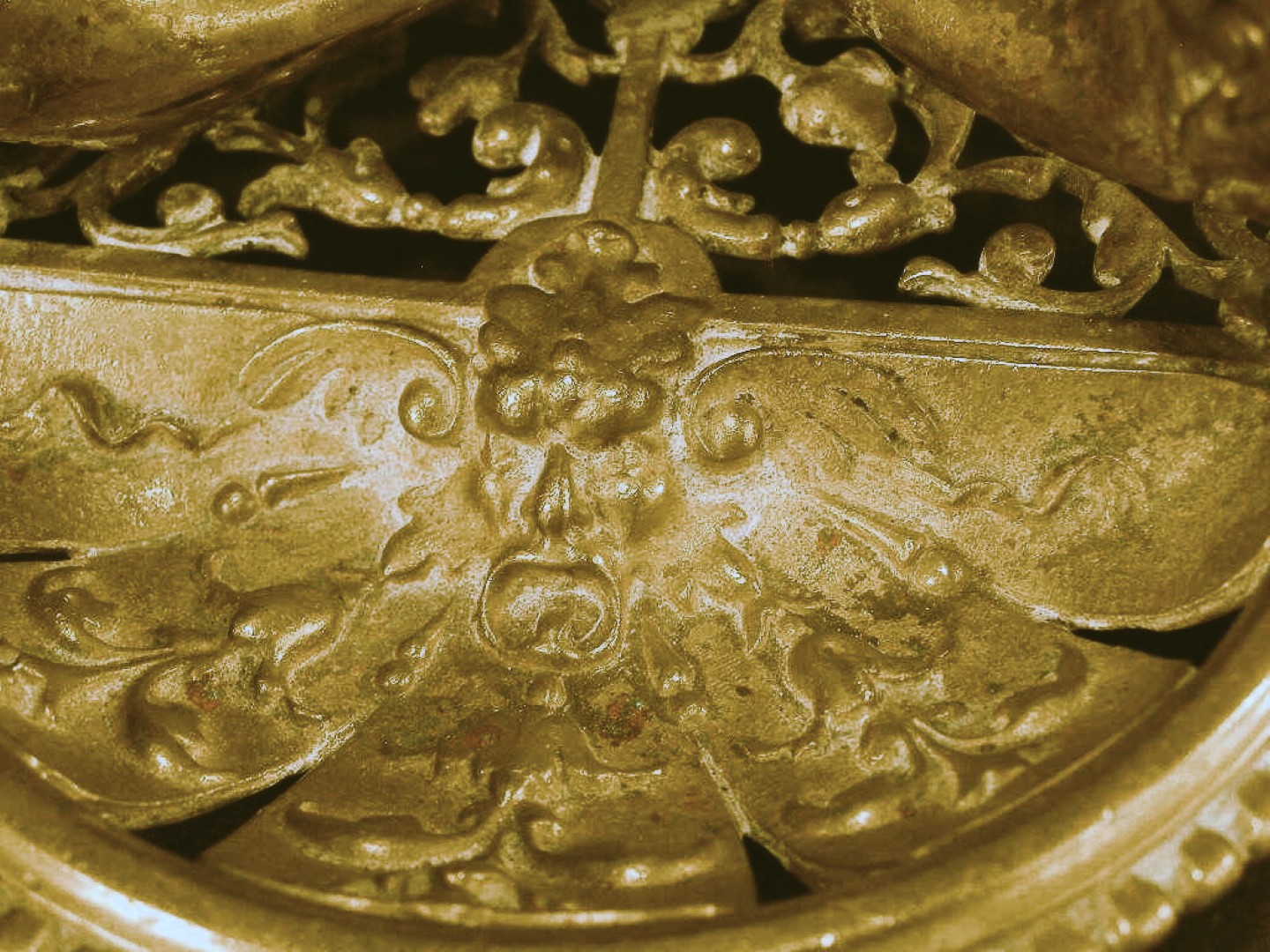
- Base: The assembly rests on a tiered gilt-bronze base with a broad, integrated pen tray featuring a classic guilloché border.
Symbolism and Narrative
- The Torchbearer (Link-Boy): In the eras before street lighting, “link-boys” or pages would carry torches to guide their masters through the dark. On a desk, this signifies that the writer’s work is an act of bringing light to the darkness or guiding the reader’s path.
- The Armed Page: The knife signifies that this is a trusted attendant. In courtly life, a page was a student of noble etiquette and protection. This adds a layer of Duty and Vigilance to the desk, suggesting that the writer is a guardian of the truth they record.
- Abundance of Thought: The cornucopias remain symbols of Prosperity, implying that the service of “lighting the way” leads to an abundance of creative or intellectual wealth.
Origin and Age
- Style: This is a classic example of Troubadour Style (a branch of the Romantic movement), which favored nostalgic, idealized depictions of the Middle Ages and Renaissance.
- Manufacturer: The high quality of the “lost wax” bronze casting and the detailed costume work suggest a premier Parisian bronze foundry such as F. Barbedienne or G. Viot.
- Age: Circa 1850–1880. The Troubadour style peaked in France during the reign of Louis-Philippe and the early Second Empire.
Sold for $218 in February 2026
Content disclaimer. The information posted is the owner’s best knowledge and may not have been vetted by the SOIC. We welcome comments, corrections, and additions, working to make our website information comprehensive and accurate.
Join the Society of Inkwell Collectors (SOIC) – it’s free!
Founded in 1981 as a non-profit organization,
we are documenting inkwells (and accessories).
We’re here to help and inform!