

Inkipedia
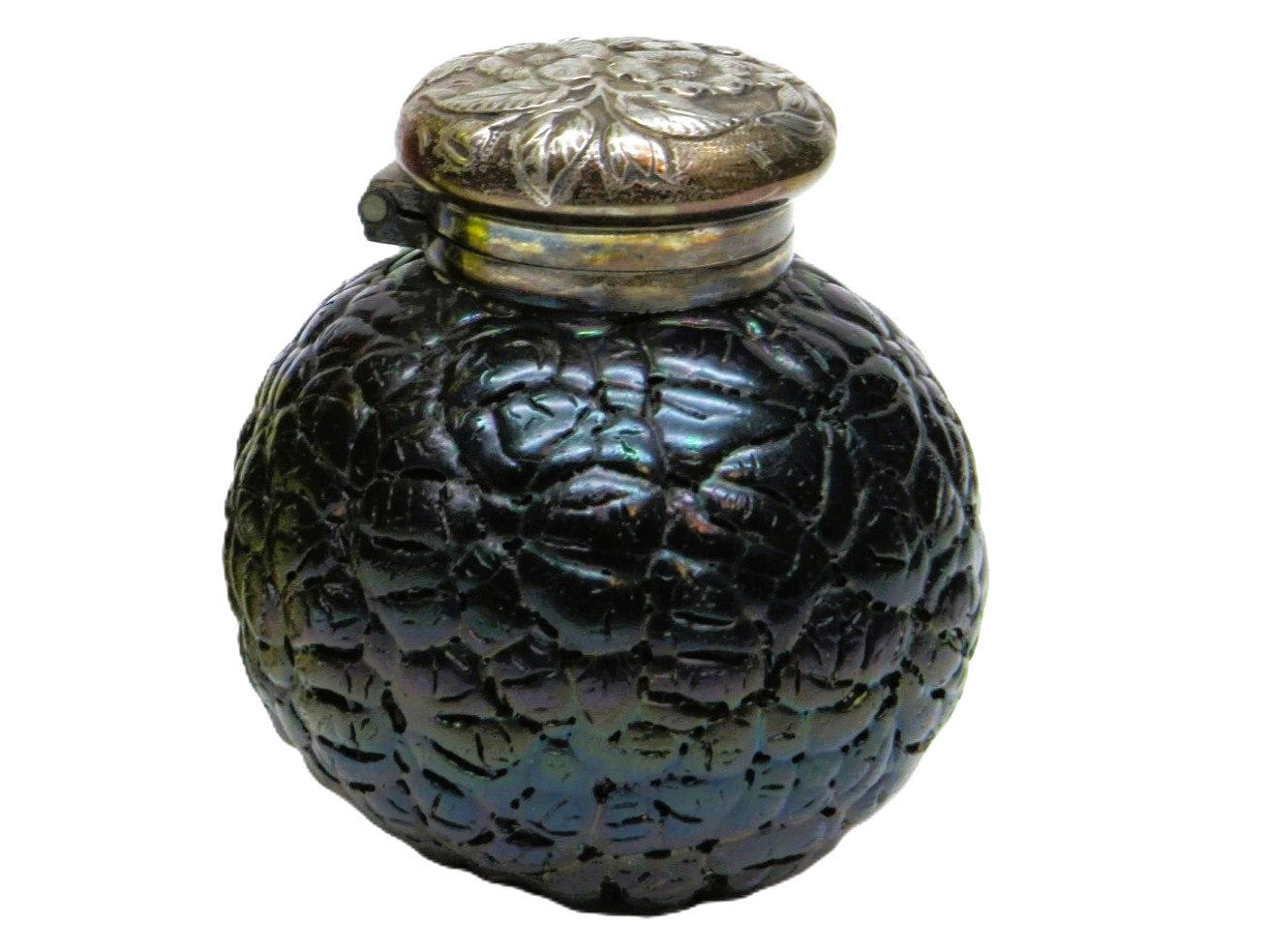


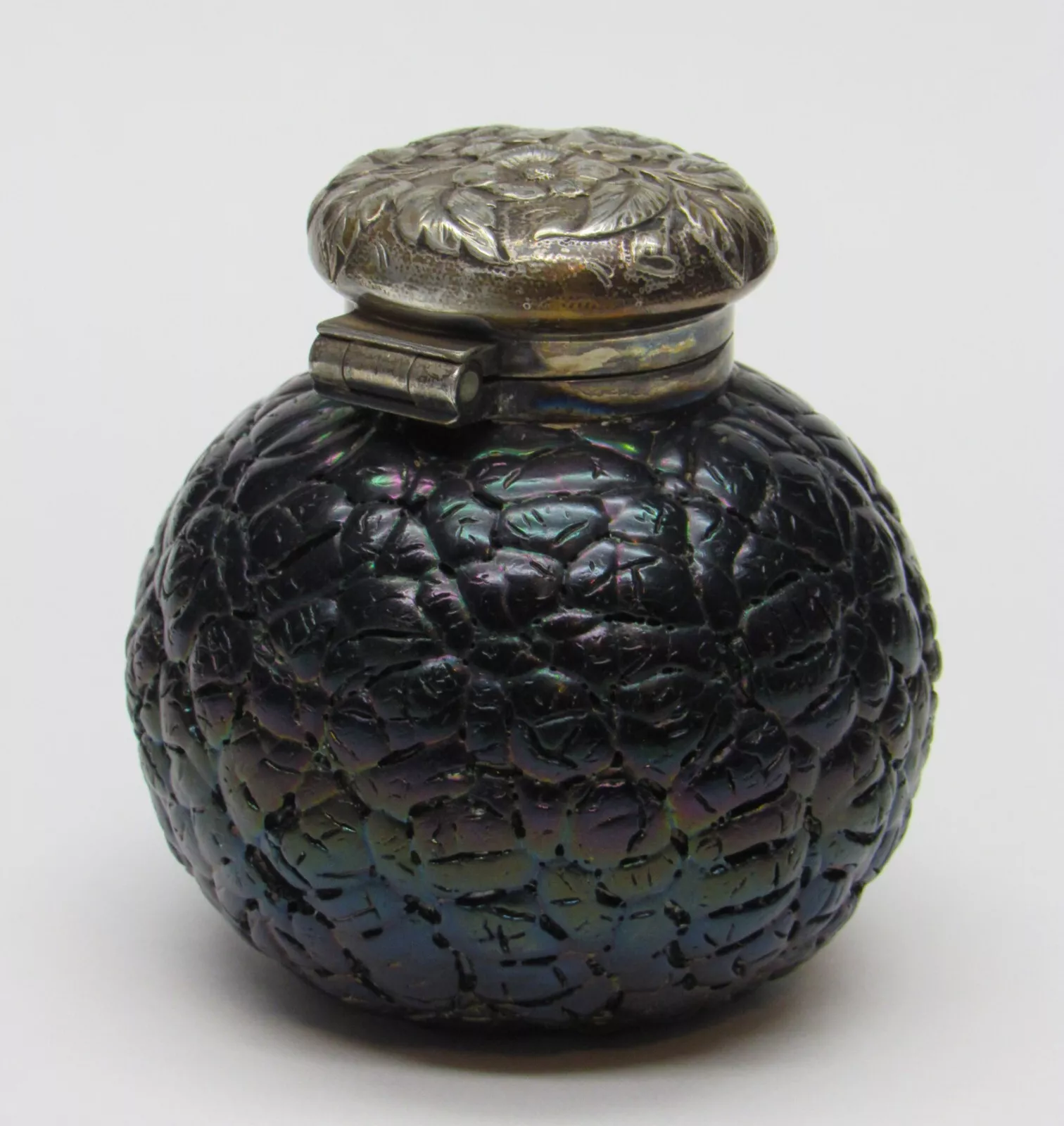
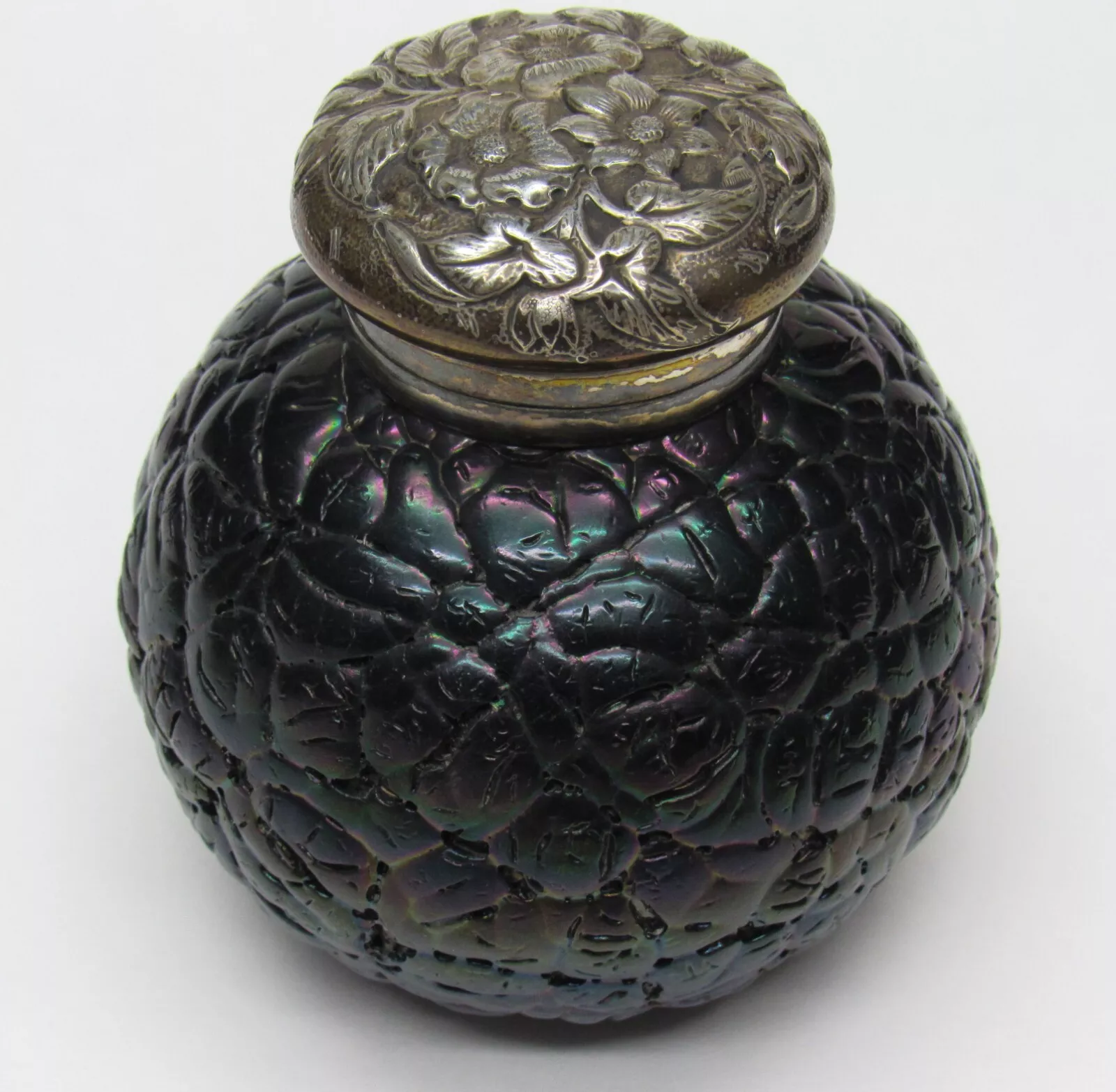
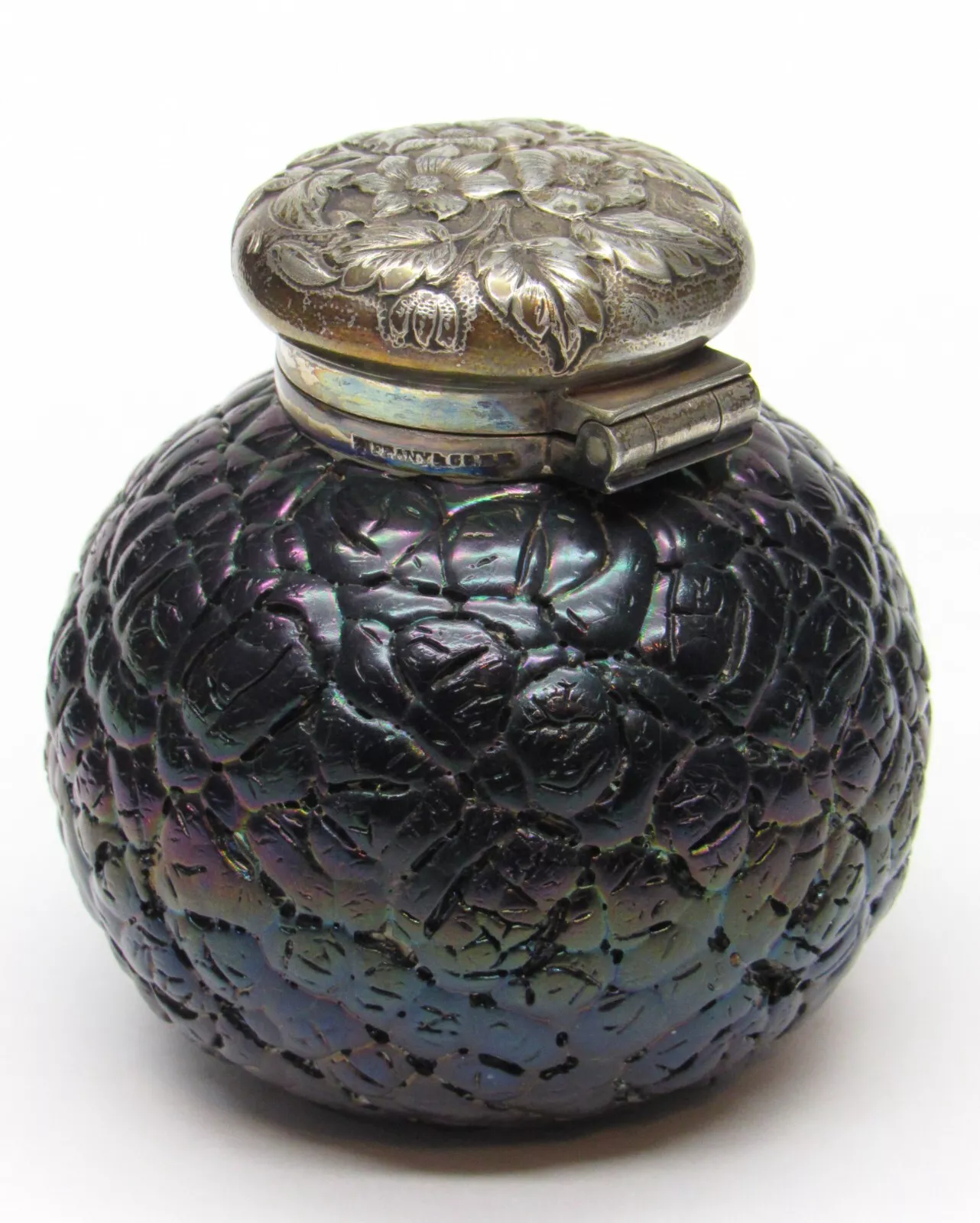
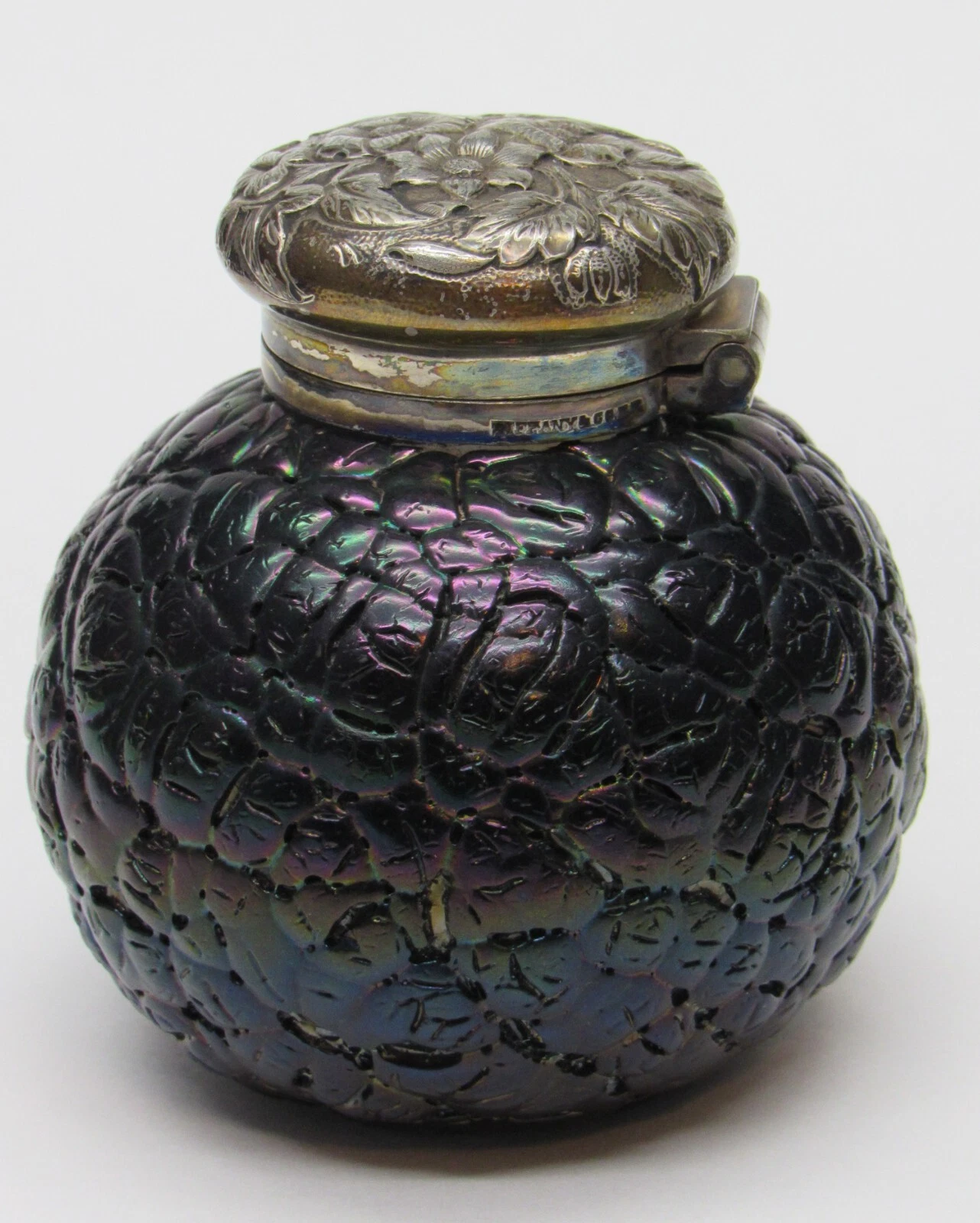
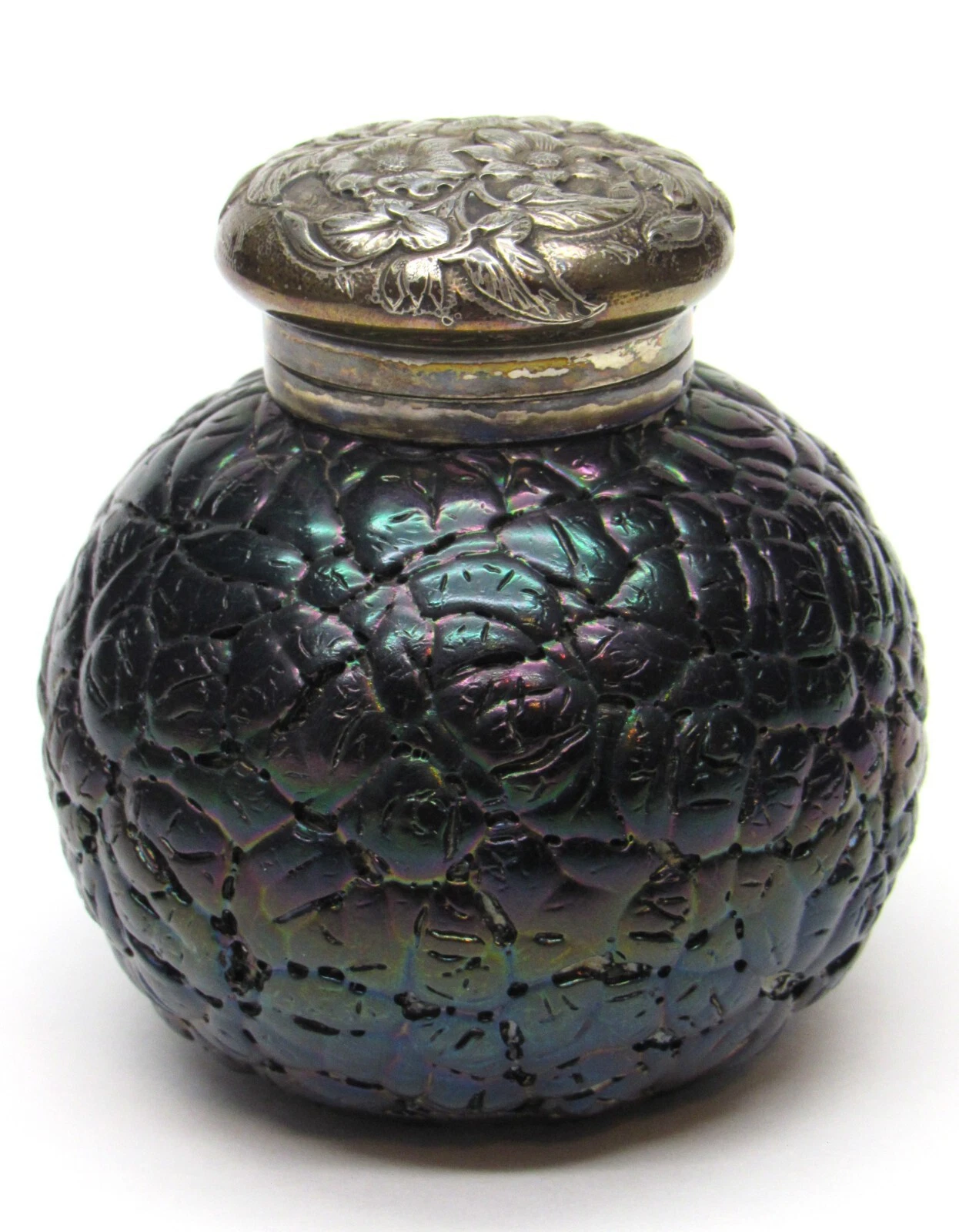
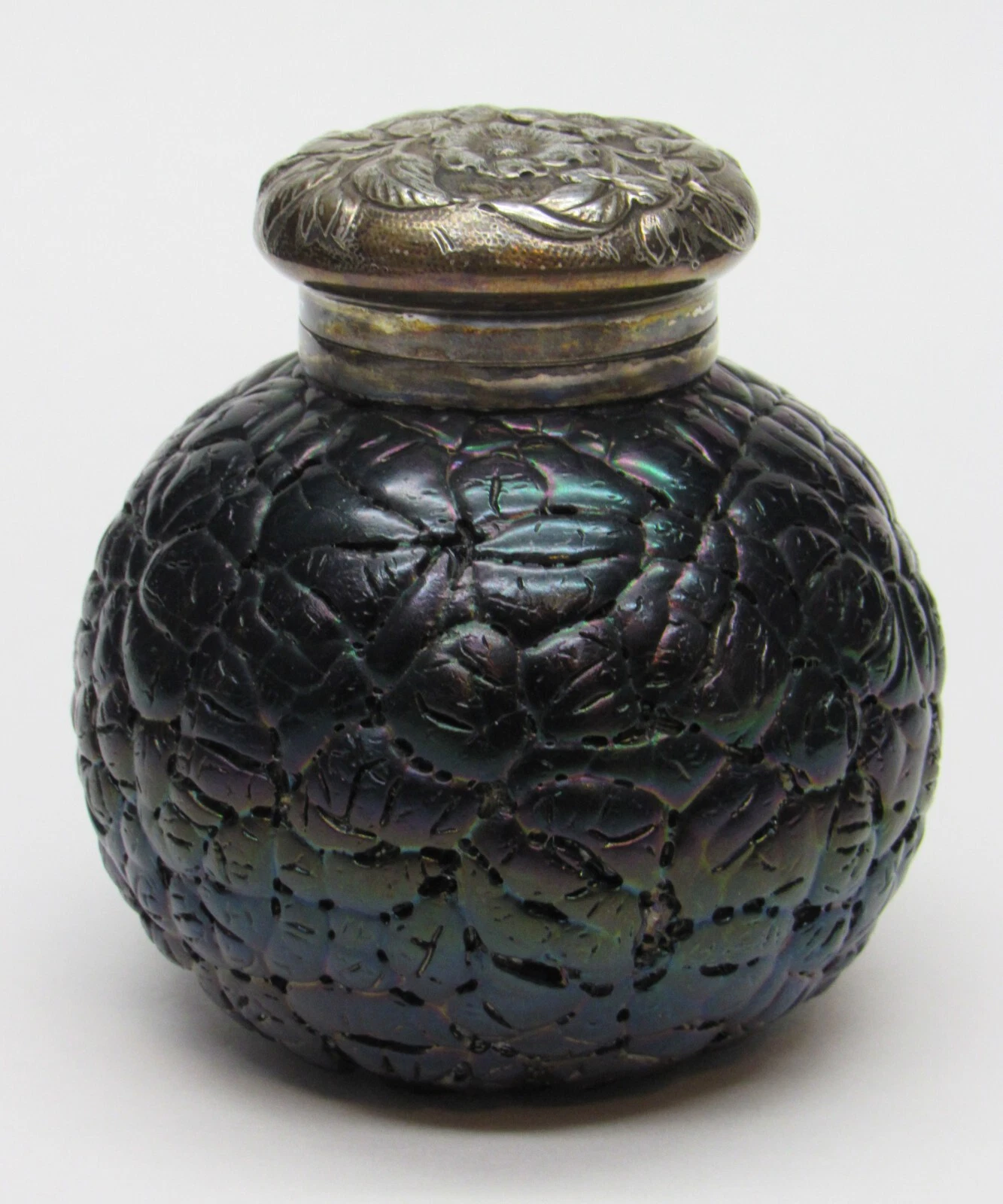
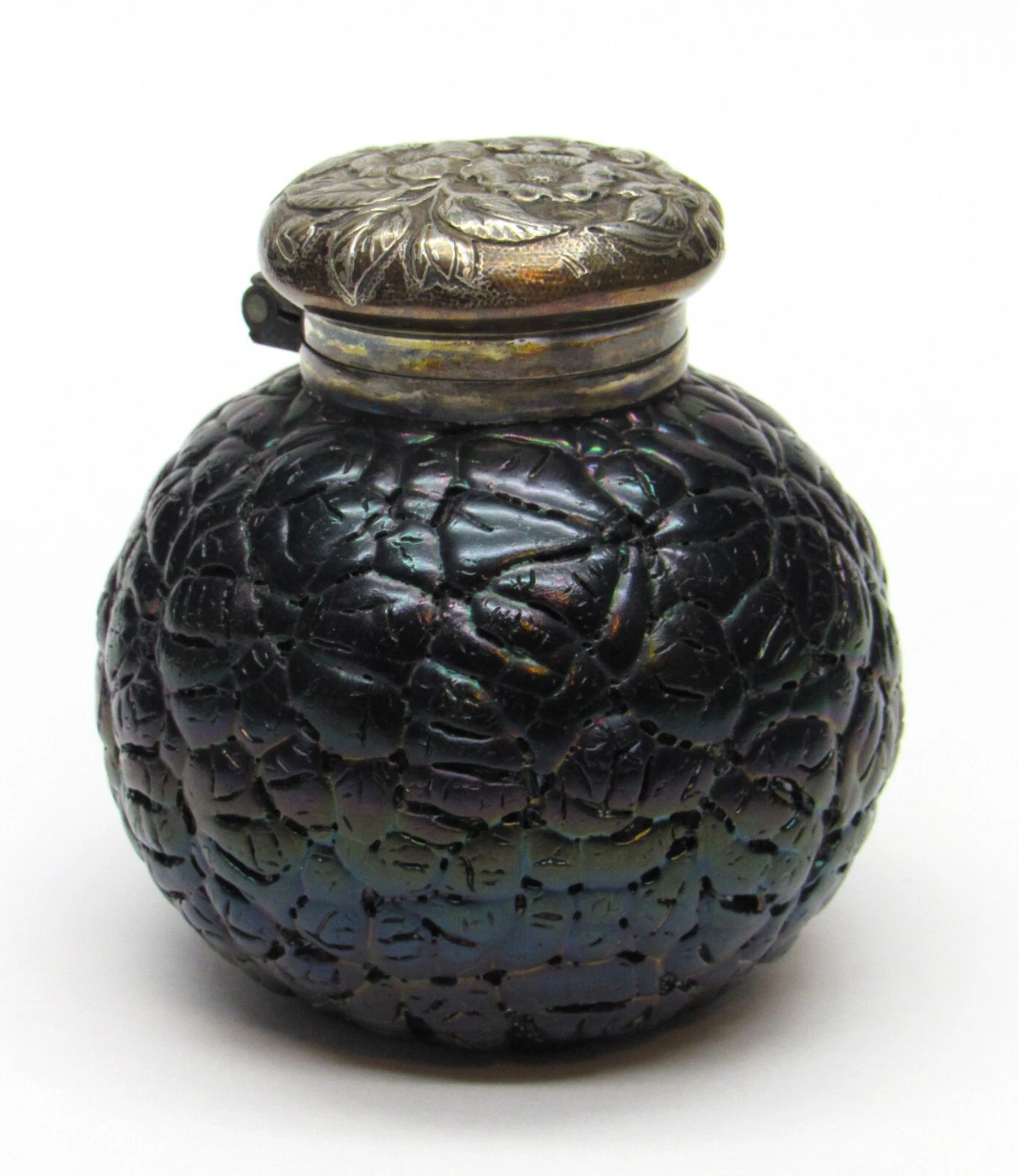
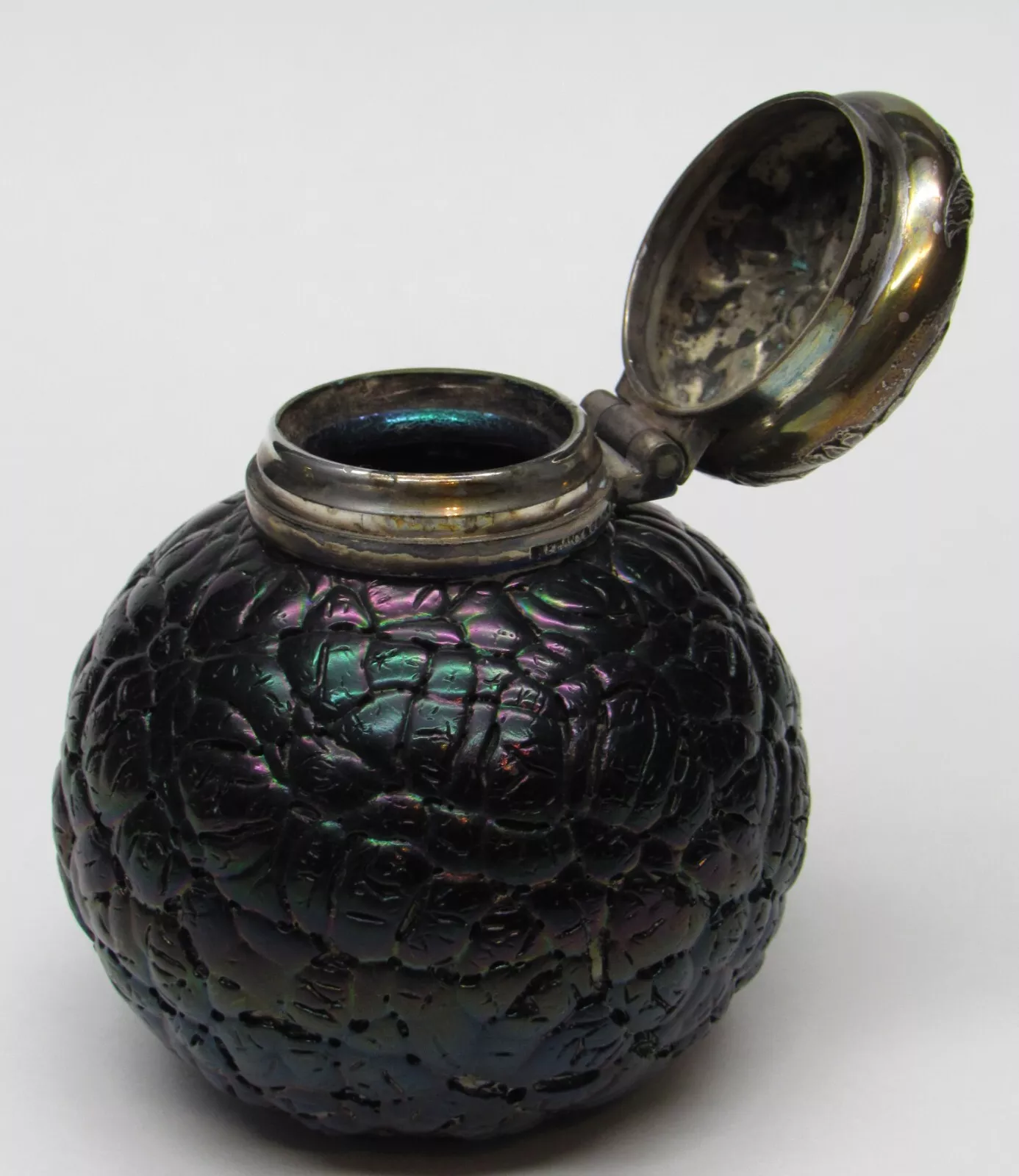
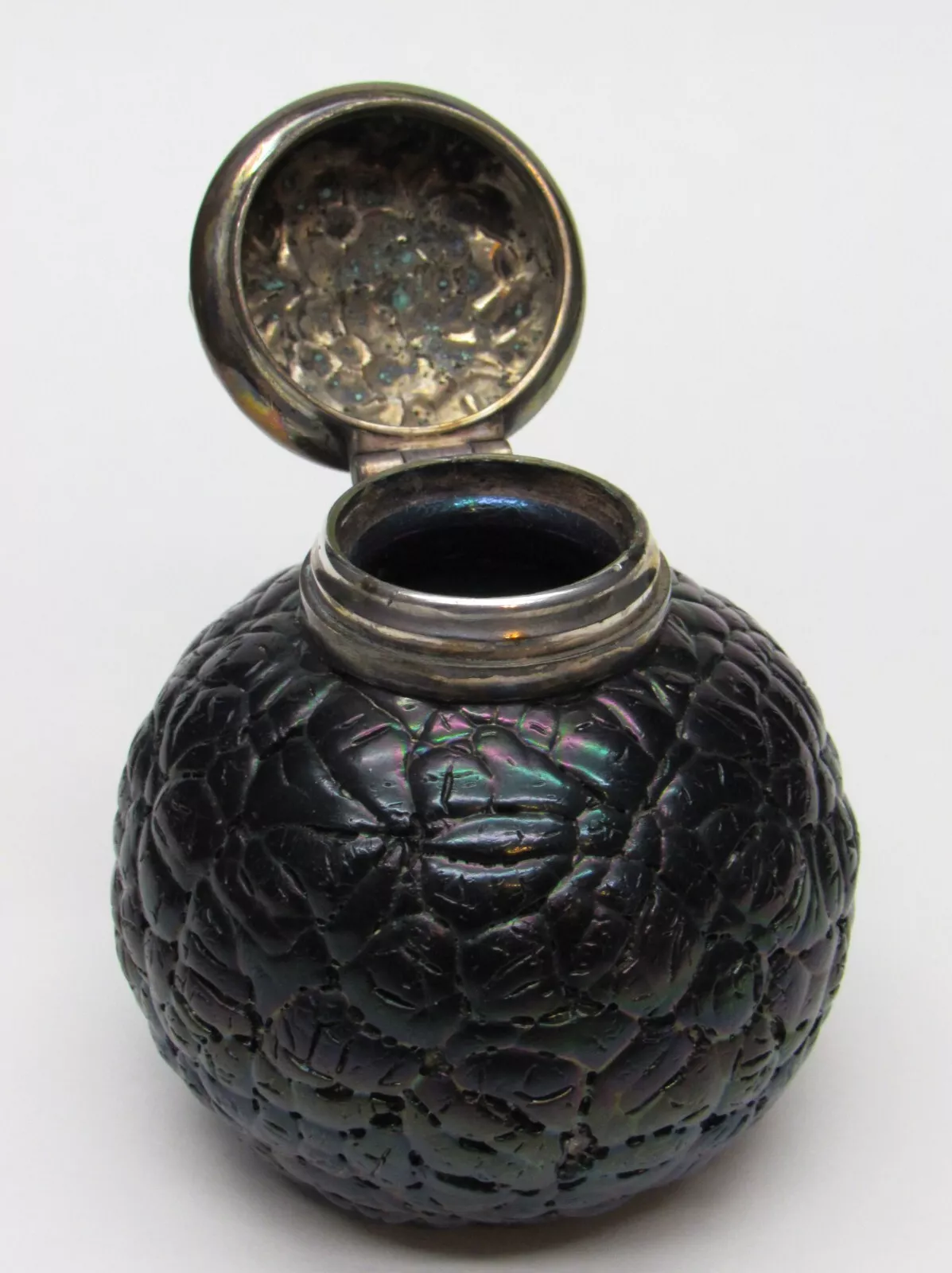
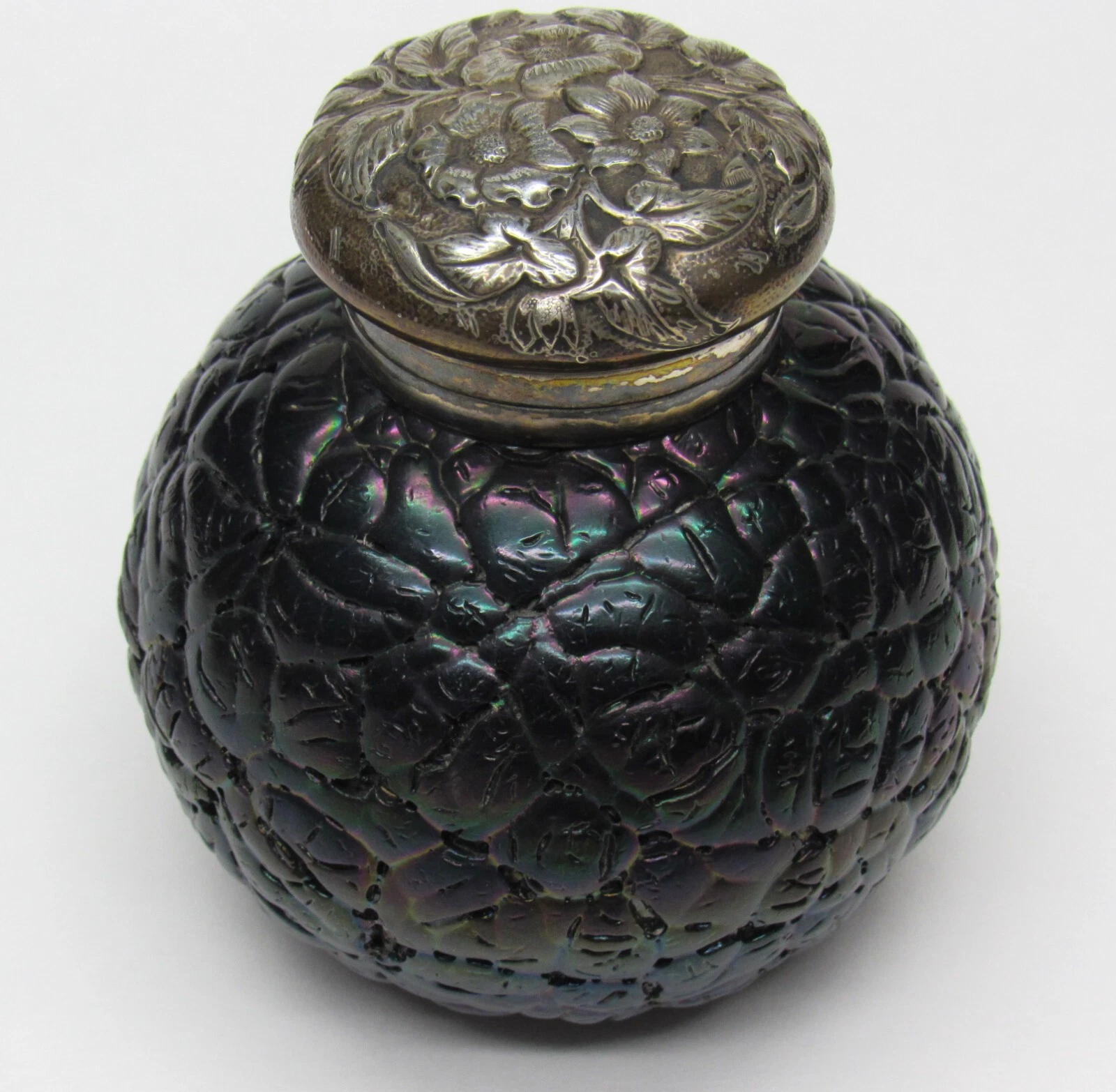
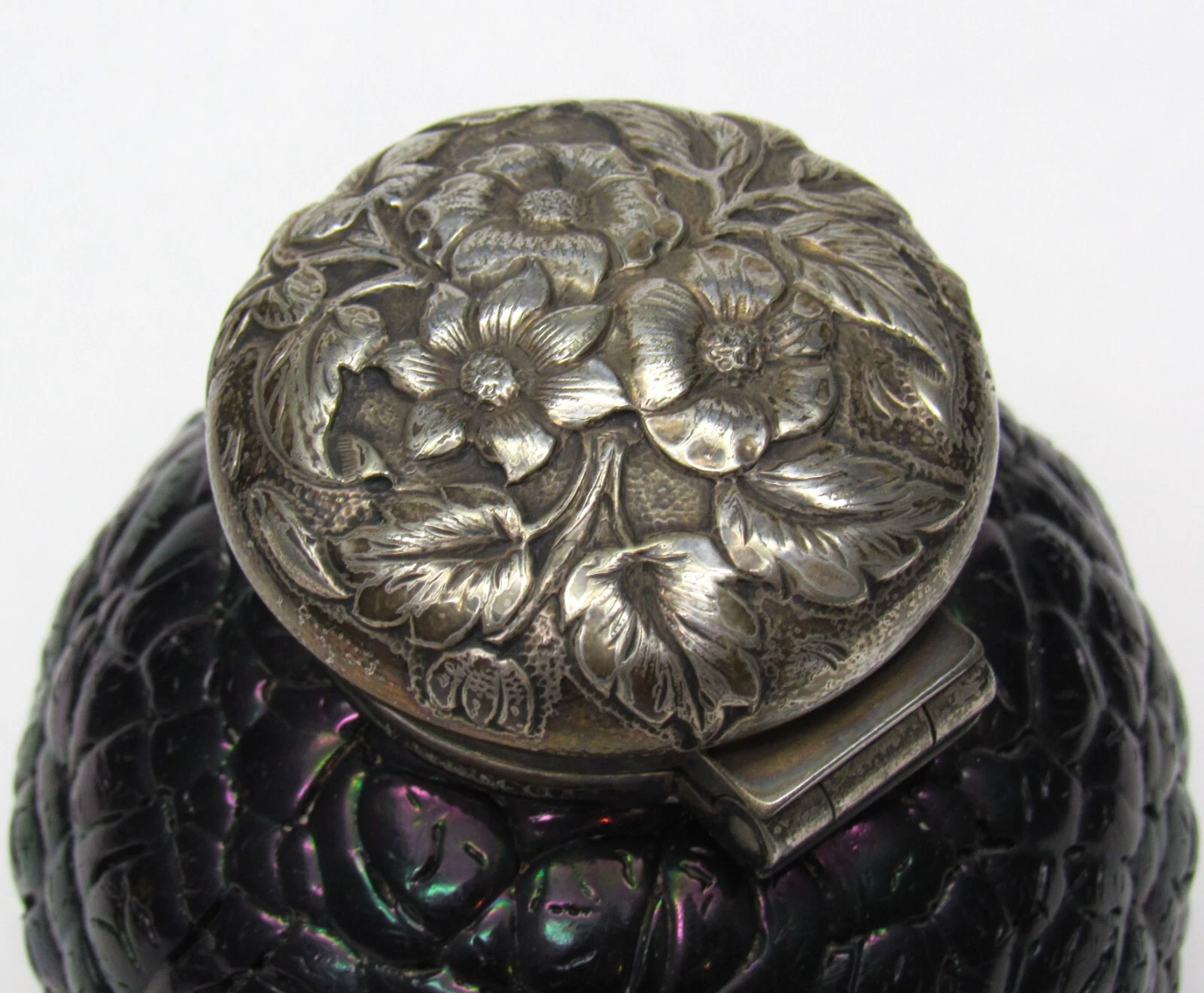
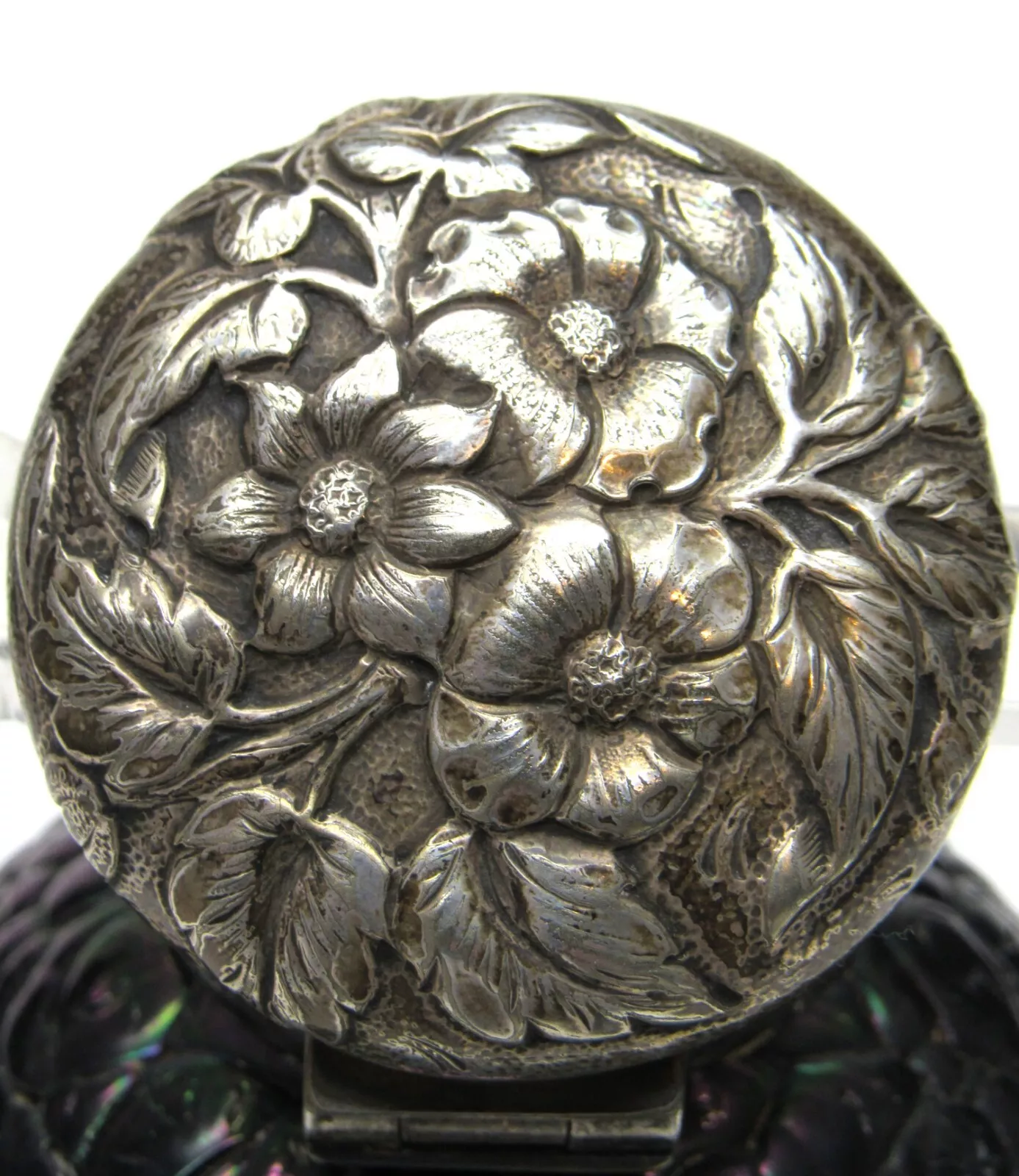
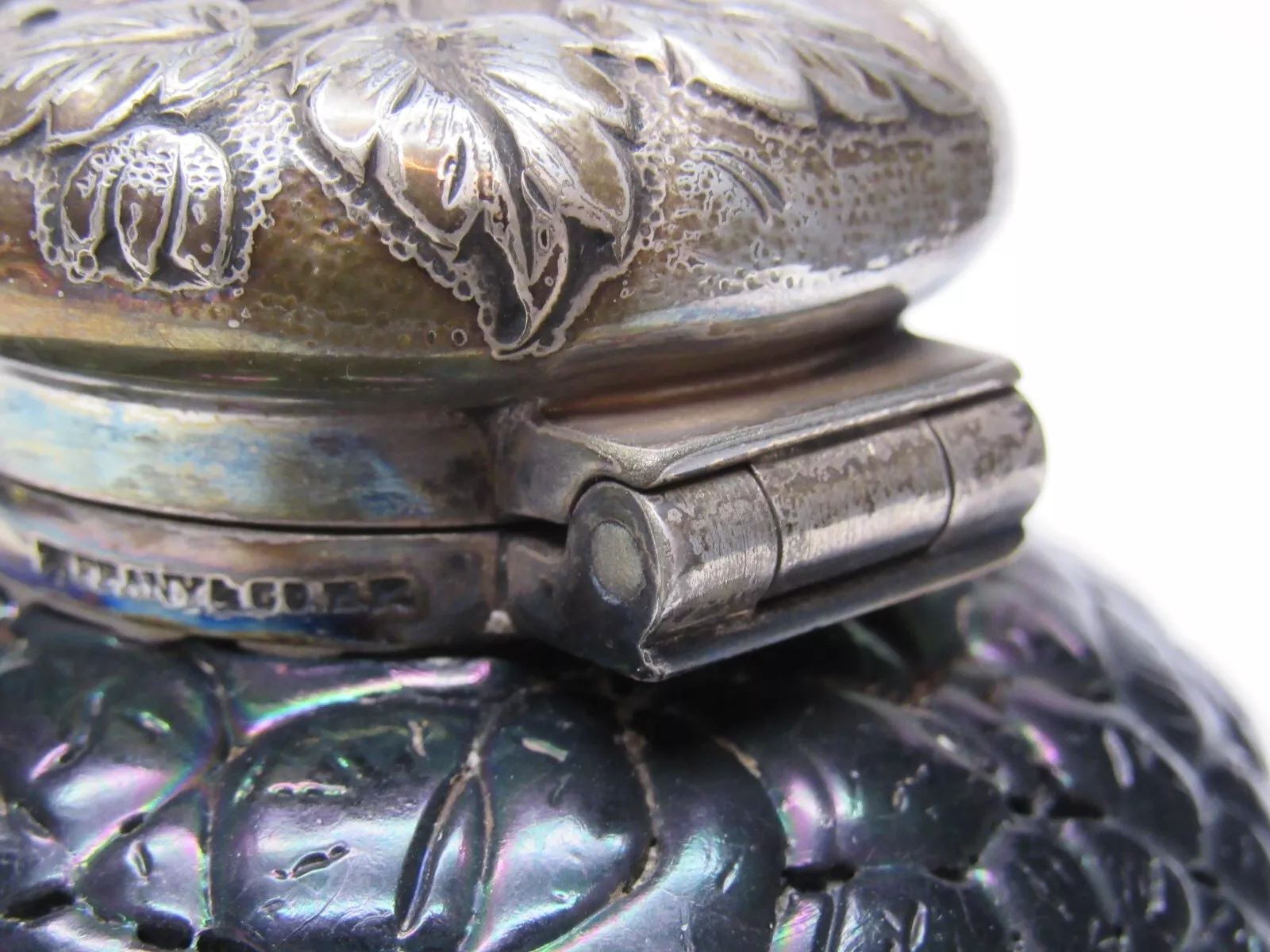
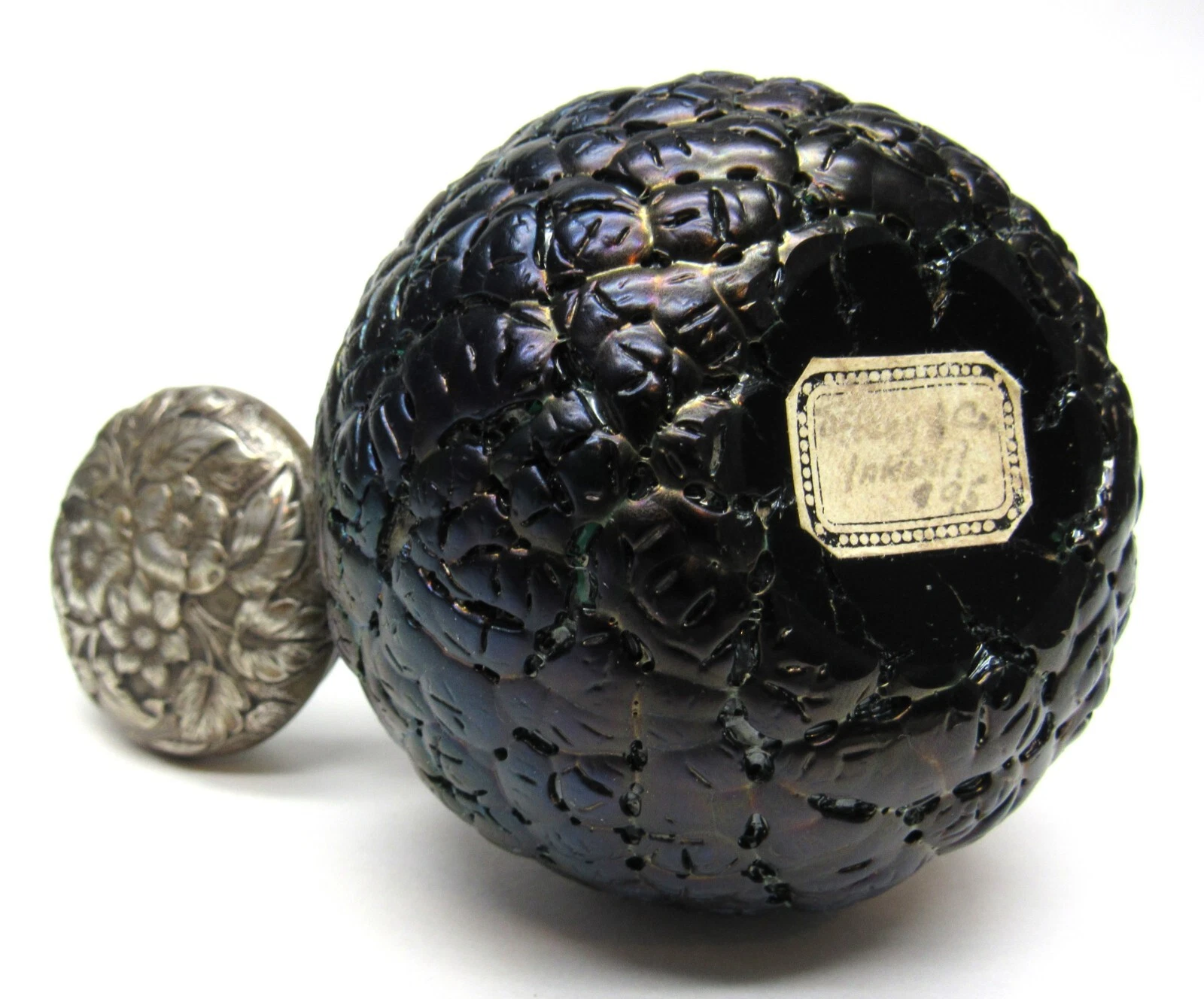
Thomas Webb Art Glass Inkwell with Tiffany Lid
| Categories | Tiffany |
| Material | Glass |
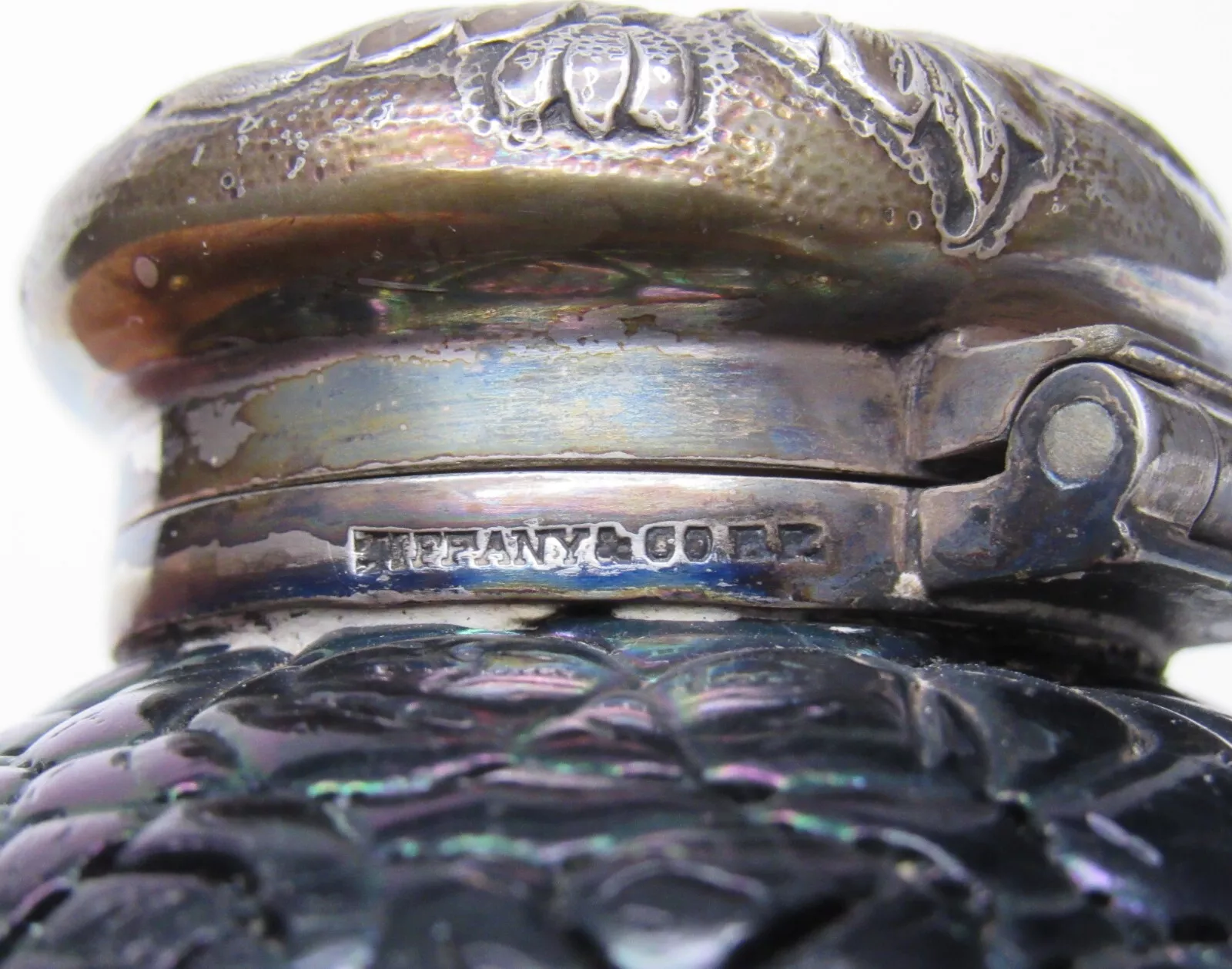
| Markings | Tiffany & CO EP |
| Manufacturer | Thomas Webb & Sons |
| Origin | England |
| Date or Era | circa 1900 |
| Measuring | 3 ½” high x 3 ¼” at its widest |
- The Glassmaker: Thomas Webb & Sons
The glass is attributed to Thomas Webb & Sons of Stourbridge, England, a world-renowned glass company celebrated for its artistry and technical innovation, especially during the Victorian era.
- “Lava” or “Brain” Pattern: This is an informal but widely used name for this particular form of glass. It is a type of textured, iridescent art glass. The surface was intentionally created to have a rough, “crackled” or “crushed” appearance, which catches the light and highlights the glass’s deep, shimmering iridescence. This technique was a signature of Webb’s high-quality art glass production. There is a neatly polished pontil on the bottom.
- The Silver Top and Markings: Tiffany & Co.
- Mark: The mark on the collar is “TIFFANY & CO. EP”.
- Meaning of “EP”: EP stands for “Electro-Plated.” This indicates that the metal mount is silverplated, not solid sterling silver. While Tiffany & Co. is best known for its sterling silver, it did sell high-quality silverplated goods as well.
- Repoussé Floral Design: The intricate, raised floral pattern on the lid was created using the repoussé technique, where the design is hammered from the reverse side to create a low relief. This style of floral design was very popular in the late 19th century, especially in the Art Nouveau period.
- Collaboration
The presence of the Tiffany & Co. mark on a Thomas Webb glass piece speaks to its quality and history.
- Retailer/Maker Relationship: It was a common practice for prestigious retailers like Tiffany & Co. to source high-quality goods from the best manufacturers of the day. In this case, Tiffany would have acquired the Thomas Webb inkwell and then commissioned a silversmith to create and attach the decorative silverplated top with their own company mark. This was a way for Tiffany to offer unique, high-end items under its brand name without having to produce every component in-house.
Sold for $1,000 in June 2025
Content disclaimer. The information posted is the owner’s best knowledge and may not have been vetted by the SOIC. We welcome comments, corrections, and additions, working to make our website information comprehensive and accurate.
Join the Society of Inkwell Collectors (SOIC) – it’s free!
Founded in 1981 as a non-profit organization,
we are documenting inkwells (and accessories).
We’re here to help and inform!