

Tennis Themed Inkstand
| Categories | Sports |
| Type | Tennis |
| Material | Brass, Glass |
| Markings | Unmarked |
| Manufacturer | Undetermined |
| Origin | England |
| Date or Era | circa 1890 |
| Measuring | 4” high |
Description
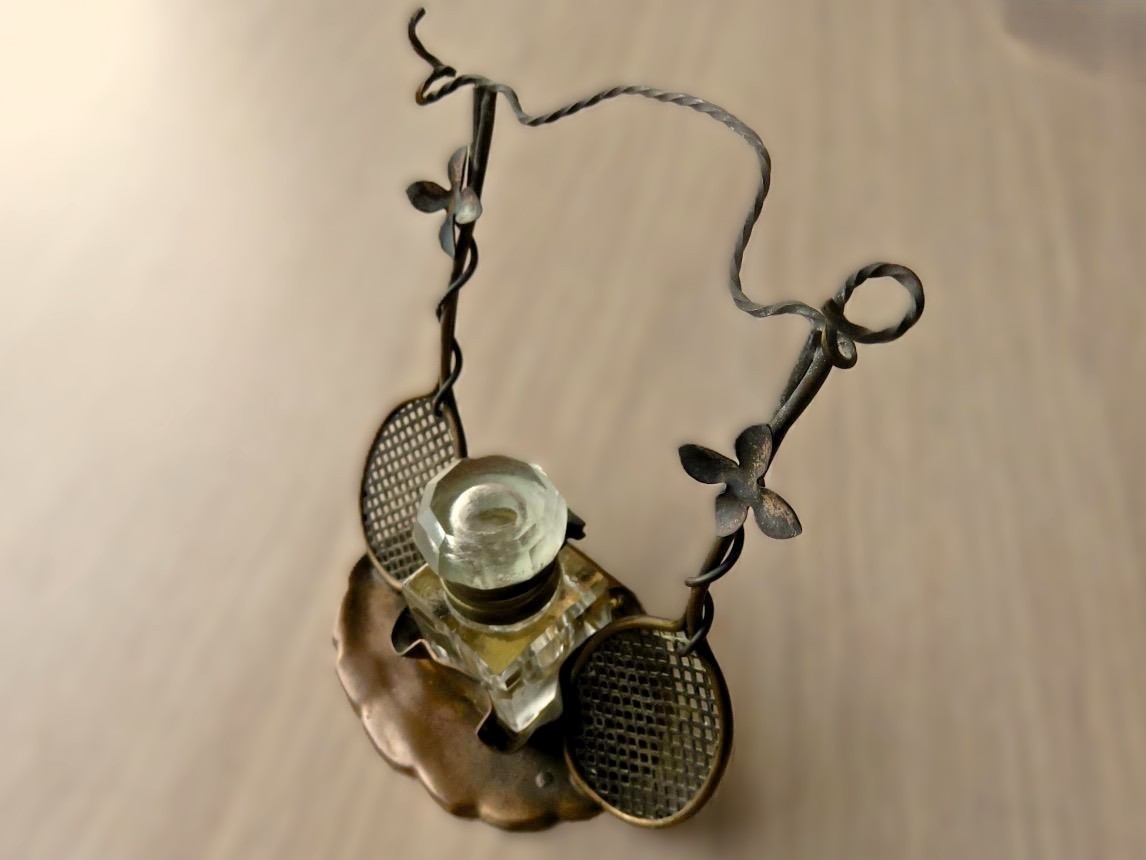
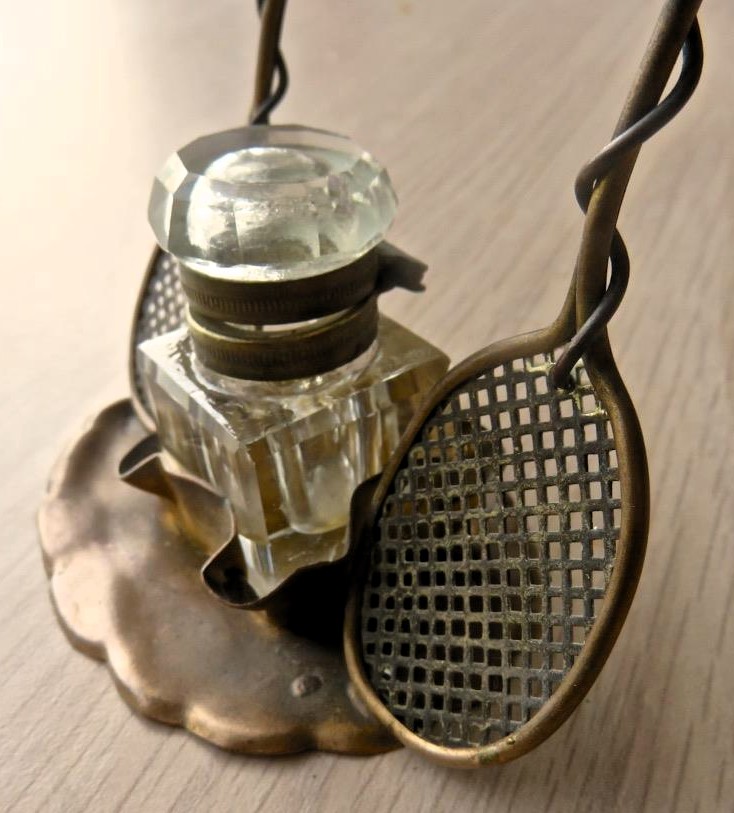
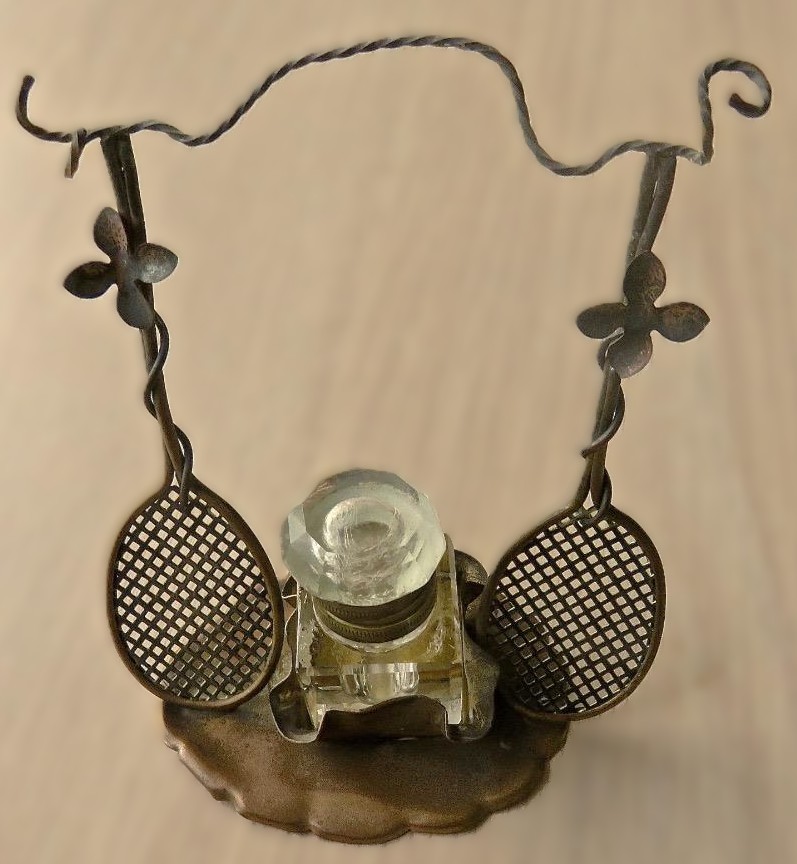
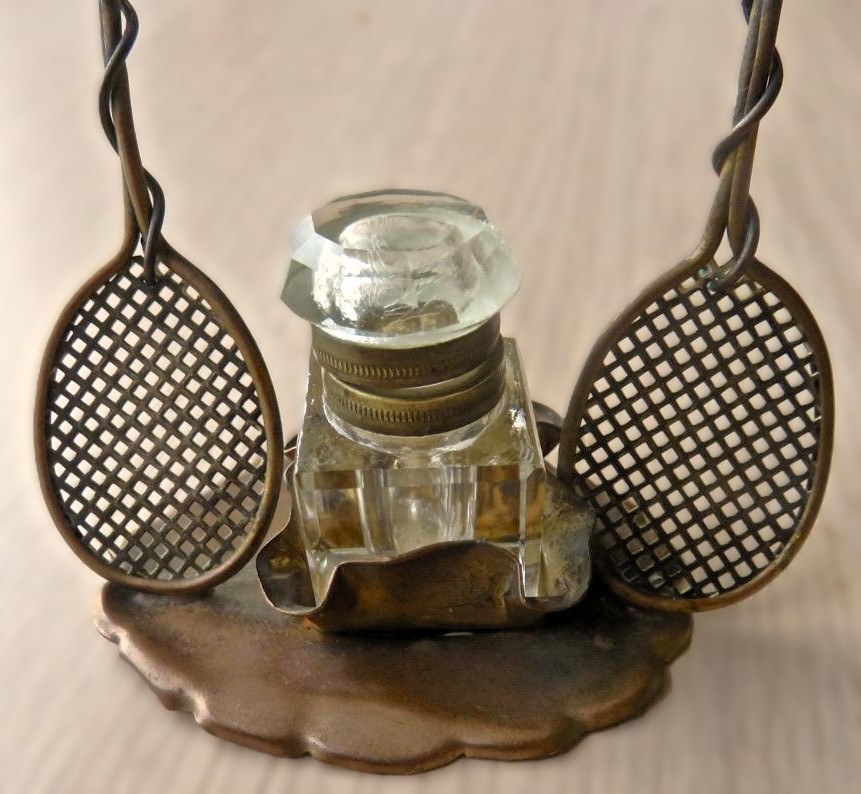
- The Inkstand (Base & Structure): This figural inkstand is made of brass (possibly with some mixed non-ferrous metal components in the wirework) and features a scalloped, tray-like base. Anchored to the base are two stylized lawn tennis rackets facing inward. The rackets are realistically cast to depict a crosshatch, square-mesh pattern mimicking early gut stringing.
- The Pen Rest / Handle: Rising from the tennis rackets are twisted, snaking wire supports wrapped with decorative elements, including small four-petal dogwood-style metal blossoms. The wire forms a high, wavy overhead arch that doubles as a carrying handle and an elevated dual pen rest, complete with outward-scrolling hooks at the terminal ends to cradle dip pens.
- The Inkwell & Receiver: Nestled snugly between the two rackets is a fitted, ruffled brass collar that holds a single, square-cut clear glass inkwell. The inkwell features a matching brass collar, and a heavy, multi-faceted, geometric clear glass hinged lid.
Where Was It Made?
This piece was manufactured in England, most likely in the Birmingham area.
During the late 19th century, Birmingham was the global epicenter for the production of brassware, metal “toys” (the historical term for small metal novelties), and decorative desk furniture. British manufacturers excelled at capitalizing on contemporary social trends by producing silver-plated, brass, and spelter novelty desk sets for the domestic and export markets.
When Was It Made?
The inkstand can be dated to circa 1885–1895.
- The Lawn Tennis Boom: Major Walter Clopton Wingfield patented lawn tennis in 1874, and the sport exploded in popularity across England and America throughout the 1880s and 1890s. This craze triggered a massive market for tennis-themed household items, including trophy cups, knife rests, and desk accessories.
- Design Clues: The shape of the rackets—featuring a balanced, symmetrical oval head rather than the tilted, lopsided “teardrop” shapes of the 1870s—firmly places this in the mid-to-late 19th-century lawn tennis era. Additionally, the whimsical combination of rigid sporting gear with organic, twisted wire and floral accents bridges late Victorian eclectic design and early, nascent Art Nouveau influences.
Sold for $132 in November 2015
Content disclaimer. The information posted is the owner’s best knowledge and may not have been vetted by the SOIC. We welcome comments, corrections, and additions, working to make our website information comprehensive and accurate.
Join the Society of Inkwell Collectors (SOIC) – it’s free!
Founded in 1981 as a non-profit organization,
we are documenting inkwells (and accessories).
We’re here to help and inform!