








Sterling Silver Inkstand – Barnard & Sons
| Categories | Silver |
| Material | Silver |
| Markings | See Narrative |
| Manufacturer | Barnard & Sons |
| Origin | England |
| Date or Era | circa 1870 |
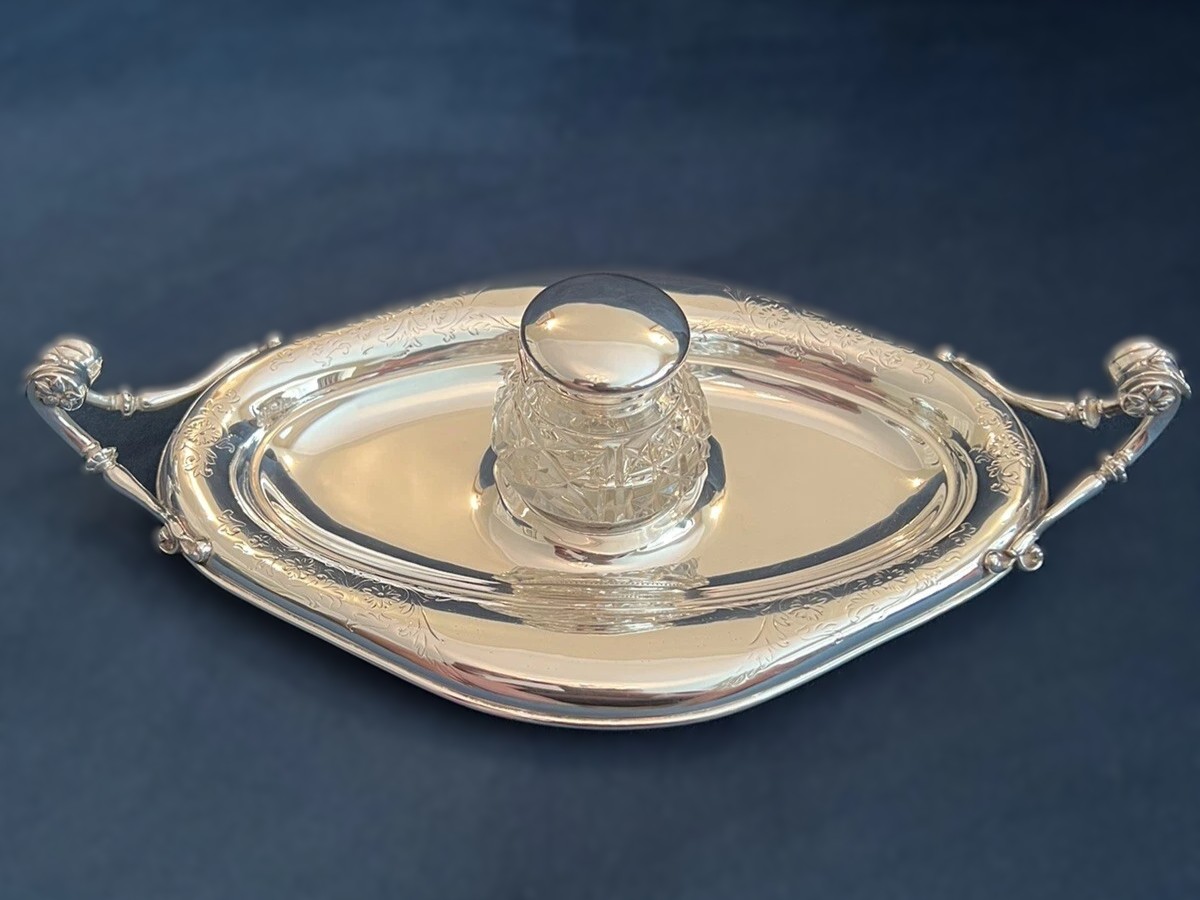
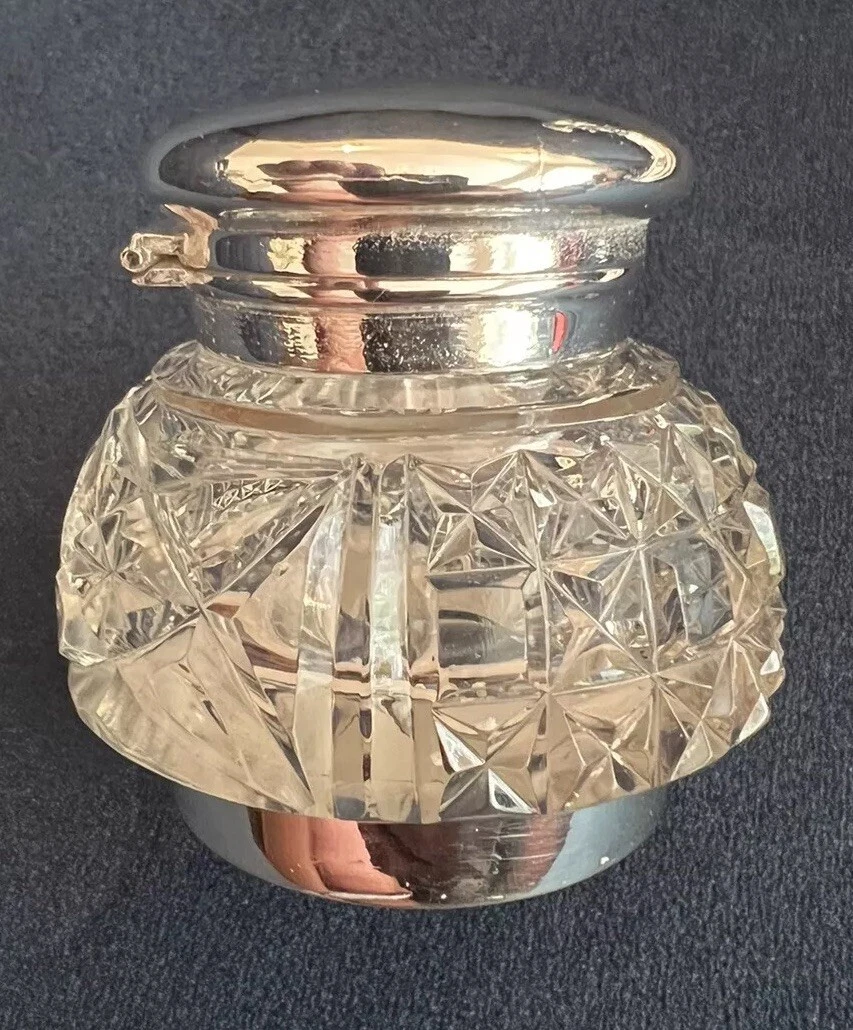
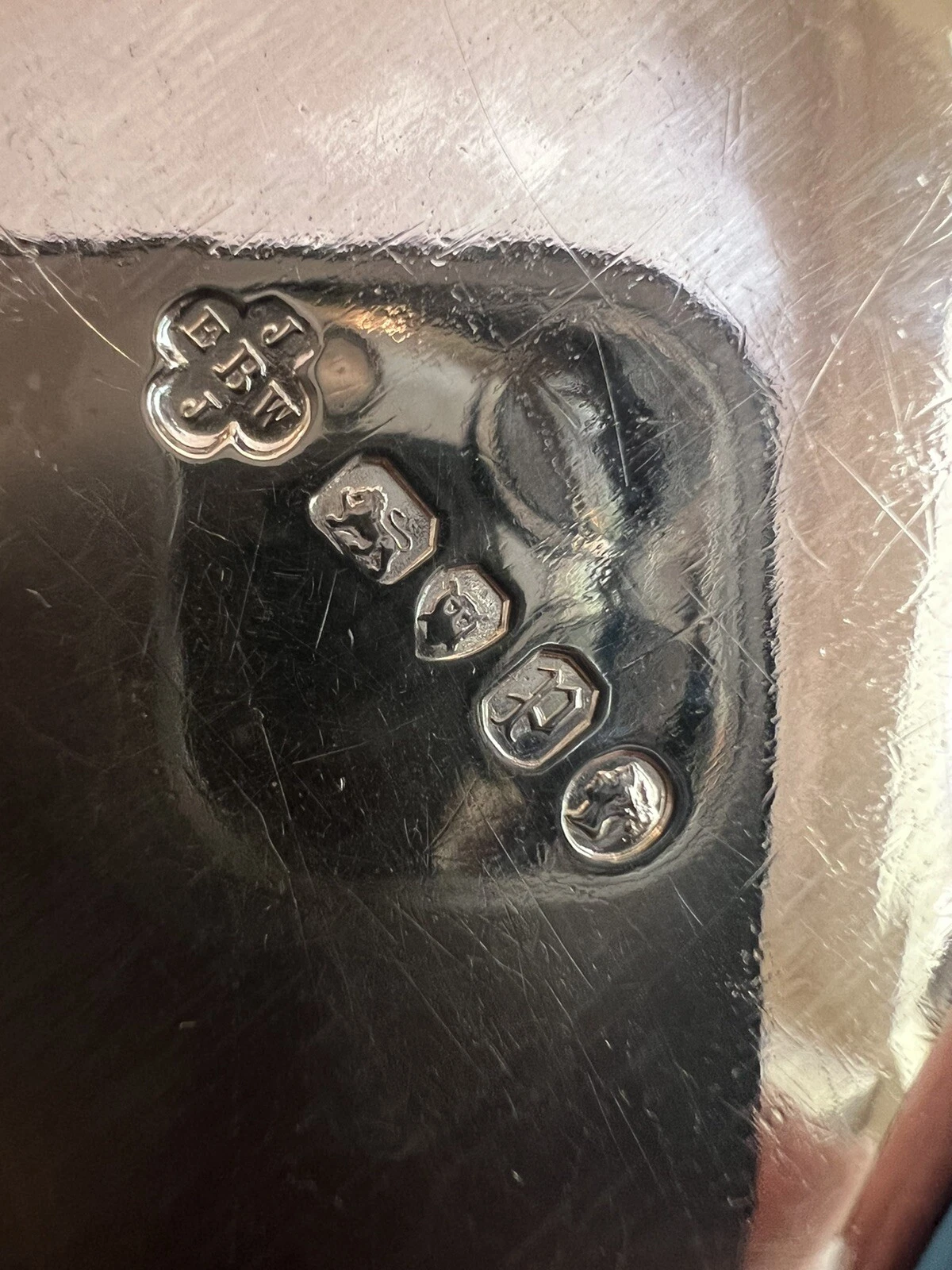
This is a classic Victorian sterling silver inkstand. The hallmarks indicate it was assayed in London in 1870 and produced by the renowned silversmith firm Barnard & Sons (specifically the partnership of Edward, John, and William Barnard).
Design & Features
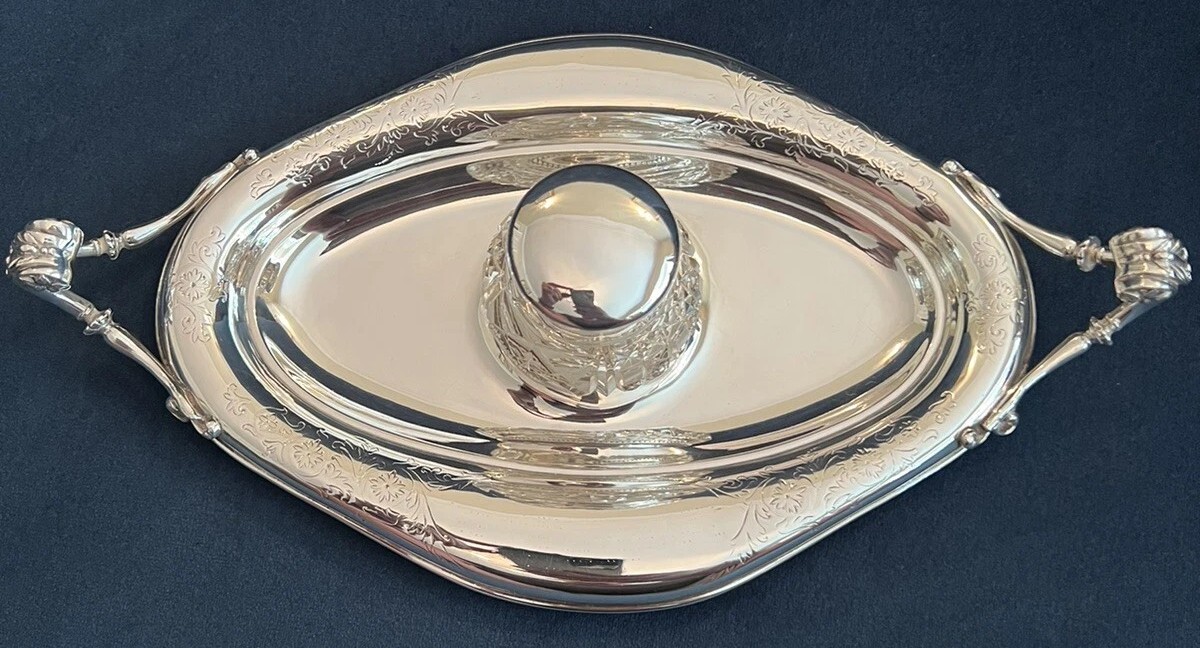
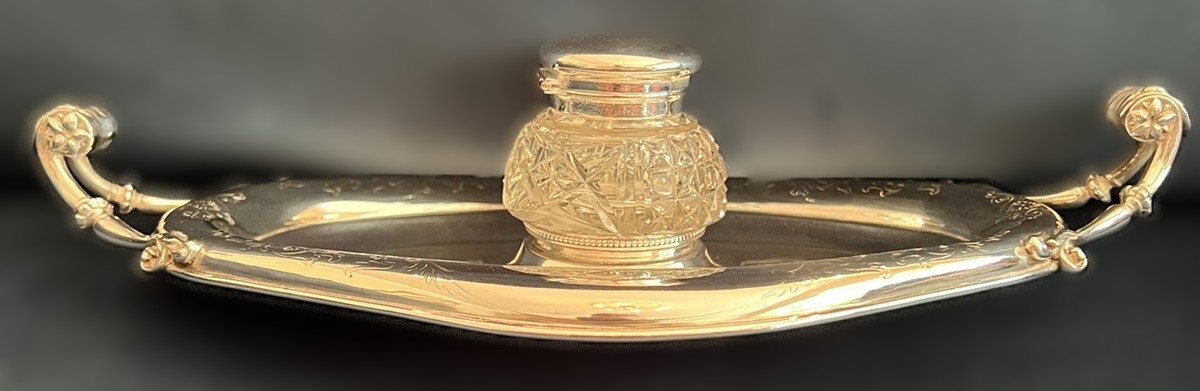
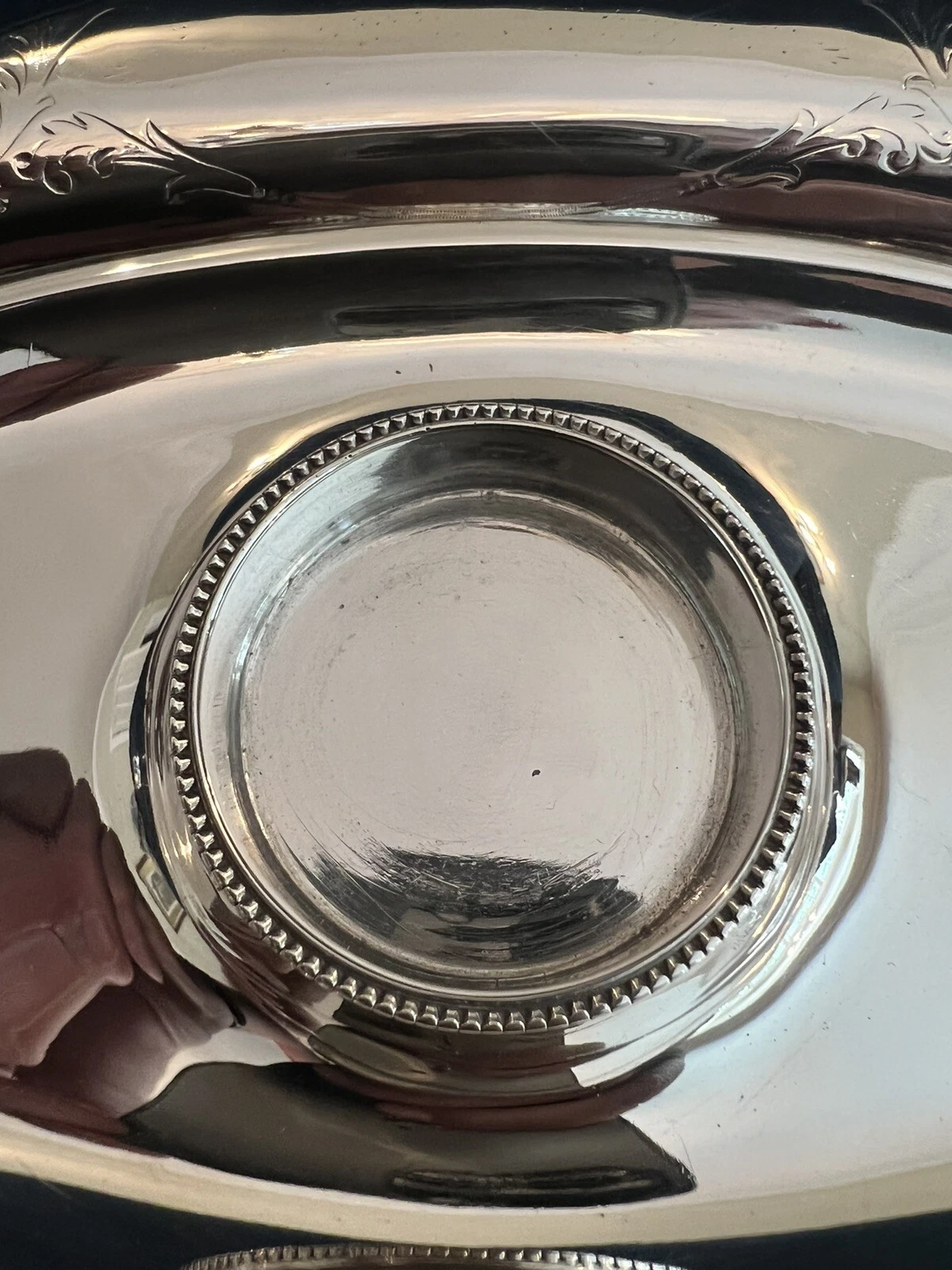
- The Tray (Stand): The base is an elegant, boat-shaped oval tray with raised sides.
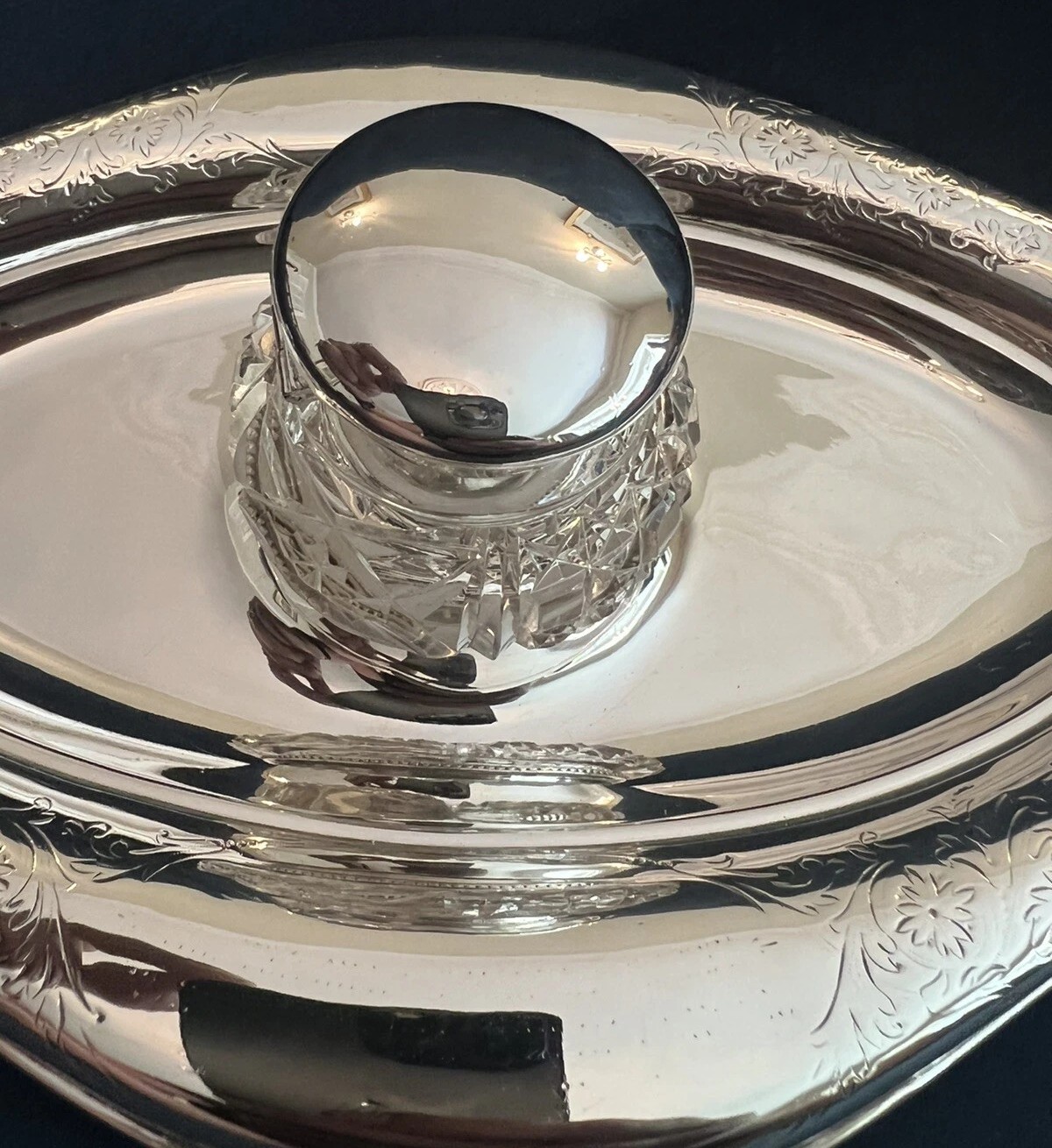
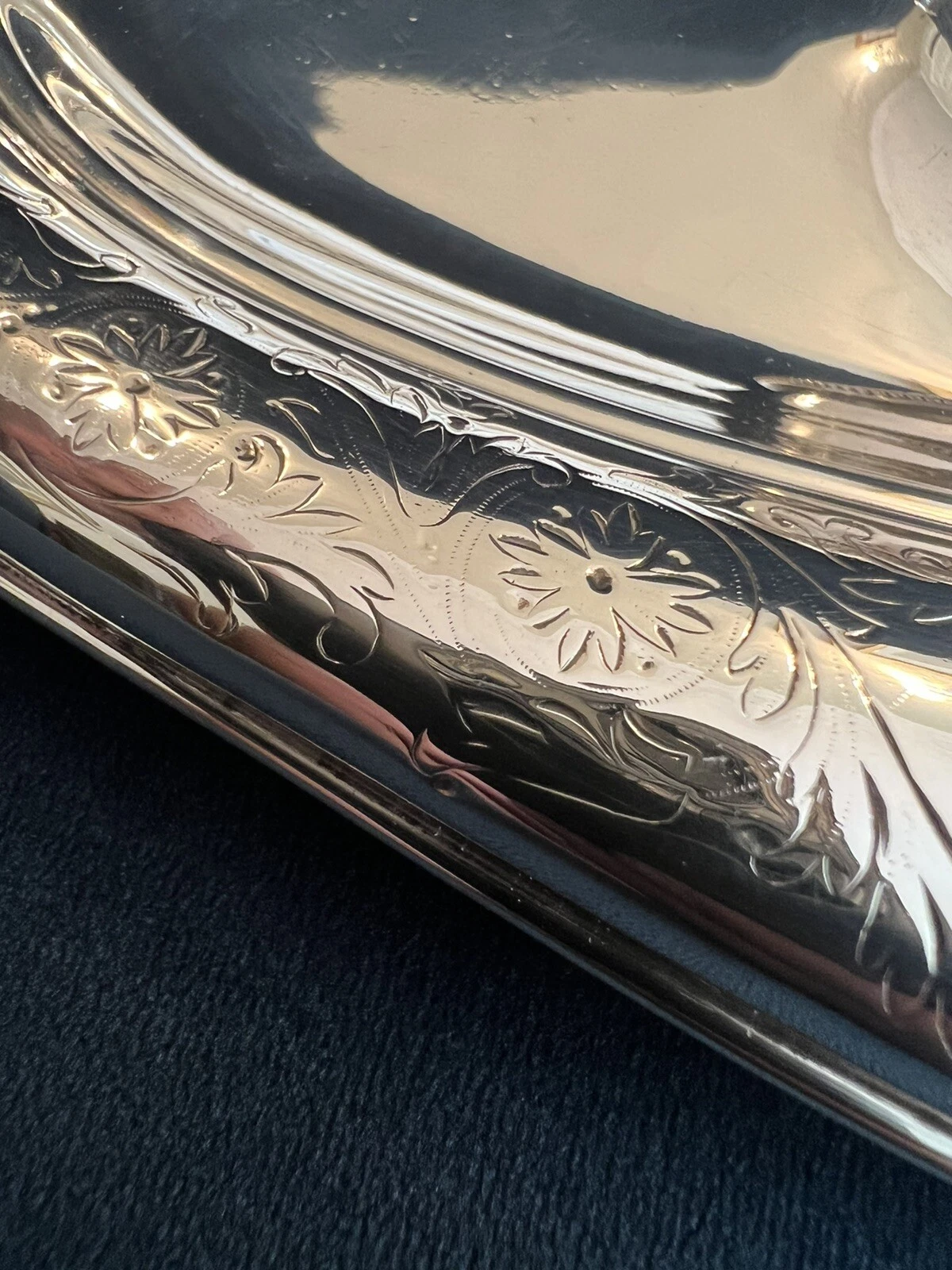
- Decoration: The flat rim features a band of intricate bright-cut engraving depicting floral and foliate (leaf) motifs.
- Central Well: In the center is a raised, silver receiving ring with a beaded border designed to hold the glass inkwell securely in place.
- Handles: The tray is flanked by two cast silver scroll handles with stylized floral terminals.
- The Inkwell:
- Glass: The ink reservoir is made of heavy lead crystal featuring a diamond or “hobnail” cut pattern.
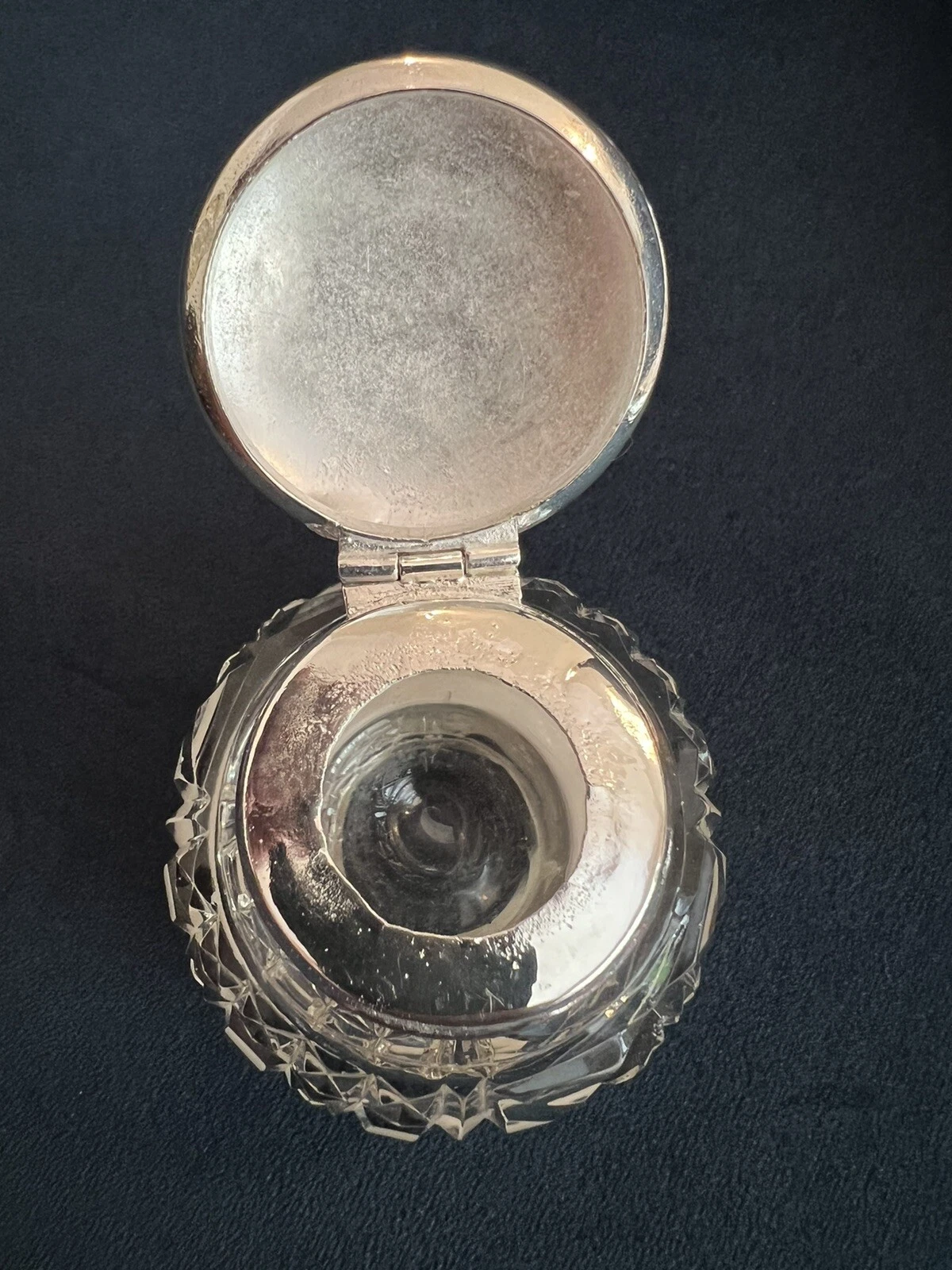
- Mounts: The bottle is topped with a sterling silver collar and a hinged, domed lid. The lid is polished and plain, providing a sleek contrast to the engraving on the tray.
Hallmarks
The hallmarks on the base (and partially on the bottle collar) confirm the item’s history:
- Maker’s Mark: The quatrefoil shape containing initials (E, J, W, & B) belongs to Edward, John & William Barnard. The Barnards are considered among the oldest and most prestigious manufacturing silversmiths in the world.
- Lion Passant: The “walking lion” symbol certifies the metal is Sterling Silver (.925 purity).
- Leopard’s Head: The symbol of the London Assay Office.
- Date Letter: The Gothic lowercase “p” corresponds to the year 1870.
- Duty Mark: The profile of Queen Victoria (the “Queen’s Head”) indicates that the tax on silver was paid. This mark was discontinued in 1890, further verifying the piece’s age.
The history of Edward Barnard & Sons is widely considered one of the longest and most prestigious in the British silver trade. They are often cited as the oldest manufacturing silversmith firm in the world, with a continuous lineage that spanned over 300 years.
Here is the history of the firm that created this 1870 inkstand:
- Origins (c. 1680–1829)
While the name “Barnard” became famous in the 19th century, the business actually began much earlier.
- The Nelme Era: The firm’s roots trace back to Anthony Nelme, a prominent silversmith who established his workshop in London around 1680.
- The Chain of Succession: The business passed through several famous hands throughout the 18th century, including Francis Nelme, Thomas Whipham, and Charles Wright.
- The Barnard Connection: In 1786, the business amalgamated with Thomas Chawner. A young apprentice named Edward Barnard (I) became the foreman of this new partnership. Over the next few decades, Barnard rose from foreman to manager, and finally to partner.
- The “Edward Barnard & Sons” Era (1829–1910)
This is the period when this inkstand was made.
- Establishment: In 1829, after the withdrawal of his previous partner Rebecca Emes, Edward Barnard (I) became the sole proprietor. He brought his three sons—Edward (II), John, and William—into the business, officially trading as Edward Barnard & Sons.
- The Victorian Powerhouse: The firm became a dominant force in Victorian silver. Unlike retail shops (like Tiffany or Asprey) that sold directly to the public, Barnard & Sons was primarily a manufacturing firm. They supplied high-quality silver to many of the most prestigious retailers in London, including Garrard & Co. and Elkington & Co..
- 1870 Context: By the time this inkstand was hallmarked in 1870, the first generation of “sons” (Edward II and John) had passed away or retired (Edward II died in 1868). The firm was being run by the next generation, including Walter Barnard and John Barnard (II). The mark on this piece likely represents this transition of partners within the family.
- Famous Commissions
The firm was renowned for its technical skill and ability to produce grand, historicist designs (Neo-Classical and Rococo Revival). Their most famous single work is the Lily Font.
- Commissioned by Queen Victoria in 1840.
- It is a large, silver-gilt baptismal font used for the christening of almost every British royal baby since, including King Charles III and Prince William.
- Later Years (1910–2003)
- The firm incorporated as a limited company in 1910.
- In 1977, it became a subsidiary of Padgett & Braham Ltd.
- Despite surviving for three centuries, the firm finally closed its doors in 2003.
Sold for $230 in November 2025
Content disclaimer. The information posted is the owner’s best knowledge and may not have been vetted by the SOIC. We welcome comments, corrections, and additions, working to make our website information comprehensive and accurate.
Join the Society of Inkwell Collectors (SOIC) – it’s free!
Founded in 1981 as a non-profit organization,
we are documenting inkwells (and accessories).
We’re here to help and inform!