

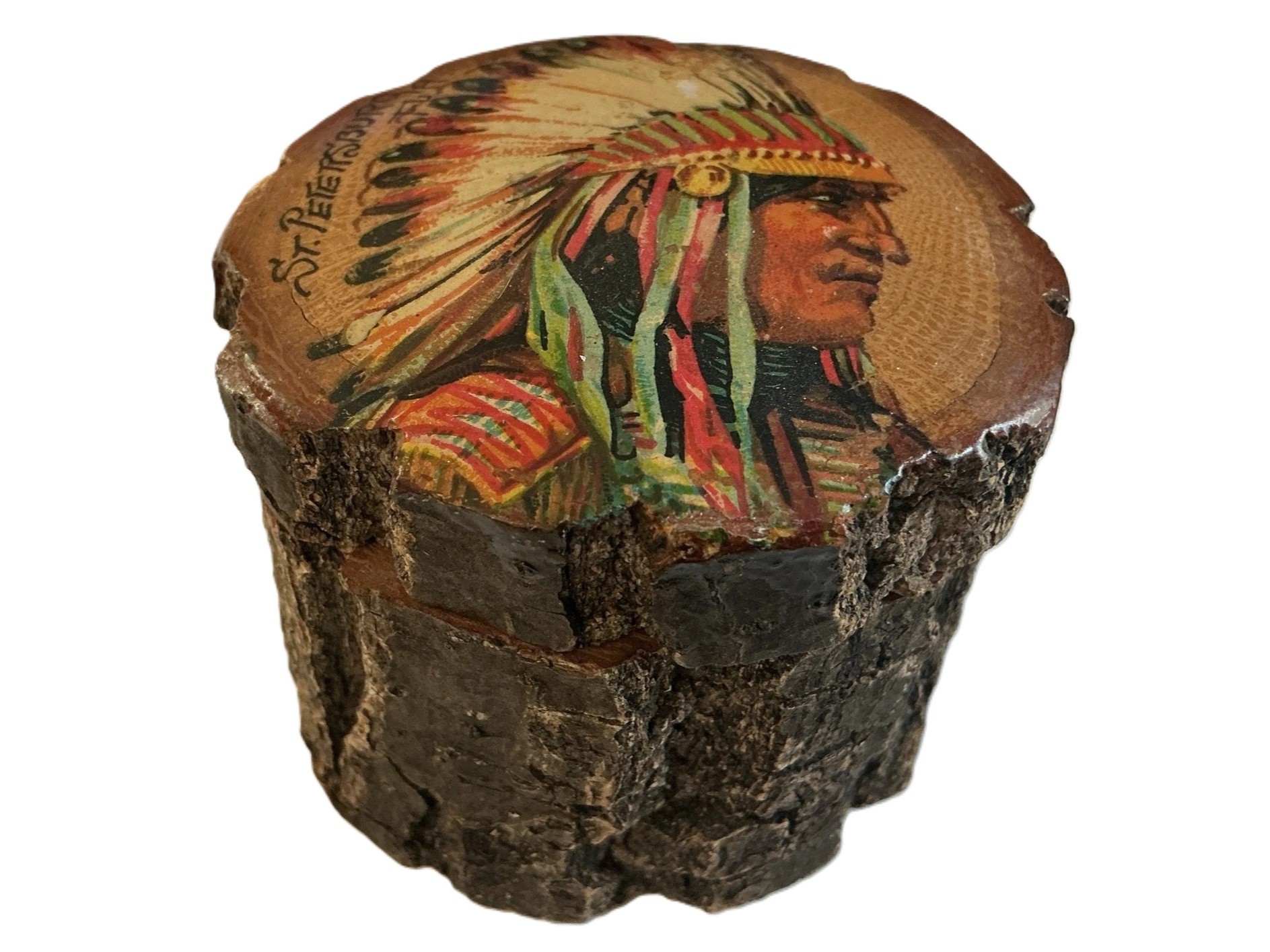
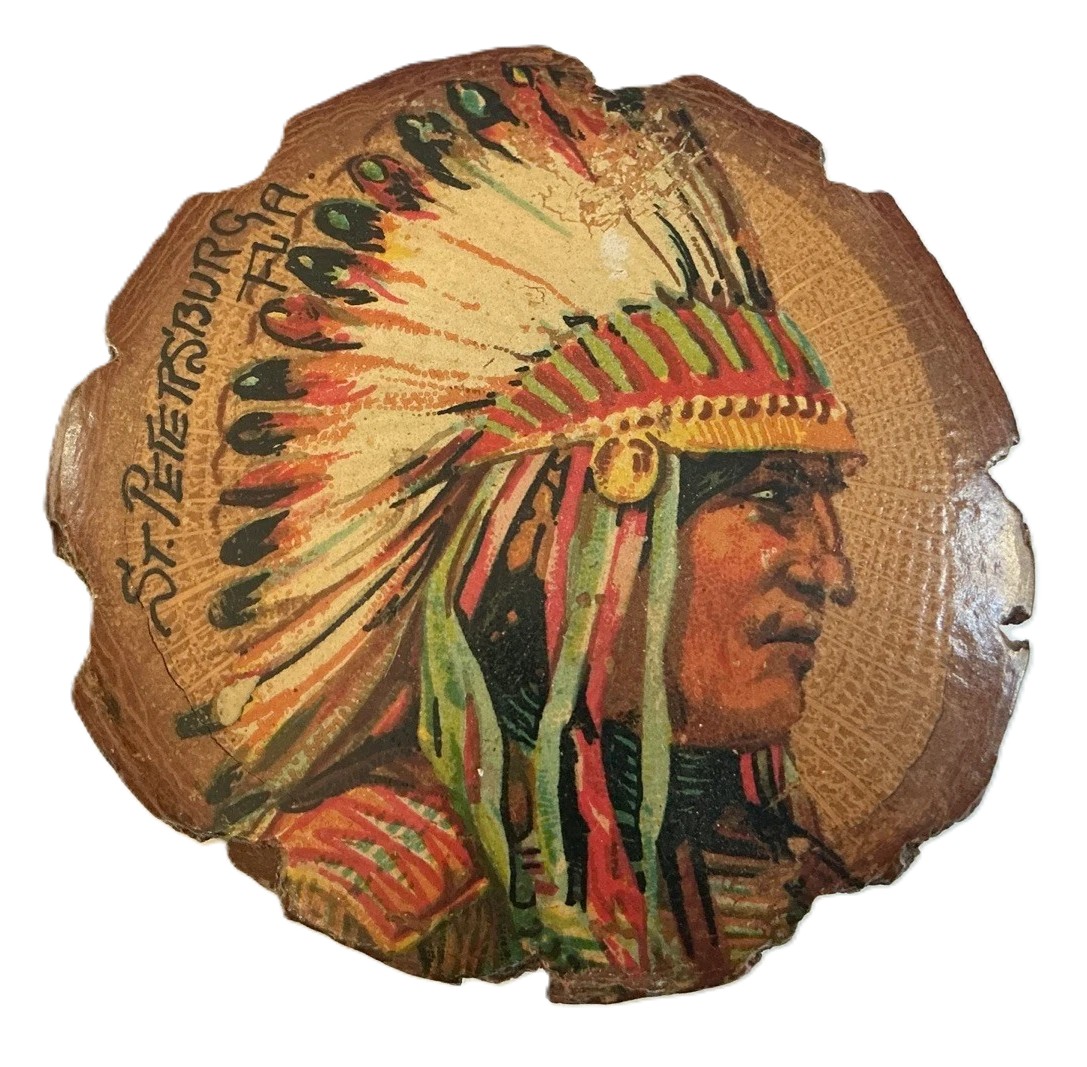


Souvenir Inkwell – St. Petersburg, Florida
| Categories | Souvenir |
| Type | Native American Indian |
| Material | Wood |
| Markings | St. Petersburg |
| Manufacturer | Undetermined |
| Origin | United States |
| Date or Era | circa 1930 |
| Measuring | 3” diameter; 2 ½” high |
This is an example of a “Rustic Log” souvenir inkwell, a popular category of roadside Americana from the early-to-mid 20th century.
The Imagery: A Plains Chief in Florida
The Native American depicted is not representative of a Florida tribe.
- The Headdress: The figure is shown wearing a full feathered war bonnet, which is the traditional regalia of the Plains Indians (such as the Sioux/Lakota).
- Florida Tribes: The Seminole and Miccosukee tribes of Florida historically wore distinctive turbans or patchwork clothing, not Plains-style feather headdresses.
- Why the mismatch? During the “Golden Age of Souvenirs” (roughly 1920s–1950s), manufacturers used generic stock images that represented “Native Americana” to the general public. To a tourist in 1935, a “Chief” was a symbol of the Great Outdoors and the exotic, whether they were in St. Petersburg, Florida, or the Adirondacks. It wasn’t until later that souvenirs became more geographically specific with flamingos, alligators, or palm trees for Florida souvenirs.
The Wood and Construction
This piece was made from a natural tree branch.
- Wood Variety: Based on the deep, furrowed texture of the bark, this is likely a branch from a hardwood tree, such as Oak or possibly Elm.
- The Transfer: The image of the Chief and the text “St. Petersburg, FLA” are color lithographs or “decals” (transfers) applied to the sanded flat cross-section of the wood and then varnished.
- Production: While it feels “hand-crafted,” these were mass-produced by souvenir companies (often based in the Northeast, like New Hampshire) and shipped to tourist kiosks across the country.
Age and Condition
- Estimated Age: 1930s–1940s. The style of the brass hinge and the specific type of printing used for the “St. Petersburg” text are hallmarks of the pre-WWII Florida tourism boom.
- The Insert: The flared rim and the mold marks on the bottom of the insert confirm it is a standard industrial insert from that era.
Note: The rough bark and natural aesthetic were meant to appeal to the “back to nature” movement of early auto-tourists who were just beginning to explore the country by car.
Sold for $27 in February 2026
Content disclaimer. The information posted is the owner’s best knowledge and may not have been vetted by the SOIC. We welcome comments, corrections, and additions, working to make our website information comprehensive and accurate.
Join the Society of Inkwell Collectors (SOIC) – it’s free!
Founded in 1981 as a non-profit organization,
we are documenting inkwells (and accessories).
We’re here to help and inform!