


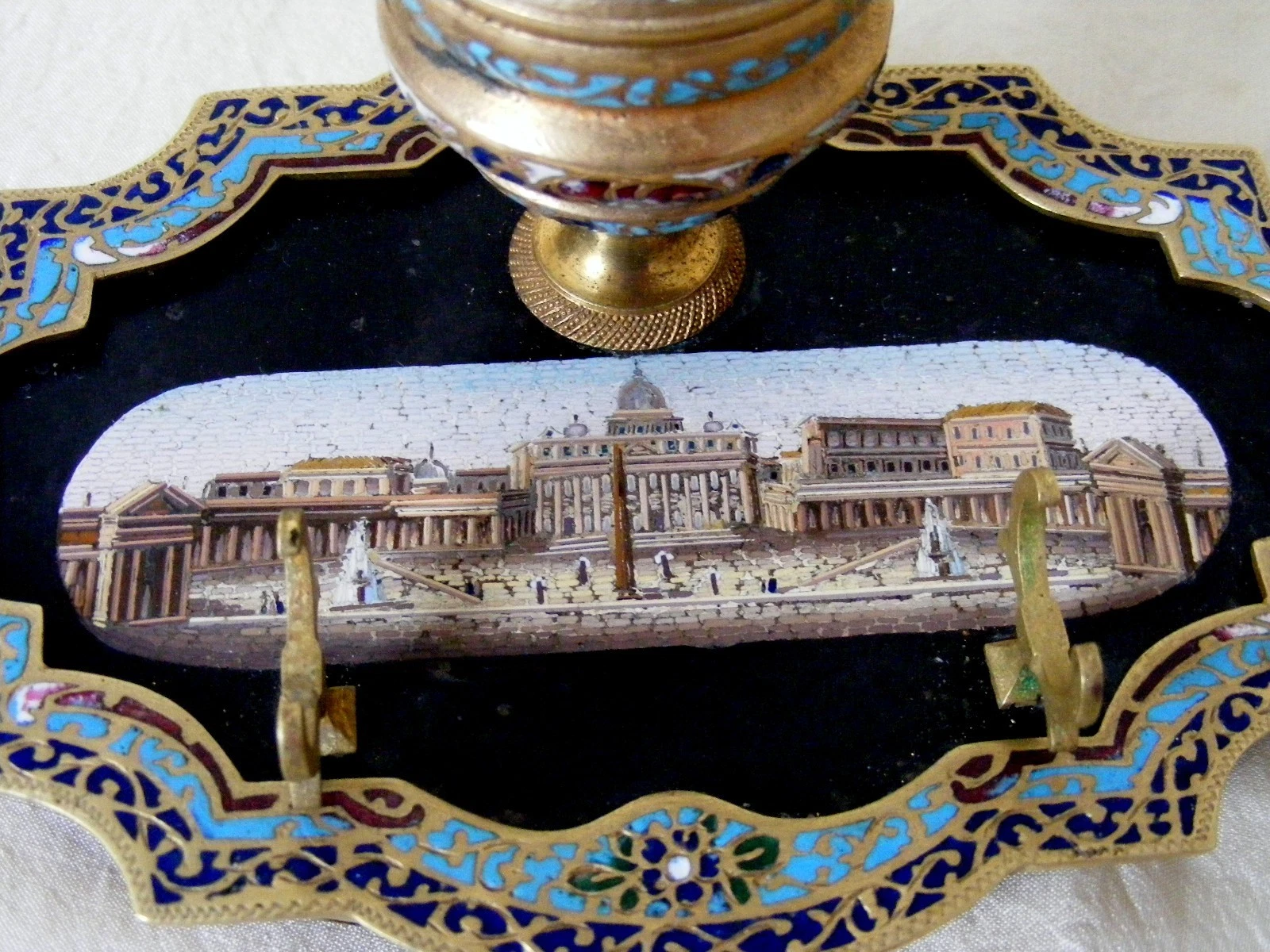




Souvenir Inkstand Depicting St. Peter’s Square
| Categories | Enameled Metal, Souvenir |
| Type | Champlevé |
| Material | Enameled Brass/Bronze/Metal, Glass |
| Markings | Unmarked |
| Manufacturer | Undetermined |
| Origin | Italy |
| Date or Era | circa 1870 |
| Measuring | 6 ½” x 4 ¼” x 3 ½” high |
This 19th-century “Grand Tour” souvenir was likely made in Italy (specifically Rome) between 1860 and 1890. It represents a high-end marriage of two distinct decorative arts: Roman Micro-mosaic and French-style Champlevé enamel.
History and Purpose
This inkstand was intended as a high-quality souvenir. During the 18th and 19th centuries, wealthy travelers—primarily from Britain and America—embarked on the “Grand Tour” of Europe. Rome was the crowning destination, and travelers frequently purchased objects featuring iconic views of the city.
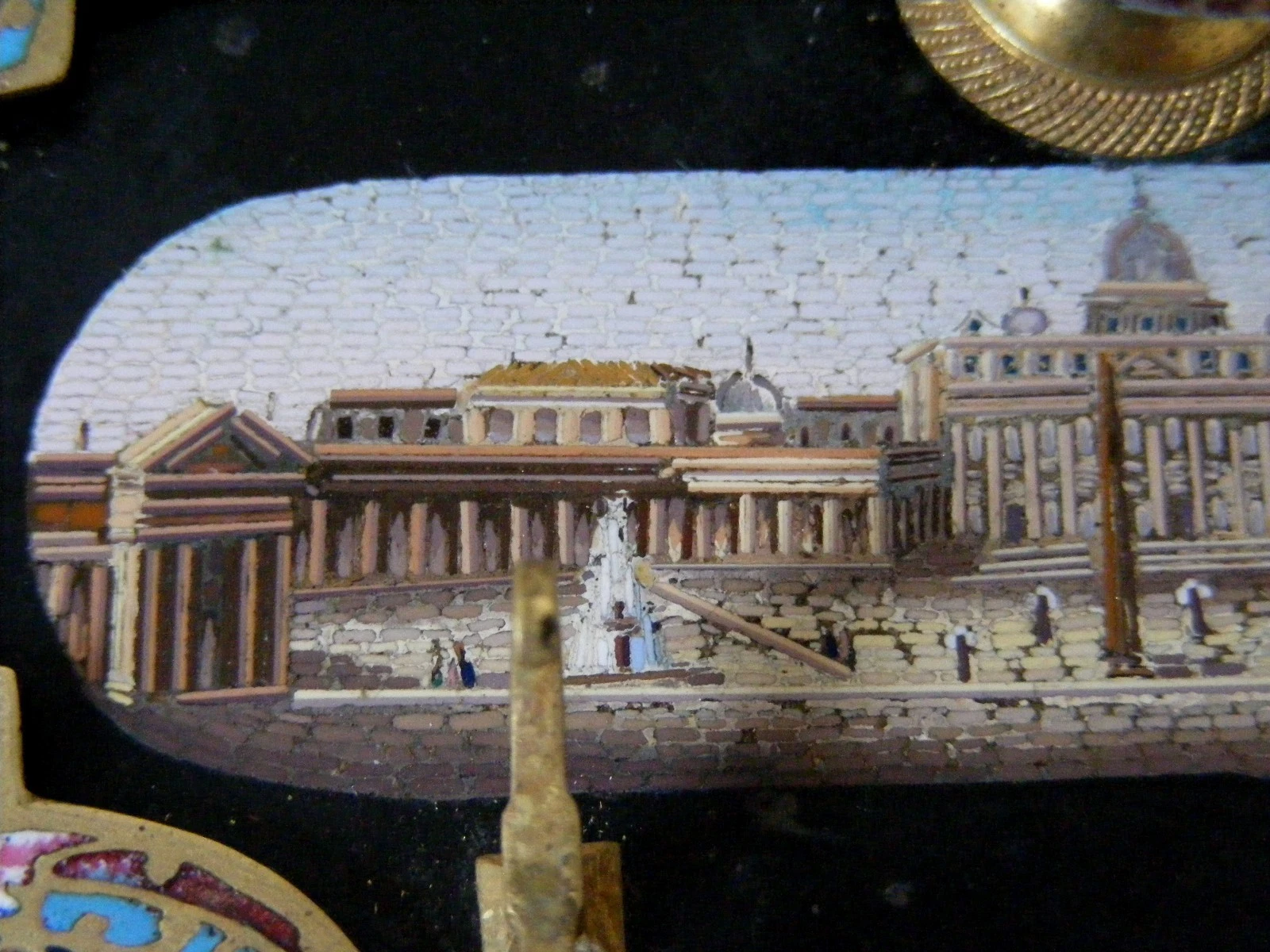
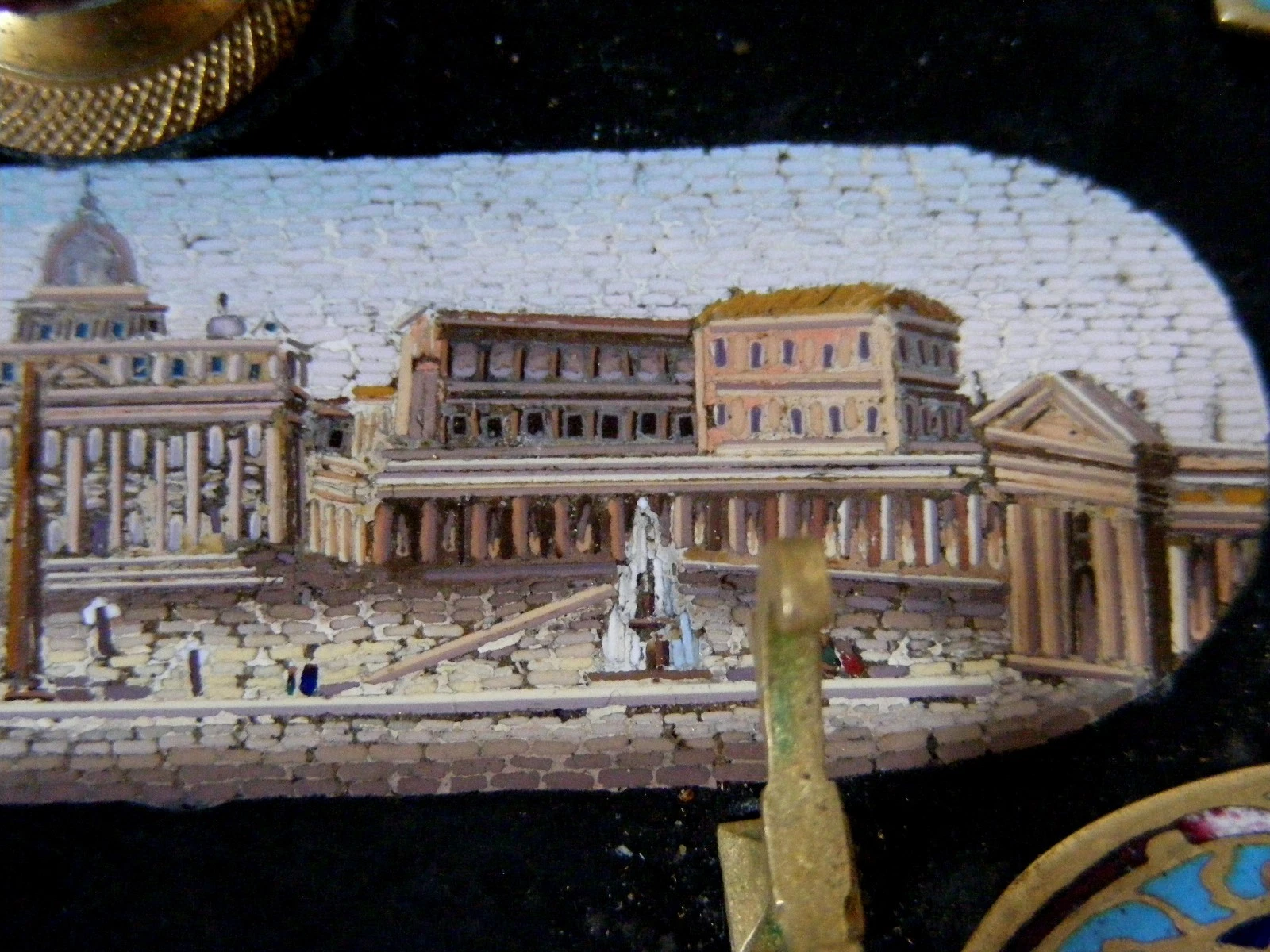
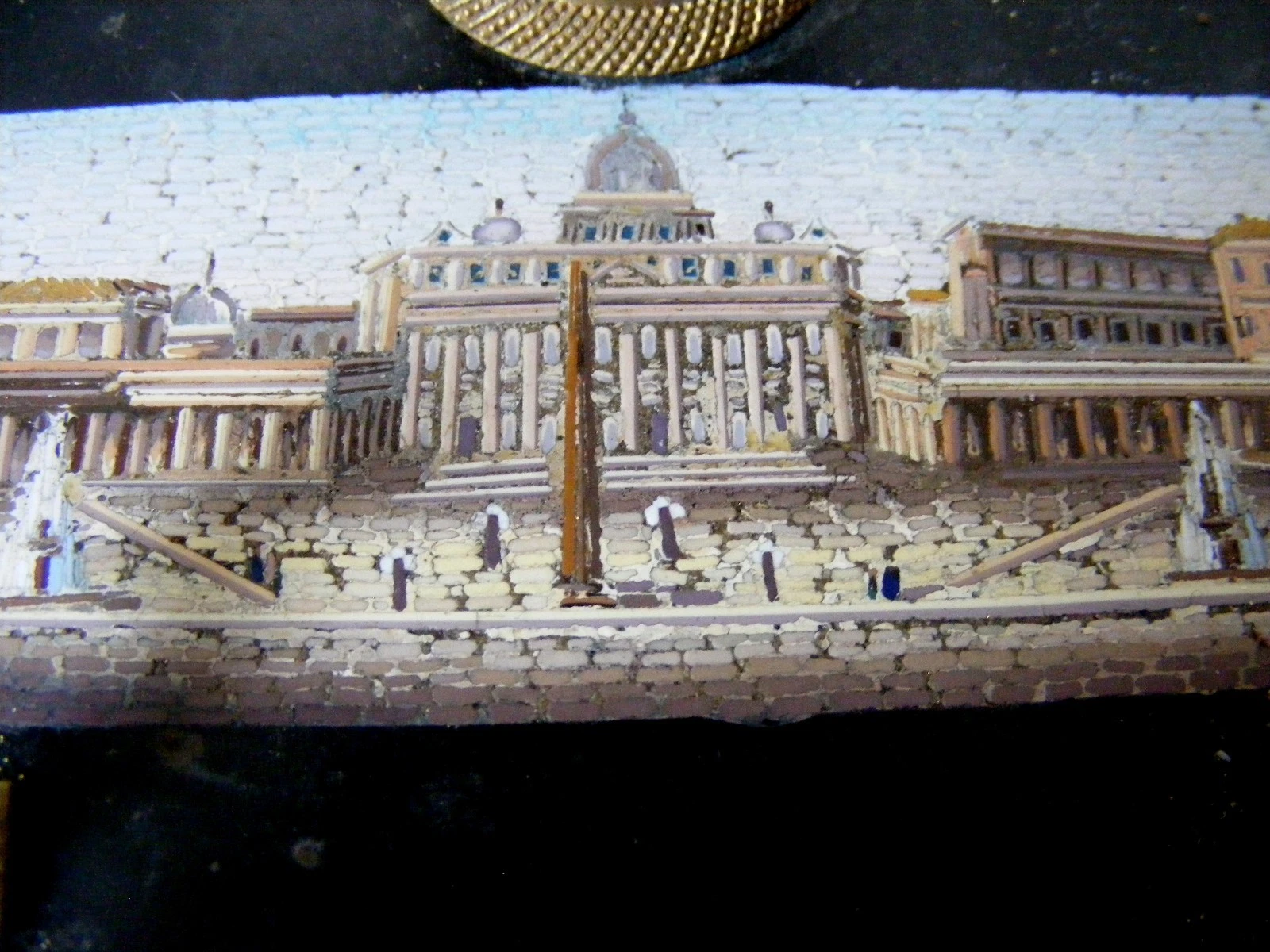
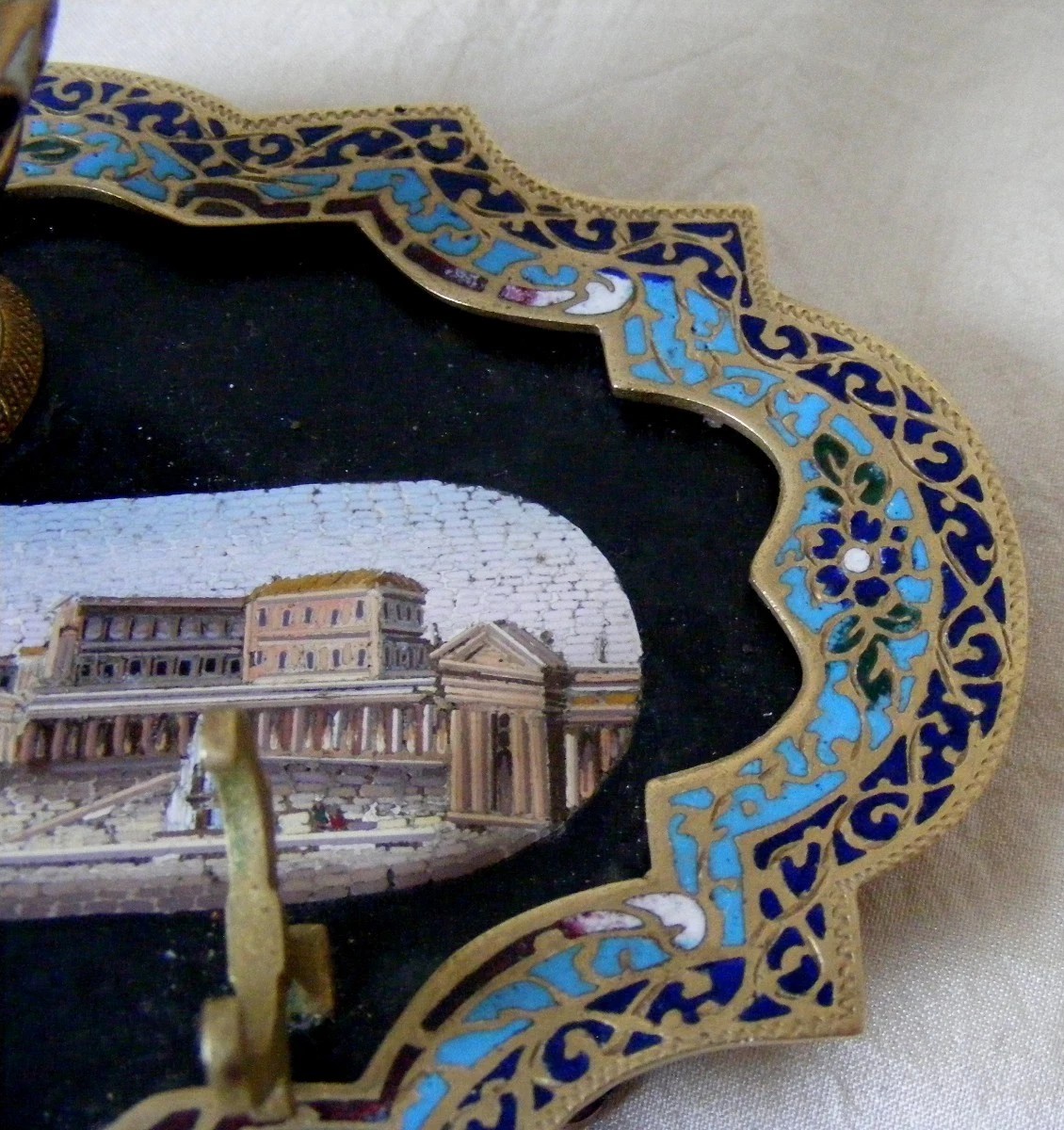
The central mosaic depicts St. Peter’s Square (Piazza San Pietro), including the central Egyptian obelisk and the flanking fountains. Pieces like this were often produced by the Vatican Mosaic Studio (established in the 16th century) or private workshops in Rome, such as those of the famous mosaicist Giacomo Raffaelli.
The Manufacturing Process
This item was made using two incredibly labor-intensive techniques:
- Micro-Mosaic (Micromosaico): The central scene is not painted; it is composed of thousands of tiny, hand-cut glass threads called filati.
- Glass was melted and pulled into thin, colored rods.
- These were snapped into minute “tesserae.”
- A craftsman used tweezers to set these pieces into a slow-drying oil-based mastic (adhesive) within the recessed “black slate” panel.
- The background is likely Noir Belge (Black Belgian Marble) or a dense black slate, which provided the high-contrast “frame” for the scene.
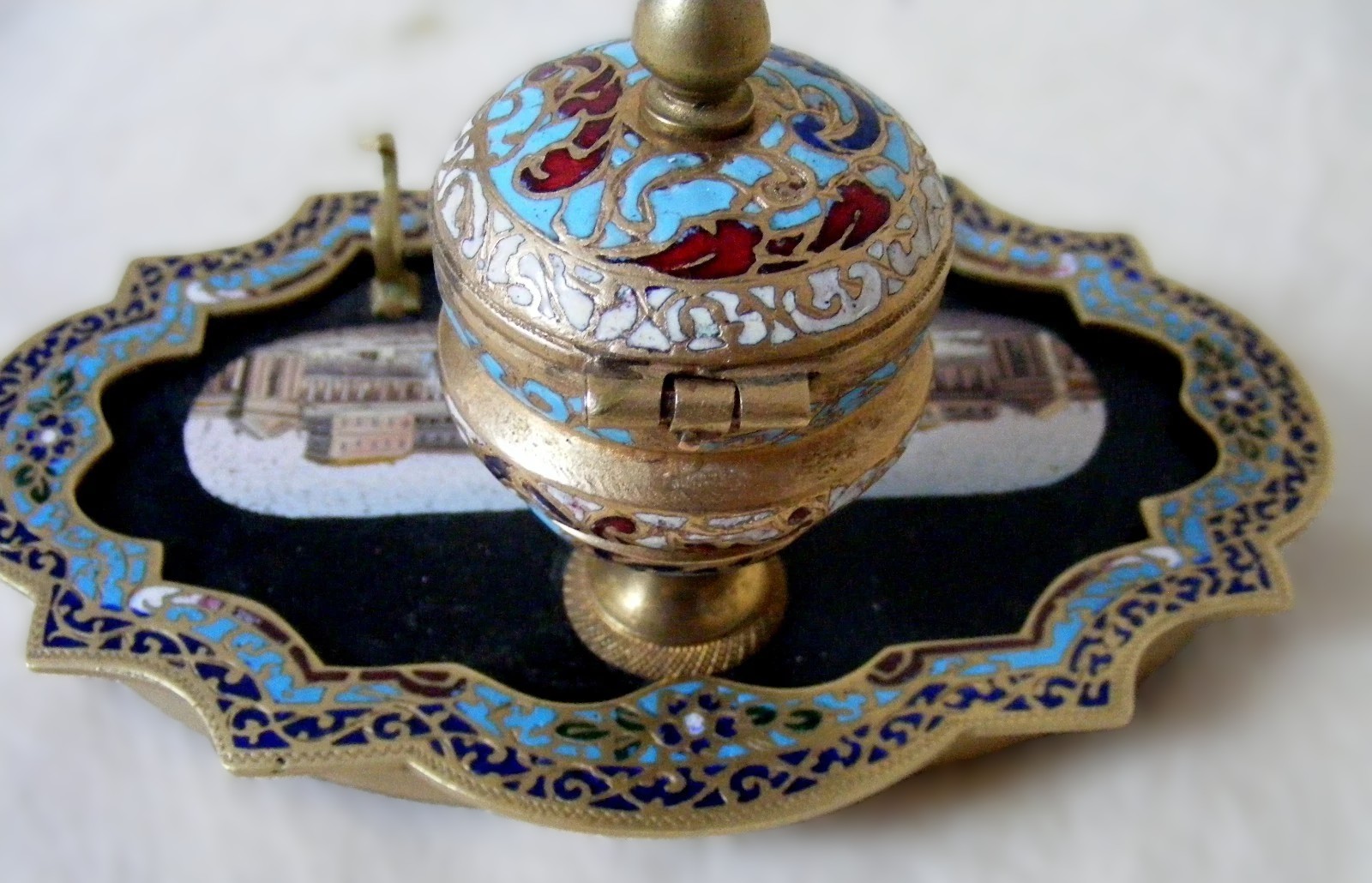
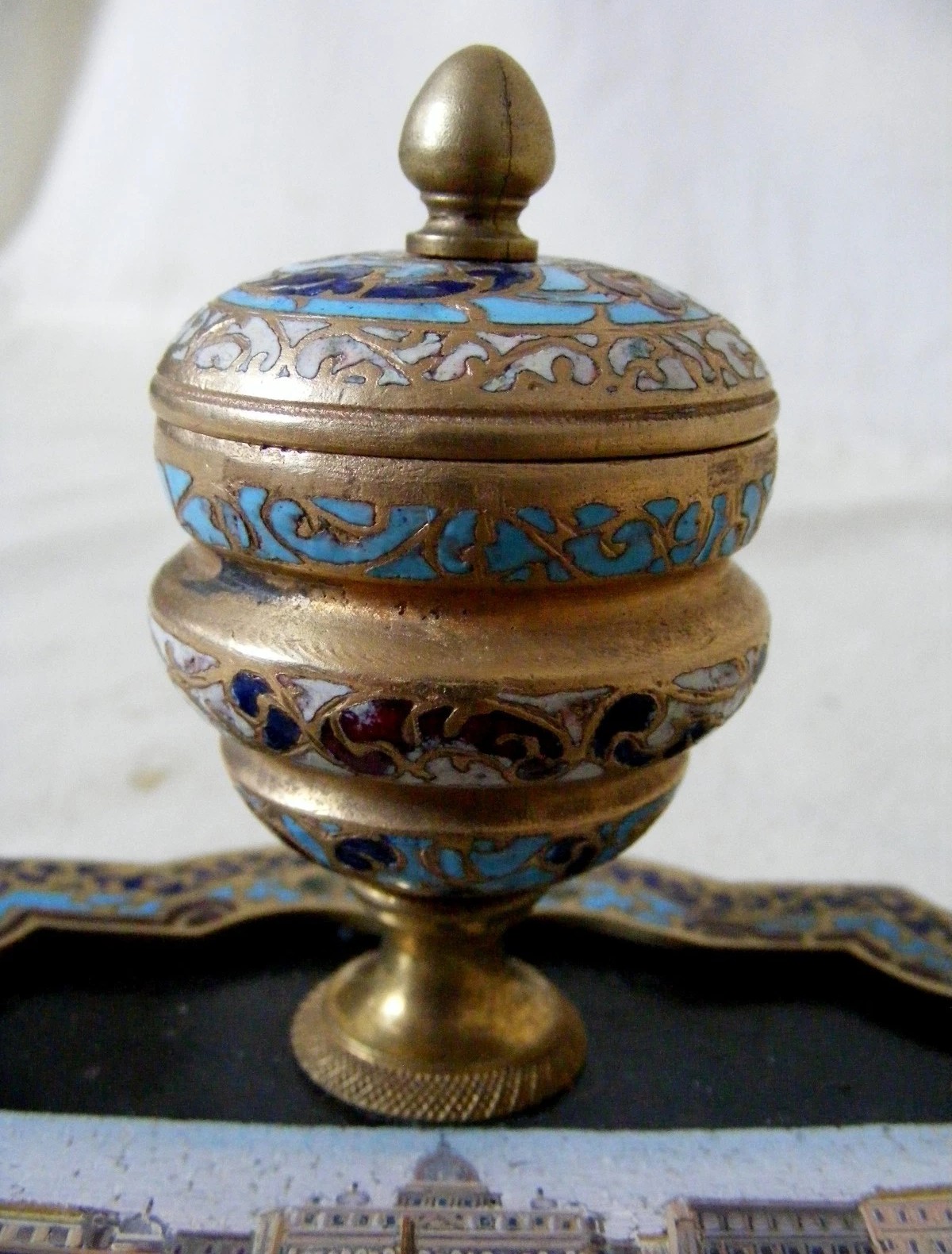
- Champlevé Enamel: This refers to the colorful decoration on the brass stand and the inkwell urn.
- The metal surface (bronze on this piece) was etched or carved to create shallow “cells.”
- Powdered glass (enamel) in shades of turquoise, cobalt, and garnet was packed into these cells.
- The piece was fired in a kiln until the glass fused to the metal.
- Finally, it was ground down and polished until the metal lines and the enamel were perfectly flush.
Features
- Inkwell Insert: Missing
- Pen Holder: The two “hooks” or rests in front of the mosaic were designed to hold a single dip pen (quill or metal nib holder), displaying it horizontally across the view of the Vatican.
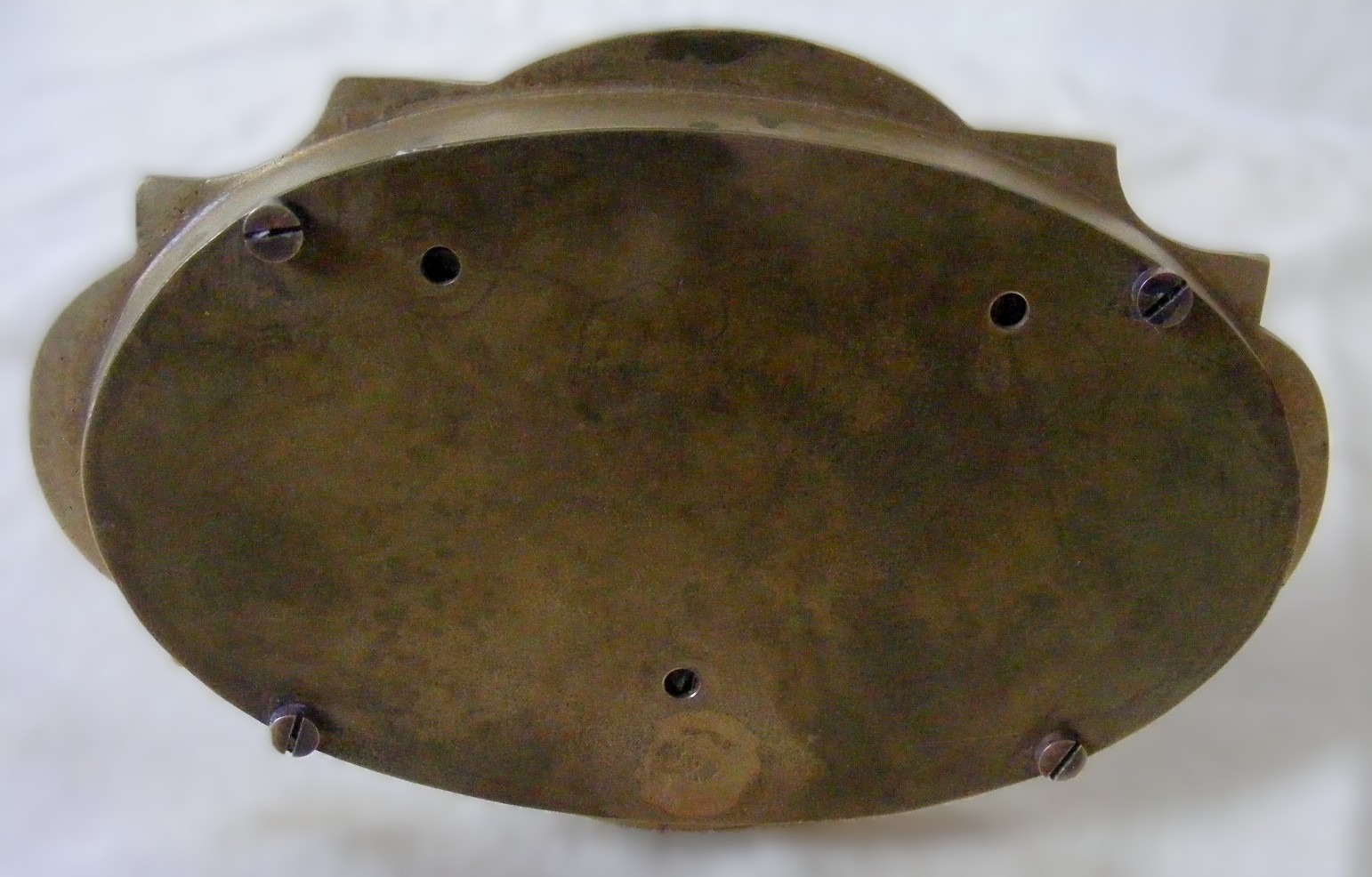
- Base: The underside shows a simple flat metal plate secured with screws. This is typical of 19th-century construction, allowing the various components—the enamel frame, the slate panel, and the inkwell—to be tightened or replaced.
Summary Table
| Feature | Details |
| Origin | Rome, Italy (Metalwork potentially French) |
| Era | Mid-to-late Victorian (c. 1870s) |
| Materials | Gilt bronze, glass (smalti), black marble/slate |
| Subject | St. Peter’s Square, Vatican City |
| Rarity | High (Champlevé and micro-mosaic combinations are prized) |
Sold for $650 in March 2026+
Content disclaimer. The information posted is the owner’s best knowledge and may not have been vetted by the SOIC. We welcome comments, corrections, and additions, working to make our website information comprehensive and accurate.
Join the Society of Inkwell Collectors (SOIC) – it’s free!
Founded in 1981 as a non-profit organization,
we are documenting inkwells (and accessories).
We’re here to help and inform!