

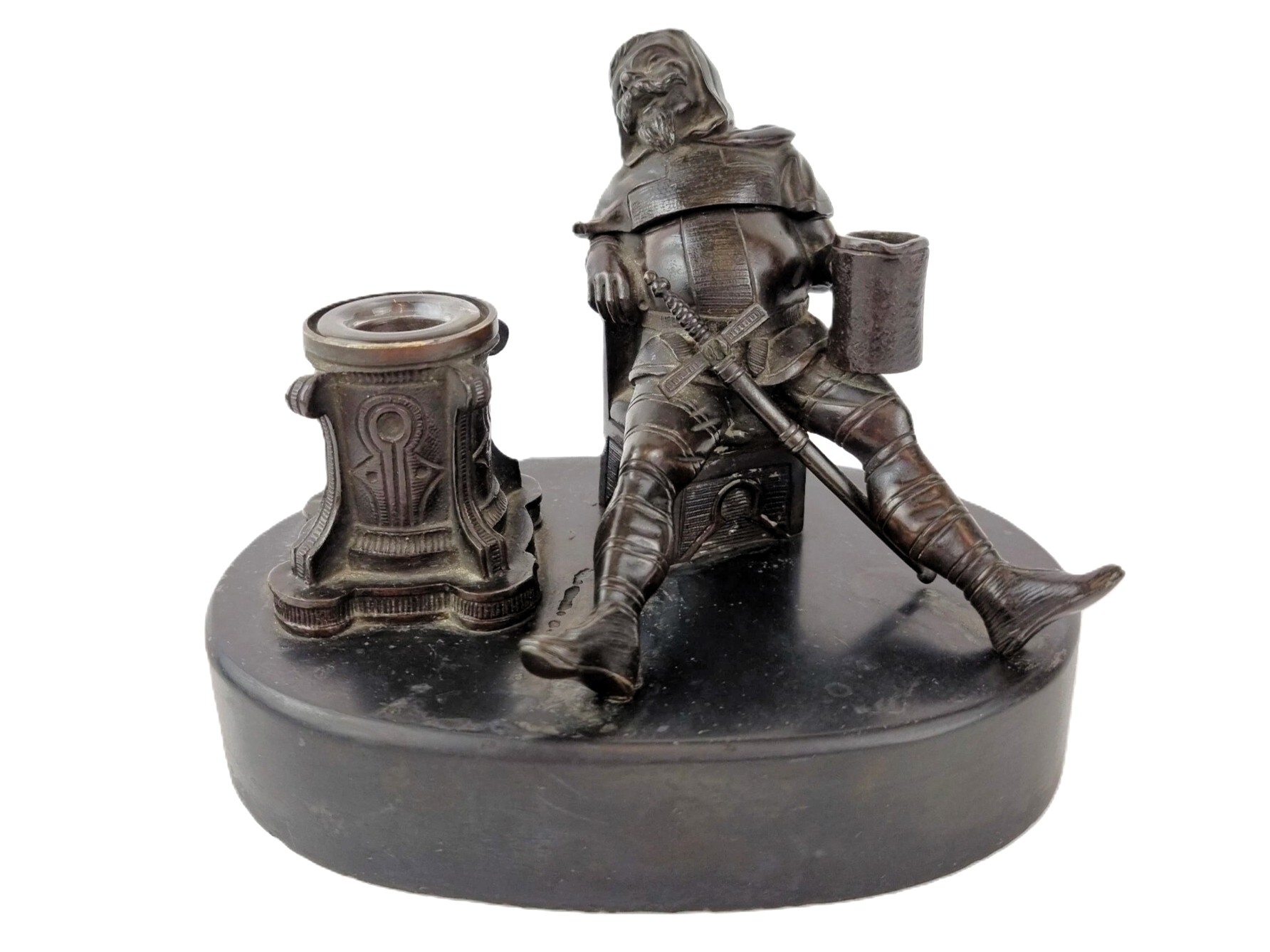






Sir John Falstaff Figural Inkstand
| Categories | Figural - Mythology; Literature; Religion; Fictional |
| Type | Literature |
| Material | Bronze |
| Markings | Unmarked |
| Manufacturer | Undetermined |
| Origin | Undetermined |
| Date or Era | circa 1890 |
| Measuring | 5 ⅞” x 4” x 4 ½” high |
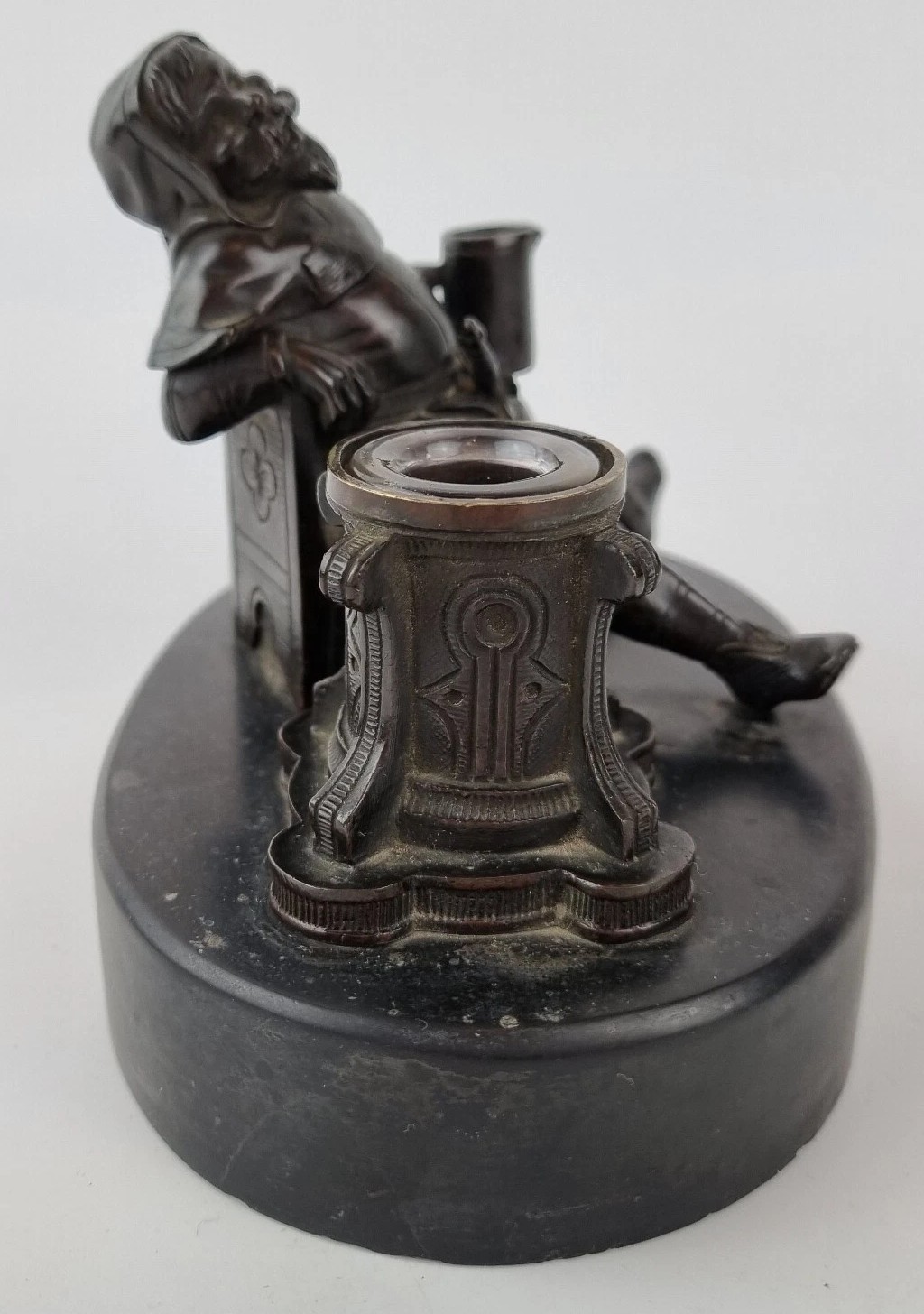
This bronze figural inkstand is a humorous piece of “desk-top sculpture” that dates to the late 19th century (circa 1880–1900).
Physical Description
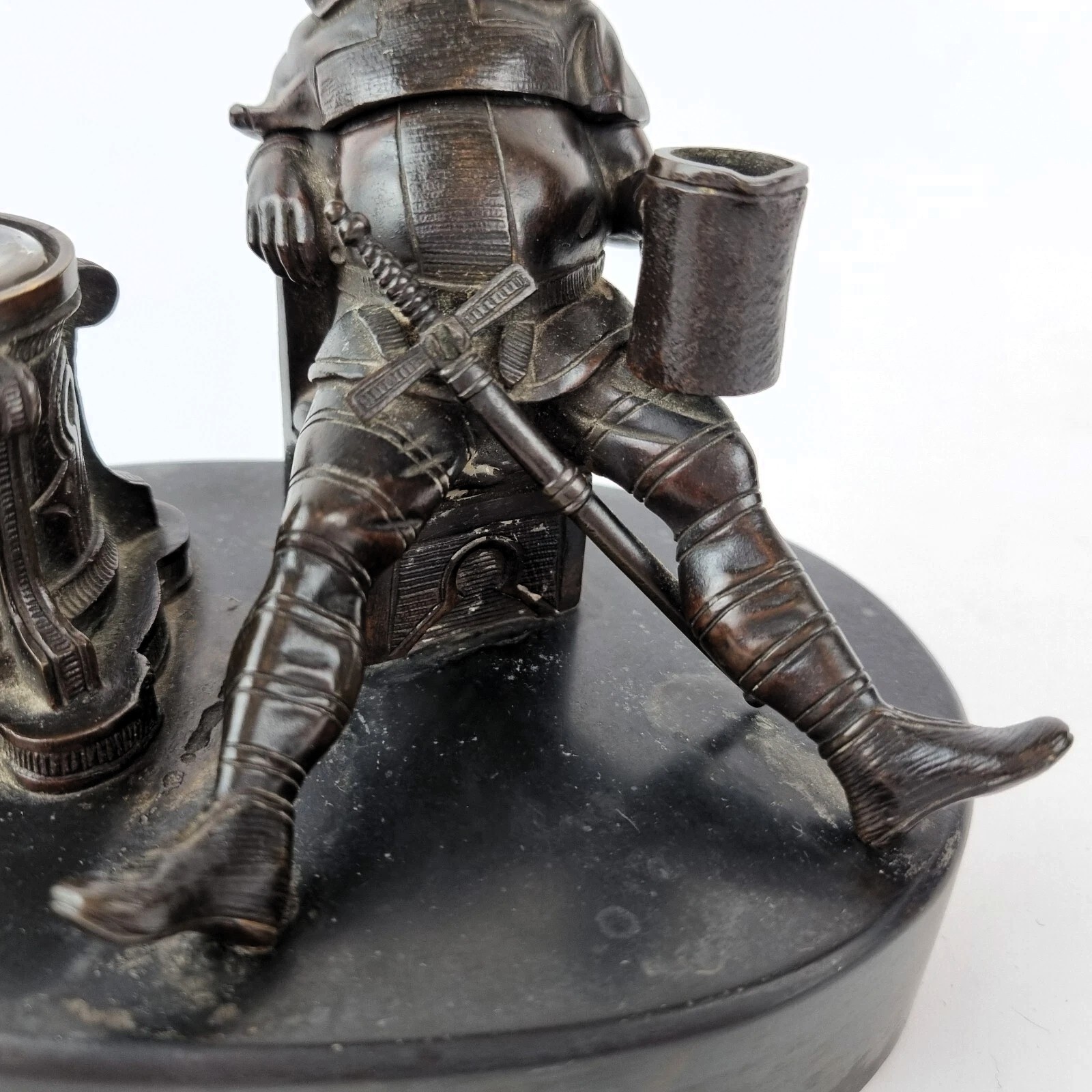
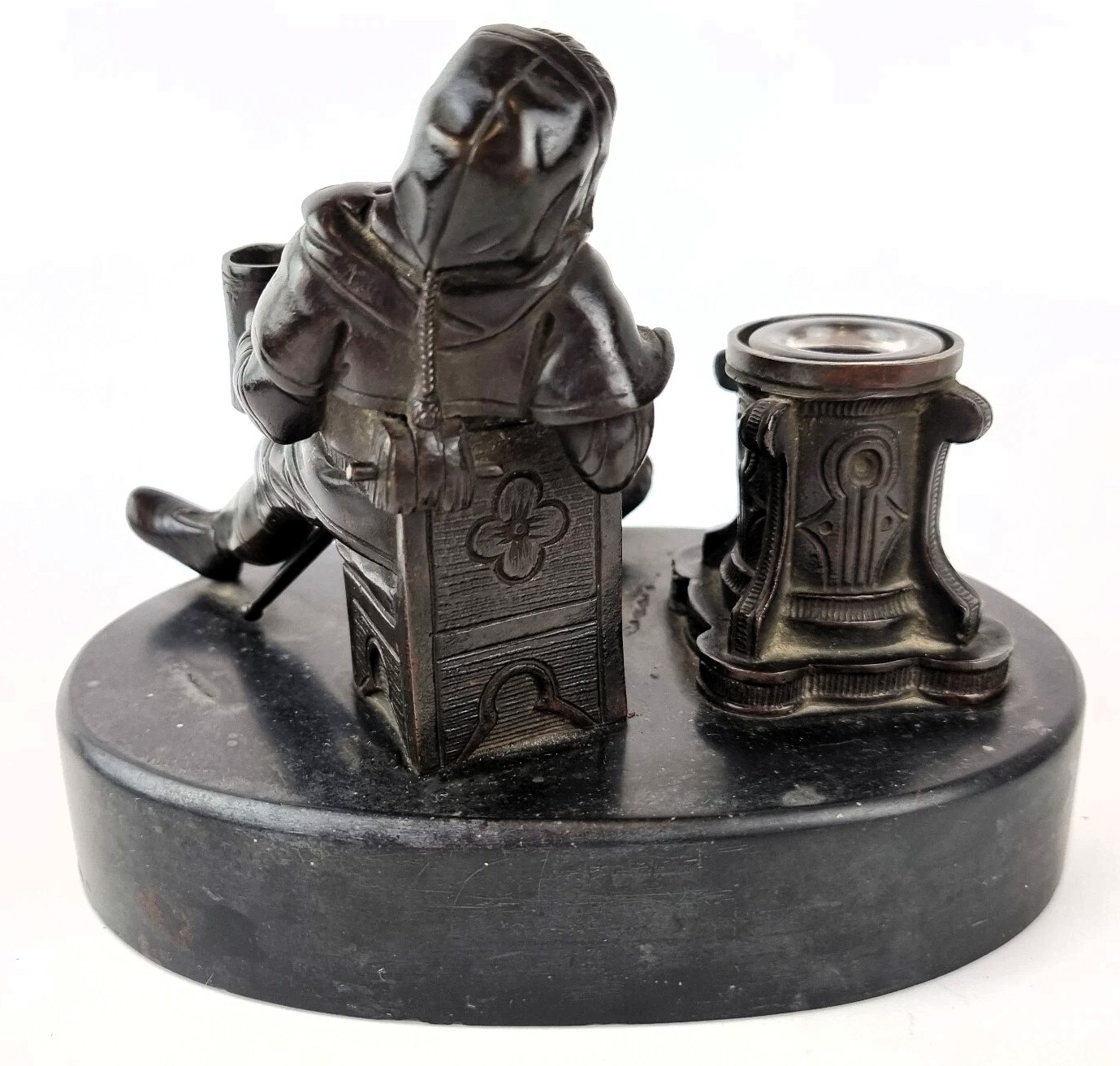
- The Figure: The centerpiece is a patinated bronze figure of a drunken knight slumped in an ornate, high-backed chair. He is depicted with a comical expression, holding a goblet or flagon, and wearing detailed period armor. The boots of his outstretched legs could serve as a pen rest.
- The Mechanism: Uniquely, the knight is hinged at the shoulders, allowing his torso and head to tilt back and reveal a hollow interior.
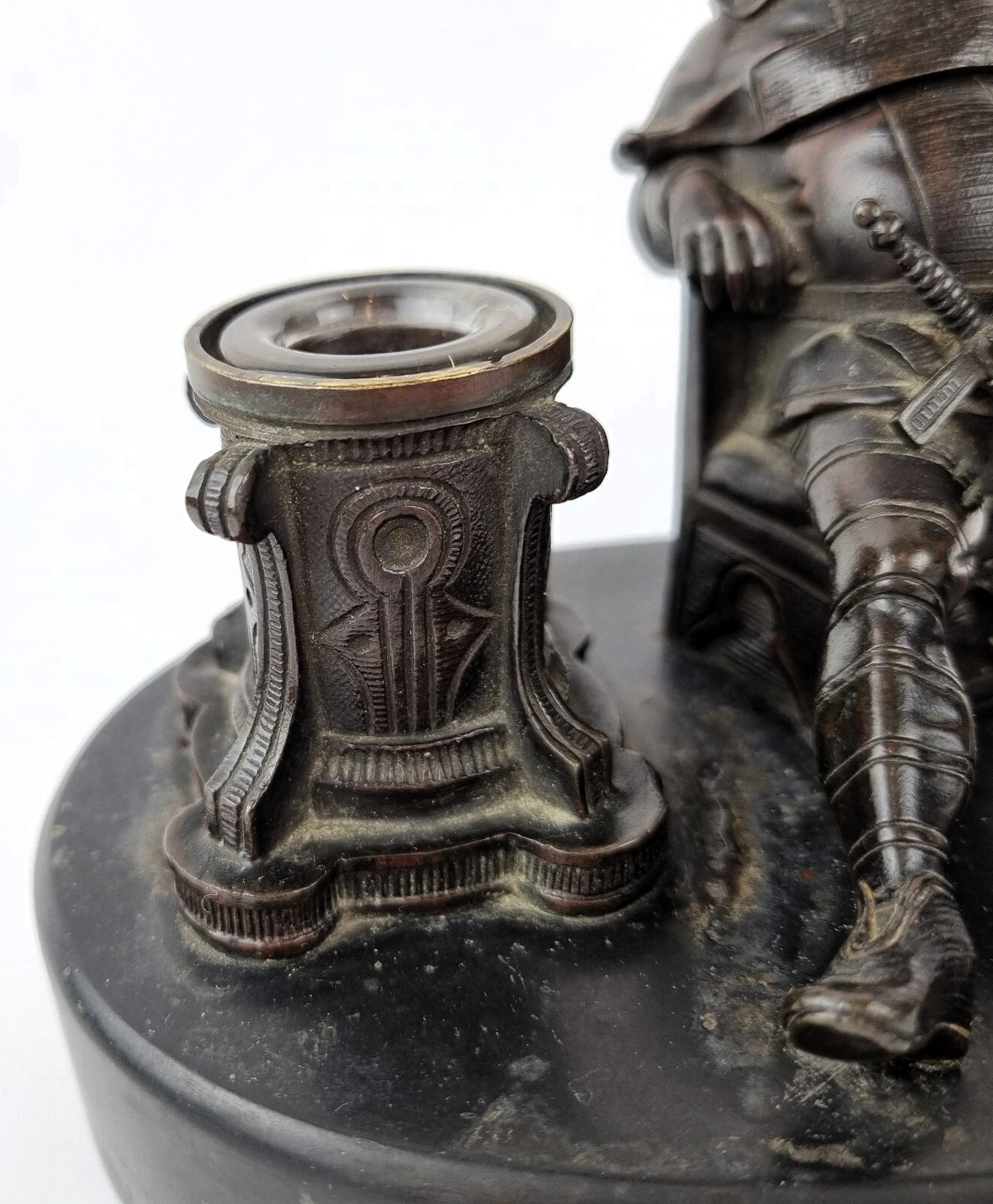
- The Inkwell: The actual ink reservoir is located in a separate housing integrated into the stand next to the chair, featuring a removable glass insert. At one time there likely had been a lid covering the inkwell.
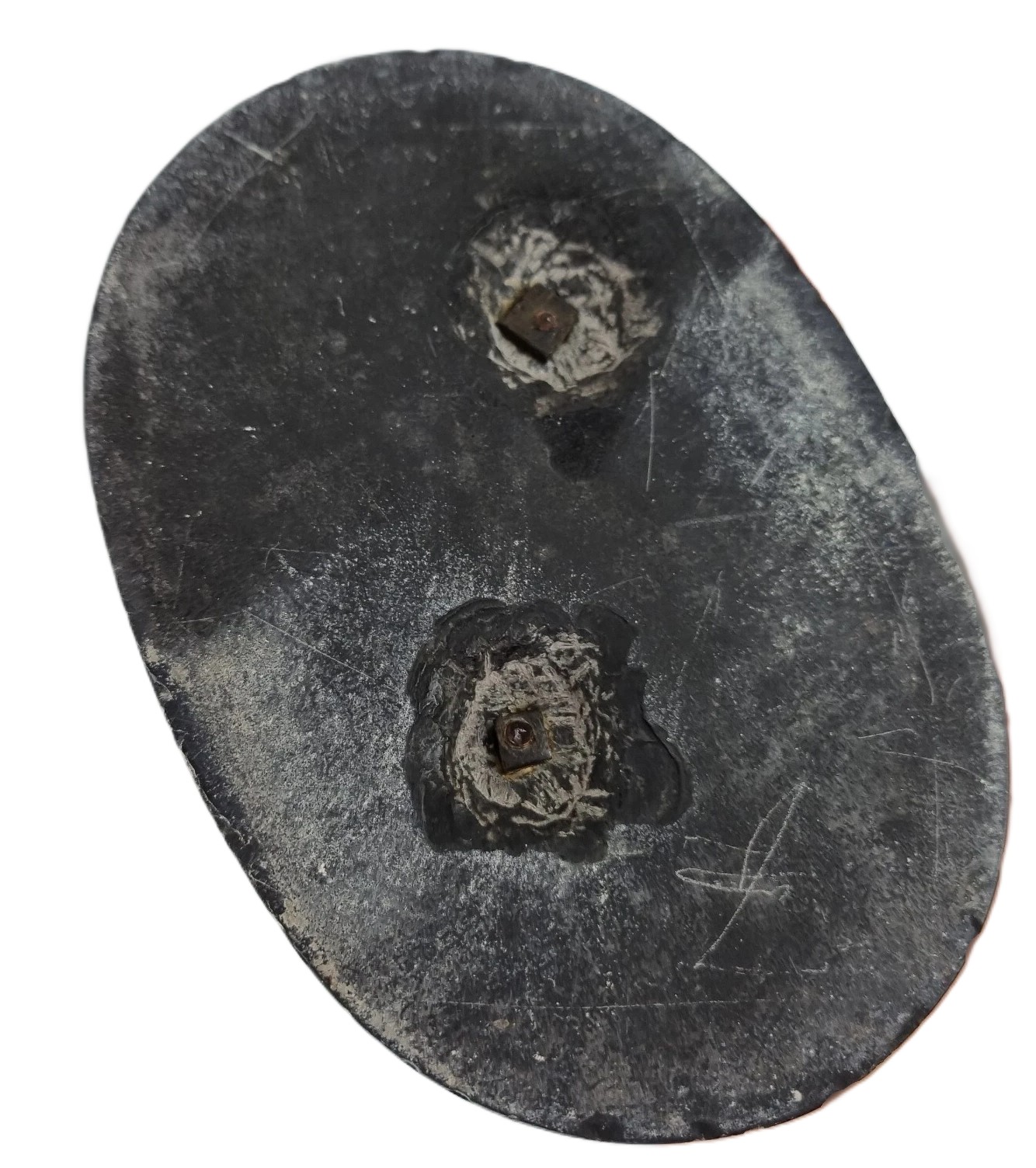
- The Base: The entire bronze assembly is mounted on a heavy, polished slate base.
Character Identification: Is it Falstaff?
The subject is almost certainly Sir John Falstaff, the boisterous, vain, and frequently intoxicated knight from Shakespeare’s Henry IV and The Merry Wives of Windsor.
- Visual Cues: The rotund belly, the knightly attire paired with a look of dissolution, and the presence of a drinking vessel are the standard iconographic traits used to portray Falstaff in Victorian decorative arts.
- Popularity: Falstaff was an immensely popular figure for 19th-century bronze foundries, as he represented a “jovial” and nostalgic view of Old England that appealed to Victorian collectors.
The Compartment
The space inside the knight’s body, accessible via the shoulder hinge, was not intended for ink. In high-end desk sets of this era, such hidden compartments typically served one of two purposes:
- Stamp or Nib Box: A dry, convenient place to store small, frequently used items like postage stamps, sealing wax, or spare steel pen nibs.
- Match Striker/Holder: Some figural bronzes of this type were designed to hold matches (vestas), with the rough slate base or a hidden textured surface acting as the striker.
Origin and Manufacturer
- Place of Origin: Most likely Germany or Austria. Foundries in Vienna and Berlin specialized in “Vienna Bronzes”—highly detailed, often whimsical figural pieces mounted on stone or marble bases.
- Age: Circa 1890. The combination of literary themes, mechanical novelty, and stone bases was a hallmark of the late 19th century.
Sold for $400 in February 2026
Content disclaimer. The information posted is the owner’s best knowledge and may not have been vetted by the SOIC. We welcome comments, corrections, and additions, working to make our website information comprehensive and accurate.
Join the Society of Inkwell Collectors (SOIC) – it’s free!
Founded in 1981 as a non-profit organization,
we are documenting inkwells (and accessories).
We’re here to help and inform!