




Silverplated Lobed Inkstand
| Categories | Silver |
| Material | Silverplate |
| Markings | See Narrative |
| Manufacturer | Thomas Bradbury & Sons |
| Origin | England |
| Date or Era | circa 1890 |
Description
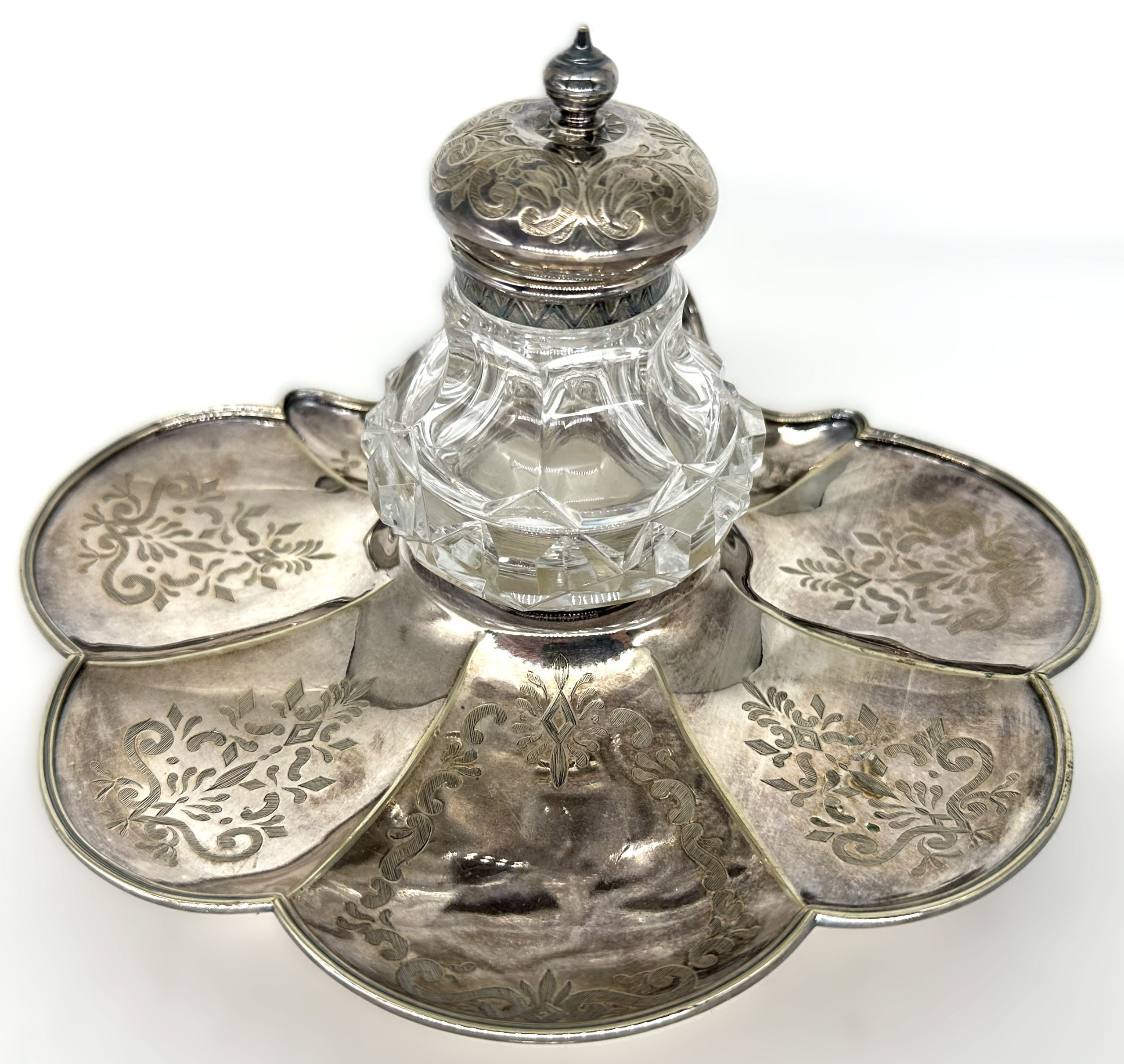
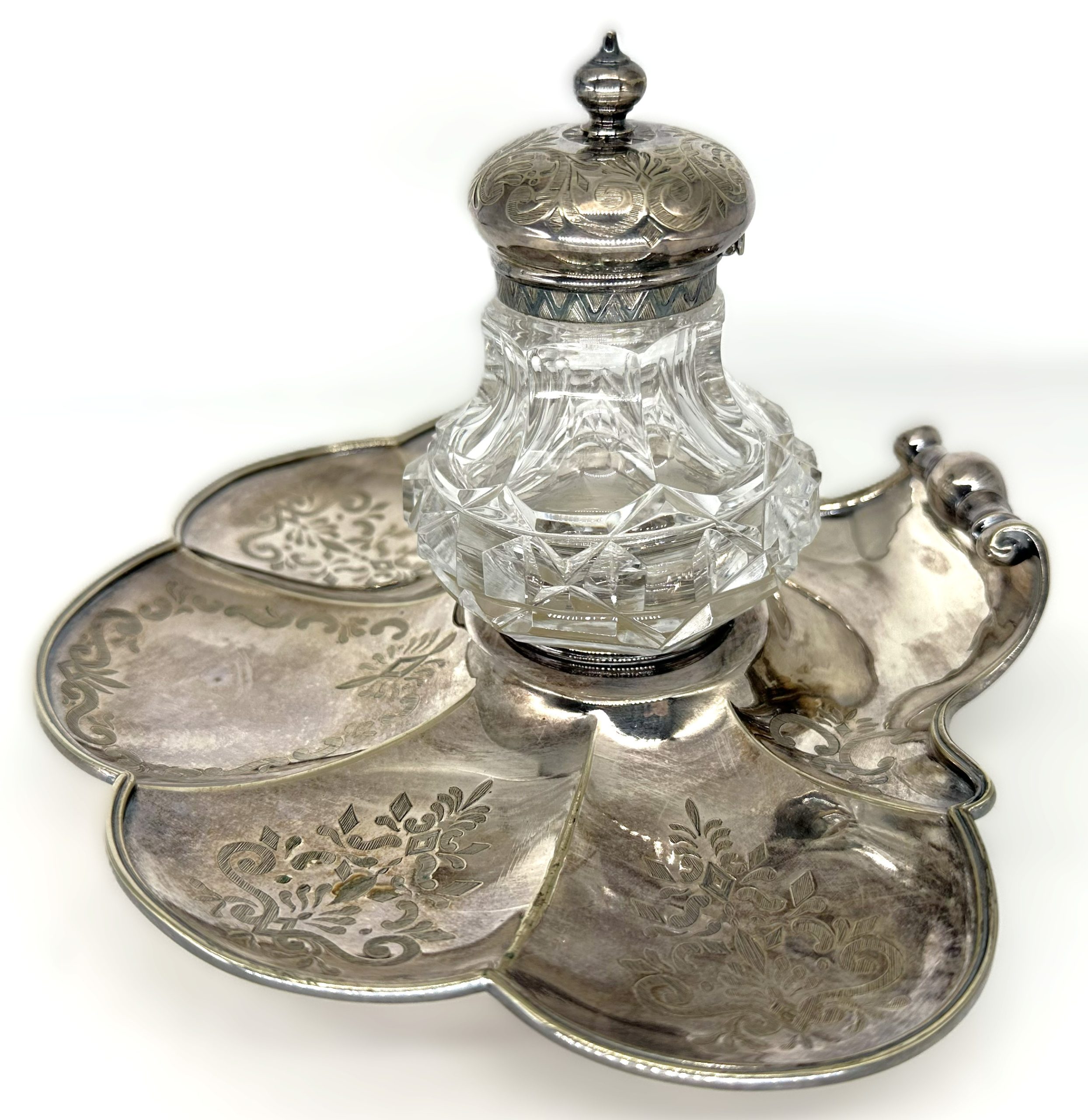
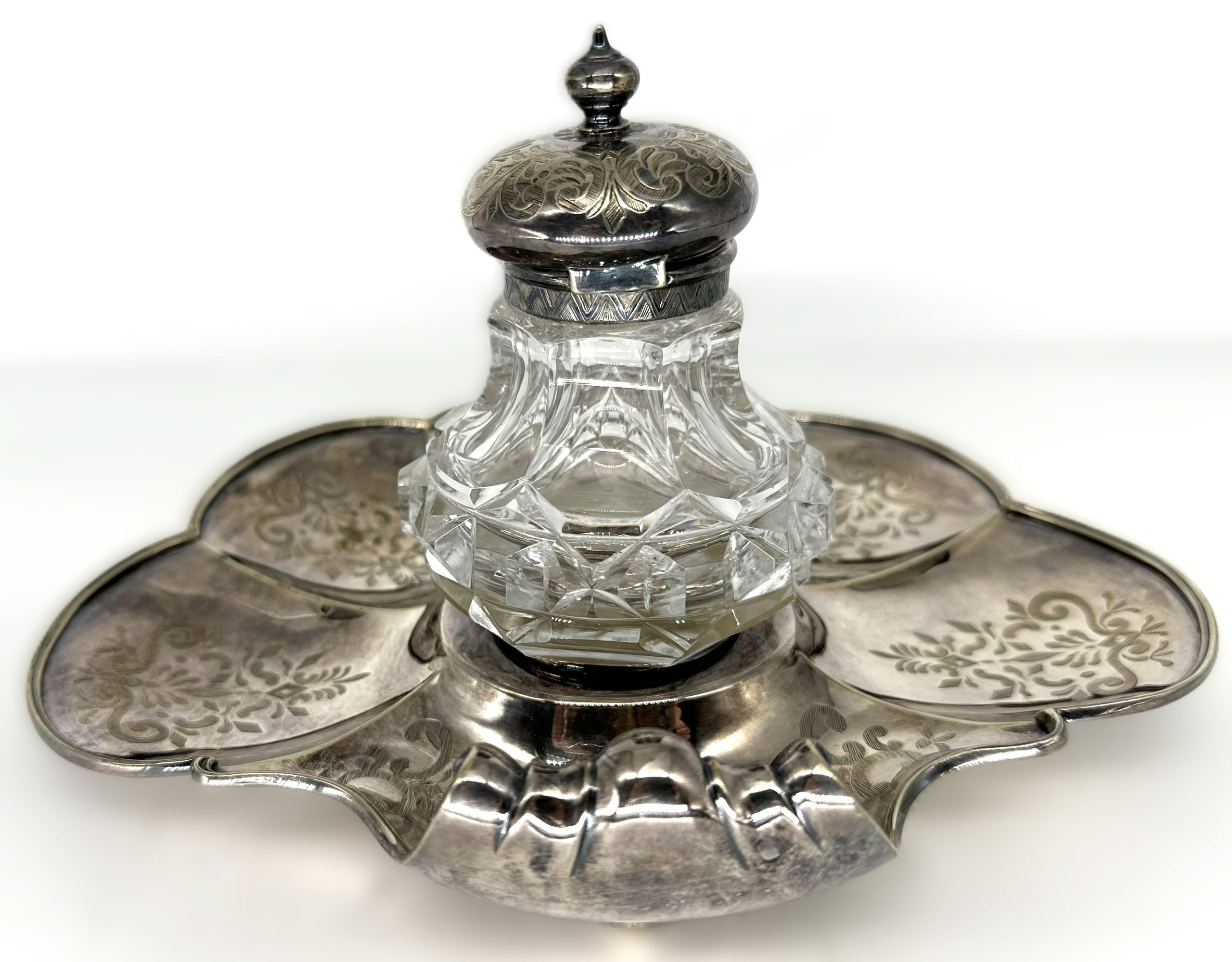
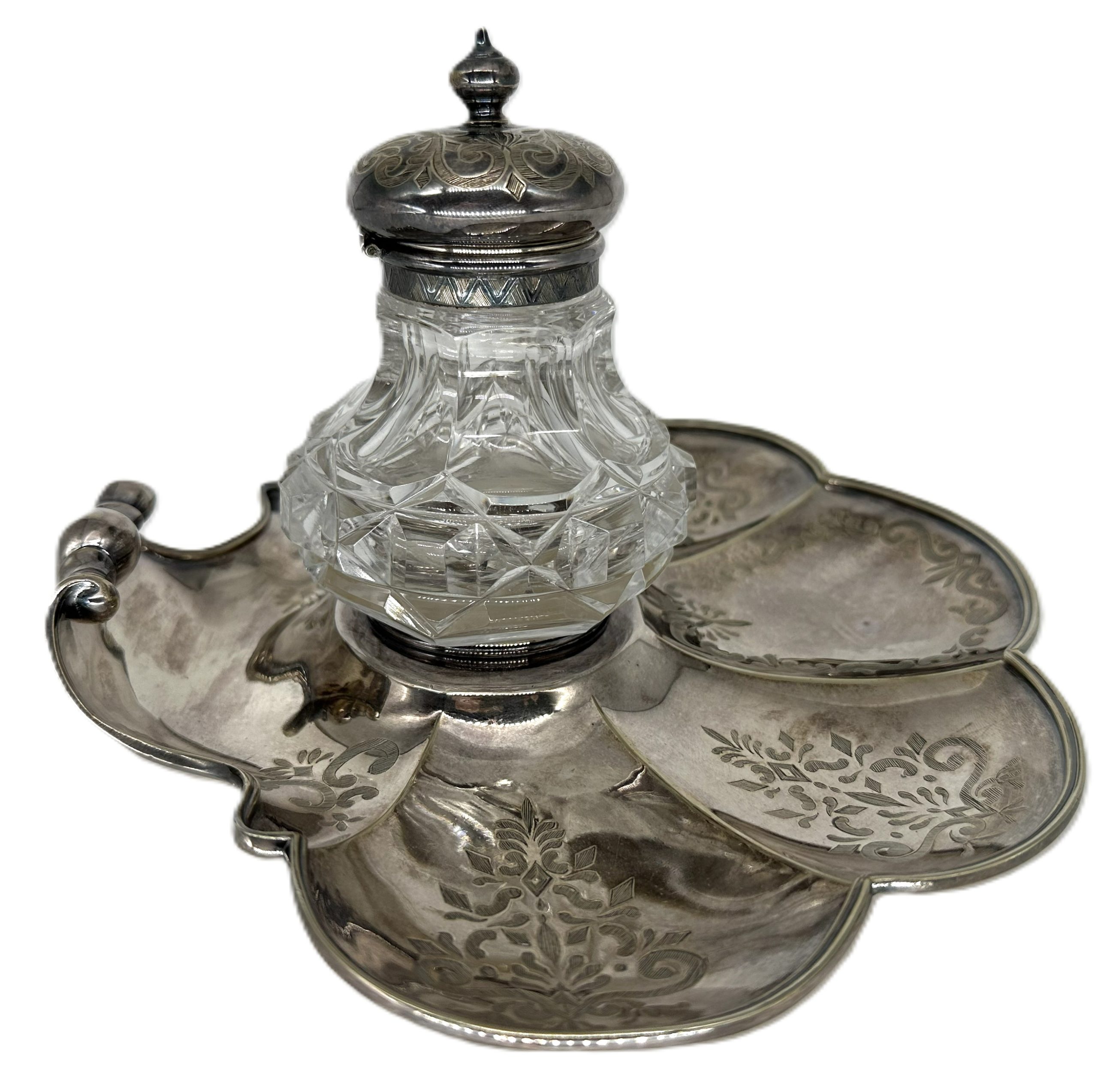
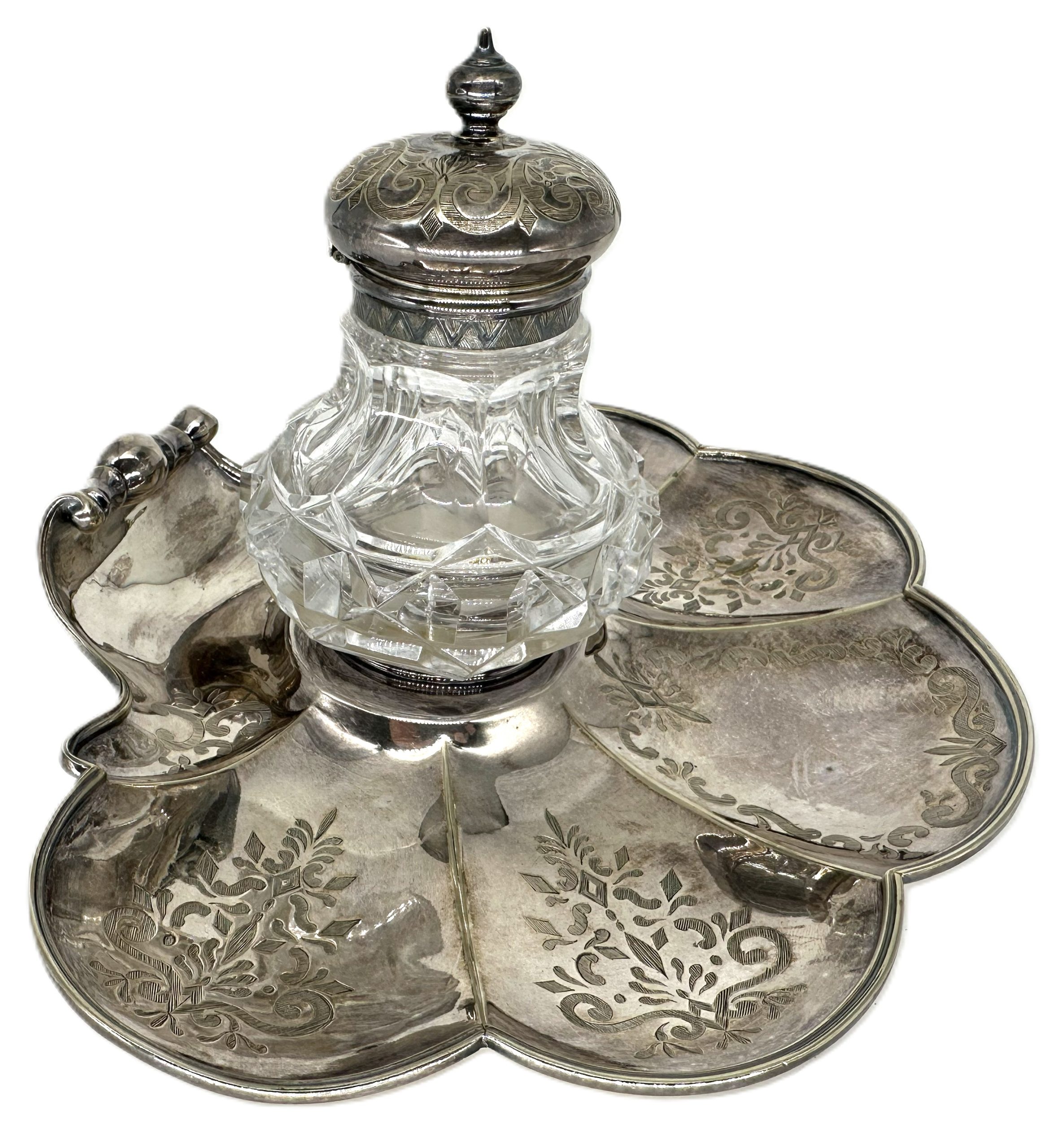
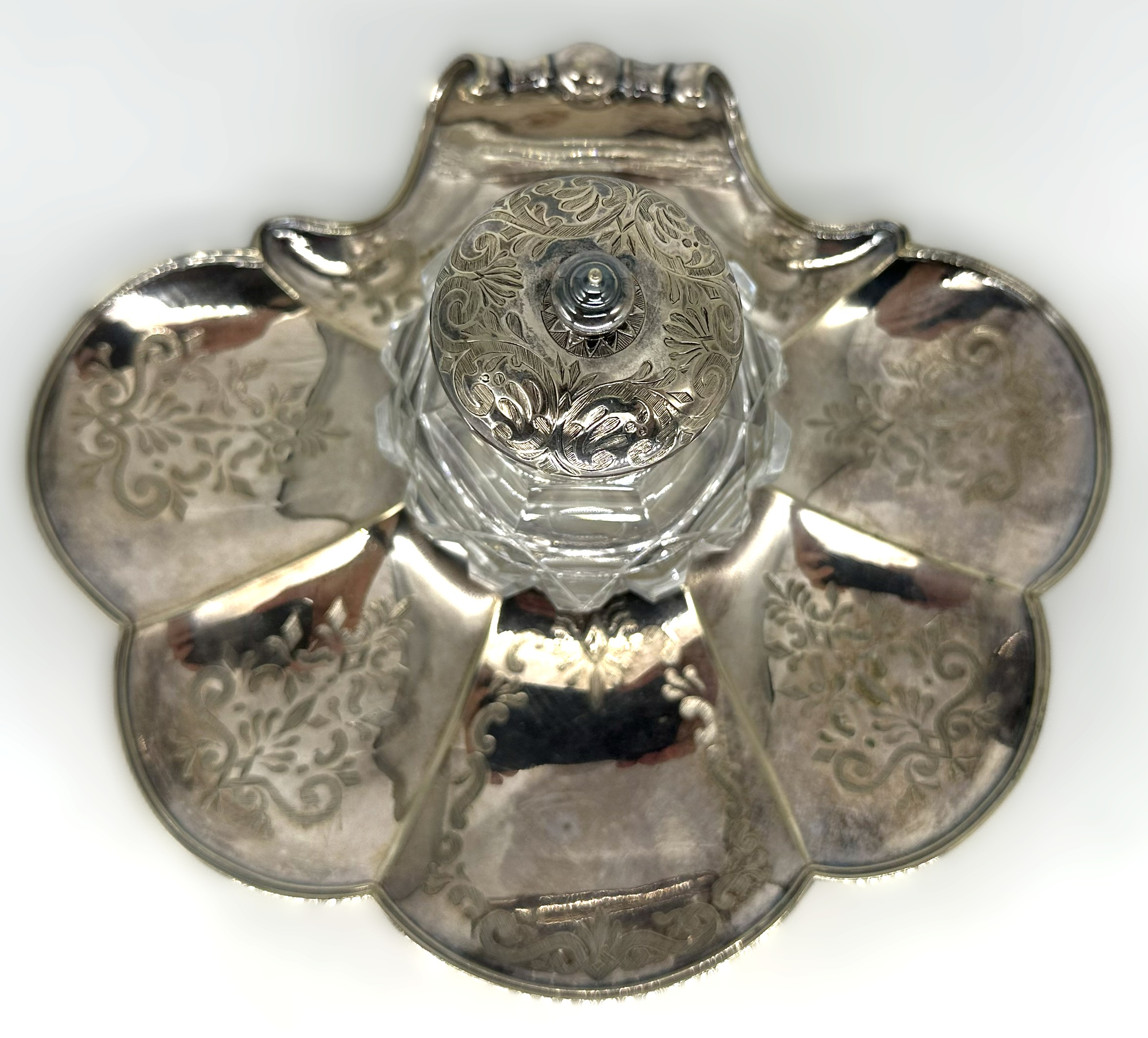
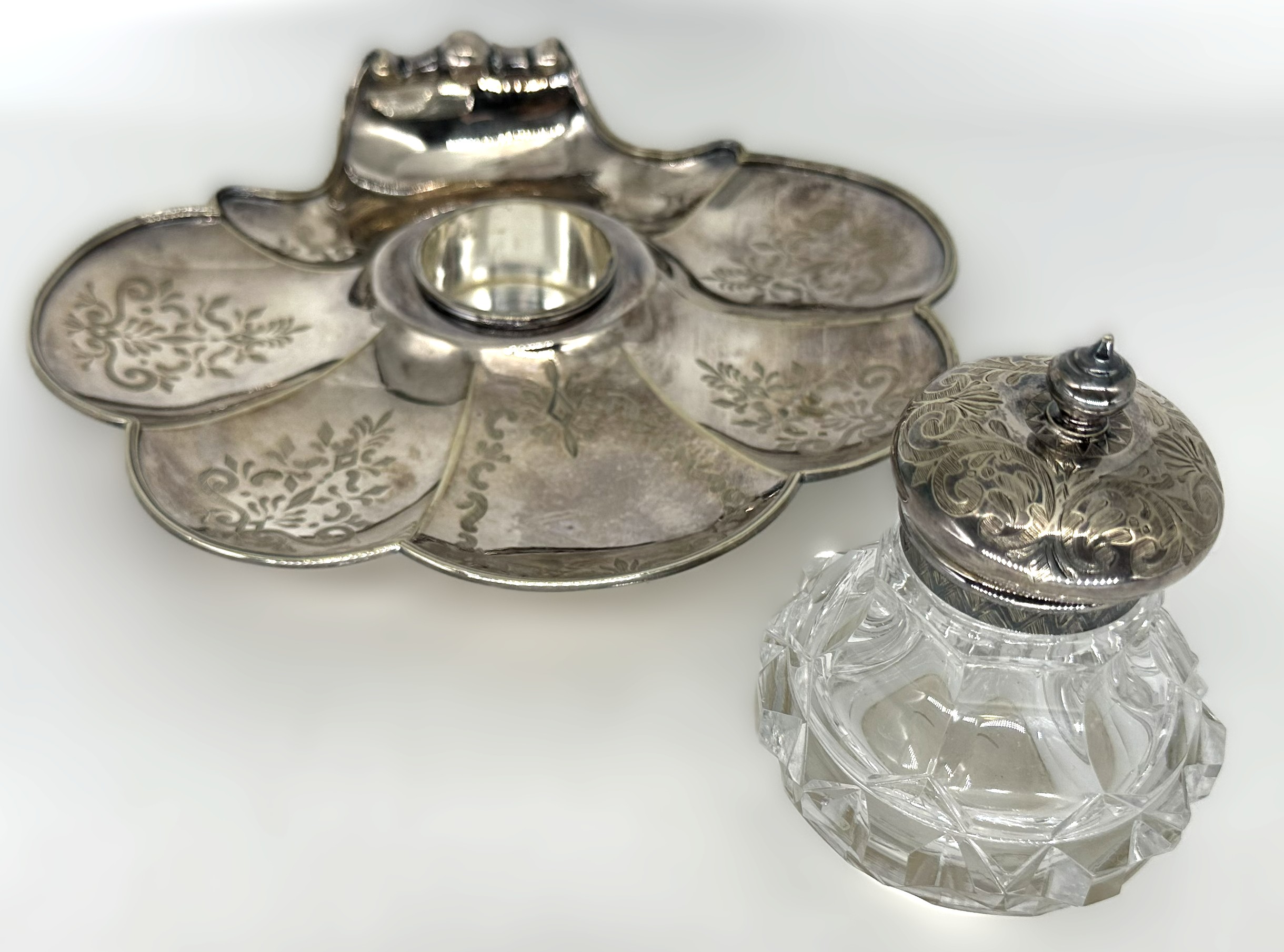
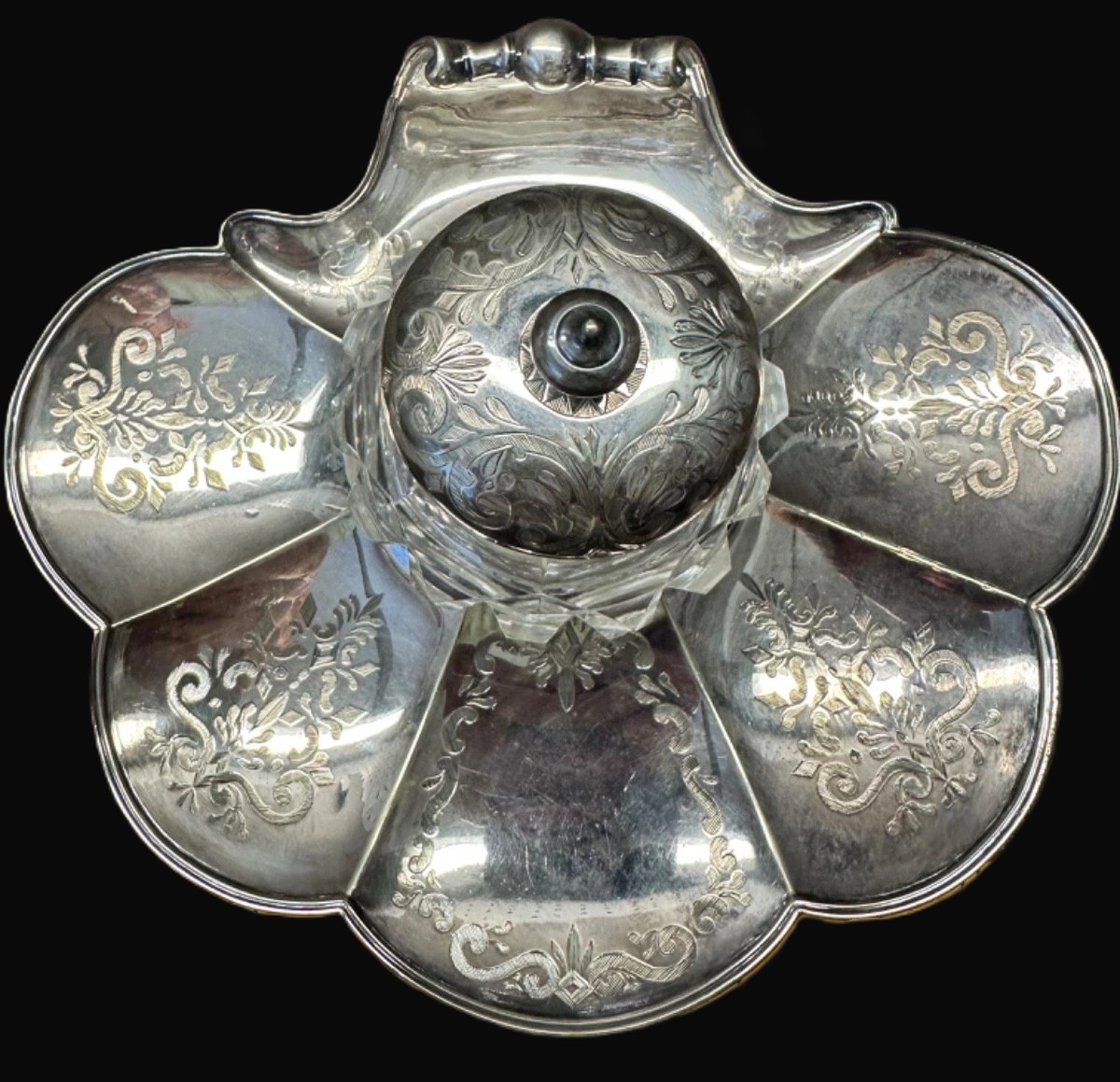
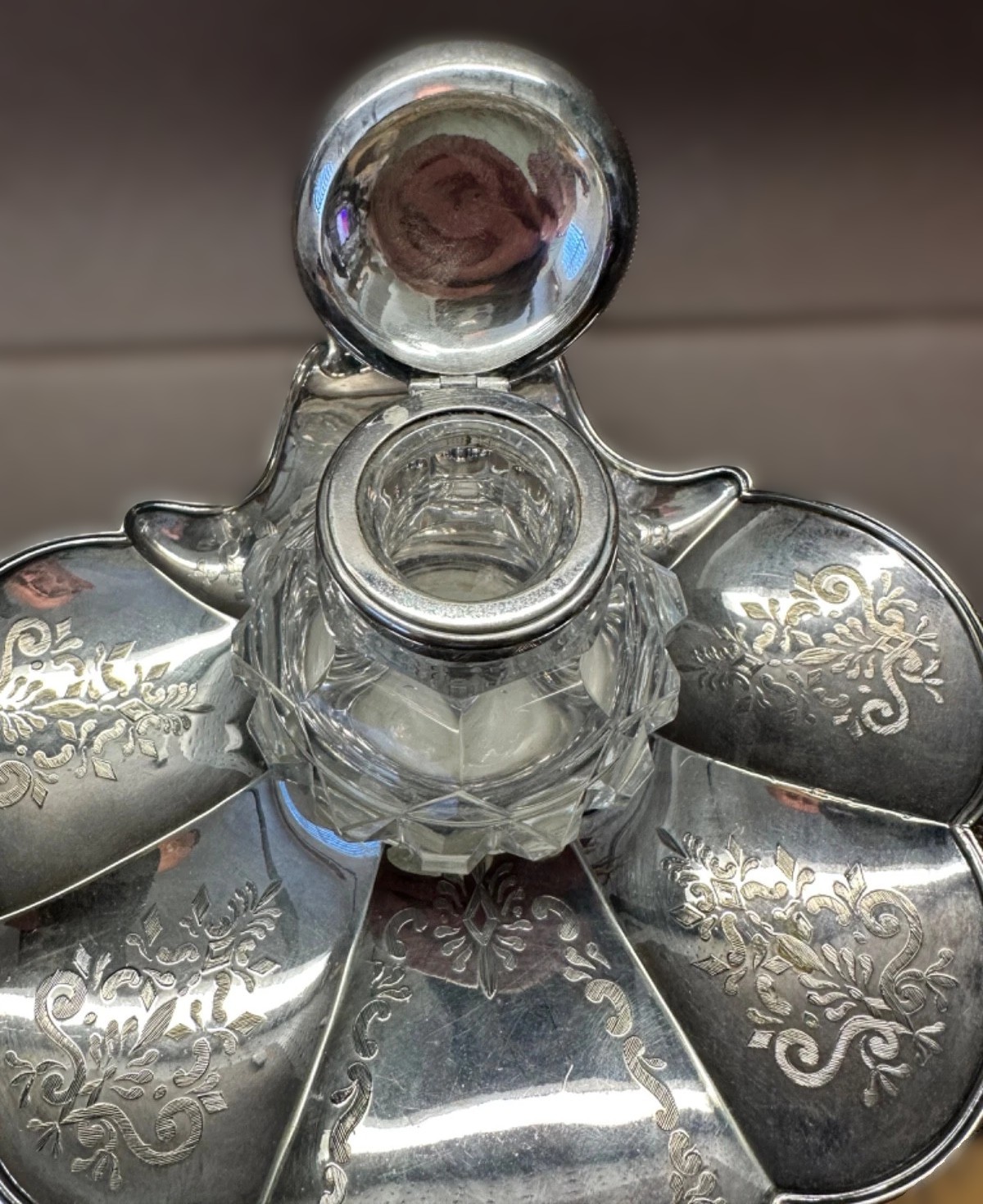
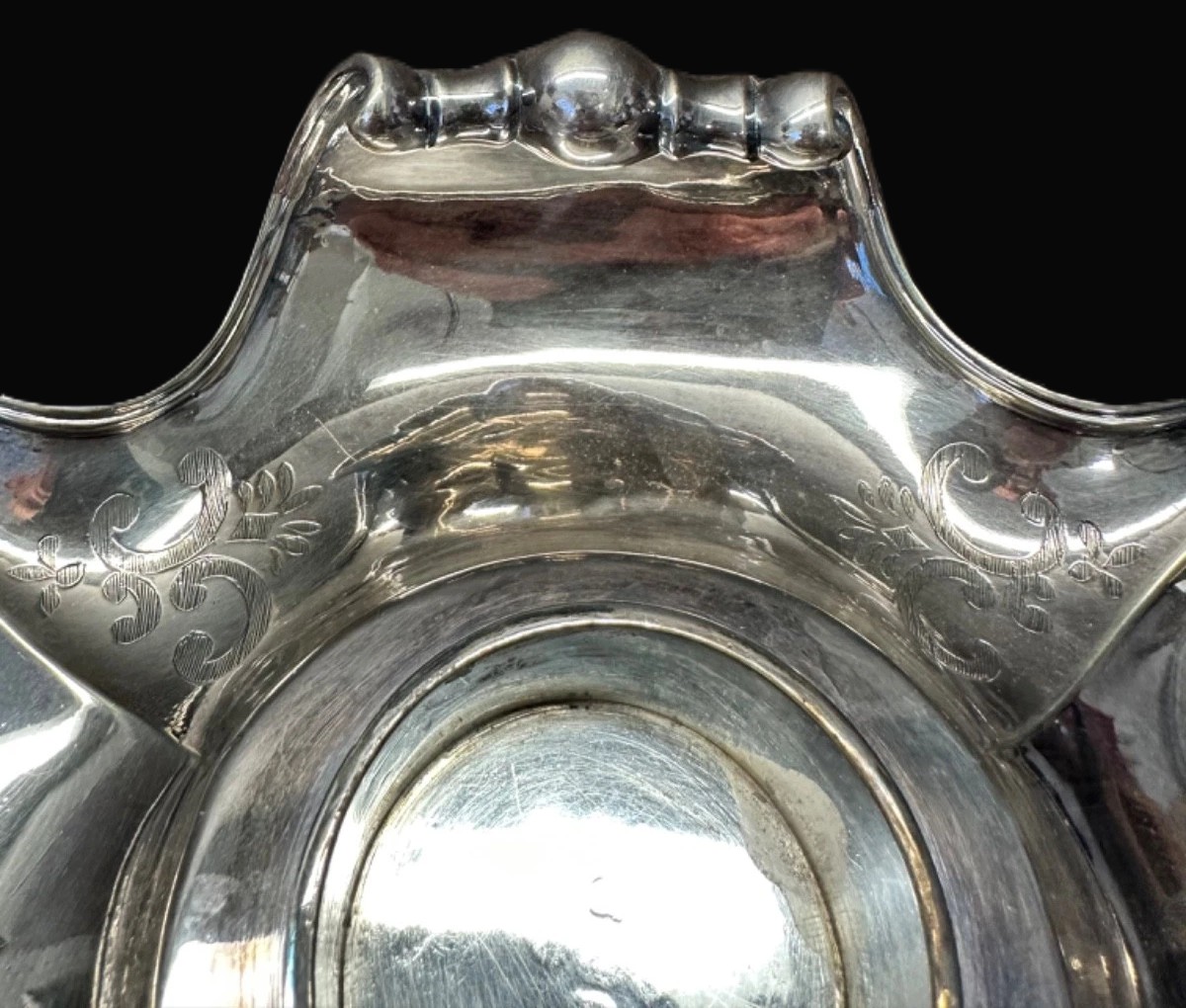
This silverplated lobed inkstand features a “petal” or “scalloped” base design. The stand is composed of five distinct lobes surrounding a central raised gallery:
- Ornamentation: Four of the lobes are adorned with finely etched foliate and scrollwork motifs, typical of the Neo-Rococo revival style.
- The Inscription Lobe: The front-center lobe is purposely left “in the bright” (plain) to allow for a presentation engraving or a monogram.
- The Pen Rest: The rear of the stand features an integrated, scrolled pen carriage designed to hold a dip pen horizontally.
- The Inkwell: The central vessel is a heavy, brilliant-cut crystal reservoir with a starburst base. It is topped with a silverplated hinged mount and a domed, embossed lid featuring a finial. The “stemmed” base of the glass allows it to sit securely within the circular well of the stand.
- Support: The entire piece is elevated on three small bun feet.
Analysis of the Marks
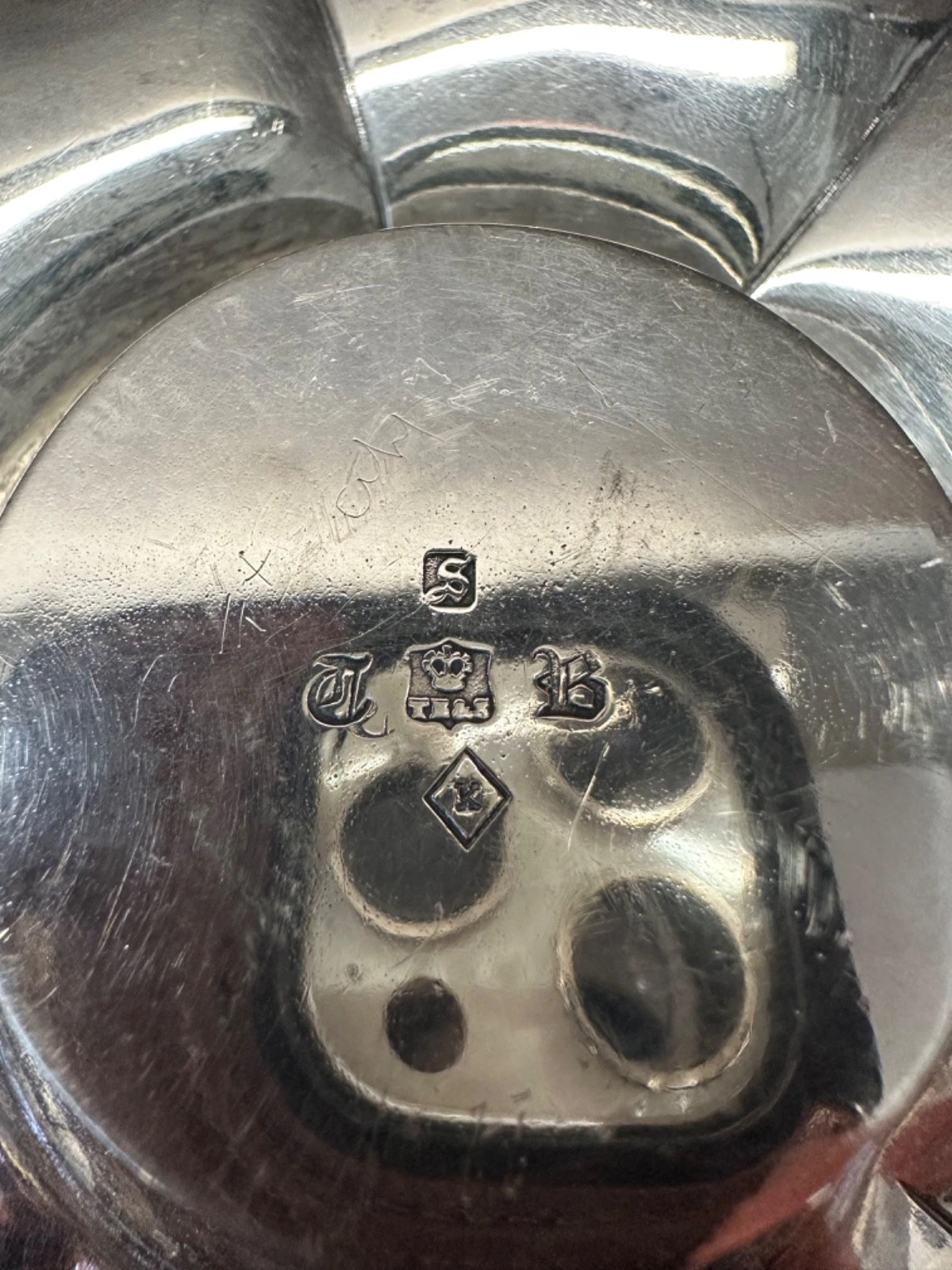
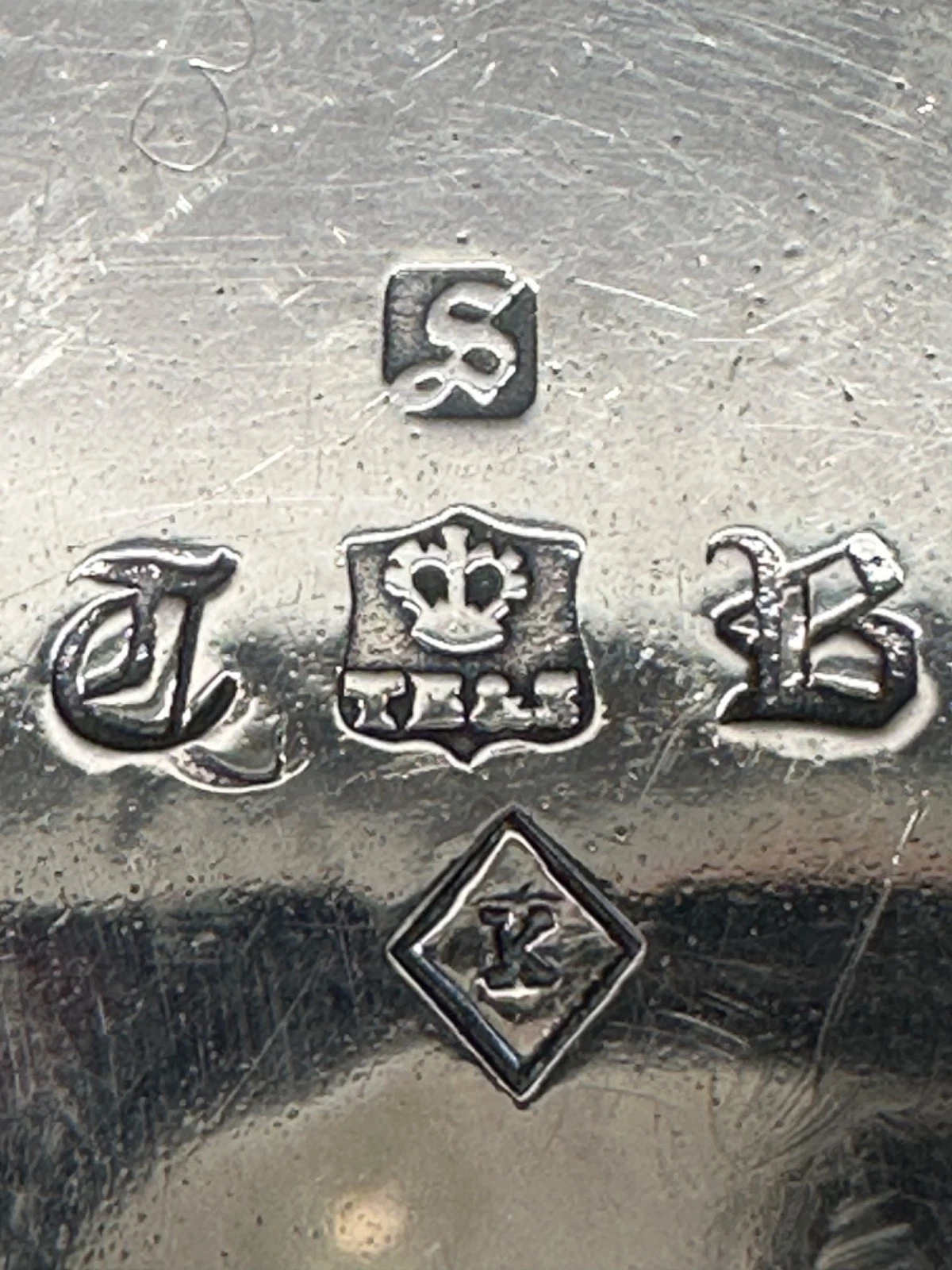
The markings on the underside are the “Old Sheffield” style marks used by the maker for their electroplated silver (EPNS) wares.
- T and B: These ornate Gothic letters stand for Thomas Bradbury.
- S (Top): This represents Sheffield, the heart of the British silver and plating industry.
- The Center Shield: This contains a Crown over the initials TB&S. While the crown was often reserved for solid silver hallmarks, Bradbury (and a few other top-tier Sheffield firms) were famously allowed to use it on their high-quality plated goods to signify their prestige.
- K (Bottom): This “K” inside a diamond is a date letter or an internal factory code. For Bradbury’s plated line, a Gothic or boxed letter like this typically places the production in the late 19th century.
History of Thomas Bradbury & Sons
Thomas Bradbury & Sons was one of the oldest and most respected names in Sheffield.
- Origins: The firm’s roots go back to 1736. It evolved through various partnerships (notably Watson & Bradbury) before officially becoming Thomas Bradbury & Sons in 1832.
- Reputation: They were masters of “Old Sheffield Plate” (fusing silver to copper) and were among the first to successfully transition to electroplating in the mid-1800s. They were known for maintaining the high standards of solid silver craftsmanship in their plated lines.
- The “Bradbury” Legacy: The family was so influential in the trade that Frederick Bradbury wrote A History of Old Sheffield Plate, which remains the definitive “bible” for collectors today.
- Longevity: The company remained in family hands for generations until it finally closed its doors in 1943.
Estimated Age
Based on the specific “TB&S” shield mark and the transition from the heavier Victorian styles to the more refined lobed patterns, this piece likely dates to circa 1885–1895.
It is a high-quality “boutique” item from that era; whereas many Victorian inkstands were mass-produced in base metals, a Bradbury piece was intended for a high-end stationery cabinet or a professional’s desk.
Estimated value: $125
Content disclaimer. The information posted is the owner’s best knowledge and may not have been vetted by the SOIC. We welcome comments, corrections, and additions, working to make our website information comprehensive and accurate.
Join the Society of Inkwell Collectors (SOIC) – it’s free!
Founded in 1981 as a non-profit organization,
we are documenting inkwells (and accessories).
We’re here to help and inform!