


Inkipedia
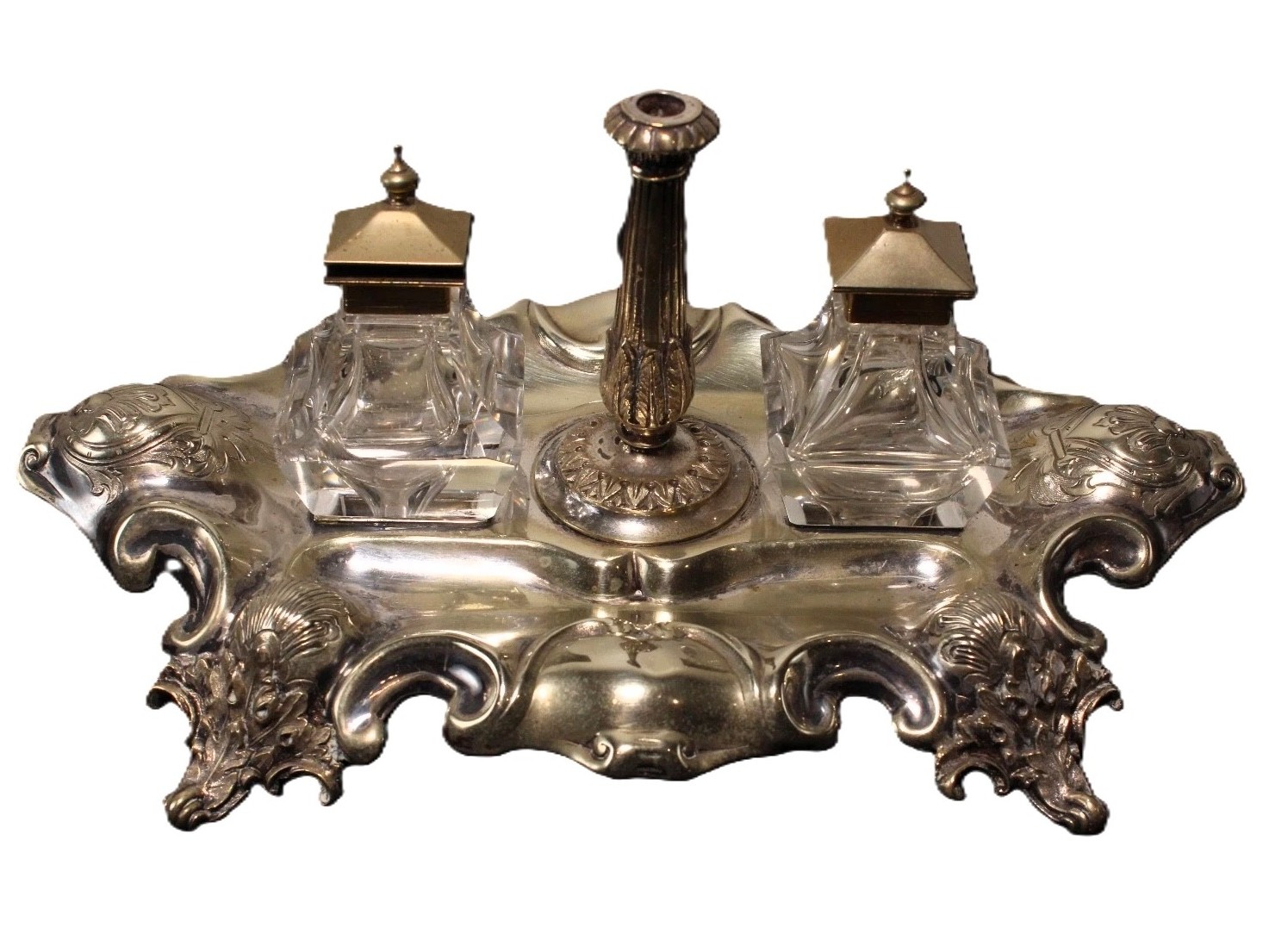
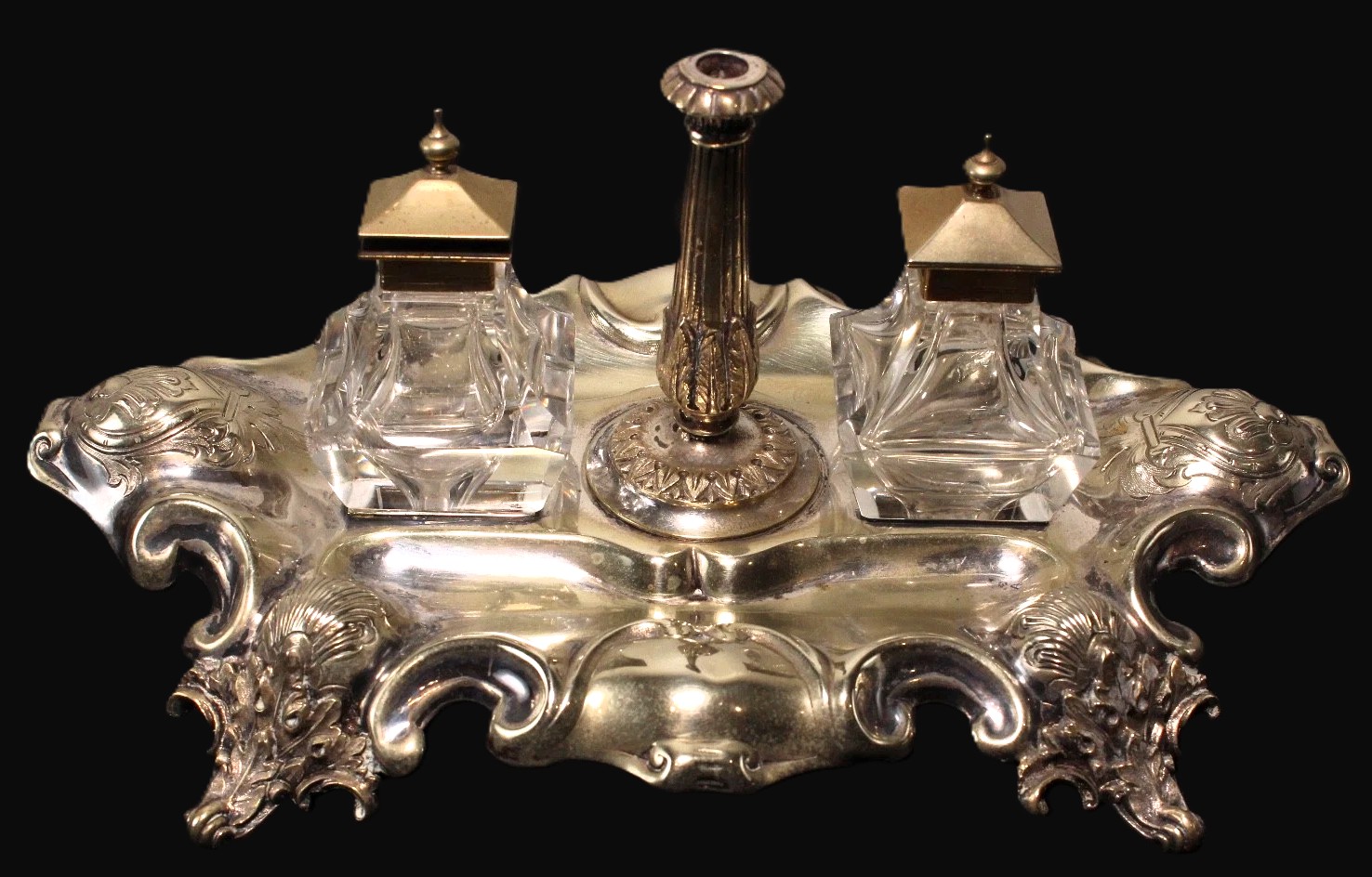

Silverplated Double Inkstand
| Categories | Silver |
| Material | Silverplate |
| Markings | Unmarked |
| Manufacturer | Undetermined |
| Origin | England |
| Date or Era | circa 1875 |
This silver-plated inkstand is an example of Neo-Rococo (Rococo Revival) decorative art, a style that celebrated the ornate and asymmetrical aesthetics of the mid-18th century with 19th-century manufacturing precision.
Detailed Physical Description
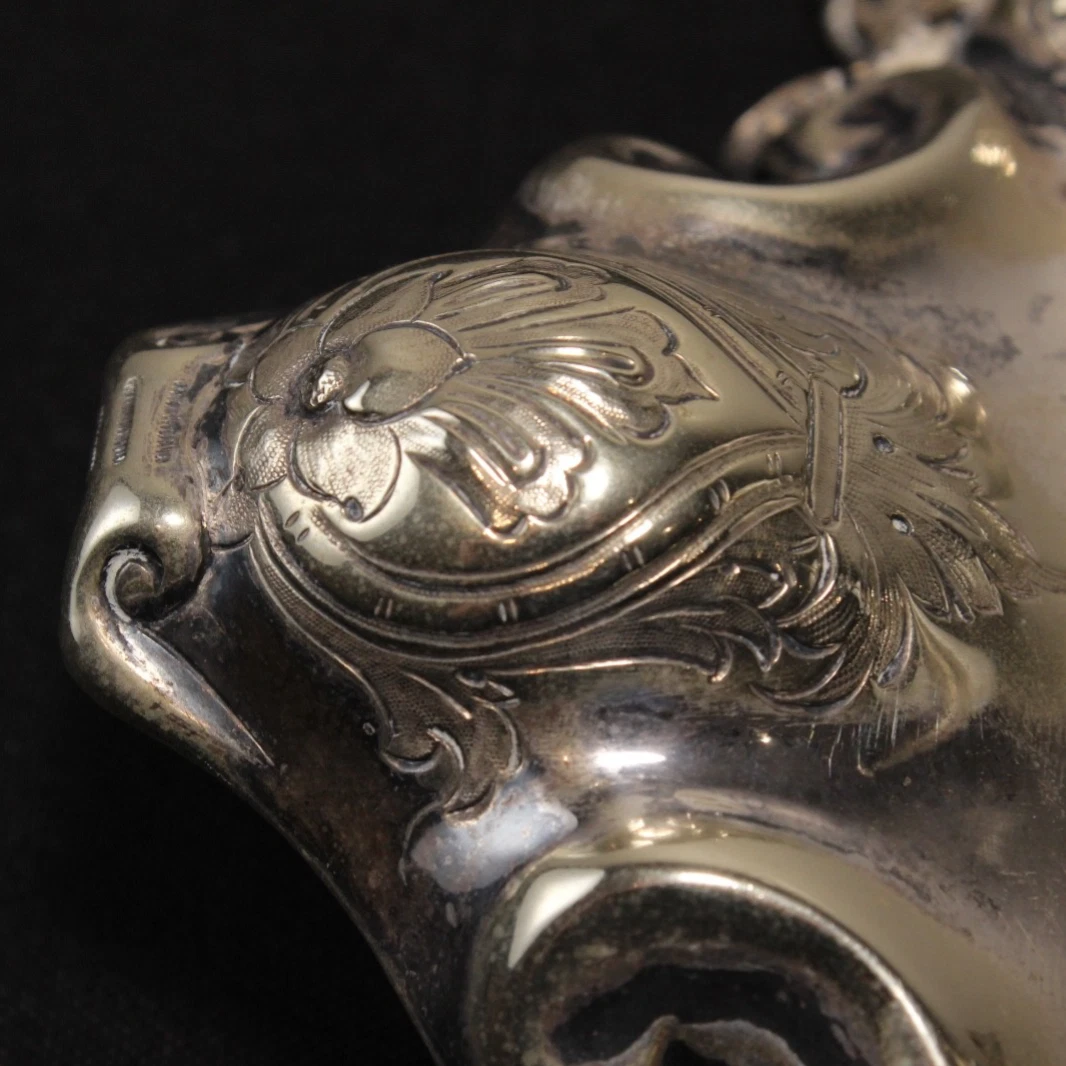
- The Tray & Ornamentation: The stand is a masterwork of repoussé and chasing, techniques where the metal is hammered from the back and front to create high-relief patterns. The surface is a flowing arrangement of rocaille (shell-like) motifs, scrolling acanthus leaves, and dense floral garlands.
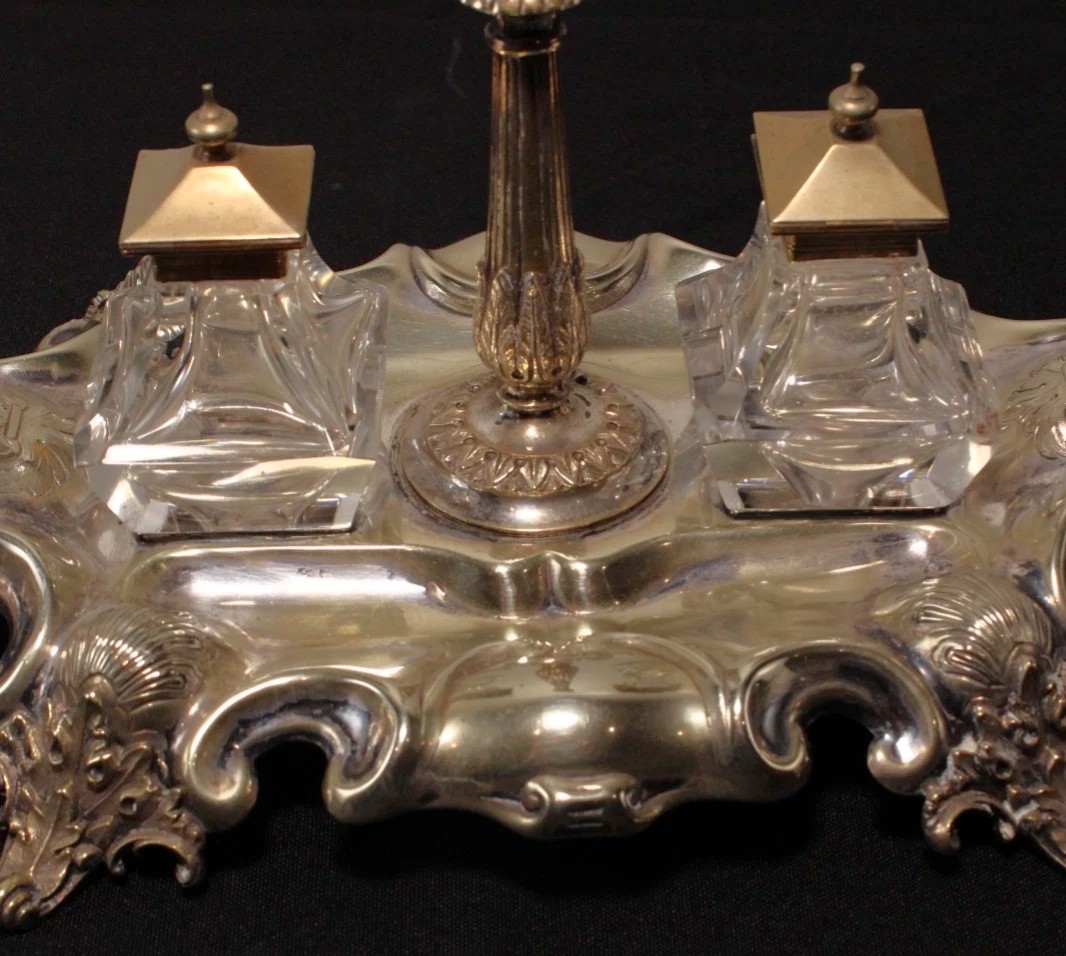
- Crystal Inkwells: Set symmetrically on the tray are two geometric cut-crystal ink bottles. The deep vertical and diagonal miter cuts are designed to play with light, contrasting with the metallic luster of the stand. Each bottle is topped with a heavy, hinged silver-plated lid that echoes the floral motifs of the base.
- Central Taper Holder: A unique and functional feature is the tall, central candle holder. Historically, this was used to hold a taper candle for melting sealing wax, an essential part of the 19th-century letter-writing ritual.
- The Base & Feet: The foundation of the piece shows extraordinary detail:
- Scalloped Shell Corners: The four corners are anchored by large, stylized shells, a primary symbol of the Rococo movement.
- Lion-like (Monopodium) Feet: The stand rests on four powerful feet that transition from scrolled foliate patterns into stylized animal paws.
- Crest Medallions: On either side of the tray, there are blank shield-shaped medallions (cartouches). These were often left empty by the manufacturer so that the owner could have their family crest or initials custom-engraved.
Origin and Manufacturer
The overall design and the specific combination of crystal and silverplate are characteristic of Victorian England.
- Likely Origin: Birmingham or Sheffield, England. These cities were the global centers for “Old Sheffield Plate” and the later electroplating industry.
- Potential Maker: The quality of the casting and the elaborate base suggest a high-end maker such as Elkington & Co. or Dixon & Sons. Both firms were famous for their “Presentation Inkstands” that were often gifted as retirement or wedding presents.
Estimated Age
- Circa 1870–1890.
- This “High Victorian” period favored these large, theatrical desk suites. The complexity of the base suggests a date closer to 1875, when the industrial capability to cast such intricate lion-paw feet and shell motifs reached its peak.
Sold for $64 in December 2025
Content disclaimer. The information posted is the owner’s best knowledge and may not have been vetted by the SOIC. We welcome comments, corrections, and additions, working to make our website information comprehensive and accurate.
Join the Society of Inkwell Collectors (SOIC) – it’s free!
Founded in 1981 as a non-profit organization,
we are documenting inkwells (and accessories).
We’re here to help and inform!