

Siena Marble Inkstand
| Categories | Stone/Marble/Ivory/Bone/Hoof/Leather |
| Type | Grand Tour |
| Material | Bronze, Marble |
| Markings | Unmarked |
| Manufacturer | Undetermined |
| Origin | Italy |
| Date or Era | circa 1880 |
| Measuring | 12 ¾” x 4 ⅞” x 5 ¼” high |
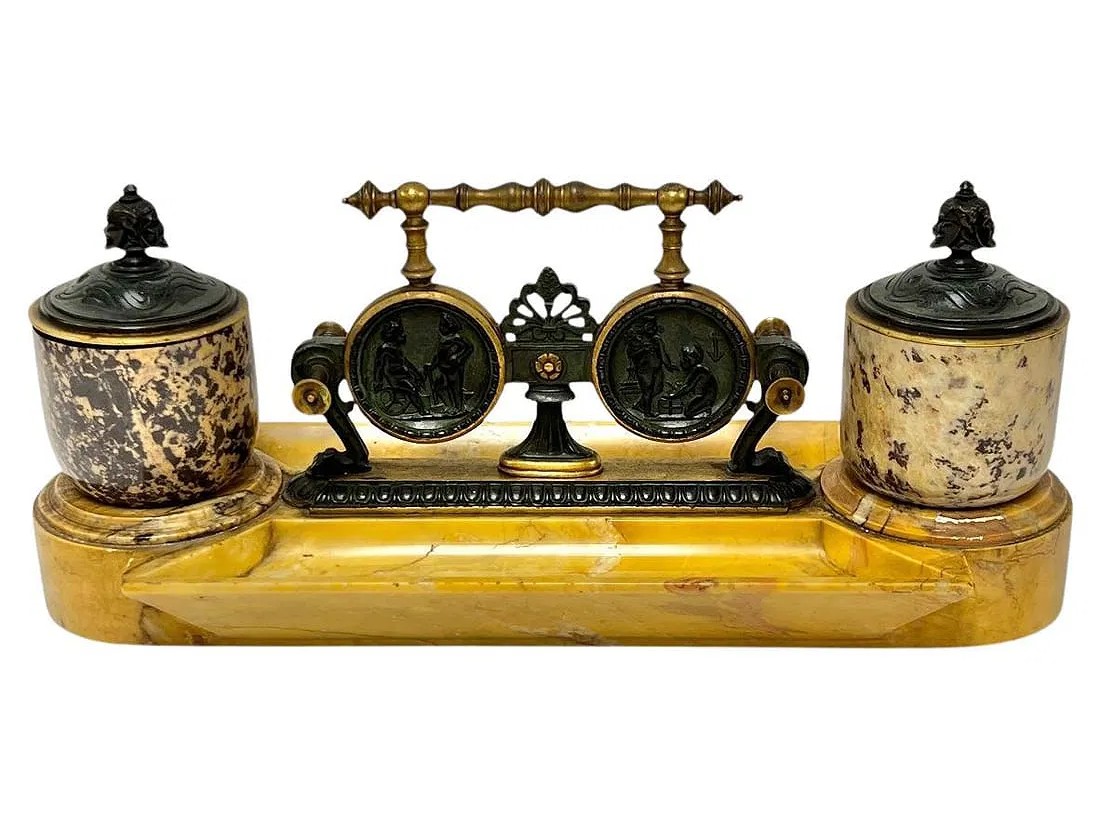
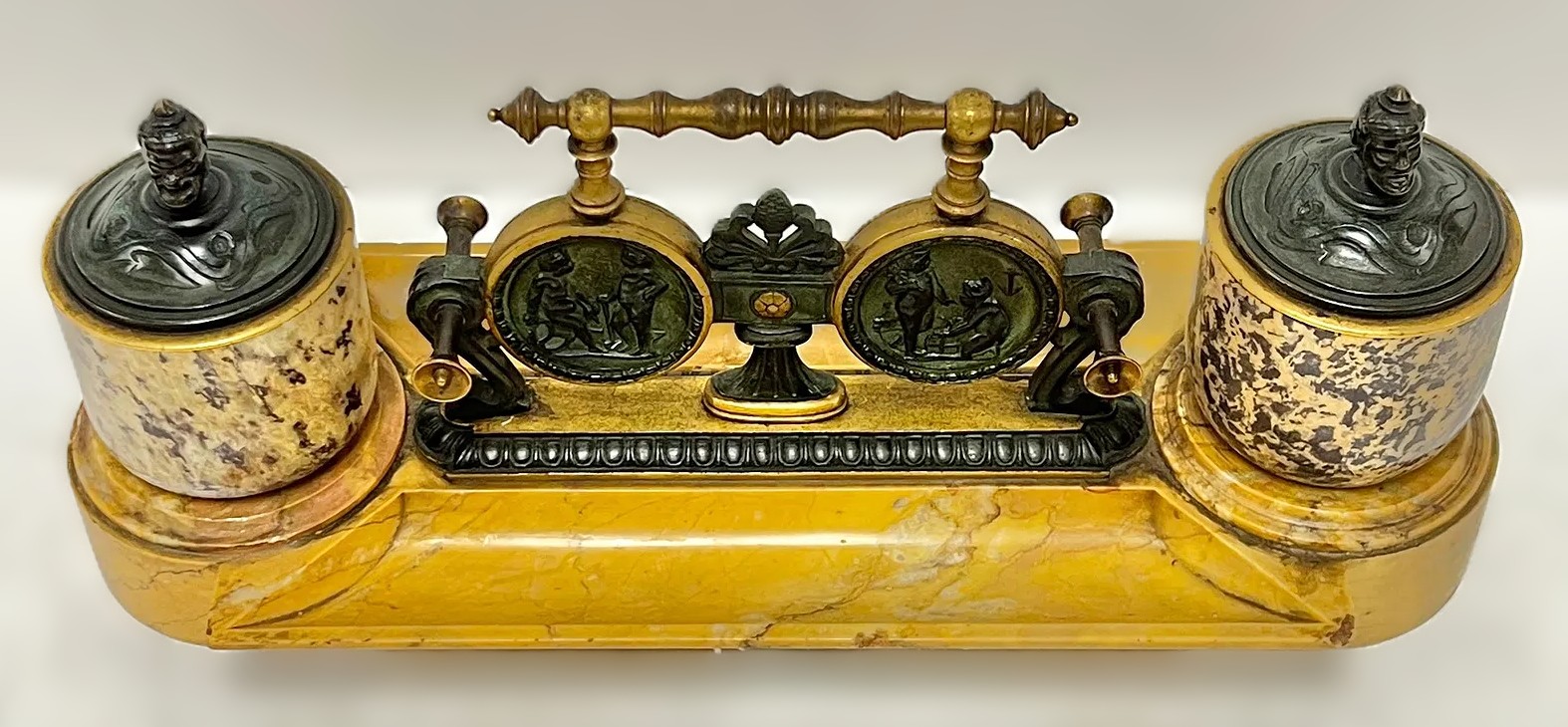
This is a striking example of late 19th-century Italian decorative art, likely produced as a high-end “Grand Tour” object. The combination of rare marbles and finely cast bronze reflects the Roman Neoclassical revival popular in the 1880s.
Detailed Description
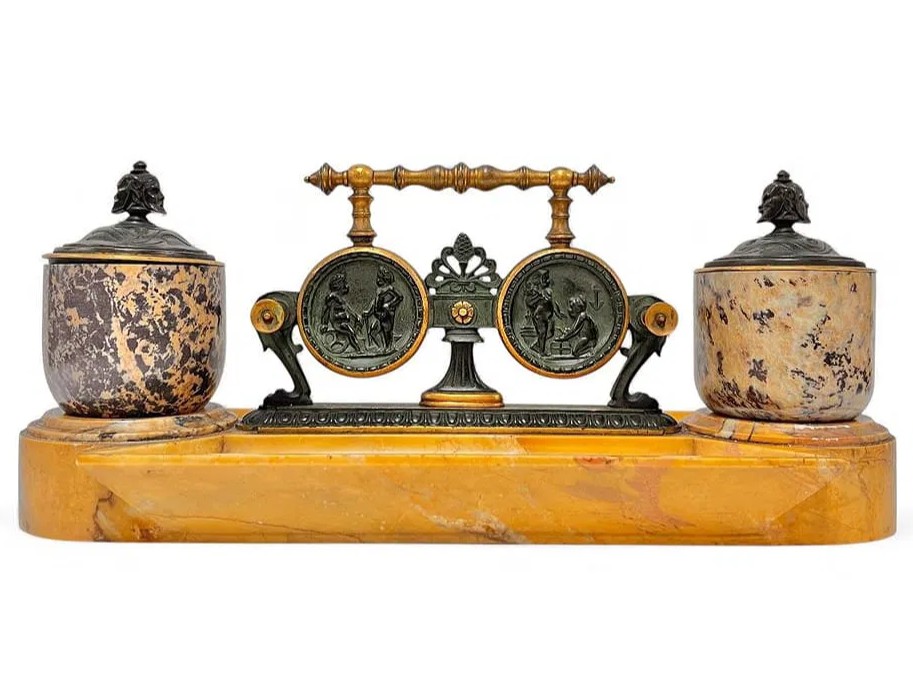
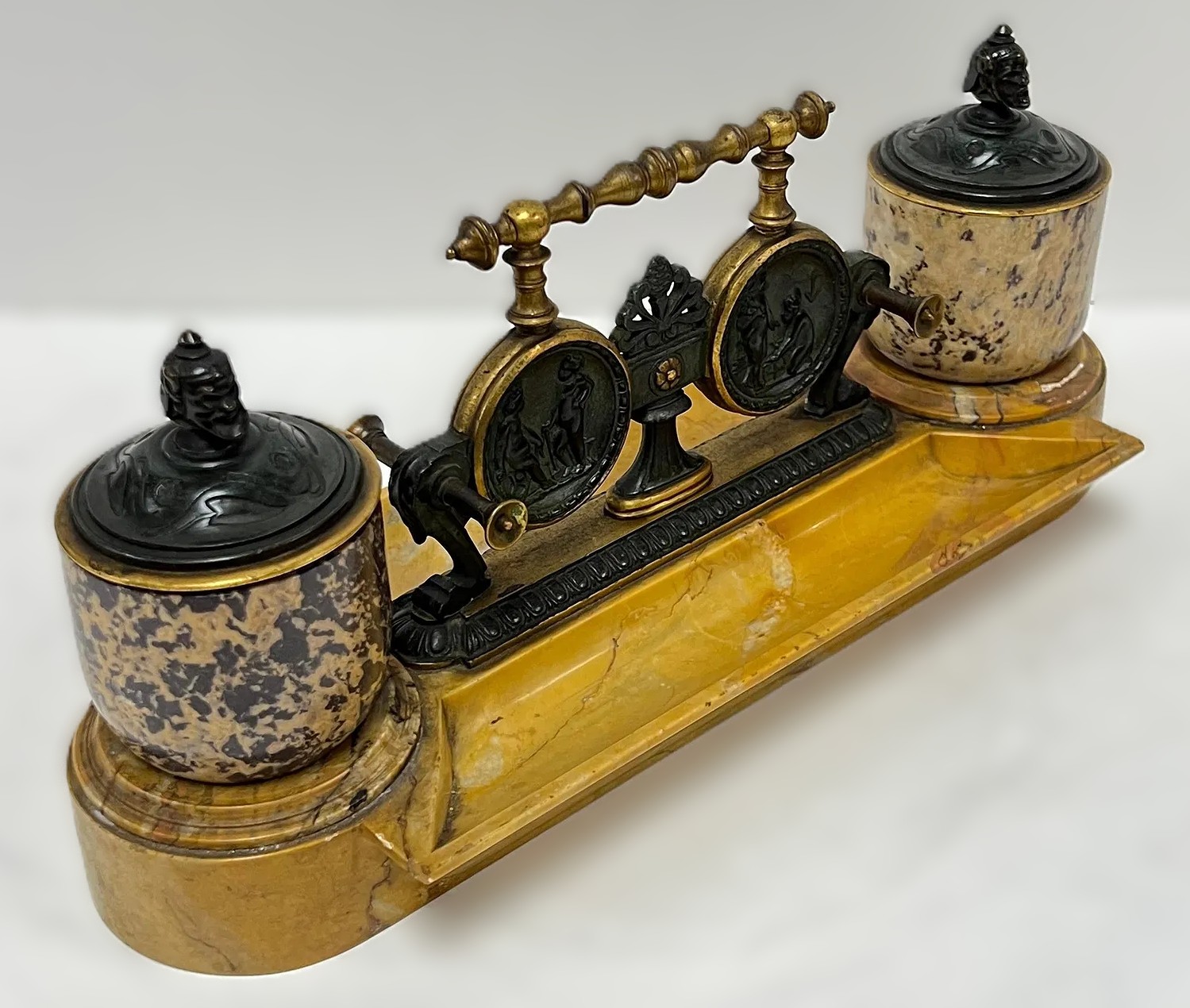
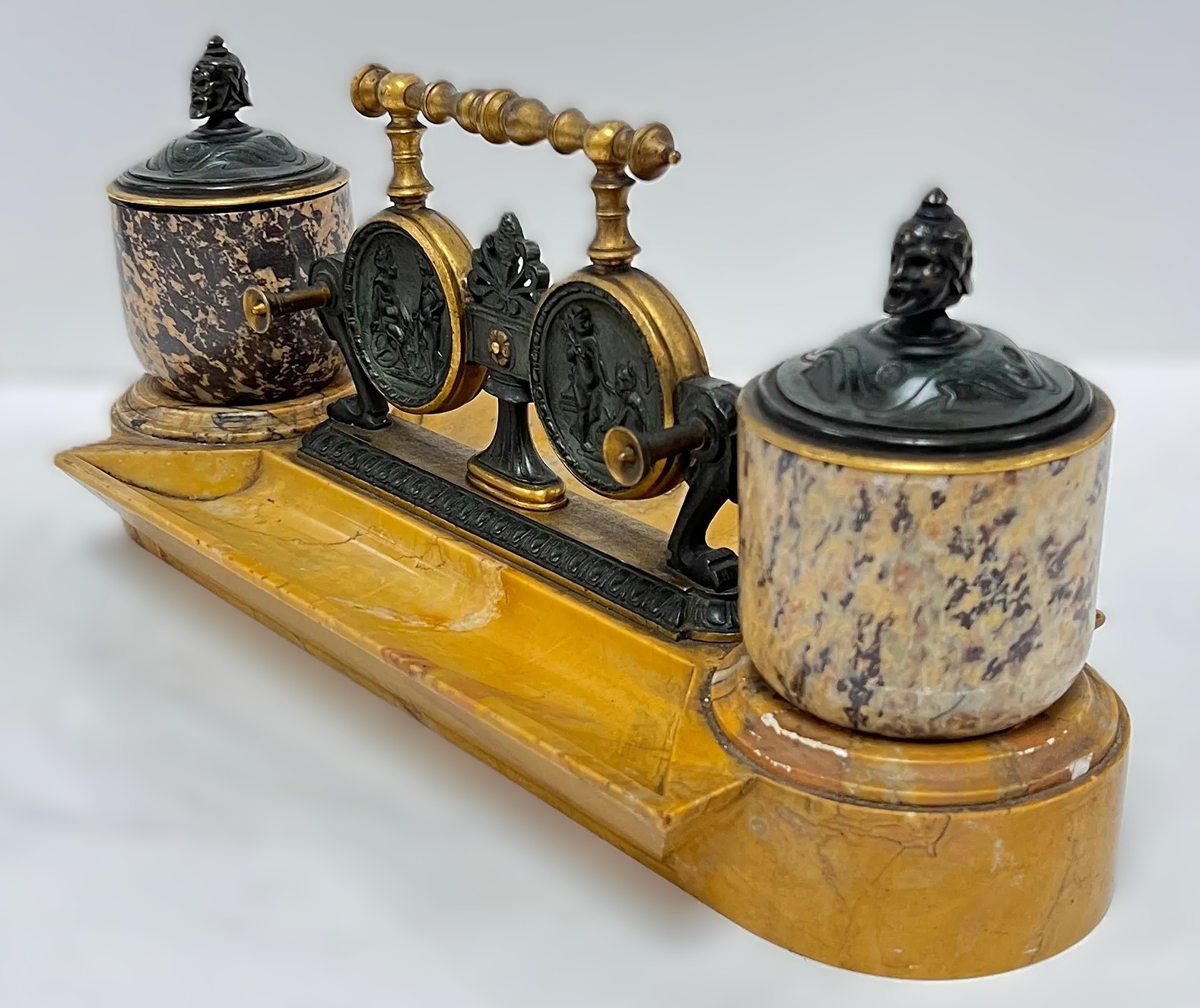
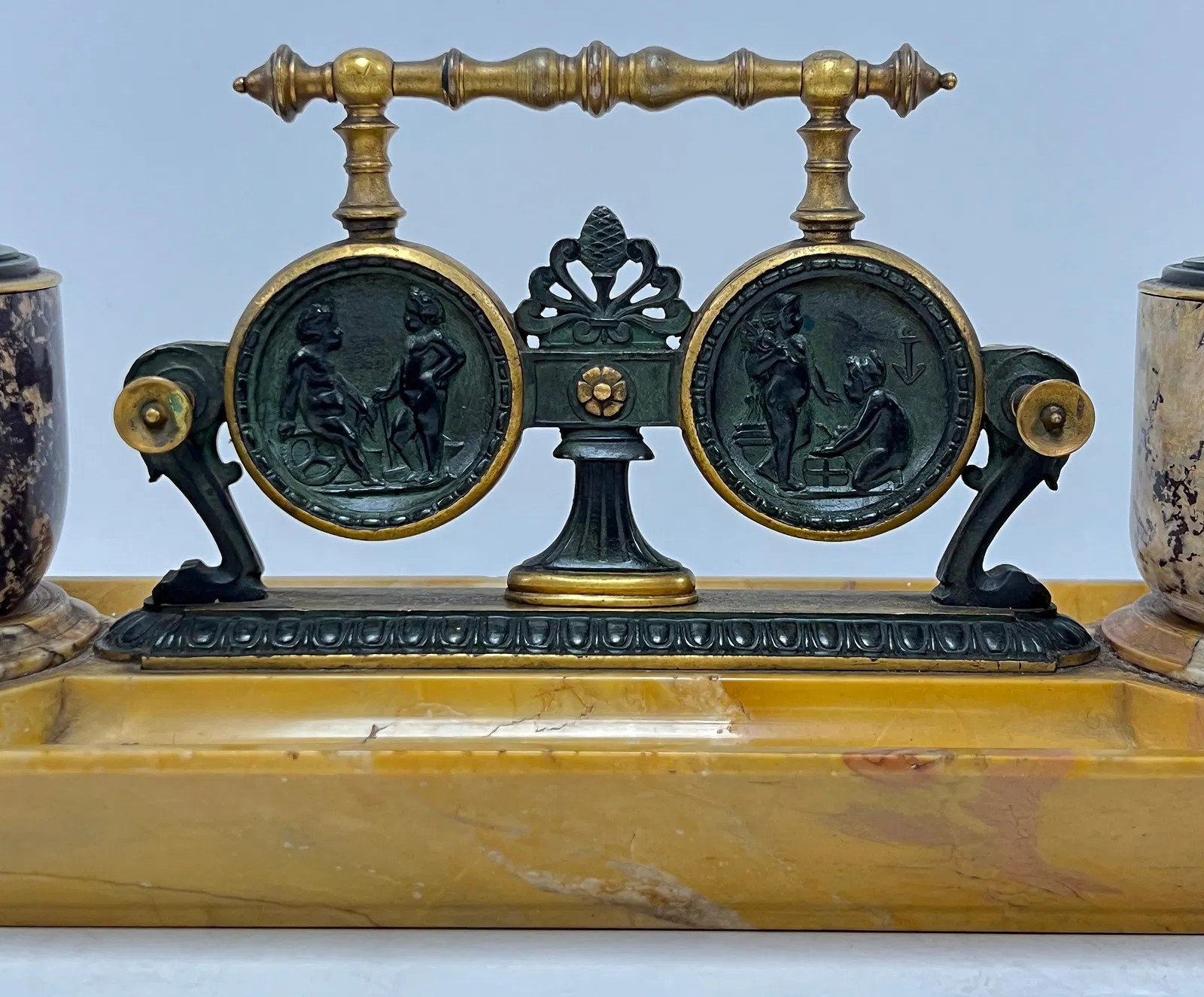
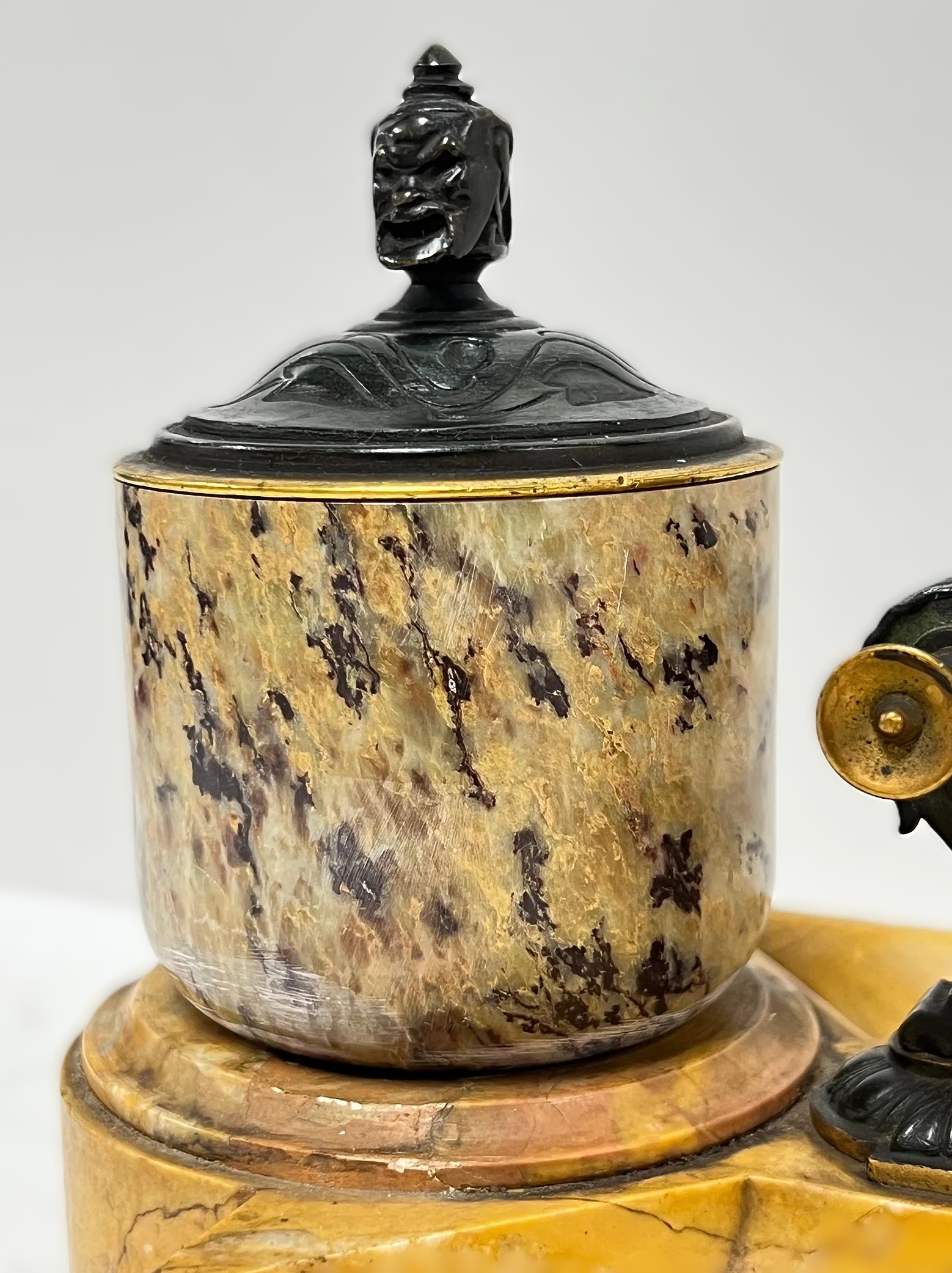
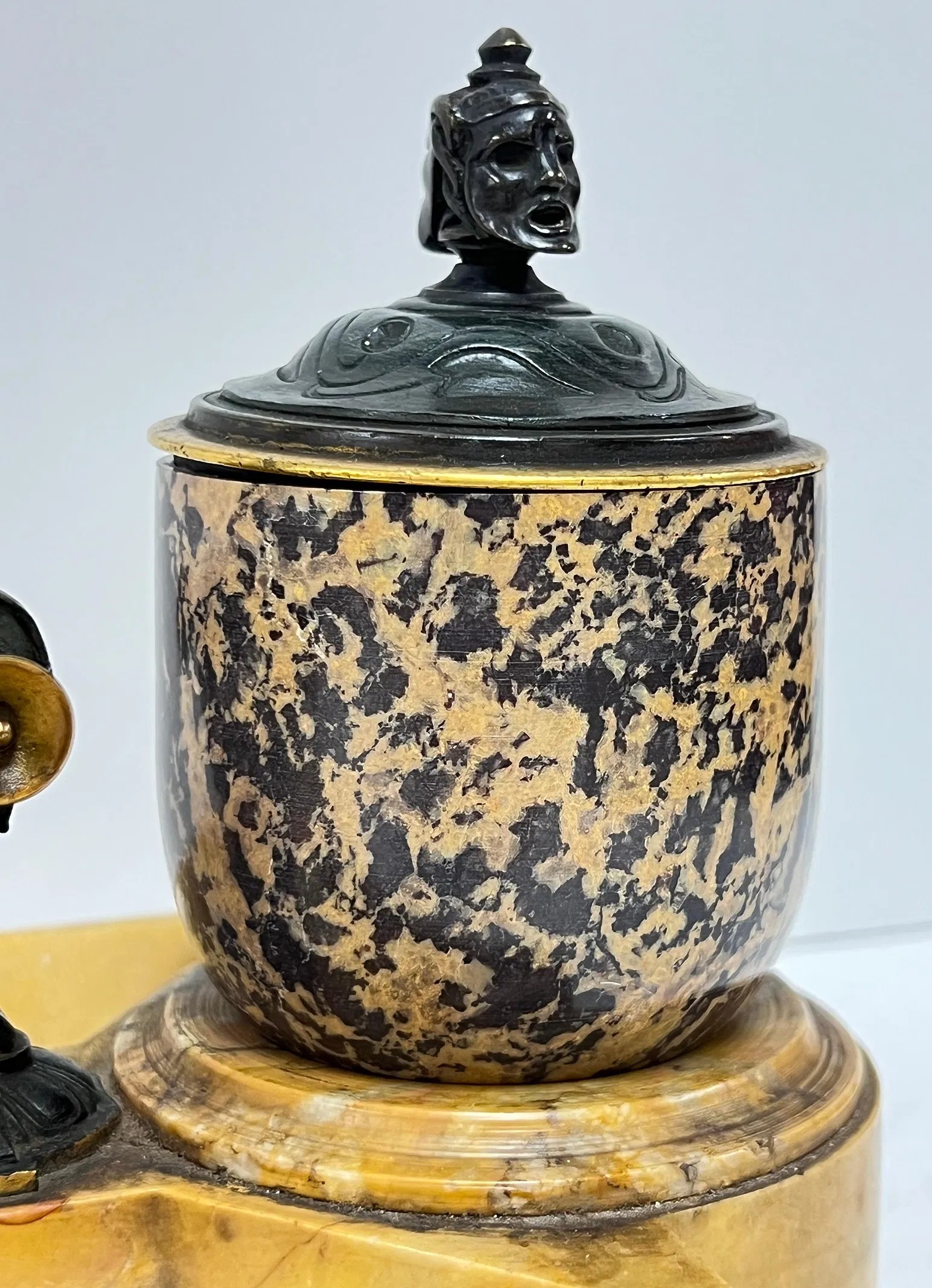
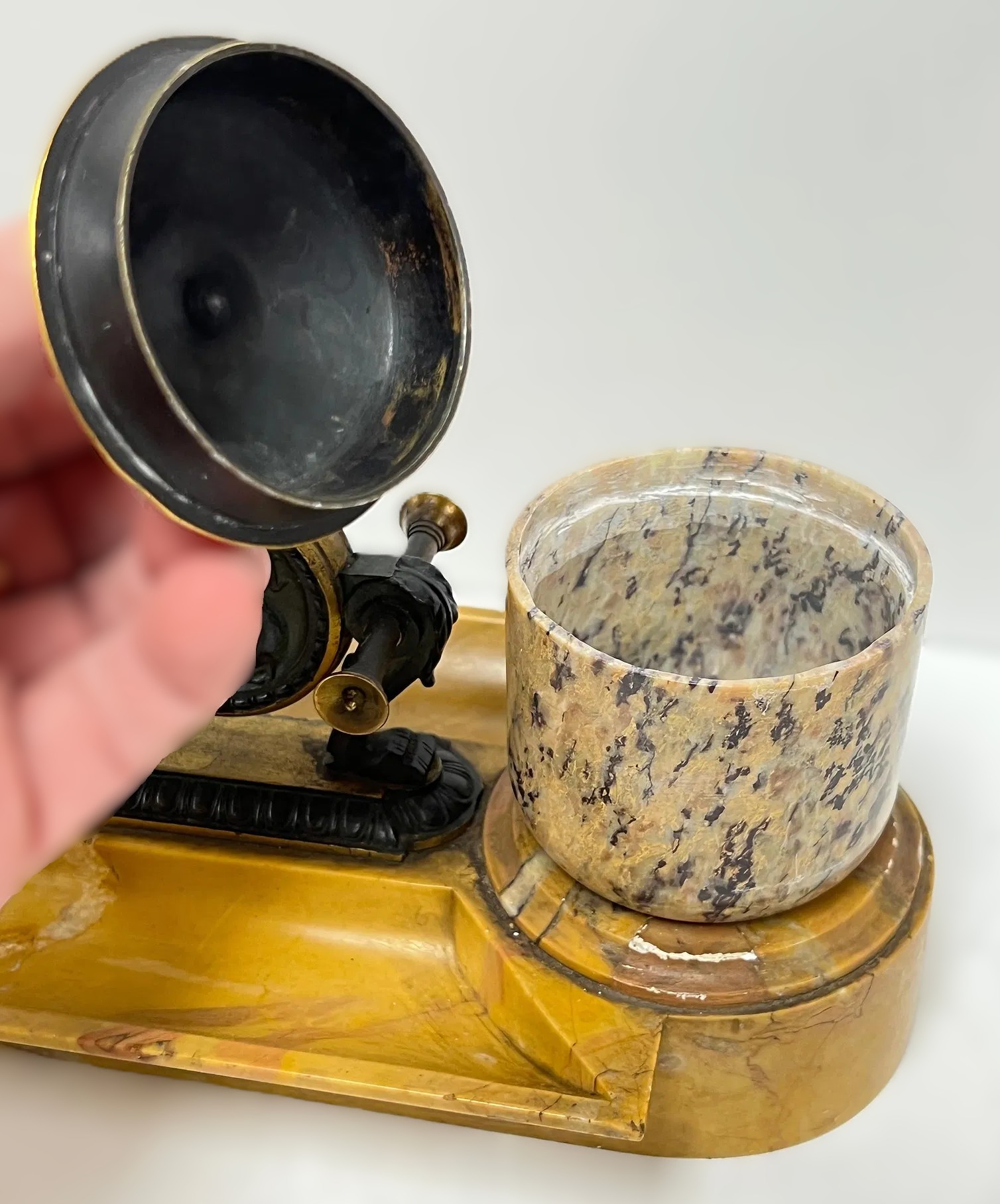
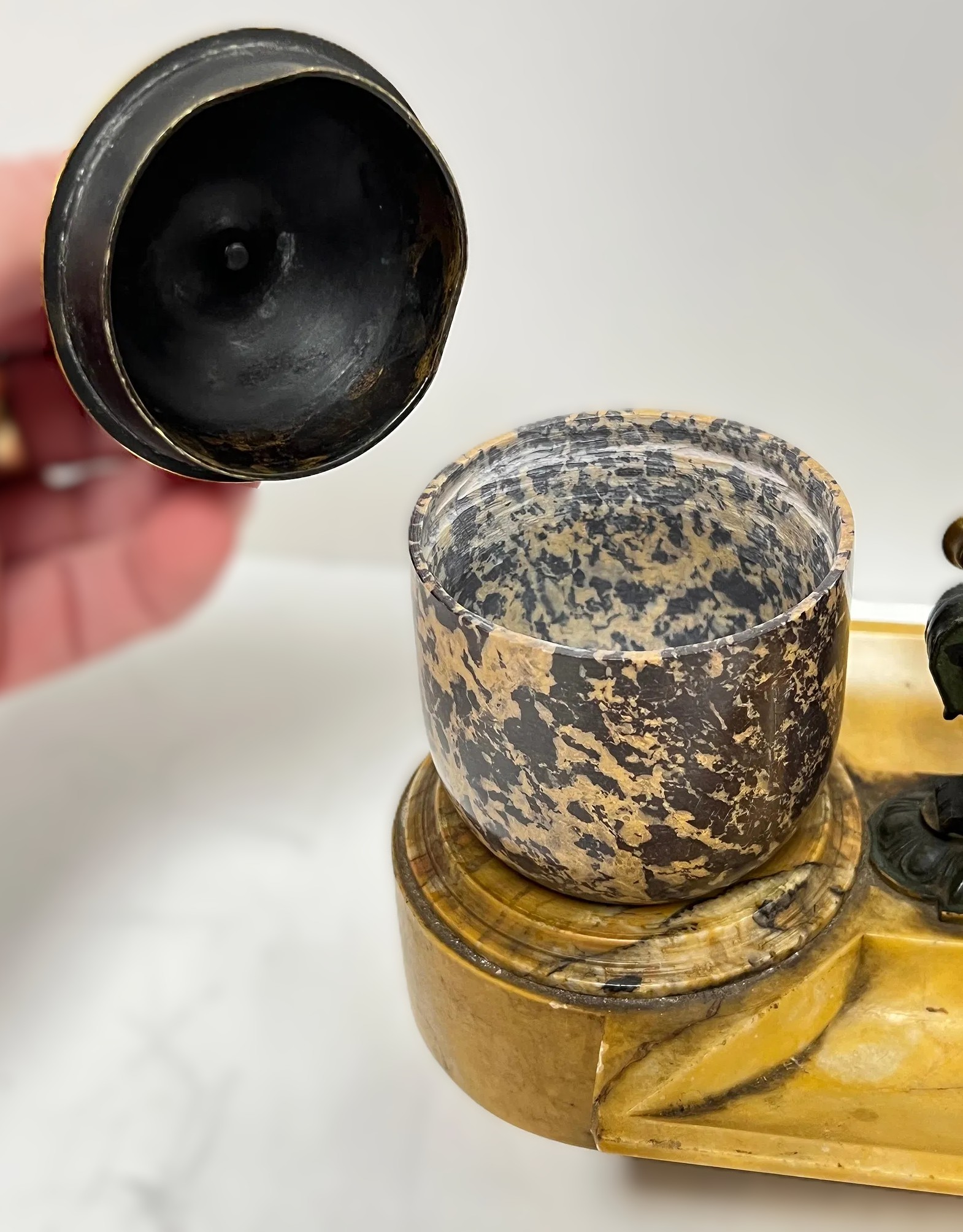
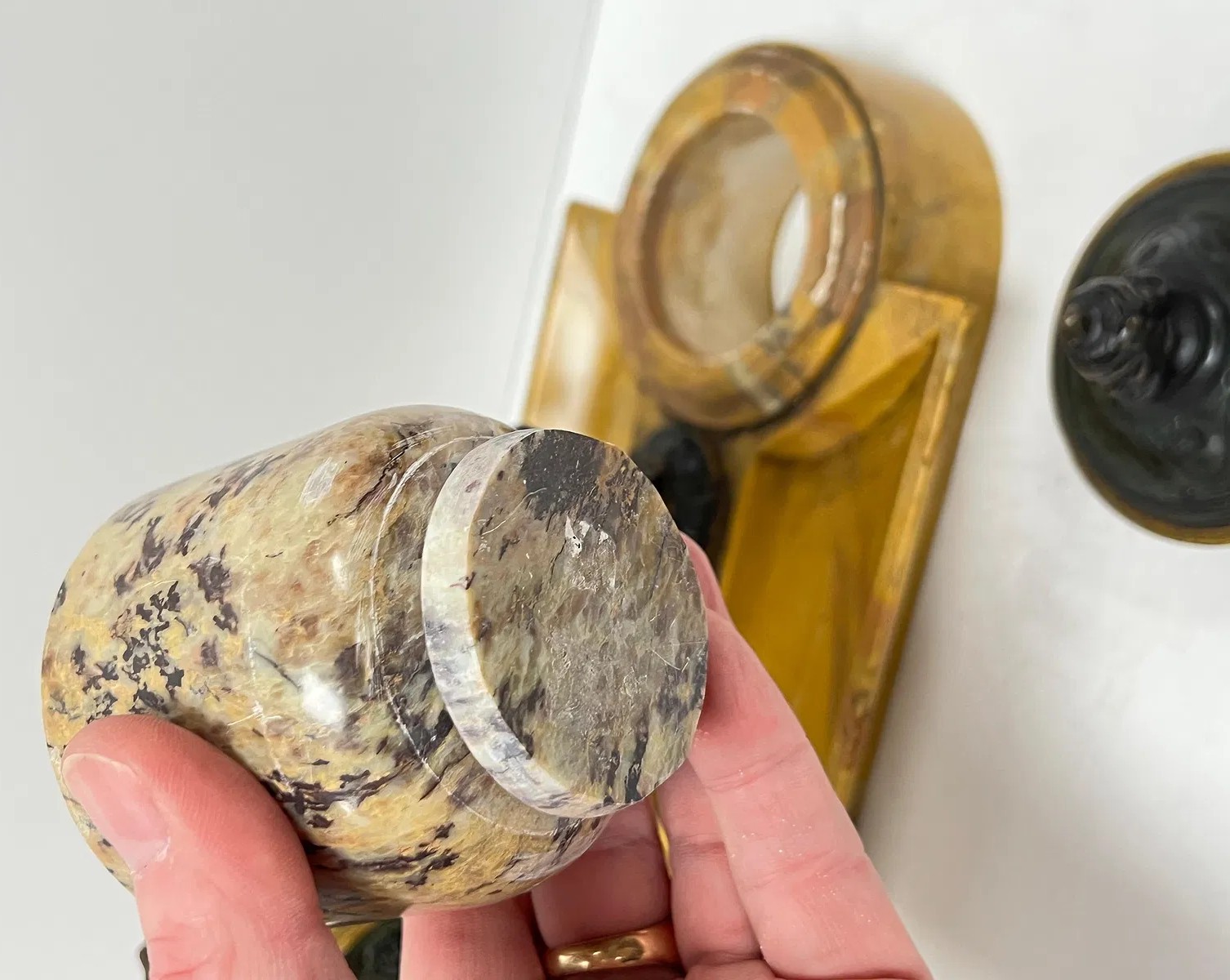
The Base and Structure The inkstand is anchored by a substantial, stepped rectangular base of Giallo di Siena (Siena Yellow) marble. A deep, chamfered pen tray is carved directly into the forepart of the marble, showcasing the stone’s characteristic warm ochre hues and delicate “broken” veining.
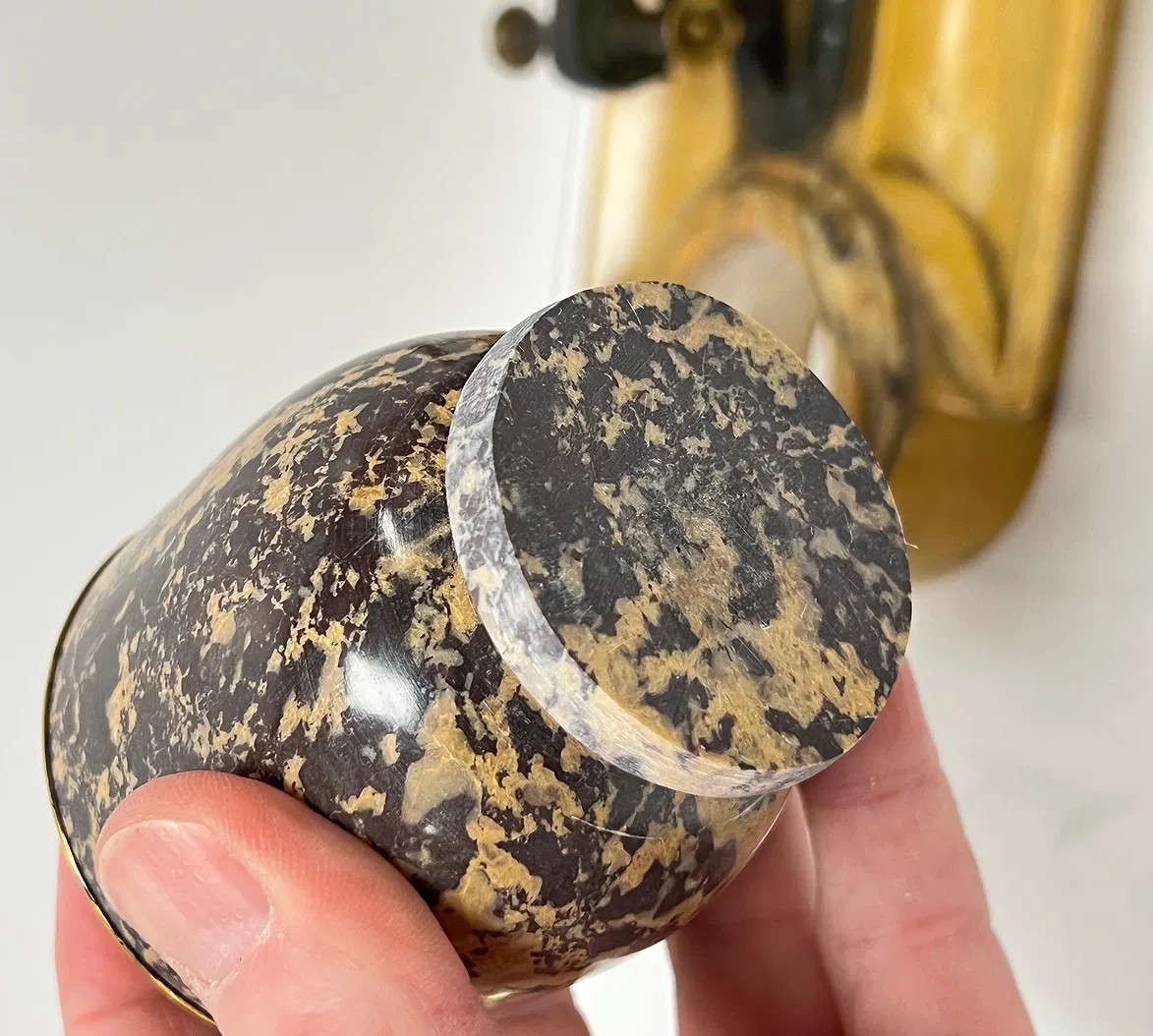
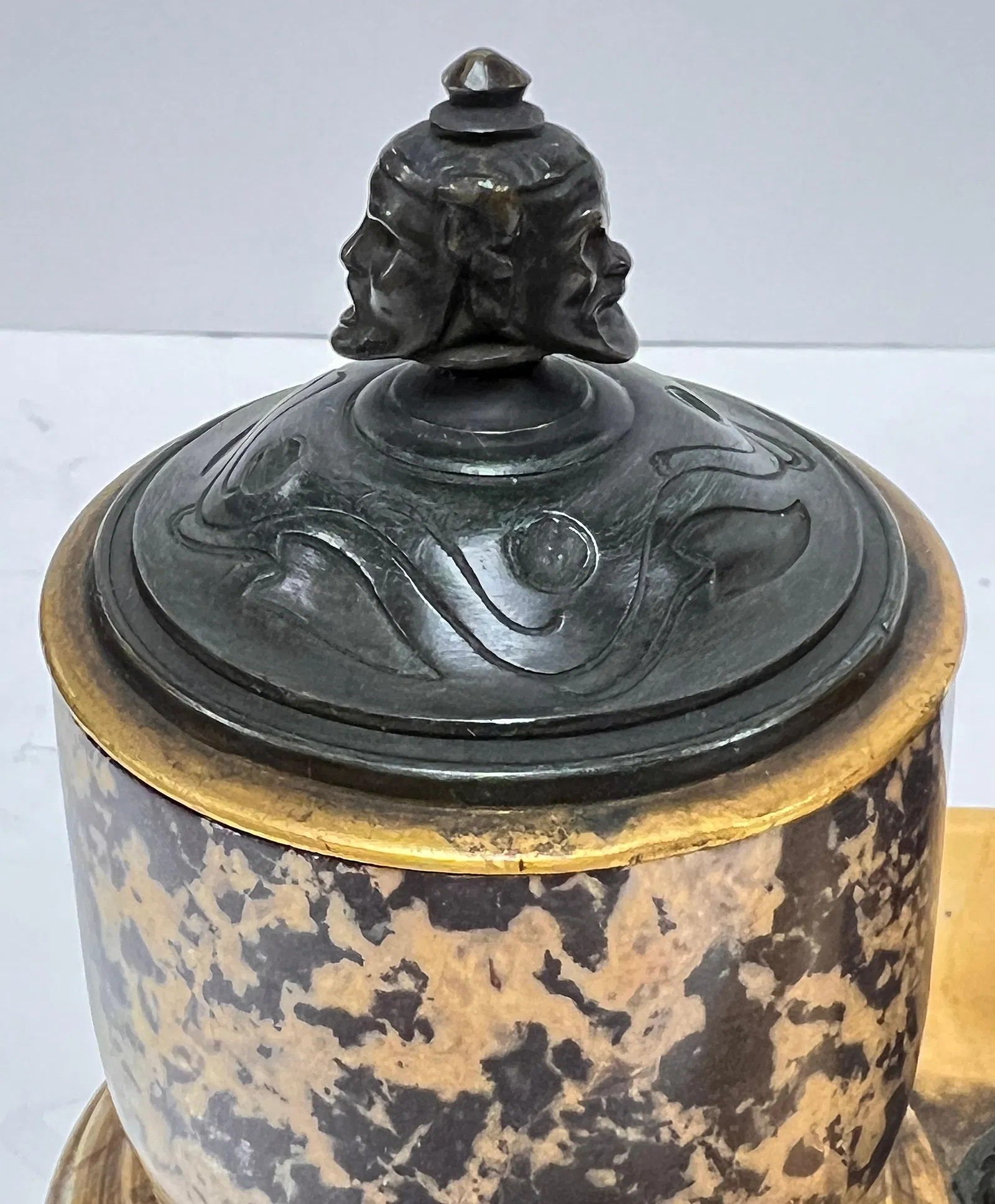
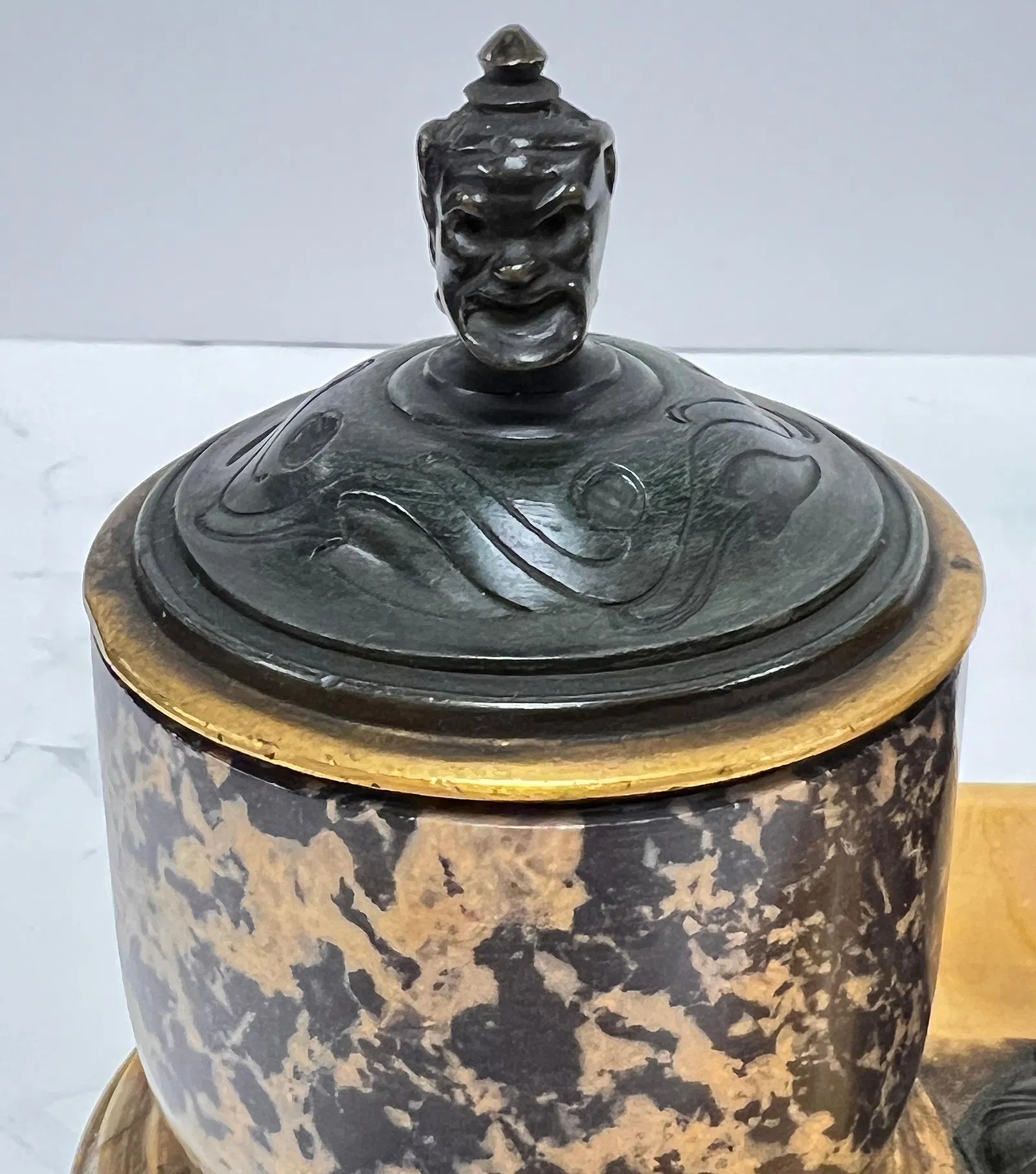
The Inkwells Flanking the central mount are two drum-shaped inkwells. These are crafted from a contrasting brecciated marble— Portoro (Black and Gold) or a dark Broccatello di Siena. The heavy, dark veining of the wells provides a sophisticated counterpoint to the golden base. Each well is topped with a patinated bronze lid featuring a decorative border and a prominent mascaron finial. These finials are cast as expressive theatrical or “grotesque” masks, a classic Roman motif representing the arts or mythology.
The Central Bronze Mount The centerpiece is an architectural bronze structure with a rich, dark patina. It features a horizontal spindle-turned handle supported by two baluster-form uprights. Between these supports are two circular bas-relief medallions set within gilded or polished bronze borders. The base of this central element is decorated with a gadrooned (ridged) pattern, resting on a pedestal that separates the two wells.
The Allegorical Scenes
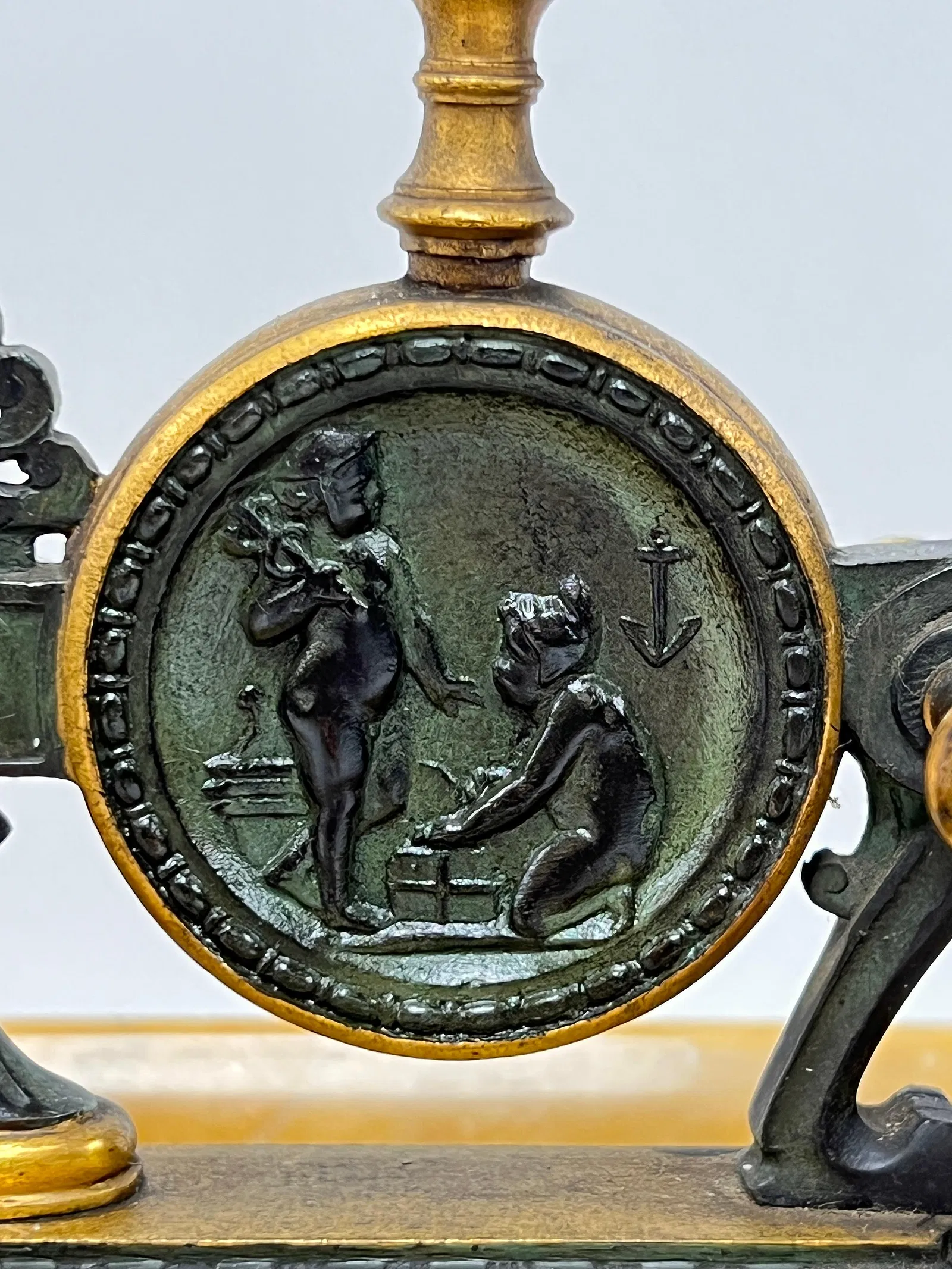
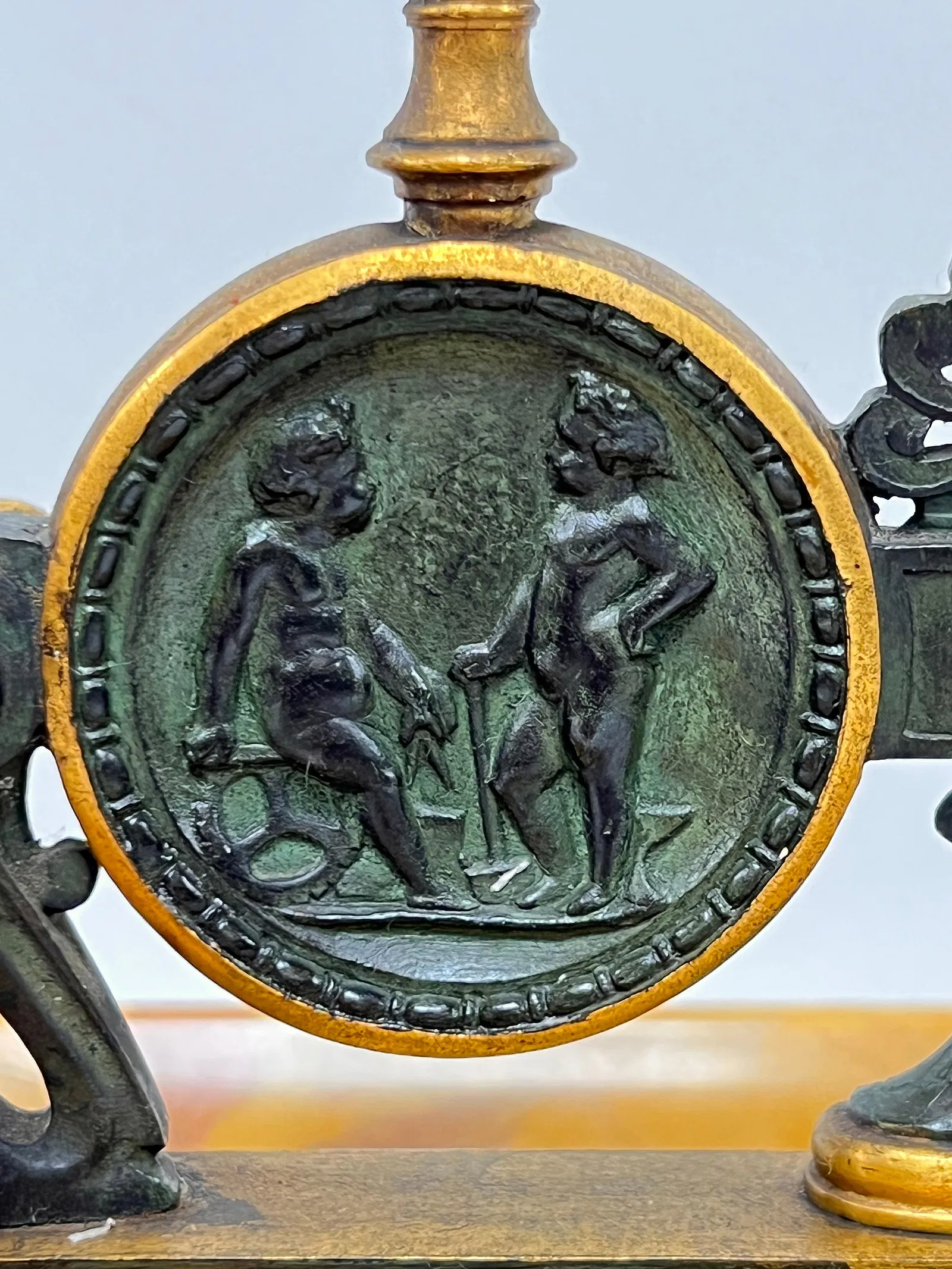
The medallions feature winged putti (cherubs) engaged in scenes that serve as allegories for the foundations of a prosperous society—specifically Industry, Navigation, and Trade.
- The Left Medallion (Industry & Progress): This scene depicts two putti. One is seated upon a large, toothed wheel or gear, which in 19th-century iconography typically represents Industry and mechanical progress. The standing putto holds a staff, possibly a caduceus (symbol of commerce) or a simple traveler’s staff, suggesting the movement of goods produced by industry.
- The Right Medallion (Navigation & Commerce): This scene represents maritime strength and wealth. A prominent anchor stands in the background, the universal symbol for Navigation (and traditionally, Hope). One putto stands beside it while the second putto kneels to open or inspect a treasure chest or shipping crate. Together, they represent the arrival of wealth through sea trade.
Summary of Specifications
- Style: Roman Neoclassical / Grand Tour Revival.
- Date: Circa 1880.
- Materials: Giallo di Siena marble, Portoro/Broccatello marble, patinated and gilded bronze.
- Key Features: Dual inkwells, allegorical putti medallions, mascaron finials, and integral pen tray.
Sold for $2375 in April 2026
Content disclaimer. The information posted is the owner’s best knowledge and may not have been vetted by the SOIC. We welcome comments, corrections, and additions, working to make our website information comprehensive and accurate.
Join the Society of Inkwell Collectors (SOIC) – it’s free!
Founded in 1981 as a non-profit organization,
we are documenting inkwells (and accessories).
We’re here to help and inform!