




Scottish Highland Horn Compendium
| Categories | Dual Purpose Inkstands, Stone/Marble/Ivory/Bone/Hoof/Leather |
| Material | Glass, Horn/Bone/Tusk, Silver, Wood |
| Markings | See Narrative |
| Manufacturer | Comyns, William |
| Origin | Scotland |
| Date or Era | circa 1895 |
This 19th-century Scottish Victorian functional desk compendium combines an inkstand, a clock, and a weather station.
Here is a detailed breakdown of the materials, markings, and history of this piece:
- The Materials: Oak & Highland Horn
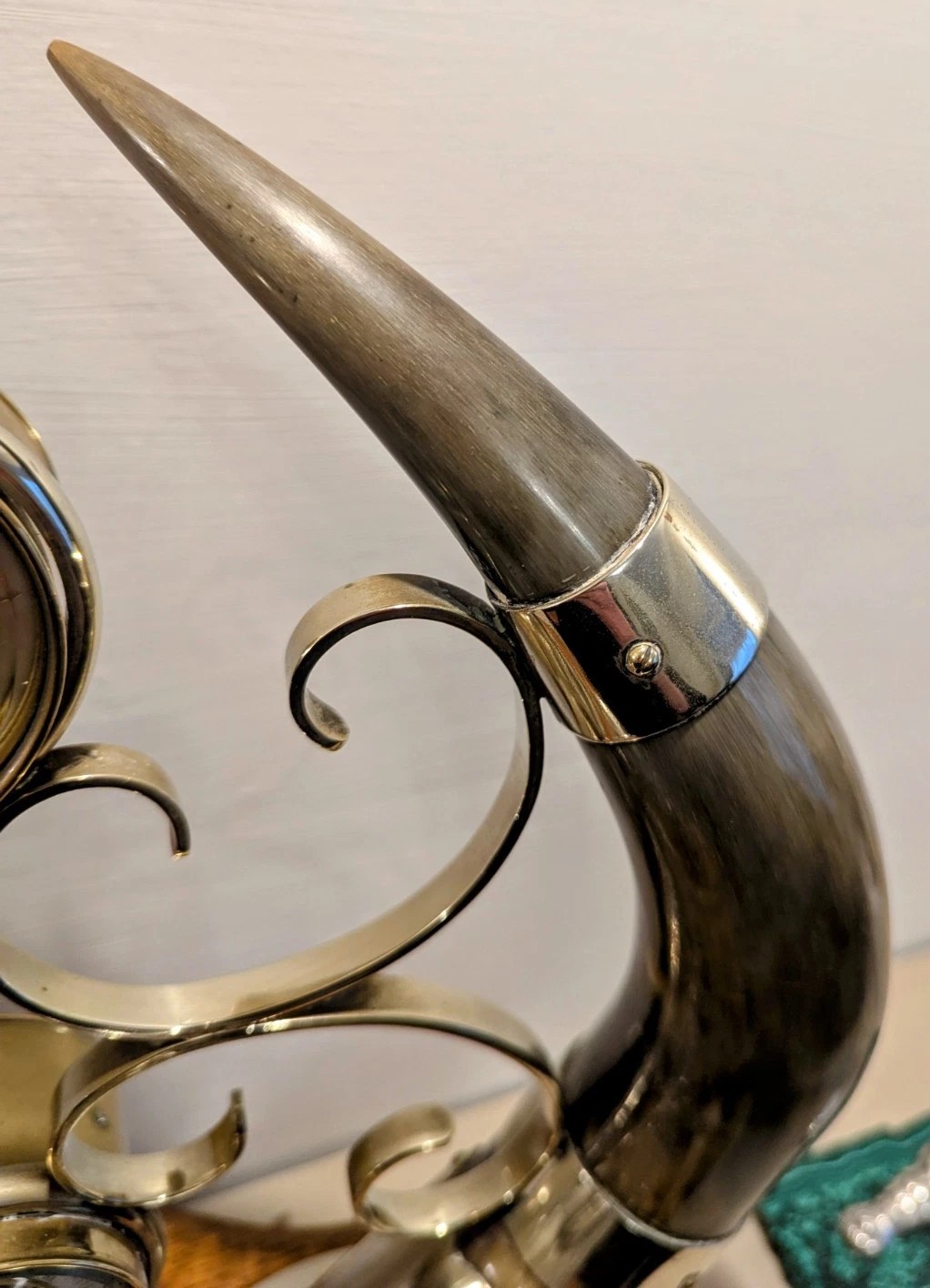
- The Horns: These are the long, characteristic horns of Scottish Highland Cattle. During the Victorian era (particularly after Queen Victoria popularized the “Highland” style), such horns were frequently used to create “novelty” furniture and desk accessories like inkstands, snuff mulls, and even chairs.
- The Base: The wood is oak, specifically showing the prominent “medullary rays” (the flecked grain pattern) typical of quarter-sawn oak, often referred to as “Tiger Oak.”
- The Instruments: A French-Scottish Collaboration
While the stand is Scottish in style, the movements are high-quality imports:
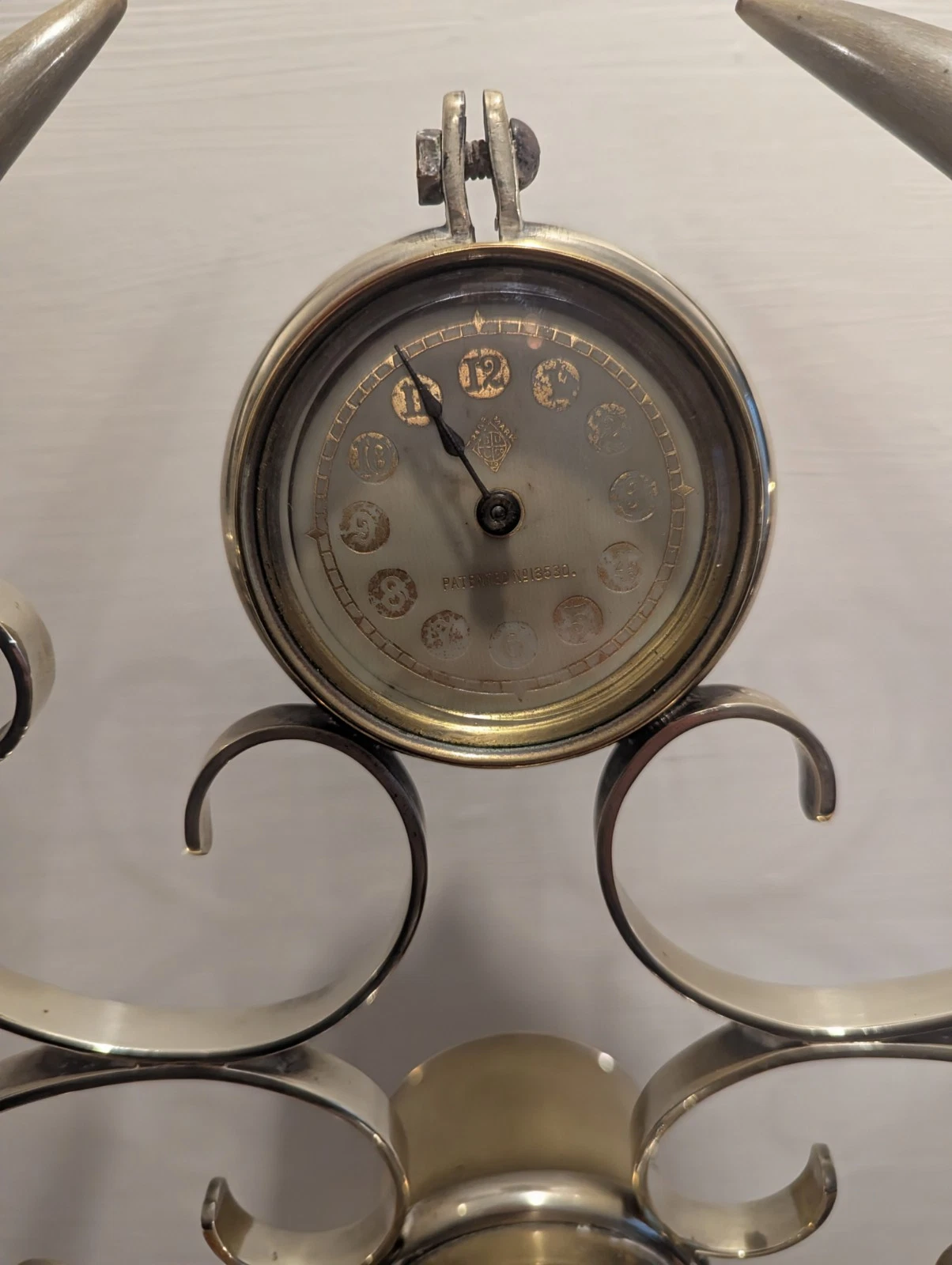
- The Clock (Top): Features a white enamel dial with a small logo inside a diamond shape at the 12 o’clock position. The “Patented No. 13530” suggests a specific design for the movement or the case attachment.
- The Barometer (Bottom): This is an Aneroid Barometer (indicated by the “Stormy / Rain / Change / Fair” dial).
- The Maker’s Mark: The back plate shows a distinct “N-B” with an arrow pointing right. This is the mark of Richard & Cie (Richard & Co.), a major late 19th-century firm with branches in Paris and London. They were famous for importing high-end French clock movements to the UK. The text below it likely reads “Brevete S.G.D.G.” (the French patent mark) and “Made in France.”
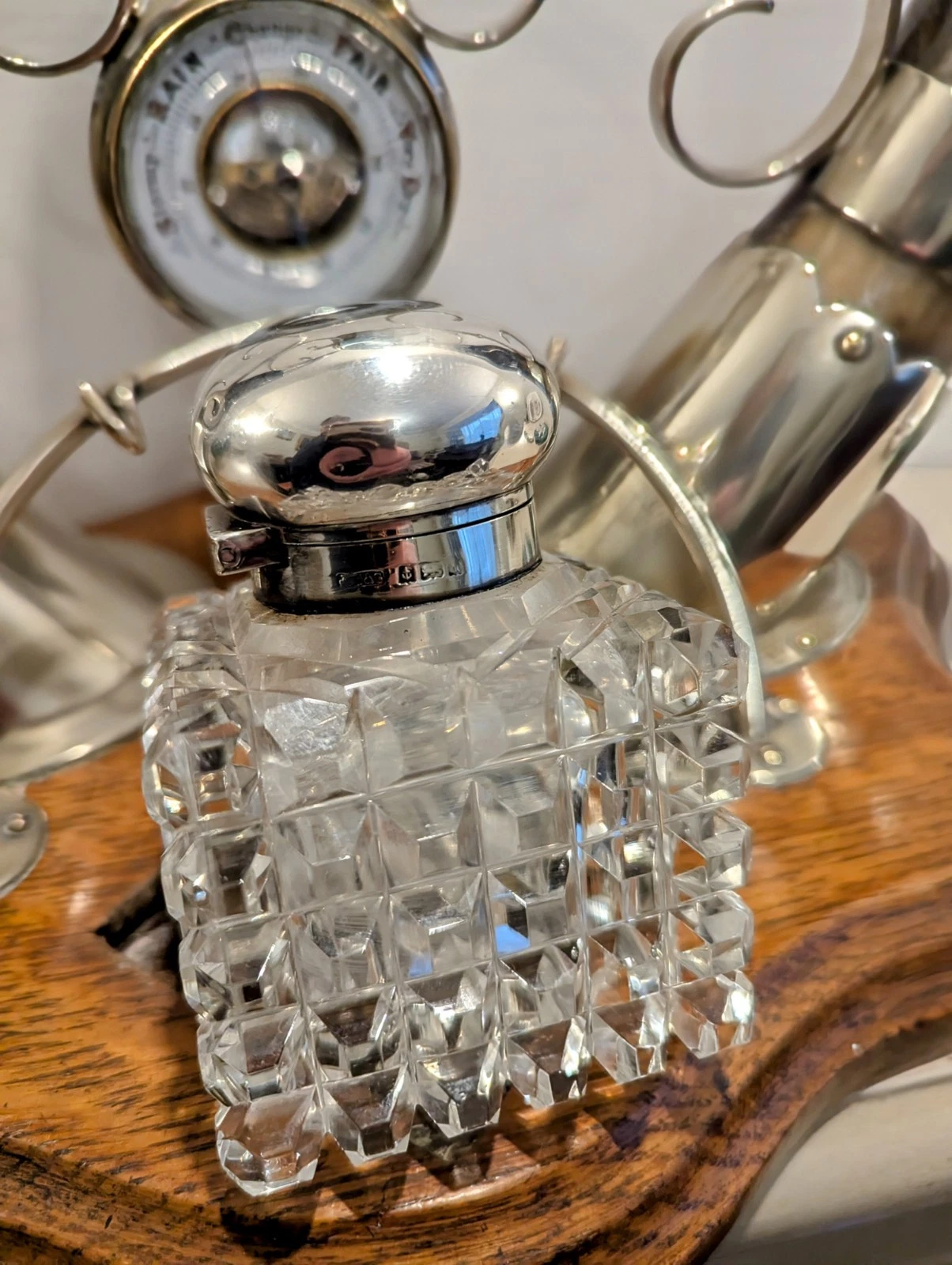
- The Sterling Silver Inkwell (Hallmarks)
- Lion Passant: The “walking lion” confirms the top is Sterling Silver (.925 purity).
- Leopard’s Head: This is the assay mark for London.
- Date Letter: The lowercase “u” in a shield-shaped cartouche dates this specific silver component to 1895. (If it’s a “v”, it would be 1896).
- Maker’s Mark: The initials (partially obscured, but appearing to be “W.C”) belong to the silversmith who made the mount—common London makers of the time included William Comyns or William Comyns & Sons, who specialized in high-end silver desk items.
- The Glass: The inkwell itself is made of heavy-cut crystal, featuring a classic strawberry diamond or hobnail pattern.
- Additional Features
- Decorative Scrollwork: The instruments are held in place by elegant nickel-silver or silver-plated brass scrollwork, which matches the curved aesthetic of the horns.
- Pen Rests: The curved metal bars in front of the barometer and behind the inkwell serve as pen rests for dip pens.
- The Finials: Notice the polished tips of the horns; these were often capped with silver or brass, but here they have been polished to a high natural shine, showing the beautiful “honey and charcoal” transition of the natural keratin.
Summary:
Object: Victorian Scottish Highland Horn Desk Compendium. Origin: Scotland (Stand/Assembly) / France (Clock & Barometer movements). Date: c. 1895. Components: 8-day clock, Aneroid barometer, sterling silver-mounted cut-glass inkwell. Marks: Richard & Cie “N-B Arrow” (Movement); London 1895 Sterling Hallmarks (Inkwell).
Sold for $1000 in February 2026
Content disclaimer. The information posted is the owner’s best knowledge and may not have been vetted by the SOIC. We welcome comments, corrections, and additions, working to make our website information comprehensive and accurate.
Join the Society of Inkwell Collectors (SOIC) – it’s free!
Founded in 1981 as a non-profit organization,
we are documenting inkwells (and accessories).
We’re here to help and inform!