






Samurai Shokai Japanese Dragons
| Categories | Far East / Oriental |
| Type | Dragon |
| Material | Silver |
| Markings | See Narrative |
| Manufacturer | Samurai Shokai |
| Origin | Japan |
| Date or Era | circa 1900 |
| Measuring | 5” x 2 ½” x 3” high |
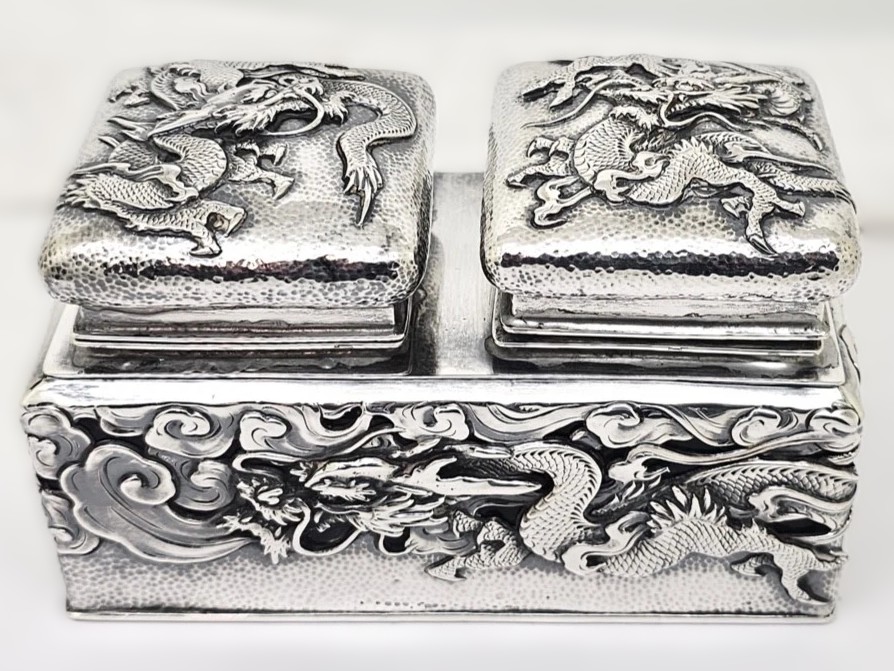
This Samurai Shokai double inkwell is an exceptional piece of Japanese Meiji-era export silver, representing the height of craftsmanship produced in Yokohama for the international luxury market.
Physical Description
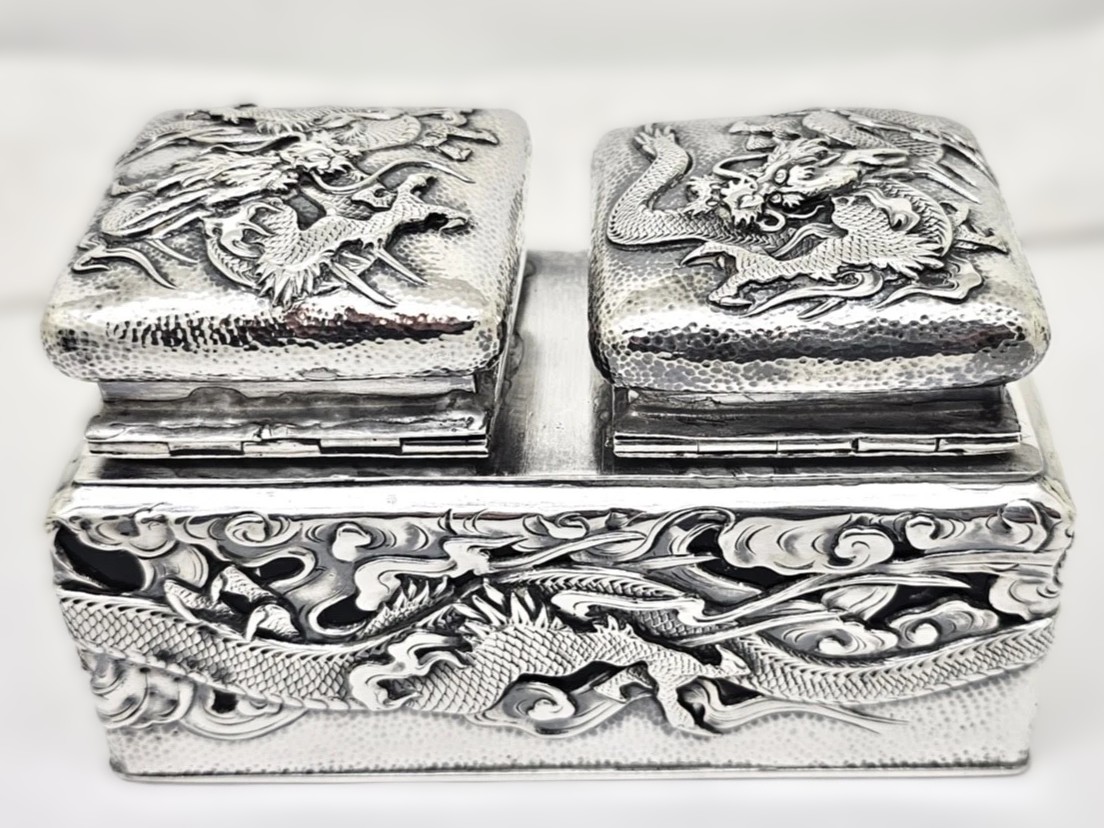
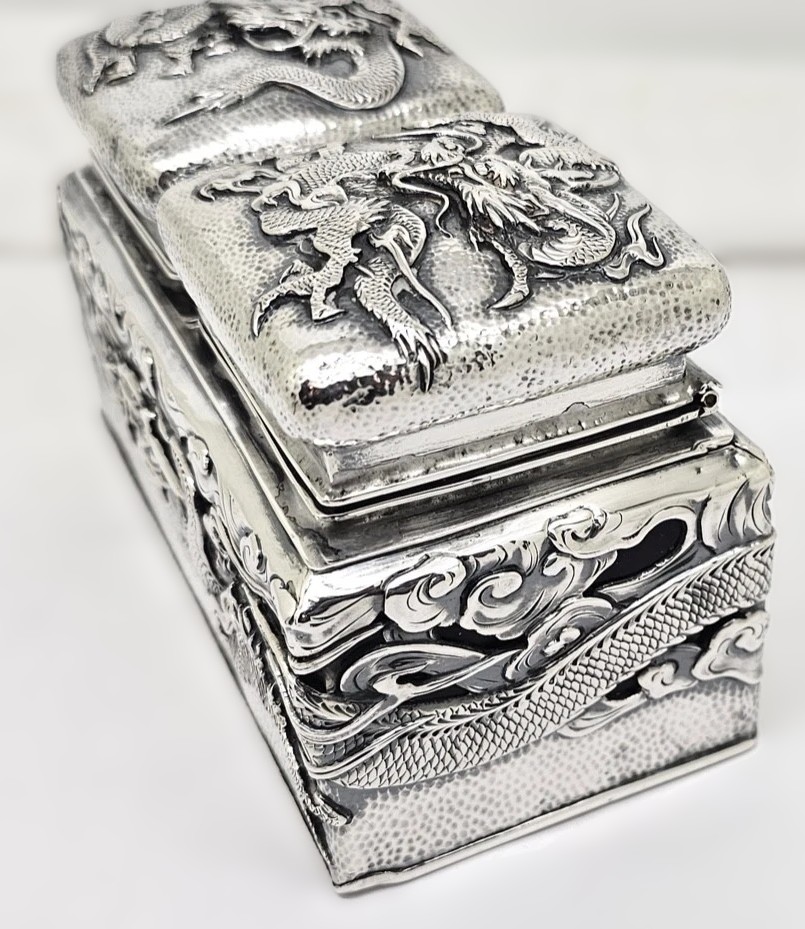
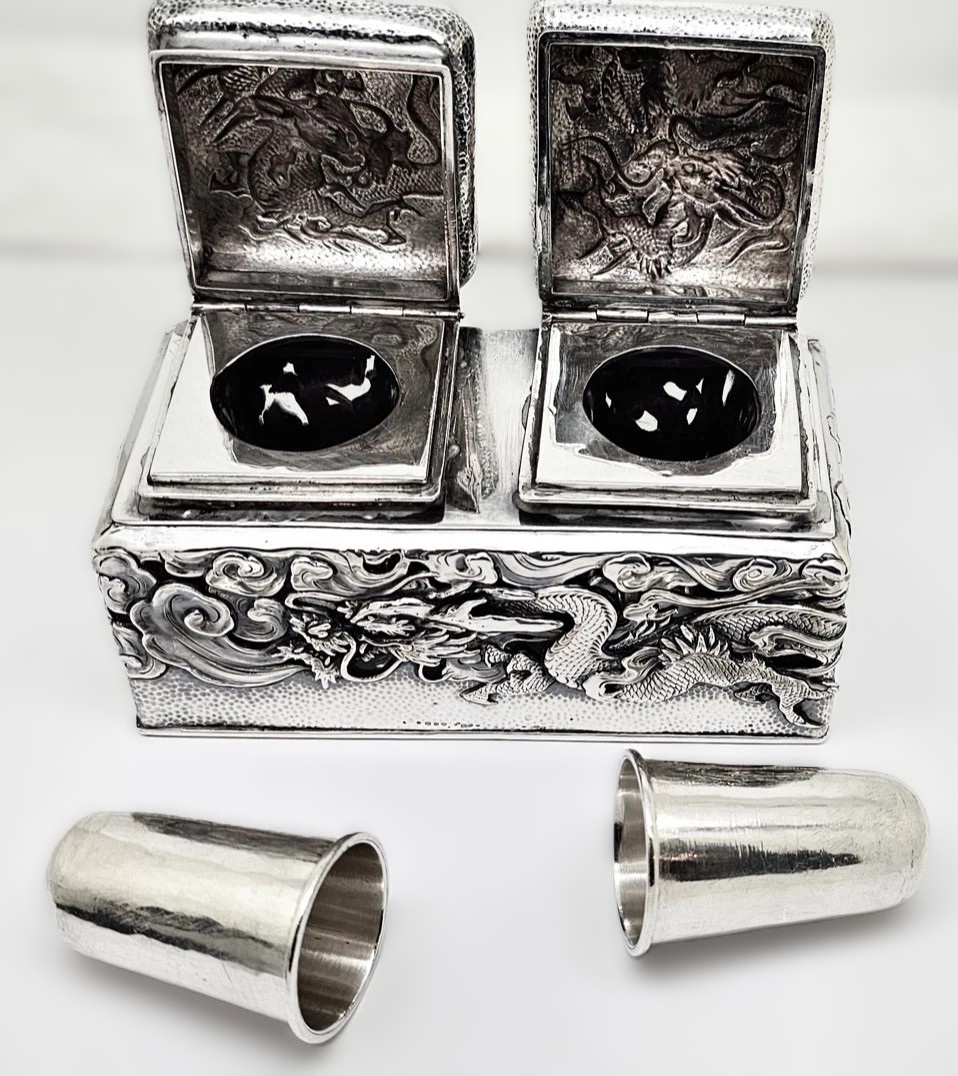
- The Structure: The inkwell consists of two glass reservoirs encased in an ornate silver overlay.
- The Decoration: The silverwork features high-relief Japanese dragons (Ryū) winding through a stylized background of “swirling clouds” or “roiling waves”. The dragon is meticulously chased with individual scales, sharp claws, and expressive facial features.
- The Inkwells: The two central wells feature hinged silver lids decorated with matching dragon motifs. Inside the glass housings are two removable sterling silver inserts, which would have held the ink.
Maker & Origin: Samurai Shokai
The stamp on the base, “Samurai Shokai / Yokohama,” identifies one of the most famous retailers and manufacturers of the Meiji period.
- The Company: Founded by Yozo Nomura in 1894, Samurai Shokai was an elite purveyor of “Fine Arts and Curios”. Based in the port city of Yokohama, the firm specialized in catering to wealthy Western travelers and dignitaries.
- The Craftsmanship: While Samurai Shokai was a retail “Shokai” (trading company), they employed many of Japan’s finest silversmiths and metalworkers who had lost their traditional patronage after the samurai class was abolished. This led to a “Golden Age” of Japanese export silver characterized by the technical skill seen in this dragon inkwell.
- The Marks: The presence of the Japanese silver mark (the character for “Jungin” or “Pure Silver,” meaning at least .950 to .1000 purity) alongside the company name confirms the high quality of the metal.
Estimated Age
This inkstand was manufactured between 1895 and 1910. This period represents the peak of the “Yokohama Style”—a unique fusion of traditional Japanese mythological themes with Western functional forms like the double desk stand.
Historical Significance
Samurai Shokai was world-renowned for its “fair dealing” and high standards, often receiving mentions in early 20th-century travel guides as the premier destination for silver and cloisonné in Japan. Items from this maker are sought after by collectors of Meiji-era art because they represent the final flourish of traditional Japanese hand-tooling before mass production became the norm.
Sold for $797 in December 2025
Content disclaimer. The information posted is the owner’s best knowledge and may not have been vetted by the SOIC. We welcome comments, corrections, and additions, working to make our website information comprehensive and accurate.
Join the Society of Inkwell Collectors (SOIC) – it’s free!
Founded in 1981 as a non-profit organization,
we are documenting inkwells (and accessories).
We’re here to help and inform!