

Inkipedia


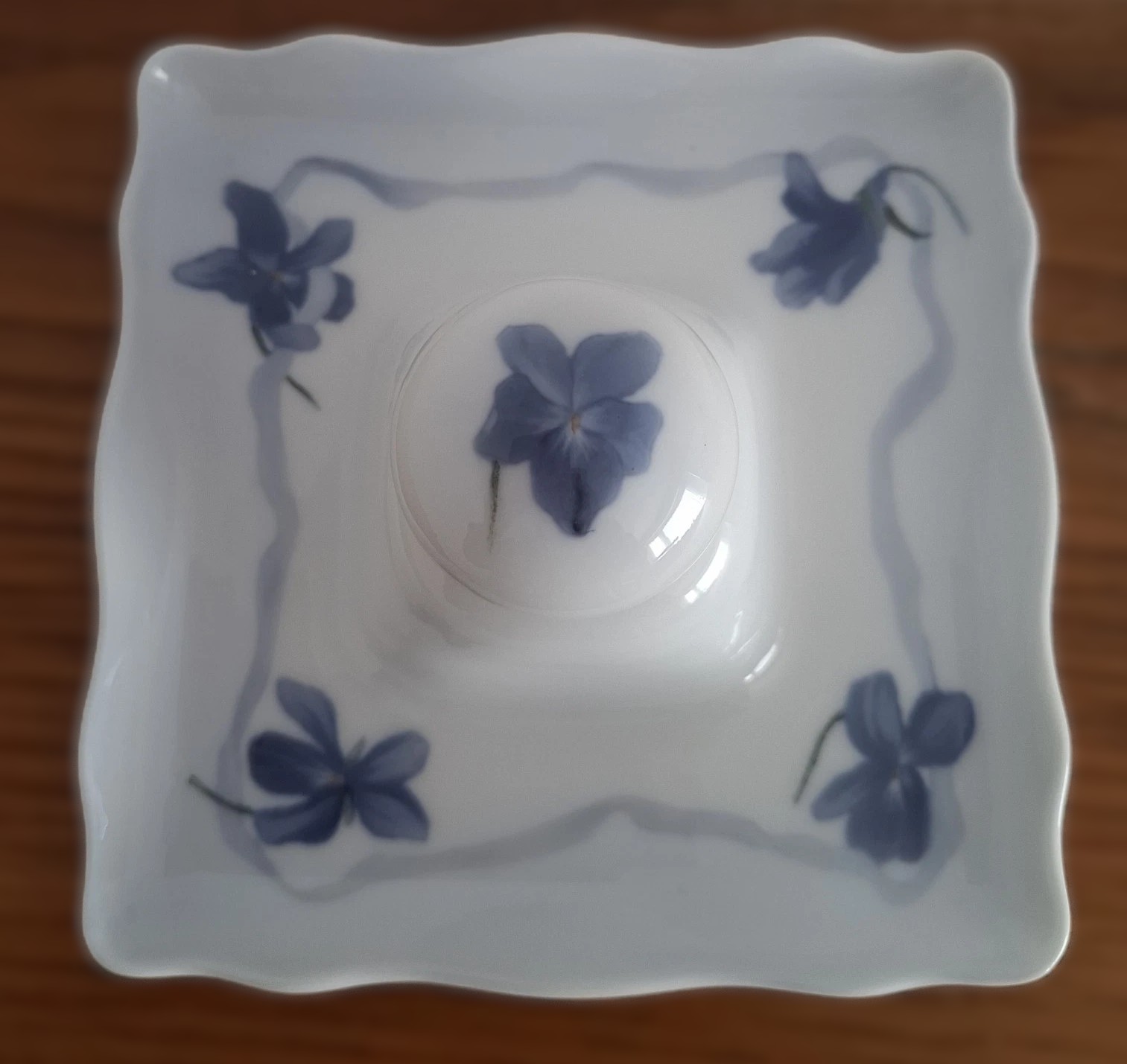

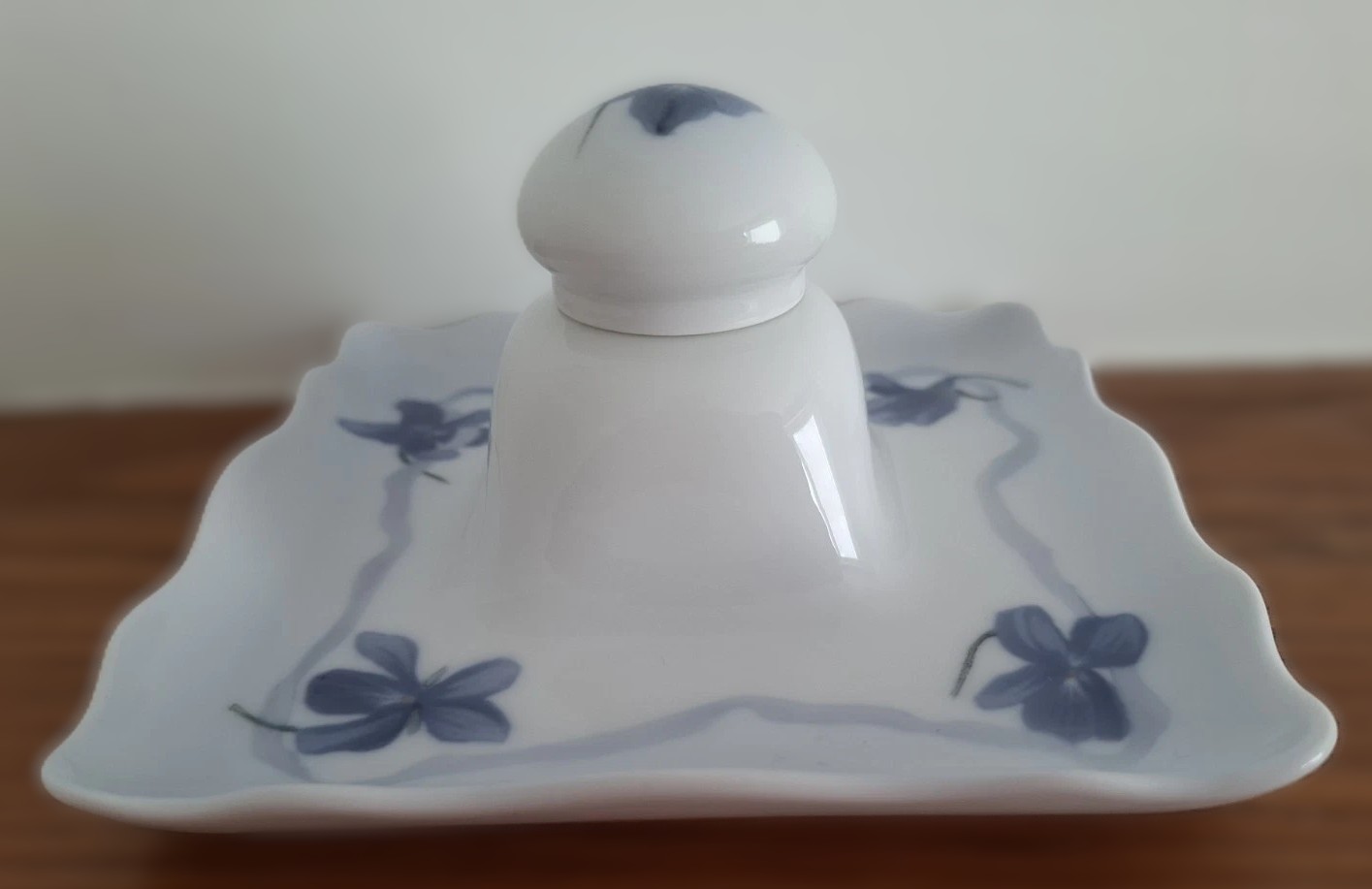


Royal Copenhagen Inkstand
| Categories | Ceramics/Porcelain "Named" Makers |
| Material | Porcelain |
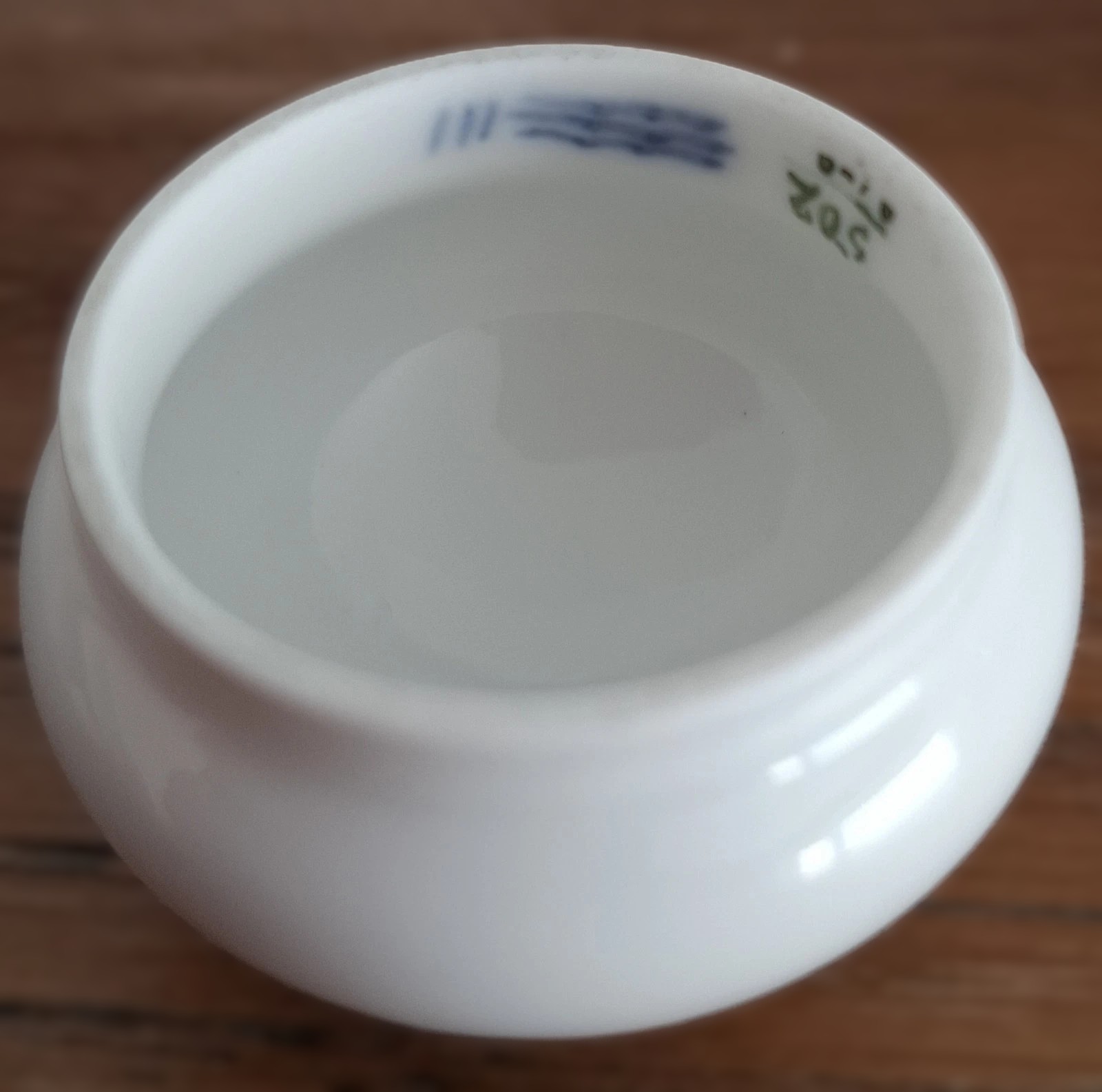
| Markings | See Narrative |
| Manufacturer | Royal Copenhagen |
| Origin | Denmark |
| Date or Era | circa 1910 |
| Measuring | 6” x 6” x 3 ⅛” high |
- Inkstand Description
- Manufacturer: The Royal Porcelain Factory, Copenhagen, Denmark (Royal Copenhagen).
- Form: A single, shallow rectangular inkstand.
- Material: Fine Hard-Paste Porcelain.
- Decoration (Style): The decoration is in the classic underglaze blue and white style that Royal Copenhagen popularized. The design features a delicate, stylized floral or botanical motif (violet or wild pansey) applied around the perimeter and center of the piece.
- Components:
- Base/Tray: The body of the standish has a shallow tray and a raised rim for resting a pen.
- Inkwell: A circular depression holds the inkwell. The piece has an integrated porcelain lid covering the inkwell.
- Deciphering the Marks and Dating
The underside markings on Royal Copenhagen porcelain are precise and allow for dating and identification:
| Mark/Number | Interpretation & Confirmation |
| Three Wavy Lines | The official factory mark since 1775, representing the three narrow Danish waterways (Storebælt, Lillebælt, and Øresund). |
| Crown & Initials | The main factory stamp. The style (specifically the absence of the word “Denmark” beneath the mark, which was later added) helps with dating. |
| Model/Shape No. (258) | Confirmed: This is the model or shape number for this particular inkstand design. |
| Dating Marks (Lines/Dots) | Confirmed: The presence of a small line or mark beneath the letter in “Copenhagen” (or another letter in the stamp) indicates the year of production. A dating mark between 1898 and 1923 is typical for this period. |
| Painter’s Number (111) | Confirmed: This is the number assigned to the painter or decorator who executed the underglaze work. This links 111 to J. Hanschell (1904–1931). |
| Additional Number (502) | Likely a Lot/Assortment Number or Secondary Decorator’s Mark: This is often a batch number, size number, or color variation code used internally by the factory, or possibly a number for a second painter. |
Based on the combination of the painter’s dates and the general factory mark style, 1904 – 1923 is an excellent and accurate date range.
Information about Royal Copenhagen
- Establishment: Founded in 1775 by Queen Juliane Marie of Denmark.
- Royal Patronage: The company has been under royal patronage since its founding, which is why it holds the title “Royal.”
- Signature Style: The most famous and enduring pattern is “Blue Fluted” (Musselmalet), which was introduced early in the factory’s history and is based on Chinese blue-and-white porcelain. This piece’s style is a variation or derivative of this classic blue underglaze technique.
- Underglaze Painting: Royal Copenhagen is famous for pioneering the use of underglaze painting, which results in the characteristic soft, integrated colors that sink into the glaze. This technique often uses cobalt oxide to create the rich blue color.
- Artistic Merit: During the late 19th and early 20th centuries (the period of this inkstand), Royal Copenhagen emphasized artistic quality, attracting noted designers and sculptors, and it gained international fame at exhibitions like the 1889 Paris Exposition Universelle.
Sold for $75 in October 2025
Content disclaimer. The information posted is the owner’s best knowledge and may not have been vetted by the SOIC. We welcome comments, corrections, and additions, working to make our website information comprehensive and accurate.
Join the Society of Inkwell Collectors (SOIC) – it’s free!
Founded in 1981 as a non-profit organization,
we are documenting inkwells (and accessories).
We’re here to help and inform!