



Royal Bayreuth “Jester” Porcelain Inkstand
| Categories | Ceramics/Porcelain "Named" Makers |
| Material | Porcelain |
| Markings | See Narrative |
| Manufacturer | Royal Bayreuth |
| Origin | Germany |
| Date or Era | circa 1910 |
| Measuring | 5” x 4 ½” x 2 ½” high |
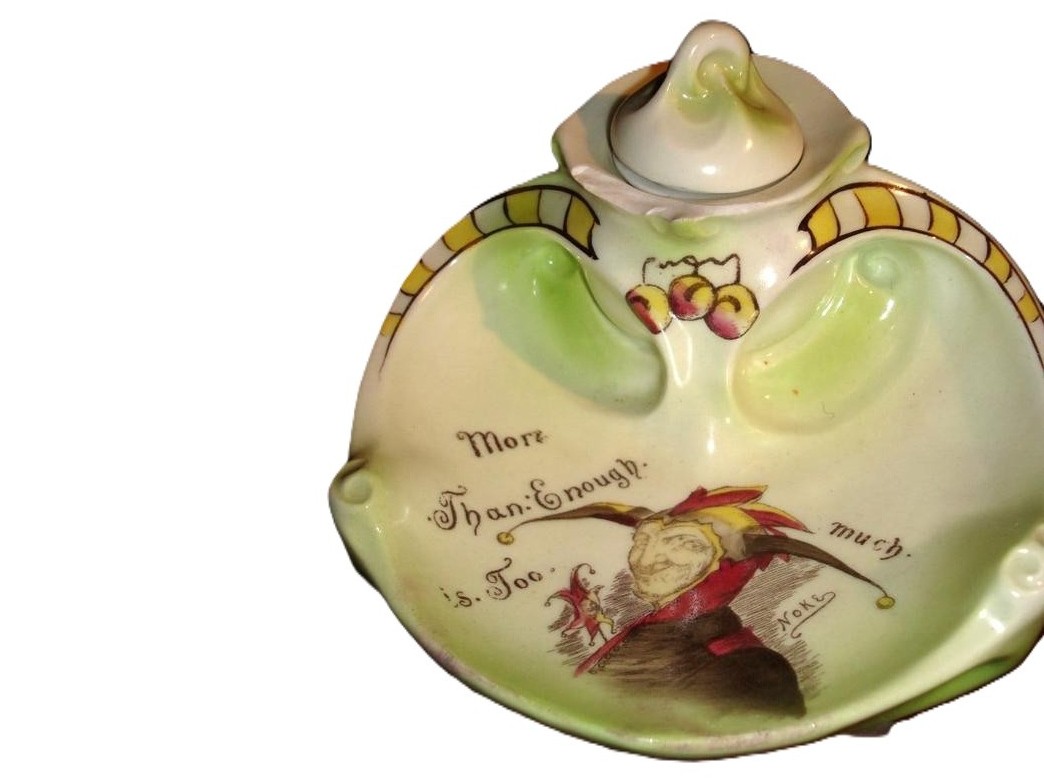
This Royal Bayreuth “Jester” Inkstand features the iconic artwork and signature of Charles J. Noke.
- Description of the Piece
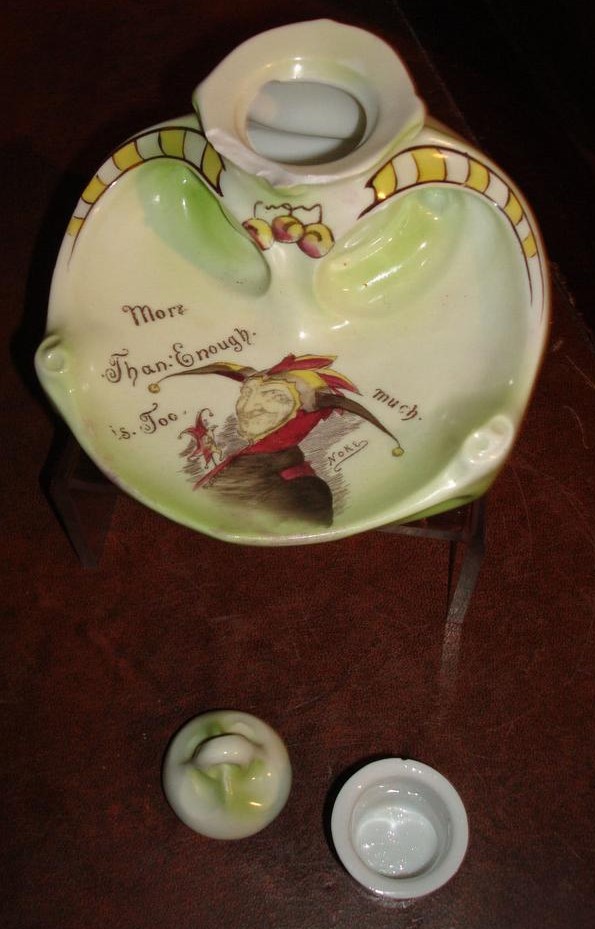
The piece is a porcelain triangular-shaped desktop inkstand. It features:
- The Well and Trays: A central inkwell opening with a fitted removable porcelain insert and a matching lid. Flanking the inkwell are two curved depressions serving as pen rests.
- The Design: A hand-painted or transfer-applied illustration of a grinning medieval Court Jester in a classic red and yellow cap ‘n’ bells, holding a marotte (a jester’s staff/bauble).
- The Signature: The illustration is signed “Noke” right next to the jester’s shoulder.
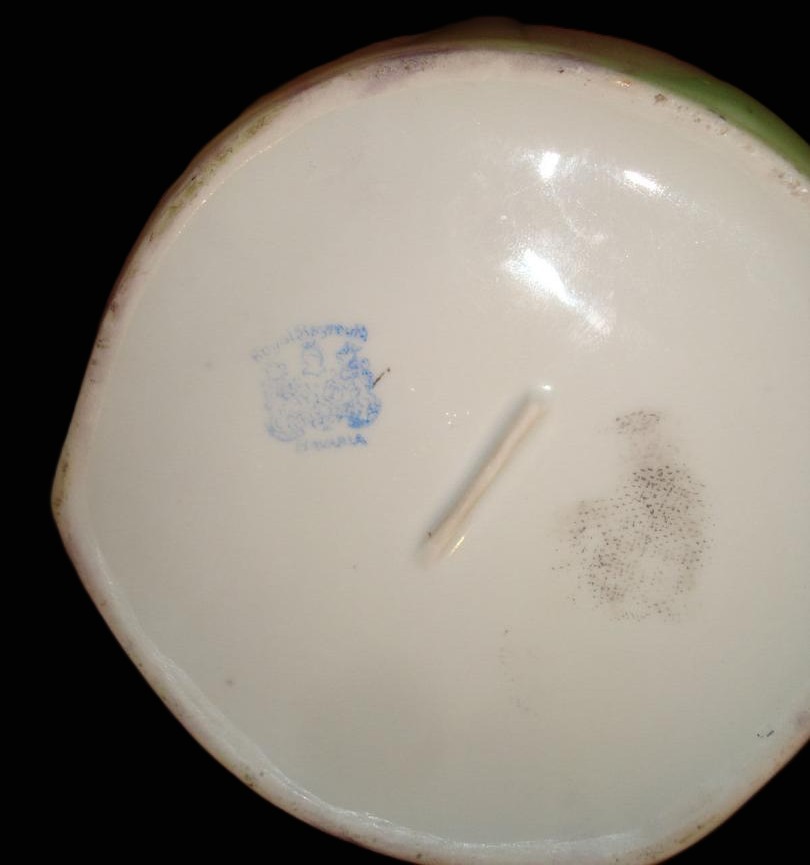
- The Maker’s Mark: The base displays the authentic blue Royal Bayreuth Bavaria lion coat of arms mark.
- When Was It Made?
Based on the specific style of the blue Royal Bayreuth Bavaria backstamp shown on the bottom of this piece, it was manufactured in the early 1900s (circa 1902–1915).
- History with Royal Bayreuth
This piece represents a fascinating cross-border connection in ceramic history.
- The Artist: Charles J. Noke was a famous English designer who spent nearly his entire career working for Royal Doulton in Staffordshire, England (eventually becoming their Art Director). He is legendary for creating Doulton’s famous character jugs and series ware.
- The Manufacturer: Royal Bayreuth is a historic German porcelain factory located in Tettau, Bavaria, renowned for its figural creamers, tapestry porcelain, and novelty items.
- The Crossover: During the late 19th and early 20th centuries, European porcelain companies frequently shared, purchased, or adapted popular illustrative themes. Royal Bayreuth produced a highly collectible “Jester Series” using Noke’s distinct illustrations. Because Royal Bayreuth utilized the original artwork, they kept Noke’s printed signature on the front of the porcelain, even though the physical ceramic item was entirely crafted and backstamped in Germany.
Because of this unique intersection, items from this specific Royal Bayreuth Jester series are scarce and sought after by collectors of both German porcelain and Royal Doulton art.
- Was “More Than Enough Is Too Much” a Famous Saying?
Yes. The inscription “More Than Enough Is Too Much” is a traditional English proverb.
- Meaning: It is a classic warning against greed and a lesson in moderation. It means that once your essential needs are fully satisfied, gathering excess or overindulging becomes burdensome, wasteful, or harmful rather than beneficial.
- Context: The saying dates back centuries and was officially compiled in Thomas Fuller’s famous 1732 book of adages, Gnomologia. It perfectly complements the theme of a “Jester” or “Fool,” as jesters were historically the only characters allowed to speak blunt, philosophical, and mocking truths to society and royalty without punishment.
- Other Sayings Used:
In the Royal Bayreuth “Jester” series featuring Charles Noke’s artwork, a handful of distinct traditional proverbs and welcoming adages were used across different shapes (such as pitchers, vanity boxes, creamers, and chambersticks).
The other primary sayings found in this specific series include:
- “Welcome is the best cheer.” This incredibly popular proverb in the series is frequently found on chamberstick candle holders, lidded tobacco jars, and covered vanity powder boxes. Like this inkstand’s phrase, it is written in a matching stylized calligraphic script alongside Noke’s signature jester vignette.
- “Come and welcome.” Often featured on smaller table items like creamers and small dishes, keeping to the hospitable, pub-ware, or dining-adjacent theme common to early 20th-century novelty pottery.
- “Come and welcome, pass by and no offense.” An extension of the “Come and welcome” phrase, this full couplet is typically seen wrapped around the bodies of larger milk pitchers and tankard-style jugs. It echoes old English tavern welcoming signs, fitting perfectly with the jovial character of a court jester.
Sold for $415 in June 2026
Content disclaimer. The information posted is the owner’s best knowledge and may not have been vetted by the SOIC. We welcome comments, corrections, and additions, working to make our website information comprehensive and accurate.
Join the Society of Inkwell Collectors (SOIC) – it’s free!
Founded in 1981 as a non-profit organization,
we are documenting inkwells (and accessories).
We’re here to help and inform!