




Rotating Multi-Inkwells
| Categories | Mechanical - Levered or Rotating Lids, Presentation Piece |
| Material | Earthenware |
| Markings | See Narrative |
| Manufacturer | Undetermined |
| Origin | England |
| Date or Era | circa 1867 |
| Measuring | 4 ¼” diameter |
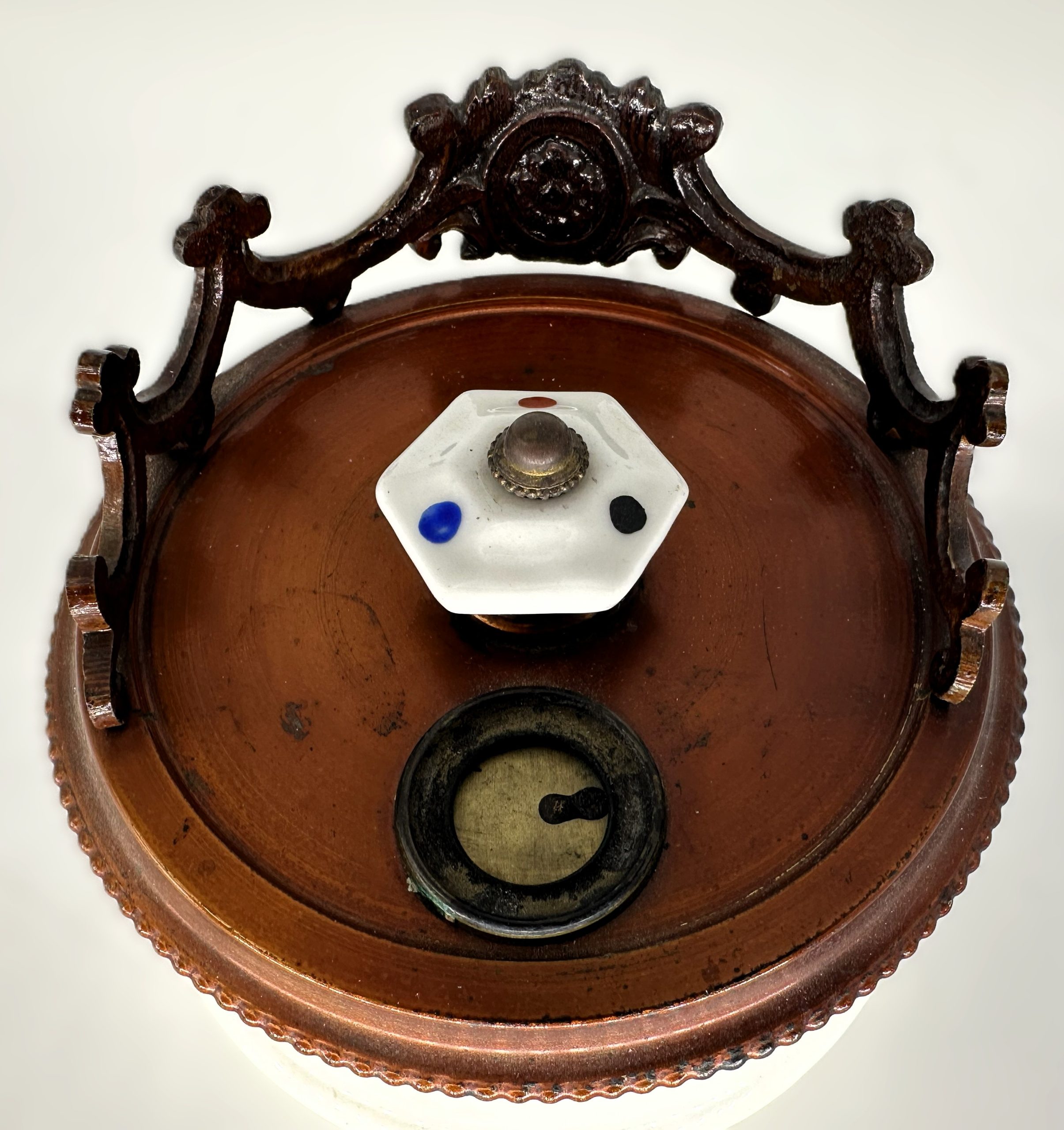
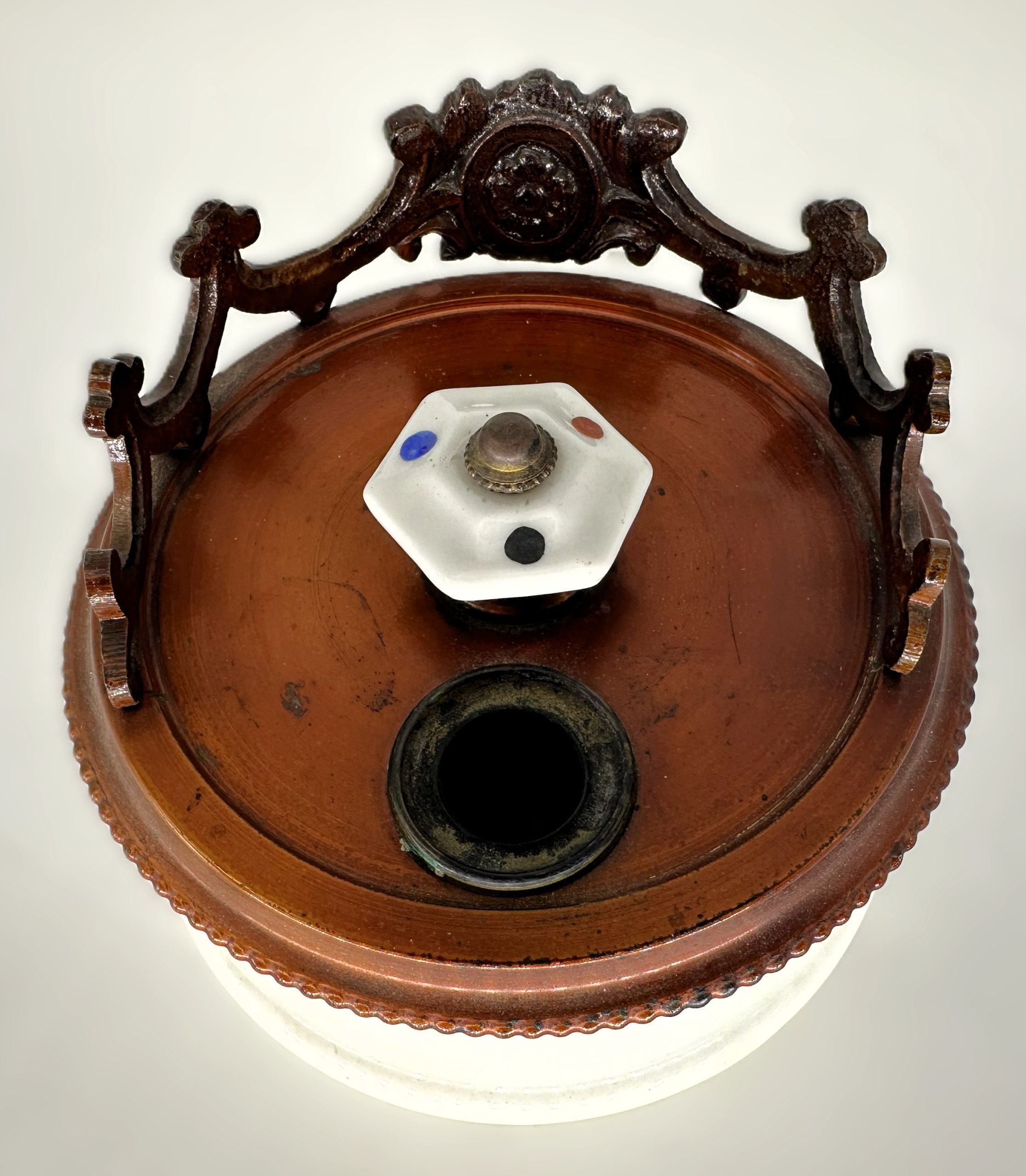
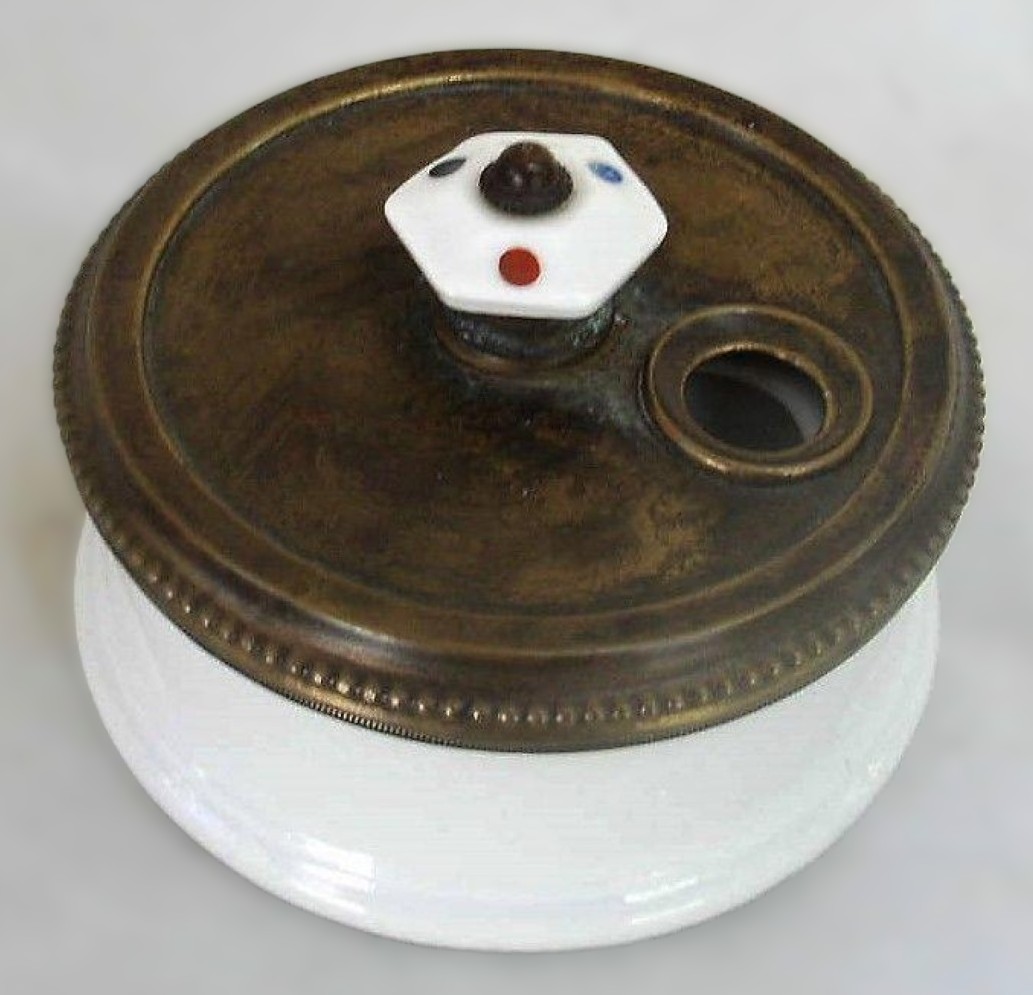
Pictured are a pair of rotating multi-inkwells (sometimes referred to as “revolving inkwells” or “trilateral inkwells”).
The Mechanics: How They Work
- The Ink Reservoirs: Inside the ceramic base sits a clover-like ceramic insert divided into three separate teardrop-shaped compartments. These were meant to hold three different colors of ink—typically black (or dark purple) for everyday correspondence, red for corrections or accounting ledger lines, and blue for emphasis or official signing.
- The Selector Knob: The hexagonal porcelain knob on top is color-coded with painted dots (red, blue, and black).
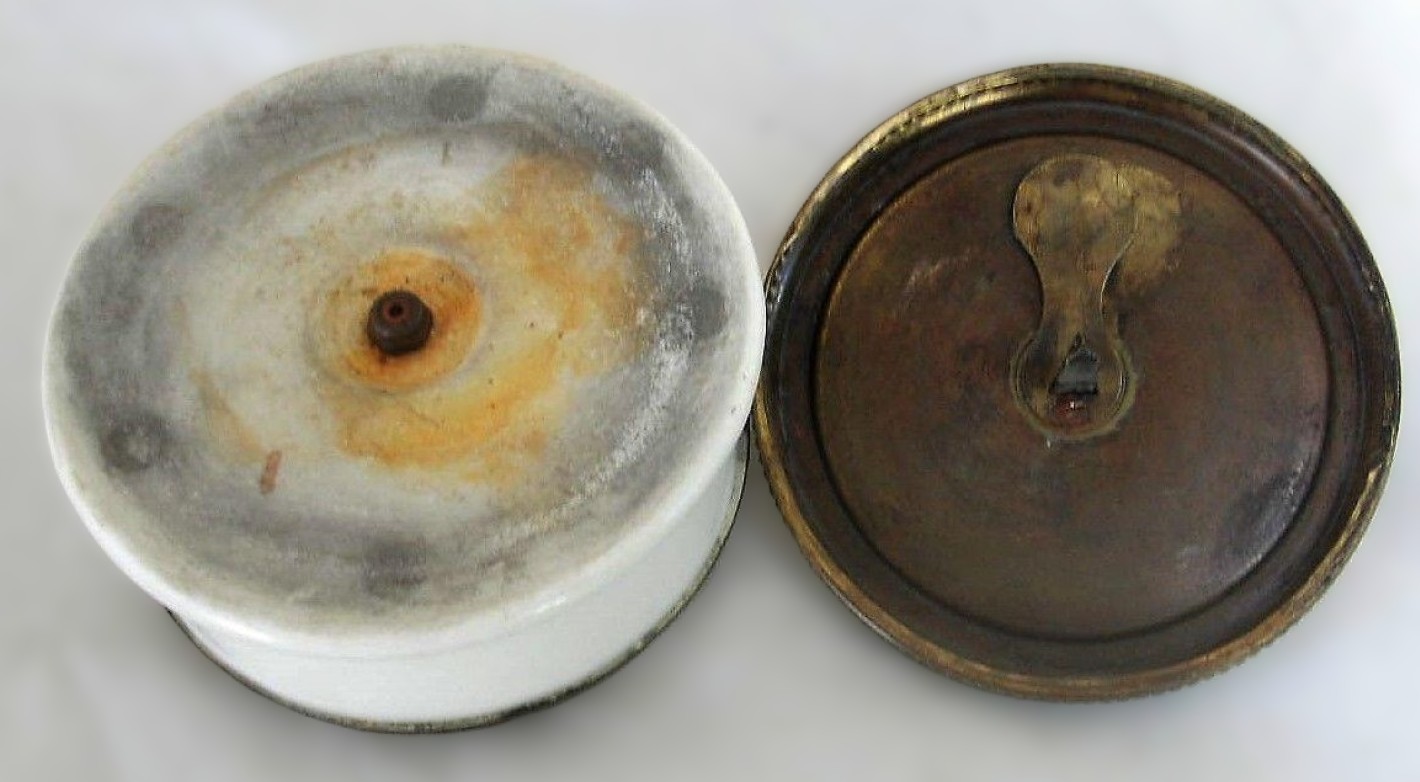
- The Shutter Mechanism: Turning the knob rotates a brass or copper cover plate on the underside of the lid. This plate has a single opening. By aligning the colored dot on the knob with the main opening on the lid, the internal shutter uncovers the corresponding ink reservoir while keeping the other two sealed to prevent evaporation. Turning it to an unmarked position acts as the “closed” safety mode.
Maker & Origin Identification
These inkwells were manufactured in Great Britain during the mid-to-late 19th century.
Specifically, the ceramic bodies and internal reservoirs are made of English ironstone or earthenware, and they are heavily associated with S. Mordan & Co. (Sampson Mordan) or Perry & Co., two powerhouse Victorian stationer manufacturers based in London.
Why the difference between the two?
- The Luxury Model (with Pen Rack): The version with the elaborate, Gothic-revival cast metal gallery serving as a pen rest was the more premium desk piece.
- The Standard Model: The simpler version without the rack was designed to be more compact or utilitarian.
Historical Context: Sampson Mordan patented numerous rotating and multi-inkwell designs in the 1860s and 1870s. While some of these carried brass stamps or hallmarks on the metal rim, many were sold strictly through high-end stationers who applied their own paper labels to the bottom, which have since worn away.
Deciphering the Inscription
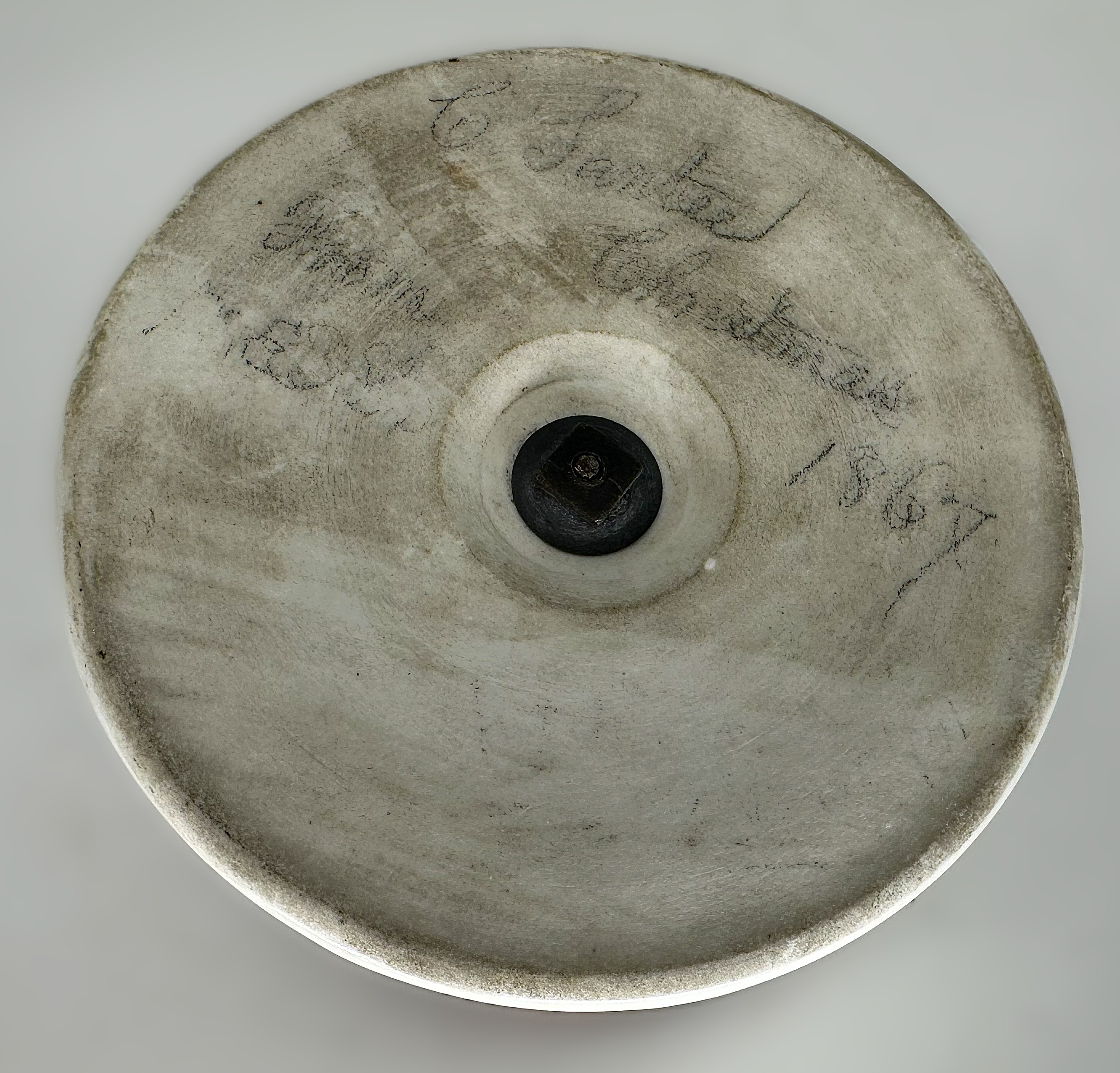
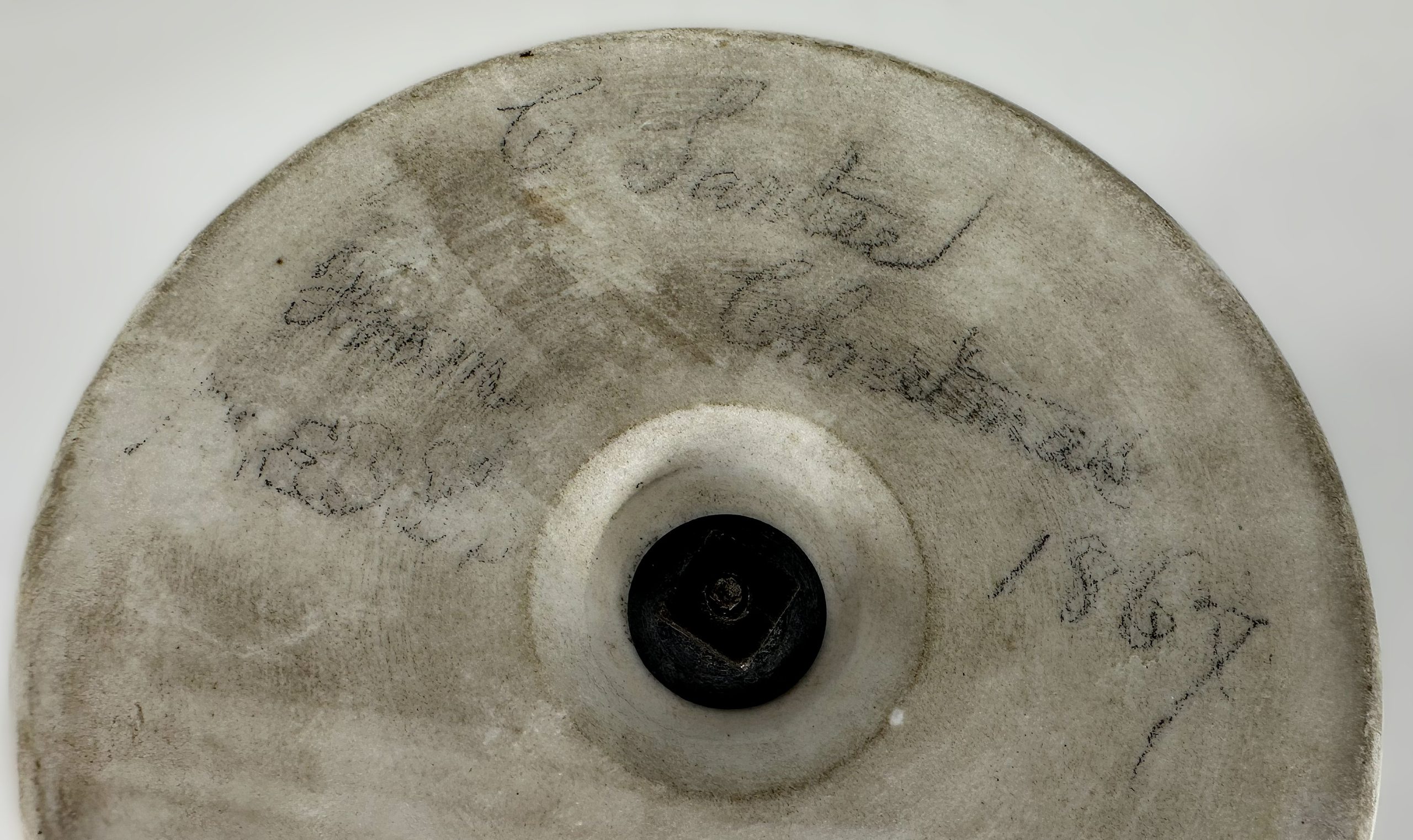
The pencil inscription on the unglazed bottom of the premium inkwell is a charming provenance marker. Gift-givers sometimes wrote notes directly onto the porous porcelain bases of presentation items.
Here is what the script says:
- Top Line: To Father
- Middle Line: Christmas
- Right Side: 1867
- Left Side (Faded Vertical Text): This is a bit tougher due to smudging, but it appears to be a name or a signature of the person giving the gift (likely a child or spouse), possibly reading something like From [Name].
Authenticity Checklist
The date 1867 perfectly matches the manufacturing era of this specific mechanical design. The handwriting is in a classic 19th-century cursive style (note the distinct Victorian formulation of the capital “F” in Father and “C” in Christmas).
Because it is written in graphite pencil on unglazed ceramic, it has survived being washed off over the generations. It proves this item was sitting on someone’s desk as a prized Christmas gift just two years after the end of the American Civil War!
Estimated value: $200 – $250
Content disclaimer. The information posted is the owner’s best knowledge and may not have been vetted by the SOIC. We welcome comments, corrections, and additions, working to make our website information comprehensive and accurate.
Join the Society of Inkwell Collectors (SOIC) – it’s free!
Founded in 1981 as a non-profit organization,
we are documenting inkwells (and accessories).
We’re here to help and inform!