

Roll-Top Double Inkstand
| Categories | Mechanical - Levered or Rotating Lids |
| Material | Brass Finish, Cast iron |
| Markings | See Narrative |
| Manufacturer | Bradley & Hubbard |
| Origin | United States |
| Date or Era | circa 1900 |
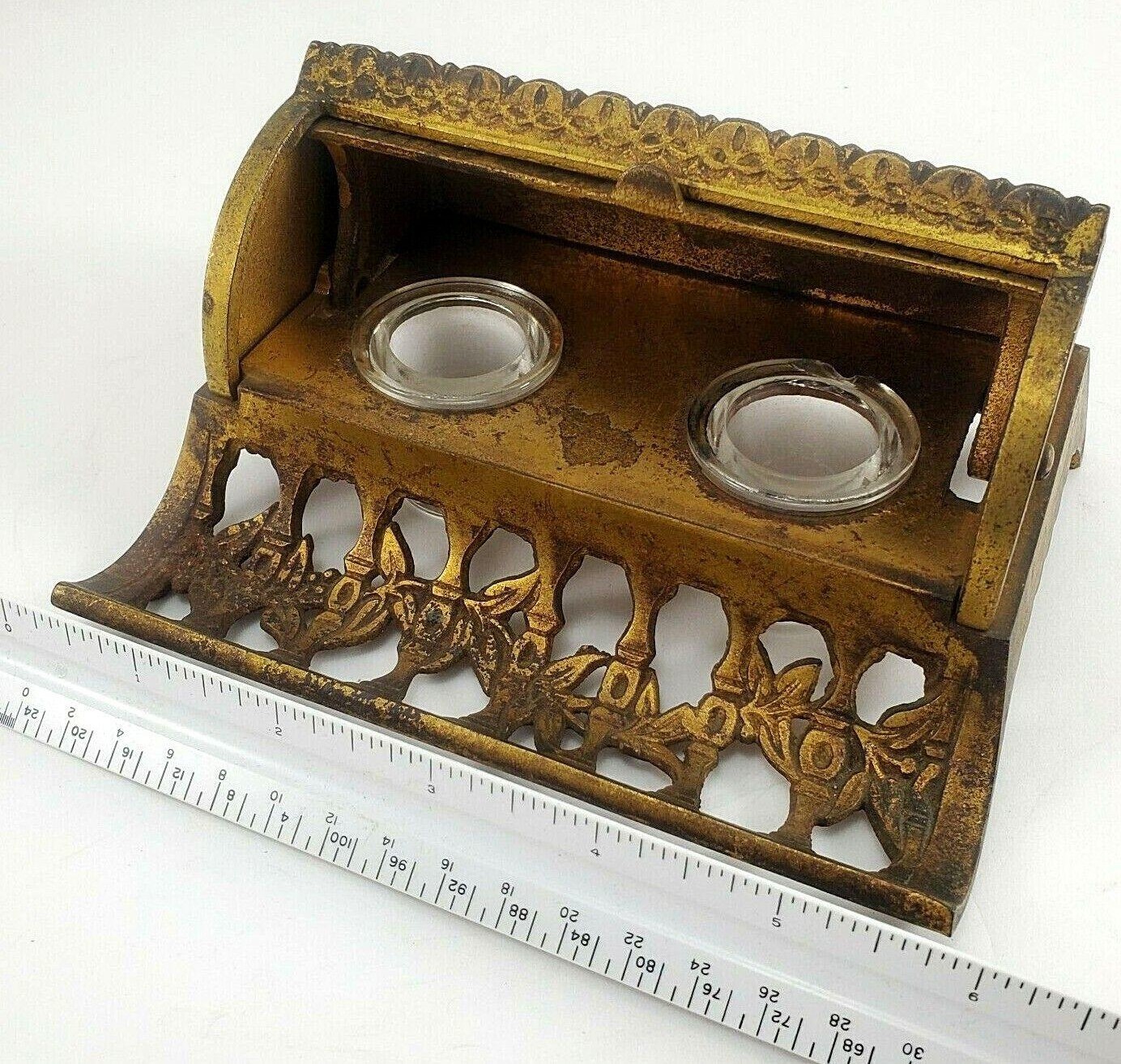
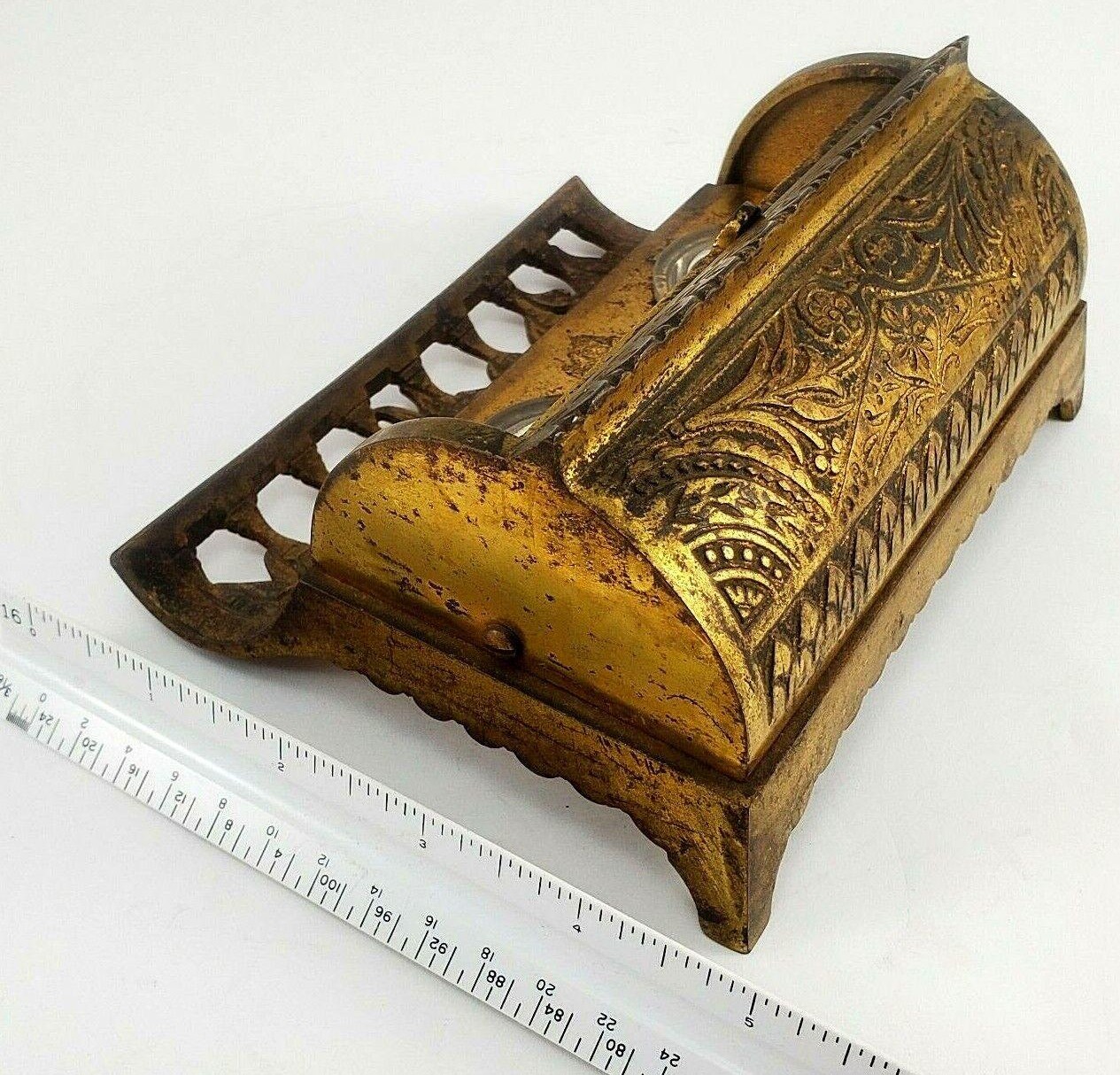
| Measuring | 5 ⅞” x 4 ¾” x 3” high |
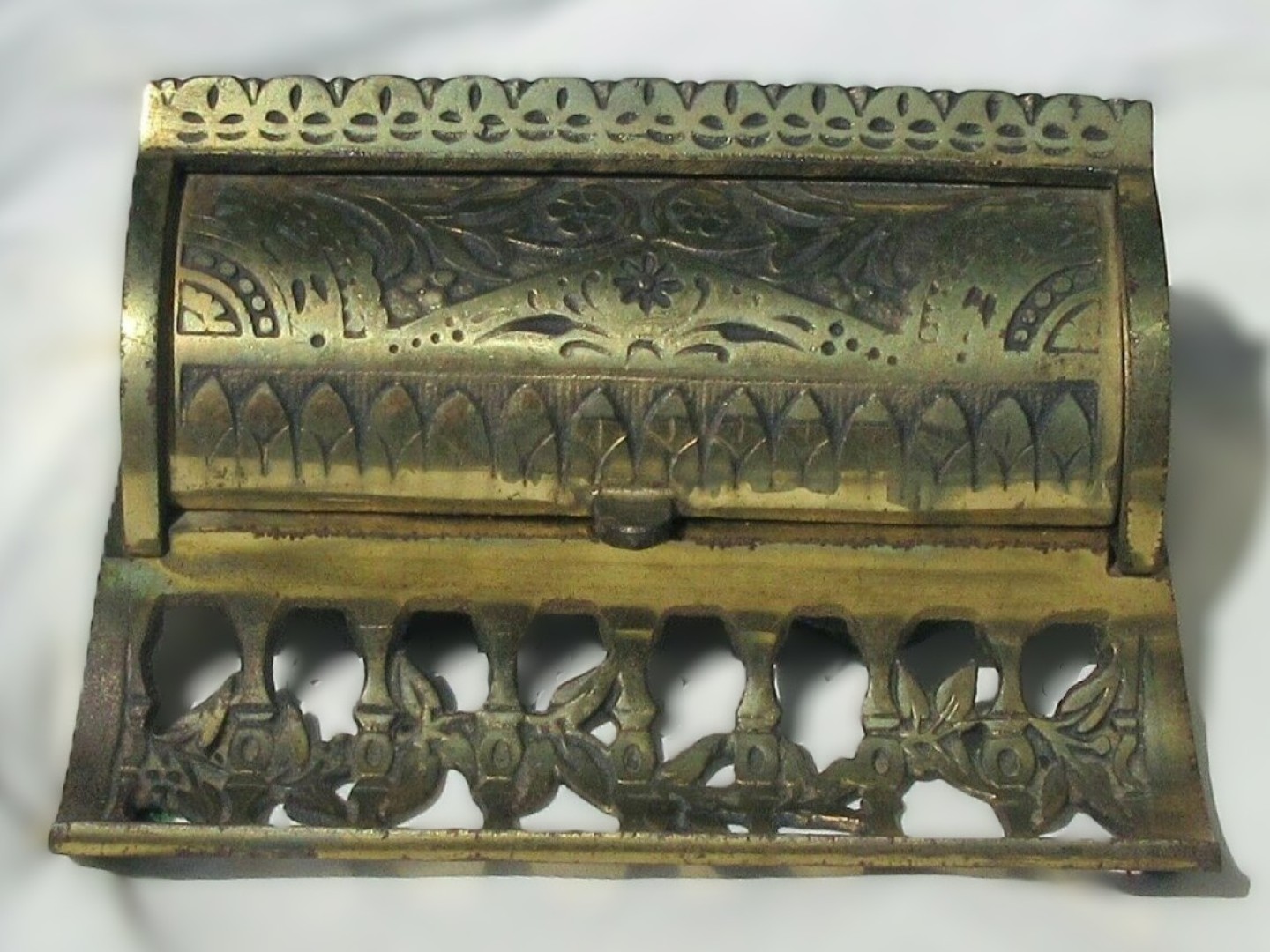
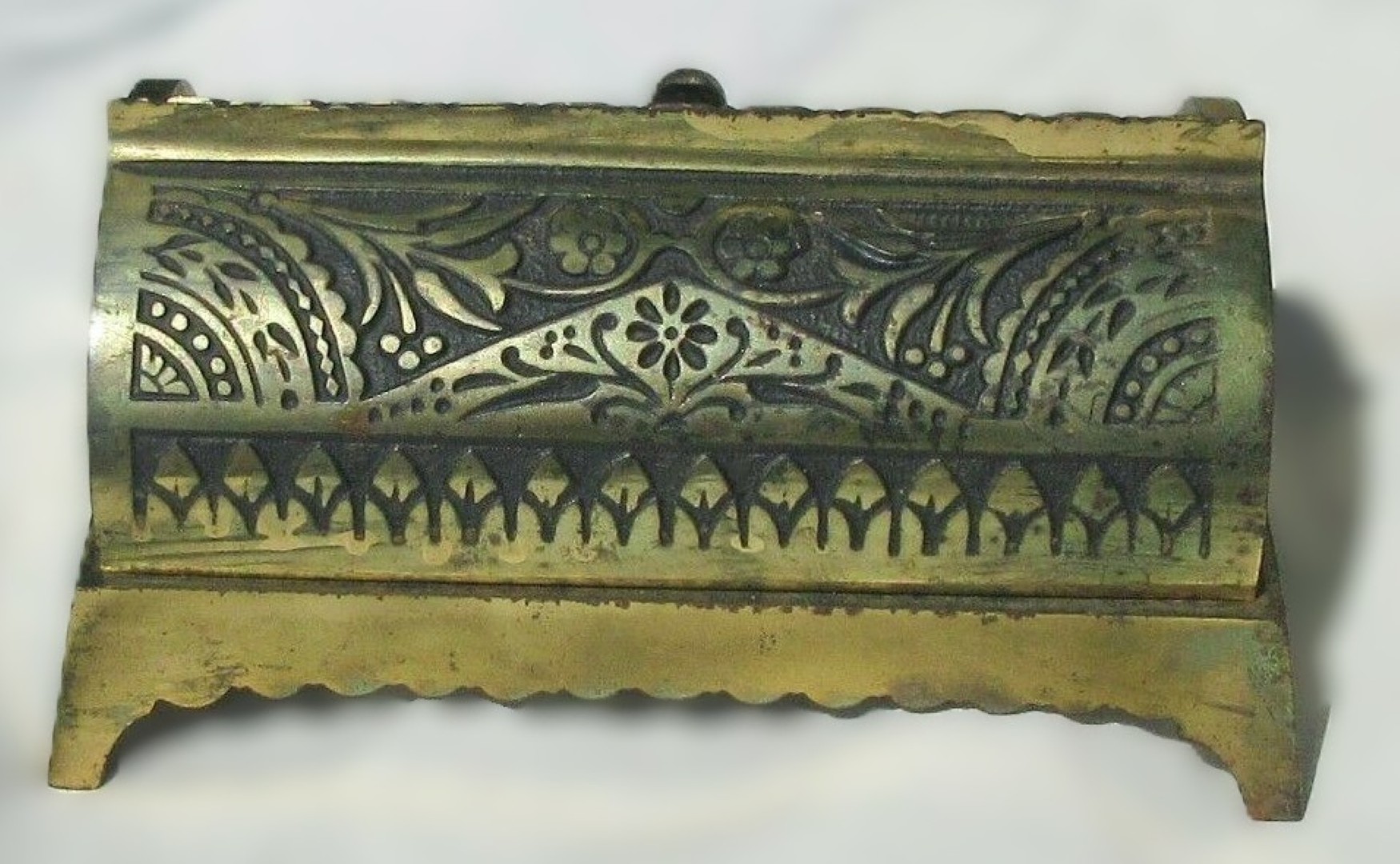
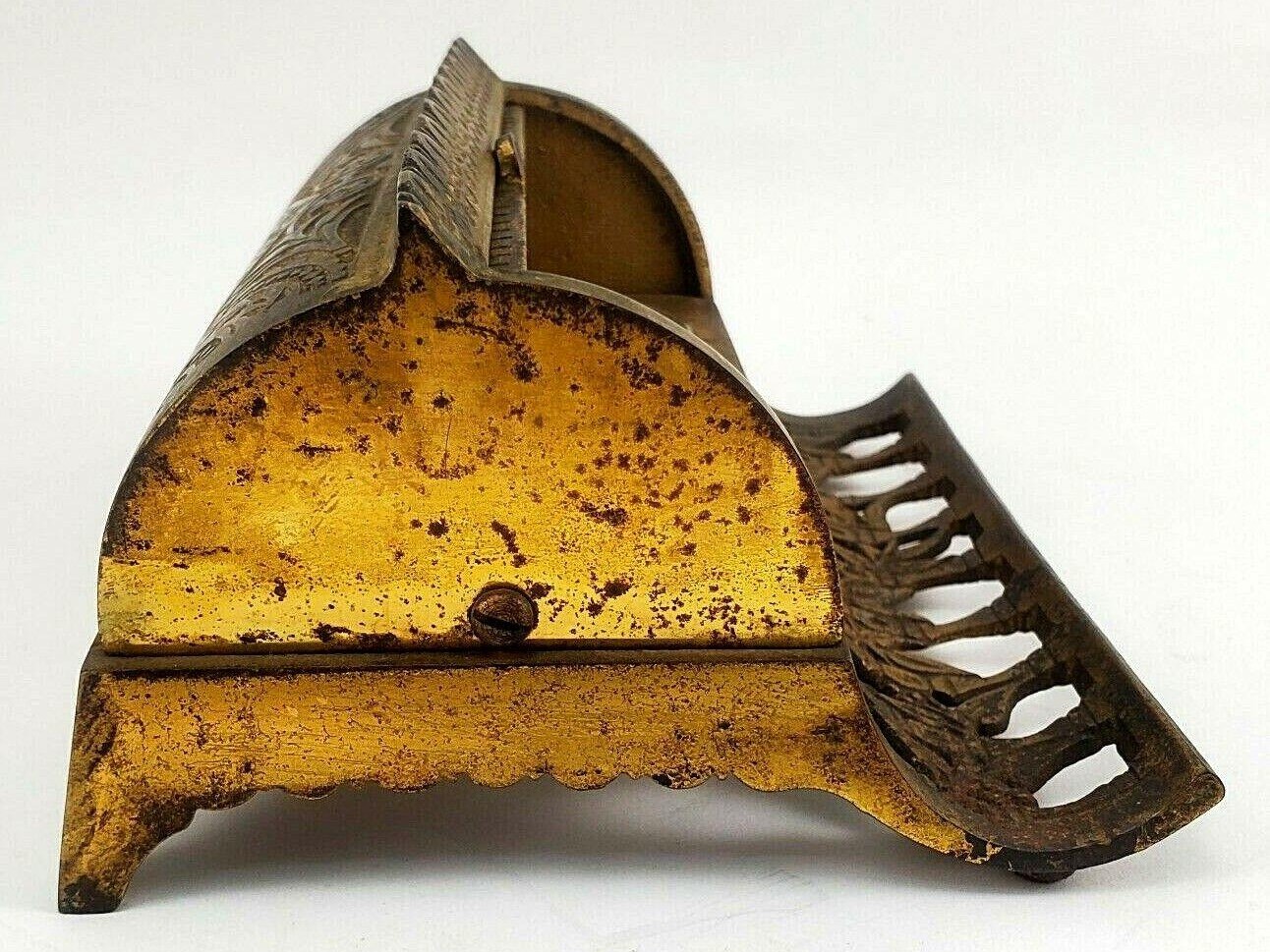
This late 19th-century double inkstand features a roll-top (or barrel-lid) mechanism, manufactured by the Bradley & Hubbard Manufacturing Co. of Meriden, Connecticut (active from the 1850s to 1940s).
Description
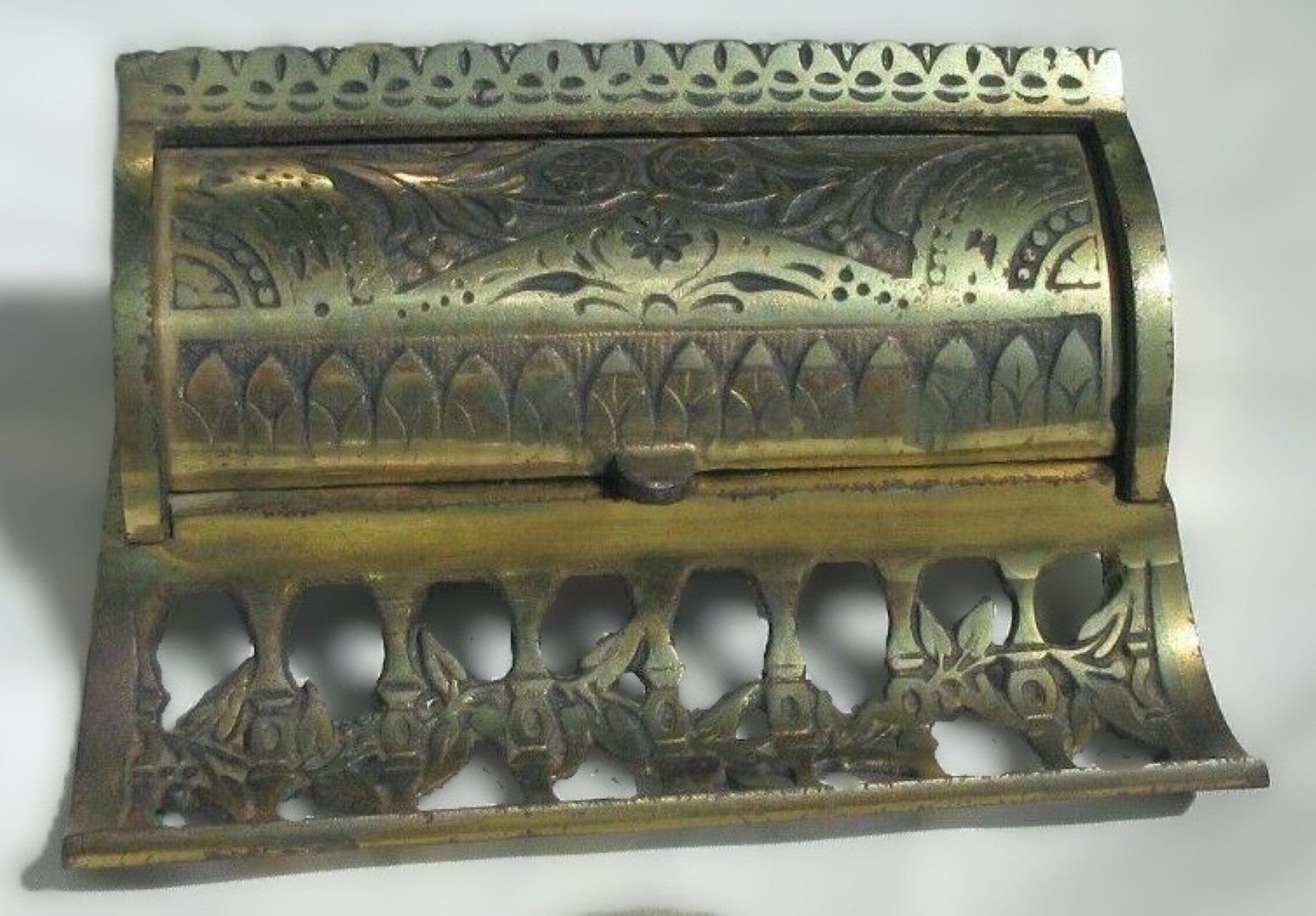
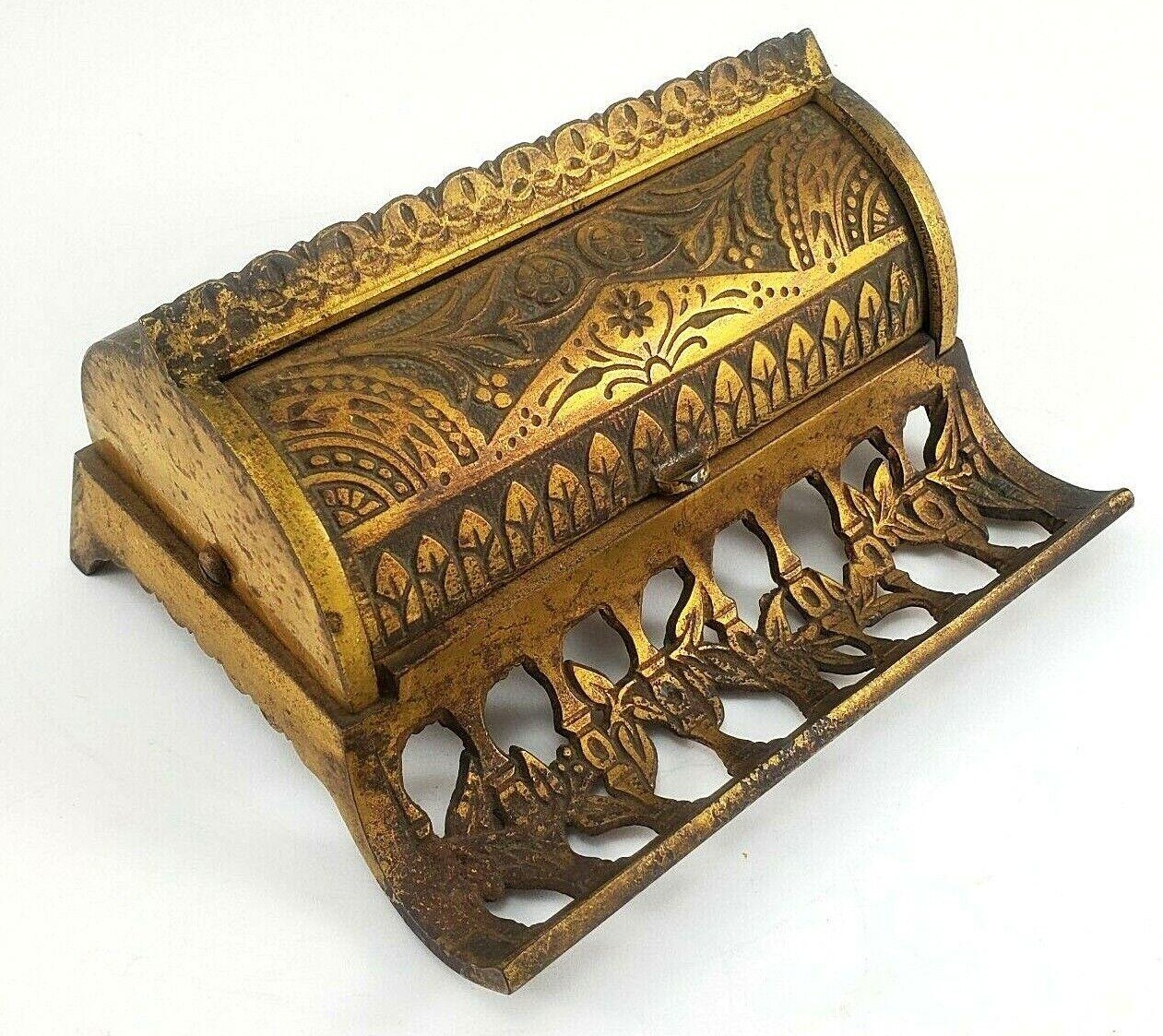
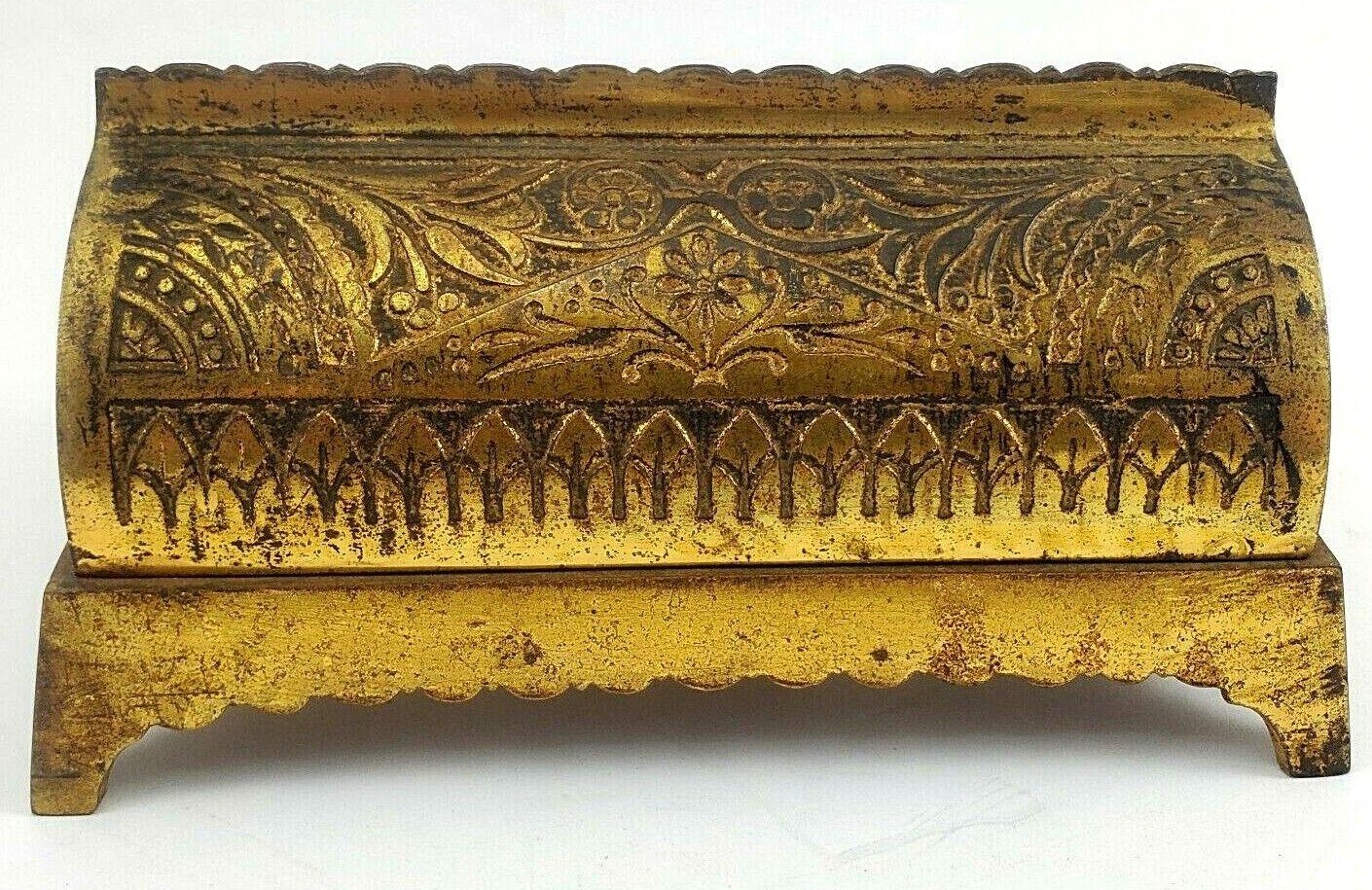
- Materials & Construction: This piece is made from cast iron with a brass-plated finish.
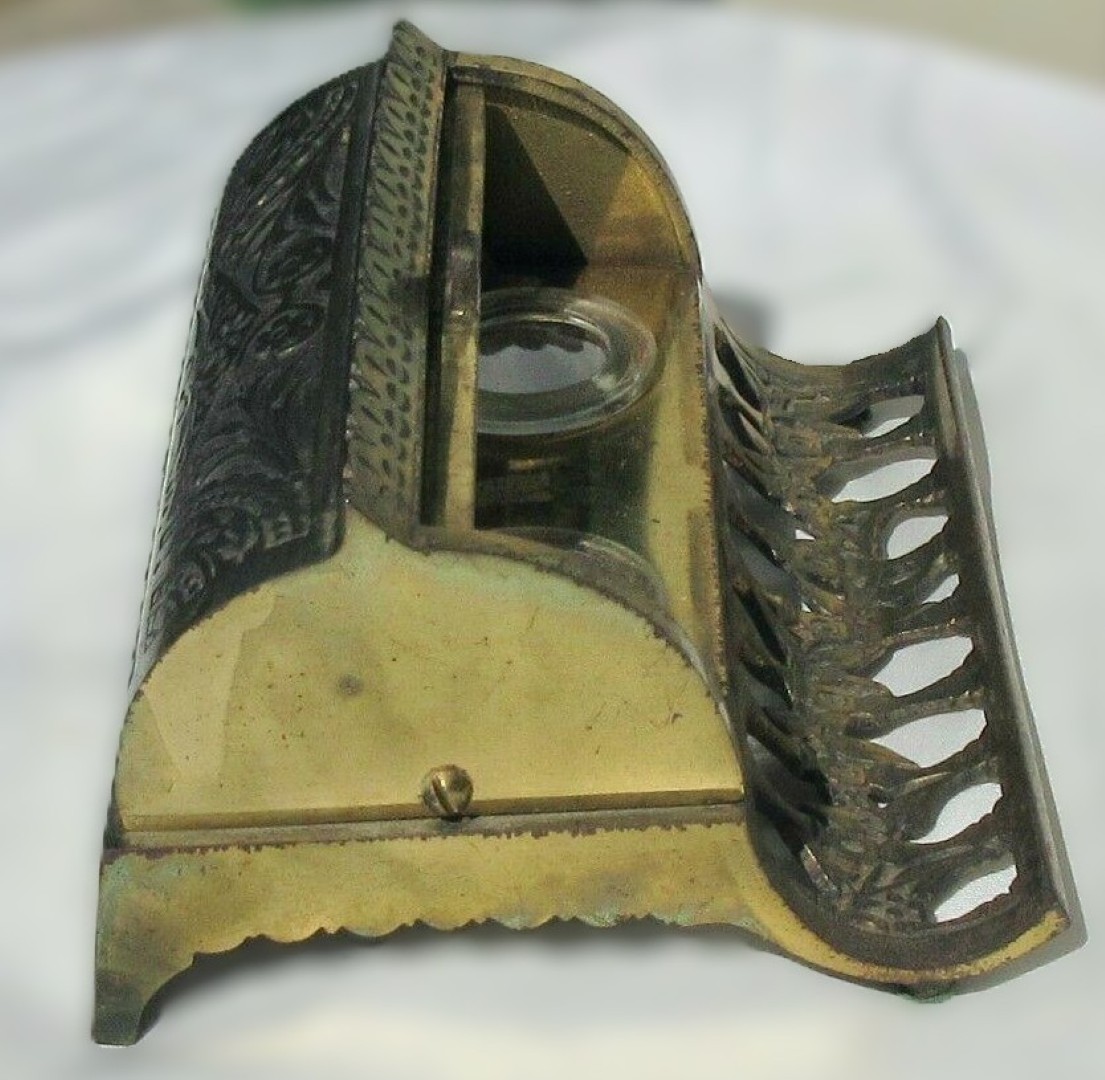
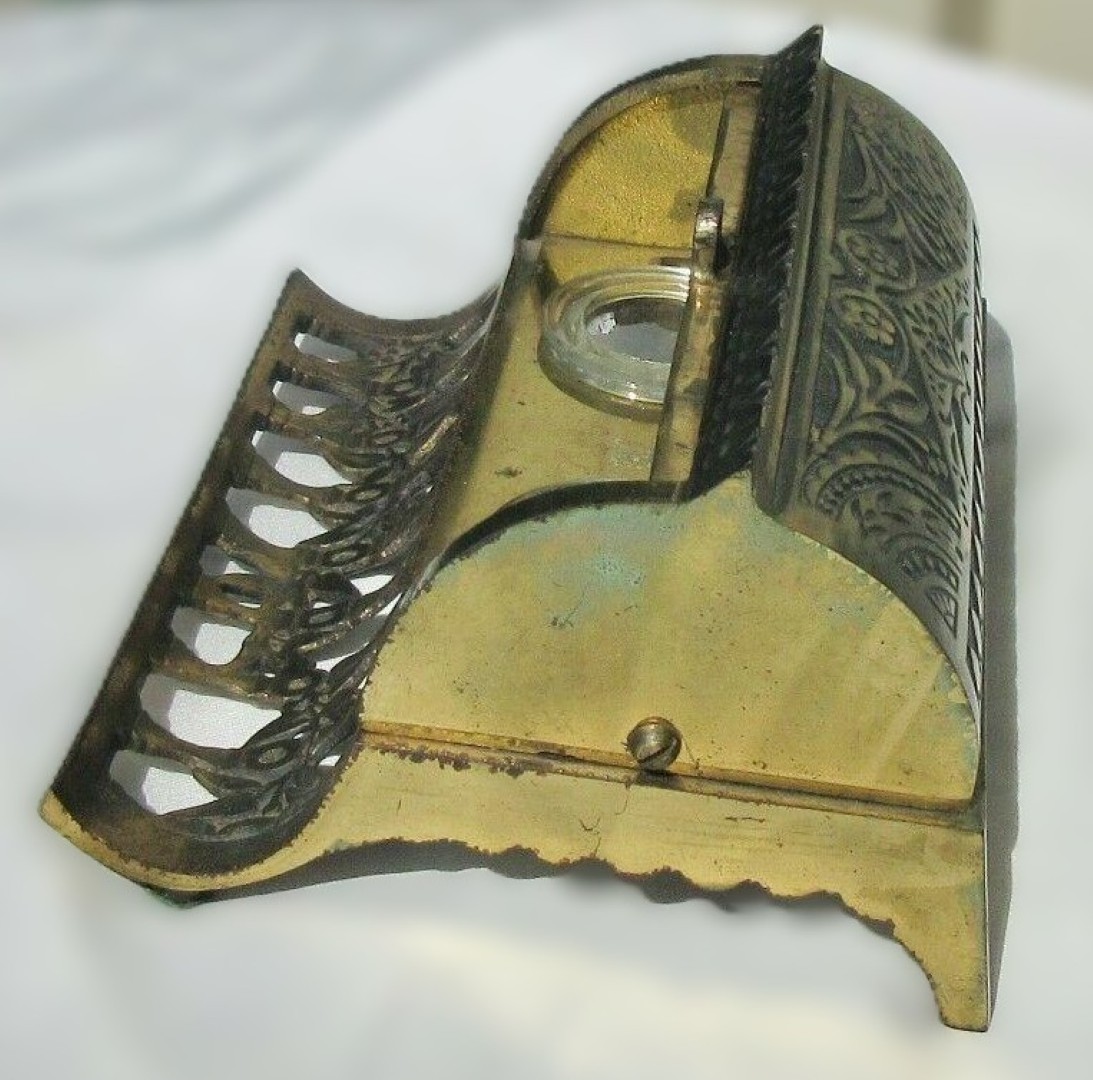
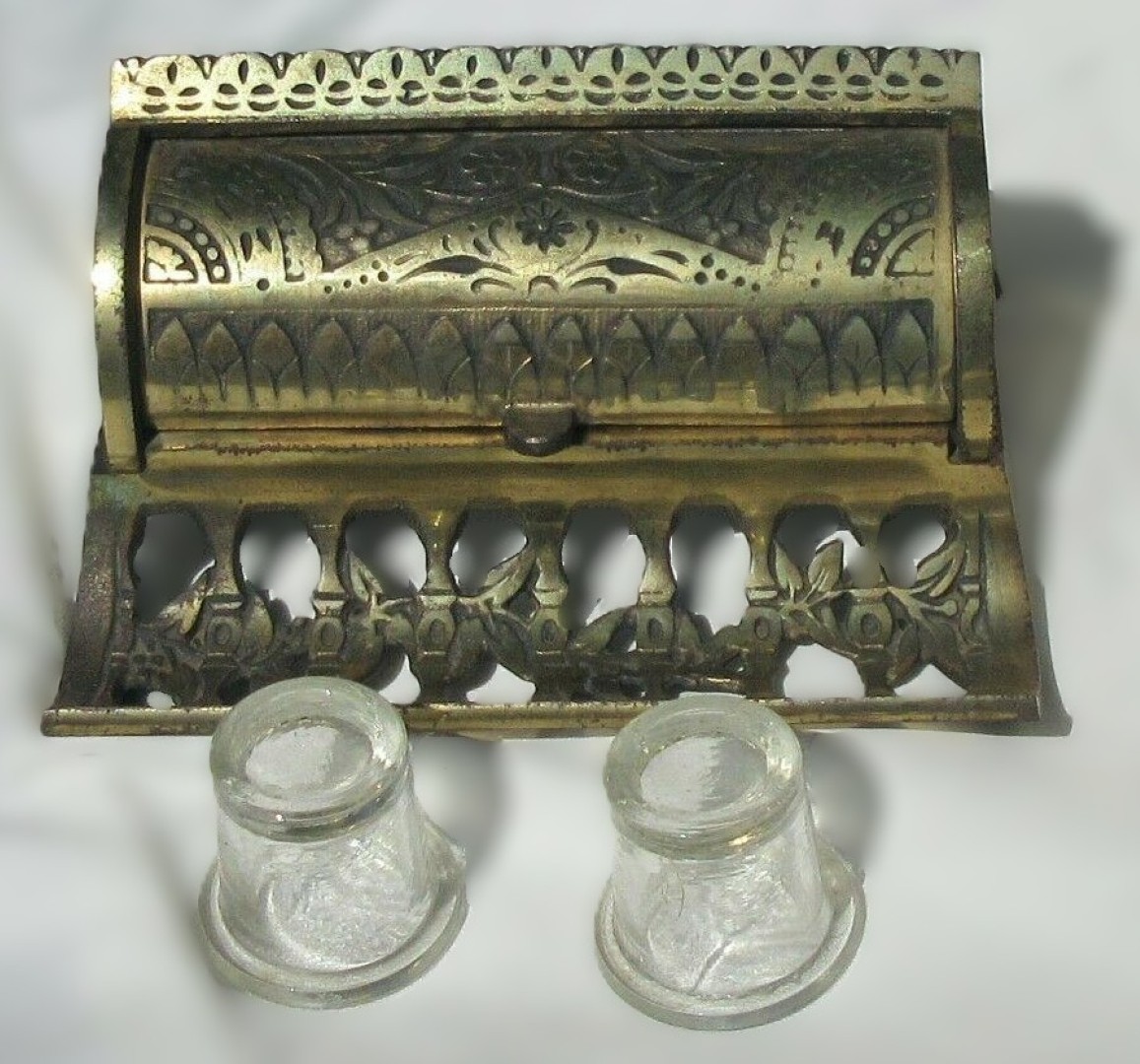
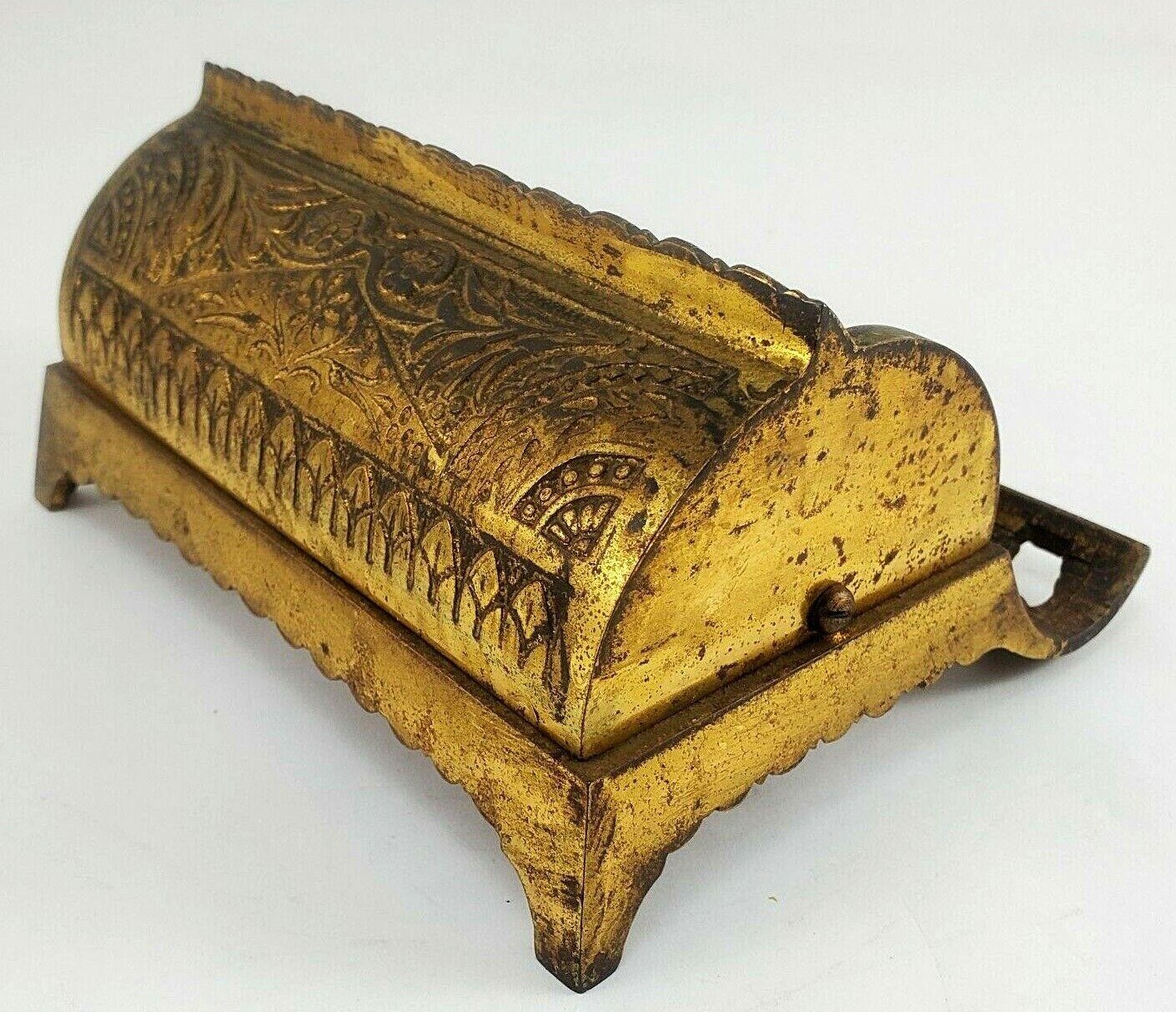
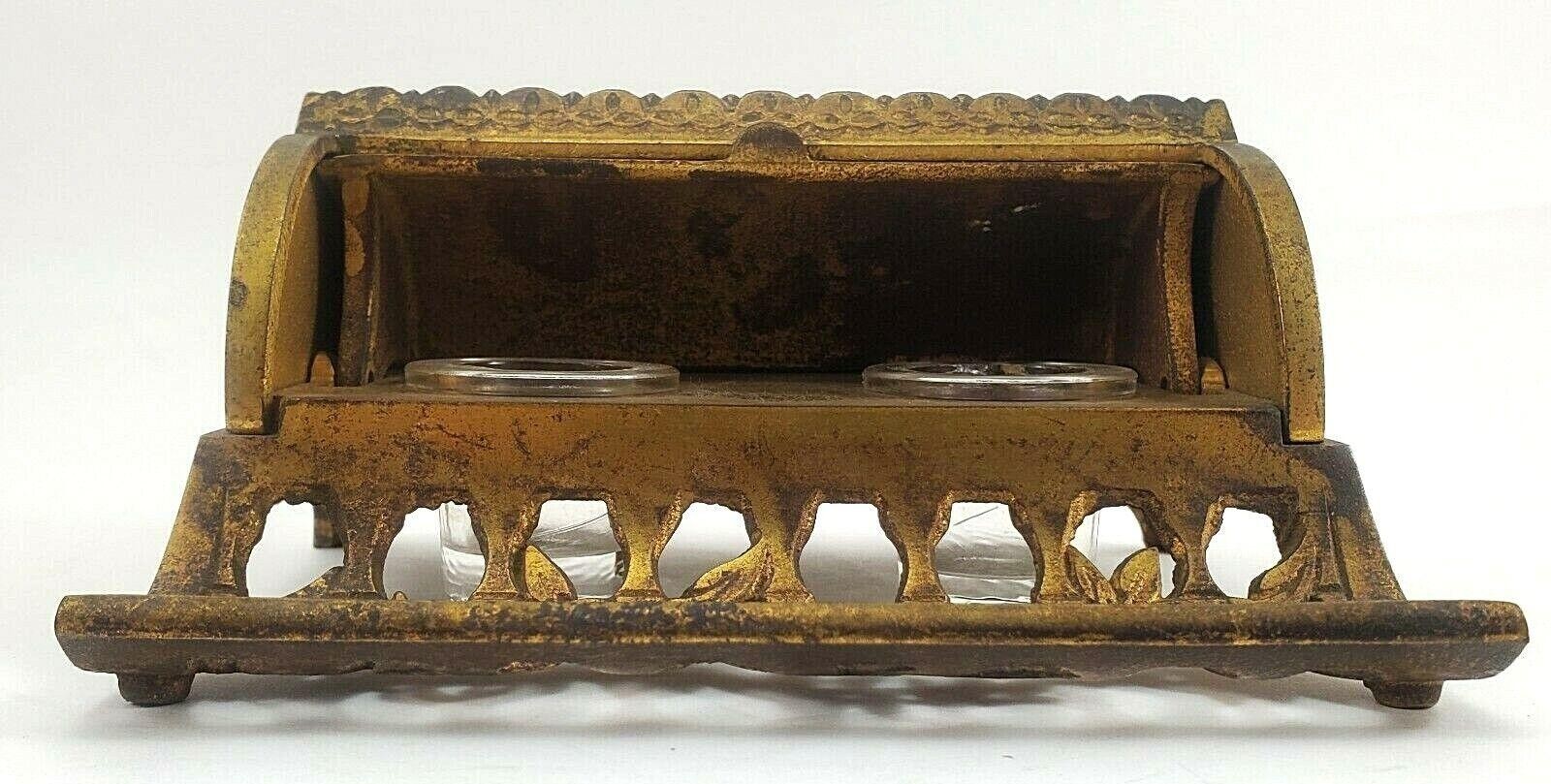
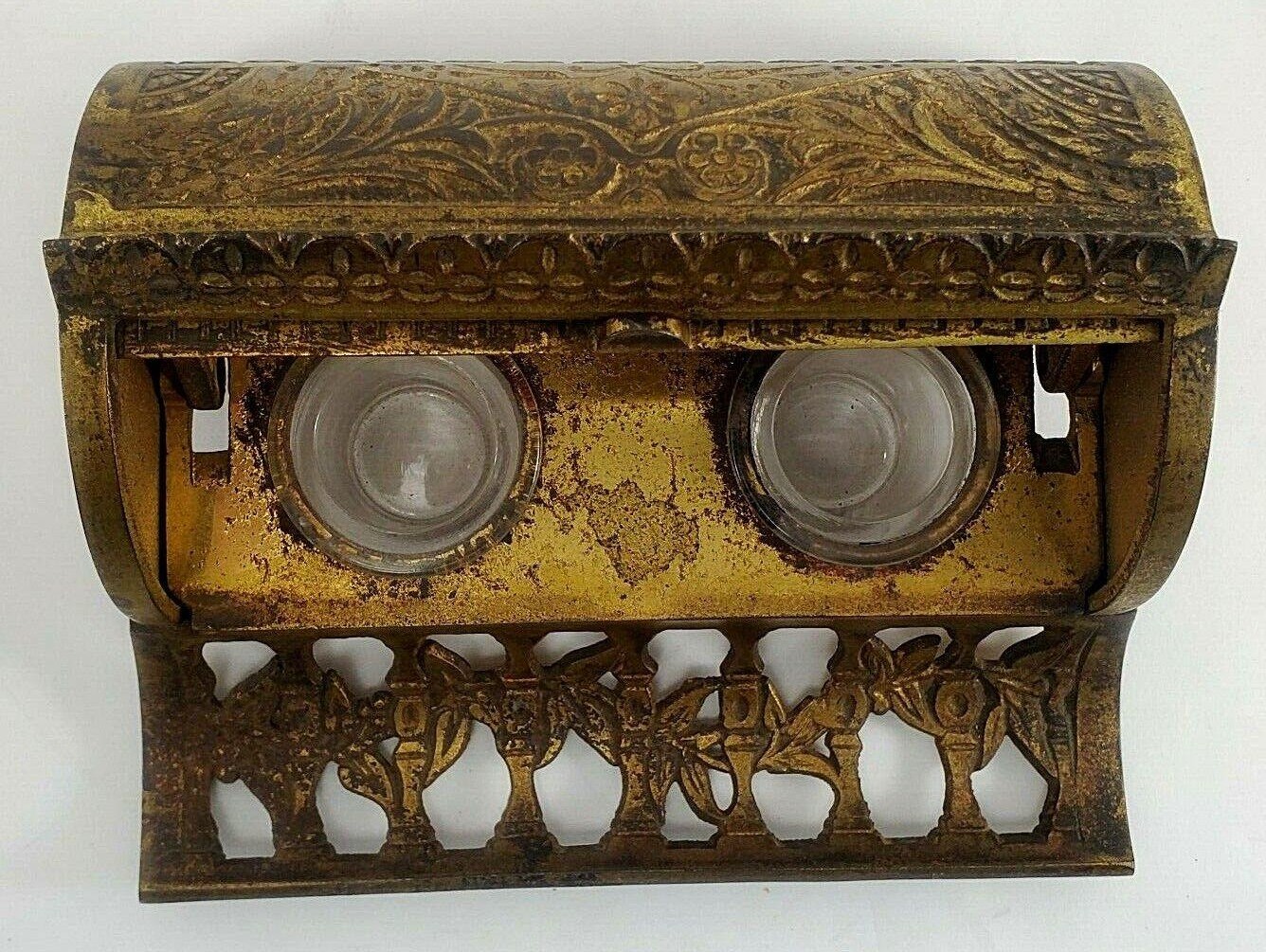
- Design & Ornamentation: The cylindrical roll-top lid is decorated with Art Nouveau/Eastlake-style embossed arabesque foliage, scrolling floral motifs, and geometric borders. The front features an integrated, scalloped pen tray (or pen rest) pierced with an openwork pattern of leaves and stems.
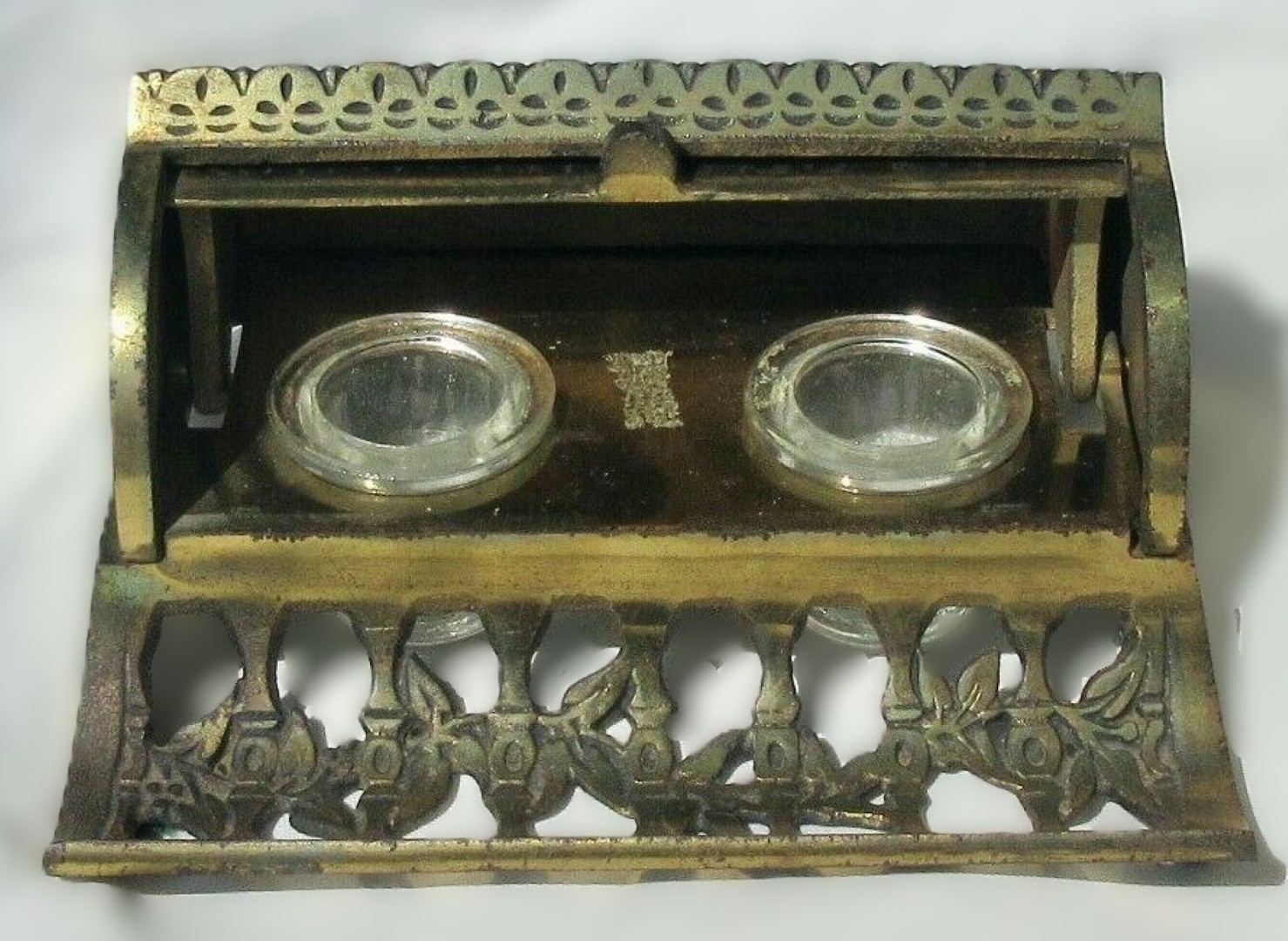
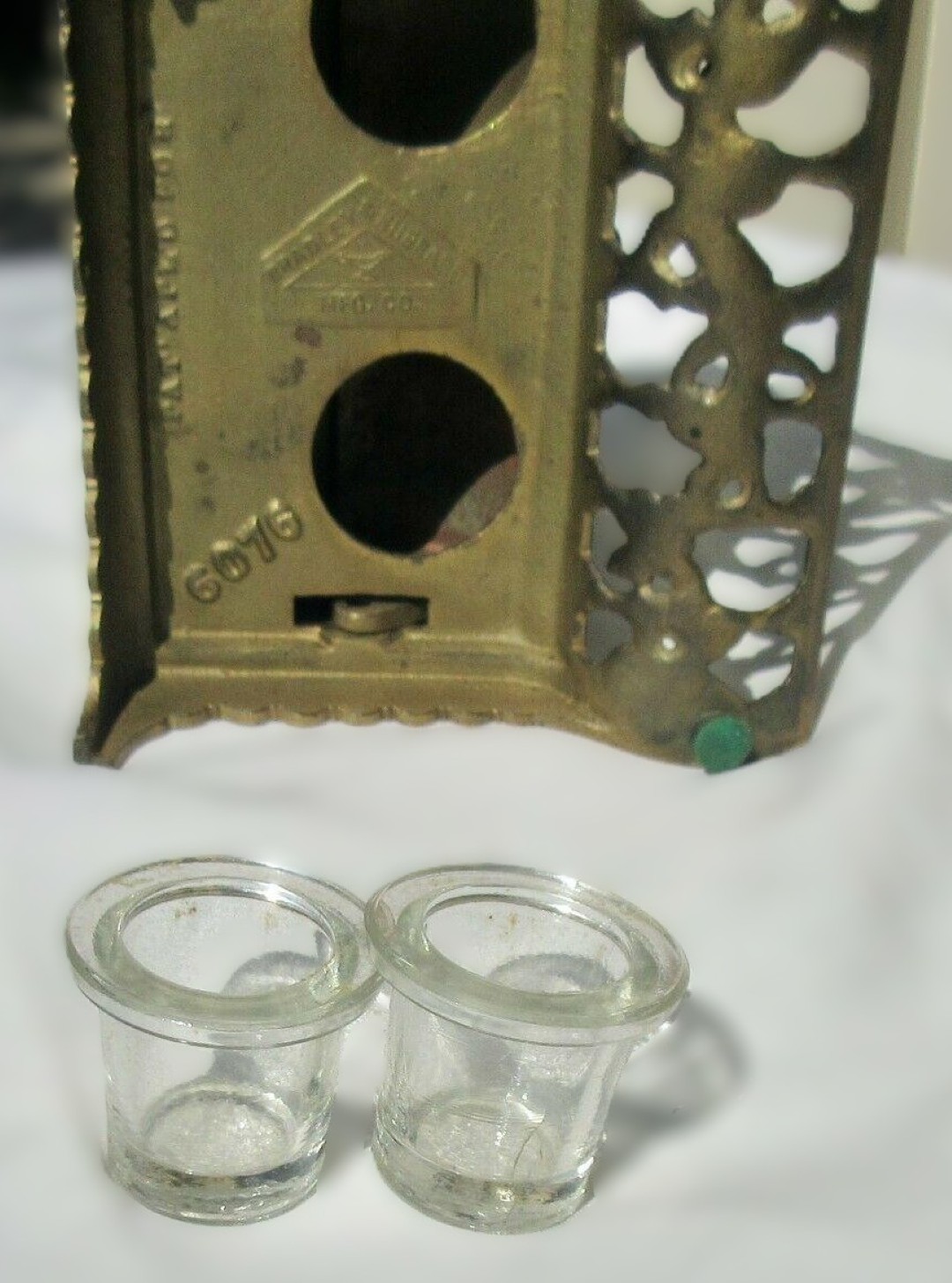
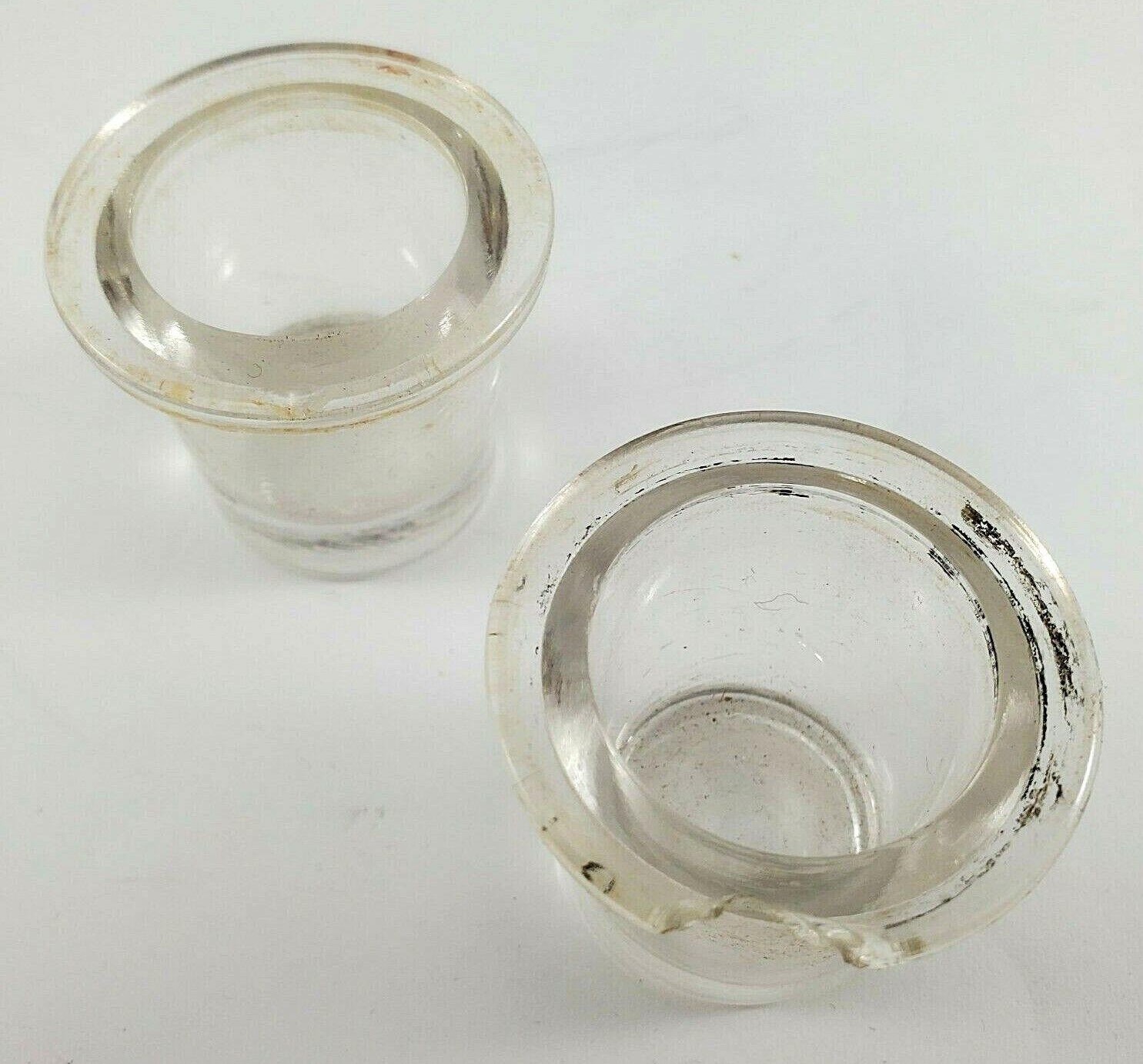
- Functionality: The pivoting curved barrel lid rolls backward to open, revealing housing for two original glass inkwell inserts.
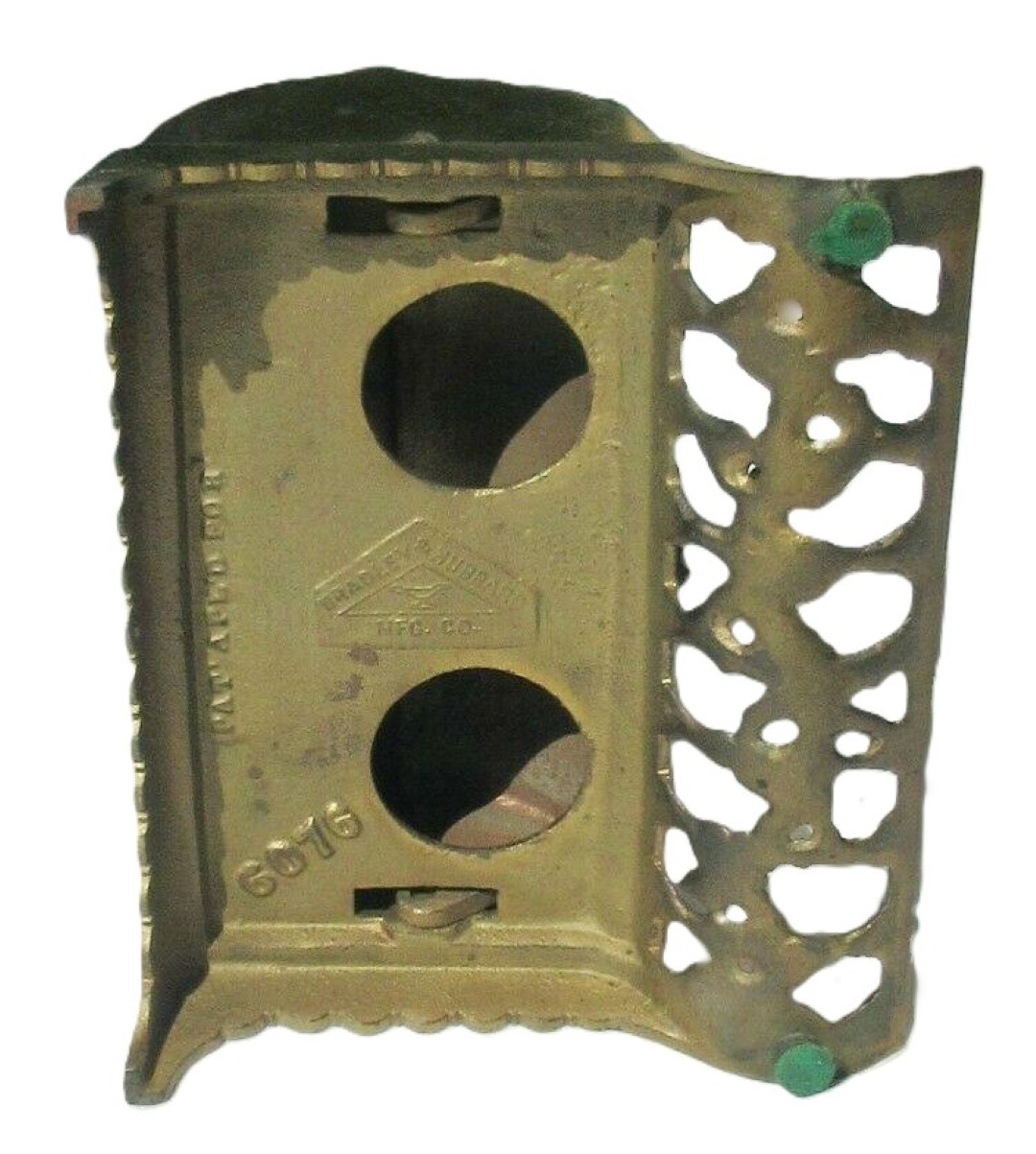
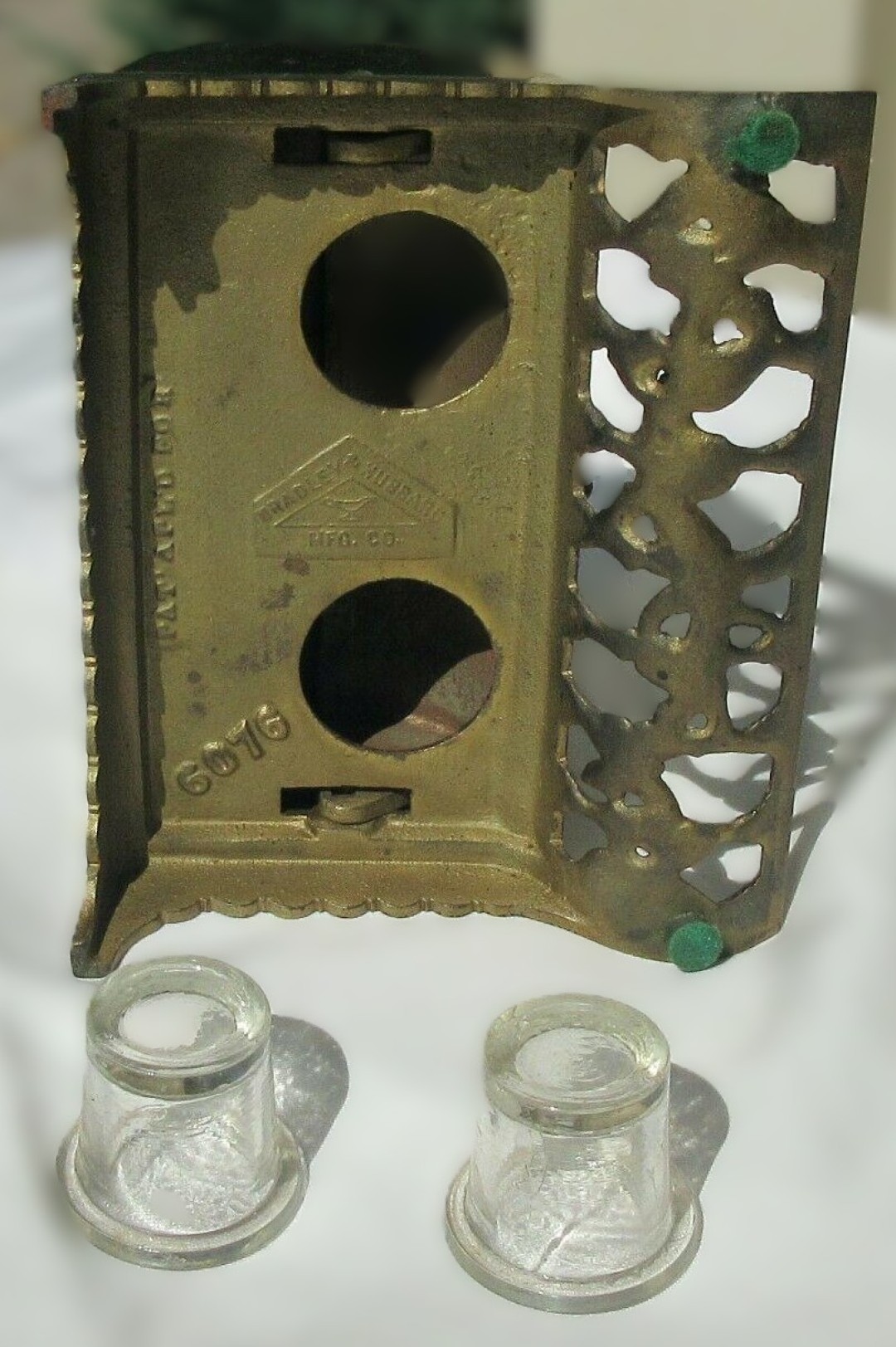
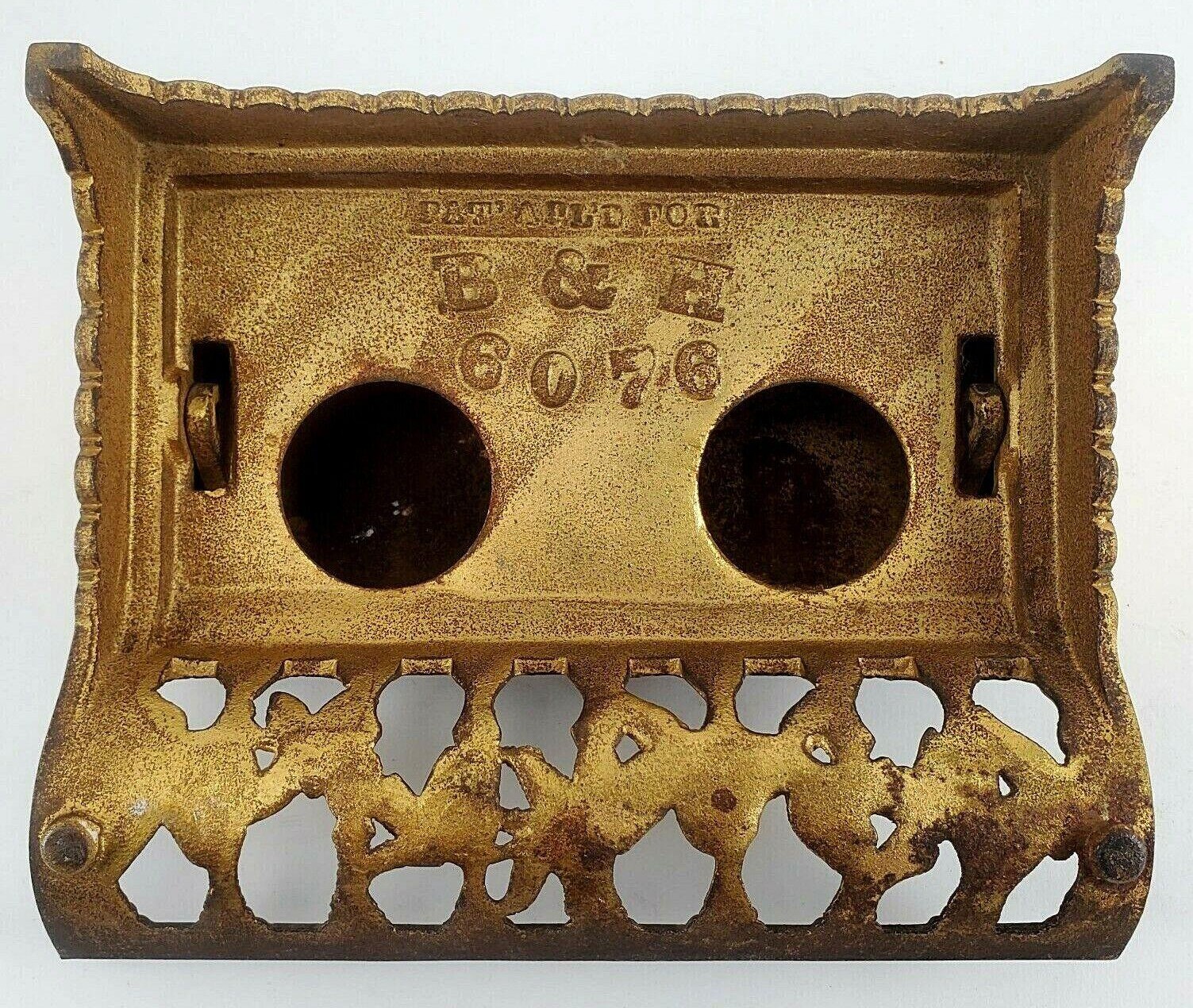
- Markings: The underside is stamped with the Bradley & Hubbard diamond/triangle maker’s mark (incorporating their iconic lamp/logo alongside “MFG. CO.”), the mold/pattern number 6076, and the stamp “PAT’ APD’D FOR”.
Patent Information
Official U.S. Patent Office records and collector archives do not tie a specific, successfully issued utility or design patent number directly to Bradley & Hubbard’s mold #6076 roll-top inkstand.
The historical details behind why this occurs and how the “Patent Pending” status functions for this piece clarify the record:
- Abandoned or Unissued Patent Status: The “PAT’ APL’D FOR” (Patent Applied For) stamp indicates that Bradley & Hubbard submitted an application for the mechanical roll-top barrel hinge or decorative housing design. However, many late-19th-century hardware applications were either abandoned during examination, withdrawn, or rejected by the patent office due to prior art (as sliding/rotating inkwell closures had seen numerous minor mechanical variations).
- Lack of a Patent Number: Because the patent was either never officially granted or the application lapsed before issuance, no final patent number was ever stamped onto subsequent production runs of mold #6076. Foundries frequently kept the “Patent Applied For” or “Pat. Pend.” stamp active on iron molds throughout a product’s commercial lifetime to deter copycats, even if a formal patent certificate was never ultimately issued.
- The Mechanics of Shutter/Barrel Covers: Patents for desktop inkstands with curved, rolling, or rotating shutter covers (similar to office roll-top desks scaled down for stationery) generally focused on the rotational axis hinges, internal counterweights, or curved track guides. These mechanisms allowed the dust-proof shutter to slide smoothly into a recessed cavity beneath or behind the ink bottles without jamming.
Advertising & Catalog Record
Bradley & Hubbard marketed their extensive lines of high-end desk hardware through wholesale trade catalogs distributed to stationers, jewelers, and luxury outfitters across the United States. While individual monthly magazine clippings for specific mold numbers like #6076 are rare, these roll-top and barrel-lid inkstands were prominently featured in their late-Victorian and early-Art Nouveau hardware catalogs under categories such as Cabinet and Desk Accessories or Fine Cast Metal Stationery Ware.
Double Inkstand with Roll-Top Lid – Summary
Maker: Bradley & Hubbard Manufacturing Co. (Meriden, Connecticut)
Period: Circa late 19th to early 20th century
Materials: Brass-plated cast iron with original glass inserts
Mold Number: 6076 (“Pat’ Apl’d For”)
This double inkstand features a functional barrel-lid “roll-top” design engineered to protect the inkwells from dust and evaporation. The cylindrical shutter is embellished with embossed arabesque foliage and scrolling floral motifs, resting above a scalloped, pierced pen tray. Stamped on the underside with the Bradley & Hubbard hallmark and mold number 6076, the piece retains its original cast iron substrate beneath worn brass plating and houses its two original glass ink inserts.
Two Examples Pictured
Based on Bradley & Hubbard’s marking conventions and manufacturing timelines, the inkstand in the first set of images (with the diamond/triangle logo) was made first, and the inkstand in the second set of images was produced later.
The evolution of their foundry marks explains this sequence:
- First Set (Diamond/Triangle Logo with “MFG. CO.”): This is the classic, more detailed hallmark format Bradley & Hubbard used during their peak production periods in the late 19th century. When mold #6076 was first cast and submitted or prepared for patenting, it received this formal company trademark alongside the vertical “PAT’ APL’D FOR” stamp.
- Second Set (Block “B & H” Stamp): The simplified, heavy block-letter “B & H” mark combined directly with the mold number and patent text was typically adopted in later production runs as a more streamlined way to stamp high-volume cast items, or when molds were refreshed and re-machined later in the company’s manufacturing lifecycle.
Estimated value: $50 – $100 depending on condition
Content disclaimer. The information posted is the owner’s best knowledge and may not have been vetted by the SOIC. We welcome comments, corrections, and additions, working to make our website information comprehensive and accurate.
Join the Society of Inkwell Collectors (SOIC) – it’s free!
Founded in 1981 as a non-profit organization,
we are documenting inkwells (and accessories).
We’re here to help and inform!