

Inkipedia
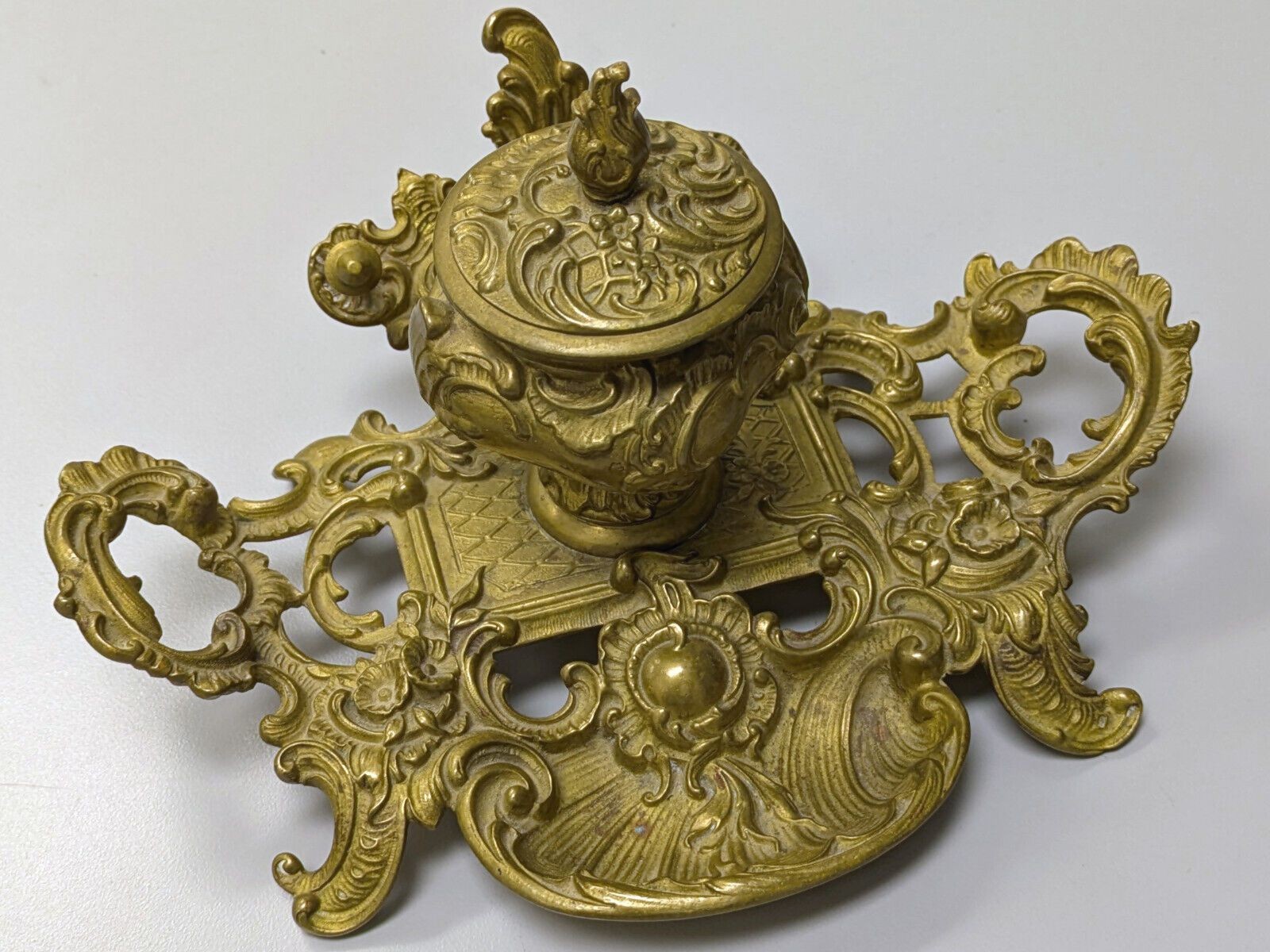
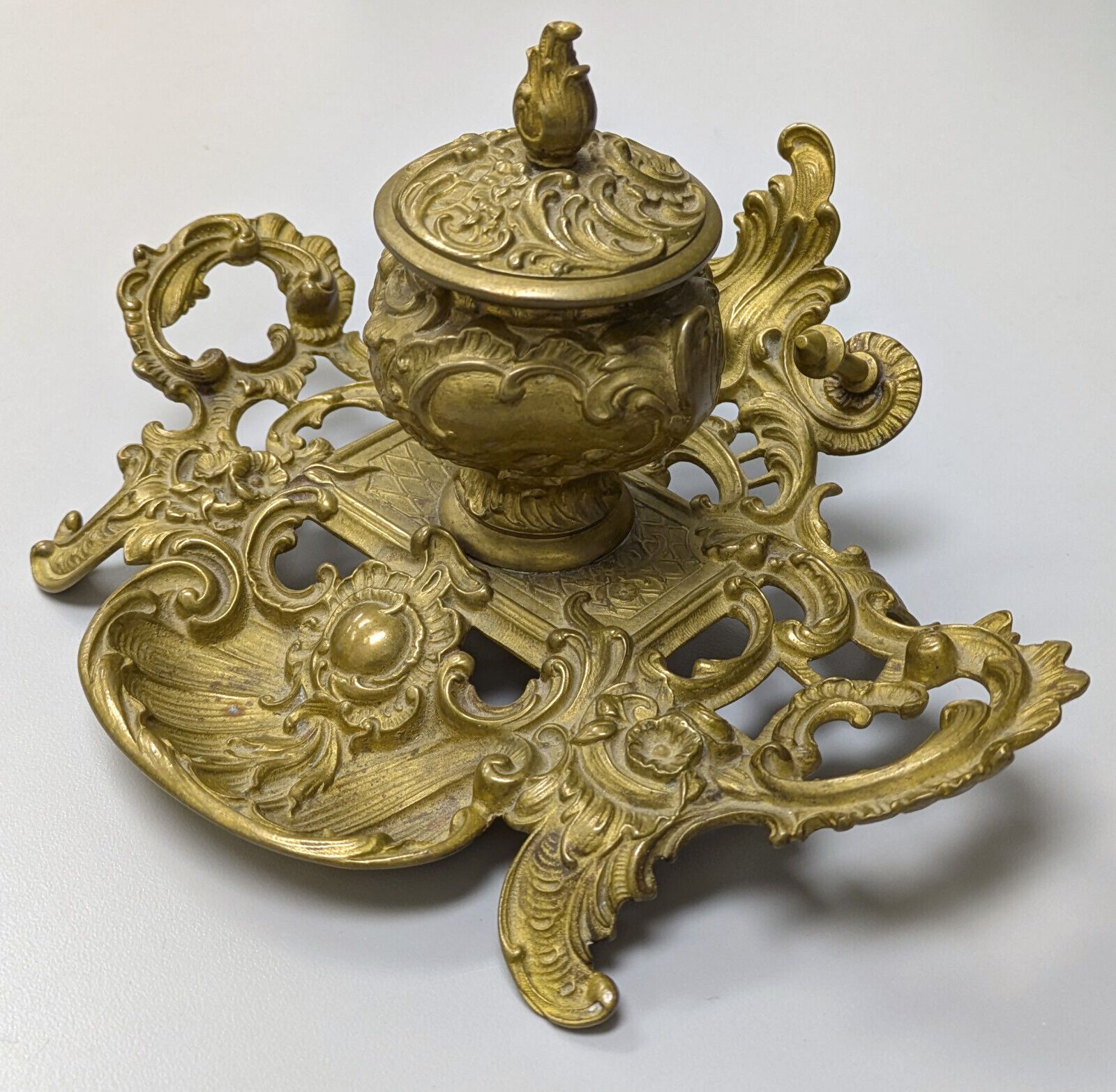

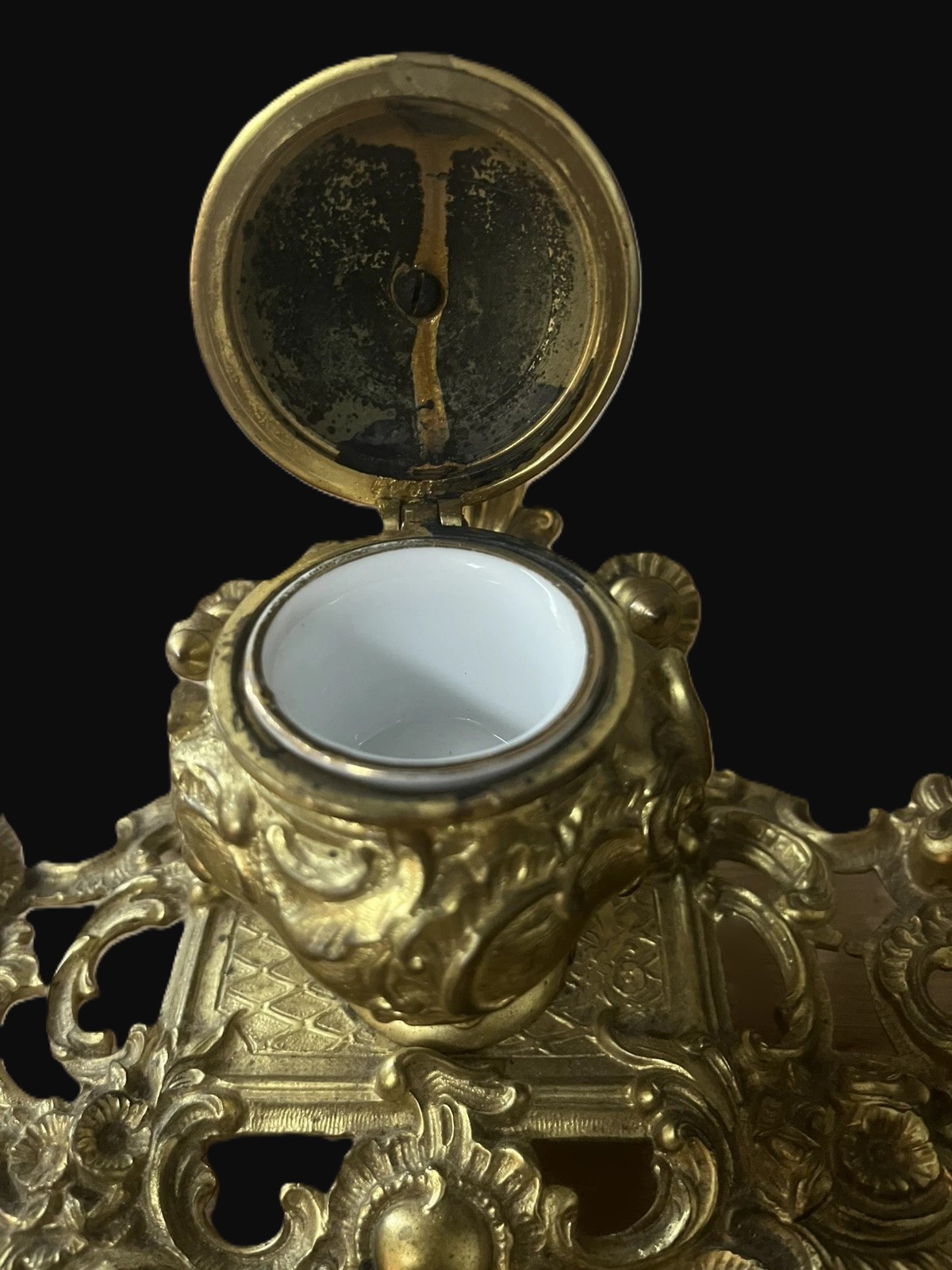


Rococo Revival Style Brass Inkstand
| Categories | Bronze - Brass - Copper |
| Material | Brass |
| Markings | P.E.G. 1085 |
| Manufacturer | P. E. Guerin |
| Origin | France |
| Date or Era | circa 1890 |
| Measuring | 8 ½” x 6 ½” x 4 ½” high |
This is an ornate Rococo Revival style inkstand, likely made in the late 19th century (circa 1880–1900).
Physical Description
- Material & Finish: The piece is made of cast brass.
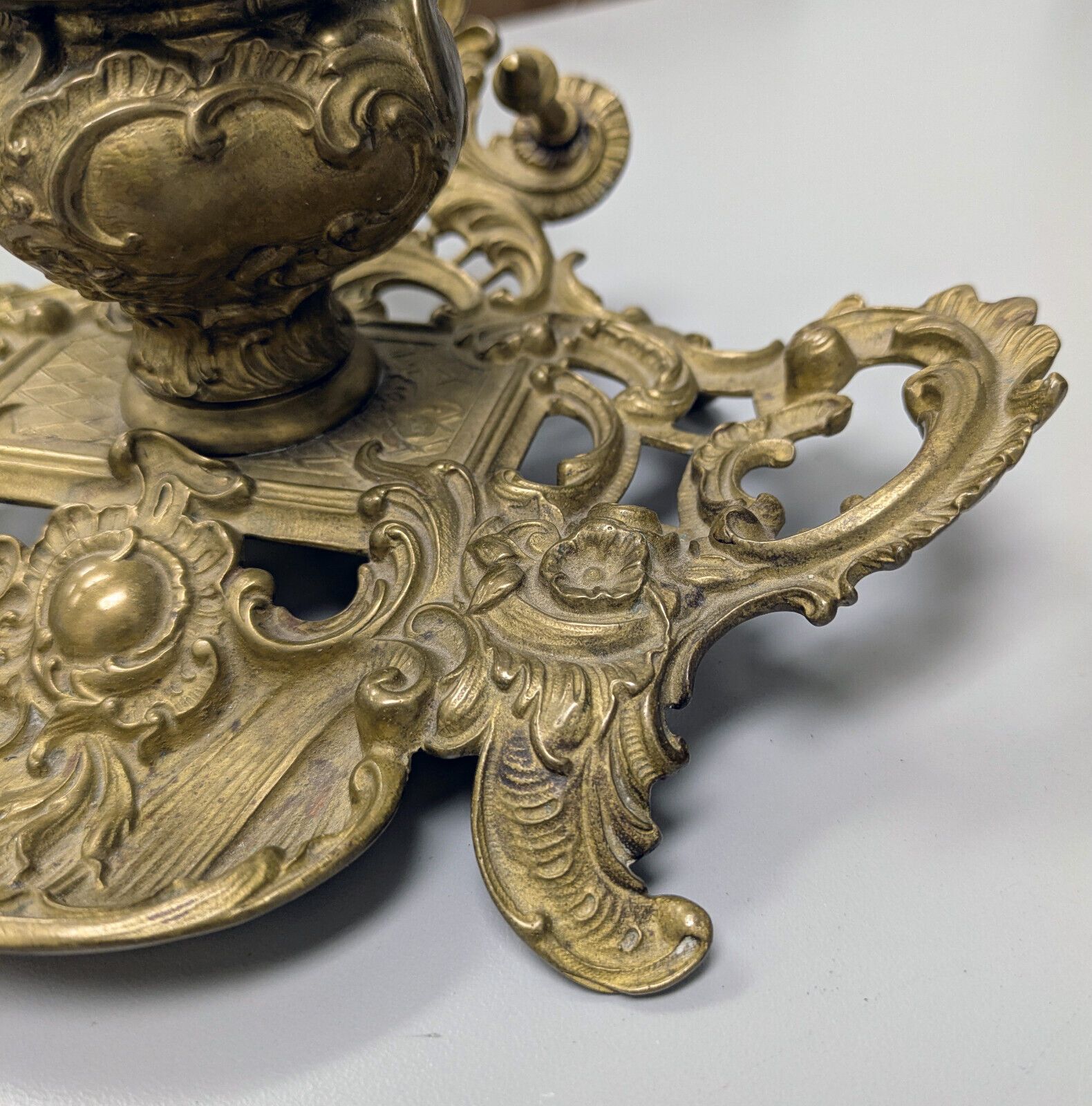
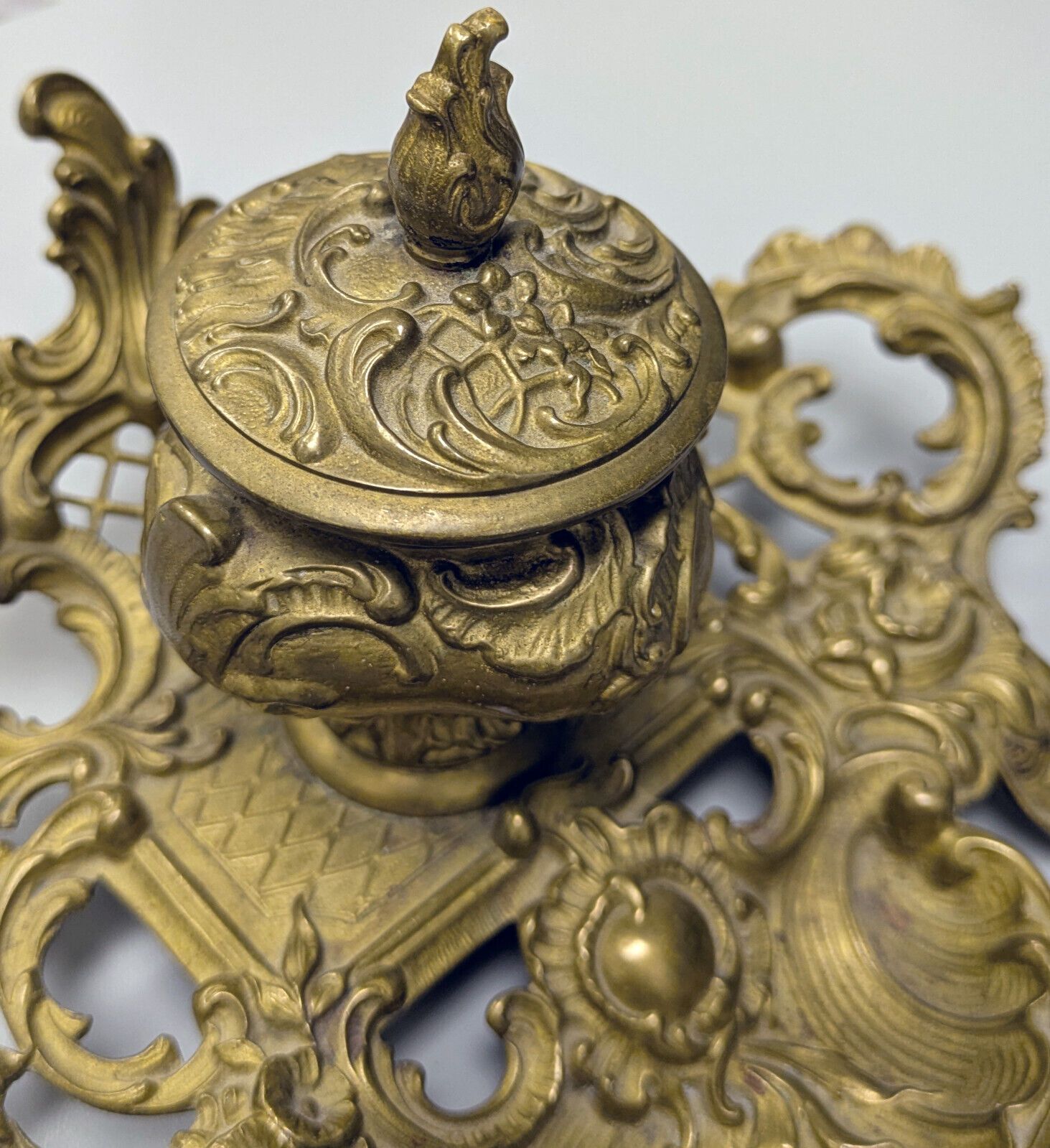
- The Inkwell: A single, central urn-shaped reservoir sits upon a raised square platform. It is decorated with heavy scrollwork, acanthus leaves, and floral motifs.
- The Lid: The lid is hinged and topped with a prominent flame finial. Inside, it contains a white porcelain liner to hold the ink.
- The Base: The base is wide and asymmetrical, featuring elaborate pierced metalwork. It includes a deep, shell-like pen tray at the front and two scrolling handles on the sides. The entire piece rests on four stylized foliate feet.
- The Backplate: There is a decorative vertical backplate featuring two small posts, which likely served as a pen holder to rest a dip pen horizontally.
Deciphering the Mark: “P.E.G. 1085”
The mark on the underside is the key to its origin.
- P.E.G.: This stands for P. E. Guerin, a renowned American foundry based in New York City. Founded by French immigrant Pierre Emmanuel Guerin in 1857, the company became the preeminent maker of high-end artistic brass and bronze hardware and decorative objects in the United States. They were famous for their French-inspired designs, which explains the heavy Rococo/Louis XV influence on this inkstand.
- 1085: This is the pattern or model number. Foundries like P. E. Guerin kept extensive catalogs of their designs; this number would have allowed a customer at the time to order this specific style of inkstand.
- Origin: Made in New York, USA.
- E. Guerin is actually still in business today in Greenwich Village, remaining the oldest decorative hardware firm in the country. Their antique desk sets are highly collectible for their superior casting quality and historical connection to 19th-century American luxury.
Sold for $100 in February 2026
Content disclaimer. The information posted is the owner’s best knowledge and may not have been vetted by the SOIC. We welcome comments, corrections, and additions, working to make our website information comprehensive and accurate.
Join the Society of Inkwell Collectors (SOIC) – it’s free!
Founded in 1981 as a non-profit organization,
we are documenting inkwells (and accessories).
We’re here to help and inform!