

Inkipedia

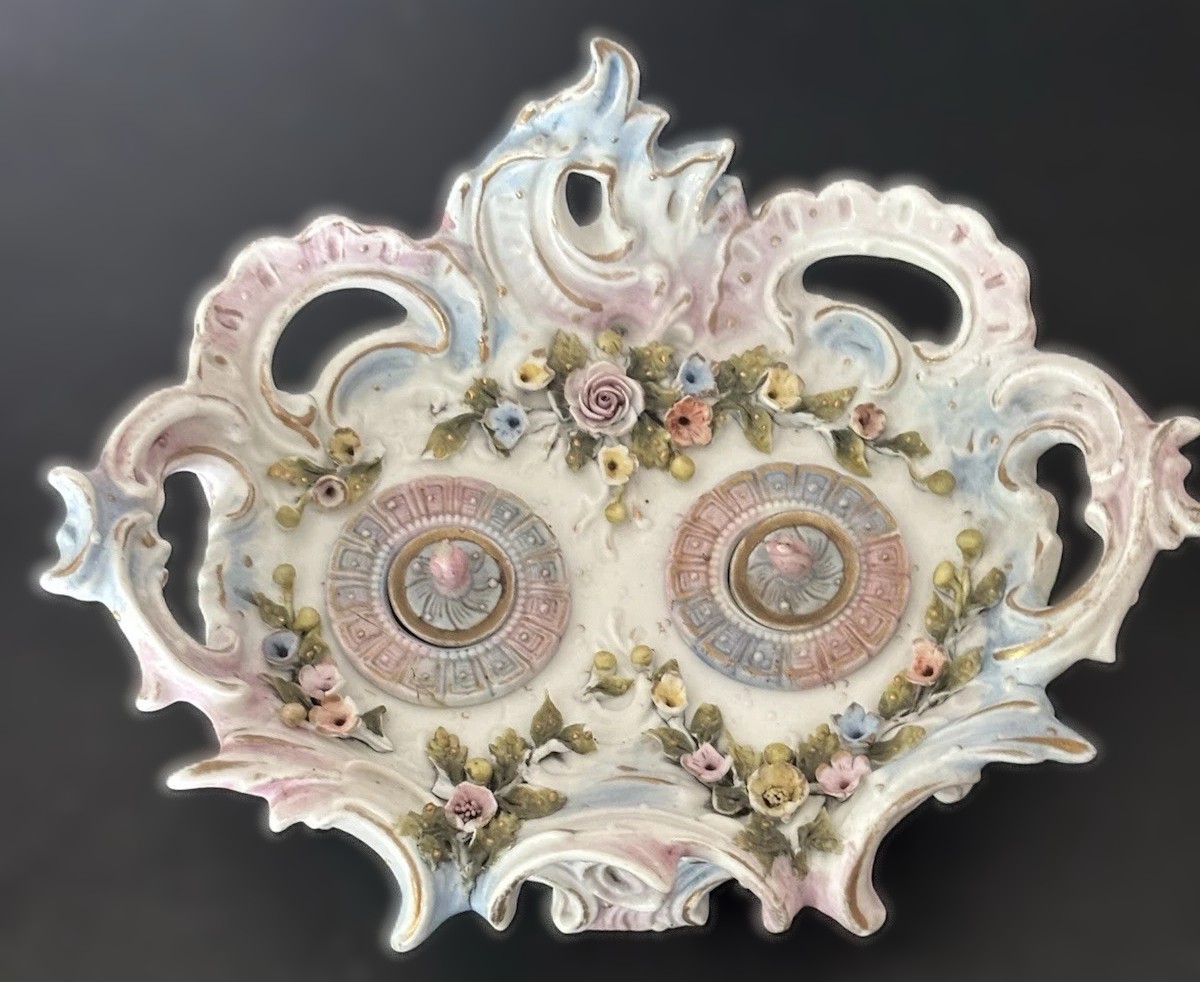

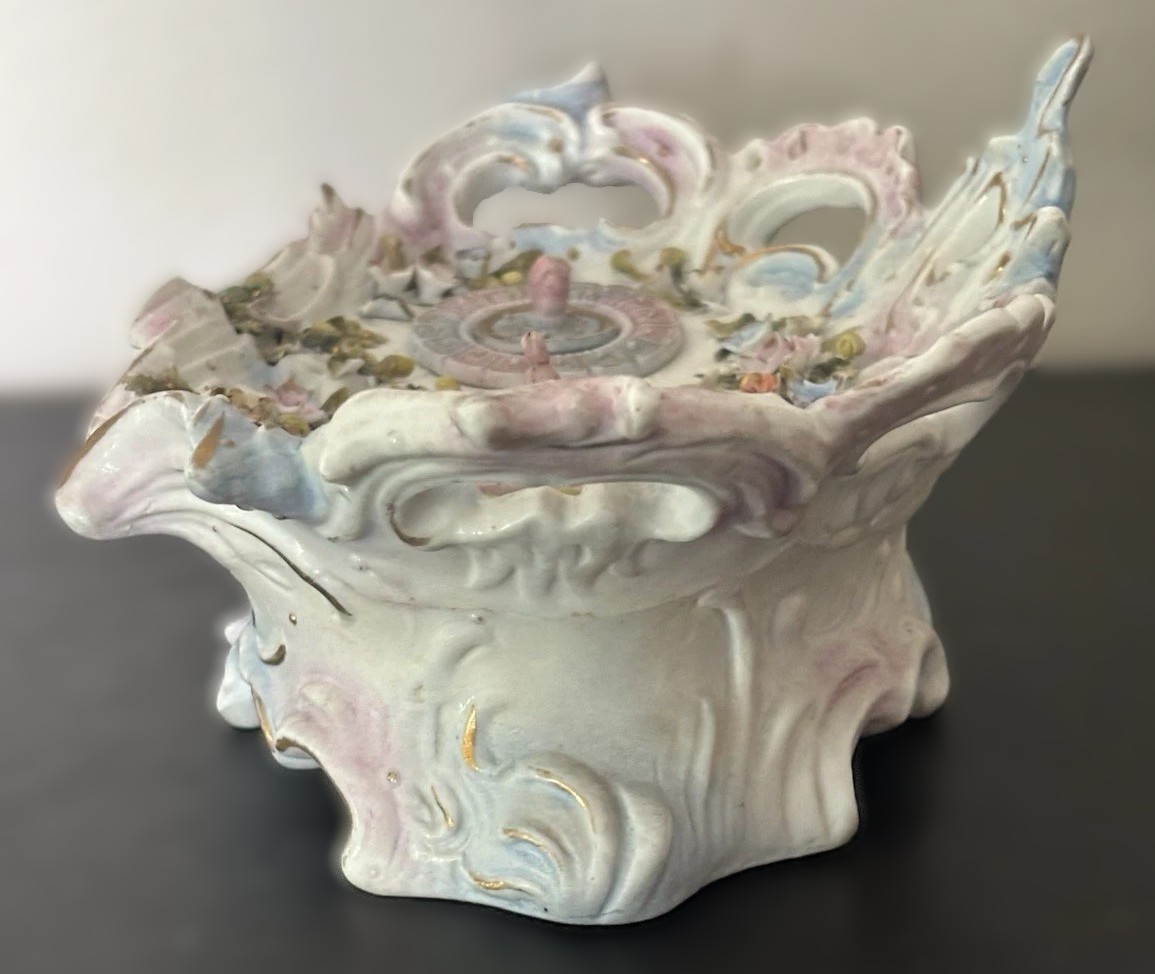
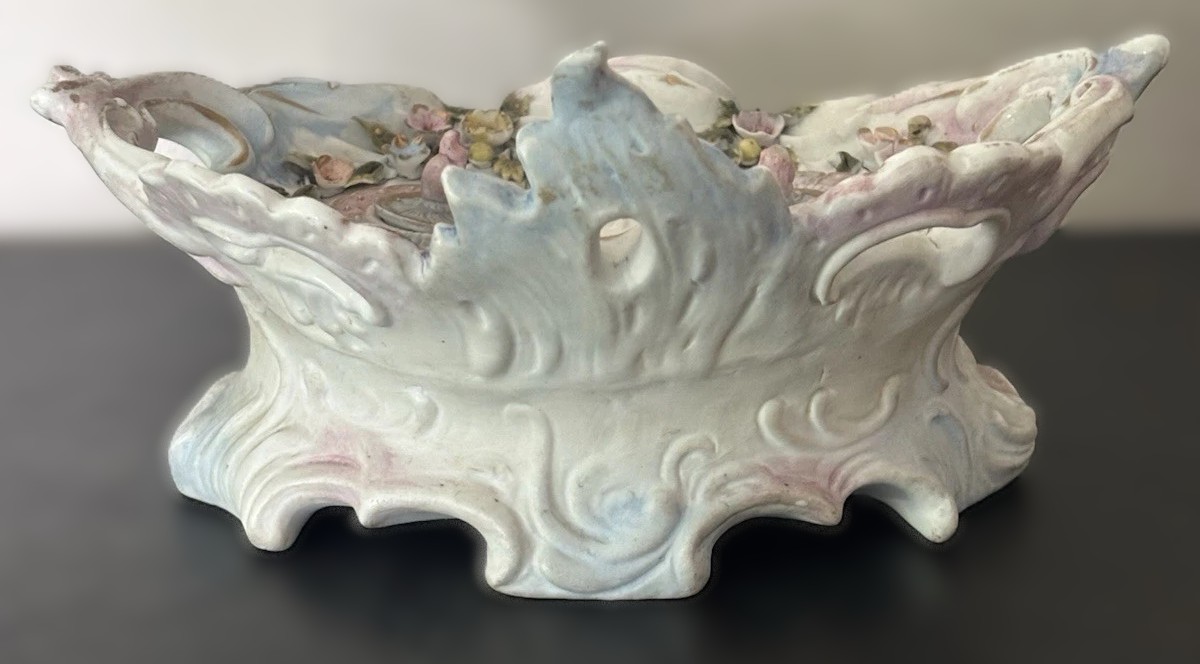
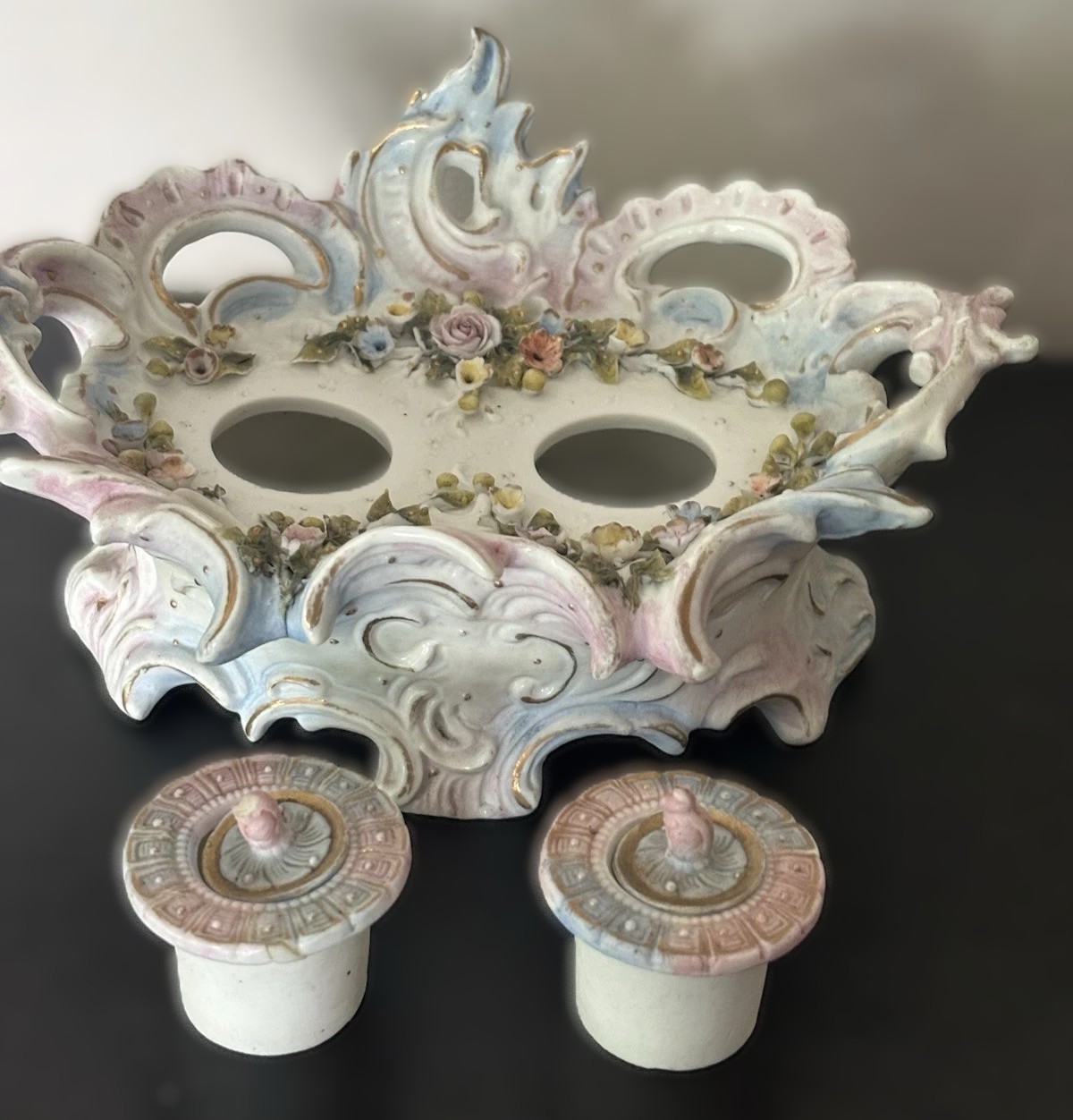
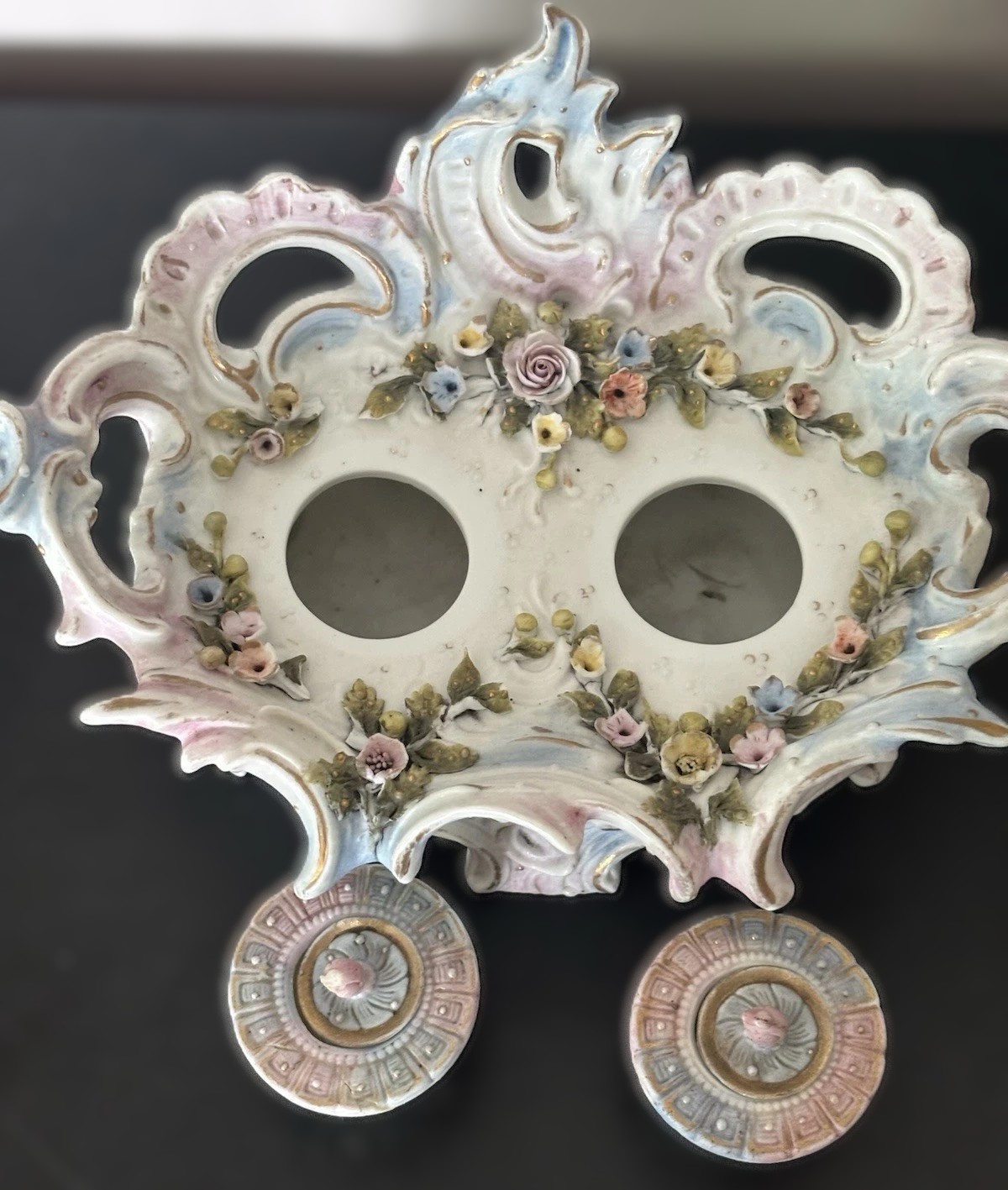
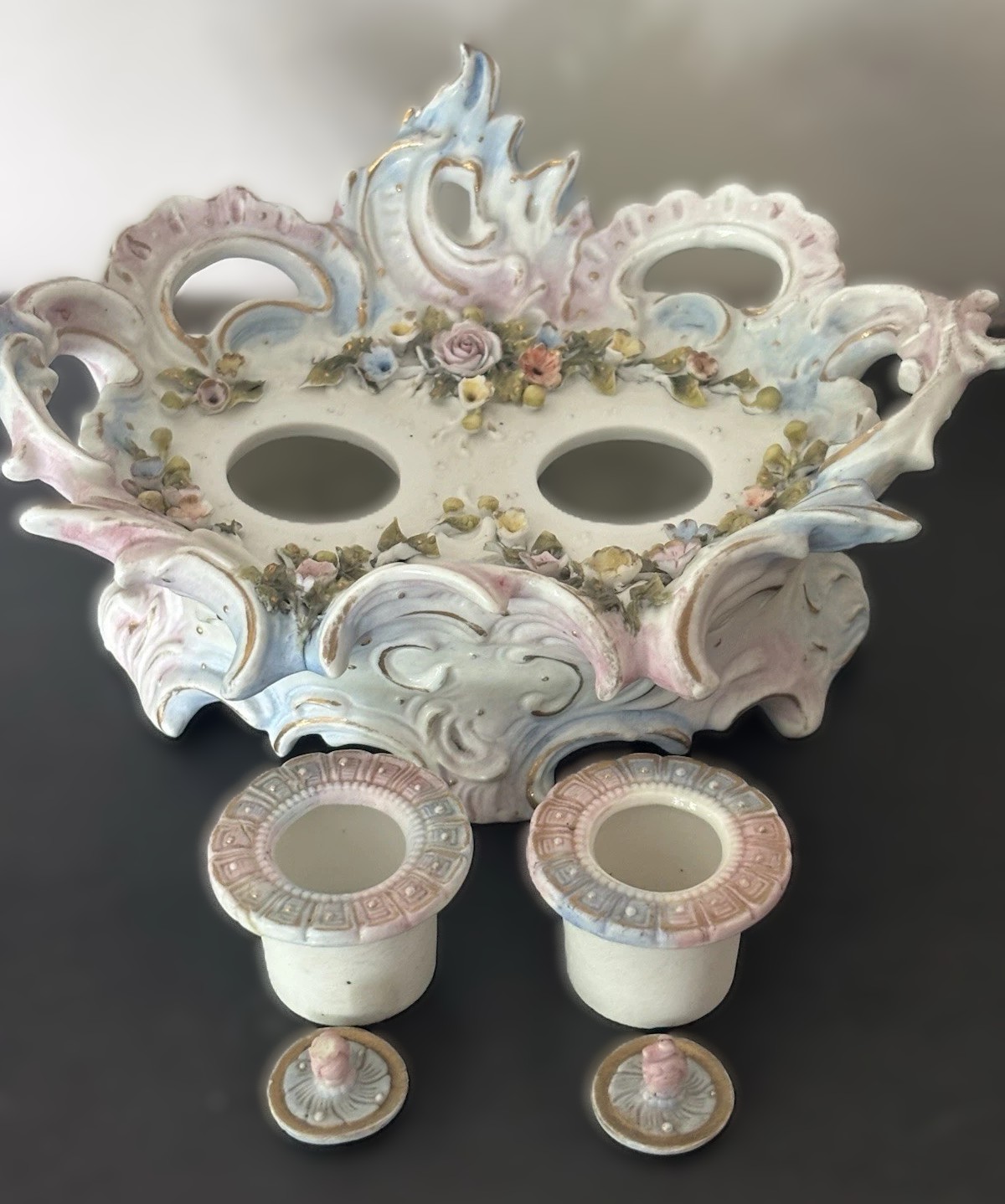
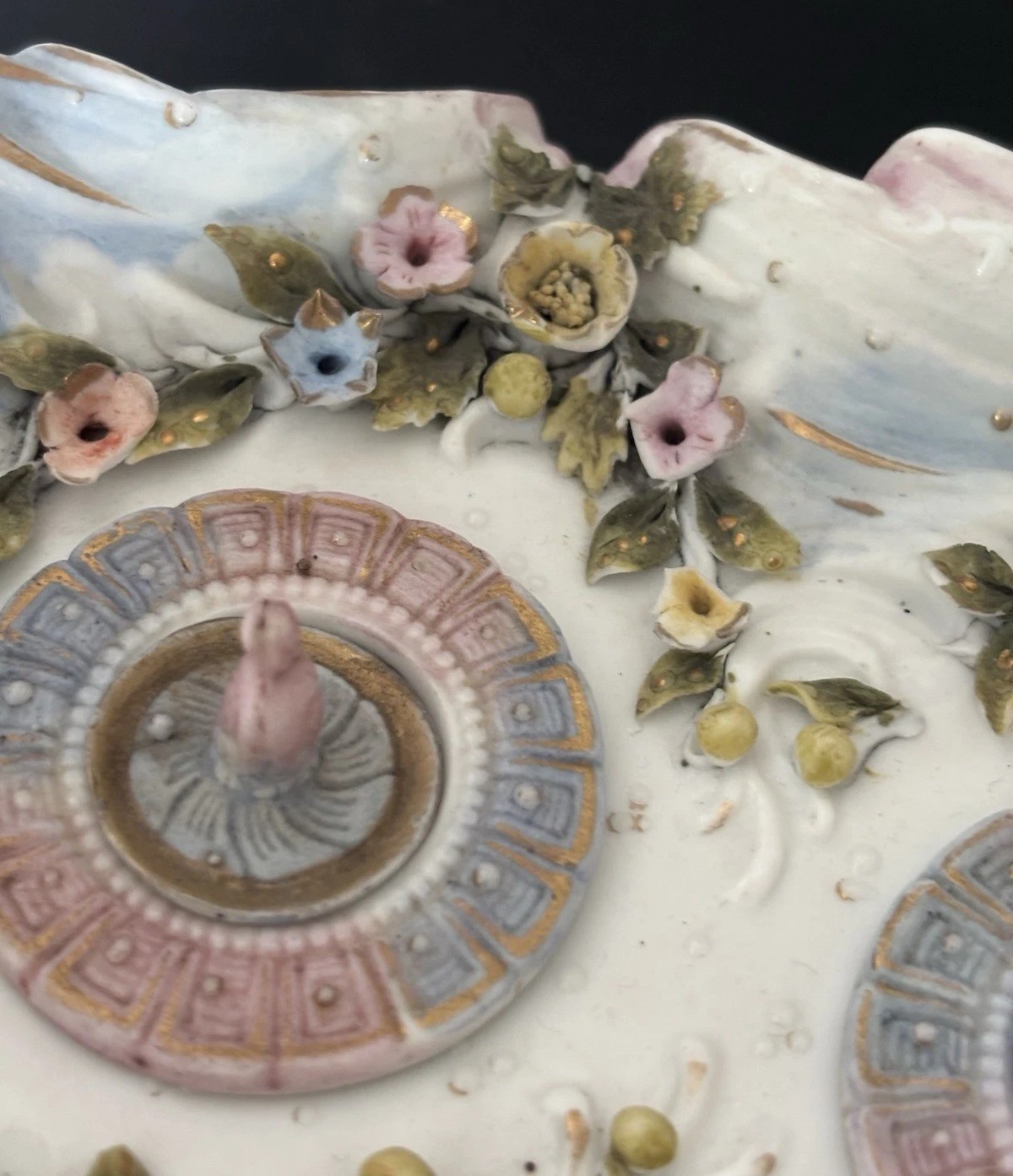
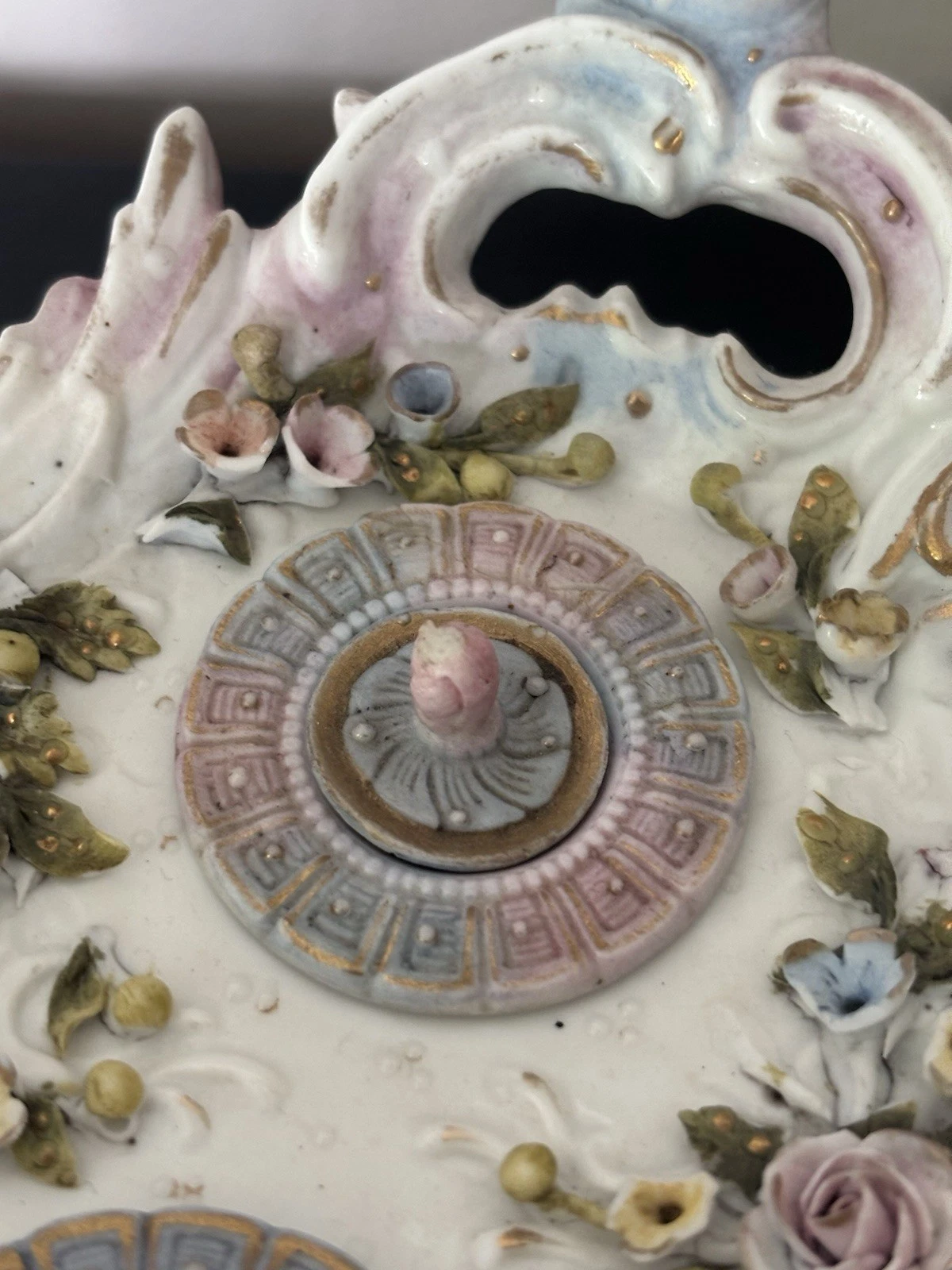
Rococo Revival Porcelain Inkstand with Three-Dimensional Flowers
| Categories | Ceramics/Porcelain non-Figural |
| Material | Porcelain |
| Markings | Unmarked |
| Manufacturer | Undetermined |
| Origin | Undetermined |
| Date or Era | circa 1870 |
| Measuring | 7 ¼” across at its widest point |
This elaborate porcelain inkstand is a beautiful example of 19th-century European Neo-Rococo (Rococo Revival) decorative art.
- Stylistic Description
- Form & Ornamentation: The inkstand features an asymmetrical, highly sculpted base with molded C-scrolls, acanthus leaves, and reticulated (pierced) handles characteristic of the Rococo Revival style. It stands on integral scrolled feet.
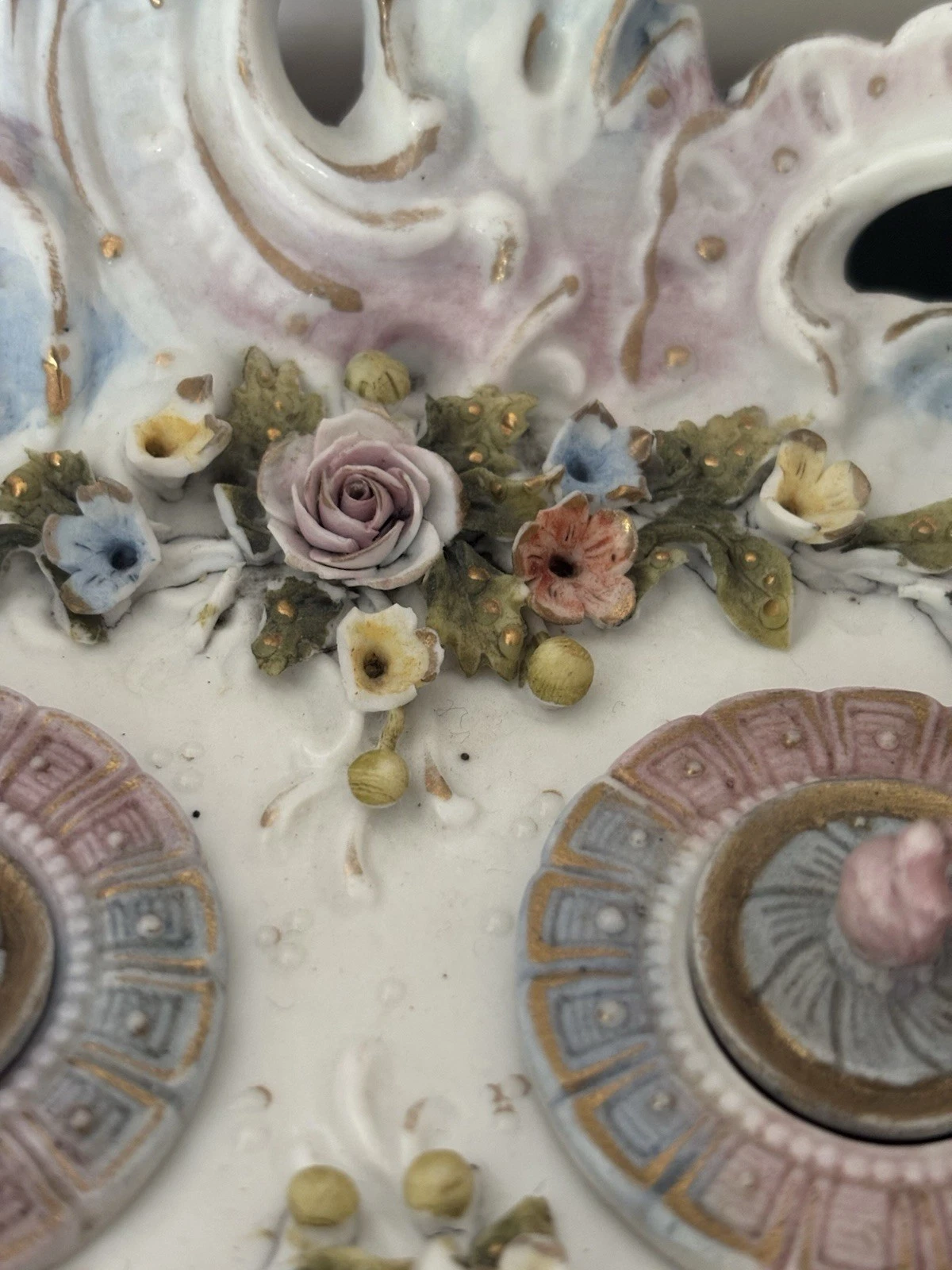
- Applied Flowers: The defining feature is the abundance of encrusted (hand-applied) three-dimensional porcelain flowers, including a central spray of a pink rose surrounded by small forget-me-nots, foliage, and buds.
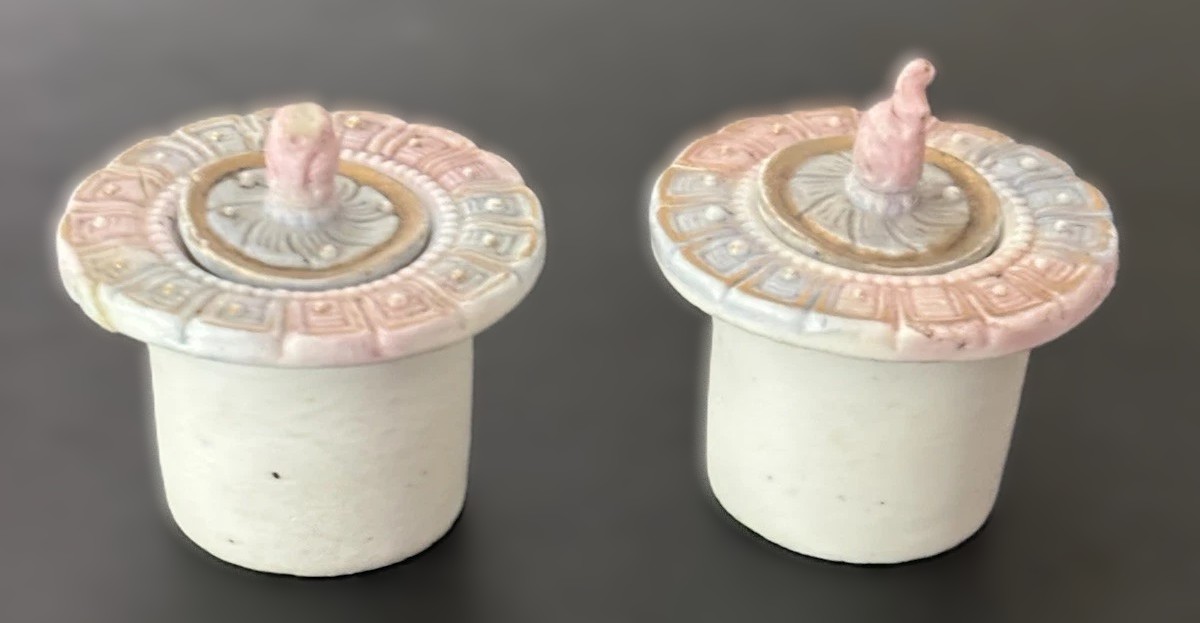
- Color Palette: It features a delicate, soft pastel palette dominated by shaded pinks, lavender-blues, and creamy white, accented with hand-painted gilt (gold) highlights along the scrollwork and geometric patterns on the inkwell shoulders.
- Components: The stand functions as a complete “standish,” containing two deep circular wells designed to hold removable porcelain inkpots. Each inkpot is fitted with its own matching lid, topped by a sculpted pink finial.
- Where & By Whom Was It Made?
There is no maker’s mark. It is unequivocally Continental European or English in origin:
- Germany (Thuringia / Dresden / Meissen): This style of highly detailed, encrusted floral porcelain is famously associated with the Dresden area (such as Carl Thieme of Potschappel) or Thuringian manufacturers like Sitzendorf, Volkstedt, or Rudolstadt. These factories specialized in decorative, delicate porcelain items with applied flowers and pastel palettes.
- France (Paris / Jacob Petit): “Old Paris” porcelain houses, particularly the workshop of Jacob Petit, were legendary for producing highly theatrical, intensely colored Neo-Rococo porcelain inkstands with applied flora during this exact timeframe.
- England (Coalport / Rockingham): English factories also embraced the “Coalbrookdale style” of heavily encrusted floral porcelain during the mid-19th century, often utilizing these exact scroll-molded desk sets.
- When Was It Made?
- Circa 1850–1890 (Victorian Era / Napoleon III Era): The Rococo Revival style flourished heavily during the middle to late decades of the 19th century, driven by a nostalgic fondness for the 18th-century court styles of King Louis XV.
Sold for $42 in June 2026
Content disclaimer. The information posted is the owner’s best knowledge and may not have been vetted by the SOIC. We welcome comments, corrections, and additions, working to make our website information comprehensive and accurate.
Join the Society of Inkwell Collectors (SOIC) – it’s free!
Founded in 1981 as a non-profit organization,
we are documenting inkwells (and accessories).
We’re here to help and inform!