

Inkipedia
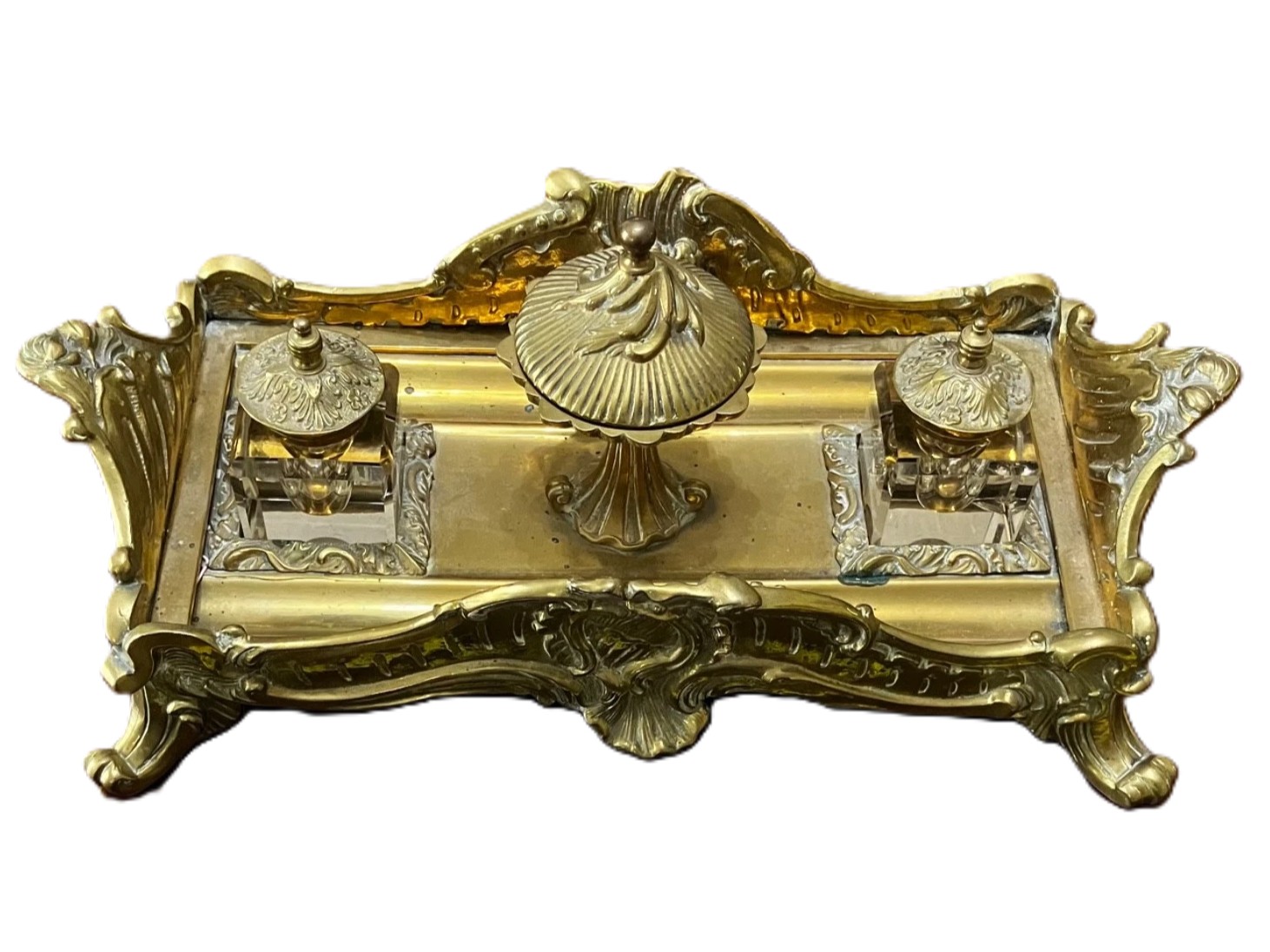






Rococo Revival Double Inkstand
| Categories | Bronze - Brass - Copper |
| Material | Brass |
| Markings | Unmarked |
| Manufacturer | Undetermined |
| Origin | Undetermined |
| Date or Era | circa 1880 |
Description
- The Brass Inkstand
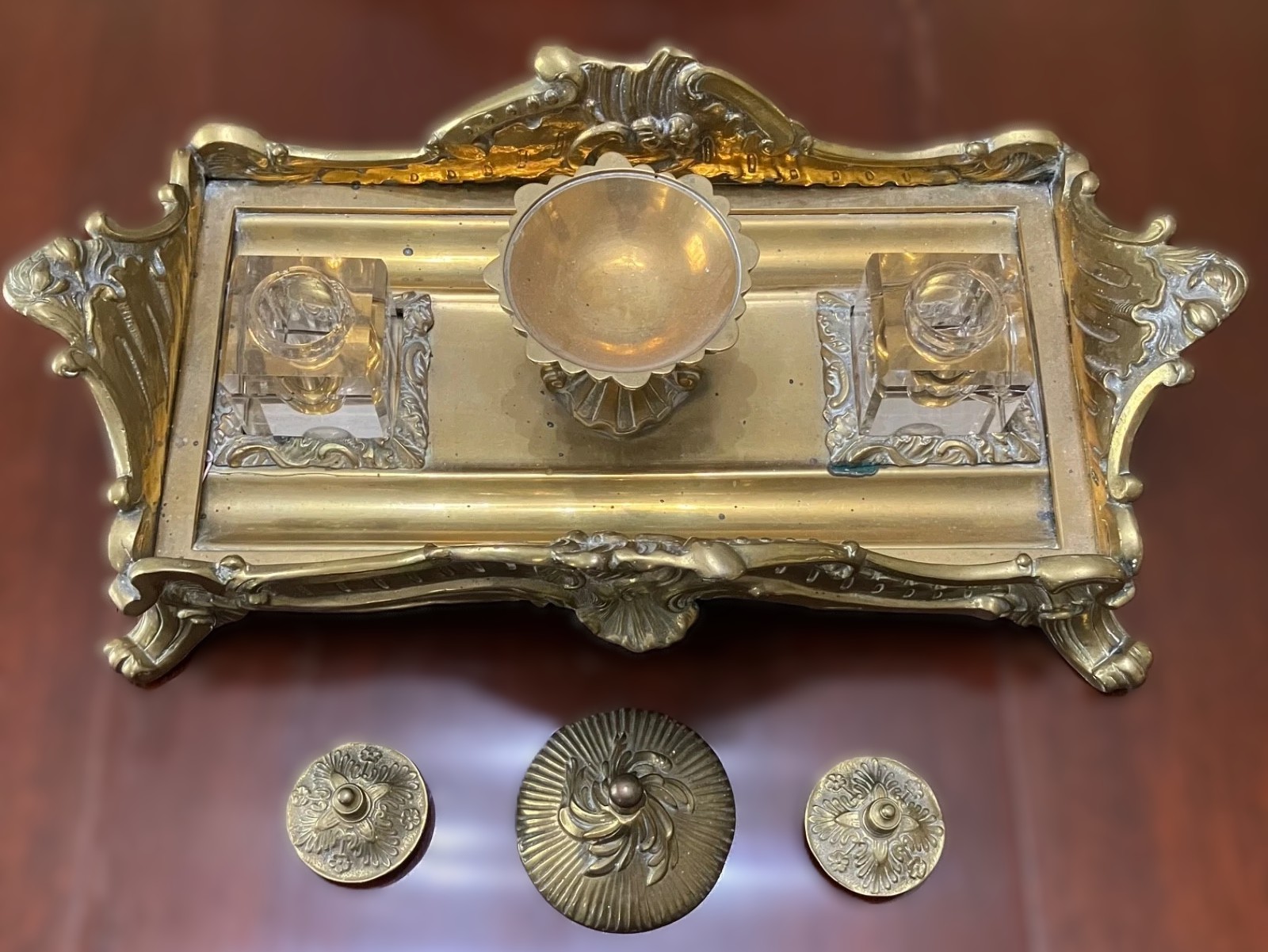
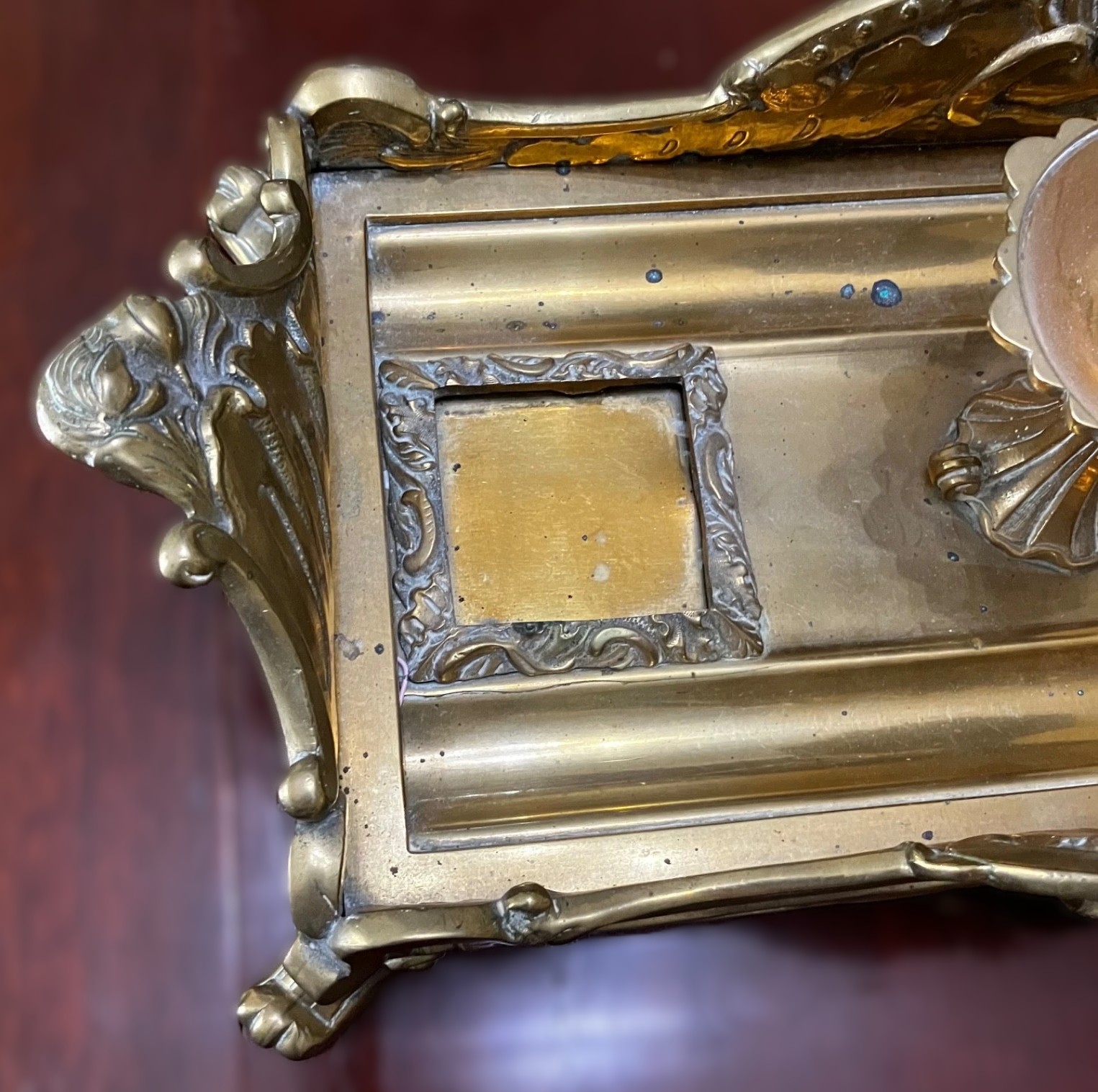
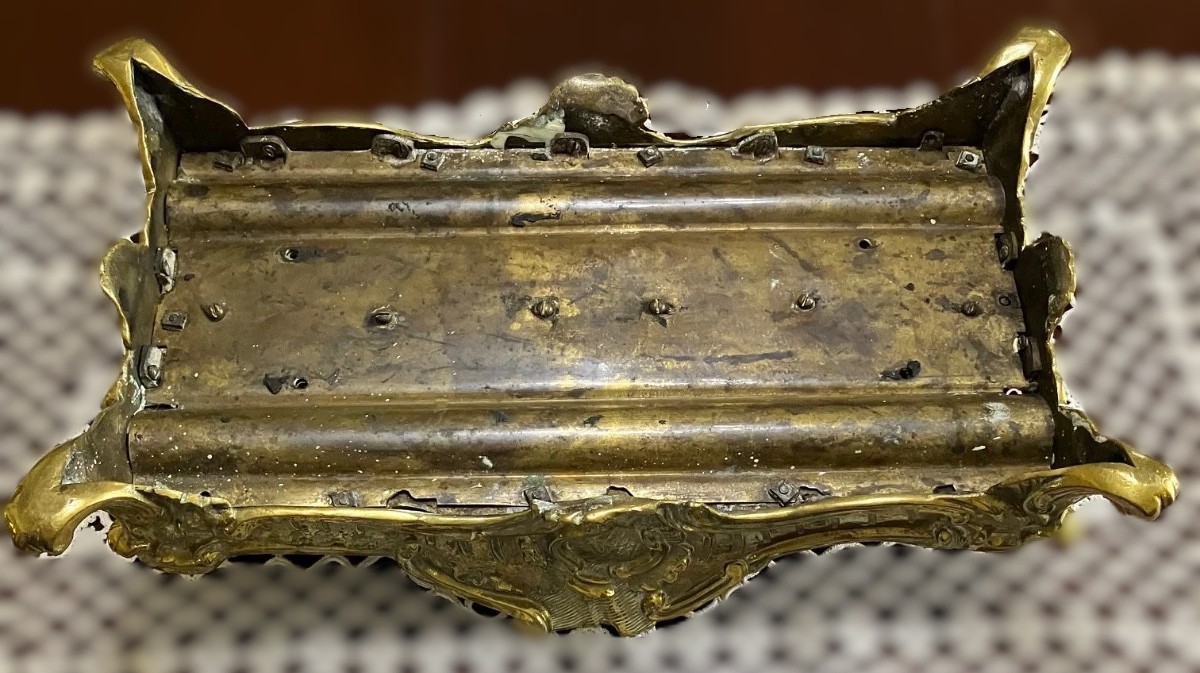
- Material & Style: Heavy cast brass designed in the ornate Rococo Revival style. The piece sits on four scrolled acanthus-leaf feet.
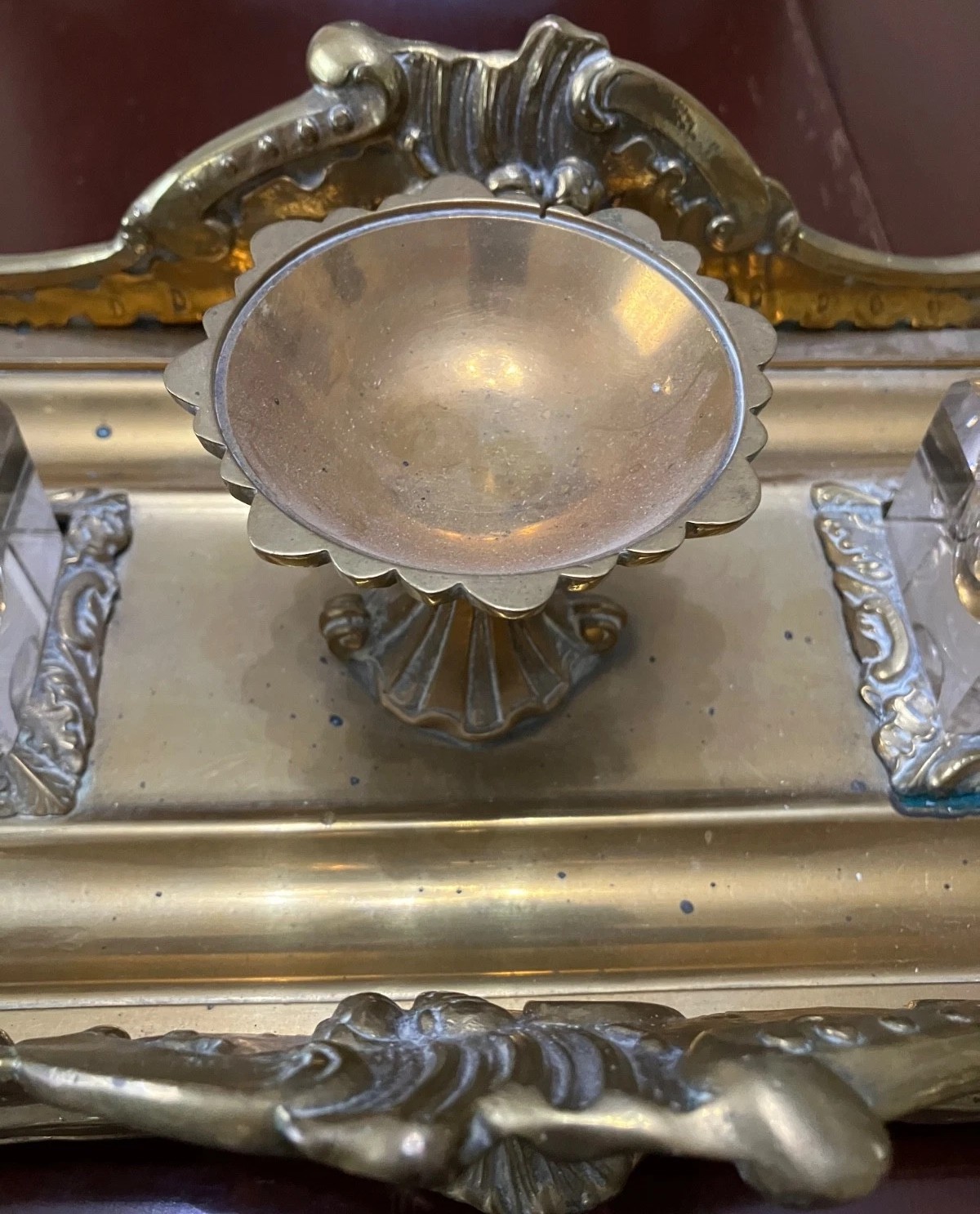
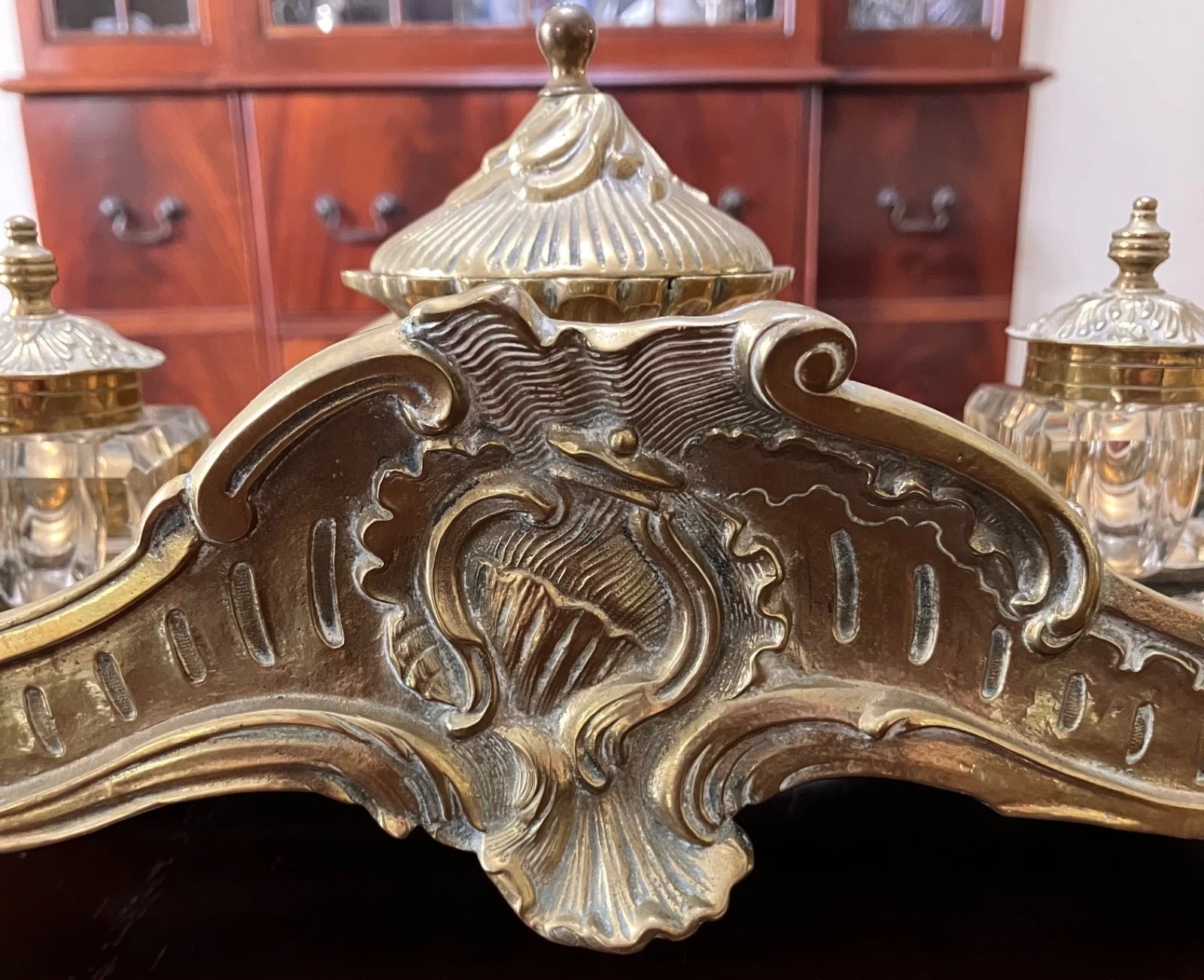
- Apron & Borders: The front, back, and side galleries feature deep, pierced C-scrolls, sweeping foliage, and a prominent stylized shell motif (rocaille) centered on both the front apron and the raised back gallery.
- Side Handles: The stylized, sweeping side borders double as functional handles for moving the desk set.
- The Inkwells
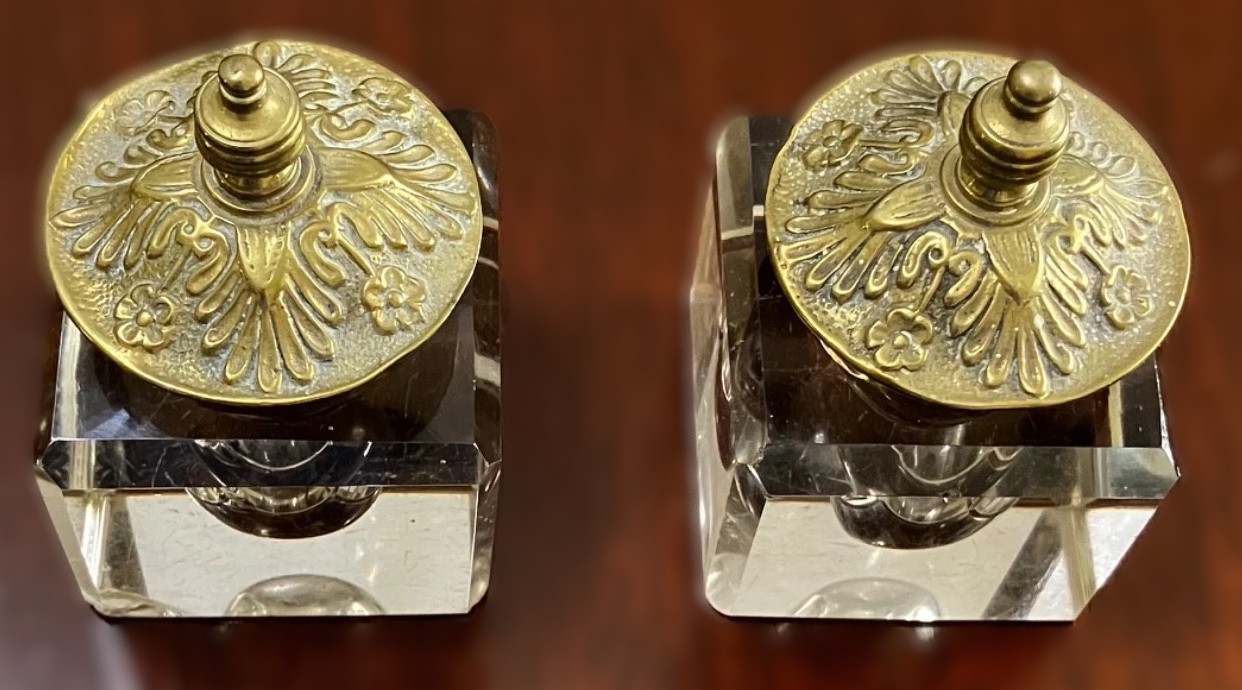
- Glass: Flanking the center are two heavy, clear, square cut-glass inkwells. The glass is thick and faceted with a round interior well to hold the ink.
- Molded Receivers: These inkwells sit perfectly into integrated, decorative square frames cast right into the brass base tray.
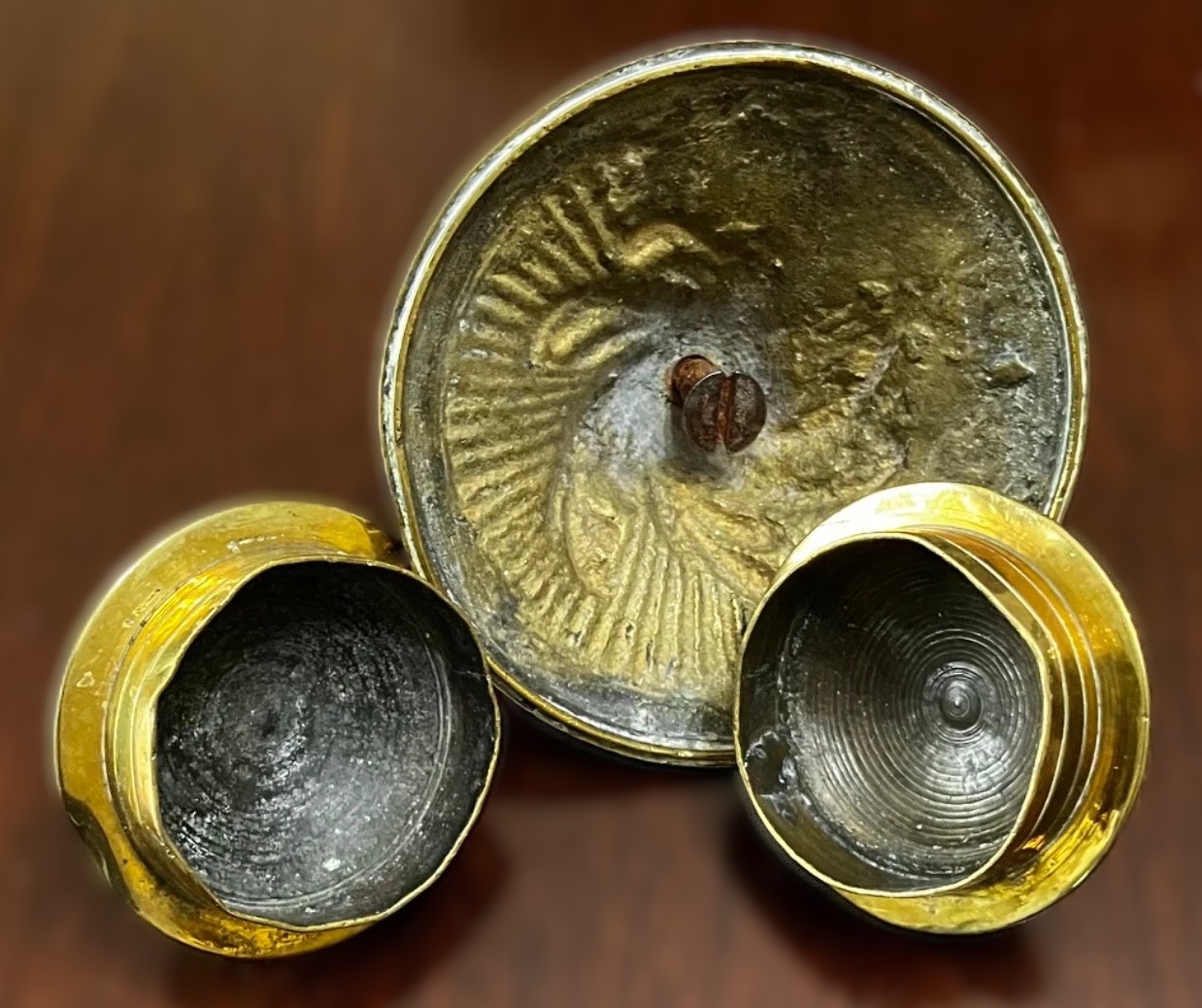
- Lids: Each glass well is topped with a removable, circular cast-brass lid featuring a dense floral and radiating leaf pattern, finished with a classic turned finial knob.
- Central Covered Vessel
- Purpose: Located exactly in the center is a matching pedestal cup. In the 19th century, this central bowl typically served as a wafer container, stamp box, or sponge cup (used for dampening stamps or cleaning pen nibs).
- Lid Detail: It is fitted with a large, matching dome-shaped lid decorated with radiating fluting and a swirling foliage pattern. The underside shows traditional period assembly, featuring a large slot screw securing the top finial.
Origin, Maker, & Era
- Where was it made? Most likely France, England, or the United States. Decorative cast-brass desk sets of this exact style were popular across Europe and America in the late 19th century.
- Who made it? Because it is completely unmarked (lacking a foundry stamp, maker’s initials, or a design registry number), the exact maker cannot be identified. During the late 1800s, numerous prominent commercial foundries produced high-quality decorative brassware for the standard consumer market.
- When was it made? Circa 1870s–1890s. The elaborate historicist molding, the specific combination of cut glass with cast brass, and the internal slot-screw assembly are characteristic of late-19th-century manufacturing.
Sold for $75 in June 2026
Content disclaimer. The information posted is the owner’s best knowledge and may not have been vetted by the SOIC. We welcome comments, corrections, and additions, working to make our website information comprehensive and accurate.
Join the Society of Inkwell Collectors (SOIC) – it’s free!
Founded in 1981 as a non-profit organization,
we are documenting inkwells (and accessories).
We’re here to help and inform!