

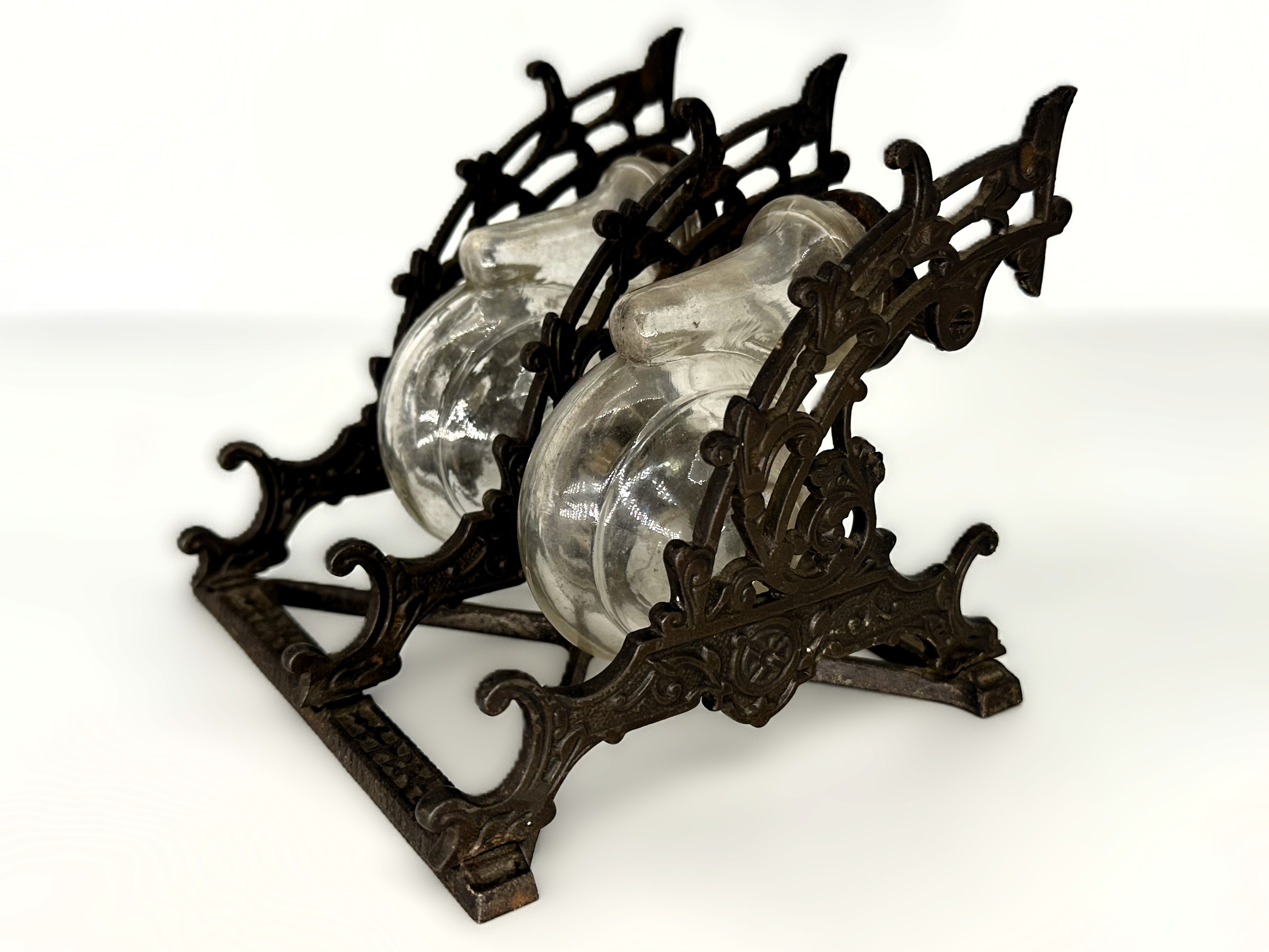
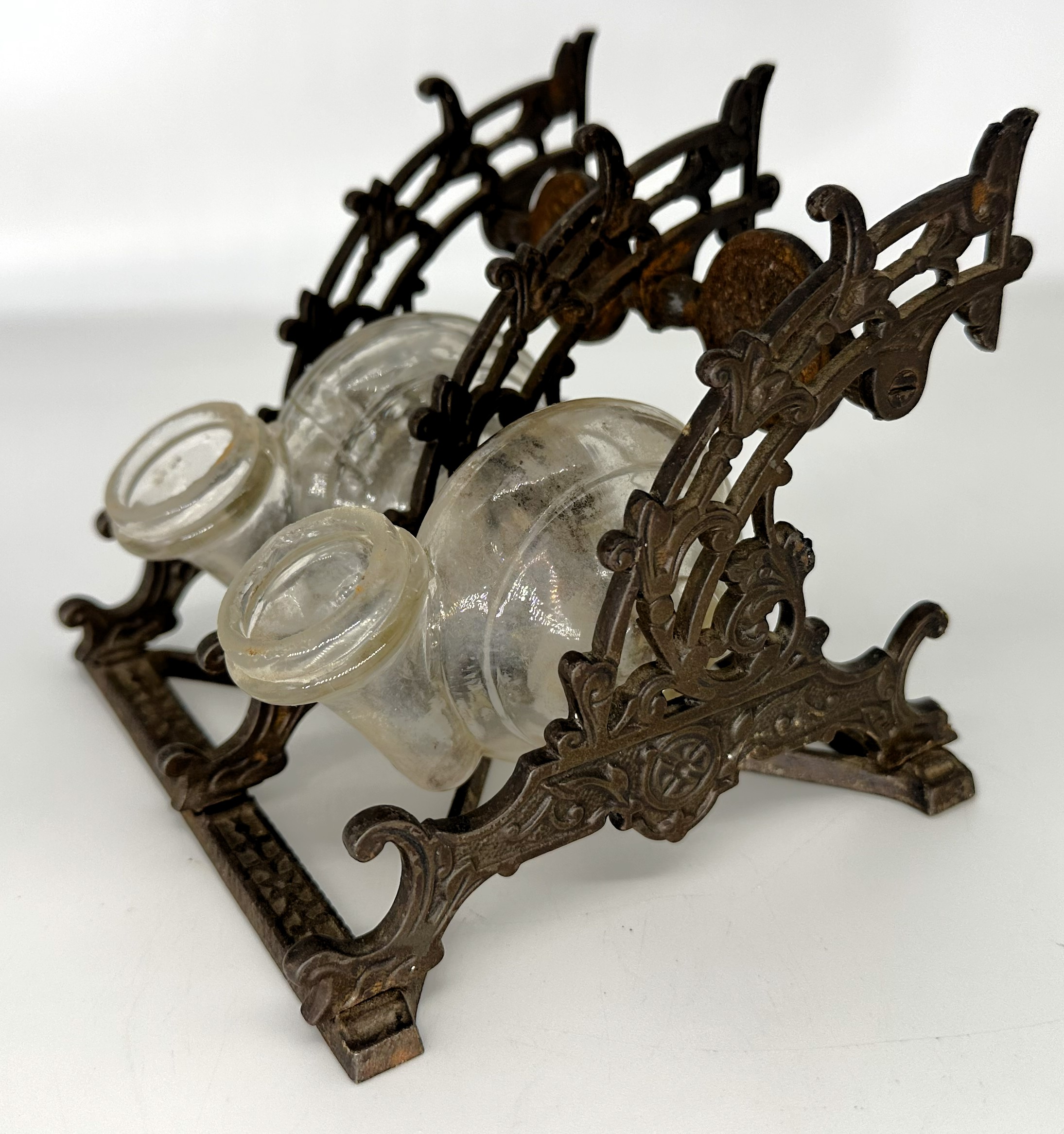

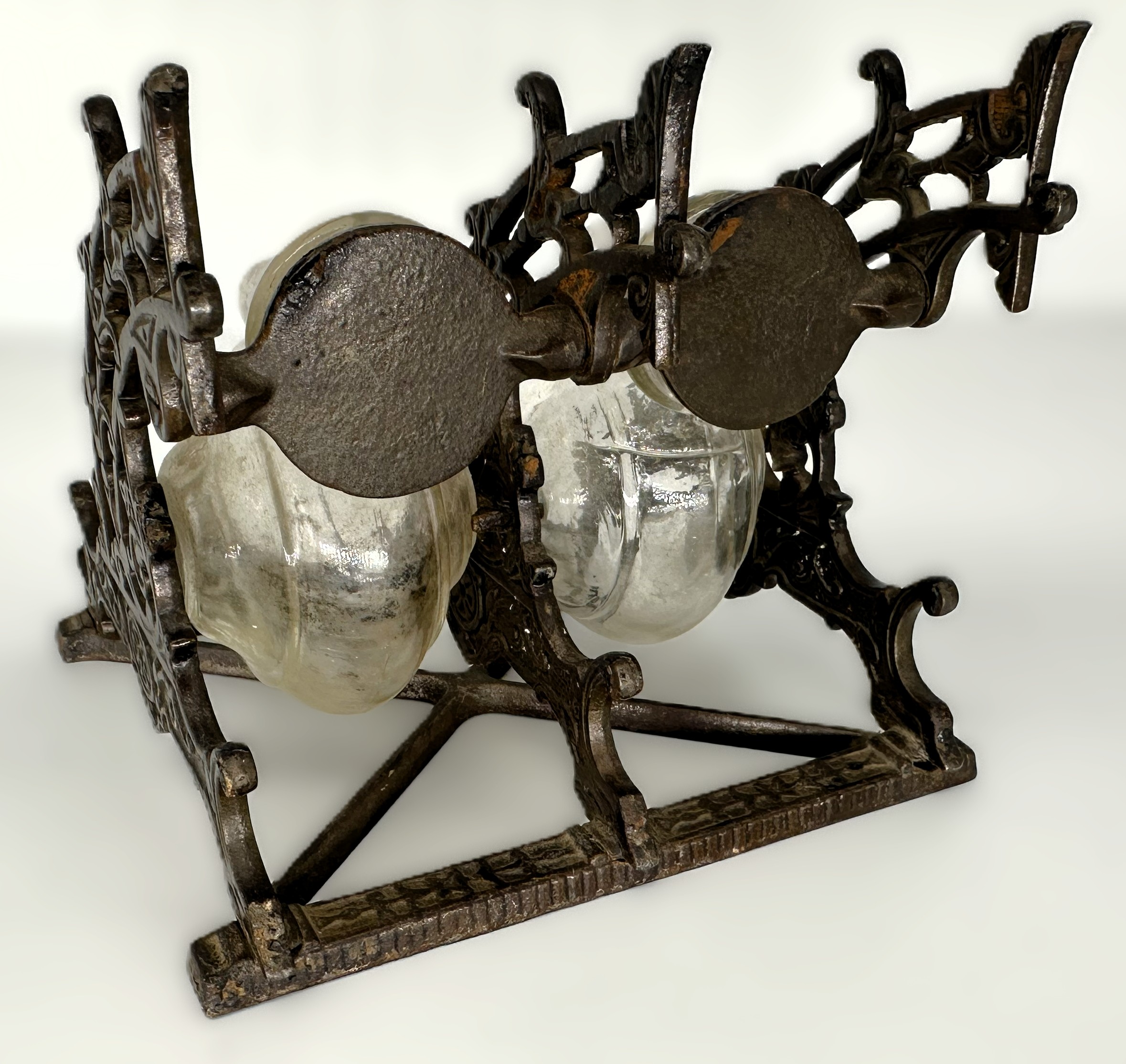
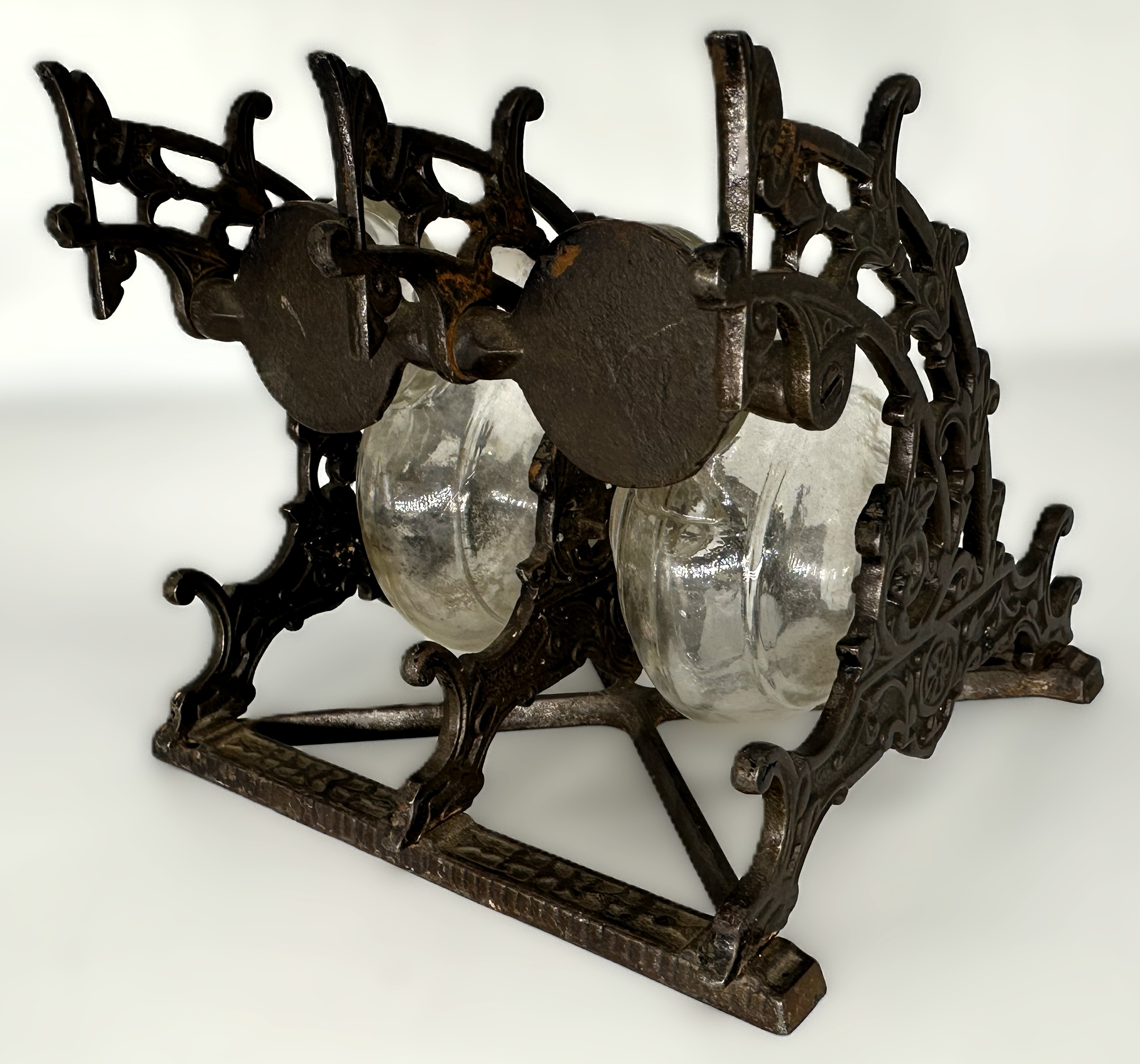


Revolving “Snail” Inkstand – Wolcott Hull
| Categories | Mechanical - Snail / Pivoting |
| Type | Snail |
| Material | Cast iron, Glass |
| Markings | Unmarked |
| Manufacturer | Wolcott-Hull |
| Origin | United States |
| Date or Era | circa 1880 |
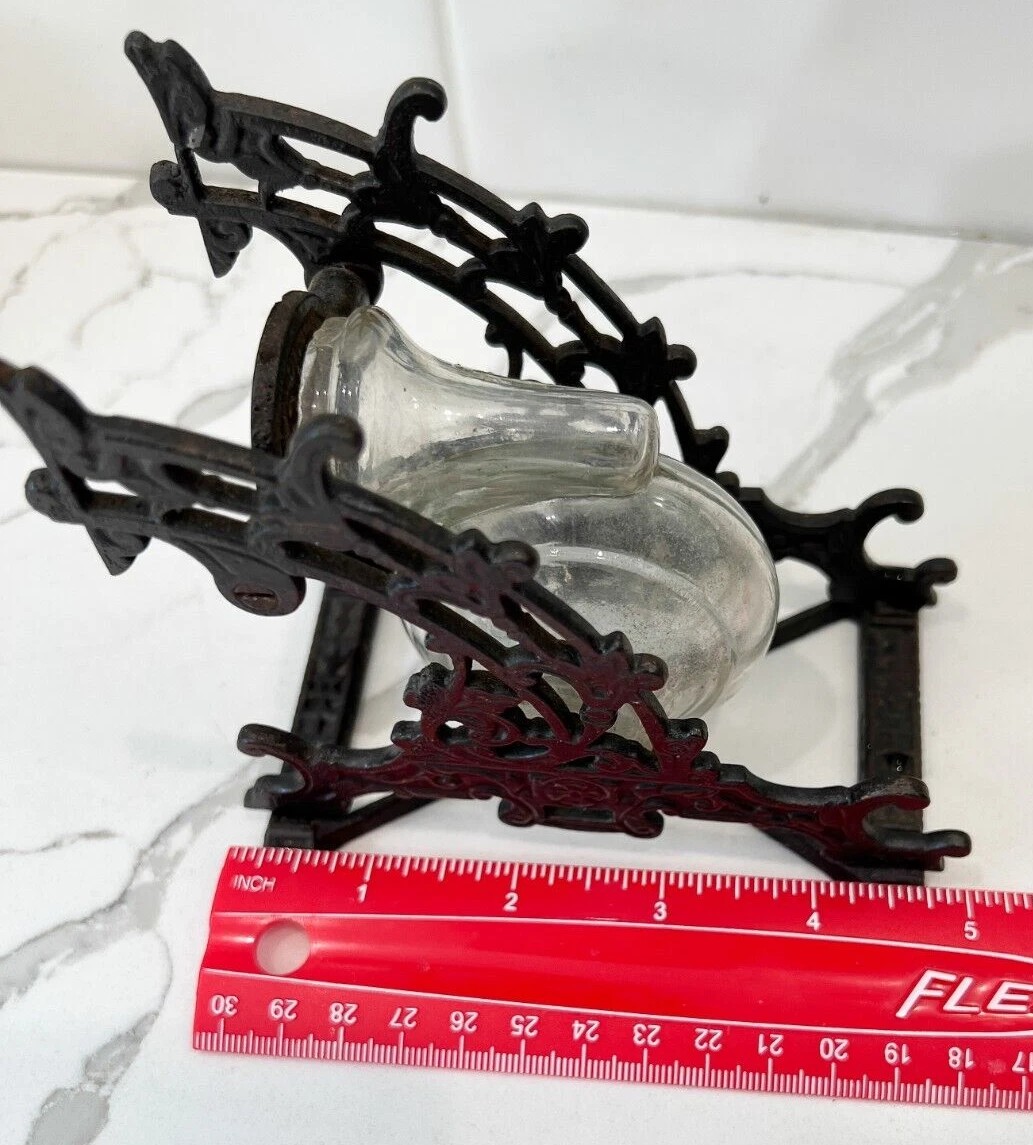
| Measuring | Single: 4 ¾” x 2 ¾” x 4 ½” high – Double: 4 ¾” x 5” x 4 ½” high |
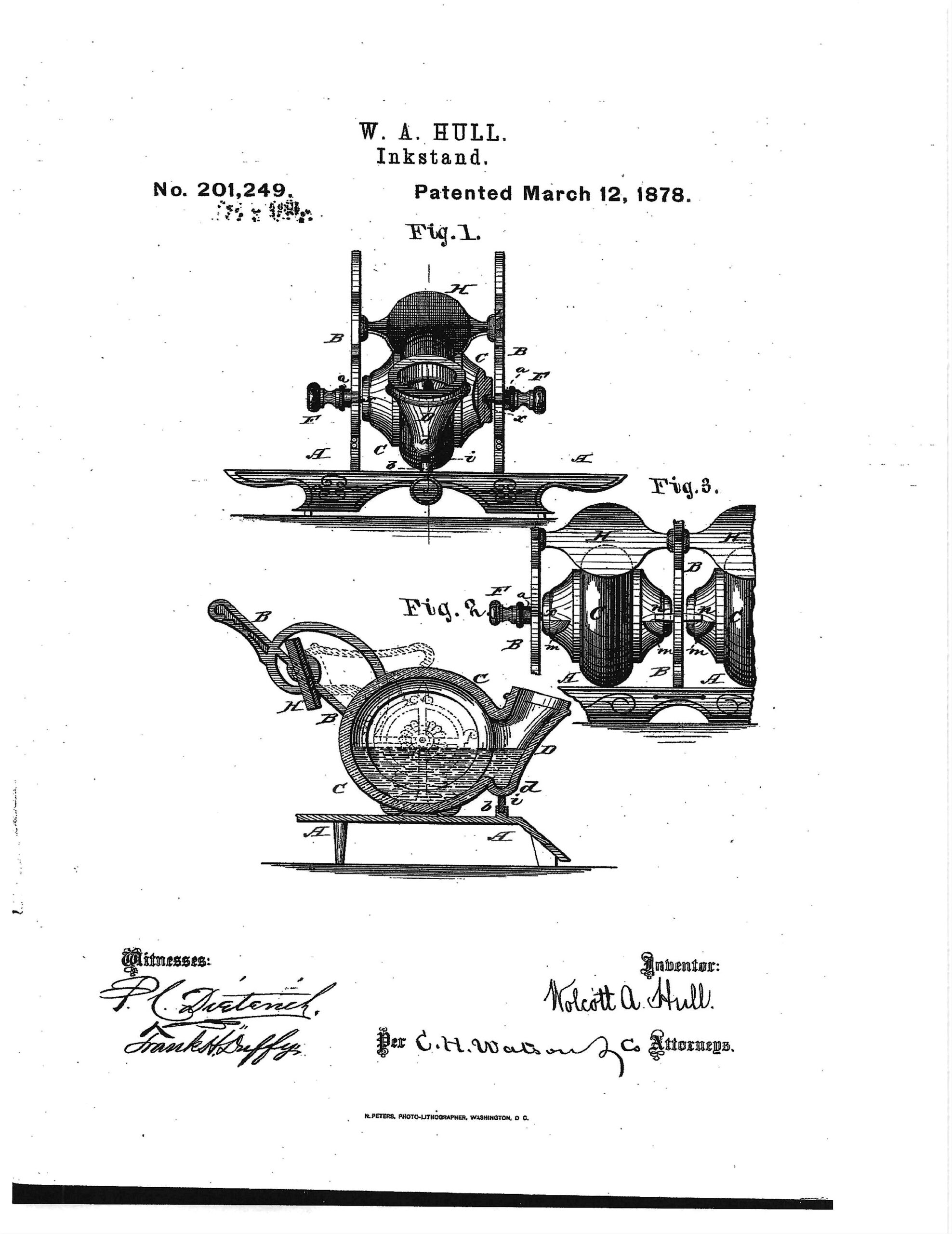
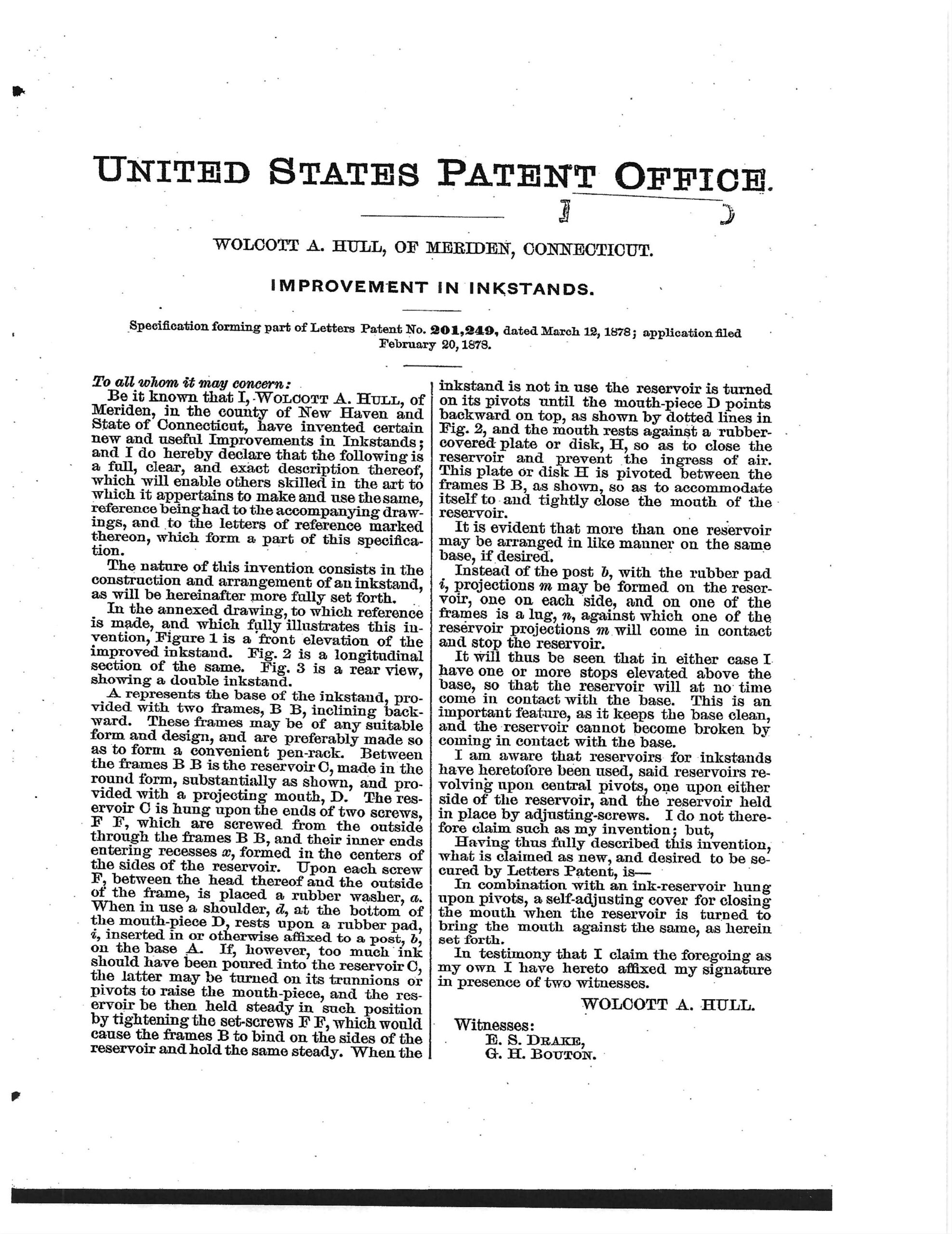
| Patent | Patent No. 201,249 March 12, 1878 |
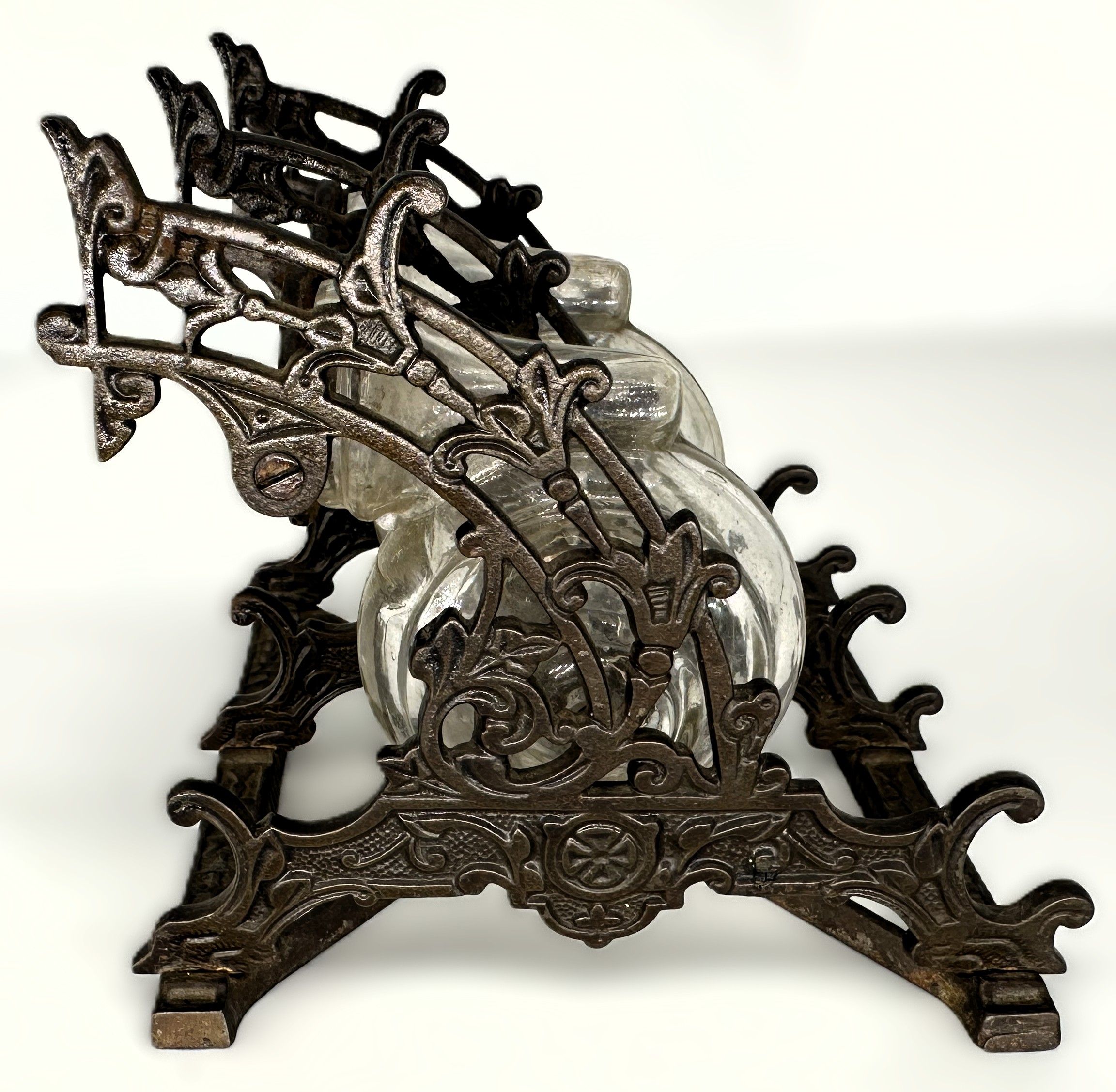
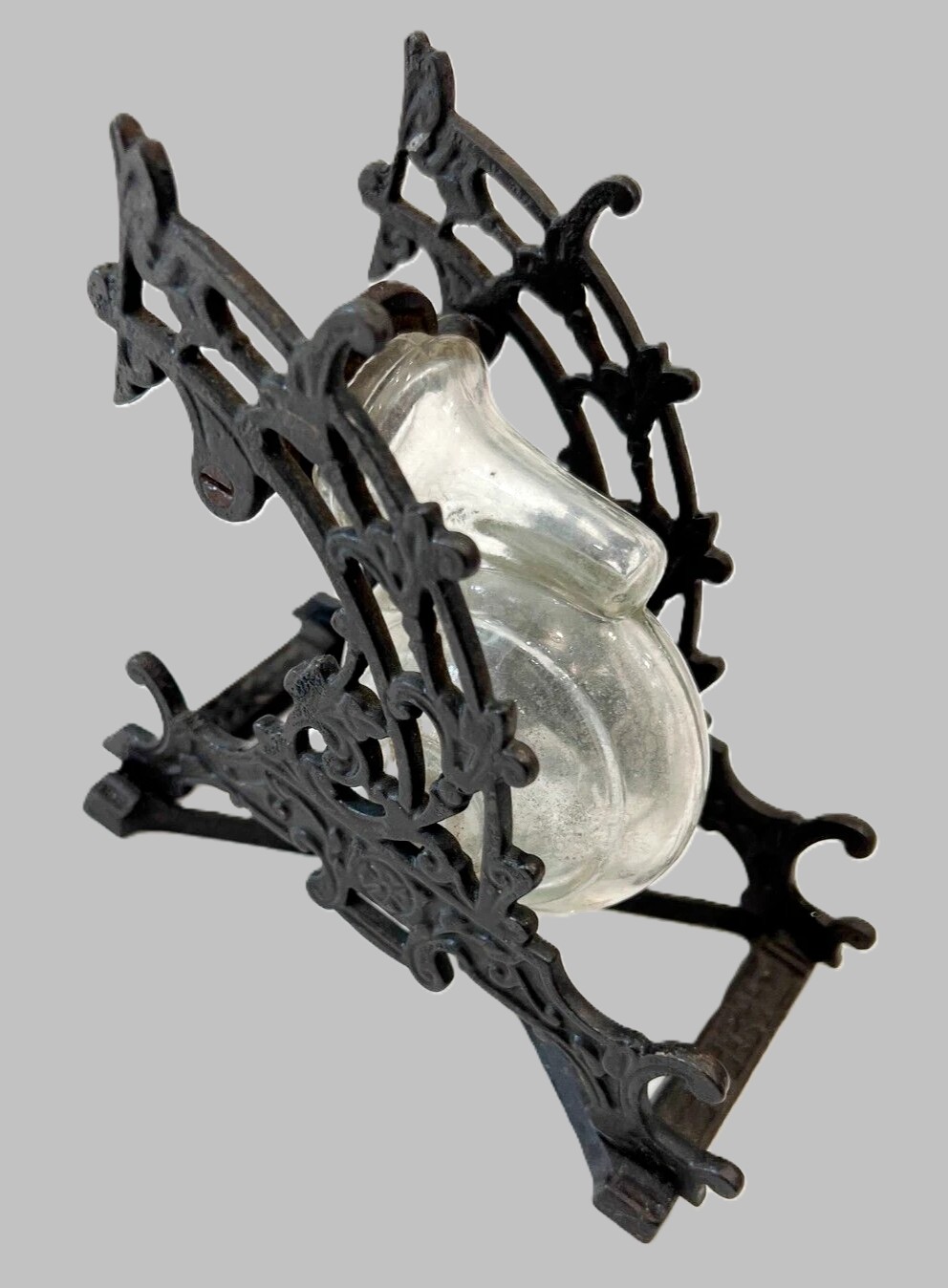
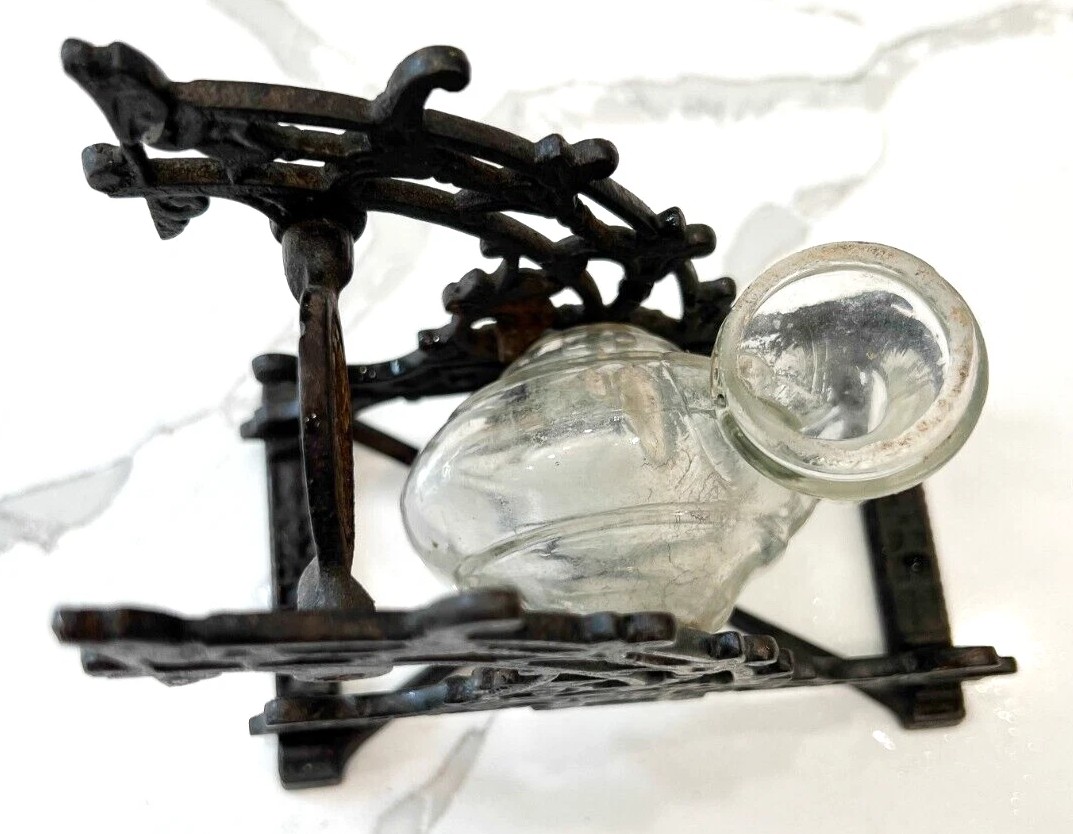
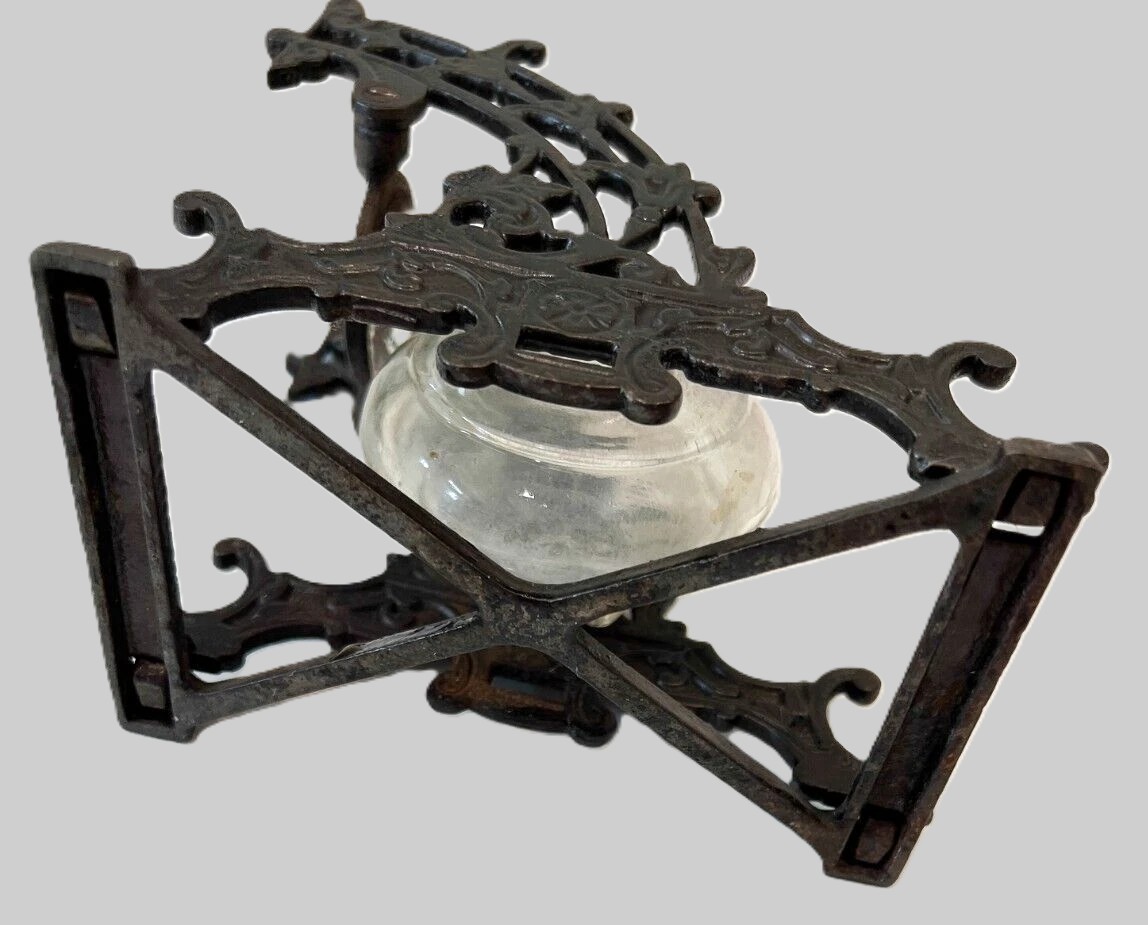
These revolving, “snail” inkstands (single and double) are examples of American desk engineering from the late 19th century. Manufactured by Wolcott Hull in Meriden, Connecticut, it reflects the city’s status as a major hub for silver and metalware production during the Industrial Revolution.
The Mechanics: How the “Snails” Function
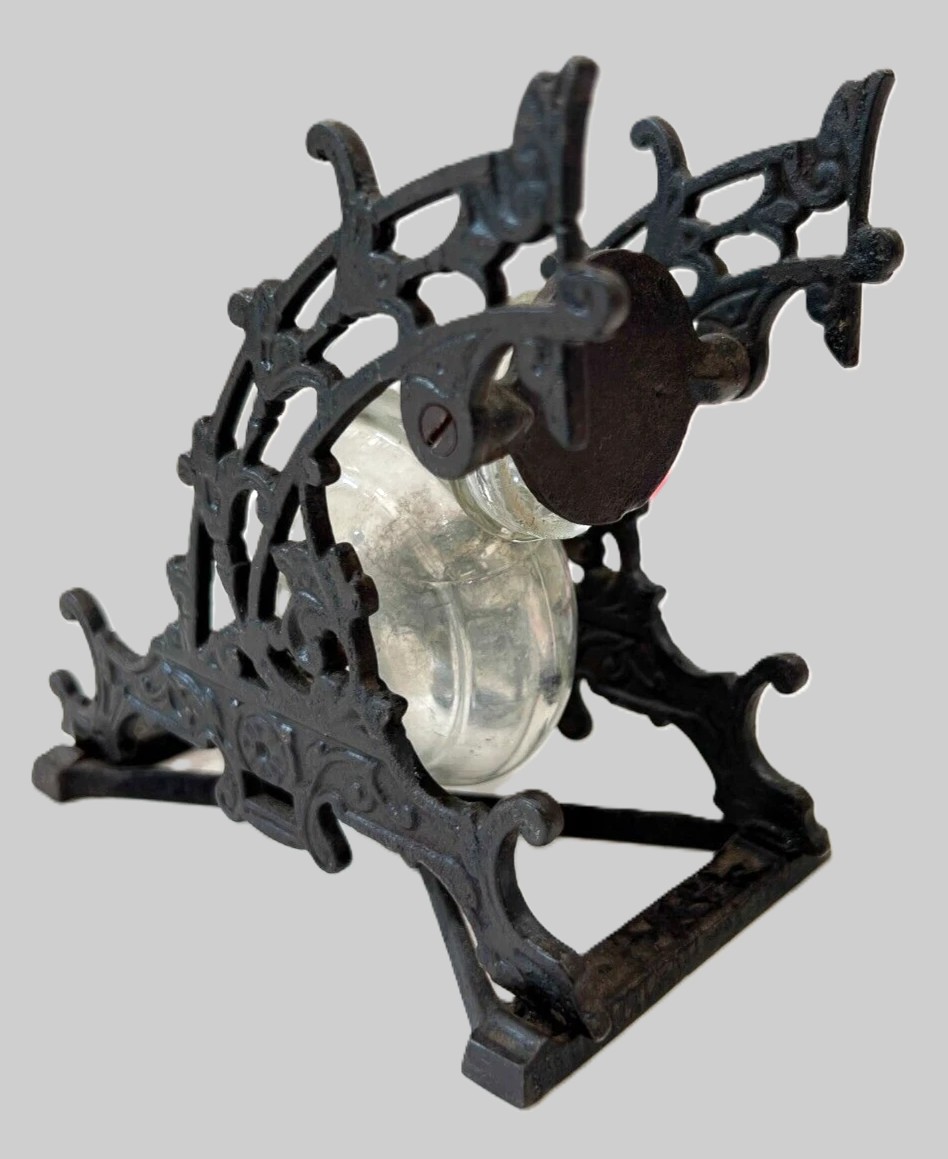
The “snail” inkwell is a type of mechanical or pivoting reservoir. It earns its nickname from the shell-like appearance of the blown-glass font.
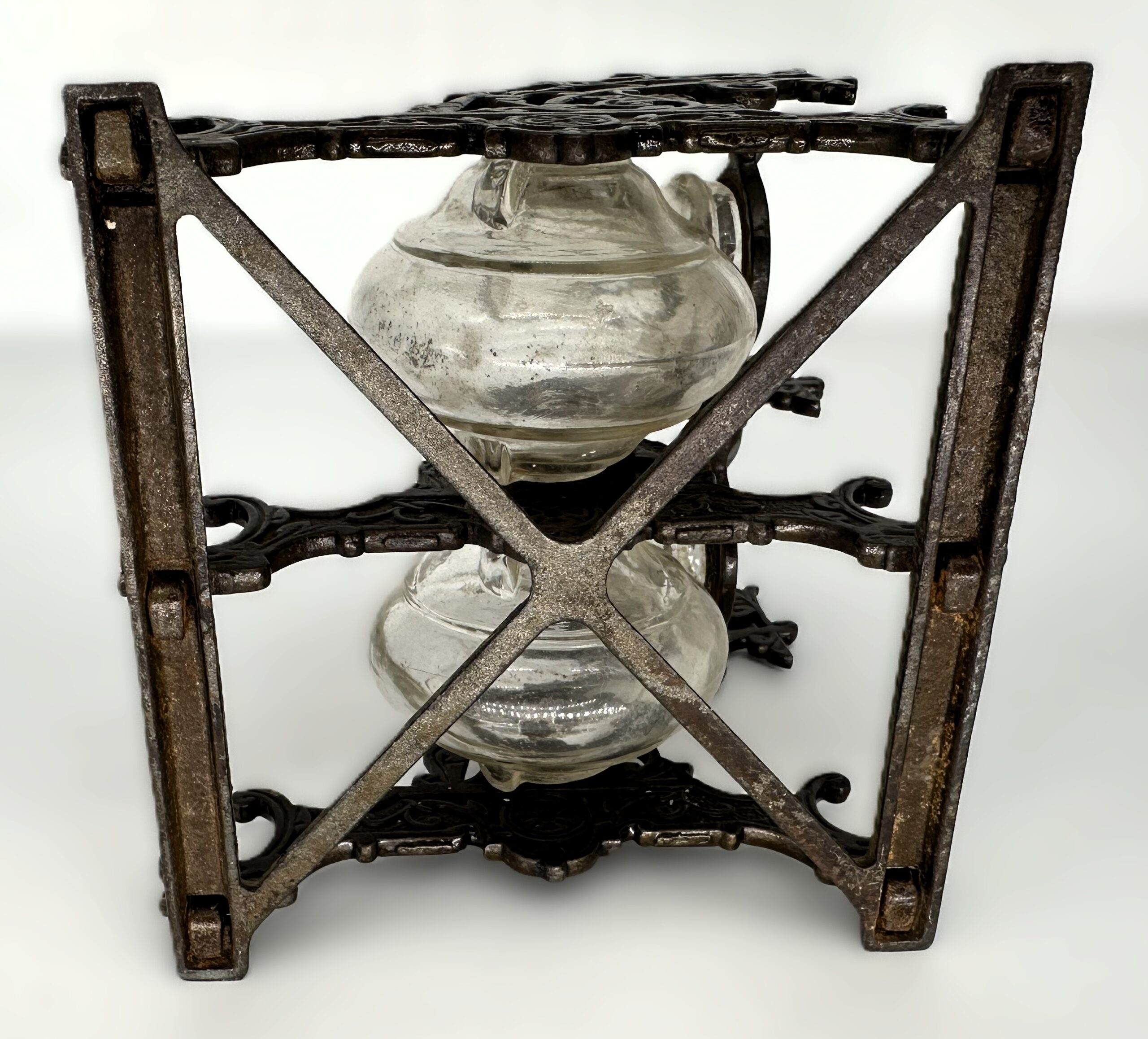
- The Revolving Action: The glass font is mounted onto the cast iron frame via two pivot points (screws or knobs) on its sides. This allows the bottle to rotate 180 degrees within the frame.
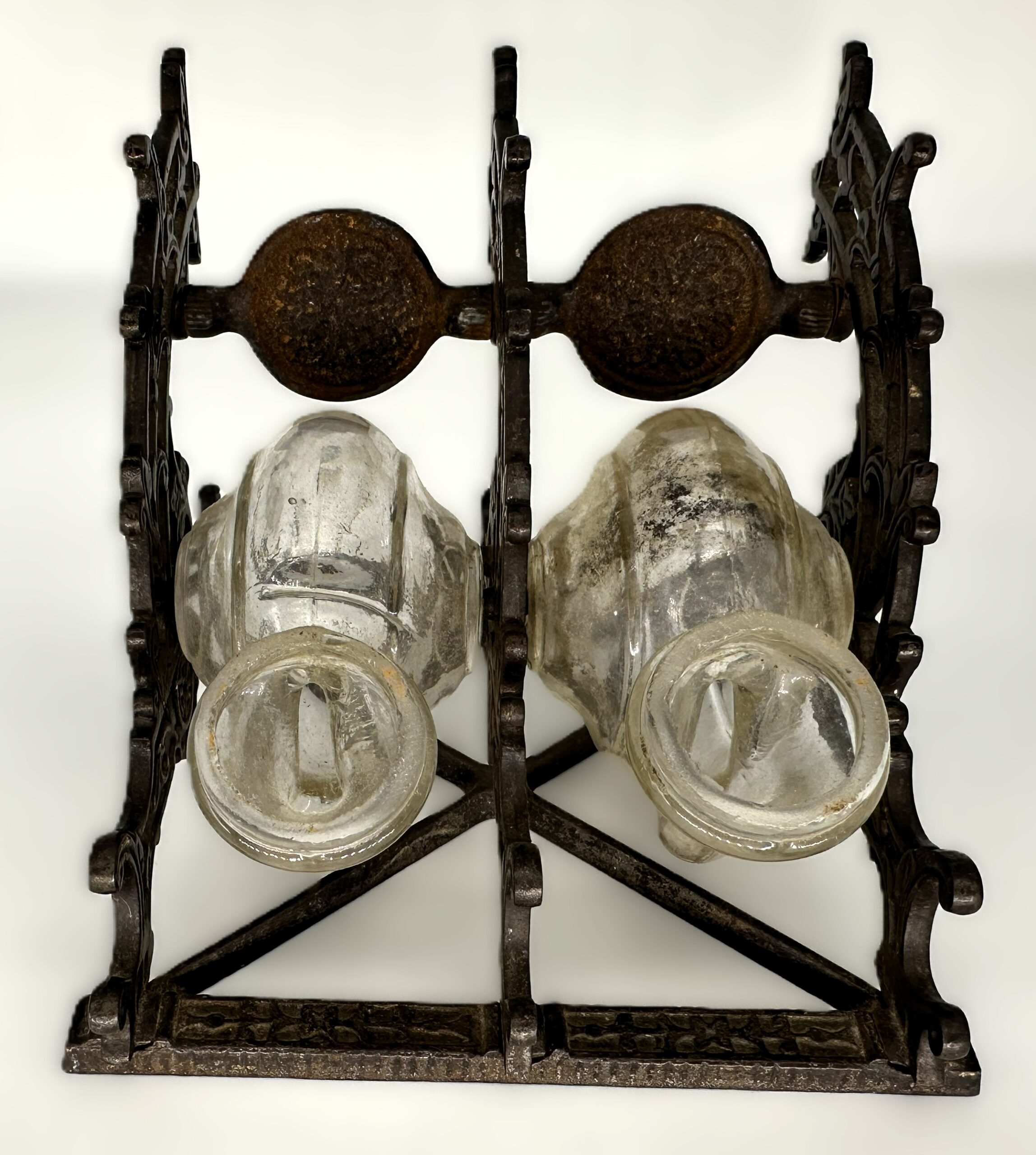
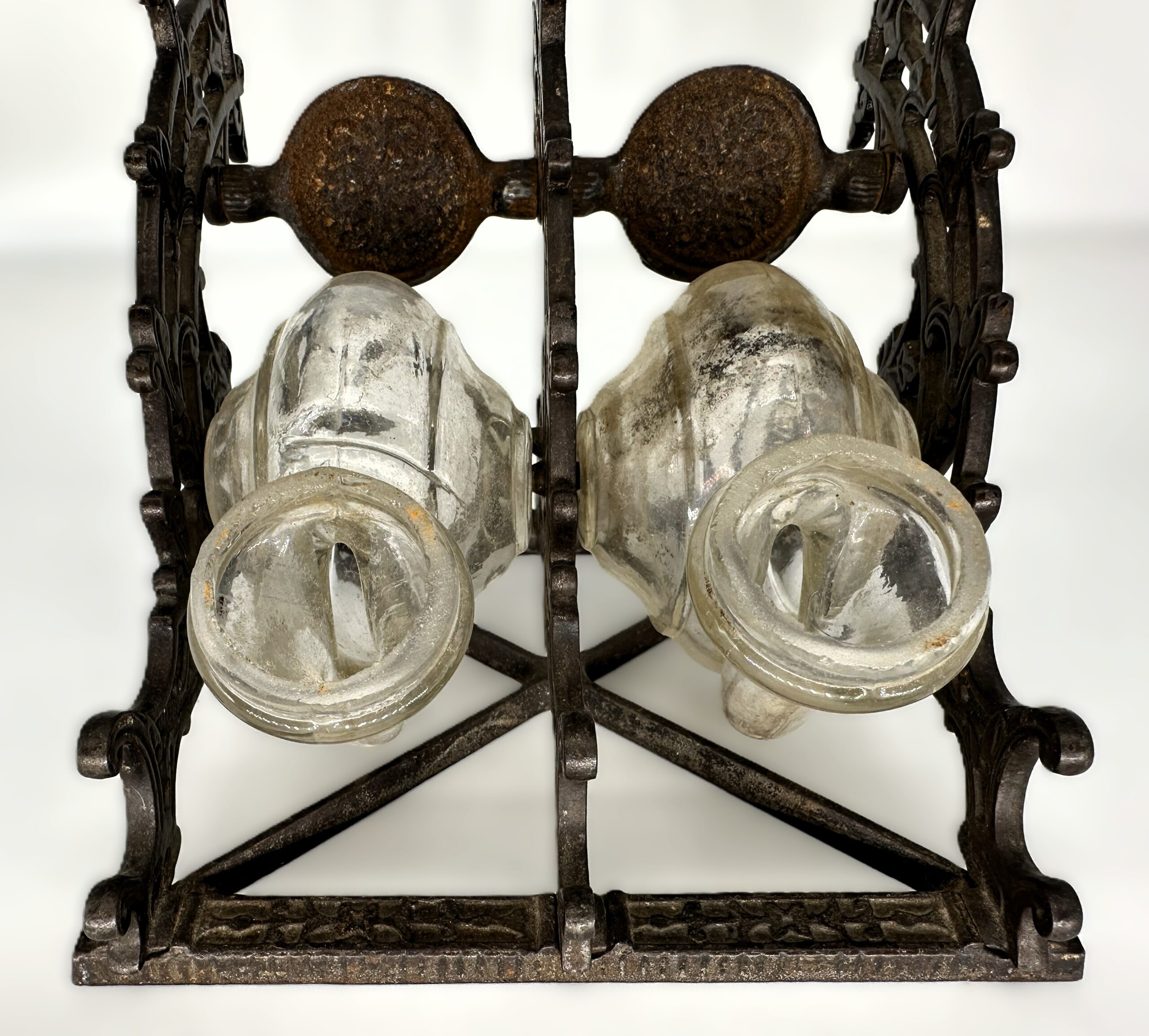
- Opening: To use the inkwell, the user manually rotates the “trumpet” opening of the glass snail toward themselves. This brings the mouth of the bottle into an upright position for dipping.
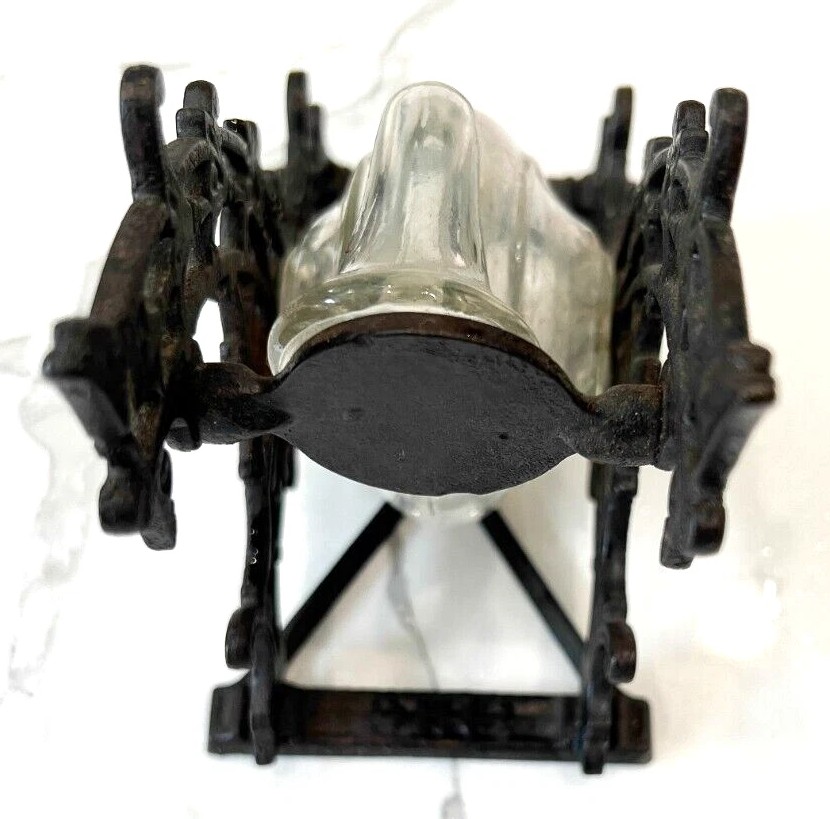
- Closing (The Seal): Integrated into the back of the cast iron frame is a stationary, flat metal disc called a “stopple plate”. When the inkwell is rotated back away from the user, the mouth of the glass snail seats firmly against this disc. This creates an airtight seal that prevents the ink from evaporating or drying out when not in use.
Manufacturer: Wolcott Hull of Meriden, CT
Wolcott Hull (born circa 1823) was an inventor and businessman based in Meriden, a city famously dubbed the “Silver City” for its high concentration of metal manufacturers like Meriden Britannia and Bradley & Hubbard.
- Business Profile: While Meriden was known for silverplate, Hull focused on cast iron and mechanical hardware. His workshop specialized in “stationers’ hardware” – items like inkstands, paper weights, and document clips.
- Advertising & Catalogs: Hull’s products were often marketed through high-end wholesale stationers in New York and Boston. While direct catalogs from Wolcott Hull are rare in the public domain today, his designs frequently appear in larger trade catalogs alongside other Meriden manufacturers. His work is characterized by the use of “japanned” (black enamel) cast iron, sometimes accented with hand-painted gold filigree.
- Dating: This style of mechanical inkwell peaked in popularity between 1875 and 1885, just before the widespread adoption of the fountain pen.
Design Features of the Double Snail
- Cast Iron Frame: The ornate frame provides the heavy “ballast” needed to keep the stand from sliding on a desk.
- Dual Pen Racks: The inclusion of both an upper and a lower pen rack is a distinctive feature of the Hull design. The lower rack was typically for the pen currently in use, while the upper rack held spare dip pens or different nib styles.
- Glassware: The snails are made of molded or “blown-in-mold” clear glass. Finding a set where both original glass fonts are intact and crack-free is quite rare, as the pivot points create stress on the glass over time.
Patent Information
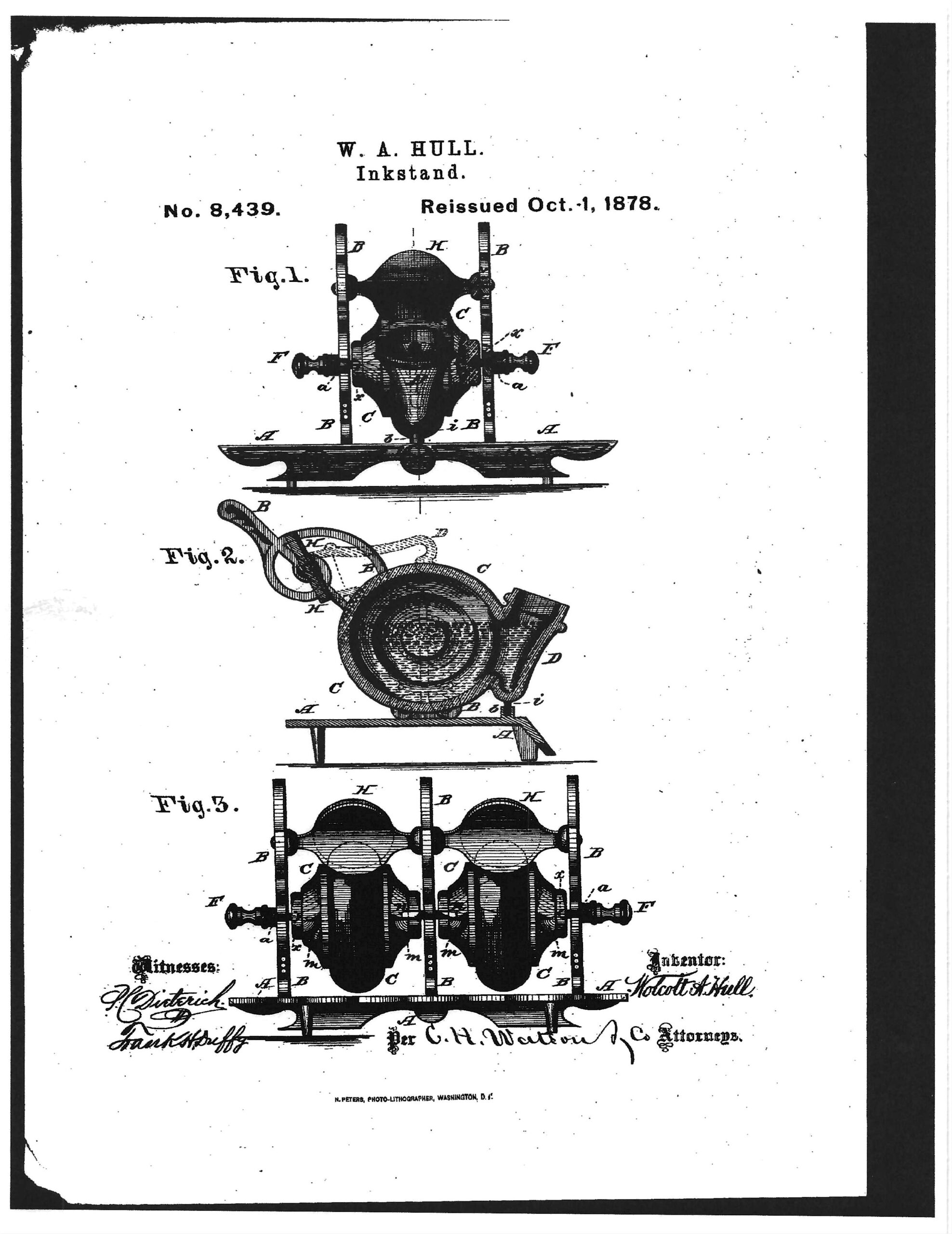
Patents were granted to Wolcott A. Hull which was the “blueprint” for the double snail design and the engineering that made his inkstand so functional.
Patent Details
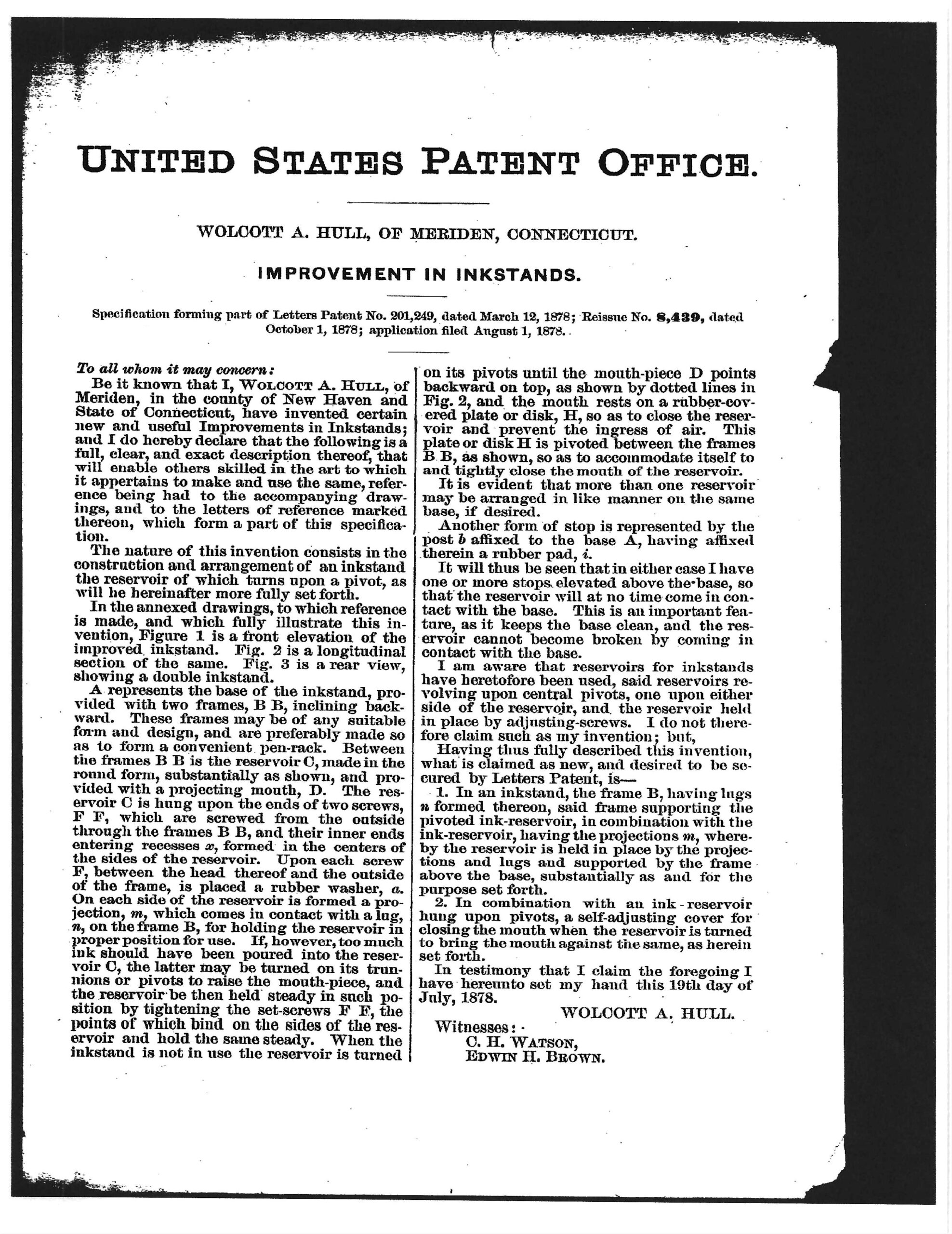
In his patent application, Hull specifically describes the mechanism as a way to solve the problem of ink evaporating or getting dusty in open wells.
- The “Trunnions”: The technical term for the pivots on the sides of the glass snails is trunnions. Hull designed these to be molded directly into the glass or attached via a metal collar, allowing the font to swing freely.
- The “Stop-Plate” (The Seal): The most important part of the patent drawing is the stationary back-plate. It shows that the frame is designed so that when the snail is tilted back, the mouth of the bottle meets a flat, often rubber-lined surface. This creates an airtight seal without the need for a separate, loose cork or lid.
- The Weight Balance: Hull’s design specifically calculates the center of gravity of the glass snail. When filled with ink, the “heavy” part of the bottle helps keep it in the closed position, ensuring it doesn’t accidentally tip forward and spill.
The 1878 Patent (No. 201,249)
The patent No. 201,249, granted March 12, 1878 is a design for a “Double Inkstand.” While the earlier patent established the revolving principle, the 1878 patent specifically covers the architectural layout of the double-well version:
- The Unified Frame: It describes a single cast-iron frame designed to hold two independent revolving wells.
- The Integrated Pen Racks: This patent details the construction of the tiered pen racks—one positioned across the top of the frame and another across the lower front—which allowed for the storage of multiple dip pens without cluttering the desk surface.
- The Reservoir Retention: It introduced improved “bearings” that made it easier to remove the glass wells for cleaning or refilling while still holding them securely during rotation.
The Wolcott Hull Business
While many collectors know the famous names like Bradley & Hubbard, Wolcott Hull was a specialized boutique manufacturer. His business was located in the heart of Meriden, Connecticut, and he often collaborated with local glass blowers to create the specific “snail” shape required for his frames.
In the late 1870s, Hull’s inkstands were considered high-end “mechanical” stationer’s goods. They were often advertised in trade journals like The American Stationer as the “The Perfection Inkstand,” marketed to bookkeepers and clerks who needed to switch between red and black ink quickly while keeping their ink fresh.
The Business of Wolcott A. Hull
Wolcott A. Hull was a specialized manufacturer of “Stationers’ Hardware” based in Meriden, Connecticut. During the late 19th century, Meriden was a major industrial center, and Hull occupied a niche as an inventor-manufacturer of high-quality mechanical desk accessories.
- Production: Unlike the high-volume silverplate giants of the era, Hull’s workshop focused on functional, durable items made of japanned (black-enameled) cast iron and molded glass. His business was located on State Street in Meriden.
- Catalog Marketing: His inkstands were rarely sold directly to consumers; instead, they were marketed through the major metropolitan wholesale stationers, such as The American News Company or Tower’s, where they were frequently advertised as the “Perfection” or “Gem” inkstand lines.
- Meriden Craftsmanship: Because he was based in Meriden, he had access to the finest cast iron foundries and glass blowers. His “snails” were often produced by local glass houses specifically to fit his patented metal frames.
- Legacy: Hull’s designs were noted for their “mechanical perfection,” a selling point for the professional class of bookkeepers and clerks who needed to switch rapidly between black and red inks while ensuring their supplies did not evaporate.
Historical Significance
Locating a Wolcott Hull piece today is a “find” because his production runs were much smaller than the industrial giants of Meriden. The fact that this inkstand has the integrated double pen rack (both top and bottom) suggests it was one of his most “deluxe” models, designed for a professional desk rather than a simple home writing table.
Single sold for $150 in December 2025
Content disclaimer. The information posted is the owner’s best knowledge and may not have been vetted by the SOIC. We welcome comments, corrections, and additions, working to make our website information comprehensive and accurate.
Join the Society of Inkwell Collectors (SOIC) – it’s free!
Founded in 1981 as a non-profit organization,
we are documenting inkwells (and accessories).
We’re here to help and inform!