


Inkipedia
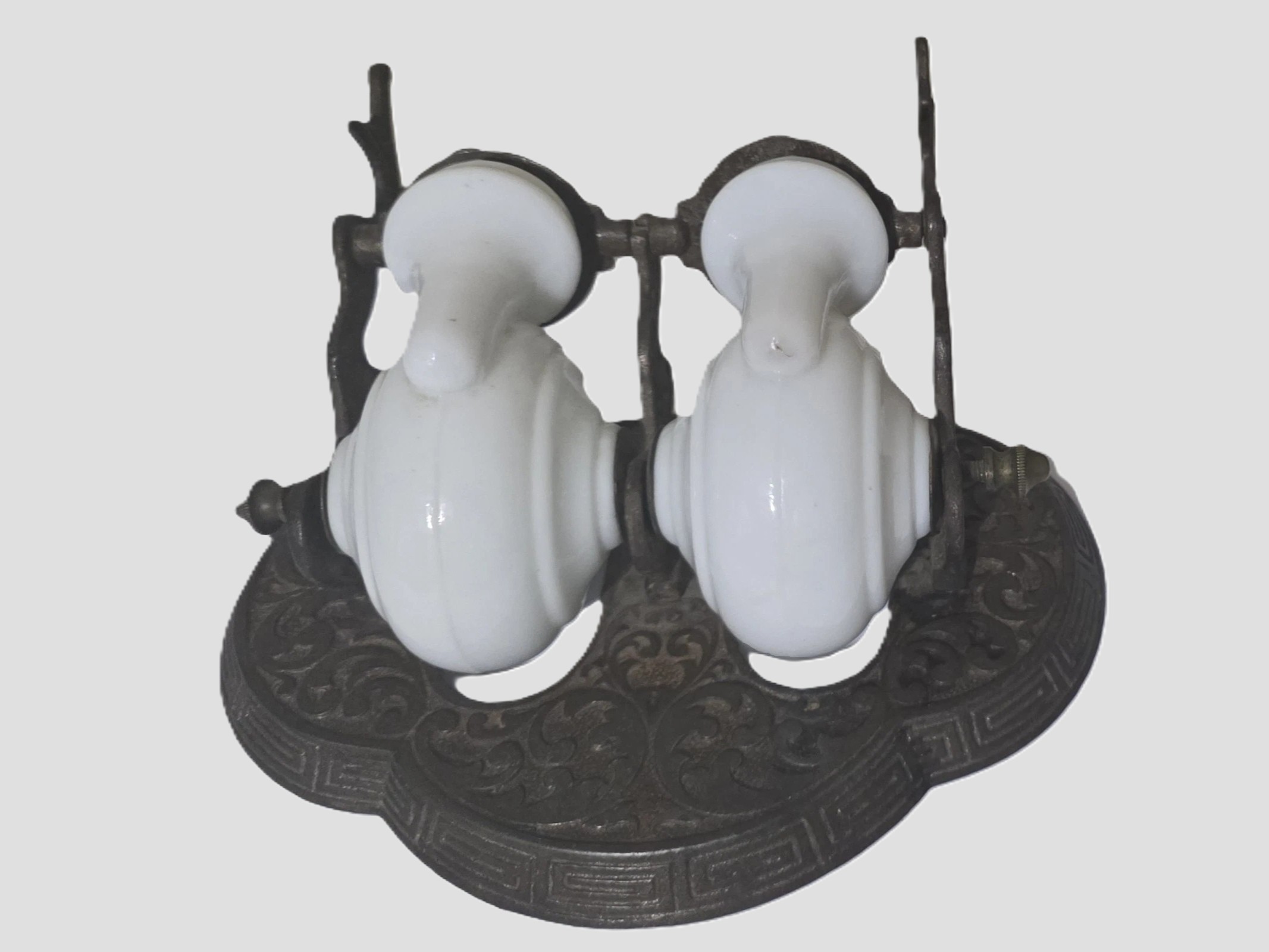

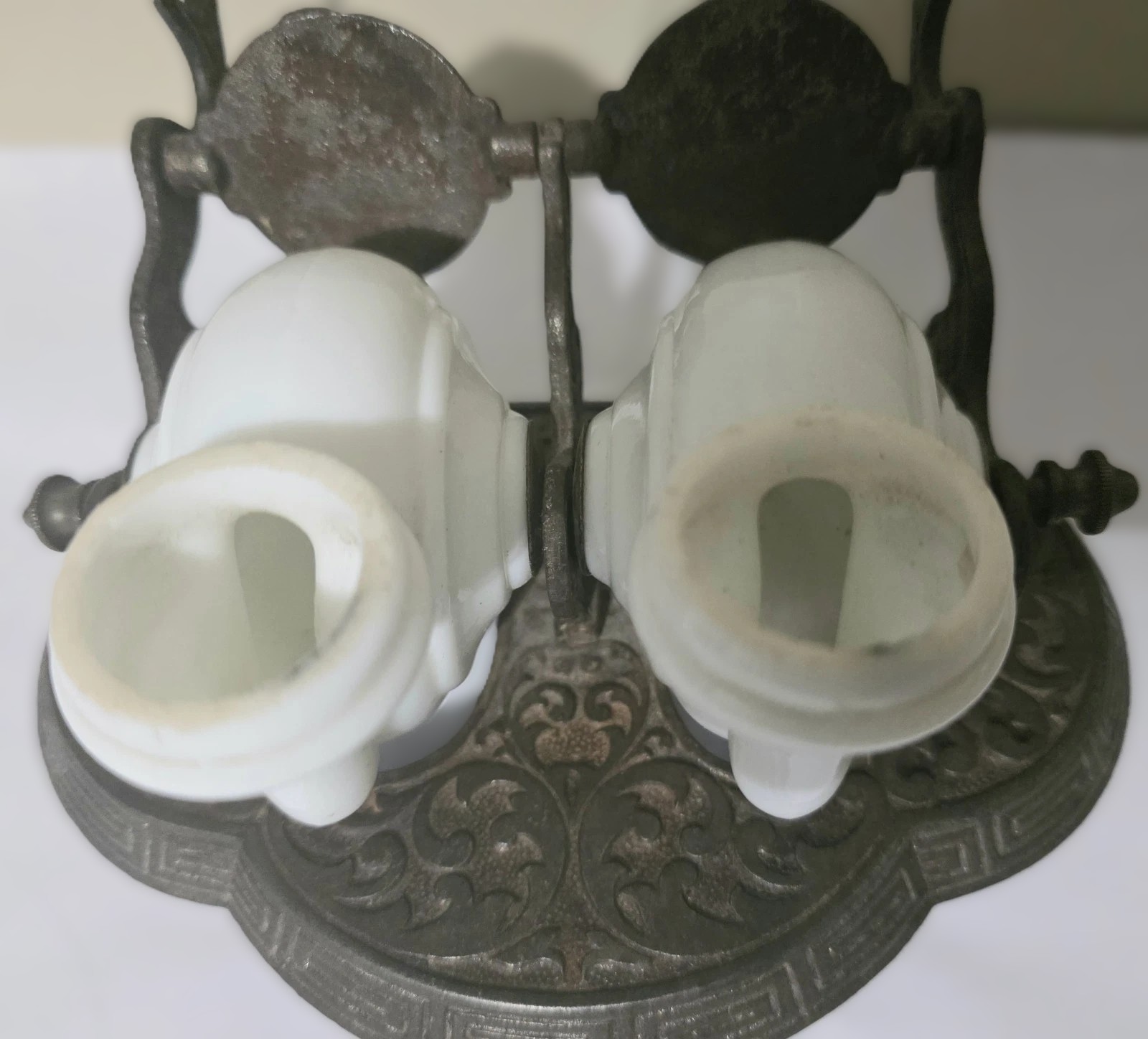
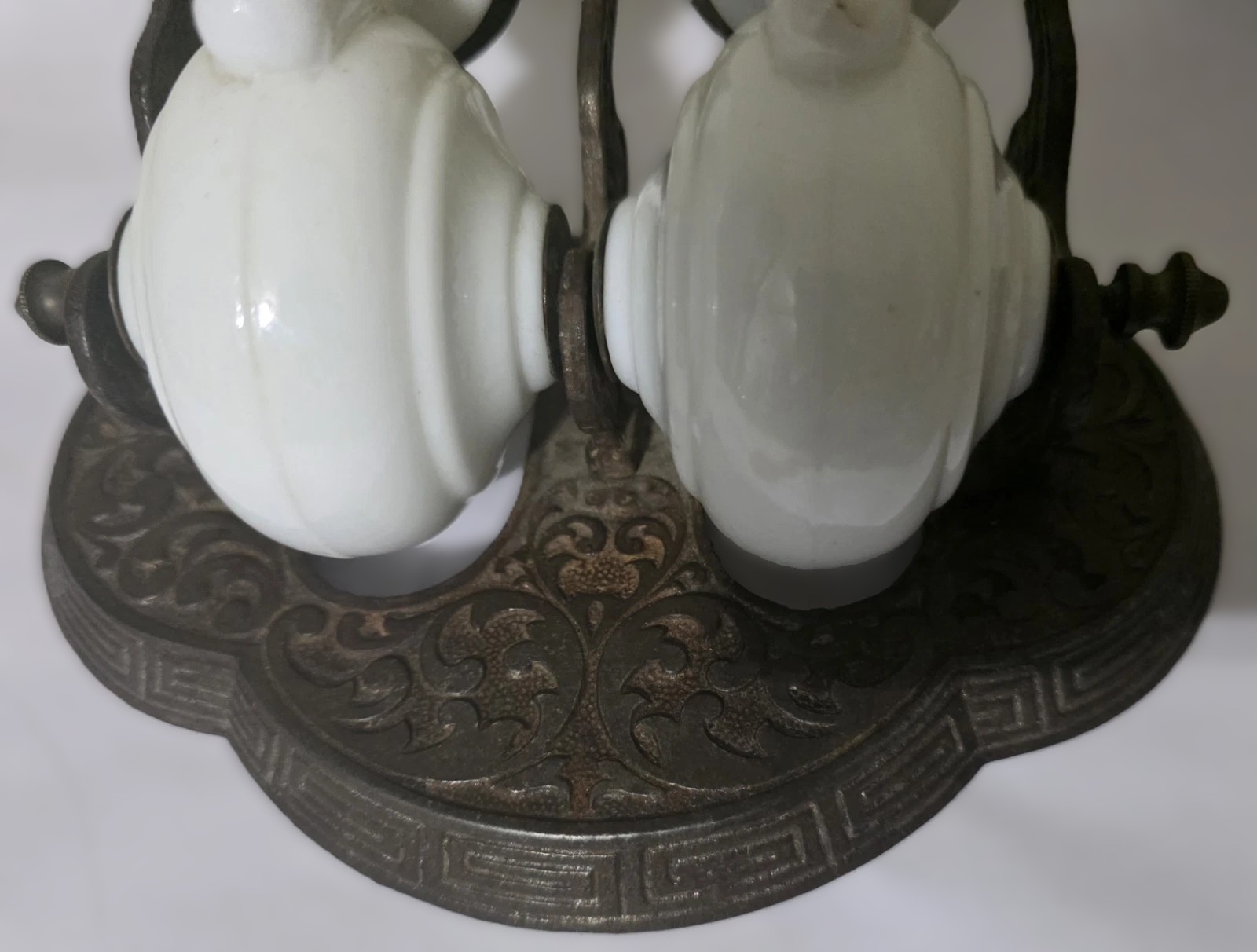
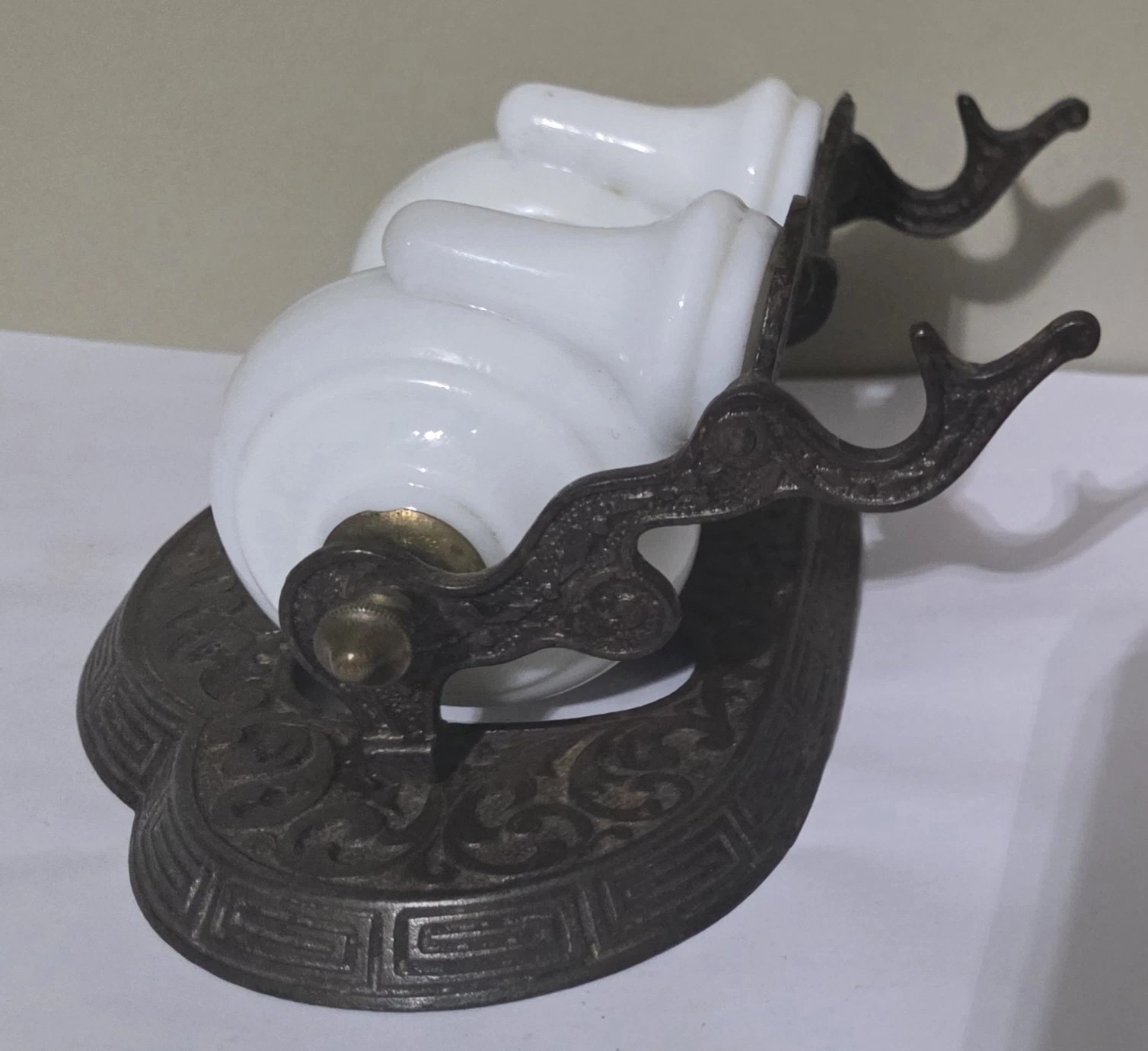
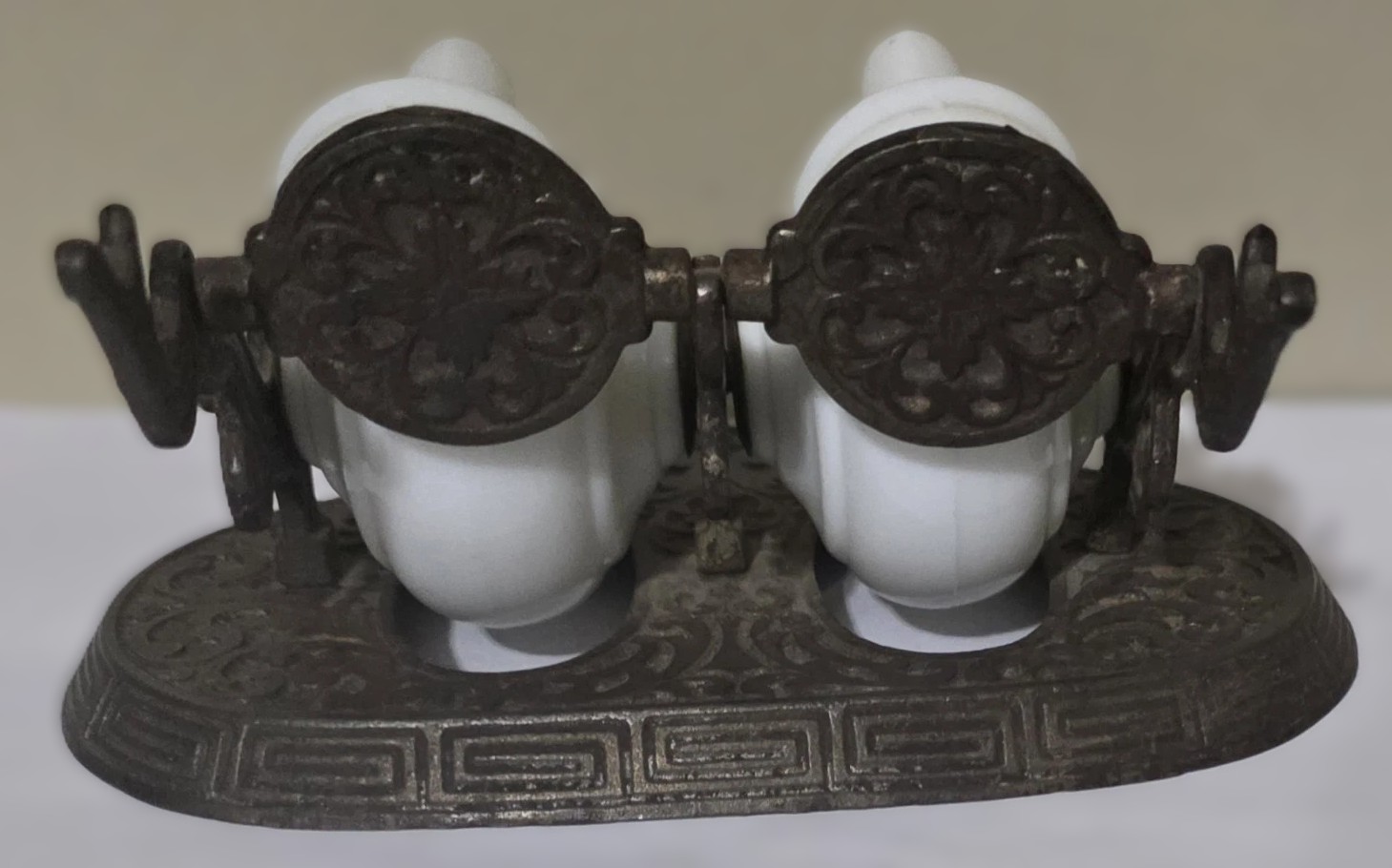
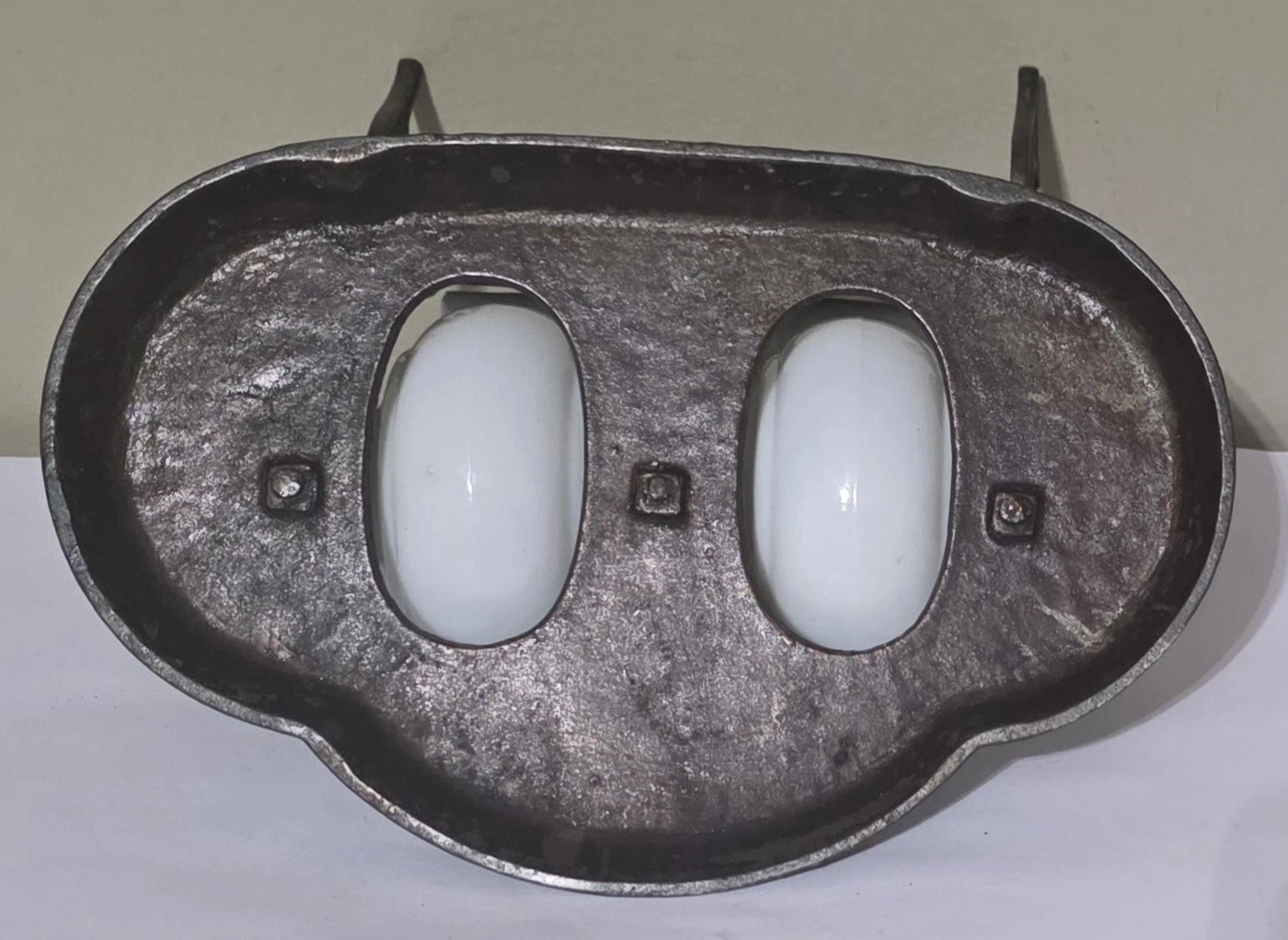
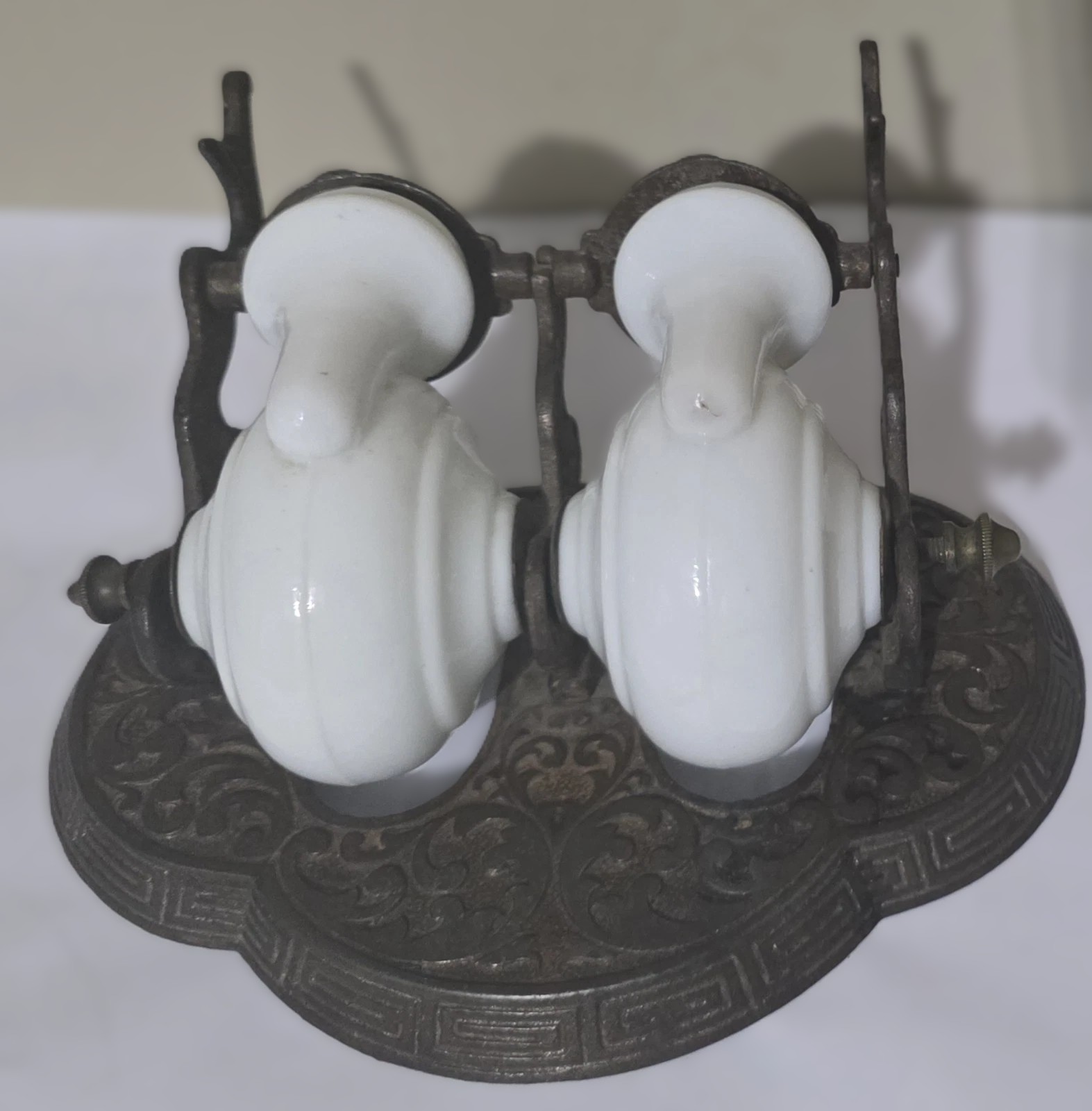
Revolving “Snail” Double Inkstand
| Categories | Re, Mechanical - Snail / Pivoting |
| Type | Snail |
| Material | Cast iron, Milk Glass |
| Markings | Unmarked |
| Manufacturer | J. & E. Stevens Co |
| Origin | United States |
| Date or Era | circa 1880 |
| Measuring | 6 ¾” x 4 ¼” x 2 ¾” high |
- Identification and Description
- Item: Double Revolving “Snail” or “Nautilus” Inkstand.
- Date: Circa 1875–1885 (Victorian / Eastlake period).
- Materials: The base and frame are Cast Iron (originally finished with a “Japanned” black lacquer or bronze wash). The reservoirs are milk glass (opaque white glass).
- Style: The base features Eastlake styling, characterized by the geometric Greek Key border pattern visible on the edge and the stylized floral scrolling on the platform.
- The Manufacturer
While these pieces are rarely stamped with a name, this specific model is attributed to The J. & E. Stevens Company of Cromwell, Connecticut.
- Context: J. & E. Stevens is most famous today for their cast iron mechanical banks, but in the 1870s and 80s, they (along with competitors like Judd Manufacturing) produced a vast array of high-quality cast iron hardware and desk accessories.
- Evidence: The specific “trellis” or scroll pattern on the iron uprights and the Greek Key border are design elements frequently found in Stevens trade catalogs from the late 1870s.
- How the “Revolving Snail” Works
This design was not just aesthetic; it was a clever mechanical solution to two common problems with 19th-century dip pens: evaporation and ink depth.
- The Rotation: The two milk glass snails are mounted on a central metal axle. They can rotate 180 degrees within the iron frame.
- Ink Level Management: As the ink was used up, the level in the bottle would drop. In a standard square bottle, the ink would eventually become too shallow to dip the pen without hitting the bottom. With the “Snail” design, the user could rotate the glass slightly backward. The spiral shape would force the remaining pool of ink forward into the “snout,” keeping the dipping depth constant until the very last drop.
Closing/Sealing: When not in use, the user would rotate the glass snail upwards or backwards.
Sold for $60 in November 2025
Content disclaimer. The information posted is the owner’s best knowledge and may not have been vetted by the SOIC. We welcome comments, corrections, and additions, working to make our website information comprehensive and accurate.
Join the Society of Inkwell Collectors (SOIC) – it’s free!
Founded in 1981 as a non-profit organization,
we are documenting inkwells (and accessories).
We’re here to help and inform!