

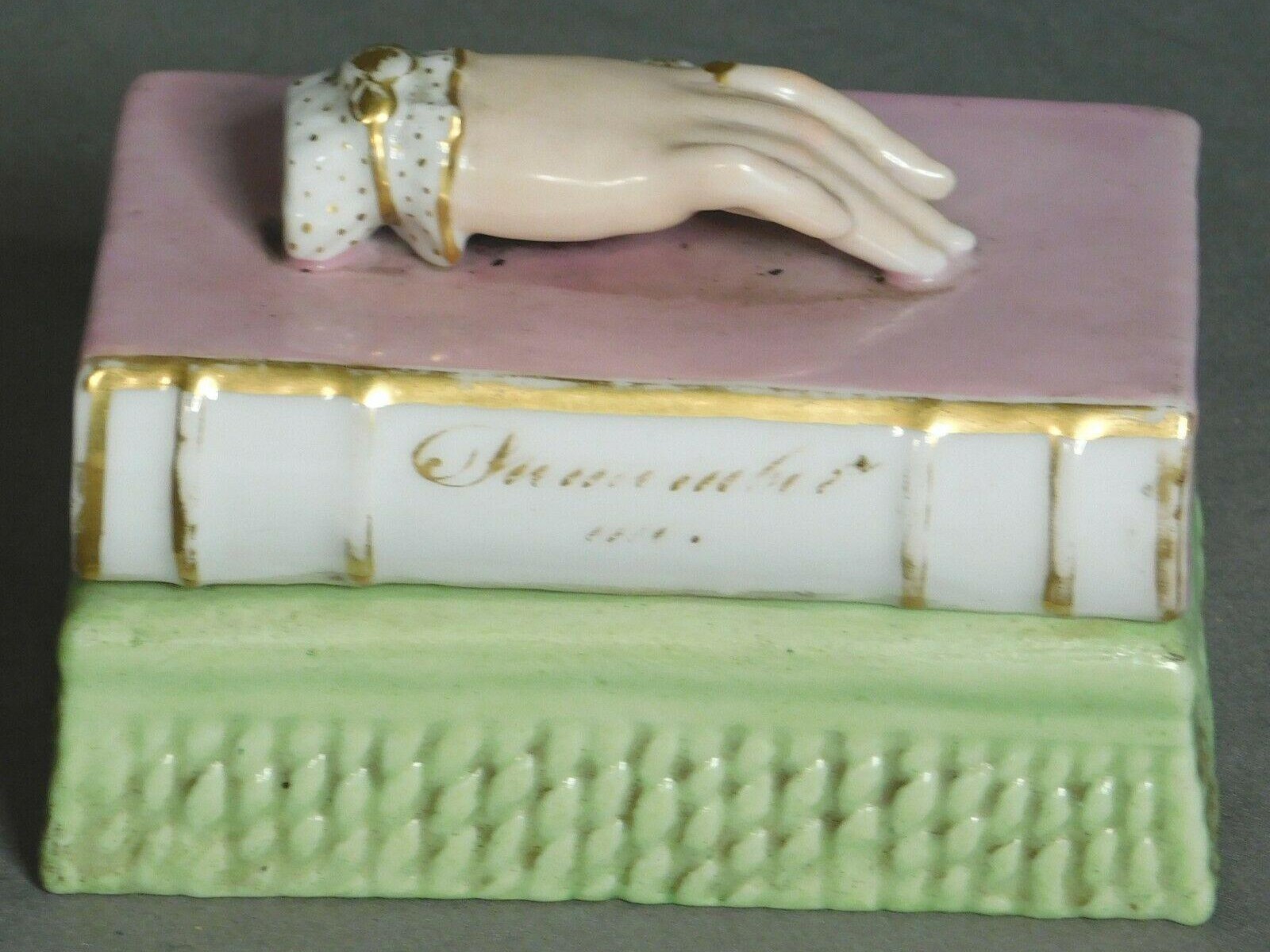
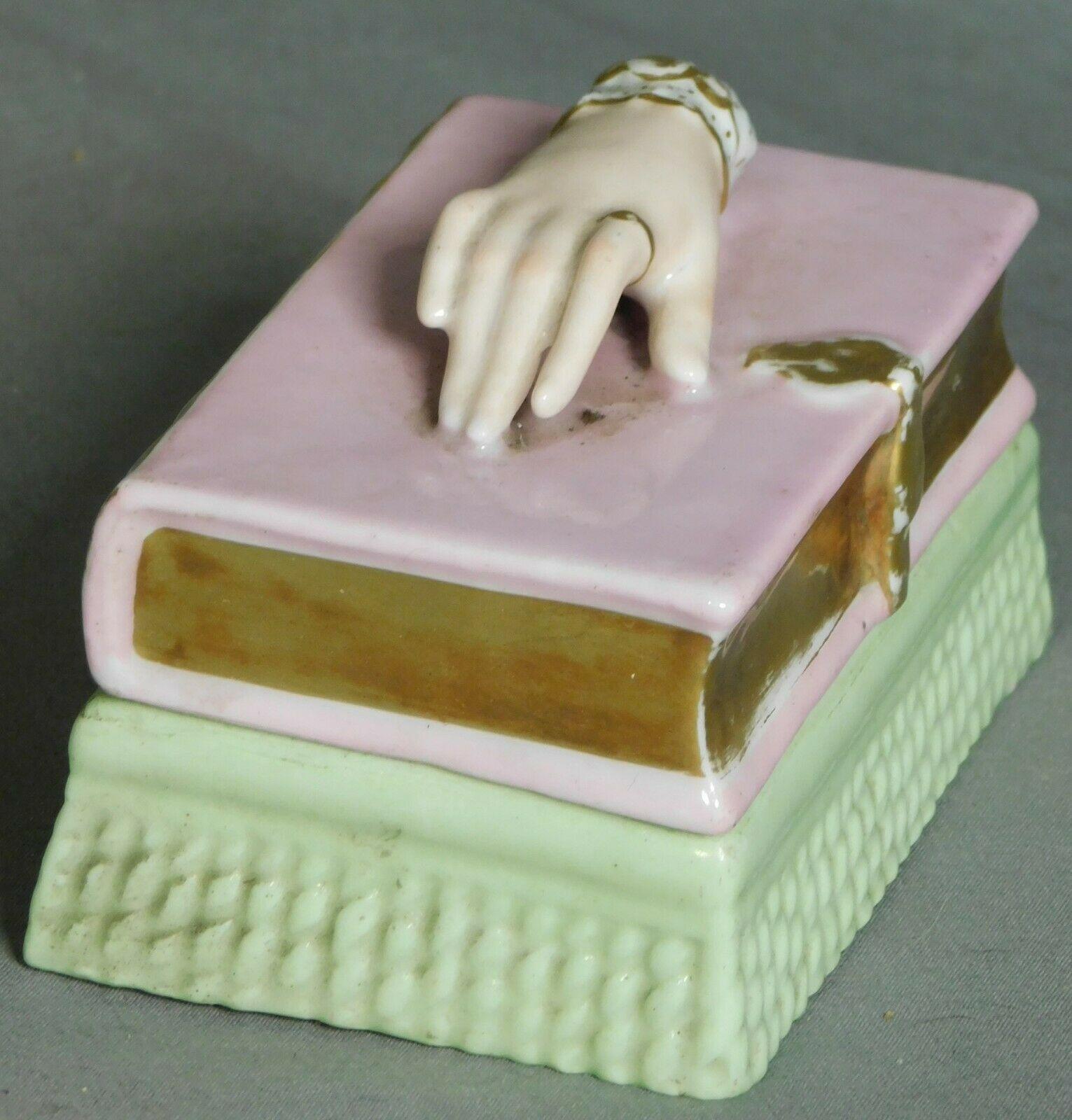
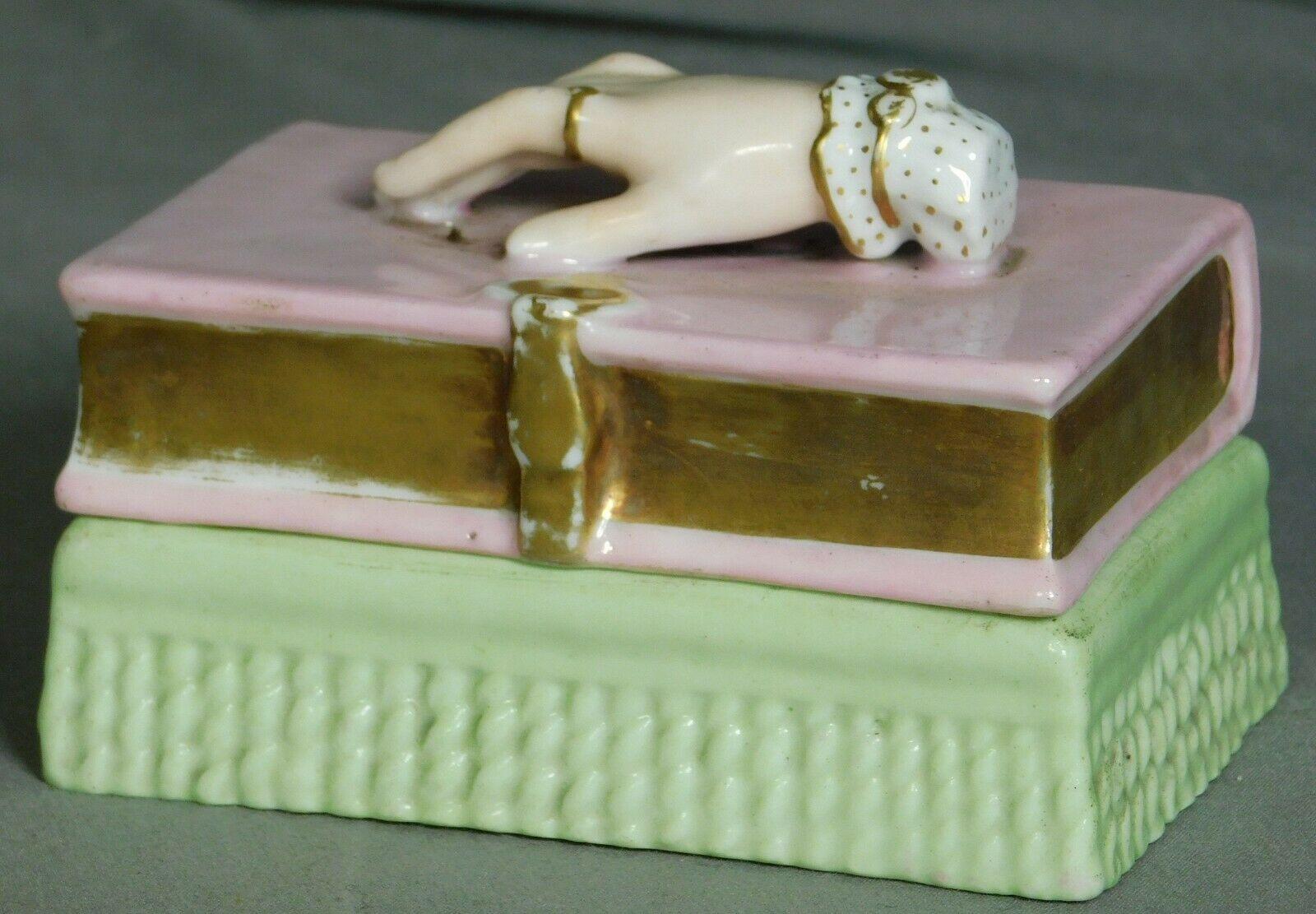
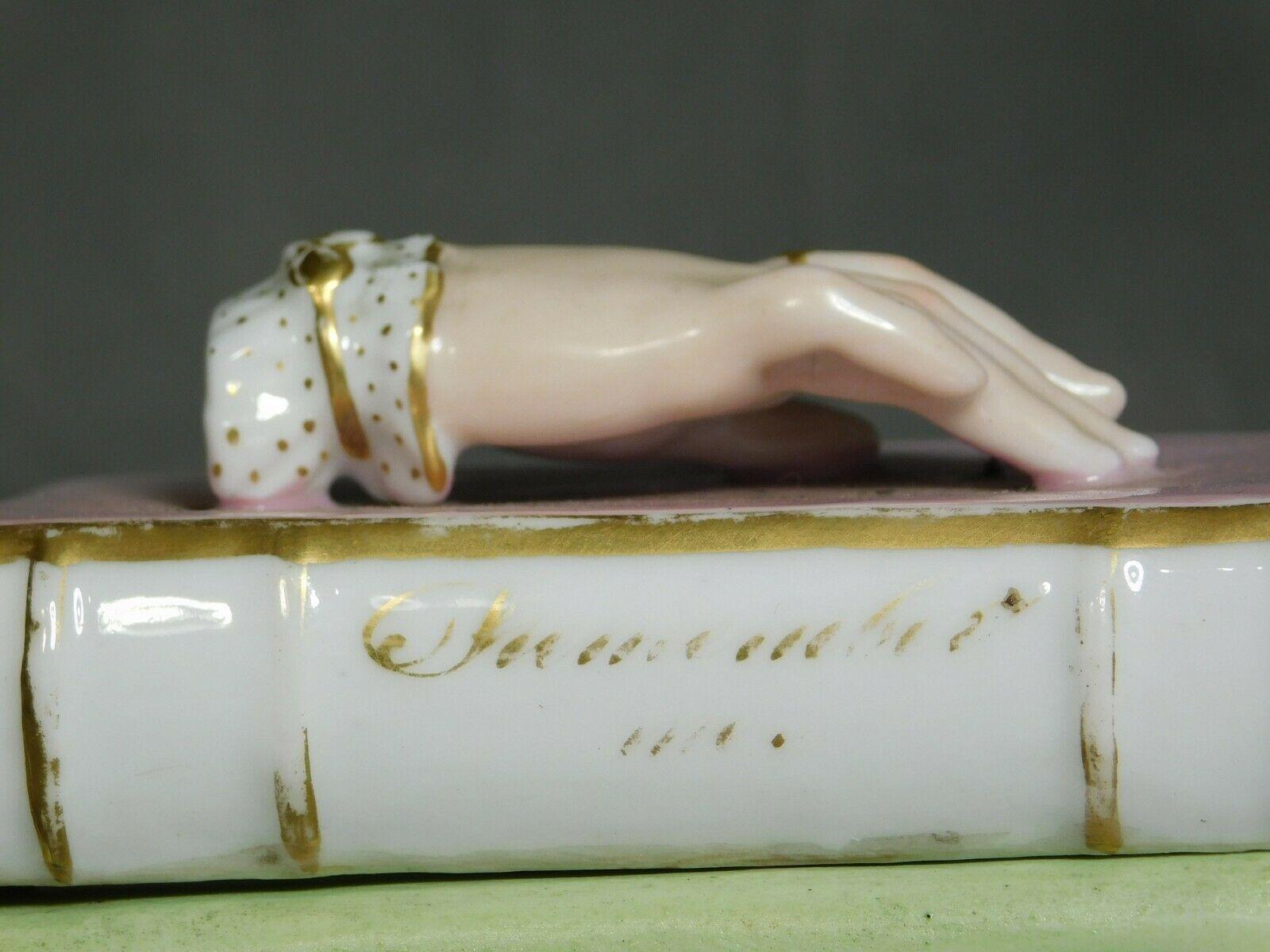
Remember Me: A 19th-Century Porcelain Book Inkstand with Sentimental Hand Motif
| Categories | Ceramics/Porcelain Figural |
| Material | Porcelain |
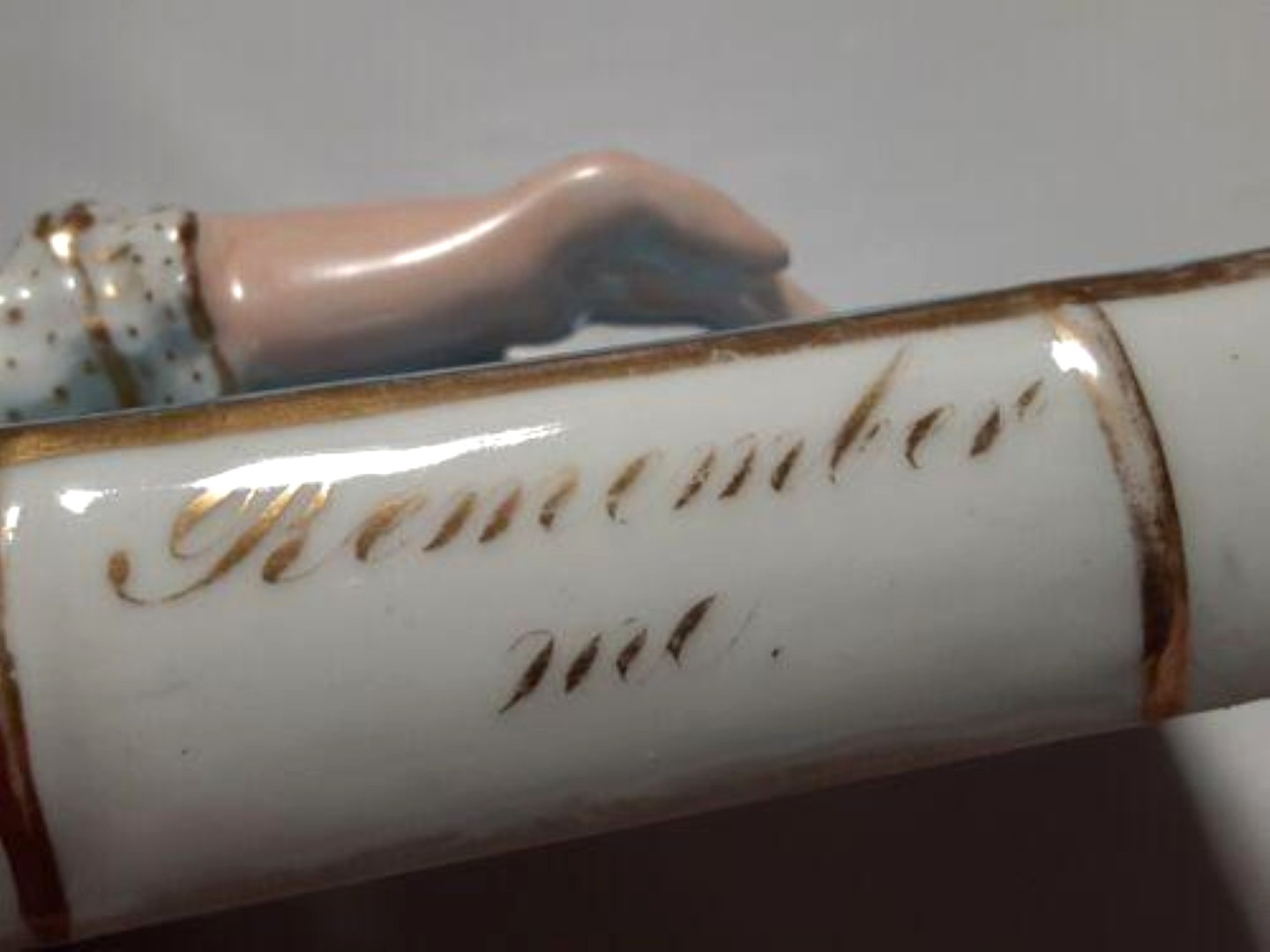
| Markings | "Remember me" |
| Manufacturer | Undetermined |
| Origin | Undetermined |
| Date or Era | circa 1870 |
| Measuring | 4” x 2 ⅝” x 2 ½” high |
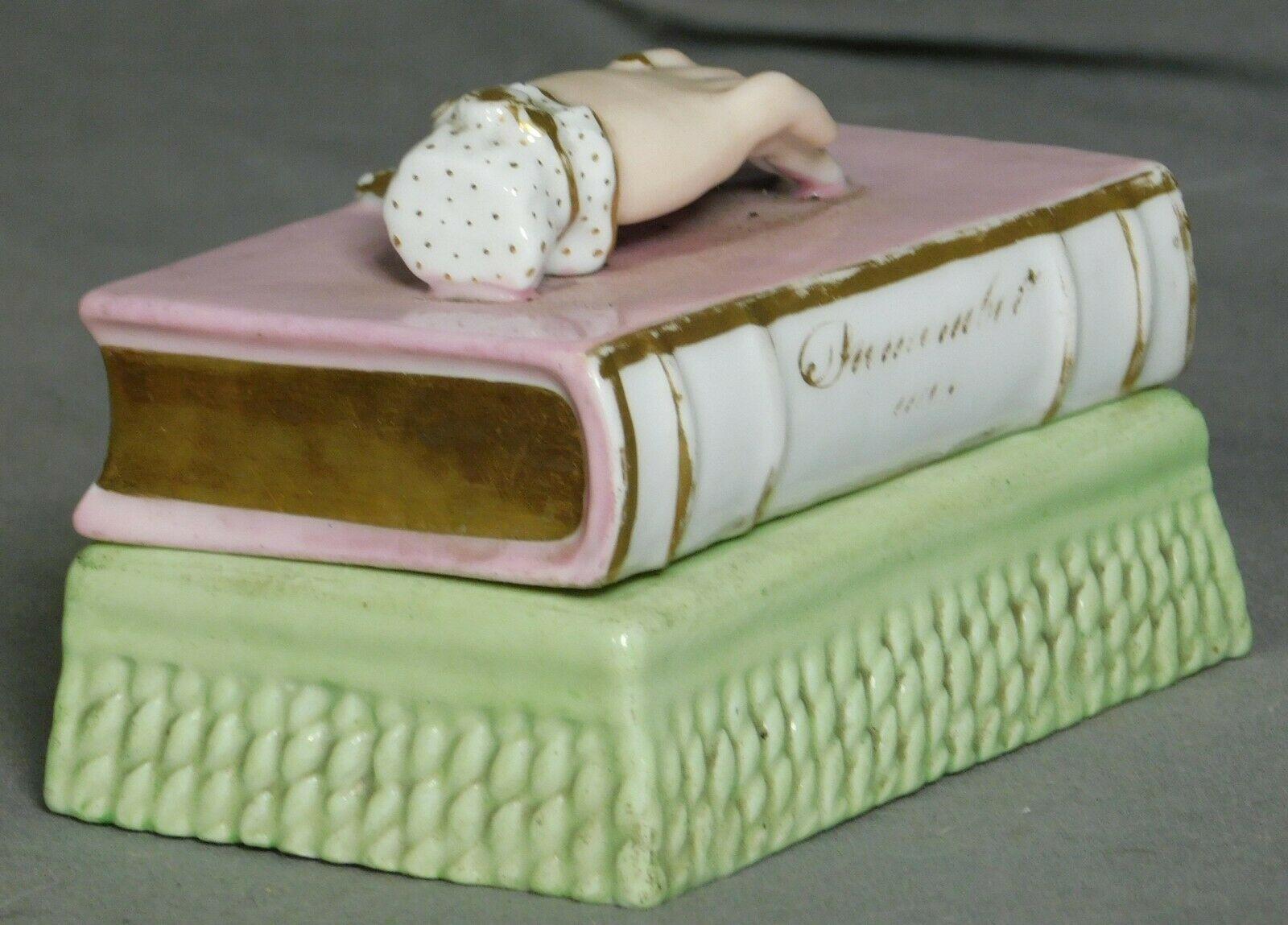
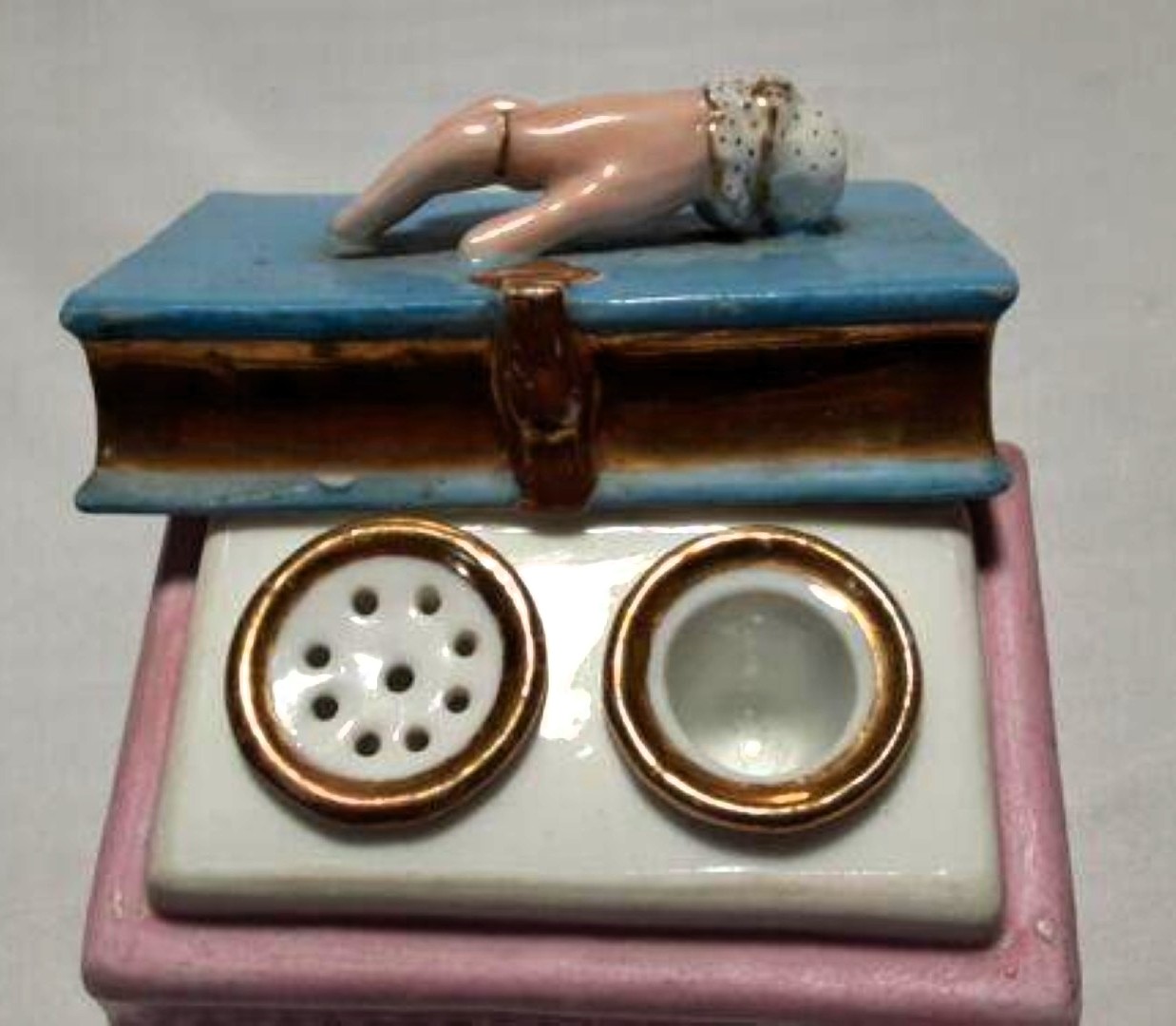
This richly symbolic piece is an example of Victorian sentimental stationery and desk accessories, blending utilitarian function with deeply personal romantic or memorial symbolism.
The Significance of the Hand in the 19th Century
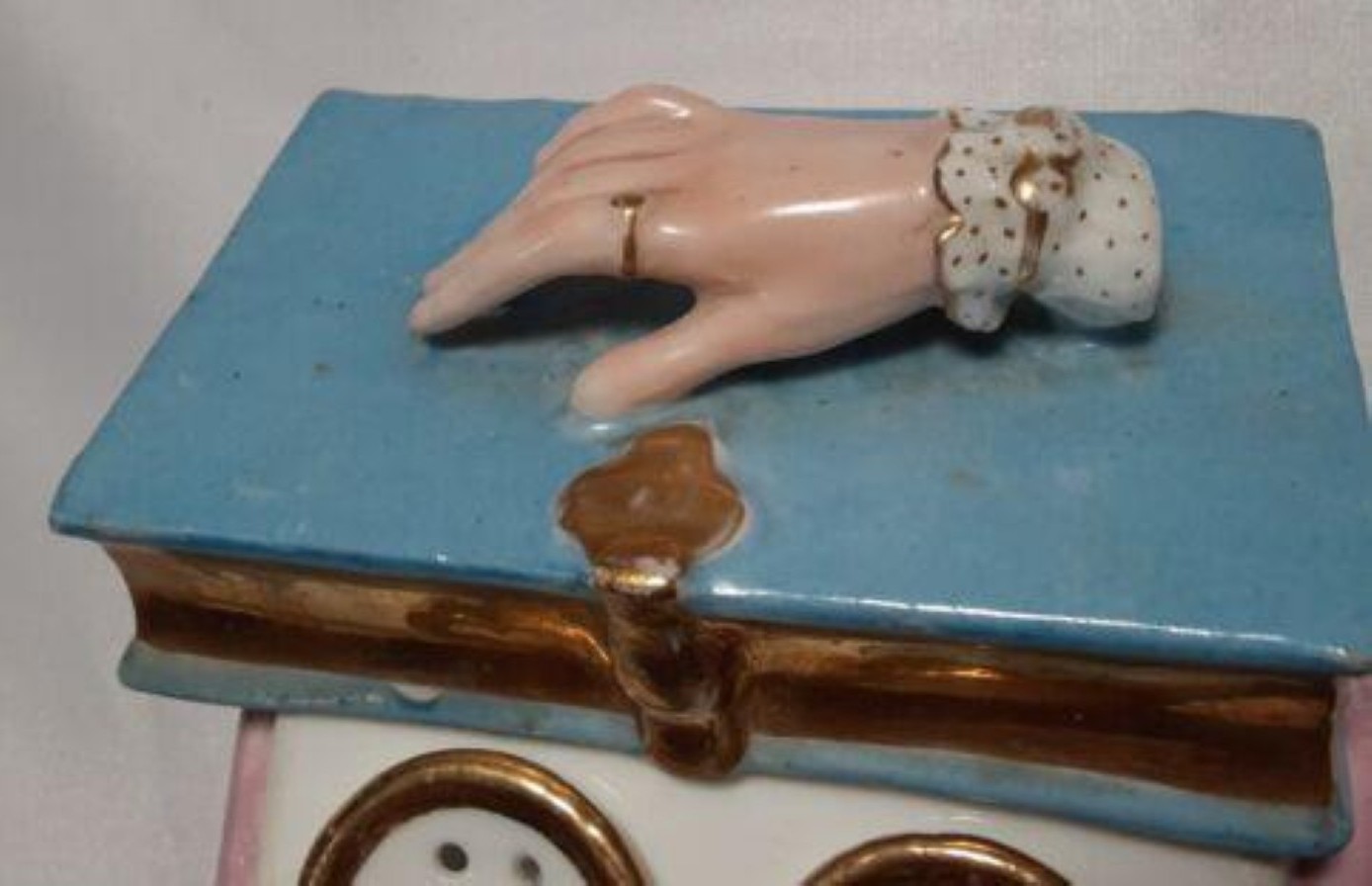
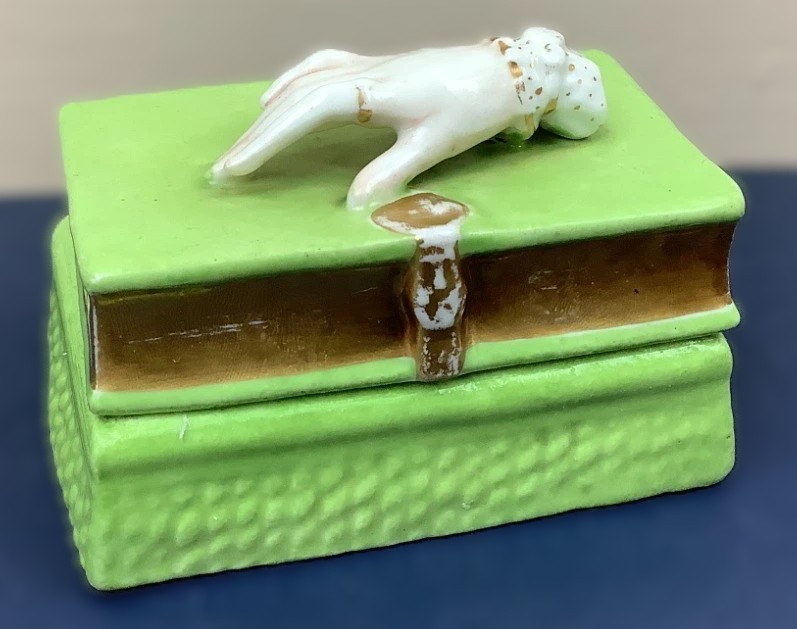
Unlike the Addams Family’s comical “Thing,” a disembodied hand (often referred to as a memento or token hand) in 19th-century decorative arts and jewelry held profound, sentimental meaning.
- Tokens of Affection and Remembrance: Hands sculpted in porcelain, ivory, or cast in metal were popular during the Victorian era. They usually represented a physical token of an absent loved one, a physical pledge of friendship, engagement, or a farewell keepsake.
- The Language of Gestures: The specific positioning of the hand carries subtle Victorian symbolism. A hand reaching outward or resting gently often symbolized sincerity, devotion, or a silent plea not to be forgotten.
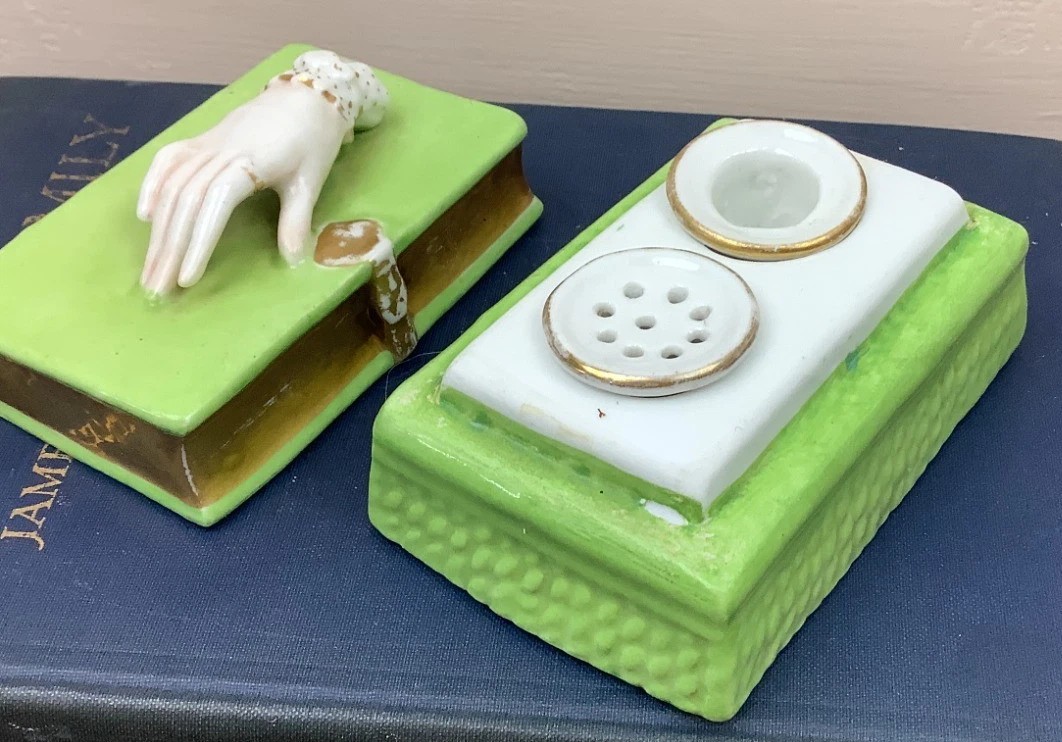
- Personal Adornments: The details on the hand—the polka-dotted ruffled cuff, bracelet, and the simple gold band (ring) on the finger—mimic real Victorian mourning or sentiment jewelry, emphasizing a personal human connection frozen in porcelain.
The Inscription: “Remember Me”
Written in elegant script on the spine of the book, “Remember Me” was a ubiquitous phrase in 19th-century sentimental culture (frequently found on friendship tokens, presentation pieces, and mourning items). It turns the desk accessory into an emotional object—a physical prompt for the recipient to think of the giver every time they open the inkstand to write a letter.
Design and Aesthetics
- The Book Form: Books represented intellect, education, and keepsake volumes (like poetry books or friendship albums). Disguising practical items like inkstands as stacked books was a popular trend in Victorian trompe l’oeil ceramics.
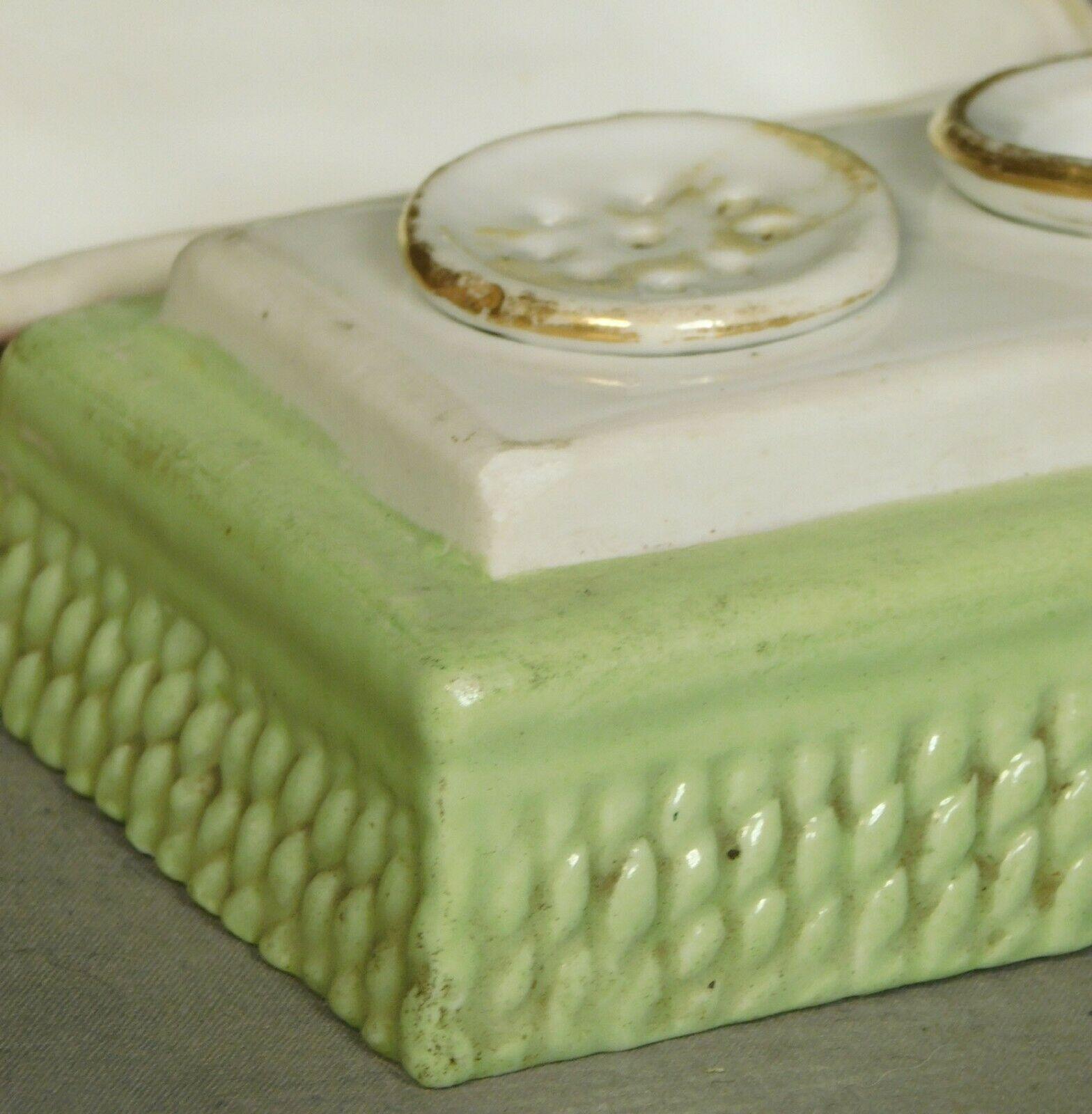
- The Base: The textured, grid-like celadon green base emulates a tasseled or quilted footstool/cushion, a common motif used to elevate precious cabinet pieces or display objects, giving the “book” an air of being respectfully rested upon a soft surface.
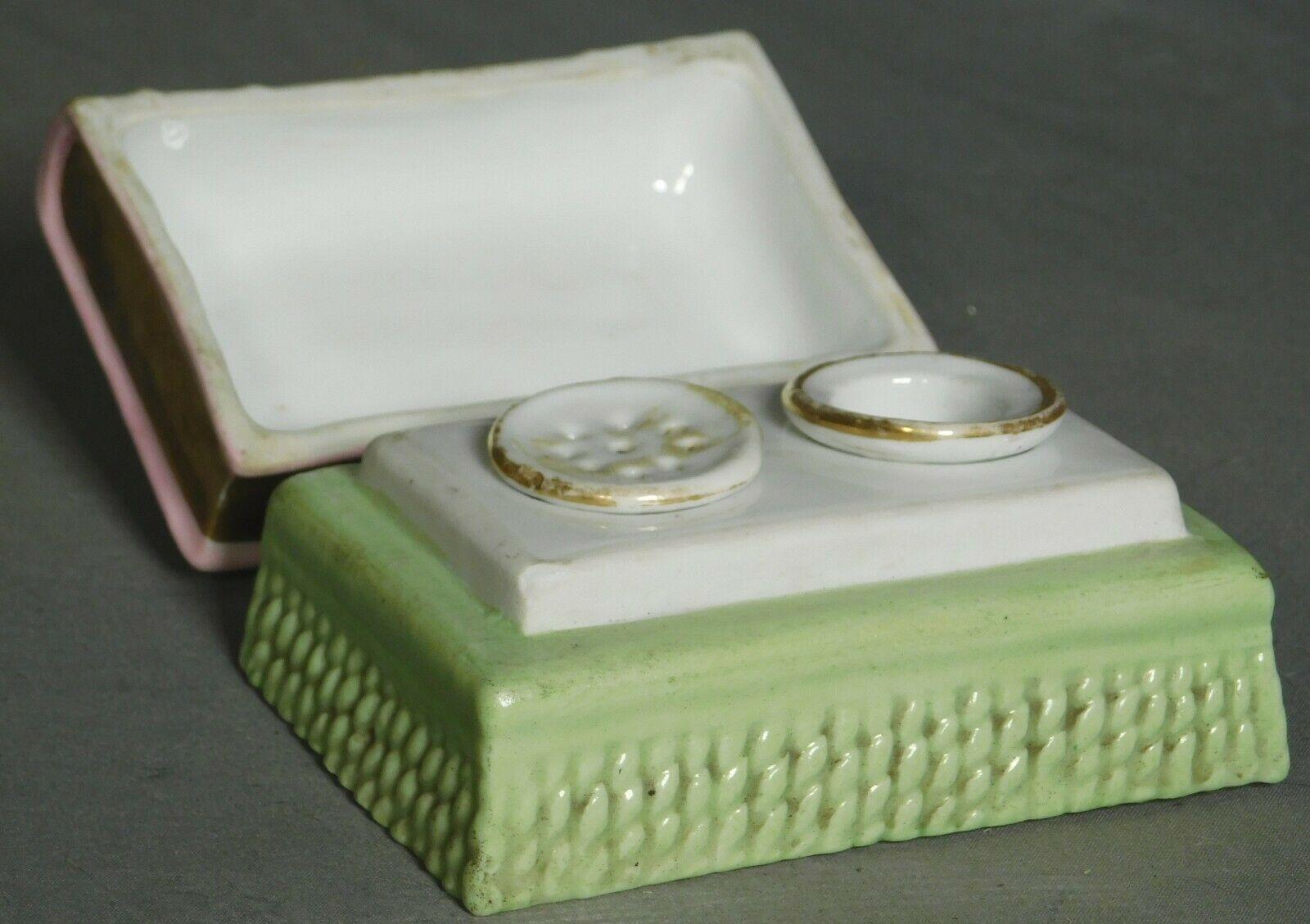
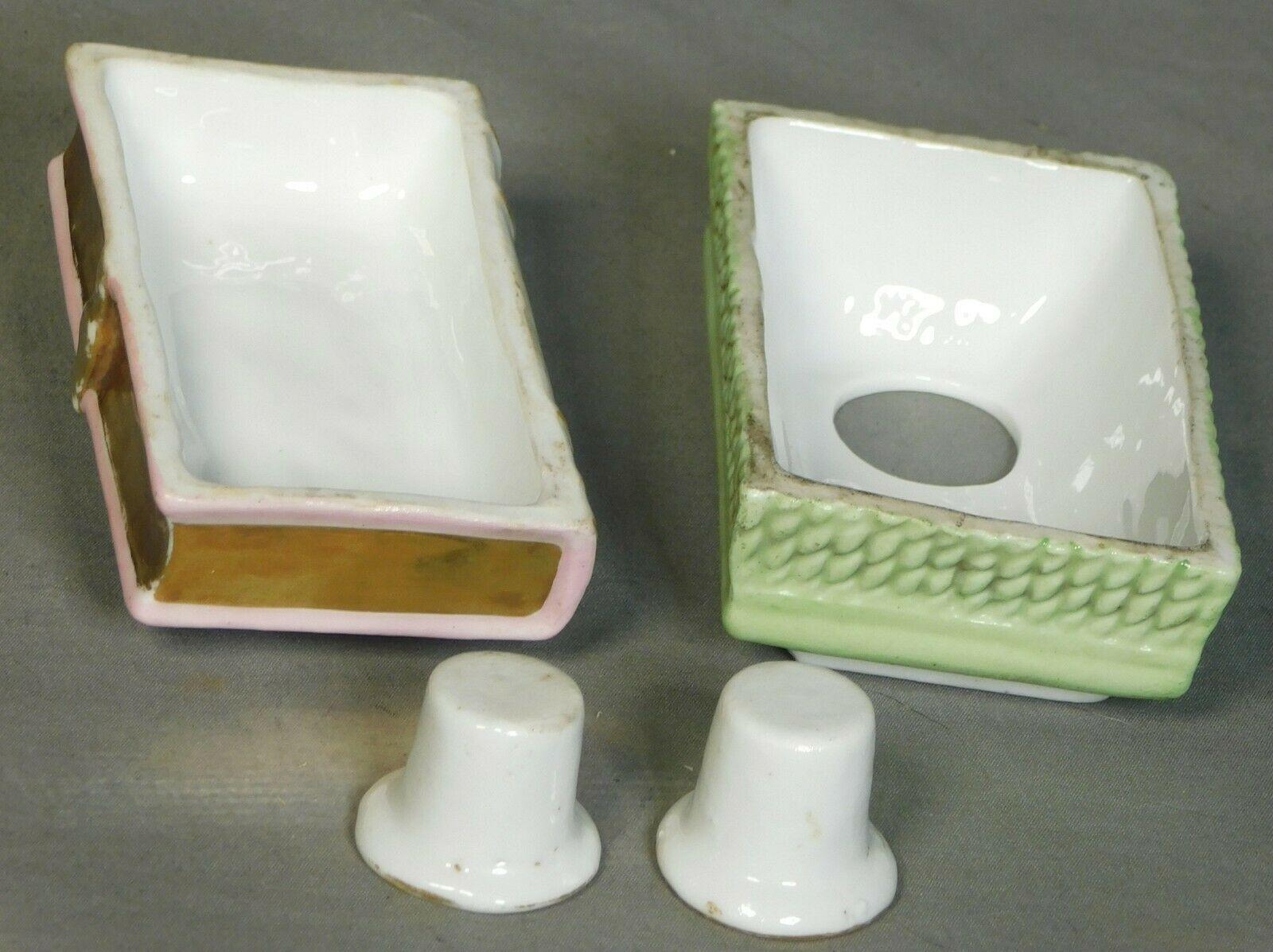
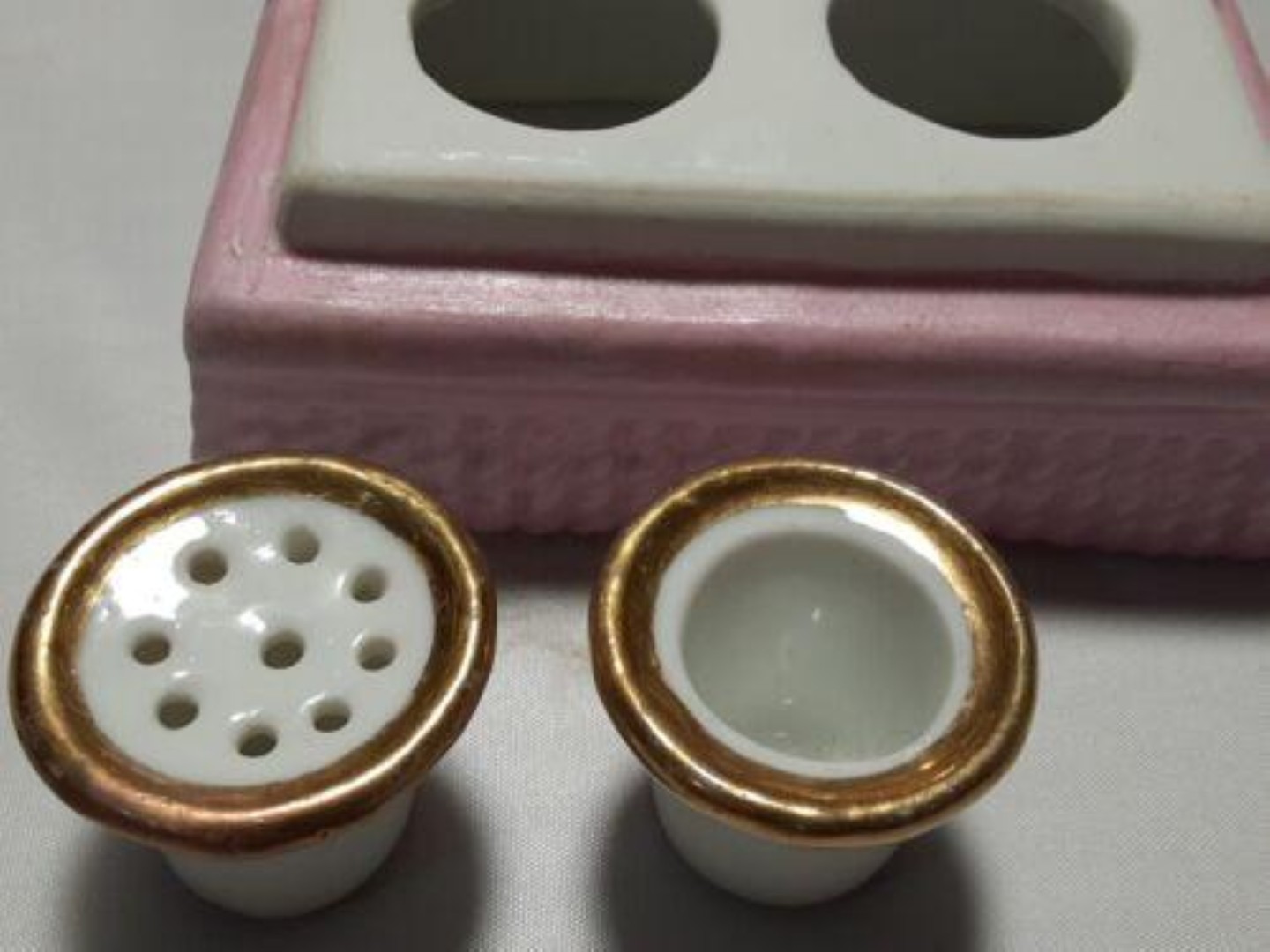
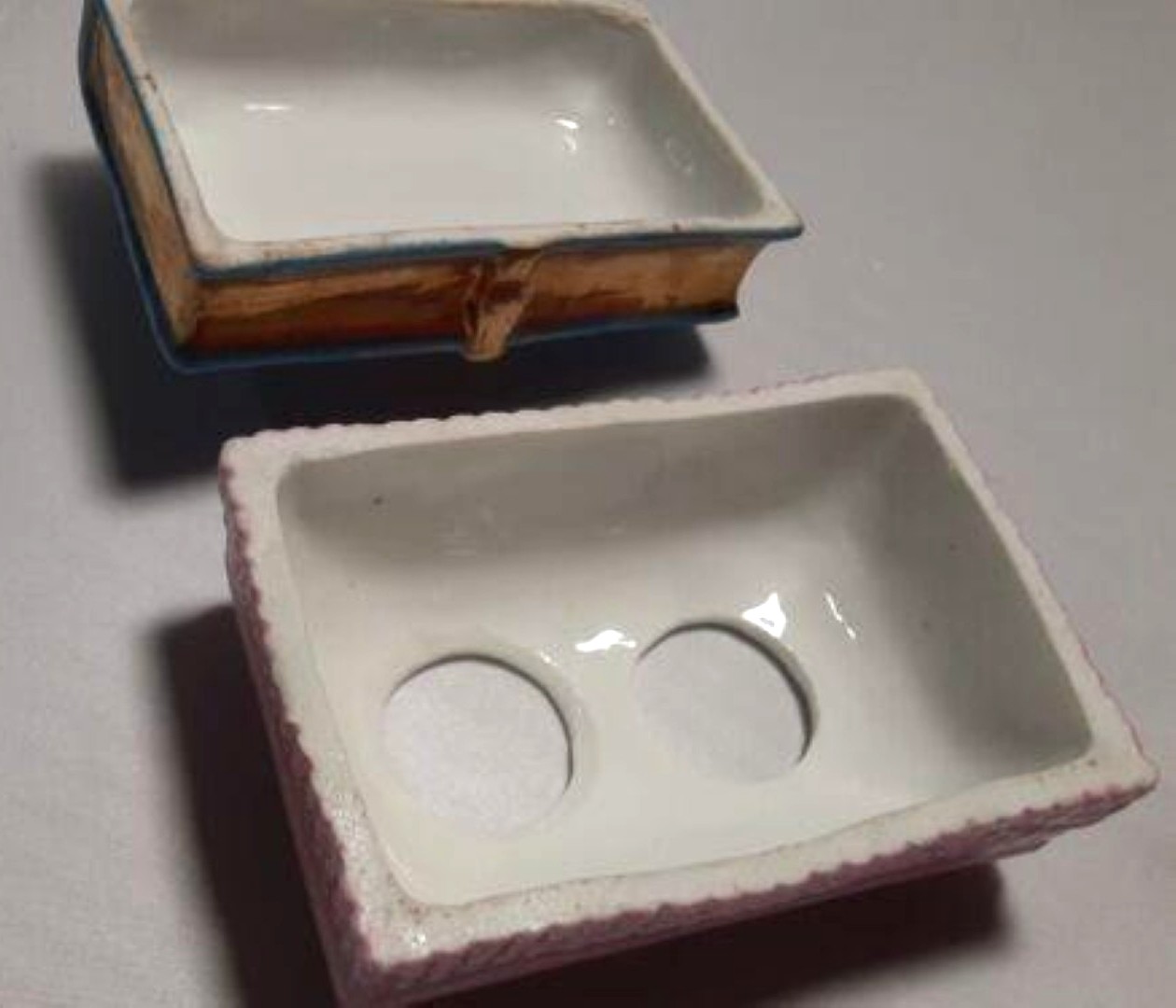
- Interior Components: Lifting the pink cover reveals the functional heart of the piece: a glazed ceramic ink pot and a sander (perforated to sprinkle fine sand over wet ink to blot it before blotting paper became widespread).
Dating and Origin
- Dating: This piece dates to the mid-to-late 19th century, broadly spanning the Victorian era (circa 1860–1890), when whimsical, highly decorative, and sentimental porcelain desk sets reached peak popularity.
- Where It Was Made: This style of fine, hand-painted porcelain with delicate gilding, pastel pinks, celadon greens, and specialized blank-molding points strongly points toward Central European (German or Austro-Bohemian) manufacturing hubs—such as Thuringia or Bohemia (modern-day Germany and the Czech Republic)—which mass-produced fanciful novelty porcelains for the international Victorian market, or alternatively France (often associated with “Paris porcelain” novelty wares).
Three examples are pictured.
#1 sold for $70 in January 2022
#2 sold for $111 in September 2022
#3 sold for $58 in August 2026
Content disclaimer. The information posted is the owner’s best knowledge and may not have been vetted by the SOIC. We welcome comments, corrections, and additions, working to make our website information comprehensive and accurate.
Join the Society of Inkwell Collectors (SOIC) – it’s free!
Founded in 1981 as a non-profit organization,
we are documenting inkwells (and accessories).
We’re here to help and inform!