

Regency-Period English Sterling Silver Inkstand
| Categories | Silver |
| Material | Silver |
| Markings | See Narrative |
| Manufacturer | John Roberts & Co. |
| Origin | England |
| Date or Era | circa 1811 |
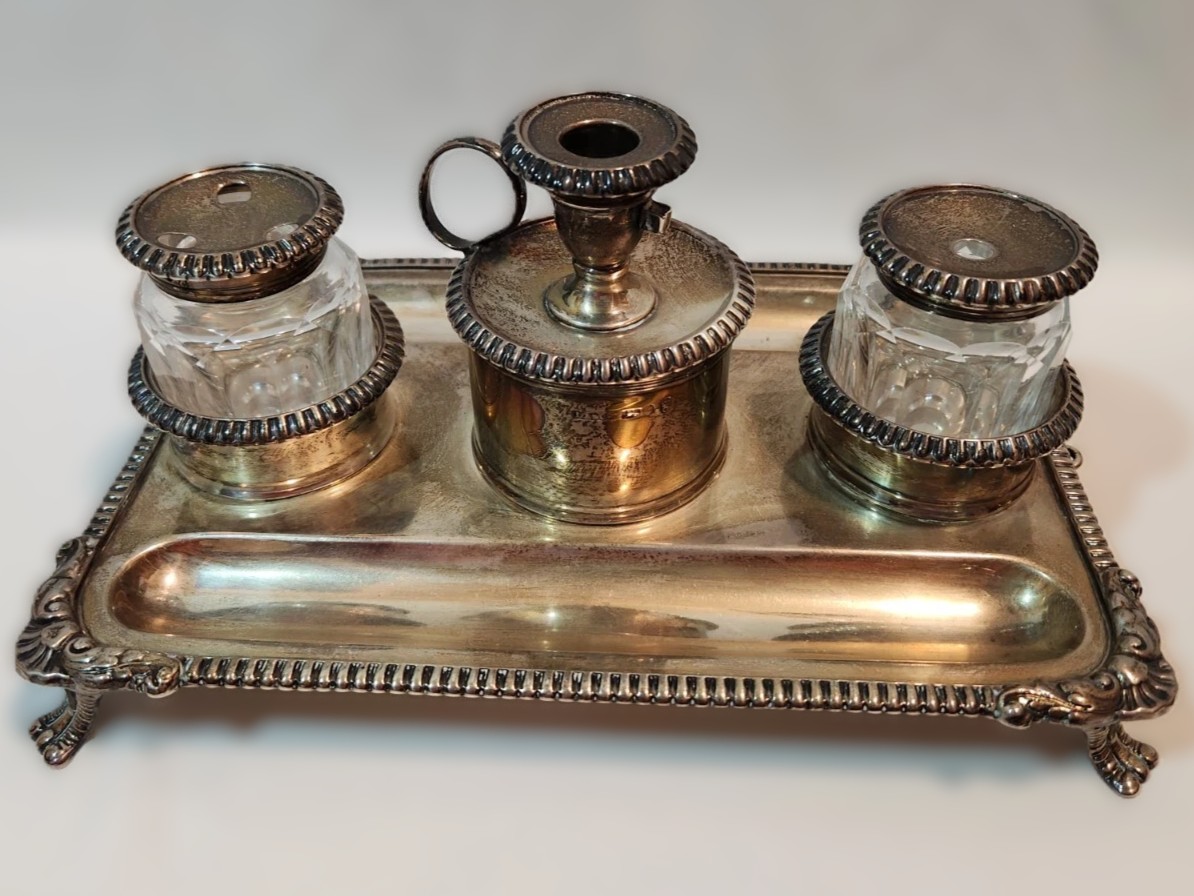
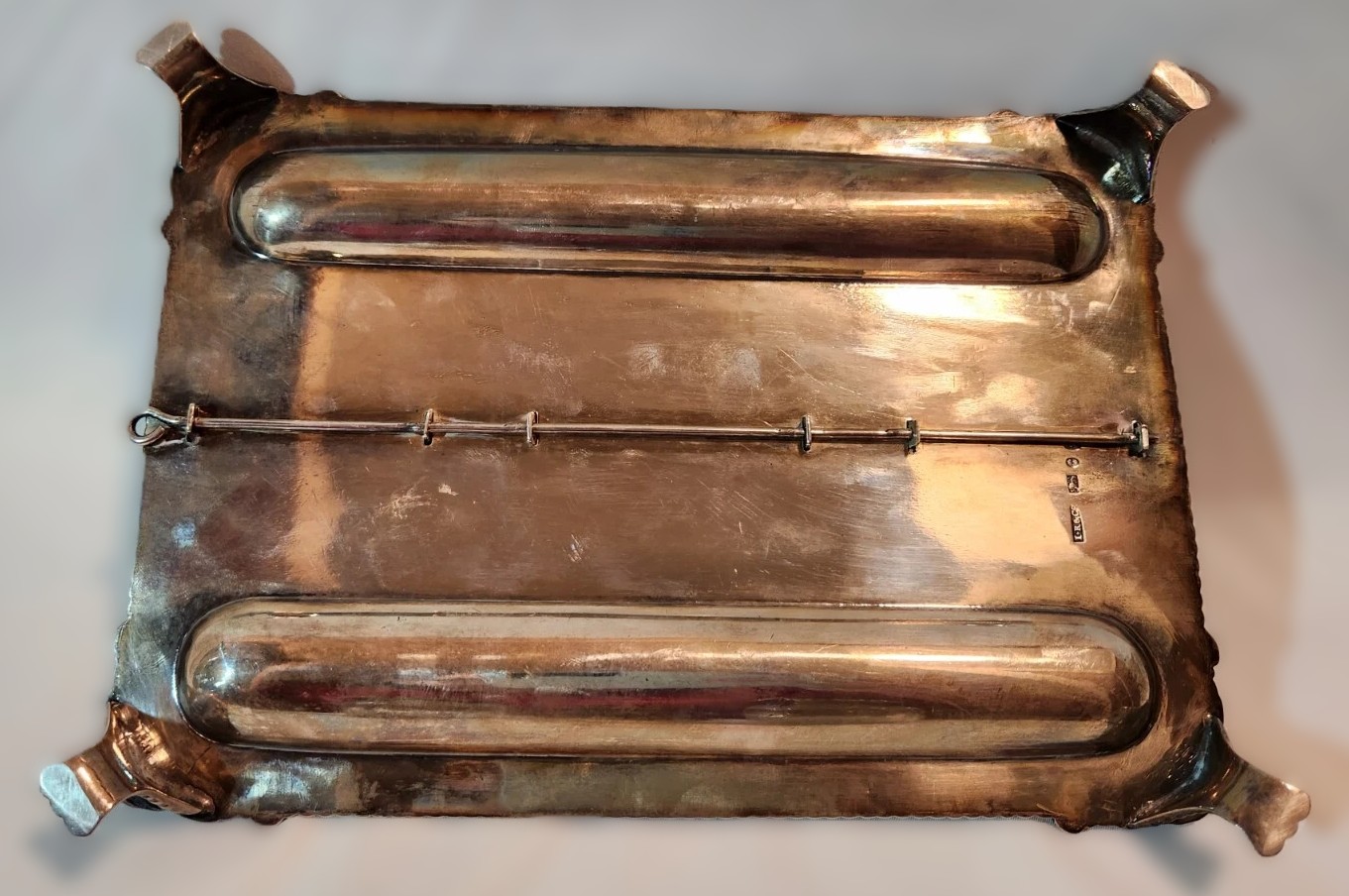
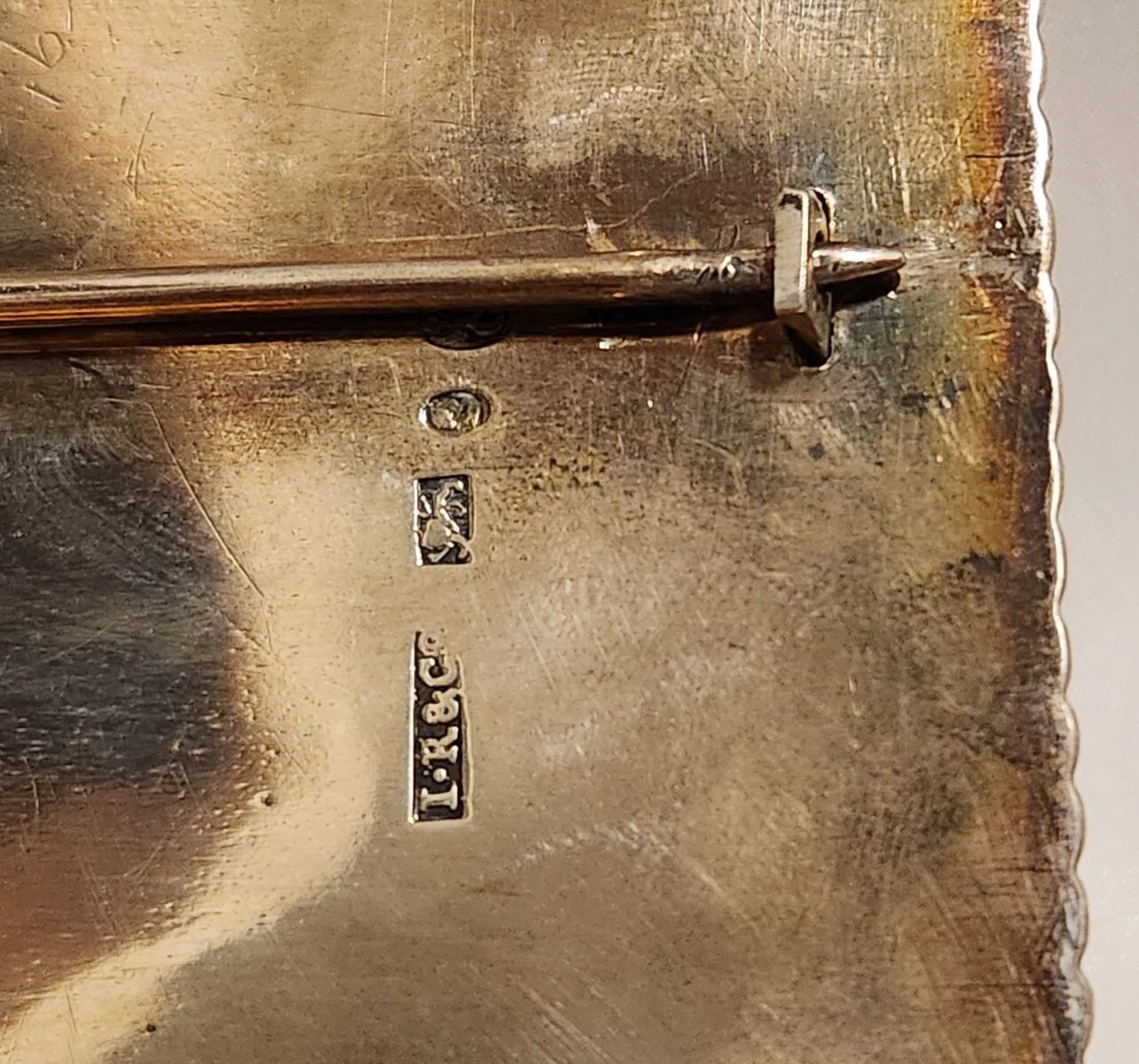
This Regency-period English sterling silver inkstand was made by the Sheffield firm John Roberts & Co. The hallmarks on this piece – specifically the presence of the Sovereign’s Head (Duty Mark) – confirm it dates to 1811. Duty marks were abolished in 1890, so its presence here, combined with the “JR & Co” mark, firmly places this piece in the early 19th century.
Description
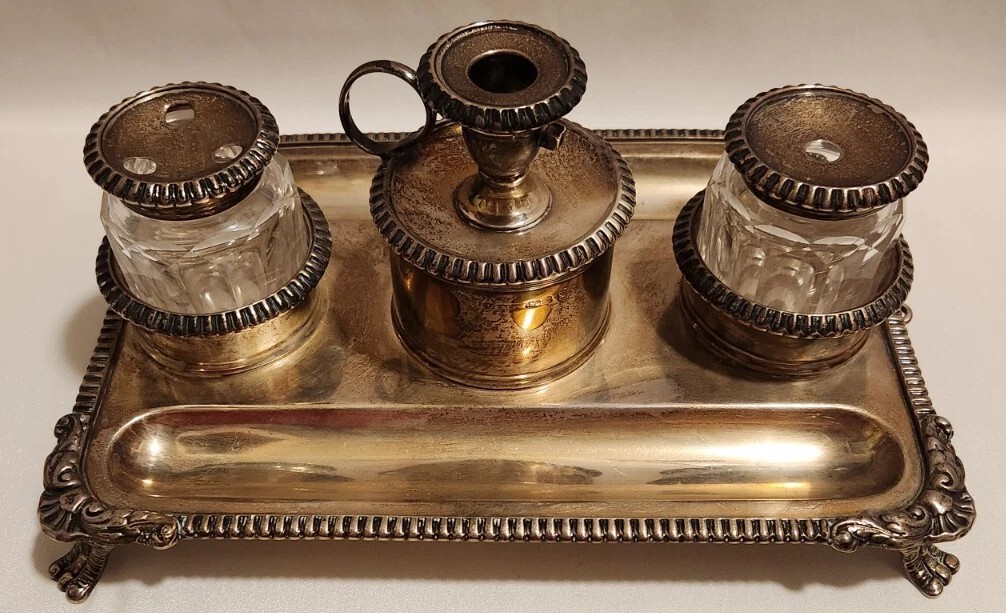
- The Tray: A heavy, rectangular sterling silver tray featuring a gadrooned (rope-like) border and a deep, recessed pen well for holding quills. It stands on four ornate acanthus and shell-style feet.
- The Components:
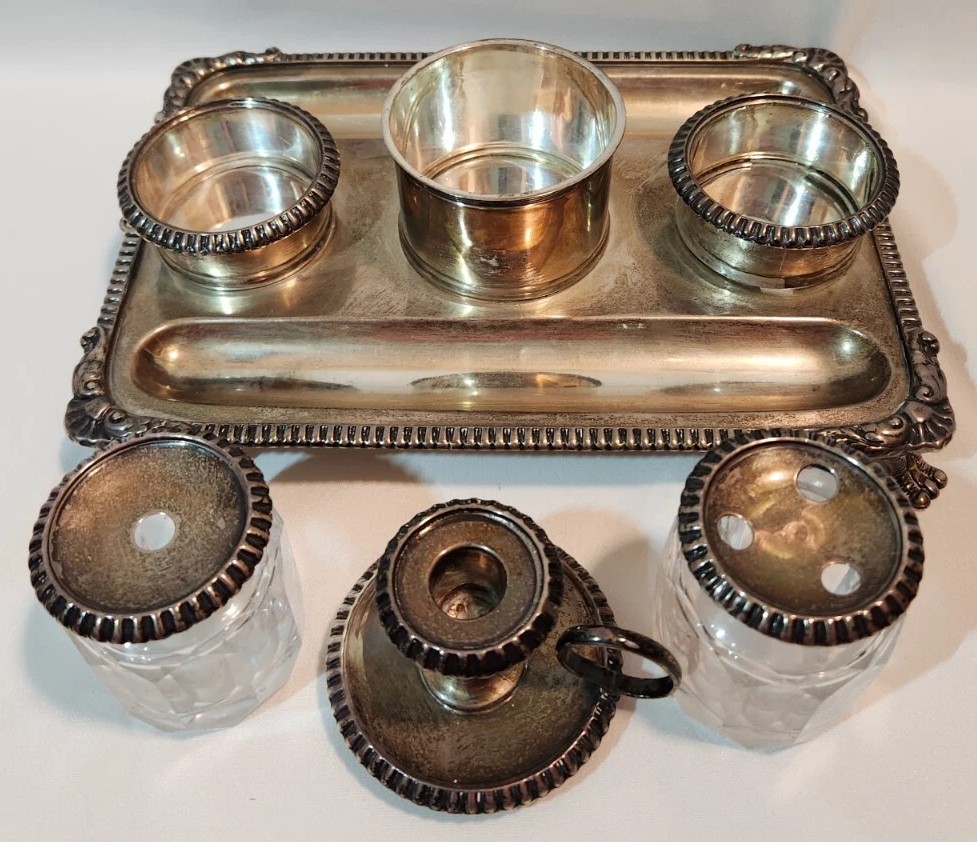
- Twin Inkwells: Two square, facet-cut glass wells. One silver lid features a single central hole (for ink), while the other features three holes (traditionally used as a pounce pot or sander for drying ink, or as a pen holder).
- Central Taper Stick: The centerpiece is a cylindrical silver container topped with a taper stick (candleholder) and a small ring handle. In the early 1800s, this was used for light and to melt sealing wax for letters.
- The Mechanism: The underside shows a retaining rod system. This was a classic Regency safety feature designed to screw into the bottom of the silver containers, securing the glass and silver components firmly to the tray so they wouldn’t tip during use.
The Maker: John Roberts & Co.
John Roberts & Co. was a premiere firm of Sheffield silversmiths active during the height of the Georgian and Regency eras (approximately 1805–1820).
- Partnership: The firm was originally comprised of John Roberts, Samuel Mosley, and John Settle. After John Roberts passed away in 1807, his son, John Winter Roberts, continued the partnership.
- Specialization: They were exceptionally well-regarded for their “hollowware”—specifically candlesticks, taper sticks, and wine coasters. Their mastery of candle-related silver explains the high quality and central prominence of the taper stick on this inkstand.
- Artistry: Their work is characterized by the Regency aesthetic: a preference for substantial weight, classical motifs (like the shell feet), and clean but decorative borders like the gadrooning seen here. Pieces by John Roberts & Co. from this period are desireable due to their superior construction and the short window of the company’s operation.
Summary of Hallmarks (c. 1811)
| Mark | Identification |
| JR & Co | Maker’s Mark for John Roberts & Co. |
| Crown | Assay Office Mark for Sheffield |
| Lion Passant | The standard mark for Sterling Silver (.925 purity) |
| Sovereign’s Head | The Duty Mark (Profile of George III), indicating tax was paid to the crown |
| s | Date Letter for 1811 (Sheffield) |
Sold for $1,500 in April 2026
Content disclaimer. The information posted is the owner’s best knowledge and may not have been vetted by the SOIC. We welcome comments, corrections, and additions, working to make our website information comprehensive and accurate.
Join the Society of Inkwell Collectors (SOIC) – it’s free!
Founded in 1981 as a non-profit organization,
we are documenting inkwells (and accessories).
We’re here to help and inform!