

Ray Cotton Company Delivery Truck
| Categories | Advertising |
| Type | Transportation |
| Material | Brass |
| Markings | See Narrative |
| Manufacturer | Undetermined |
| Origin | United States |
| Date or Era | circa 1920 |
| Measuring | 8” x 3 ¼” x 3 ¾” high |
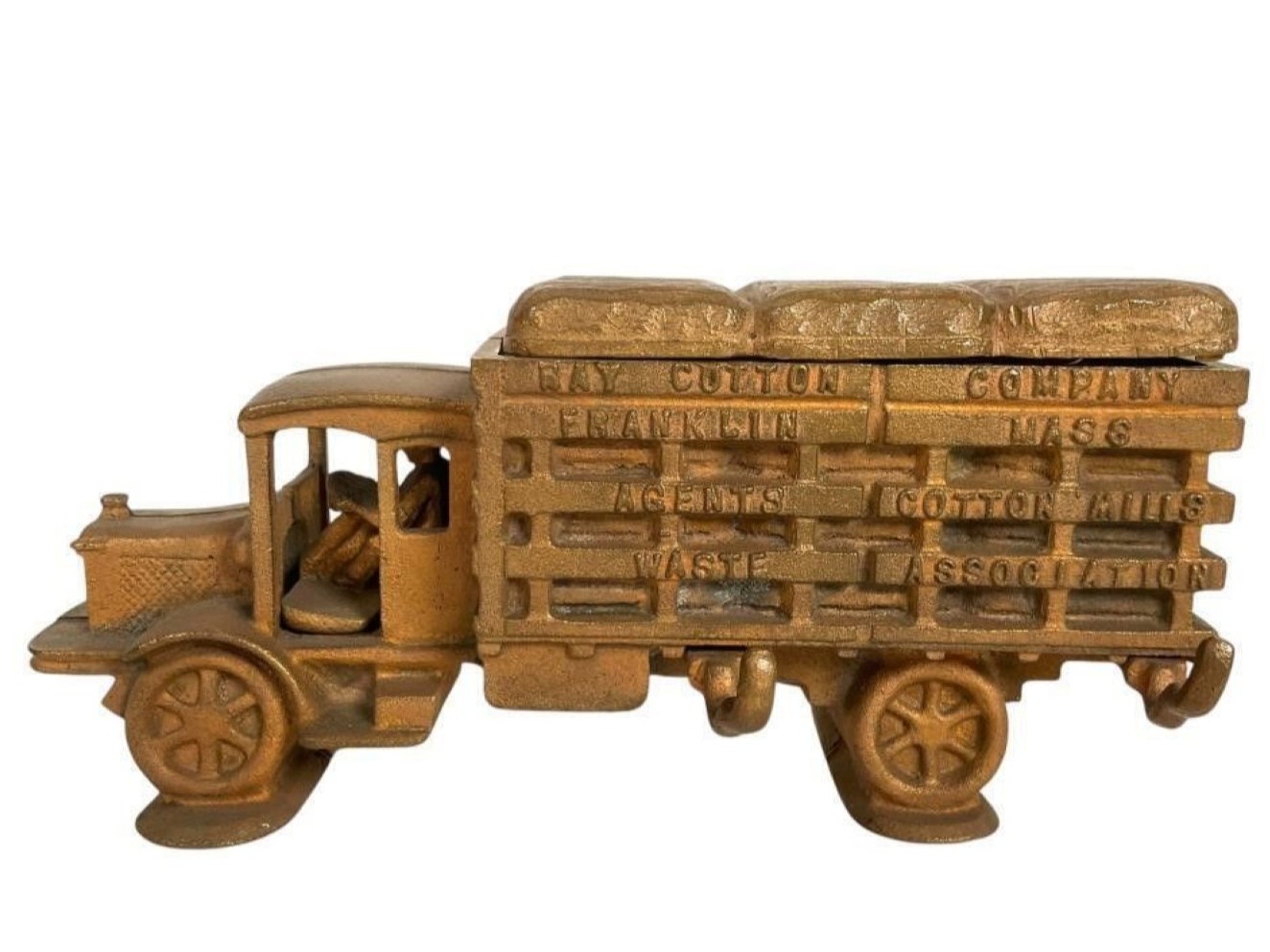
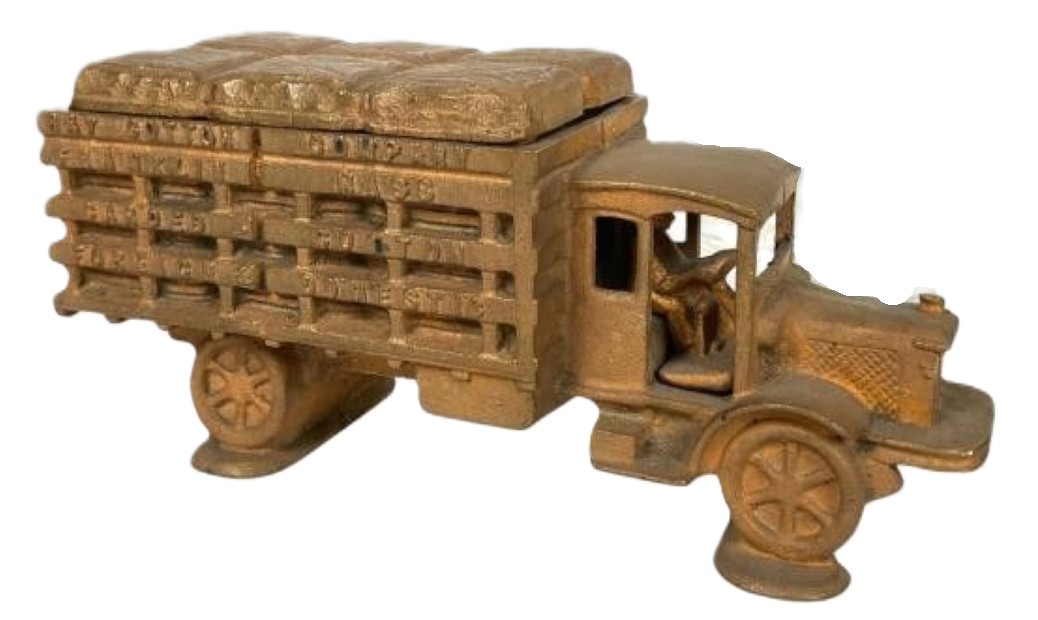
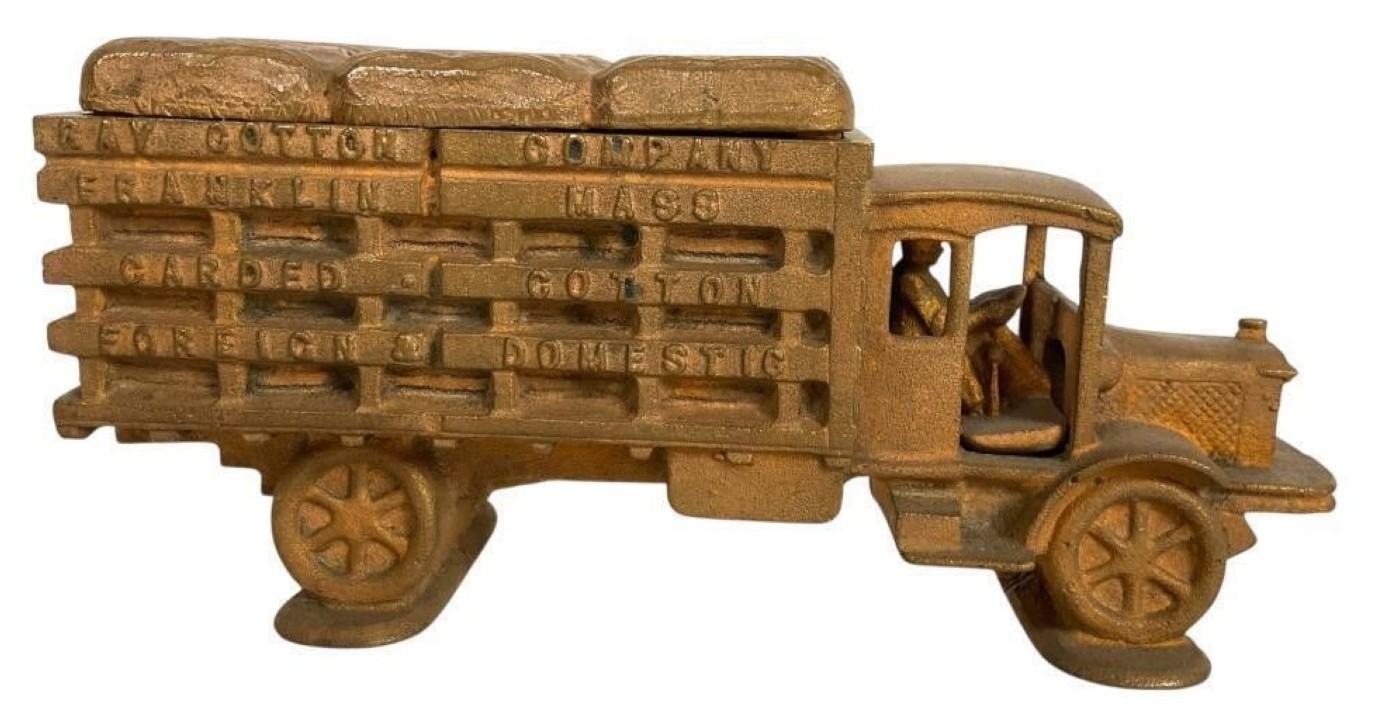
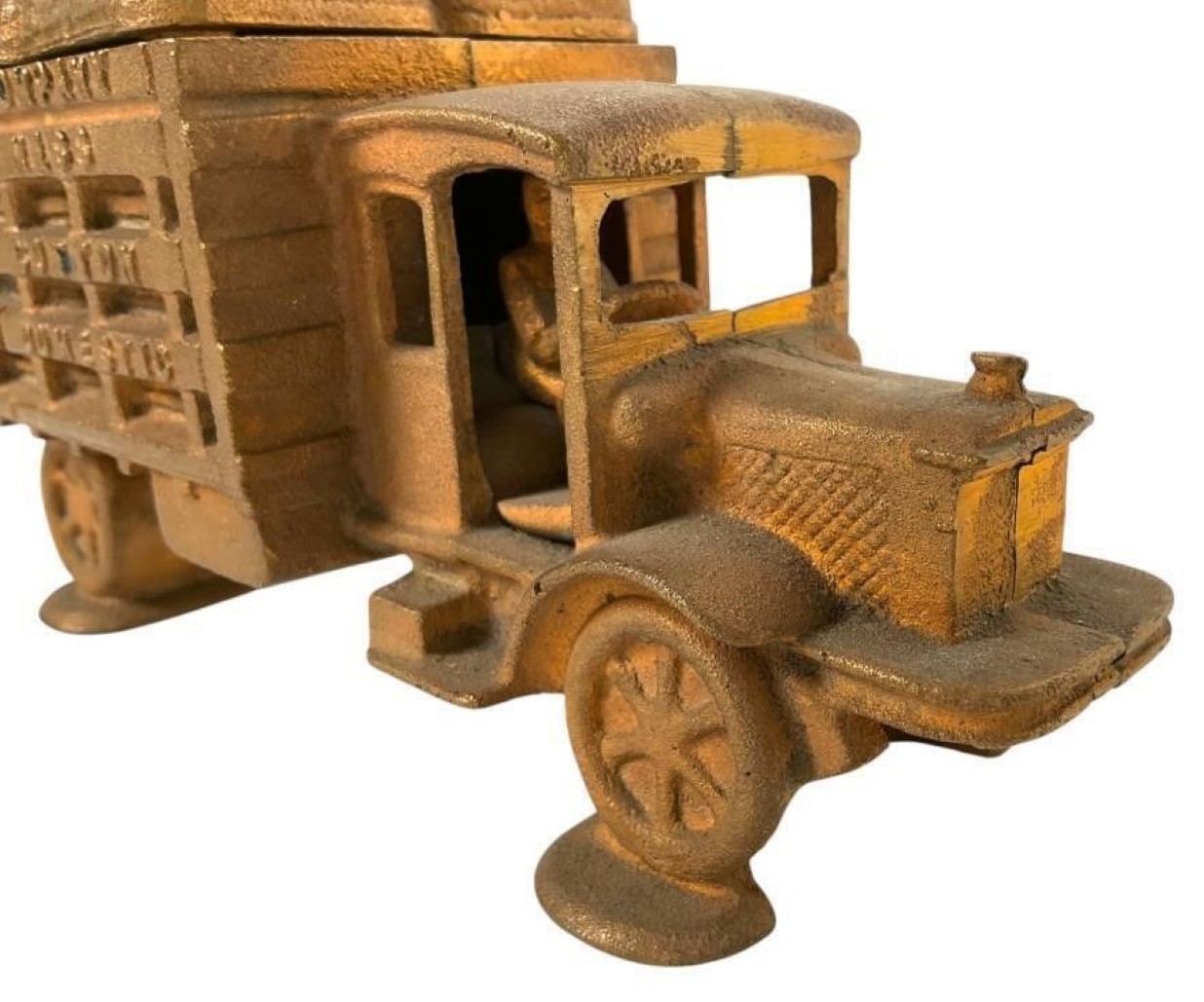
This early 20th-century industrial advertising is in the form of a figural cast-metal inkwell designed in the form of a vintage stake-side transport truck. Finished in a rich brass-toned gilt, the piece serves as both a functional desk accessory and a promotional object for the Ray Cotton Company of Franklin, Massachusetts.
Design and Exterior Details
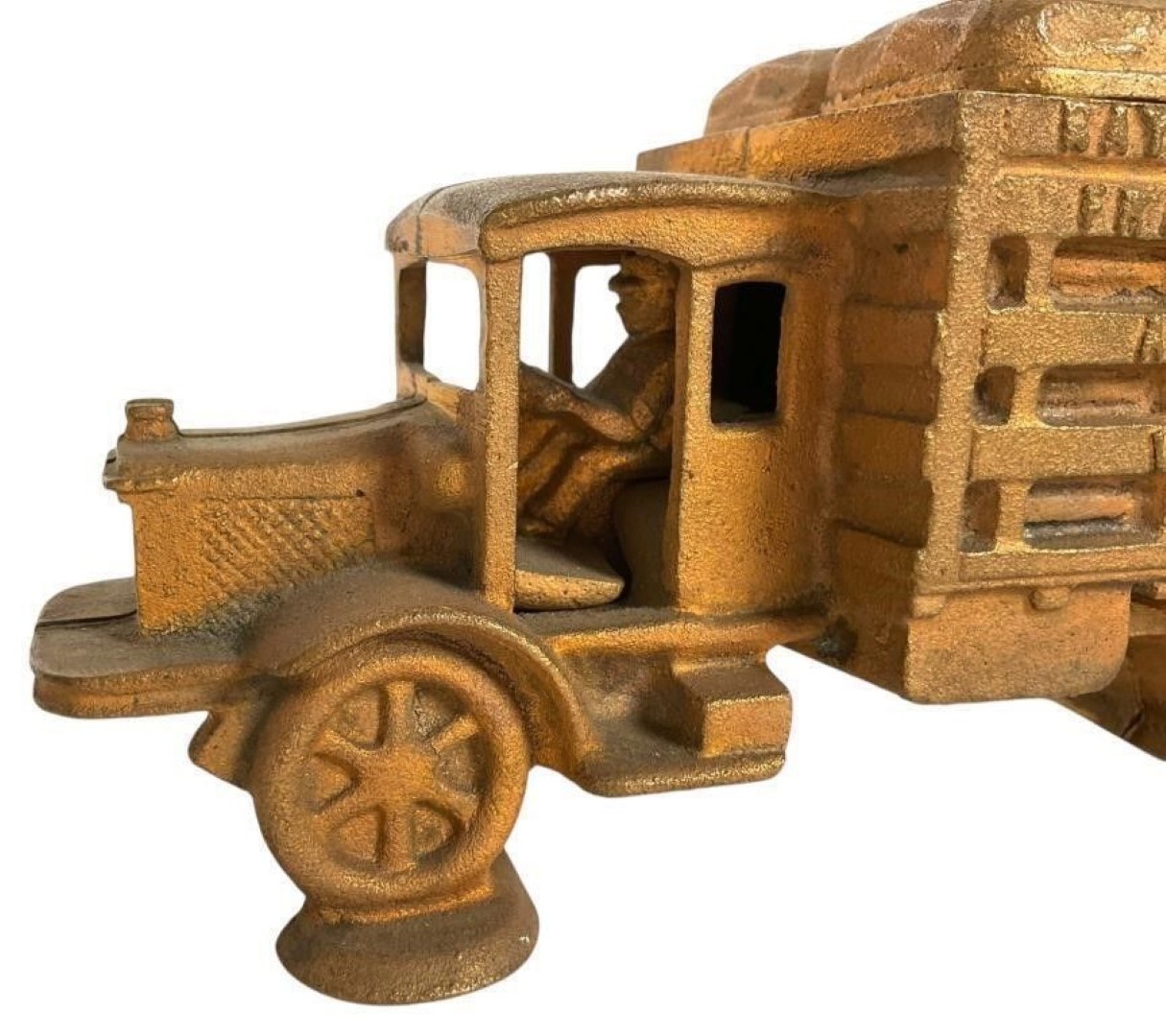
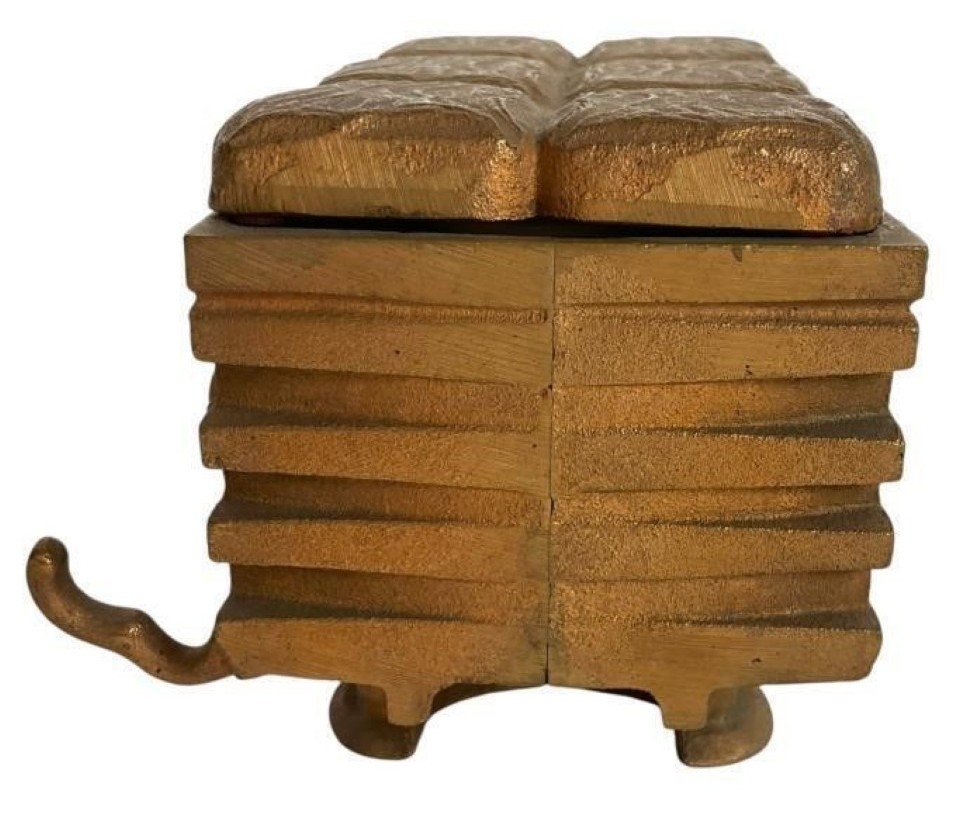
The inkwell is modeled after a heavy-duty delivery truck, reflecting the 1920s era, complete with a detailed front grille, spoked wheels, and a cast driver figure seated within the open cab. The “cargo” in the back consists of a load resembling six tightly bound cotton bales, a nod to the company’s primary industry.
The side panels of the truck feature embossed block lettering that details the company’s various business facets:
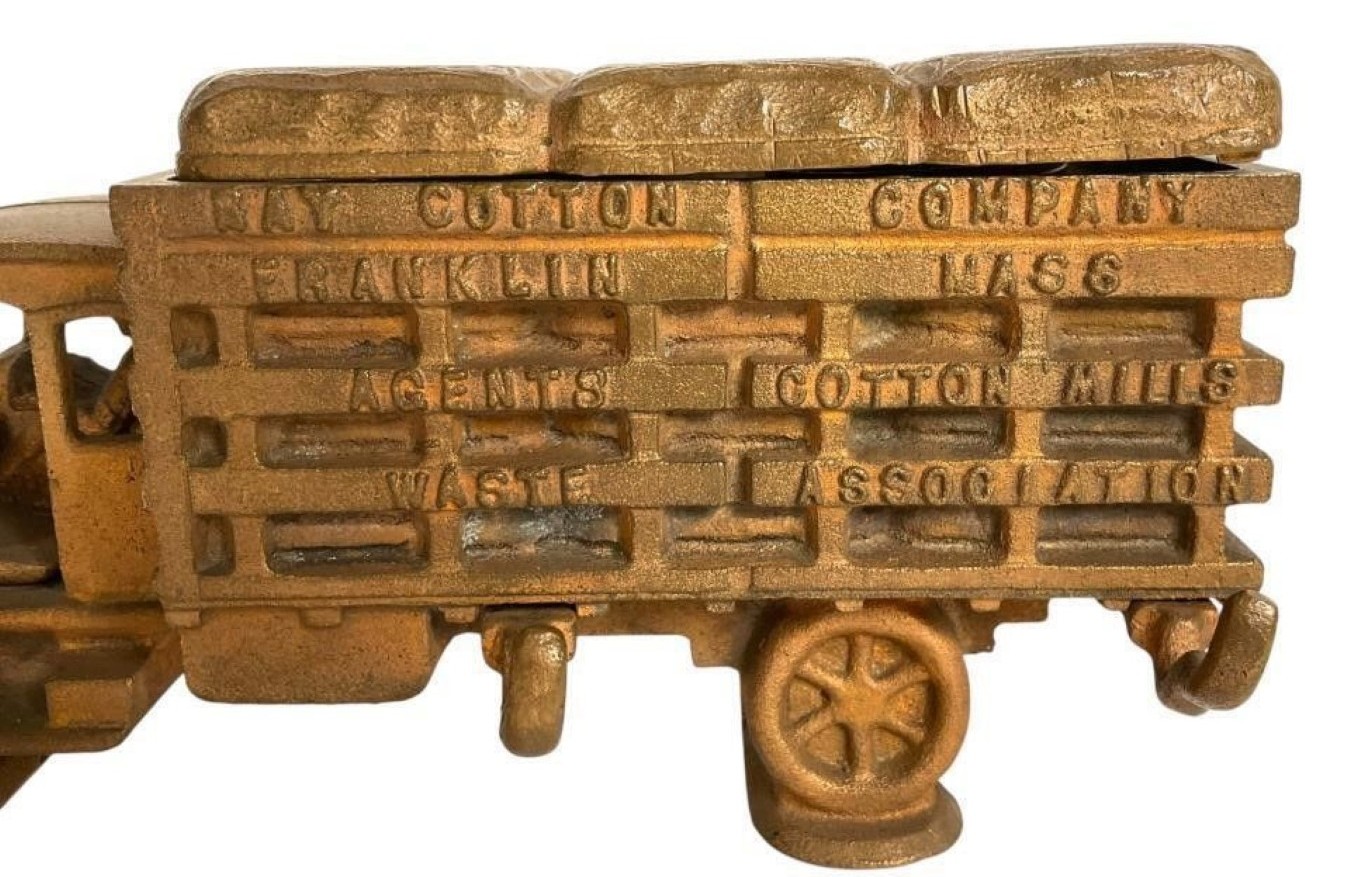
- Driver’s Side: “RAY COTTON COMPANY / FRANKLIN MASS / AGENTS COTTON MILLS / WASTE ASSOCIATION”
- Passenger Side: “RAY COTTON COMPANY / FRANKLIN MASS / CARDED COTTON / FOREIGN & DOMESTIC”
Components
True to the high-utility designs of the period, this piece is more than just a decorative model:
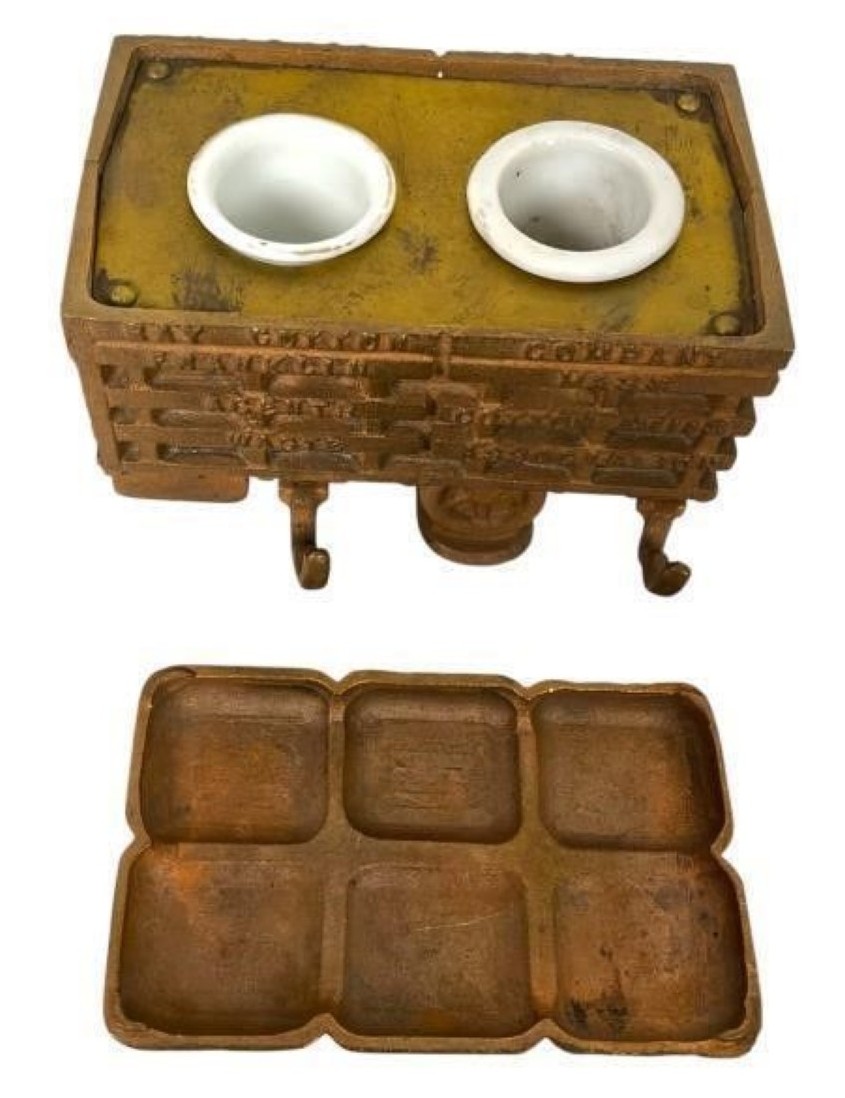
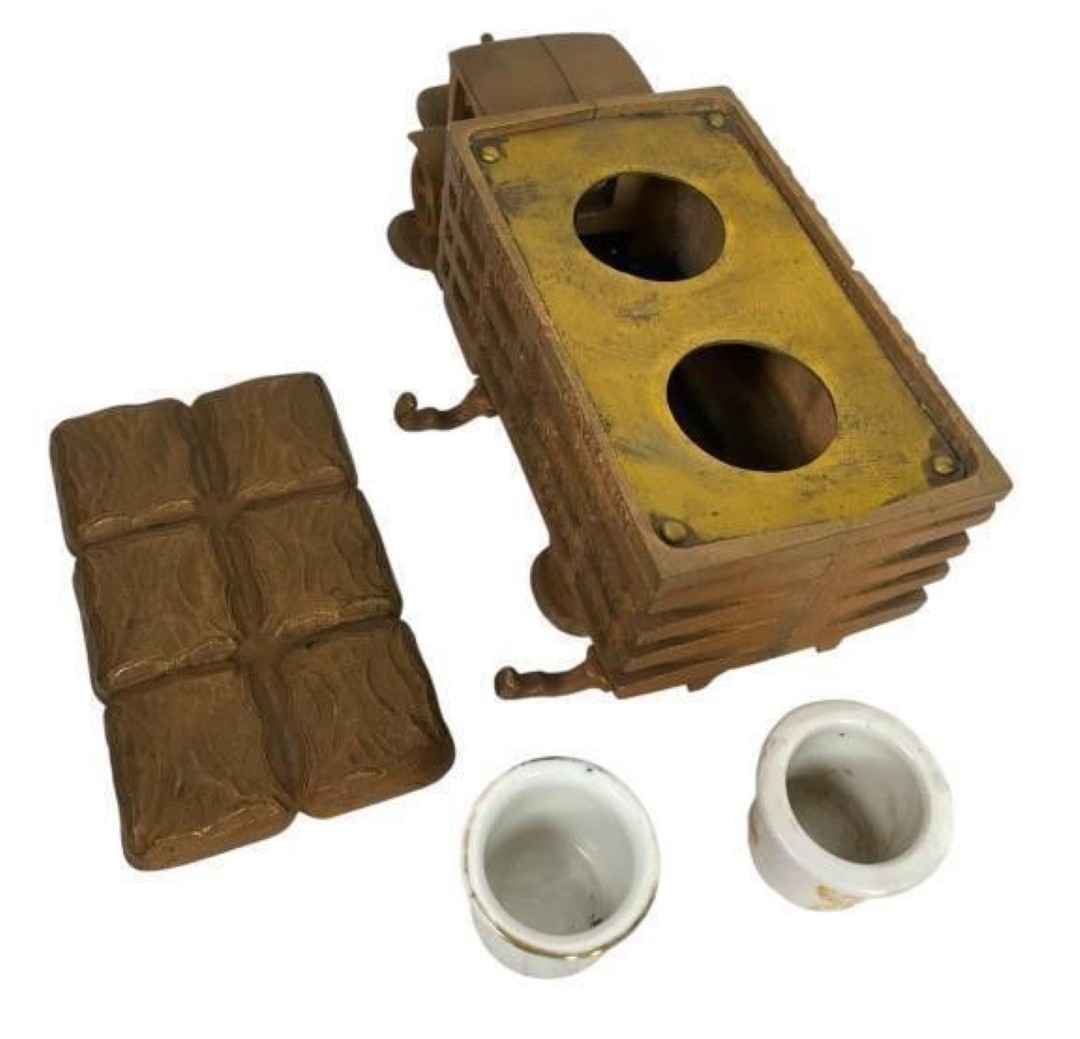
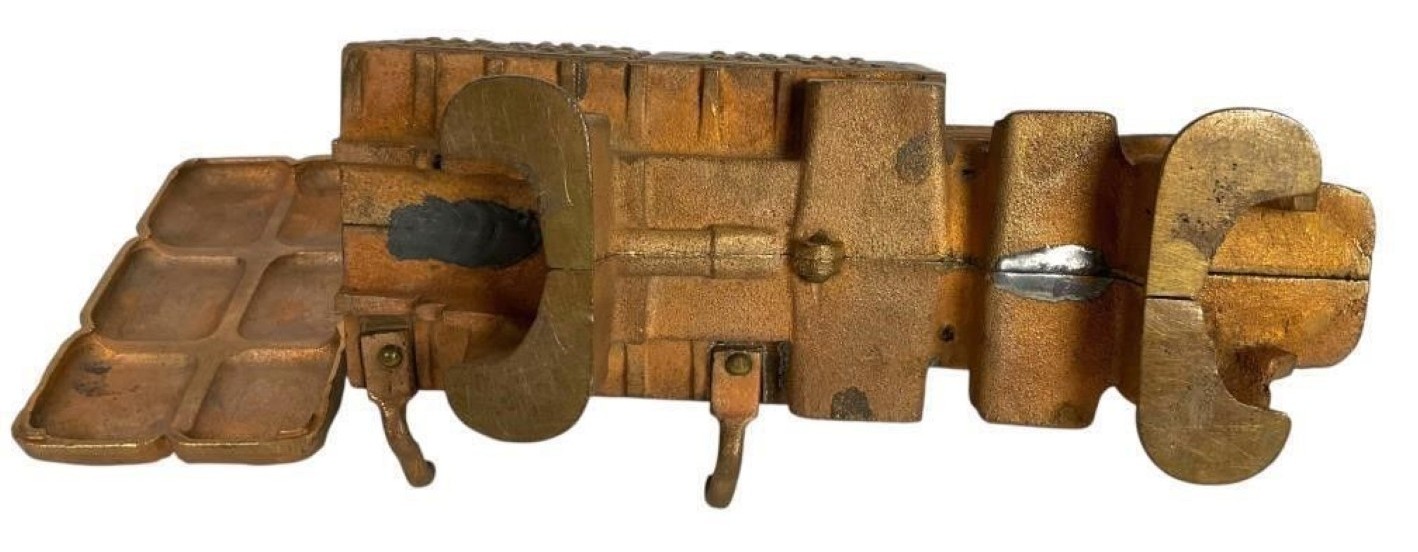
- Dual Ink Reservoirs: Lifting the lid reveals an interior housing two white ceramic (porcelain) inkwell inserts.
- Integrated Pen Hook: On the passenger side, two heavy-duty curved hooks are integrated into the frame, serving as a horizontal pen rest to keep a dip pen off the desk surface.
- Construction: The underside reveals a heavy, two-part sand-casting joined together, typical of high-quality industrial premiums of the era.
Historical Context
The Ray Cotton Company was a significant fixture in the textile history of Franklin, MA. Specializing in “cotton waste” (recycling scraps from textile mills into usable material for paper, upholstery, or engine cleaning), this inkwell would have been a high-end “executive gift” provided to mill owners or shipping agents, ensuring the company’s name remained literally at the center of their business correspondence.
Estimated Age
Based on the design of the vehicle and the historical context of the Ray Cotton Company, this inkstand most likely dates to the late 1910s to the early 1920s (circa 1915–1925).
Several specific details support this era:
- The Truck Model
The casting depicts a “heavy-duty” transport truck from the early motorized era. Key indicators of the 1915–1925 period include:
- The Open Cab: Many industrial trucks of this era were manufactured without doors or windshields to allow the driver better visibility and ease of entry/exit.
- Solid-Style Tires: The thick, flat profile of the wheels suggests the solid rubber tires used on heavy machinery before pneumatic tires became standard for large trucks in the mid-to-late 1920s.
- The Chain-Drive Appearance: The rear wheel assembly mimics the sprocket and chain-drive systems common on early Mack and White trucks (the “Bulldog” style).
- The “Cotton Waste” Industry
The Ray Cotton Company of Franklin, Massachusetts, specialized in “cotton waste” – the byproduct of the textile milling process. This industry peaked during and immediately following World War I, when recycled cotton was in high demand for making everything from paper to engine-cleaning rags. The term “Cotton Mills Waste Association” featured on the side is highly characteristic of trade group branding from the 1910s.
- Advertising Trends & Materials
This piece is a high-end “advertising premium.” During the late 19th and early 20th centuries, companies often commissioned heavy cast-metal desk items to give to executives and shipping agents.
- Dual Wells: The presence of two ceramic inserts was standard for the period, allowing the user to keep black ink for general writing and red ink for bookkeeping or corrections.
- The Transition: By the 1930s, the rise of the fountain pen reduced the need for large desk-bound inkwells, and the onset of the Great Depression saw such elaborate cast-metal premiums replaced by cheaper materials like Bakelite or lighter stampings.
Estimated value: $250
Content disclaimer. The information posted is the owner’s best knowledge and may not have been vetted by the SOIC. We welcome comments, corrections, and additions, working to make our website information comprehensive and accurate.
Join the Society of Inkwell Collectors (SOIC) – it’s free!
Founded in 1981 as a non-profit organization,
we are documenting inkwells (and accessories).
We’re here to help and inform!