


Pump Style Inkstand – Dual Fonts
| Categories | Mechanical - Pump / Siphon |
| Type | Pump |
| Material | Brass, Porcelain |
| Markings | See Narrative |
| Origin | France |
| Date or Era | circa 1870 |
| Measuring | 7 ½” x 6” x 6” high |
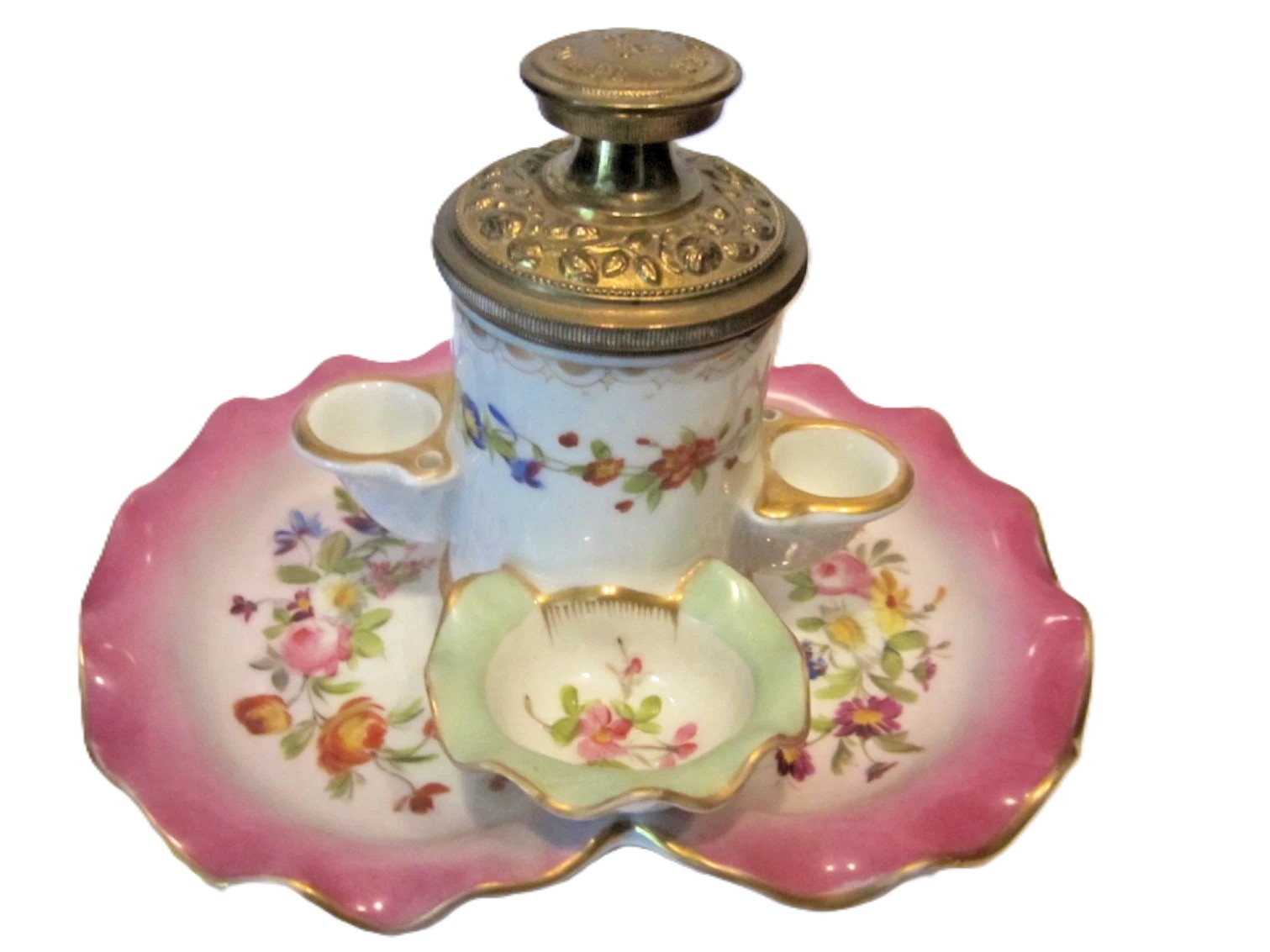
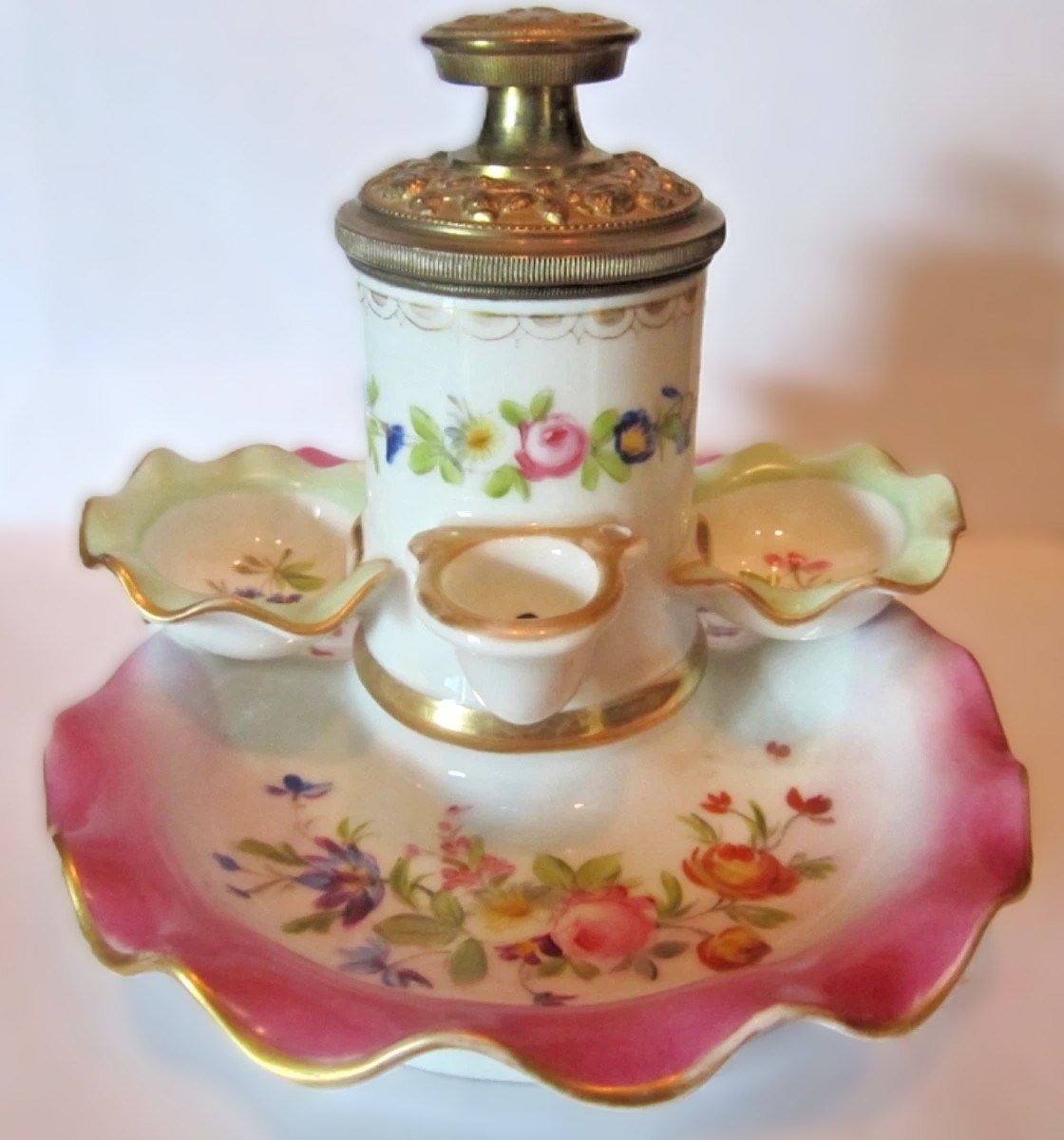
This is a classic French “pump” style inkstand, an ingenious mechanical piece of writing history designed to provide a continuous, controlled flow of fresh ink while minimizing evaporation and sediment.
Below is a detailed breakdown of its markings, components, mechanical operation, and origin.
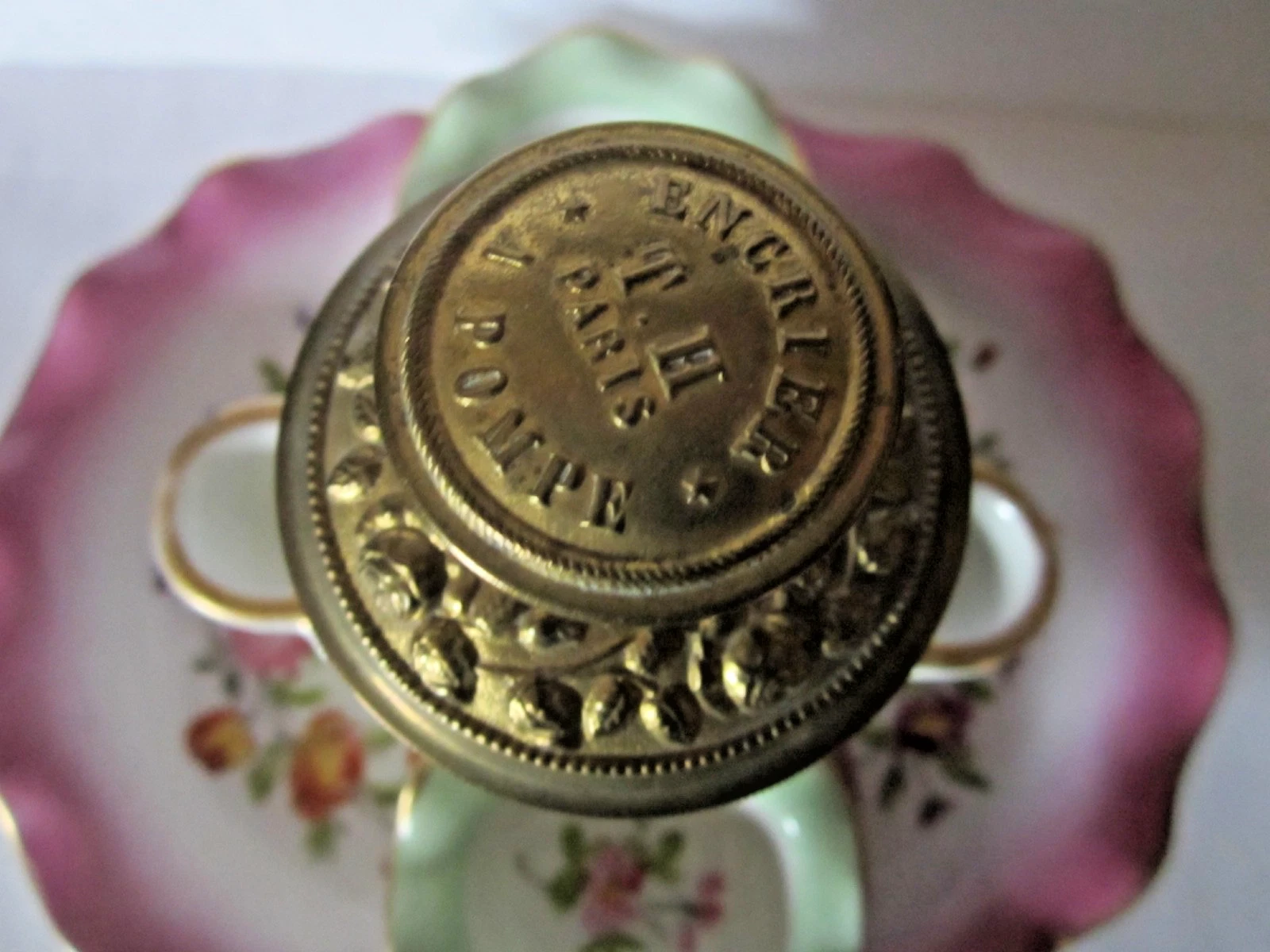
The Markings on the Handle
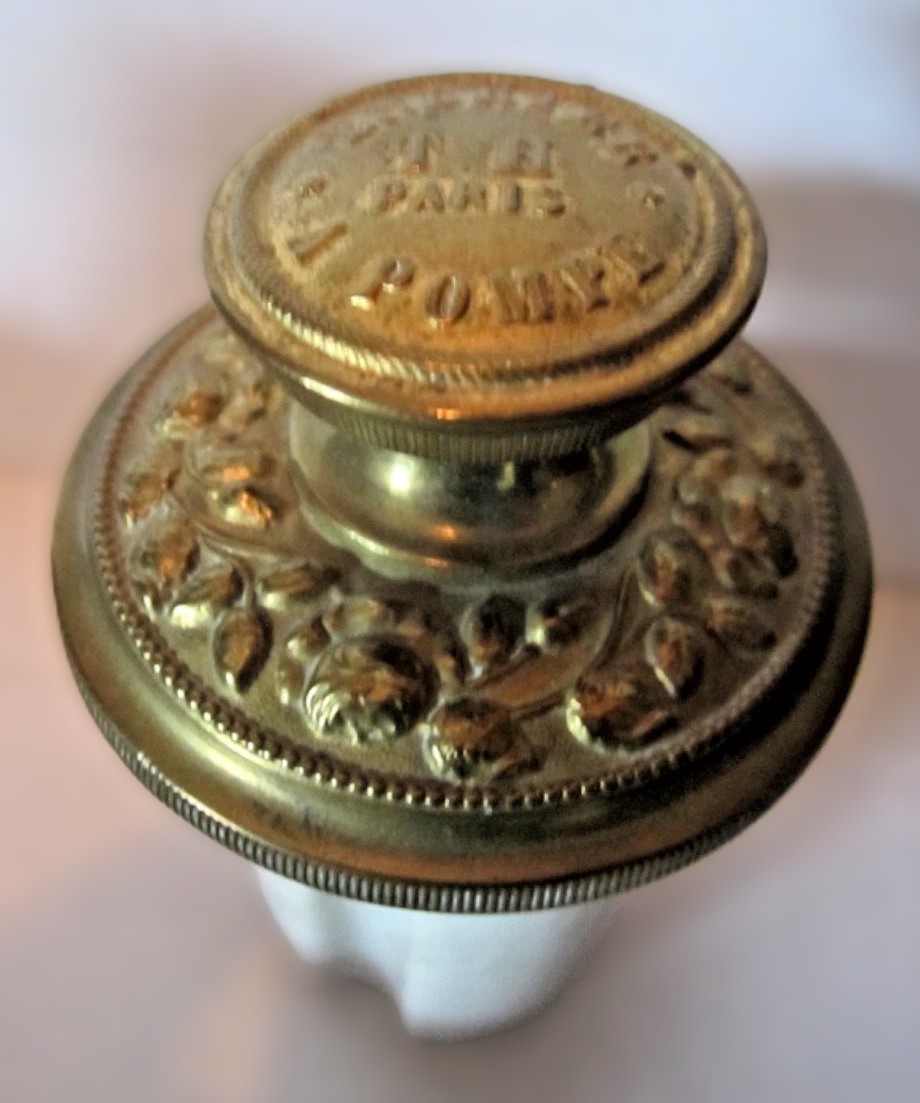
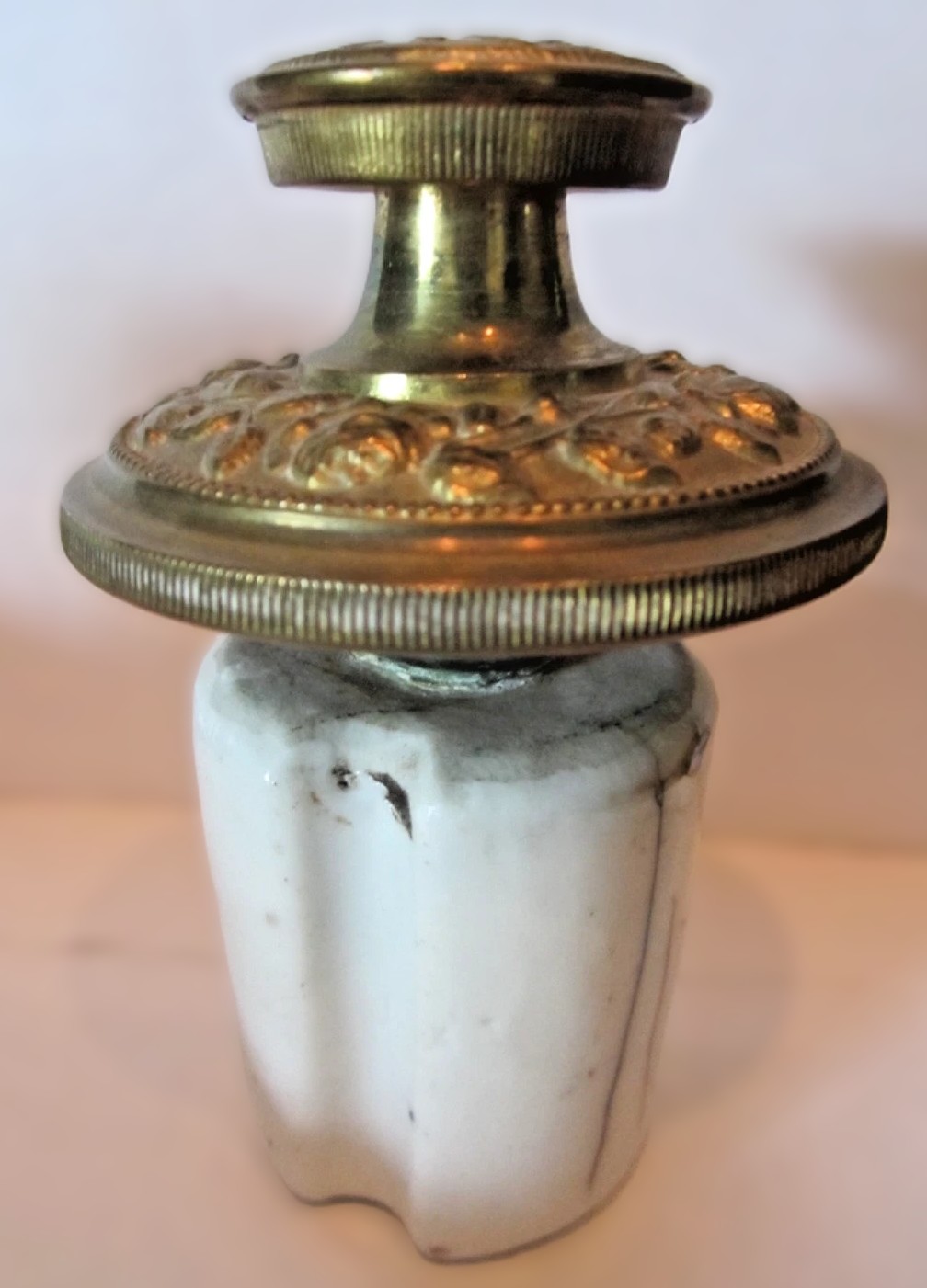
The circular brass turn knob at the very top features stamped text configured in concentric arcs.
- “T. H.”: Positioned in the very center, these initials represent the maker/inventor or a specific registered patent trademark for the mechanism.
- “PARIS”: Located just below the initials, establishing its French manufacturing origin.
- “ENCRIER A POMPE”: Wrapped around the border, which translates directly from French to “Pump Inkwell”.
Components of the Inkstand & Their Functions
This multi-part porcelain and brass piece consists of several sections:
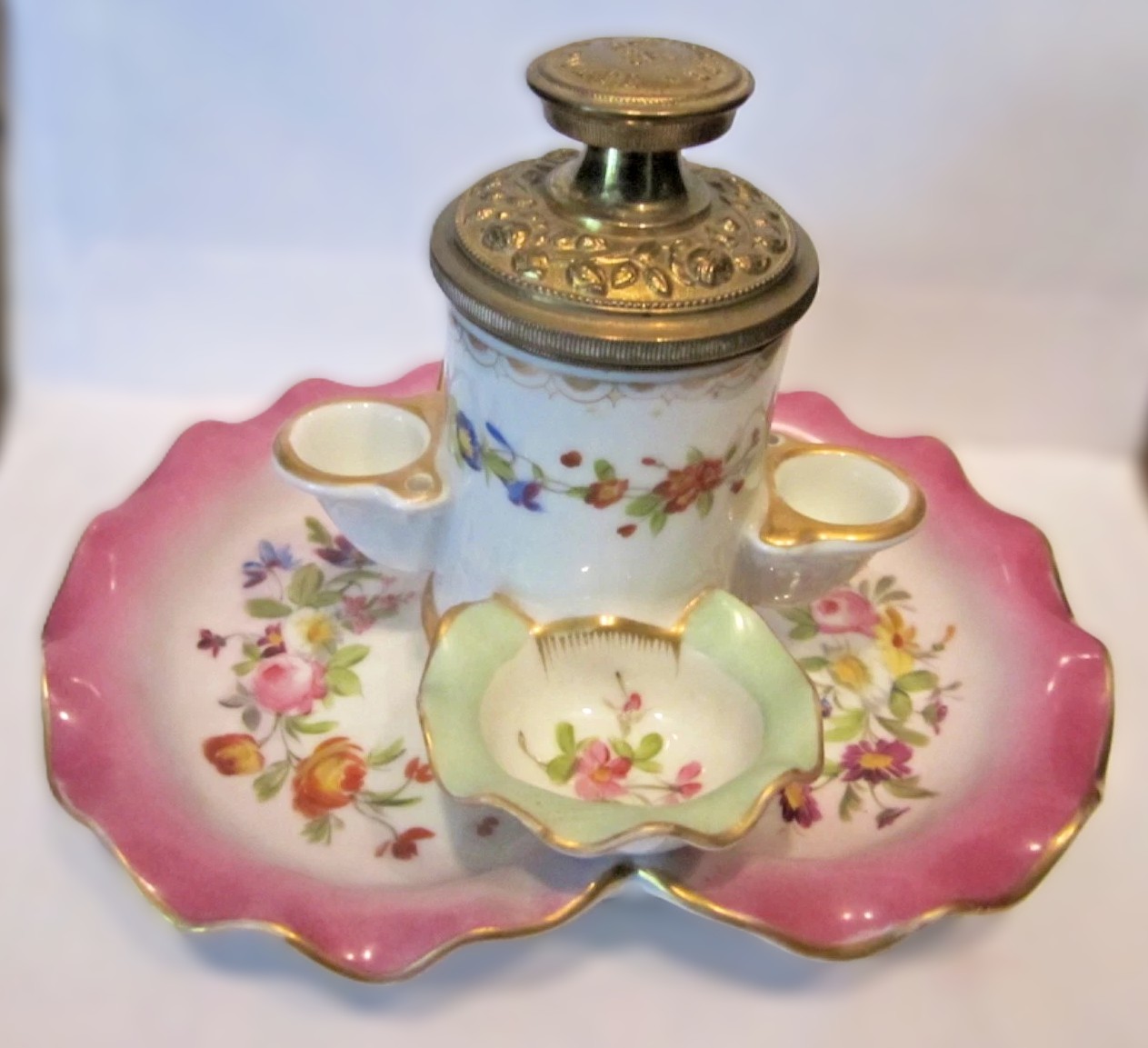
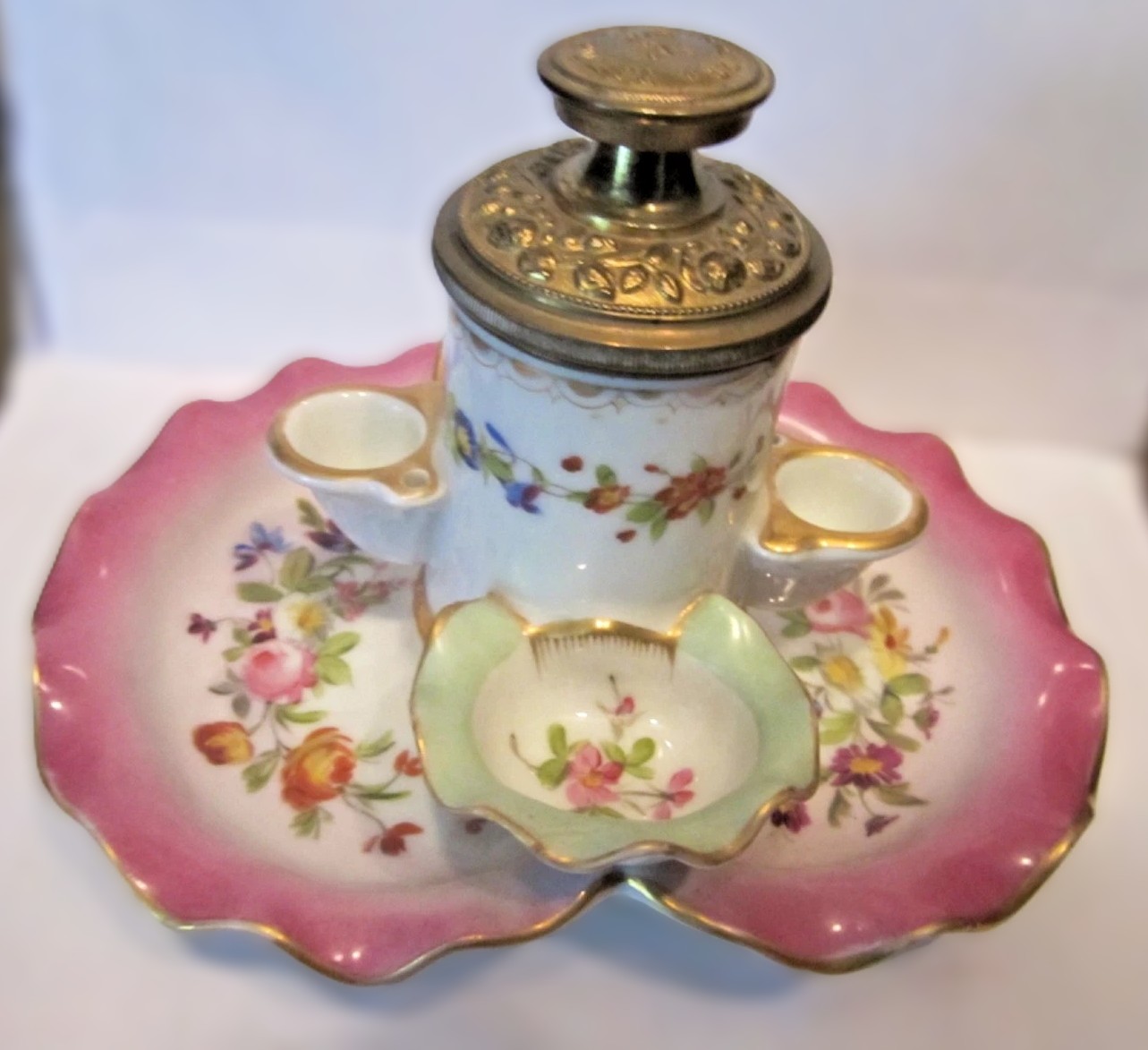
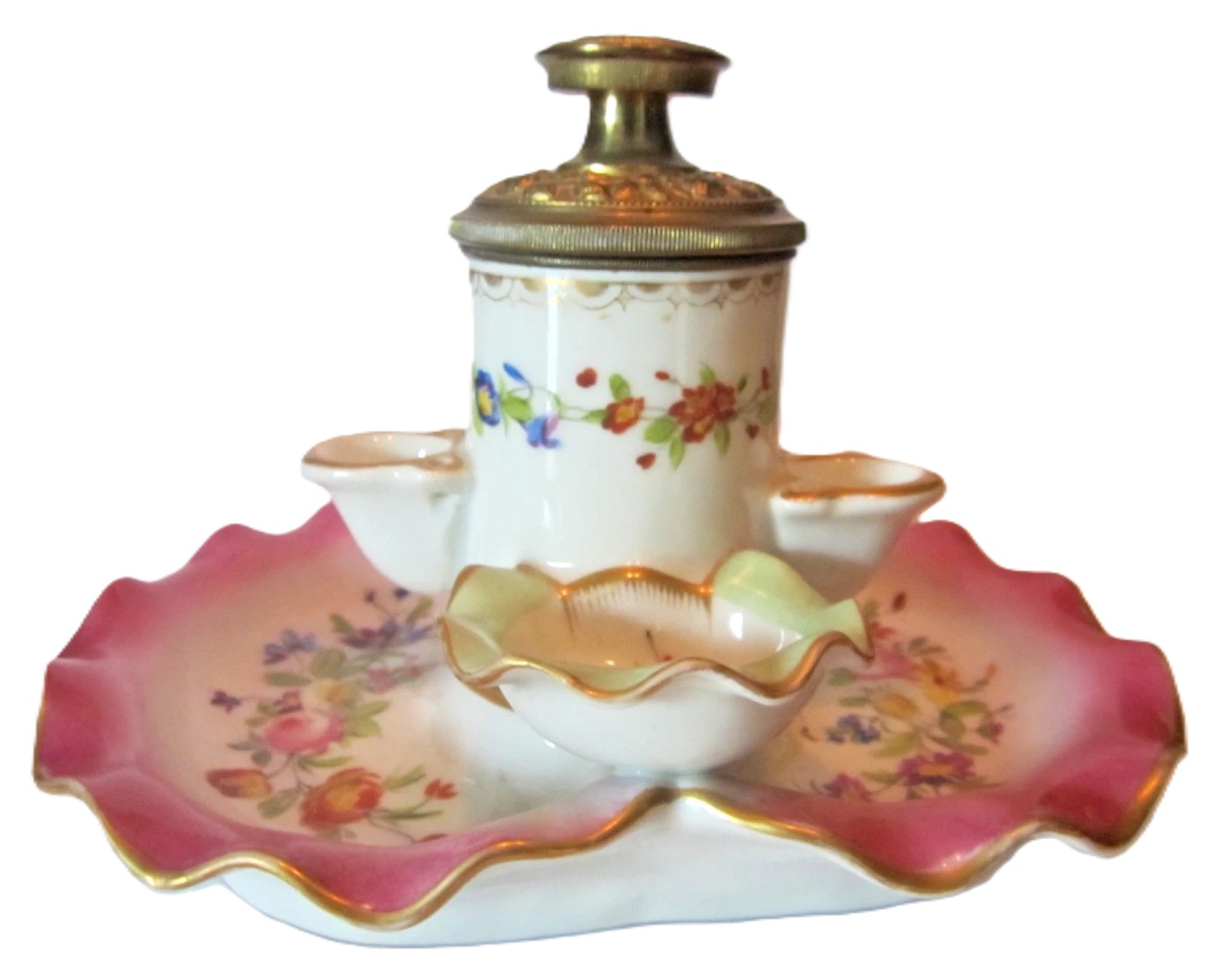
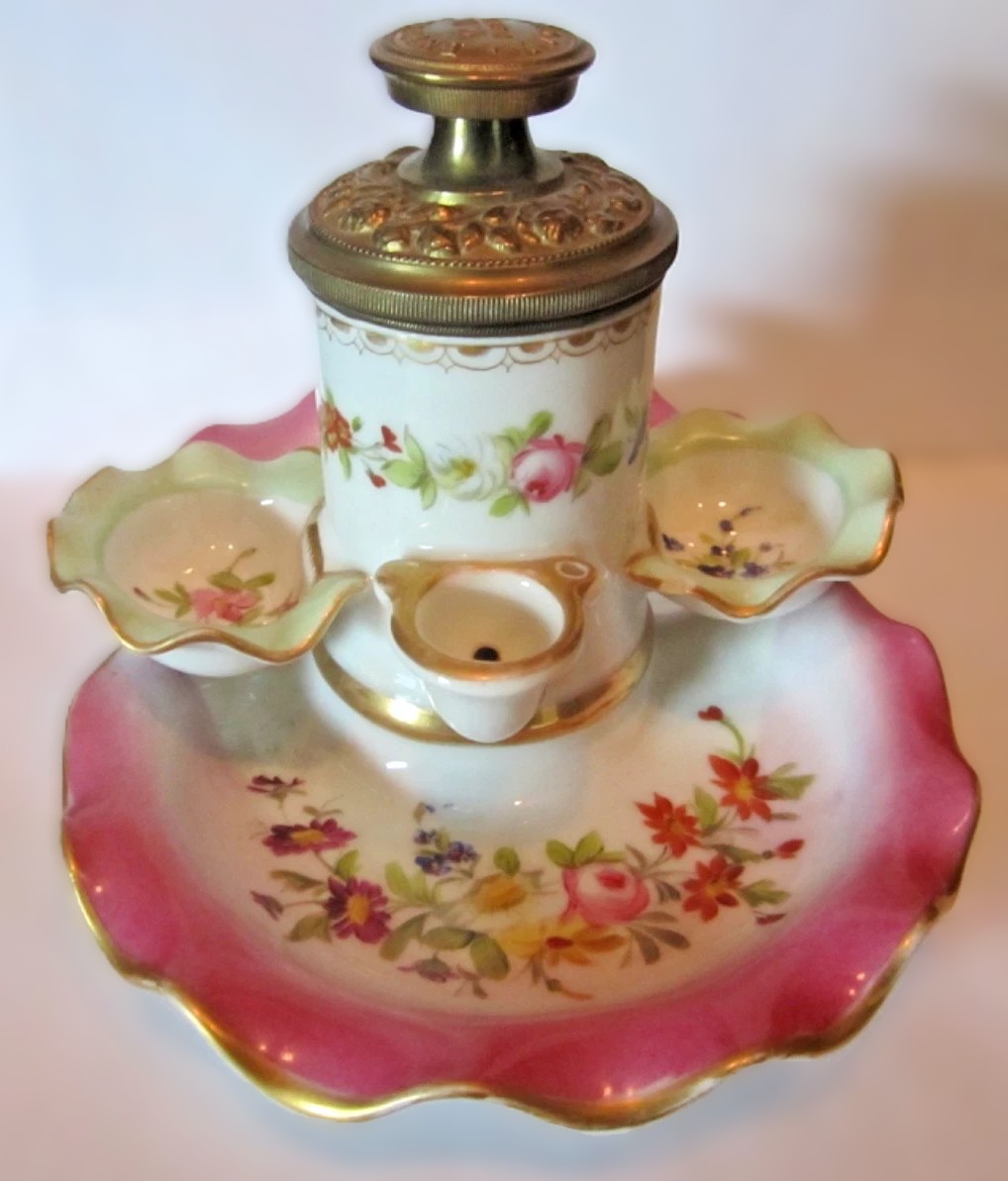
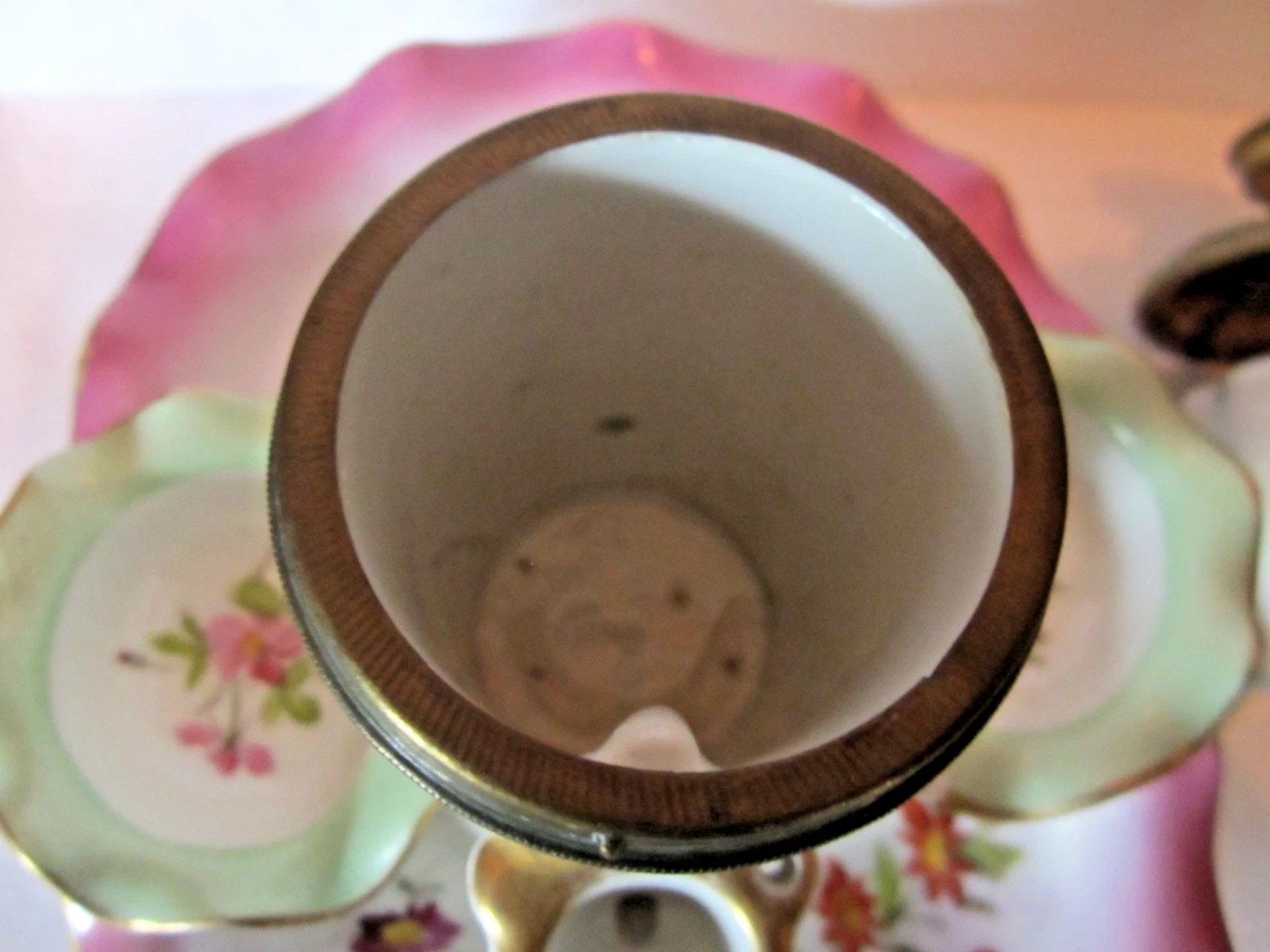
- The Main Cylindrical Reservoir: The large, central porcelain column acts as the primary holding tank for the bulk supply of ink. It is glazed white and decorated with hand-painted floral swags.
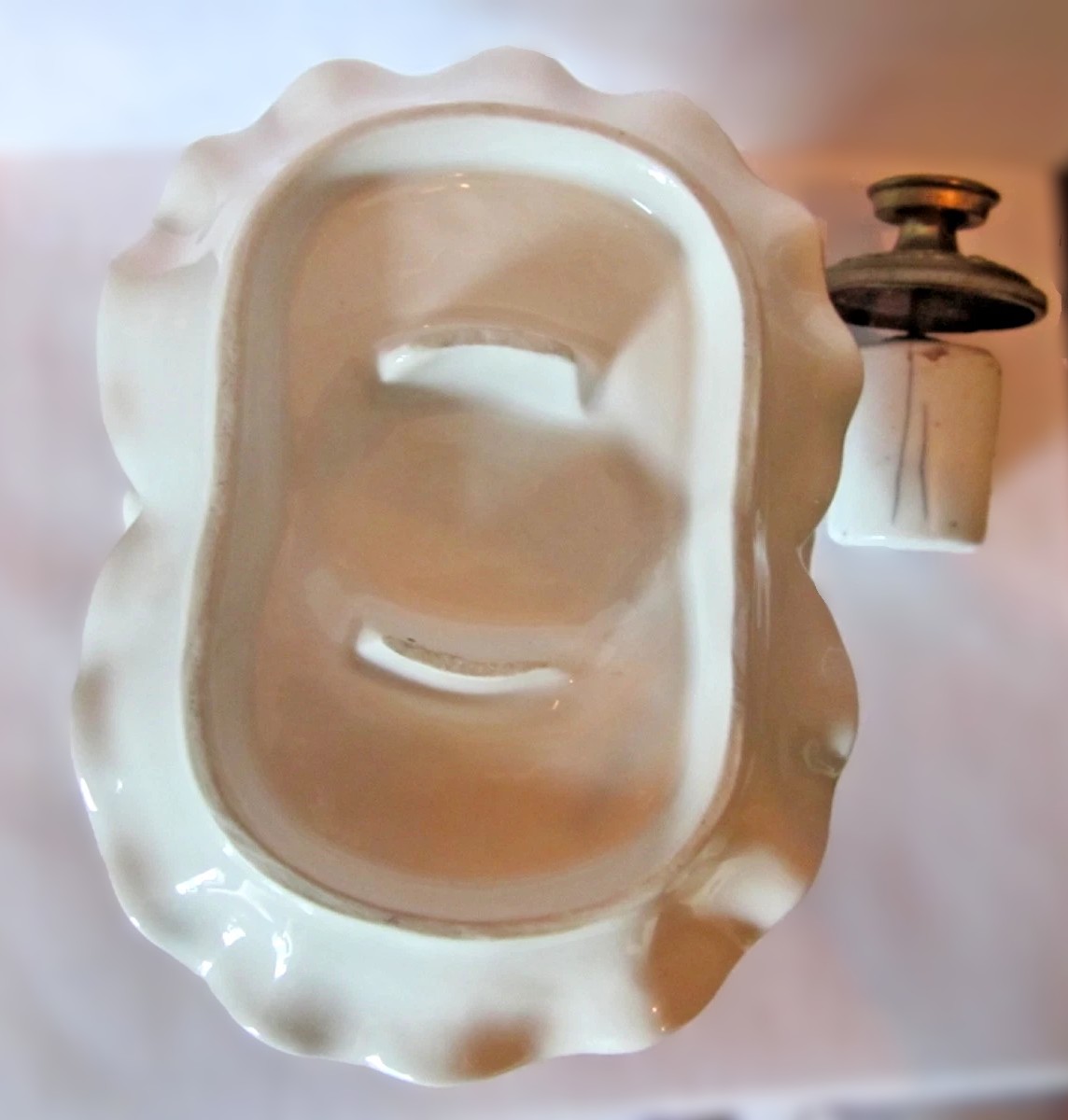
- The Scalloped Base / Pen Tray: The entire central mechanism is integrated into a wide, scalloped porcelain tray featuring a prominent pink border and gilded edges. This base catches accidental drips and serves as a tray to rest dip pens.
- Side dipping Wells (The “Fonts”): Branching out from the central reservoir are smaller, open-topped dipping fonts lined with gold trim. These are the shallow pools where a writer dips their steel or quill pen. Originally there were brass lids, attached to the base with a chain (see the hole where the chain was attached). These are missing from this example.
- Side Sconces / Accessory Cups: Flanking the dipping fonts are small, pale-green ruffled porcelain cups. These secondary cups traditionally held writing implements.
- The Pump / Plunger Assembly: This consists of a heavy decorative brass cap, a threaded central spindle, and a dense, white unglazed ceramic or stone-composition plunger block.
How the Pump Mechanism Works
The “Encrier à Pompe” is a hydrostatic/pressure-driven inkwell. It uses a slow, steady displacement system to regulate the ink level.
- Filling: The internal plunger assembly is unscrewed and lifted entirely out of the central cylinder. Ink is poured directly into the main porcelain reservoir, filling it up to a designated line.
- Sealing: The plunger assembly is reinserted. The heavy brass decorative lid is threaded or firmly pressed down onto the brass collar of the cylinder, creating an airtight seal at the top.
- Displacement via the Turn Knob: The user turns the brass knob at the top. This knob is connected to a threaded internal rod. As the knob is rotated, it mechanically drives the heavy, unglazed white plunger block downwards into the column of ink.
- The Hydrostatic Rise: Because ink is an incompressible liquid, lowering the solid plunger forces the ink level to rise within the central cylinder. This displaced ink is pushed through the small bottom ports and up into the external dipping fonts.
- Regulation: By turning the knob slightly clockwise, ink rises to fill the dipping wells for active writing. When writing is finished for the day, turning the knob counter-clockwise raises the plunger slightly, allowing the ink to recede safely back into the main chamber, away from the air, to prevent drying out and clotting.
Age and Manufacturer
Who Made It?
The piece was manufactured in France, specifically marked from Paris. The initials “T.H.” point to a French manufacturer specializing in patented mechanical deskware. During the mid-to-late 19th century, several Parisian inventors patented variations of the encrier à pompe—most notably makers like Thomas Haron (a prolific French maker of mechanical pump inkwells who held patents for these exact style displacement systems). The porcelain itself is a fine hard-paste porcelain, heavily decorated in the style of Vieux Paris (Old Paris) porcelain, which frequently utilized vibrant pink borders, extensive gilding, and bright botanical motifs.
How Old Is It?
This inkstand dates to the mid-to-late 19th Century, specifically circa 1860–1880.
During this era, steel nib dip pens completely replaced quill pens. Steel nibs required a constant supply of clean, sediment-free ink, sparking a boom in mechanical inkwell patents. By the 1890s and early 1900s, the rise of the fountain pen largely rendered these complex, heavy desk pump inkwells obsolete, making this a classic high-Victorian piece of desktop engineering.
Sold for $140 in May 2026
Content disclaimer. The information posted is the owner’s best knowledge and may not have been vetted by the SOIC. We welcome comments, corrections, and additions, working to make our website information comprehensive and accurate.
Join the Society of Inkwell Collectors (SOIC) – it’s free!
Founded in 1981 as a non-profit organization,
we are documenting inkwells (and accessories).
We’re here to help and inform!