


Inkipedia



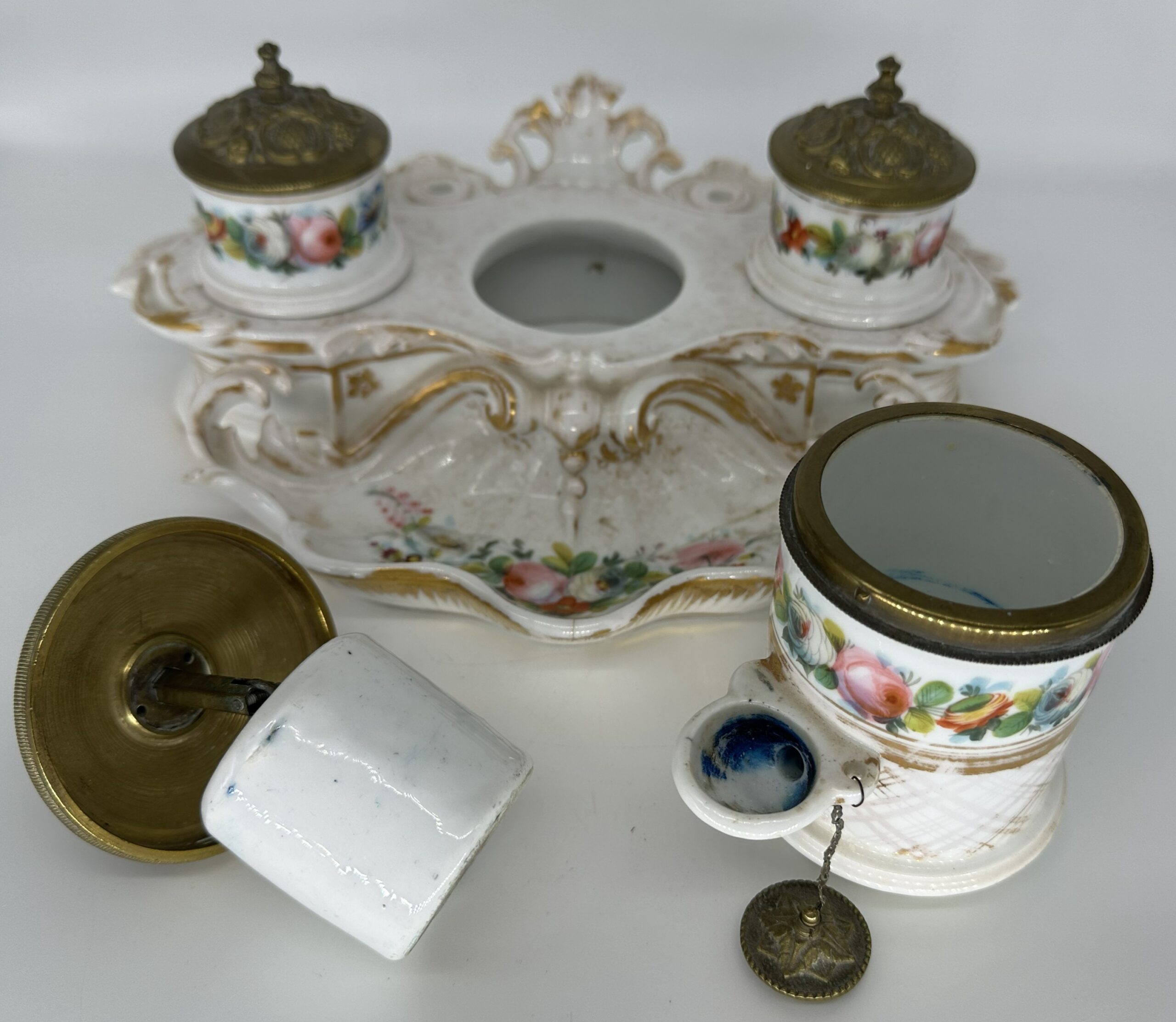
Pump Inkstand with Rococo-Style Tray
| Categories | Mechanical - Pump / Siphon |
| Type | Pump |
| Material | Bronze, Porcelain |
| Markings | Unmarked |
| Manufacturer | Undetermined |
| Origin | France |
| Date or Era | circa 1870 |
| Measuring | 11 ½” x 9” x 8” high |
This piece dates to the mid-to-late 19th century and is made in the “Old Paris” (Vieux Paris) style of the porcelain, and its mechanical brass work.
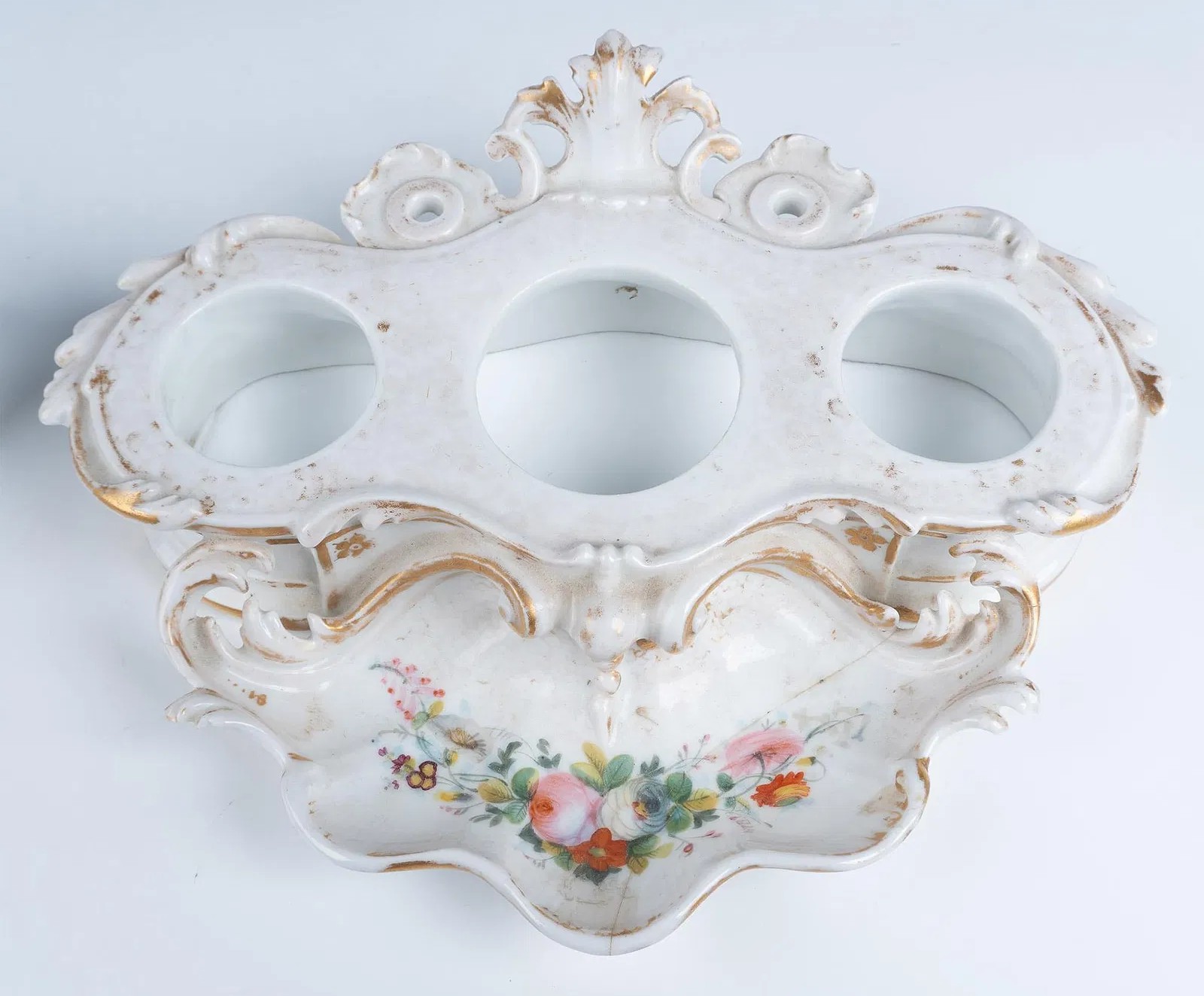
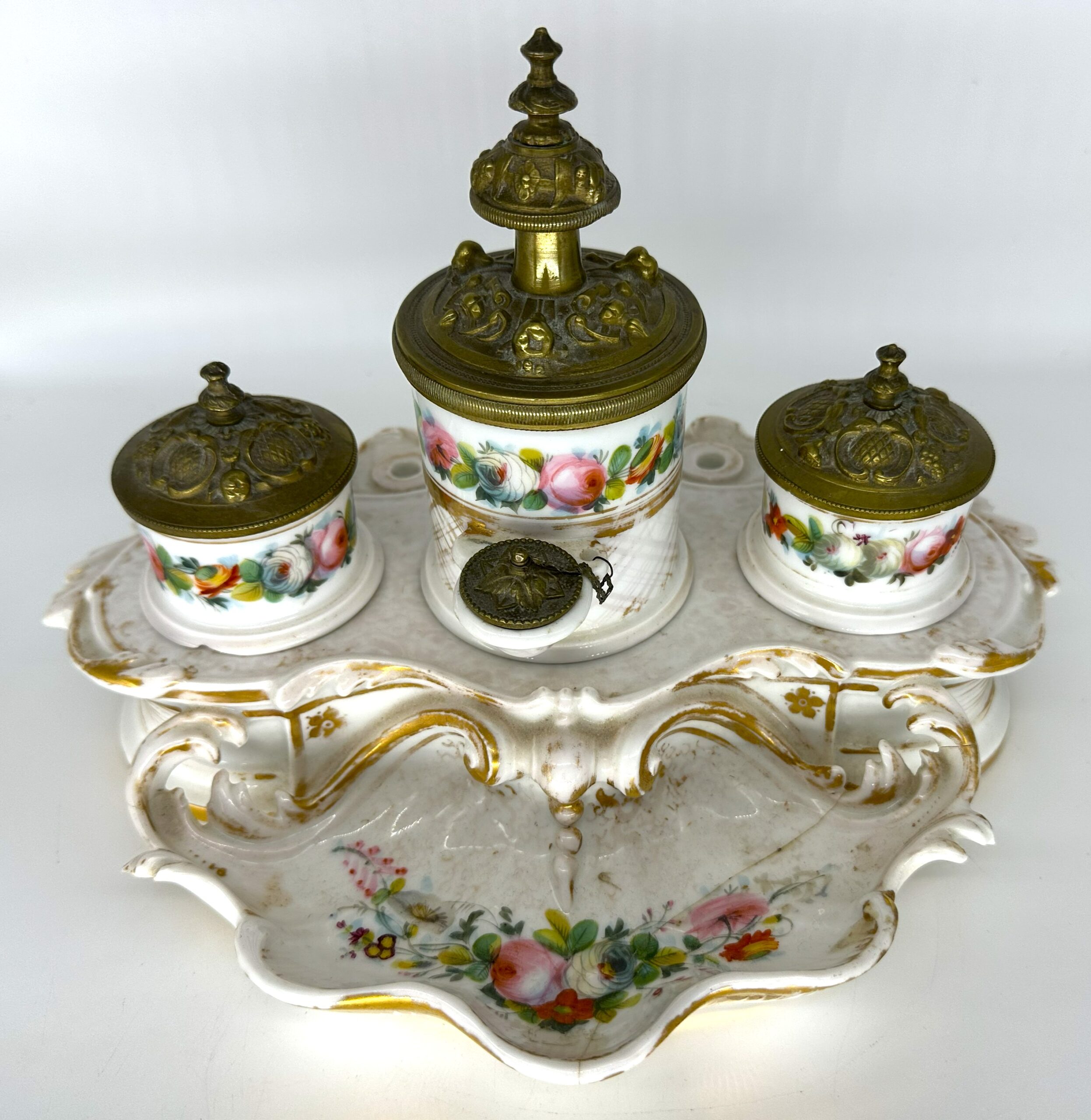
Overview This elaborate porcelain inkstand features a large, irregularly shaped tray supporting a central mechanical inkwell flanked by two matching lidded containers. The porcelain is molded with undulating curves in the Rococo Revival style, embellished with hand-painted polychrome floral bouquets (including roses, tulips, and forget-me-nots) and accented with heavy gilding.
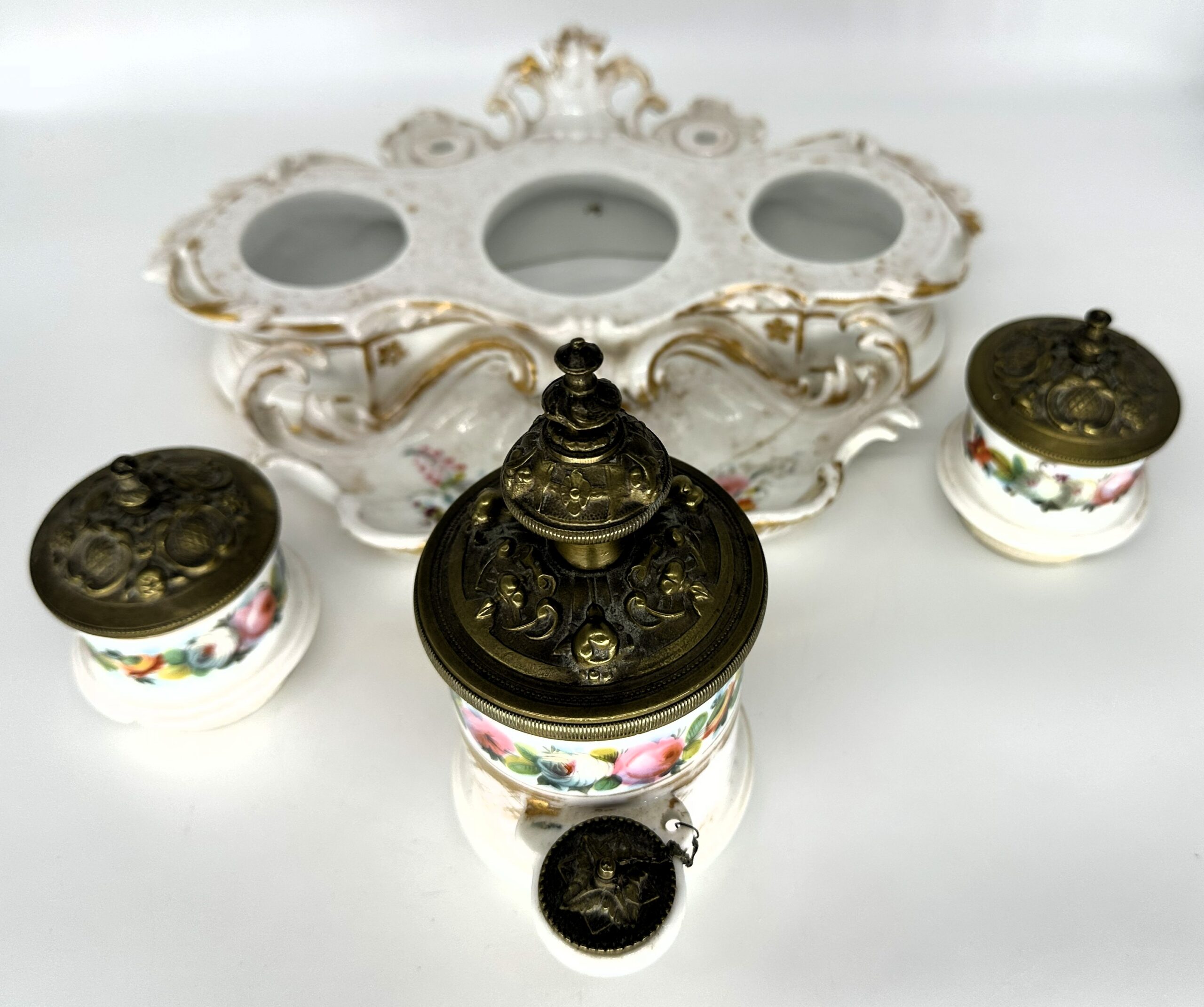
The Tray The base is a substantial porcelain tray featuring molded C-scrolls and stylized shell motifs. It contains three recessed wells designed to securely hold the inkwell and side pots. The front of the tray dips forward to form a pen rest or shallow tray for holding sealing wax or other desk accessories.
The Components
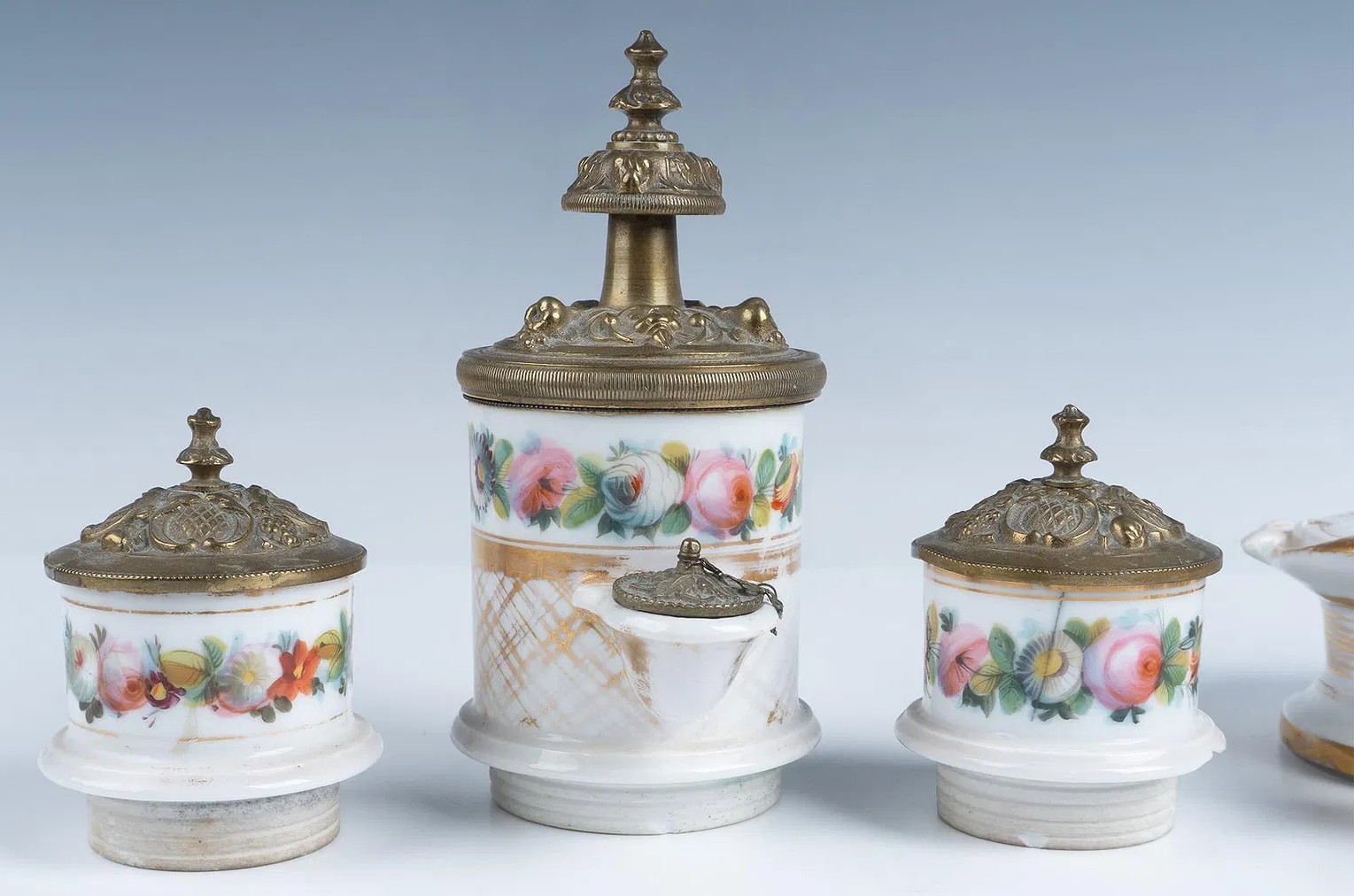
- Central Inkwell: The centerpiece is a large cylindrical reservoir featuring a distinctive gilt trellis or lattice pattern overlaying the white porcelain. It is topped with an ornate brass collar and a screw-turn lid with the finial mechanism used to lower or raise the plunger. Attached to the front is a functional dipping font with a small, hinged brass cover secured by a safety chain.
- Side Containers: Flanking the central well are two smaller matching porcelain pots with ornate brass lids. Historically, in a stand of this type (an encrier), pots might hold pounce (a fine powder used to dry ink) or sand, or wafer seals (used for sealing letters).
The Mechanical “Pump” System The inkwell utilizes a hydrostatic displacement mechanism (often called a “fountain” or “pump” inkwell) designed to keep the ink fresh and control the depth of the fluid.
The mechanism functions as follows:
- The Internal Structure: Inside the main porcelain reservoir hangs a large porcelain plunger (or displacement block) suspended from the threaded brass central shaft.
- Raising the Ink (Usage): To use the inkwell, the user rotates the brass finial at the top. This action screws the internal porcelain plunger downward into the reservoir. As the plunger takes up space inside the cylinder, the ink is displaced and forced upward through a small channel into the dipping font, making it accessible for the pen.
- Lowering the Ink (Storage): When finished, the user rotates the finial in the opposite direction to raise the plunger. This releases the displacement, causing the ink in the dipping font to drain back into the main sealed reservoir.
Benefits of Design: This ingenious system prevented the ink from evaporating, kept dust out of the main supply, and prevented the user from overloading their quill or nib with too much ink, as the depth of the font could be micro-adjusted.
Estimated Value: $200
Content disclaimer. The information posted is the owner’s best knowledge and may not have been vetted by the SOIC. We welcome comments, corrections, and additions, working to make our website information comprehensive and accurate.
Join the Society of Inkwell Collectors (SOIC) – it’s free!
Founded in 1981 as a non-profit organization,
we are documenting inkwells (and accessories).
We’re here to help and inform!