

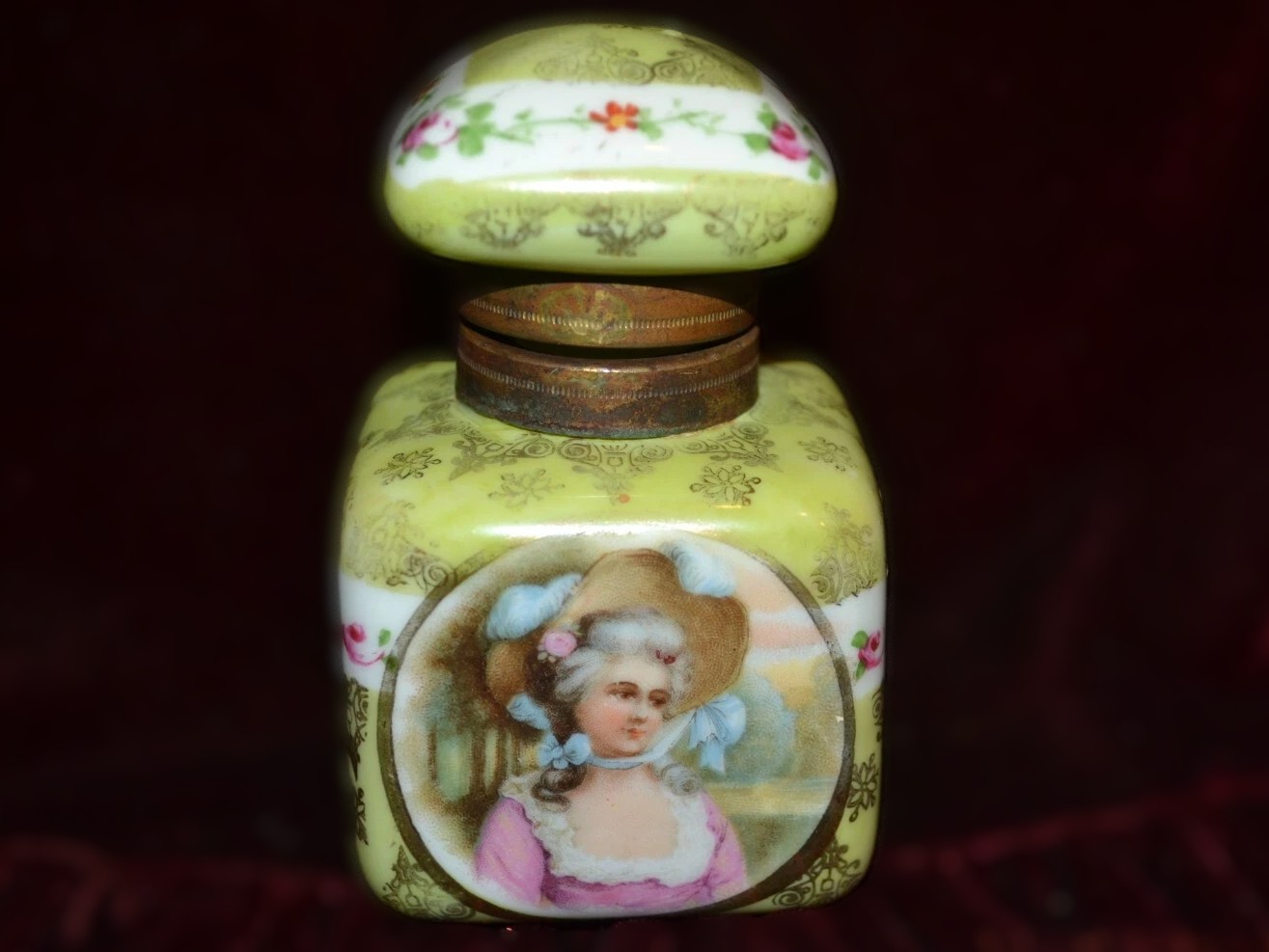
Porcelain Inkwell Featuring an Aristocratic Lady
| Categories | Ceramics/Porcelain non-Figural |
| Material | Porcelain |
| Markings | Unmarked |
| Manufacturer | Undetermined |
| Origin | Undetermined |
| Date or Era | circa 1890 |
| Measuring | 2” x 2” x 3 ½” high |
Description
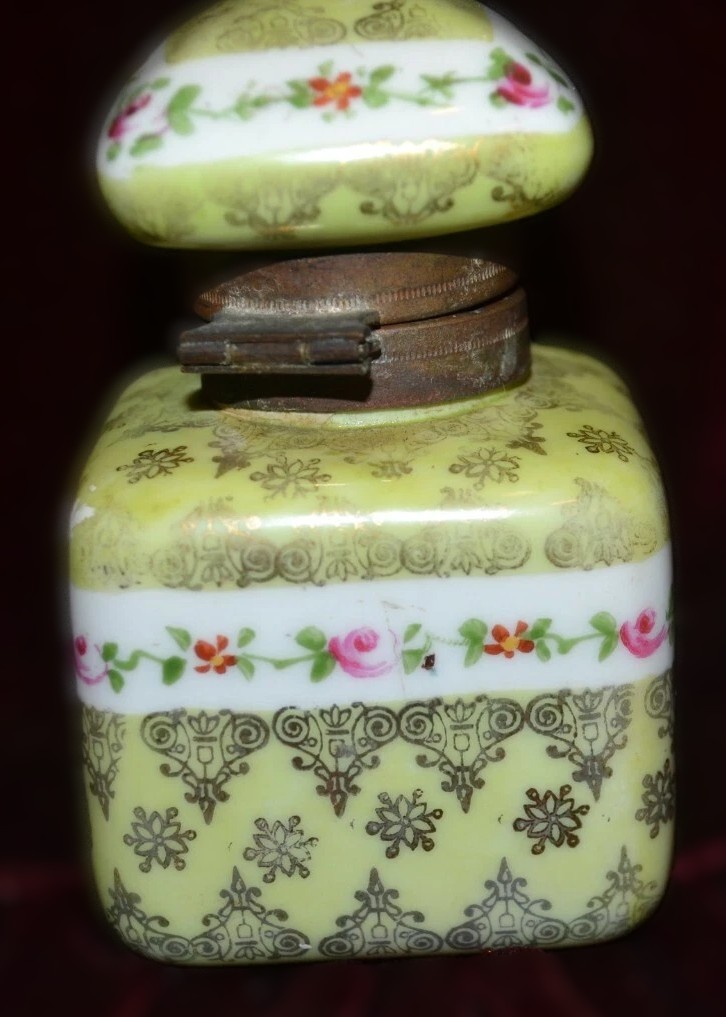
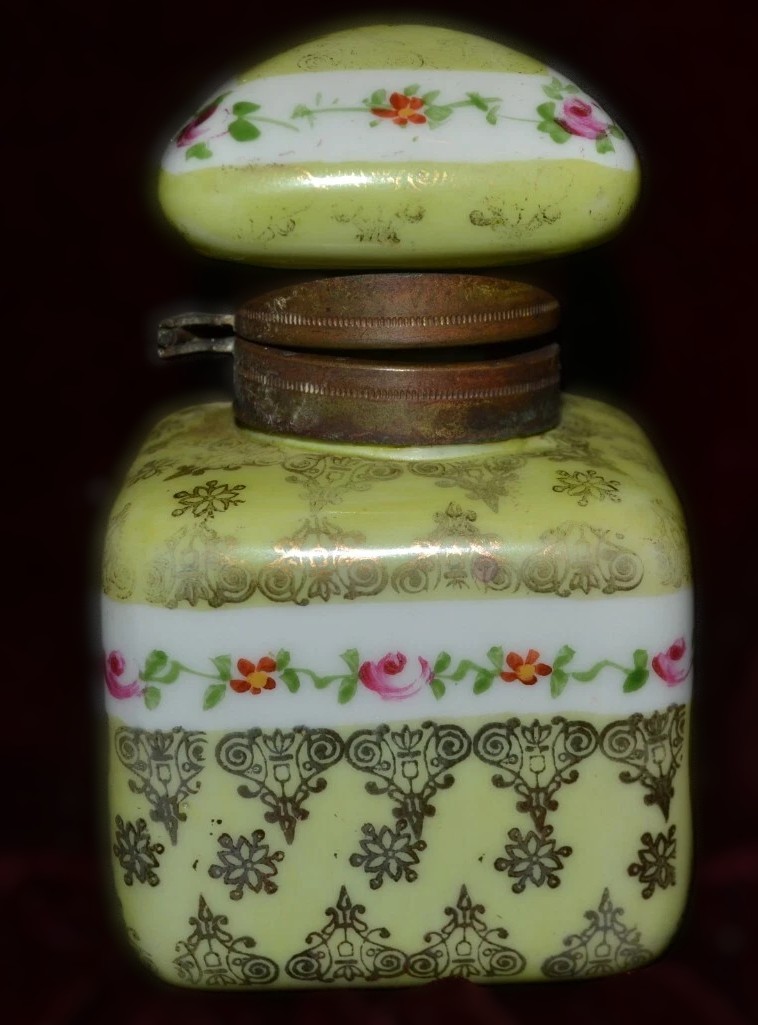
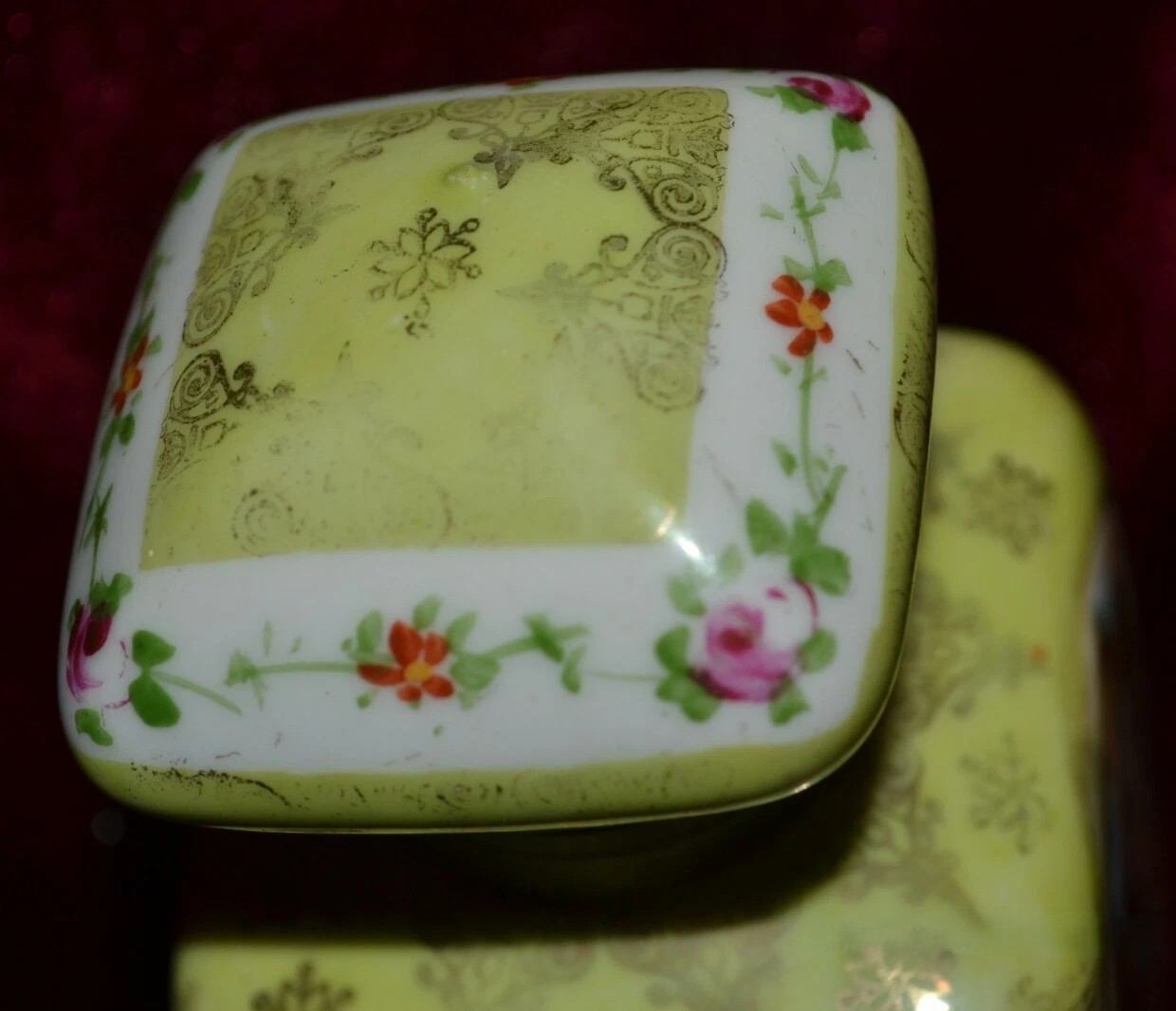
- Body and Shape: The inkwell features a square, upright porcelain body paired with a matching domed, square-shaped lid.
- Color Palette & Accents: The dominant ground color of the porcelain is a soft, buttery pale yellow, contrasted by horizontal bands of bright white porcelain.
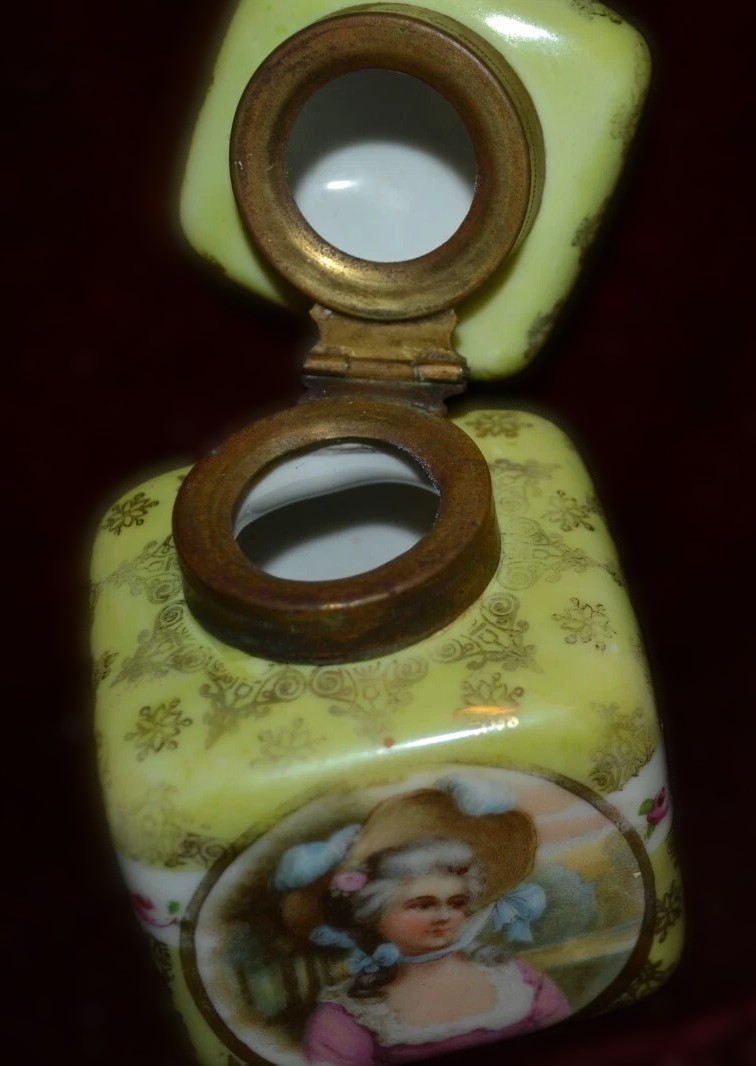
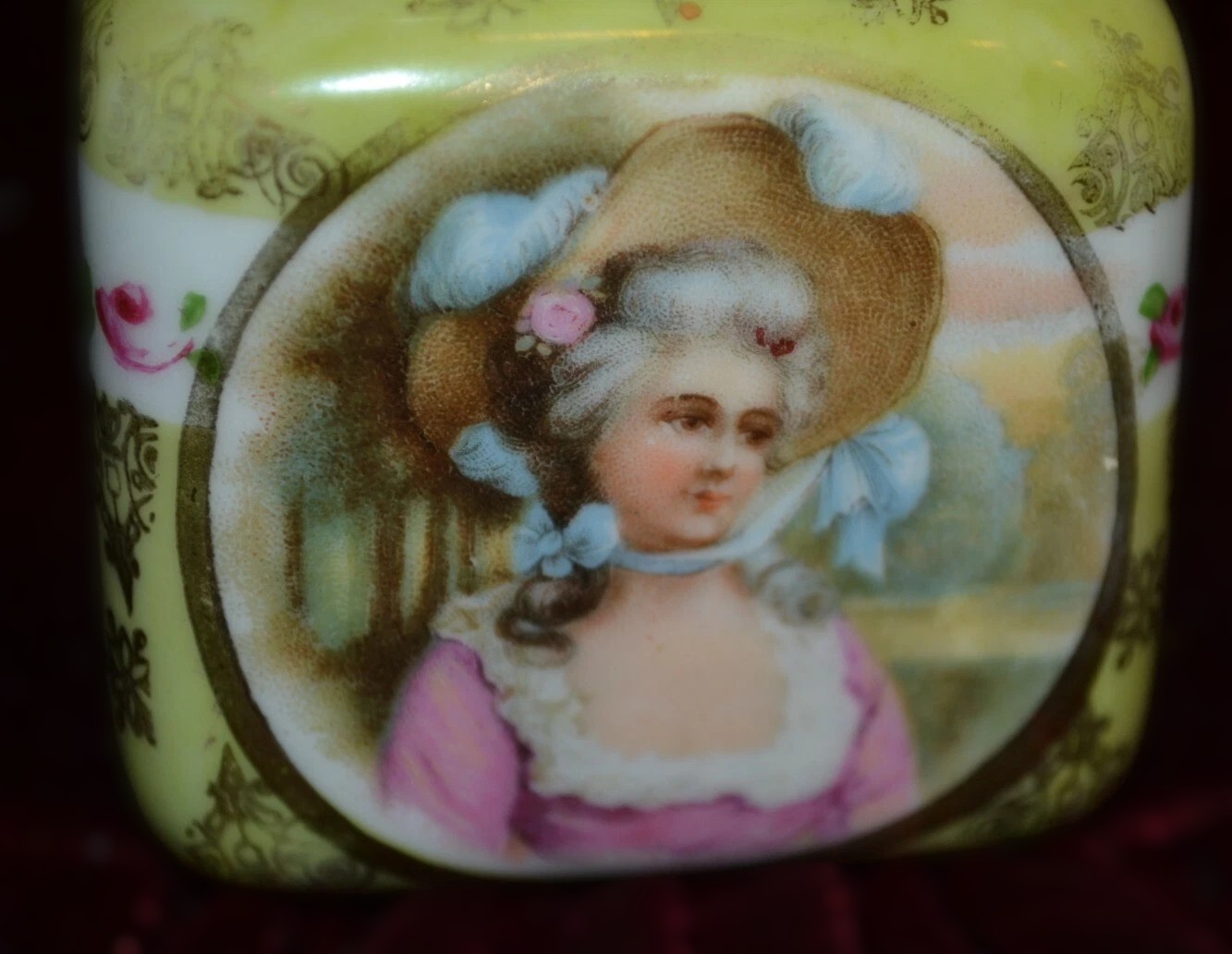
- The Portrait: One side of the square body displays a medallion portrait of an 18th-century style aristocratic woman (reminiscent of the Georgian or French Rococo era) wearing a large, wide-brimmed hat adorned with blue bows and feathers, a pink dress with a white lace-trimmed collar, and powdered hair.
- Gilding and Floral Borders: The yellow fields are embellished with gold-gilt scrollwork, scroll motifs, and star-burst or floral patterns. The white horizontal bands encircling both the body and the lid are decorated with delicate, hand-painted polychrome floral garlands featuring pink roses and small red blossoms connected by green leafy vines.
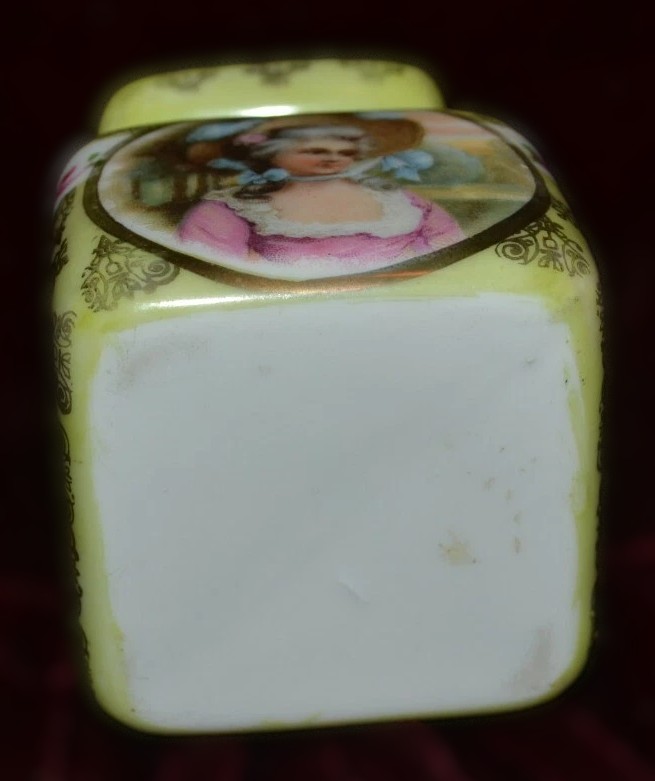
- Hardware: It has a brass collar and a hinge connecting the body to the lid. The underside is flat and unglazed around the recessed base rim, unmarked.
The Transferware (Decalcomania) Process
The portrait of the woman is produced using a transfer-printing method—specifically ceramic decalcomania (or lithographic transfer), which became widespread in the mid-to-late 19th century.
The process works as follows:
- Engraving or Lithography: The original artwork (the portrait) was initially created by an artist as a multi-color lithographic print or engraving.
- Printing on Special Paper: Instead of printing on regular paper, the image was printed using ceramic enamel colors onto a special duplex paper or gelatin-coated tissue paper, often backed with a thin layer of collodion or gum.
- Transferring to the Bisque or Glazed Ware: The printed ceramic design was slid or pressed face-down onto the glazed (or sometimes unglazed) porcelain surface. The paper backing was dampened and slid away, leaving the colored metal-oxide pigment film adhering smoothly to the curved contours of the porcelain body.
- Firing (Kiln Fixation): The piece was then placed back into a muffle kiln and fired at a relatively low temperature. This burns away any organic residues and causes the enamel colors to melt slightly and fuse permanently into the glossy glass glaze of the porcelain.
While the portrait was transferred, details like the surrounding gold gilding and the small hand-painted rose garlands on the white bands were frequently touched up or entirely applied by hand afterward.
Place of Origin (Where Was It Made?)
Because the piece is entirely unmarked, pointing to a single definitive factory is impossible, but the style points strongly toward Continental Europe, most likely Germany or Austria (such as factories in the Bavaria or Carlsbad regions), or potentially France (Limoges).
During the late 19th and early 20th centuries, numerous independent decorating studios (Abglühbuden or decorating shops) bought blank white porcelain bodies from major manufacturers (like Rosenthal, Hutschenreuther, or various Limoges makers) and finished them with colored grounds, transfer portraits, and heavy gilding for the export market. The aesthetic—combining pastel yellow grounds, rococo revival portraits, and delicate floral reserves—was popular across Europe and America during the Victorian and Edwardian eras.
Date of Manufacture (When Was It Made?)
This style of porcelain desk accessory dates to the late 19th to early 20th century, specifically c. 1880–1910.
Several clues point to this timeframe:
- The Decal Technique: While transfer printing existed earlier, the multi-color, highly detailed photographic style of ceramic decalcomania seen in the portrait blossomed during the last quarter of the 19th century.
- Aesthetic Movement & Revival Styles: The Victorian and Edwardian periods saw a massive craze for “Revival” aesthetics, particularly looking back at 18th-century French court styles (Marie Antoinette motifs, pastoral scenes, and Gainsborough-style hats).
Sold for $138 in September 2026
Content disclaimer. The information posted is the owner’s best knowledge and may not have been vetted by the SOIC. We welcome comments, corrections, and additions, working to make our website information comprehensive and accurate.
Join the Society of Inkwell Collectors (SOIC) – it’s free!
Founded in 1981 as a non-profit organization,
we are documenting inkwells (and accessories).
We’re here to help and inform!