

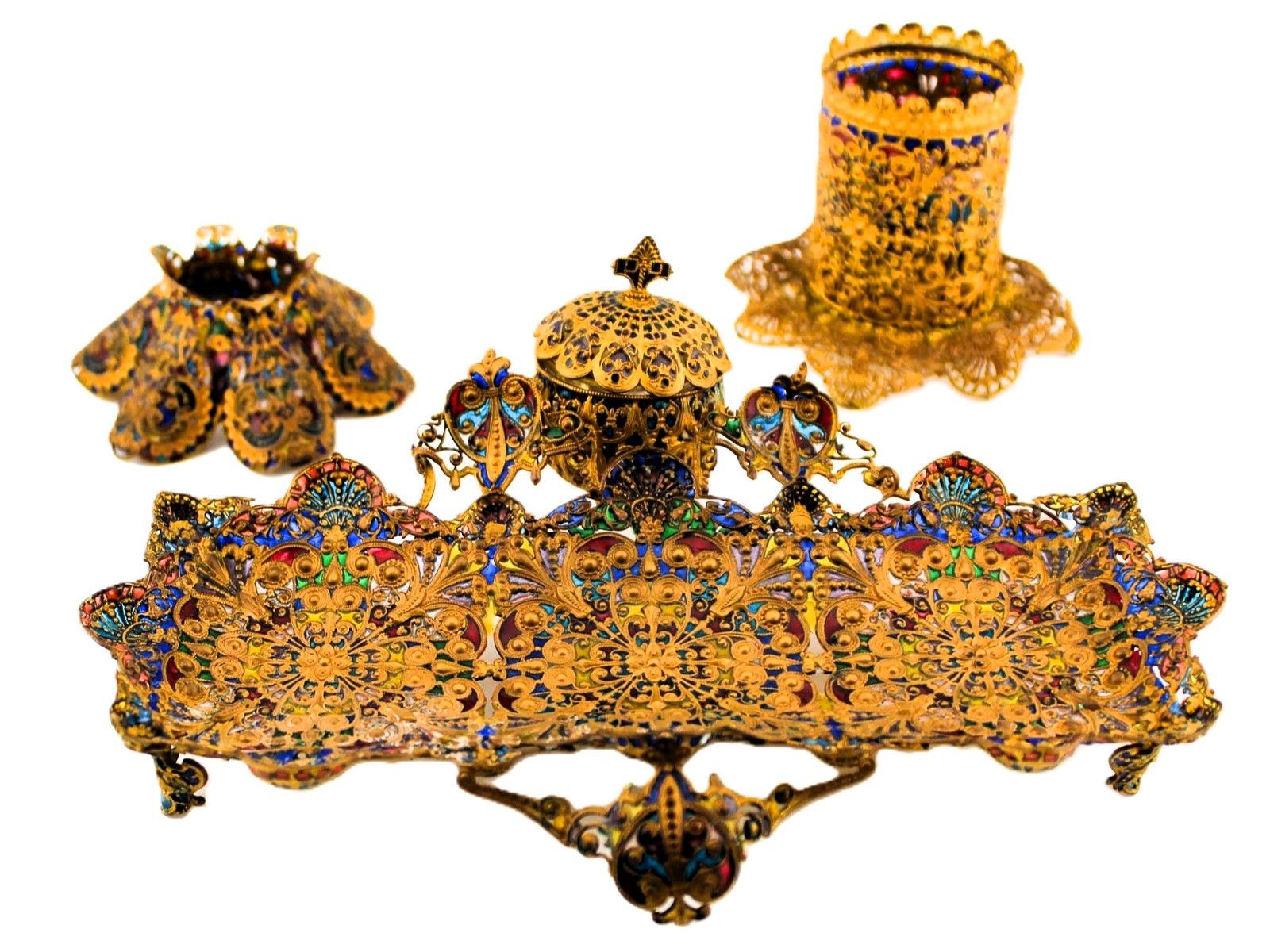



Plique-à-jour Enameled Desk Set
| Categories | Enameled Metal |
| Material | Enameled Brass/Bronze/Metal |
| Markings | Unmarked |
| Manufacturer | Undetermined |
| Origin | Russia |
| Date or Era | circa 1890 |
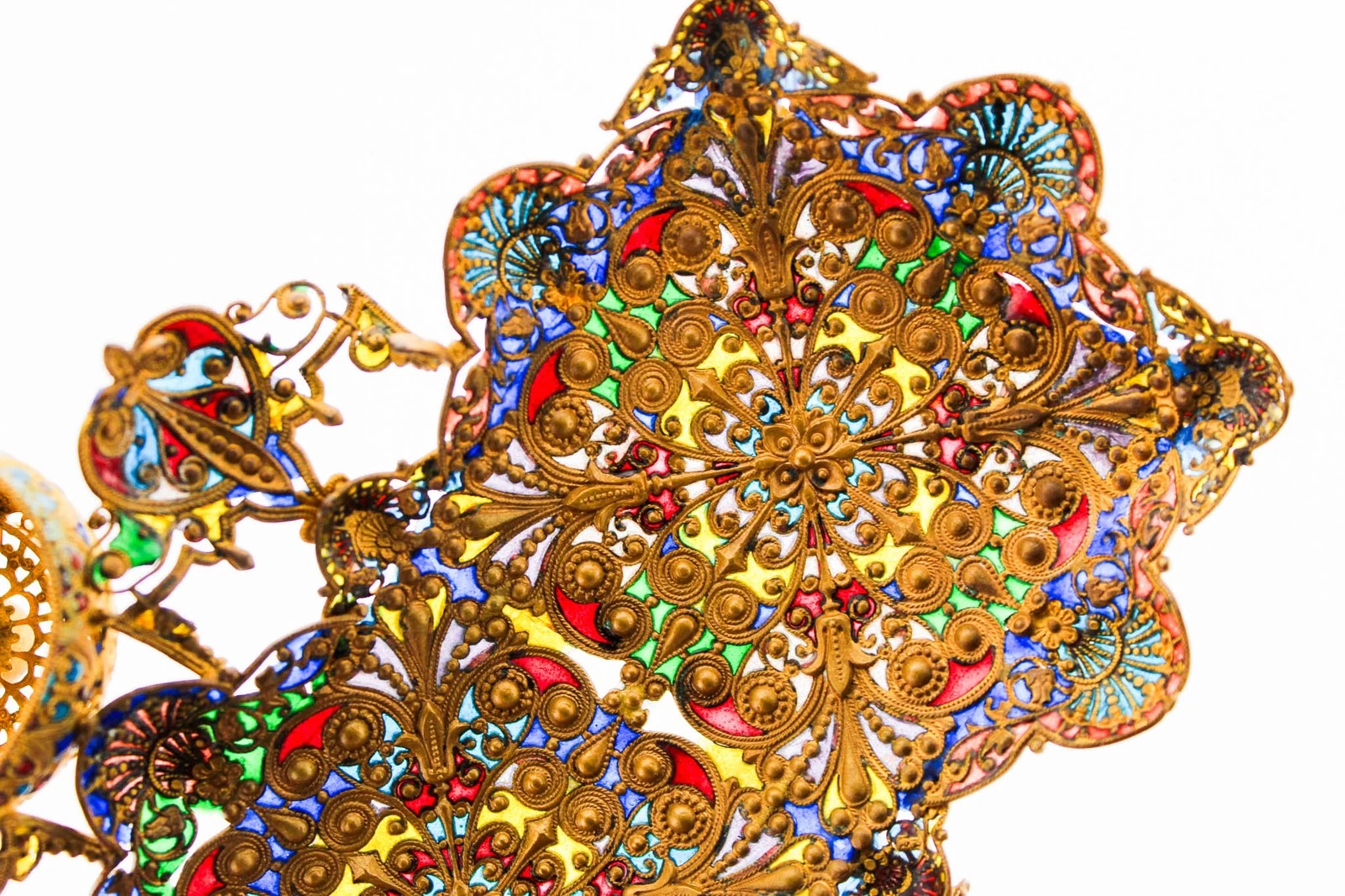
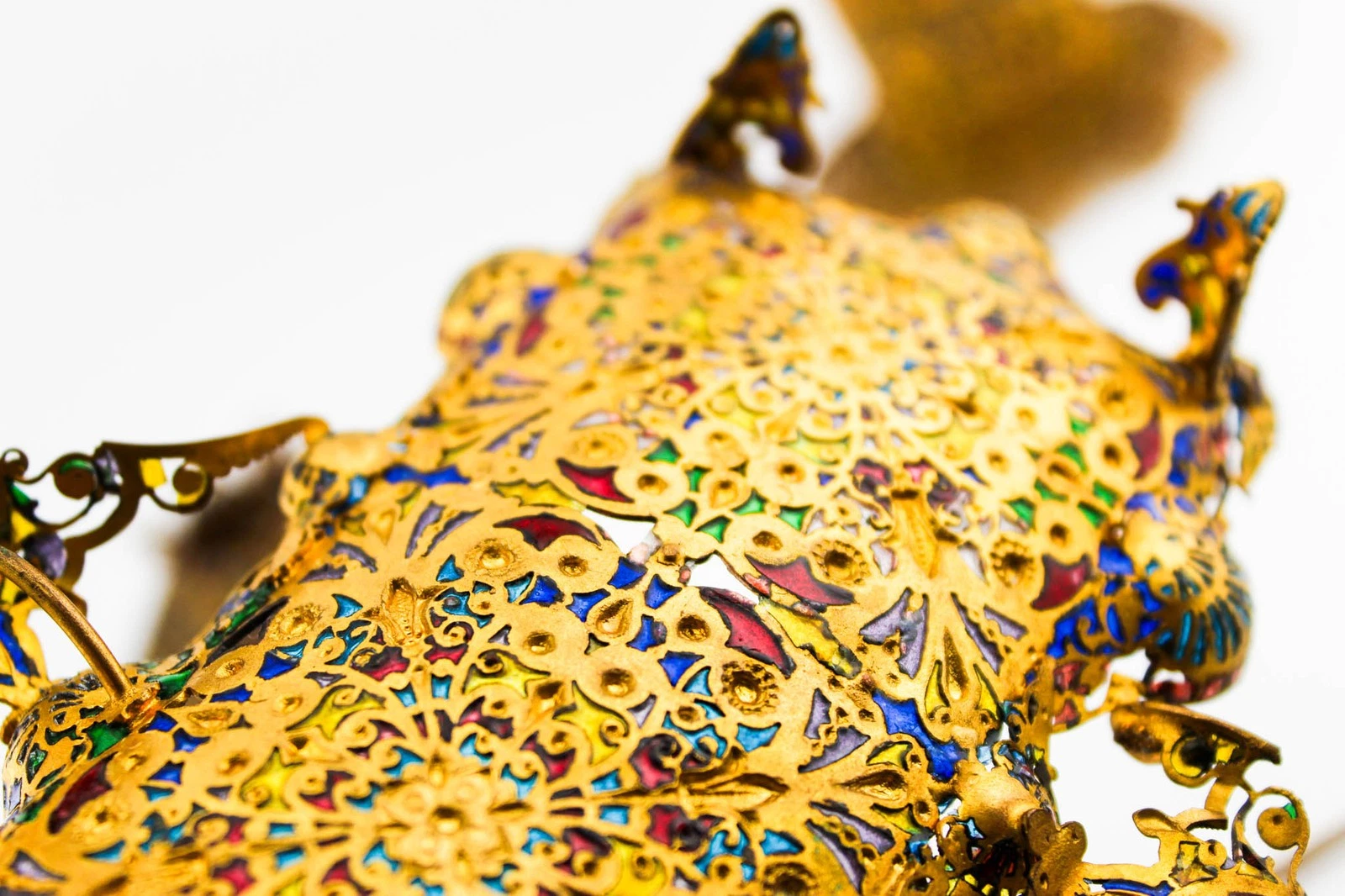
This is an extraordinary desk set. The craftsmanship is intricate, and it uses a specific technique that creates “gemstone” effects.
Identification of the Pieces
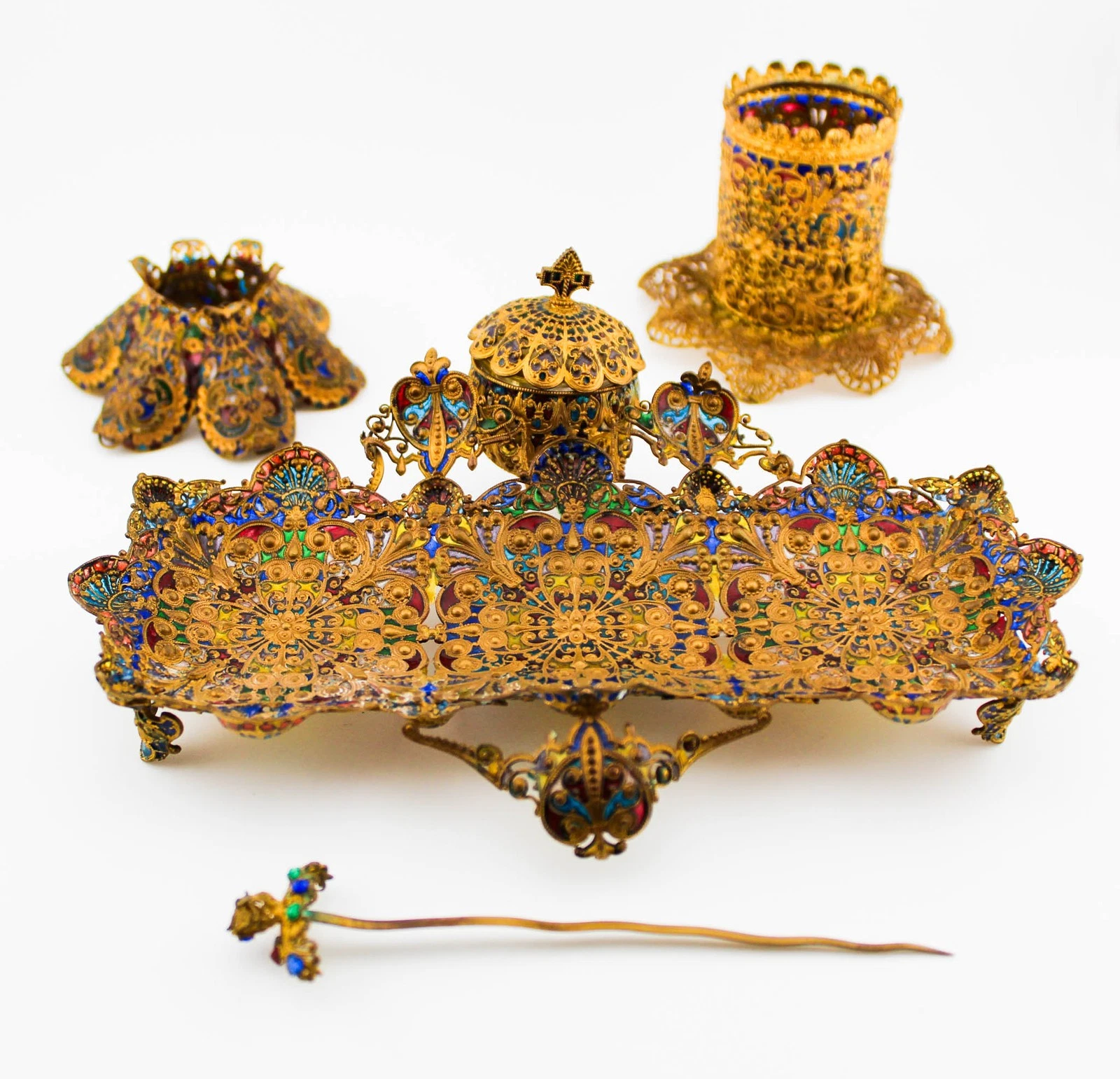
This is a multi-piece desk set comprising:
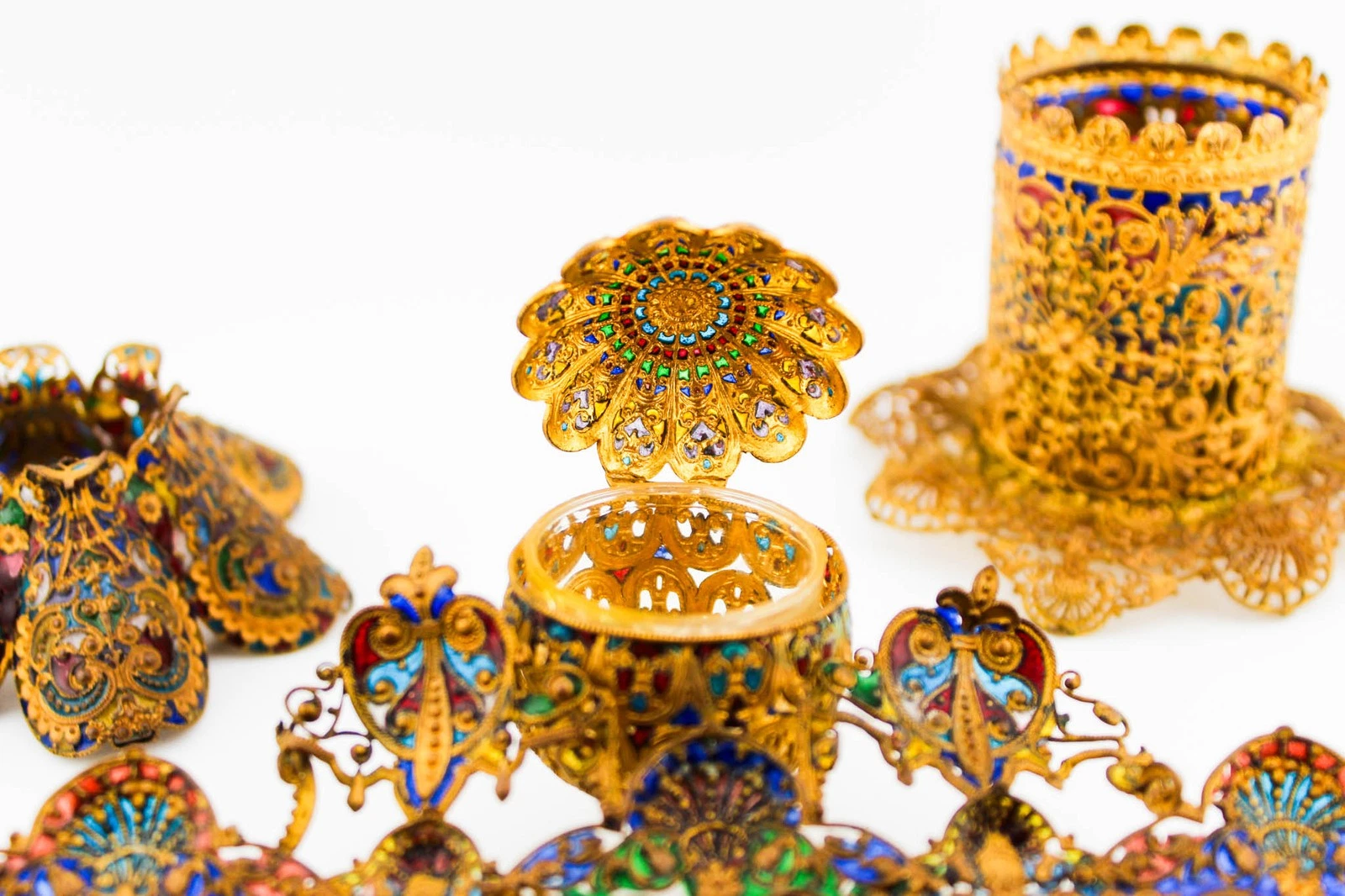
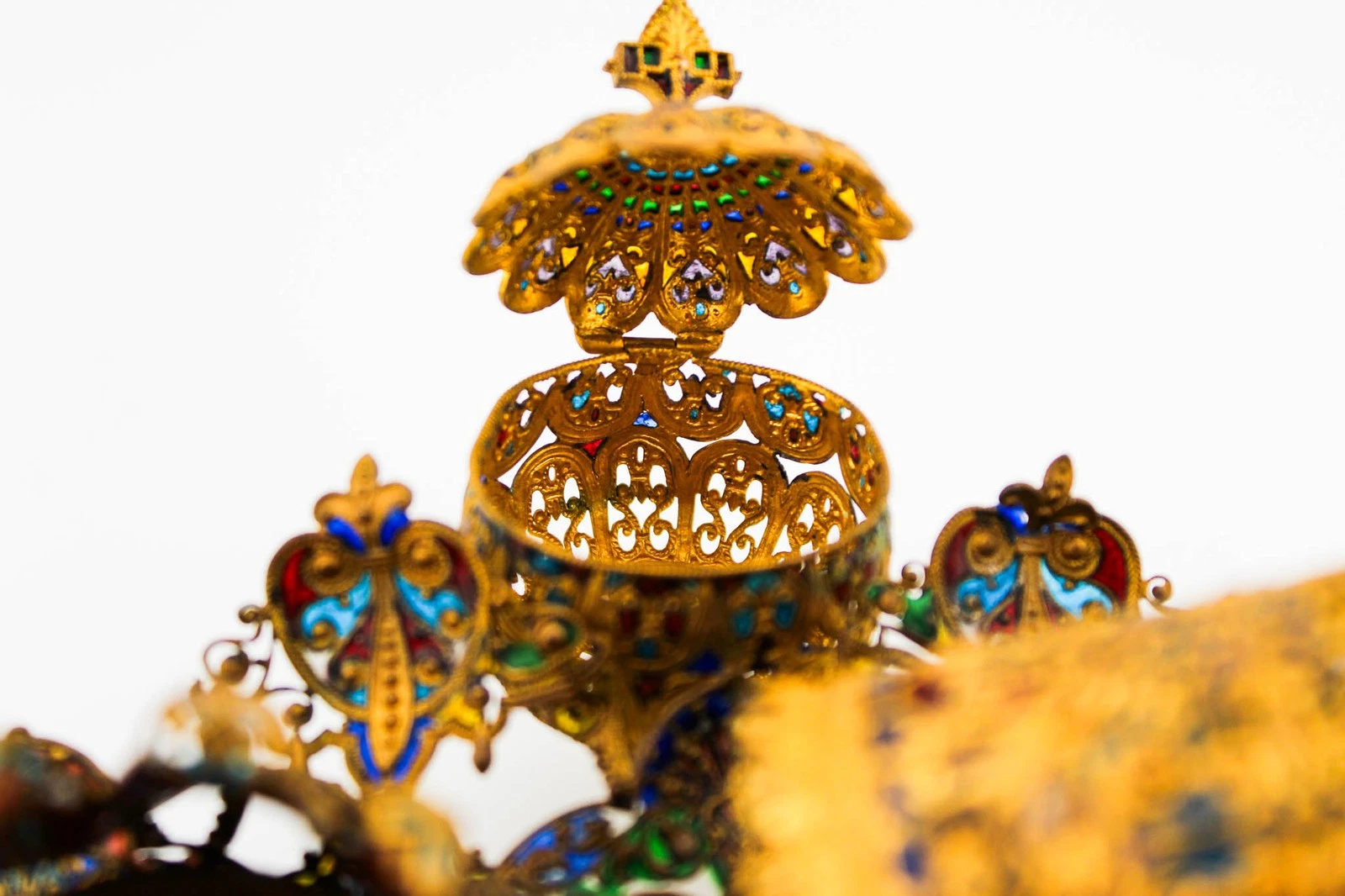
- The Inkstand (Tray and Inkwell): The main rectangular tray features a built-in central inkwell. The lid is hinged and contains a clear glass liner to hold the ink.
- The “Letter Opener” (Stiletto/Paper Knife): This long, thin tool with a decorative hilt is used for piercing or opening envelopes.
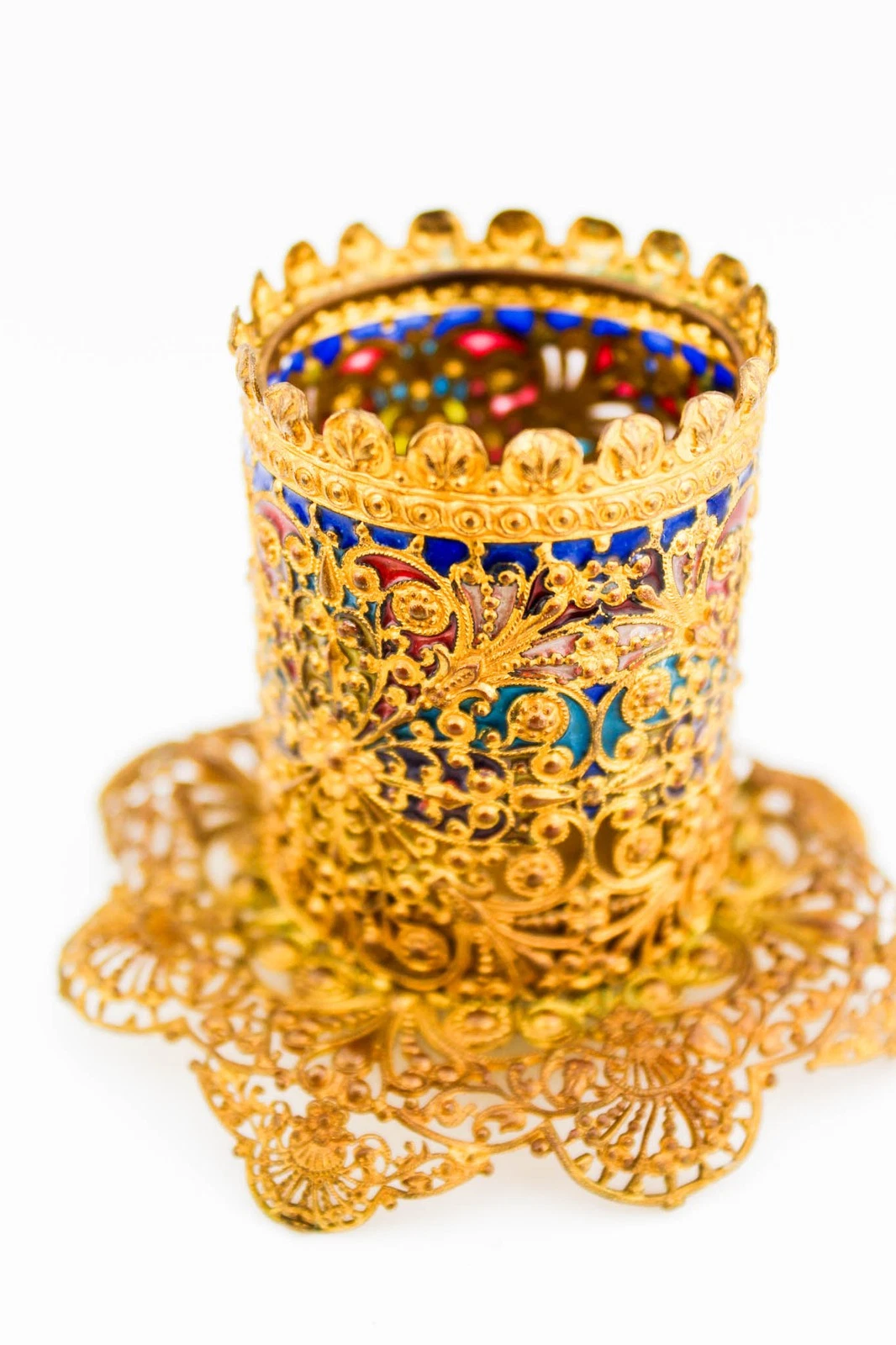
- The Cylindrical Pot: Perhaps a wax jack or a taper holder. Before gummed envelopes, letters were sealed with wax. This would hold a coil of wax or a small candle to melt the sealing wax.
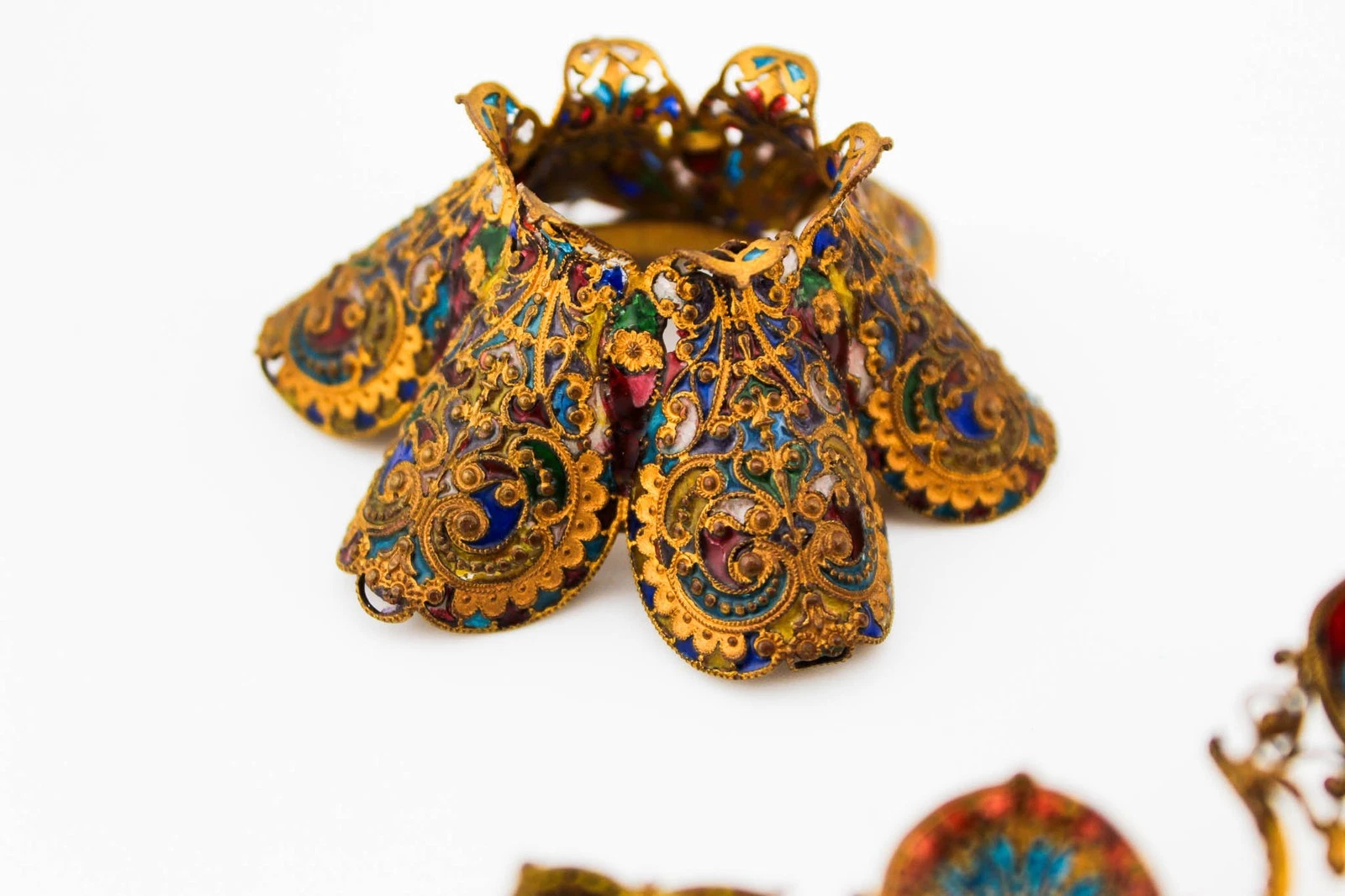
- The “Blossom” Shaped Item: This is most likely a pen wiper or a blotter base. Usually, these had horsehair or fabric inside the “petals” for a writer to clean their nib.
Materials and Technique: Plique-à-jour Enamel
This is a highly difficult technique called plique-à-jour (French for “letting in daylight”).
The Process
- The Framework: The pieces are made of gilt silver (silver washed in gold) or high-quality brass/bronze filigree.
- The Enamel: Unlike standard cloisonné, where enamel is backed by metal, plique-à-jour has no backing. The enamel is applied into the open “cells” of the wirework.
- The Effect: When held to the light, it looks like a miniature stained-glass window. The “gemstones” you see are actually translucent glass pastes fired into the metal framework.
Origin and Age
This set is likely Russian, dating to the late 19th or very early 20th century (circa 1880–1910).
- Style: The heavy use of scrolling filigree combined with vibrant, multi-colored plique-à-jour is a hallmark of the Russian “Neo-Russian” or “Byzantine” revival style.
- Makers: Famous firms like Khlebnikov, Ovtchinnikov, or even Fabergé specialized in this level of work.
Summary Table
| Feature | Description |
| Technique | Plique-à-jour Enamel |
| Metal | Gilt Silver (Silver-gilt) |
| Origin | Russia (likely Moscow) |
| Period | Late 19th Century (Tsarist era) |
Sold for $68 in January 2026
Content disclaimer. The information posted is the owner’s best knowledge and may not have been vetted by the SOIC. We welcome comments, corrections, and additions, working to make our website information comprehensive and accurate.
Join the Society of Inkwell Collectors (SOIC) – it’s free!
Founded in 1981 as a non-profit organization,
we are documenting inkwells (and accessories).
We’re here to help and inform!